

Jonathan’s PDP comeback: A Political revival or vote-splitting sabotage?
By Salisu Uba KofarWambai
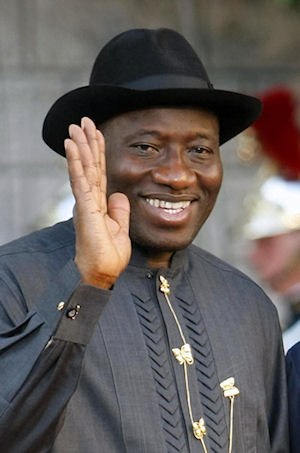
The latest buzz in Nigeria’s political arena is nothing short of explosive: former President Dr. Goodluck Jonathan is reportedly set to return and contest under the platform of the Peoples Democratic Party (PDP). The revelation has sent shockwaves across the nation and beyond. But beneath the headlines, a critical question lingers — what is the real motive behind this sudden political twist?
Before the emergence of the African Democratic Congress (ADC) as a viable coalition platform for the opposition, Nigerians had grown increasingly frustrated with what they saw as a weakened opposition front. The PDP, once a vibrant counterforce, had been reduced to what critics call a “toothless bulldog,” accused of being manipulated by President Bola Tinubu through Nyesom Wike, a PDP member who openly works in favour of the ruling party and now holds a position in Tinubu’s government.
Wike’s influence, according to party insiders, has been anything but peaceful. His repeated interventions and internal disputes have reportedly destabilised the PDP, a strategy many believe cost the party dearly in the 2023 general elections. With the backing of the current administration, Wike has consistently won key legal battles, tightening his grip on the PDP’s power structure.
Recognising the deepening crisis, several PDP heavyweights, including the party’s last presidential candidate, Atiku Abubakar, abandoned the PDP ship, aligning under the ADC banner to form a credible opposition. This development was warmly received by many Nigerians disillusioned by the ruling APC’s economic policies, from the sharp devaluation of the naira to the painful removal of fuel subsidies, policies they say have deepened poverty nationwide.
Alarmed by the growing acceptance of the ADC among struggling Nigerians, the APC-led government appears to be dusting off an old playbook. Just as they allegedly did with the Kwankwasiyya movement in 2023, they now seem ready to field a high-profile figure to split the opposition vote. This time, the role is reportedly being handed to none other than Jonathan — a move seen by many as orchestrated to weaken the ADC’s momentum.
For political observers, the pattern is clear: divide the opposition, consolidate power, and keep the electorate distracted, all while avoiding a united front that could unseat the government in 2027. What stings for some Nigerians is the idea of Jonathan, once the principal, now accepting political direction from his former protégé.
Whether Jonathan’s alleged return is a personal decision or part of a calculated strategy by the ruling party remains to be seen. But one thing is sure: the stage is set for a high-stakes political drama, and Nigerians will be watching closely to see how and where this political gunshot will be fired.

Man discovers 8-inch knife lodged in chest for eight years after hospital visit
By Abdullahi Mukhtar Algasgaini
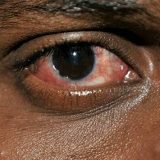
A 44-year-old Tanzanian man seeking treatment for pus discharge from his right nipple was stunned to learn he had been living with a large knife embedded in his chest for nearly a decade, doctors revealed in a recent medical report.
The patient, who had no major health complaints apart from the infection, recalled being stabbed multiple times during a violent altercation eight years ago. At the time, doctors sutured his wounds but lacked the equipment to conduct an X-ray. Since he reported no pain afterwards, further investigation was never pursued.
However, when the man visited Muhimbili National Hospital recently, an X-ray uncovered an astonishing sight—an 8-inch knife lodged near his ribcage. Miraculously, the blade had missed all vital organs.
Surgeons successfully removed the knife along with dead tissue and pus. The patient recovered well after a brief ICU stay and was discharged within 10 days.
Doctors described the case as “extremely rare,” noting that the body had formed a protective layer around the blade, preventing severe complications. The findings were published in the National Library of Medicine, highlighting the importance of thorough trauma assessments.

Nigerian Army shakes up top command in major redeployment
By Abdullahi Mukhtar Algasgaini
The Chief of Army Staff (COAS), Lieutenant General Olufemi Oluyede, has approved a sweeping reorganization of the Nigerian Army’s leadership, appointing new commanders to key positions in a bid to enhance operational effectiveness.
Senior officers have been reassigned to critical roles, including Principal Staff Officers at the Army Headquarters, General Officers Commanding (GOCs), Corps Commanders, and heads of training institutions.
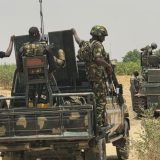
Among the changes, Major General AA Adeyinka moves to the Department of Army Logistics as Chief of Logistics, while Major General ASM Wase takes command of 1 Division, overseeing counterterrorism operations in the North West.
Other notable appointments include Major General CR Nnebeife as GOC 2 Division and Major General MO Erebulu as Provost Marshal of the Nigerian Army Corps of Military Police.
Several officers have also been named as commandants of training schools, including the Nigerian Army College of Logistics and Management.
The COAS charged the newly appointed leaders to intensify efforts in the fight against insurgency and terrorism, emphasizing the importance of troop welfare in achieving operational success.

Minister demands cancellation of Kano by-election over violence
By Abdullahi Mukhtar Algasgaini
The Minister of State for Housing and Urban Development, Yusuf Abdullahi-Ata, has called on the Independent National Electoral Commission (INEC) to cancel the Bagwai/Shanono State Assembly by-election, citing widespread violence and electoral malpractice.
Speaking to journalists on Sunday in Kano, Abdullahi-Ata alleged that armed thugs were mobilized from within and outside the state to disrupt Saturday’s poll, preventing voters from exercising their rights.
He claimed that thugs invaded polling units as early as 5 a.m., wielding weapons and intimidating residents.
The minister also accused attackers of targeting the residence of the All Progressives Congress (APC) candidate. Despite early warnings to security agencies, the violence persisted, disenfranchising voters awaiting the by-election since the death of their former representative, Hon. Halilu Ibrahim-Kundila, in April.
Abdullahi-Ata urged INEC to reschedule the election for a free and fair process and called for the prosecution of arrested suspects.
He appealed for calm among APC supporters, stressing that democracy depends on safe and credible elections.
“An election marred by violence is no election at all,” he said.

Zuru emir, Muhammadu Sani Sami, dies at 81
The Emir of Zuru in Kebbi State, retired Maj.-Gen. Muhammadu Sani Sami, has died on Saturday night at the age of 81.
This was announced in a statement issued in Birnin Kebbi on Sunday by Alhaji Ahmed Idris, Chief Press Secretary to the Kebbi State Governor.
According to the State Commissioner for Local Government and Chieftaincy Affairs, Alhaji Garba Umar-Dutsinmari, the monarch passed away in a London hospital after an illness.
He is survived by four wives and seven children.
“The Kebbi Government extends its heartfelt condolences to his immediate family, the Zuru Emirate Council, the people of Zuru, and the entire people of Kebbi State.
“May the Almighty Allah forgive his shortcomings and grant him Jannatul Firdaus,” the commissioner said, adding that burial arrangements would be communicated later.
Maj.-Gen. Sami joined the Nigerian Army on December 10, 1962, and was commissioned after training at Mons Officer Cadet School in Aldershot, England, on July 25, 1963.
He rose through the ranks and served in various capacities, including Military Administrator of Bauchi State (1984–1985), Commanding Officer of the 82nd Division, and General Officer Commanding 1 Mechanised Division in 1988.
In 1995, he was appointed Emir of Zuru, a position he held until his death.

Dr. Bala Maijama’a Wunti and the world of kindness
By Usman Abdullahi Koli, ANIPR
There are people whose presence on earth answers questions, silences chaos, and reassures broken spirits that goodness has not lost its place in the journey of humanity. When you meet such a soul, you don’t need persuasion or praise to understand them. Their essence speaks gently but powerfully. Their actions speak more than introductions. And their humility becomes the loudest testimony. Dr. Bala Maijama’a Wunti is one such rare man.
He is not defined by his position. He is defined by his posture toward people, toward purpose, and toward the possibilities that are in building others. He carries influence with a gentleness that disarms pride. He wields intellect with a clarity that speaks in results, not rhetoric. His kindness does not seek the spotlight, yet it lights up lives. In Dr. Wunti, leadership is not a claim; it is an effect. You don’t need to be told he leads; you feel it by what surrounds him: hope, truth, trust.
Dr. Wunti is a thinker. But not one who sits in silence while people suffer. He listens, he observes, and he acts. His success in the energy sector is known by experts across continents, but even more admirable is how he has remained deeply connected to the people beneath the statistics—those whose lives don’t appear in data sheets but whose realities matter the most. He balances global intellect with local empathy, and he does so effortlessly.
Every act of his kindness is not random. It is intentional. It is driven by a deep understanding of pain and a personal conviction that no one should be left behind when it is possible to lift. Many men do charity. Few men carry kindness as a responsibility. Fewer still see it as an identity. For Dr. Wunti, it is not about doing good to impress. It is about being good enough to make a difference that leaves no noise but creates echoes of gratitude.
What sets him apart is not only what he does but how he does it. He makes room for others without shrinking himself. He uplifts without needing to be worshipped. He speaks with such calm confidence that even disagreement becomes a space of learning. There is discipline in his humility, and there is wisdom in his silence. He doesn’t interrupt with his greatness; he simply lets it shine in how he walks into a room, how he listens to the ordinary, and how he never forgets those without titles.
Dr. Bala Maijama’a Wunti is a builder of people, not just systems. He is a man who understands that progress is not only about projects but also about peace. He knows that development is not truly development if it does not carry the human soul along. That is why his style is not loud. It is thoughtful. That is why his touch remains long after he has moved on. People do not only remember what he did; they remember how he made them feel—seen, respected, and valued.
It is no surprise that across regions, communities, institutions, and families, his name is spoken not with awe but with affection. And there is his secret—he earns respect by restoring dignity. He doesn’t walk in front to be praised. He walks beside, so no one is left behind. He does not pretend to know it all, but what he knows, he applies with uncommon honesty.
There is something deeply graceful about a man who does not chase validation yet earns admiration by simply being himself. In a time when too many seek recognition before action, Dr. Wunti has quietly made his life a gift to others. His kindness is not weakness. It is strength in its purest form. A strength that builds rather than breaks. A strength that gives, even when no one is looking.
This world, with all its weight, still finds light in people like Dr. Bala Maijama’a Wunti. He reminds us that being accomplished is good, but being compassionate is better. That having knowledge is necessary, but using it to serve others is noble. That being known is nice, but being remembered for goodness is divine.
As one reflects on his journey, it becomes clear that such a man deserves not just recognition but appreciation, not just applause but prayers. He doesn’t wear his impact as decoration. He lets others wear it as hope. And in doing so, he has built something bigger than status. He has built trust.
May the road ahead for Dr. Wunti remain wide, purposeful, and peaceful. May his type multiply in a world that desperately needs the fragrance of men whose hearts still beat for others. And may his story inspire many more to lead not by command but by compassion.
Because in this world of fleeting moments and forgotten promises, one truth remains: kindness will never go out of relevance. And for that, the name Bala Maijama’a Wunti will always echo where sincerity is treasured.
Usman Abdullahi Koli wrote via mernoukoli@gmail.com.

288 suspects nabbed in Kano over alleged by-election violence plot
By Uzair Adam
The Kano State Police Command has confirmed the arrest of 288 people suspected of attempting to trigger violence during the ongoing by-election for the Shanono/Bagwai State Constituency in Kano.
The disclosure was made by the Police Public Relations Officer in the state, SP Abdullahi Haruna Kiyawa, through his verified Facebook account.
He explained that the suspects were arrested with dangerous weapons and are currently under investigation.
According to him, the arrests formed part of a wider operation to forestall any breakdown of law and order throughout the election.

Tribute to my father – Alhaji Musa Muhammad Ringim
By Kabir Musa Ringim
15/08/2025
My father, Alhaji Musa Muhammad, was an orphan who lost his father at a very young age. He was nicknamed Musa Lare in reference to his mother, Lare. His father, Mallam Mamman Aminu, a staff member of the Nigerian Railway Corporation and a native of Daura in present-day Katsina State, was transferred to Ringim to work at the corporation’s train station. There, he met Lare, a Fulani widow, and they married in the early 1940s.
Their first child, a very handsome boy, was named Musa. Sadly, destiny decreed that Mallam Mamman would not live long enough to have another child or witness his son’s growth and achievements.
Alhaji Musa Muhammad was born in 1945 in Ringim. After completing mandatory Qur’anic school, he was enrolled at the age of seven in Ringim Elementary School (now Katutu Pilot Special Primary School) in 1952, finishing in 1955. In 1956, he proceeded to City Senior Primary School, Kofar Nasarawa, Kano (now Government Girls Secondary School, Shekara, Kano), and graduated in 1958. In 1959, he entered Kano Provincial Secondary School (now Rumfa College, Kano) with school number 230.
His first job came in 1963 when the University of Ibadan, in collaboration with the Federal Ministry of Agriculture and Natural Resources, offered him a one-year temporary position. He conducted a market study on the quality, quantity, and price of selected farm produce – millet, sorghum, and beans – at Kurmi and Sabon Gari markets in Kano. The results were sent monthly to the Nigerian Stored Products Research Institute (NSPRI) Kano for onward transmission to the University of Ibadan. During this period, as a federal government worker, the Emir of Kano, Sir Muhammad Sanusi I, provided him with accommodation at the palace.
In 1964, Alhaji Musa Muhammad joined the Forestry Division of the Federal Ministry of Agriculture as the pioneer Government Forest Guard. He attended the Government Forest Guard Course at the Regional School of Forestry, Jos, after which he was posted to Zaria. In 1966, he was transferred to Kaduna Parks and Gardens as Officer in Charge of nurseries.
When states were created in 1967, he was deployed to his home state, Kano. Following directives from CP Audu Bako, the then Military Governor, he was posted to Kuda Gangara in Kazaure Emirate to establish Bagaruwa plantations for producing pods used in the state’s tanning factories. These plantations were established at Kuda Gangara Forest Reserve along Achilafiya – Karkarna Road.
In 1968, he applied for a change of cadre from Forester to Forest Assistant in training. His application was approved, and he was sent to the Federal School of Forestry, Ibadan, for a six-month Forest Assistant Course, running from May 1970 to October 1971. He completed the course with a Second-Class Certificate and was posted to Kano North Central Administrative Area, headquartered at Dambatta, as Area Forest Officer in charge.
In January 1973, he was selected for a one-year Diploma Course at the Federal School of Forestry, Ibadan. He graduated with a First-Class Diploma, becoming the first Northerner to win a prize in silviculture (the cultivation and management of trees). Due to his outstanding performance, he was posted to Hadejia Administrative Area as Forest Officer in charge. There, he established three new forest nurseries in Hadejia, Diginsa, and Kafin Hausa, upgraded the Birniwa nursery, and created shelterbelts in Diginsa and Birniwa, along with numerous roadside plantations.
In 1975, at the age of 30, while working in Hadejia, he met my mother, who was then fifteen years old. They married that same year and remained together for fifty years until his death.
In 1976, he was transferred to Kano, attached to the Forest Management Division (West), and placed in charge of the Savannah Investigation Unit, which conducted soil and vegetation surveys, produced soil maps, and interpreted aerial photographs.
In 1977, he was transferred to Kano South West Administrative Area, headquartered at Rano, as Forest Officer in charge. In 1978, following the local government reforms, he applied for the position of Head of the Local Government Agriculture Department, in line with a Ministry of Agriculture circular inviting qualified diploma holders to apply. He was appointed and posted to Ringim Local Government as the pioneer Head of Agriculture.
In 1980, he was transferred to Tudun Wada Local Government. While there, he expanded his qualifications by enrolling with the British Institute of Engineering Technology, Aldermaston Court, Berkshire, England, to study Tropical Agriculture, Agricultural Engineering, and Animal Husbandry in the Tropics via correspondence. He completed these courses in three years.
In 1983, he returned to Ringim Local Government, and in 1984, he was transferred to Gezawa Local Government as Head of Agriculture. In 1987, he was moved to Dutse Local Government. That same year, the Kano State Government decided to professionalise the Inspectorate Division of the Ministry for Local Government. Heads of Departments in Agriculture, Works, Health, and Social Welfare were selected on merit through interviews. He was appointed Assistant Chief Local Government Inspector, joining three colleagues.
This role gave him opportunities to attend various courses, including:
1. Project Management Implementation and Control at the Agricultural and Rural Management Training Institute, Ilorin.
2. Rural Development Project Formulation and Management at Ahmadu Bello University, Zaria.
3. Leadership and Management at the Nigerian Institute of Management.
4. Various workshops, seminars, and committee assignments within and outside Nigeria.
Following the creation of Jigawa State in 1991, he was deployed as Assistant Chief Local Government Inspector. With civil service reforms, his post became Assistant Director of Agriculture Inspection. In 1992, he was transferred to the State Council of Chiefs as Council Secretary. He was promoted to Deputy Director, then substantive Director in 1997, a position he held until his retirement on 31 August 2001.
Twenty-four years after retirement, on 3rd July 2025, he passed away peacefully at home in Ringim without any known illness, leaving behind my mother and 19 children. Among his sons are two classroom teachers, four lecturers, and a consultant neurosurgeon.
My late father was a man of strong faith, selflessness, and patriotism. When asked how all his children found good jobs, he replied that it was Allah who provides and that he had prayed for his children’s success. He detested corruption, avoided politics, and never sought personal favours. He refused cash gifts even from his children and was meticulous about keeping records and time, locking his house himself every day at 8 p.m.
He was the healthiest person I have ever known. I never for once saw him bedridden or visiting a hospital. Even at 80, he could drive, walk upright, and retained his senses of smell, hearing, and sight. He ate in moderation – only twice a day – favouring healthy, traditional foods such as fura, zogale, bread, tsire, and tea, with oranges, mangoes, and bananas as his preferred fruits.
While in service, he also farmed, growing millet, sorghum, beans, tomatoes, and other crops for home consumption. After retirement, he devoted his time to prayer and religious duties, declining all job offers. Though considered an elder statesman in Ringim, he kept few friends and preferred to stay indoors, coming out after late morning prayers until Zuhr to interact with neighbours.
His enduring message was: “Be resolute, fear your Creator, and surmount every difficulty to achieve your objective. It is not the beginning that matters but the end.”
May Allah (SWT) forgive his shortcomings, accept his good deeds, and grant him Jannatul Firdaus. Ameen.

DSS nabs PDP agent with N30m for vote-buying in Kaduna
By Abdullahi Mukhtar Algasgaini
The Department of State Services (DSS) has arrested a suspected Peoples Democratic Party (PDP) agent, Shehu Fatange, with N30 million allegedly meant for vote-buying ahead of Saturday’s bye-elections in Kaduna State.
Fatange was apprehended Friday evening at a hotel in Kaduna, where he was reportedly coordinating the distribution of cash to influence voters in the Chikun/Kajuru Federal Constituency election.
Security sources confirmed the suspect was caught with a large sum of money intended to compromise the electoral process.
The Kaduna Police Command also verified the arrest, stating that investigations were ongoing.
The incident comes amid rising tensions, with political parties trading accusations of vote-buying and electoral malpractice ahead of the polls.
Authorities have urged the public to remain calm and turn out peacefully to vote.
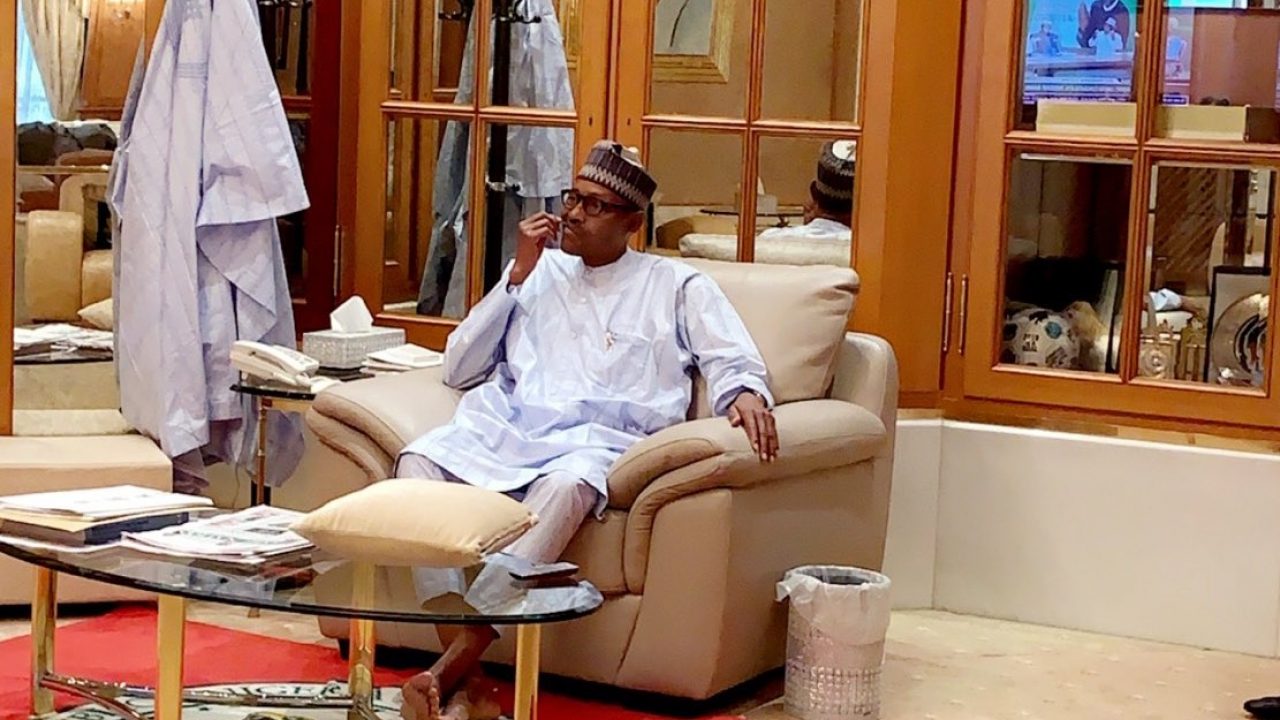
Between sugarcoated lies and harsh truth: Buhari’s tragic legacy
By Abdullahi Muhammad Yalwa
As Nigerians lay their former president, Muhammad Buhari, to rest, a lively yet insightful debate has ignited on social media. Buhari’s death on the evening of Sunday, 13 July, has sparked a wave of polarised reactions across Nigeria and beyond. These responses, though all too familiar to ignore, are nonetheless difficult to tolerate either.
Ruling one of the most ethnically heterogeneous populations, the name BUHARI means different things to different people. For some, his death marks the end of a revered statesman’s journey, a disciplined military man turned democrat who embodied integrity and sacrifice. As such, religious apologists and loyalists have rushed to sanctify his legacy, cloaking his tenure in a veneer of divine purpose and moral uprightness. Yet, beneath the watershed emotions, lies a more sobering narrative, an impersonal truth which is hard to accept as it’s bitter to swallow.
For history and to serve as a springboard of truth, Buhari’s legacy is one that history will not so easily forgive nor forget. It’s a force that will be reckoned with in Nigeria’s history. A turmoil journey that lumbered from one crisis to another and finally ended in an overwhelming sense of failure. The truth, though uncomfortable, is therefore that Buhari’s legacy is a tale of squandered goodwill, unfulfilled promises, and a nation left more fractured than he found it.
In 2015, when the Saviour proclaimed his campaign, which would finally mark his ascension to power, Buhari, in a boisterous voice, chanted the “CHANGE” mantra, and citizens across the nation’s divides chanted CHANGE, and so the sound echoed. Hailed as a man of discipline, Buhari, in his usual austere demeanour and military pedigree, promised a break from the corruption and mismanagement that had plagued previous administrations. Equally, he promised to tackle insecurity, root out corruption, and stabilise a faltering economy. We saw in him a Messianic figure who would finally weed Nigeria of its bad seeds and breed a new garden for the poor. Sadly, however, the euphoria that greeted his election was a sad, fragile foundation of selective memory.
Buhari’s economic legacy is perhaps the most damning indictment of his tenure. Although he inherited an economy already strained by falling oil prices, his policies exacerbated the crisis, plunging Nigeria into two recessions within five years. By 2023, inflation had soared from 9% to over 22%, unemployment surged from 10.4% to 33.4%, and the naira lost 70% of its value against the dollar. Nigeria, once Africa’s largest economy, became the world’s poverty capital, with 133 million citizens living in abject poverty by the end of his tenure.
His economic interventions, such as the 2019 border closure to boost local production, backfired spectacularly, spiking food prices and straining relations with neighbouring countries. The naira redesign policies, implemented in 1984 and again in 2022, caused widespread hardship, with long queues and economic disruption for ordinary Nigerians. These measures, while framed as anti-corruption tools, were poorly executed and lacked strategic foresight. The ballooning national debt, reaching $150 billion by 2023, forced Nigeria to allocate 96% of its revenue to debt servicing, a fiscal albatross that continues to choke the economy.
Though it might be argued that Buhari inherited a comatose economy from Jonathan, riddled with corruption scandals like the $2 billion arms deal misappropriation, he promised to come and make a change, not to make excuses. Equally, his infrastructure projects, such as the Enugu-Port Harcourt Expressway and the Nigeria Air initiative, might be cited as evidence of progress. Yet, these achievements pale in comparison to the scale of economic devastation. The reality is that Buhari’s economic policies were not just misguided- they were catastrophic, leaving Nigerians poorer and more desperate than ever.
On the side of security, Buhari’s campaign promise to defeat Boko Haram and restore security was a cornerstone of his 2015 victory. Though there may be some early gains against Boko Haram, including the reclamation of territories, which briefly bolstered Buhari’s credentials, these victories were fleeting. By the end of his presidency, Nigeria was grappling with an unprecedented wave of insecurity, with over 63,000 deaths recorded from violent incidents between 2015 and 2023—an average of 22 deaths per day.
The rise of banditry, kidnappings, and farmer-herder clashes compounded the Boko Haram threat. The #EndSARS protests of 2020, sparked by police brutality, exposed his administration’s heavy-handed approach to dissent. Buhari’s silence during these crises, a hallmark of his leadership style, only deepened public distrust.
Buhari’s anti-corruption crusade was perhaps his most touted promise, yet it remains his most glaring failure. Though some positive outcomes were recorded, Buhari’s administration’s selective prosecution of opponents, such as Dasuki’s, raised questions about its sincerity. High-profile cases, such as the trial of former Central Bank Governor Godwin Emefiele, who’s one of the key figures during Buhari’s administration, continue to grab headlines, but systemic corruption persists. When the then Kano Governor Umar Ganduje was caught on video stuffing dollars into his robe, Buhari dismissed the evidence as doctored, undermining his anti-corruption credentials. The Economic and Financial Crimes Commission (EFCC), which he helped lay the groundwork for, became a tool for political vendettas rather than a beacon of reform. Many prominent figures were either pardoned or overlooked due to their political leanings or personal interests. As such, on anti-corruption, Buhari’s promises were a hoax.
Overall, Buhari’s cold, distant, arrogant air — that rigid, dry, unbothered, “I’m above you” type of character — which pervaded his leadership, remains deeply painful in the minds of his subjects. The fact that he spoke to his citizens during their tough times as if he was doing them a favour by acknowledging their existence is a poor record to reckon with as part of Buhari’s terrible legacy as a leader. There should be warmth and humility in public relations.
In the end, history is the most invisible phenomenon. As President Buhari is laid to rest, religious and regional loyalists should not seek to sanctify his legacy, framing him as a patriot who served Nigeria with unwavering dedication. Such eulogies, while expected, gloss over the harsh realities of his tenure. Equally, claiming that Buhari’s policies were sabotaged by external forces or inherited challenges ignores his role in exacerbating Nigeria’s woes. Instead, the uncomfortable truth is that Buhari’s legacy is one of missed opportunities and disappointment. He entered office with unprecedented goodwill, yet left Nigeria more divided, poorer, and insecure. His rigid, authoritarian style stifled dissent and eroded judicial independence, as seen in the prolonged detention of figures like Sambo Dasuki despite court orders. His failure to communicate effectively, evidenced by his silence during crises like #EndSARS and the ASUU strike of 2022, alienated a generation of young Nigerians.
History will remember Buhari not as the saviour Nigeria hoped for, but as a leader who squandered a historic mandate. His presidency teaches a bitter lesson: discipline without vision, and integrity without competence, cannot redeem a nation. As Nigerians mourn his passing, we must also confront the cost of his failures-a fractured nation, a struggling economy, and a generation of youth disillusioned with governance, standing on the brink of a precipice.
Abdullahi Muhammad Yalwa hails from Azare. He’s a graduate of Law from the University of Maiduguri, looking forward to serving his Country.