



The significance of marriage in Islam
By Muhammad Isah Zng
Marriage in Islam is not just to bind together; it is an institution that preserves faith, protects men and women from immoralities, and creates harmony between men and women. It’s also a way of raising and nurturing children on the right path.
Allah (S.W.T) describes marriage as one of His most significant signs, saying: “And among His signs is that He created for you spouses from among yourselves, so that you may find tranquillity in them; and He placed between you affection and mercy. Surely in that are signs for a people who reflect.”
(Qur’an 30:21)
In the above verse, Allah (S.W.T.) highlights the true purpose of marriage, emphasises peace, love, and mercy between husband and wife.
Similarly, Imam Al-Ghazali, a prominent Islamic scholar, said: “Marriage is companionship, not domination. It is a place of comfort, where both husband and wife share love, trust, and cooperation.”
We can also notice that marriage is also built on trust from both husband and wife, because trust brings comfort and increases love between the spouses. Without it, marriage won’t be last in any relationship.
Therefore, apart from being a way of sharing love, peace, and trust between husband and wife, it is also a means of having children who would be beneficial to society.
That’s why Allah called the attention of both husband and wife in this verse: “O you who believe, protect yourselves and your families from a fire whose fuel is people and stones…”
(Qur’an 66:6)
This verse emphasises the responsibility of couples towards the good upbringing of their children by ensuring that they provide them with proper guidance and support throughout their lives.
Marriage in Islam is an avenue where both husband and wife share love, mercy, peace, and trust; it’s also a way of raising children that benefits themselves and their society.
Muhammad Isah Zng is a student of Mass Communication, Bayero University, Kano (BUK).

Kano expands hypertension care to over 200 primary health centres
By Uzair Adam
The Kano State Government has expanded its hypertension prevention and treatment services to 208 Primary Health Care (PHC) facilities across the 44 local government areas of the state, according to the Ministry of Health.
The initiative, which builds on an earlier pilot phase, was launched under the administration of Governor Abba Kabir Yusuf to strengthen early detection and management of hypertension — a leading cause of heart disease, stroke, and premature deaths in Nigeria.
In a statement issued on Saturday, the Public Relations Officer of the Ministry, Nabilusi Abubakar K/Na’isa, said the expansion followed the successful implementation of the programme in 52 PHCs under the National Hypertension Control Initiative (NHCI).
He explained that the initiative, with technical support from Resolve to Save Lives and Project HOPE, has now been scaled up to 208 facilities to ensure more residents have access to regular blood pressure checks, treatment, and follow-up care within their communities.
Quoting the Commissioner for Health, Dr. Abubakar Labaran Yusuf, the statement noted that the government’s decision reflects its commitment to strengthening the primary healthcare system and addressing non-communicable diseases across the state.
Dr. Yusuf commended the dedication of health workers participating in the programme and urged them to sustain their efforts to ensure lasting success in hypertension prevention and control.
“The scale-up of hypertension services across 208 PHCs demonstrates Kano’s leadership in improving access to essential care. This should serve as a model for other states in advancing equitable and sustainable health services,” the commissioner said.
The Ministry expressed optimism that the initiative will help prevent costly complications, reduce hospital admissions, and promote healthier, more productive lives for Kano residents.

Northwest University to host 65th annual conference of Nigerian geographers
By Uzair Adam
Northwest University Kano is set to host the 65th Annual Conference of the Association of Nigerian Geographers (ANG), which will attract scholars, researchers, and professionals from across the country to deliberate on pressing developmental issues.
The Daily Reality reports that the theme of this year’s conference is “Navigating Physical Vulnerability, Economic Disparity, and Social Inequality in Developing Countries.”
The Head of Department of Geography, Dr. Nazifi Umar, disclosed this during a media briefing held on Saturday at the university.
He explained that preparations were in top gear to receive geographers from all parts of Nigeria for the three-day event scheduled to begin on Monday, October 6, 2025.
According to Dr. Umar, arrival of delegates and council members of the association is expected on Sunday, October 5, ahead of the formal opening ceremony.
The ceremony, he said, will be graced by top dignitaries, including the Executive Governor of Kano State, Alhaji Abba Kabir Yusuf, who will serve as the Special Guest of Honour, while the Deputy Governor, Comrade Aminu Abdulsalam Gwarzo, will be the Guest of Honour.
The Vice Chancellor of Northwest University, Professor Mukhtar Atiku Kurawa, will serve as Chief Host, while Professor Adamu Mukhtar Bichi, Deputy Vice Chancellor (Academic) of Aliko Dangote University of Science and Technology, Wudil, will chair the opening session.
Dr. Umar also announced that the keynote address will be delivered by Professor Adamu Idris Tanko, Vice Chancellor of Baba Ahmed University, Kano.
Lead paper presentations will be made by Professor Aliyu M. Babanebegu of Aliko Dangote University of Science and Technology, Wudil, and Professor Aliyu Saleh Suberu of the Department of Urban and Regional Planning, Binyaminu Usman Polytechnic, Kano.
The host added that the conference will feature technical sessions where over 250 papers will be presented, both physically and virtually, covering diverse sub-disciplines such as economic disparities, social inequality, regional development, and environmental hazards.
“Scholars from all over the country will come together to share knowledge and exchange ideas on addressing critical developmental challenges through the lens of geography,” Dr. Umar said.
He further noted that the conference would not only foster academic collaboration and innovation but also contribute to the local economy by attracting visitors to Kano.
Dr. Umar emphasized that at the end of the conference, a communiqué summarizing key discussions and recommendations would be released to guide policymakers, researchers, and other stakeholders.
The event will also feature activities for secondary school students, including a geoquiz competition, in which Kuntau Science Academy emerged as the state winner and will represent Kano at the national level.
The Association of Nigerian Geographers, established in 1957, holds its annual conference as a platform for professionals to exchange ideas and advance the discipline in Nigeria.
This year’s edition marks the first time Northwest University Kano will host the prestigious gathering.

Nigeria Customs bags global award for excellence in PR at IPRA event in Ghana
By Sabiu Abdullahi
The Nigeria Customs Service (NCS) has received international recognition for its outstanding communication practices, earning the Golden World Award (GWA) for Impactful PR in Customs Management at the 2025 International Public Relations Association (IPRA) Gala held on Friday, October 3, 2025, at the Mövenpick Hotel in Accra, Ghana.
The award, presented by IPRA President Nataša Pavlović Bujas during the Golden World Awards Gala Night, honoured the NCS for its achievements in impactful public relations within customs management.
The winning project, produced by Image Merchants Promotion Limited, highlights the communication strategies of the Comptroller-General of Customs and has become a model for public relations research and practice in Nigeria.
Philip Sheppard, Secretary-General of IPRA, explained that the publication provides practical communication strategies for institutions and showcases real-life leadership lessons derived from the reforms implemented by the Comptroller-General of Customs, Bashir Adewale Adeniyi, MFR.
Receiving the award on behalf of the Service, the National Public Relations Officer, Assistant Comptroller Abdullahi Maiwada, expressed gratitude to IPRA for the recognition, noting that it reflects the Service’s dedication to transparency and credible communication.
“This award is a validation of the Nigeria Customs Service’s commitment to professionalism, transparency, and stakeholder engagement,” Maiwada said.
“Under the leadership of the Comptroller-General, we have repositioned communication as a strategic tool for reform and trust-building.”
The recognition marks another milestone for the NCS, which had earlier won the 2024 GWA for Crisis Communication at the IPRA Gala in Belgrade, Serbia.
The 2025 award further underscores the agency’s consistency in innovation and effective reputation management.
The award ceremony was part of a three-day Public Relations Knowledge Sharing Conference held from October 1 to 3, 2025, at the Accra International Conference Centre.
The event, themed “Global Realities and Innovative Communication,” attracted prominent communication experts, including Dr. Ike Neliaku, President of the Nigerian Institute of Public Relations (NIPR); Nataša Pavlović Bujas, President of IPRA; Arik Karani, President of the African Public Relations Association (APRA); and Esther Amba Numaba Cobbah, President of the Institute of Public Relations (IPR), Ghana.
At the closing session, Ghana’s President, John Dramani Mahama, called on public relations professionals to maintain integrity and excellence in their work.
“As communicators, you hold the power to shape narratives and influence public trust,” President Mahama said. “Our continent needs professionals who communicate with integrity, clarity, and purpose to support national development.”
Ghana’s Vice President, Jane Nana, also commended the award recipients for their contributions to advancing global communication practice.
The event concluded with Esther Amba Numaba Cobbah being inaugurated as the new President of the International Public Relations Association, succeeding Nataša Pavlović Bujas.
Her appointment as the first African to lead the 70-year-old global body represents a major milestone and a source of pride for communication professionals across the continent.
NEMA and the fight to curb Nigeria’s recurring flood disasters
By Abdulhamid Abdullahi Aliyu
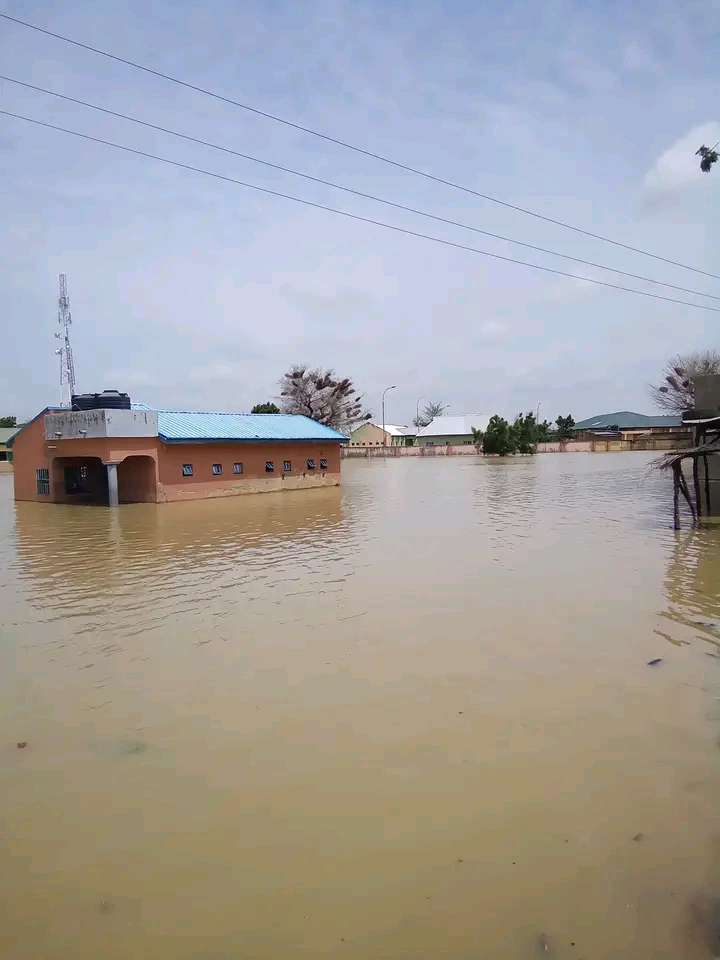
Every rainy season in Nigeria, when the skies darken and rivers swell, millions brace for the inevitable. In states like Kogi, Benue, and Bayelsa, families keep bags packed, ready to flee at the first sign of danger. Flood season has become a season of exile, not a question of if disaster will strike, but when.
The devastation of 2022 serves as a poignant reminder of what is at stake. That year, floods claimed more than 600 lives, displaced over 1.4 million people, and destroyed livelihoods on a massive scale. Croplands vanished under water, homes crumbled, and dreams were swept away. Three years later, communities still carry those scars, and the new flood alerts for 2025 have revived fears of a repeat.
It is against this grim backdrop that the National Emergency Management Agency (NEMA) is repositioning itself. For years, the agency was primarily seen as the responder of last resort, arriving with relief materials after lives and property had already been lost. Today, under the leadership of its Director General, Mrs Zubaida Umar, NEMA is making a deliberate shift: from being merely reactive to becoming a driver of foresight and prevention.
“Emergency management must no longer be about sympathy after the tragedy,” Mrs Umar insists. “It should be about preparedness that saves lives before the waters rise.”
That vision is beginning to take root. NEMA now works more closely with the Nigerian Meteorological Agency (NiMet) and the Nigerian Hydrological Services Agency (NIHSA), ensuring that seasonal forecasts and dam release alerts are translated into action at the grassroots level. Through community training, simulations, and sensitisation, the agency is attempting to close the gap between warnings and response, a gap that has cost too many lives in the past.
Yet the challenge remains daunting. Nigeria’s geography makes it naturally vulnerable, with the Niger and Benue rivers cutting across states where millions depend on farming. Poor urban planning compounds the danger, as blocked drainage and informal settlements in flood-prone areas turn cities into ticking time bombs. Climate change, with its unpredictable rainfall patterns, only worsens the threat.
In Lokoja, often referred to as the “confluence of suffering” during flood season, traders recall markets transformed into lakes, while fishermen lament the cruel irony of drowning in abundance. In Borno, families already displaced by insurgency were uprooted again when torrential rains washed away their shelters. These stories underscore a sobering truth: floods in Nigeria are not just natural disasters, but also humanitarian emergencies that exacerbate existing vulnerabilities.
Still, there are signs of progress. NEMA has strengthened partnerships with state governments and agencies, such as the Hydroelectric Power Producing Areas Development Commission (N-HYPPADEC), to broaden the response framework. The agency has also invested in early warning systems, ensuring that flood alerts do not remain stuck in Abuja press briefings but reach local leaders, town criers, and community radio stations.
For NEMA, the real battle is not only about deploying relief materials but about changing mindsets. Preparedness must become a culture. Farmers adjusting their planting calendars to forecasts, families relocating from high-risk flood plains, and local leaders treating disaster drills as seriously as security meetings. These are the shifts that make prevention real.
But as Mrs Umar acknowledges, transformation takes time. Resources remain limited, and relief supplies can only go so far in a country where millions are at risk. Disaster management will therefore continue to be a delicate balance between urgent response and long-term prevention.
What is clear, however, is that the old model of waiting until floods wreak havoc before acting is no longer sustainable. With new alerts already issued for 2025, the real task is ensuring that early warnings translate into early action. The coming seasons must not repeat the mistakes of the past.
Floods will always come. The question is whether they remain an annual tragedy or become a manageable threat. For NEMA, the answer lies in standing not just as a responder to disaster, but as a shield against it. For the millions who live in the shadow of swollen rivers, that shift could mean the difference between despair and survival.
Abdulhamid Abdullahi Aliyu writes on disaster management, humanitarian response, and national development.

Tinubu vows fairness for all faiths, pledges to end insecurity
By Abdullahi Mukhtar Algasgaini
President Bola Tinubu has assured Christian communities in Northern Nigeria of his administration’s commitment to fairness and religious equity, while also pledging to decisively tackle the nation’s security challenges.
The President gave the assurance on Saturday during a visit to Jos, Plateau State, where he met with Christian leaders at the Headquarters of the Church of Christ in Nations (COCIN) and attended the funeral of Nana Lydia Yilwatda, the mother of the APC National Chairman.”
I have a mission to unite this country, ensure its prosperity, and we are making progress,” President Tinubu stated.
He emphasized his personal commitment to religious harmony, citing his own family as an example.
“In our family, we have a strong Muslim background, and I married a Christian, a pastor for that matter, and I have never forced her to change her religion.”
On the pressing issue of insecurity, the President was resolute.
“We are defeating bandits, and we will defeat them. We will deal with them and combat the farmers-herders clashes,” he declared.
The funeral service served as a platform for the President to pay tribute to the late Nana Lydia Yilwatda, whom he described as a devoted mother and humanitarian.
The event also featured remarks from her son, Professor Nantawe Yilwatda, the APC National Chairman, who thanked the President for his support.
Reverend Dr. Amos Mohzo, the President of COCIN, expressed gratitude for the appointment of Northern Christians like Senator George Akume, the Secretary to the Government of the Federation, into key government positions.
He also appealed to President Tinubu for increased assistance for victims of conflict in Benue, Plateau, and for Christian communities displaced from Borno and Adamawa into Cameroon.
The high-profile event was attended by a host of dignitaries, including Senate President Godswill Akpabio, several state governors, and top government officials.

Ulama Forum refutes claims of 500,000 Christian deaths in Nigeria
By Hadiza Abdulkadir
The Ulama Forum in Nigeria has condemned what it describes as false and inflammatory allegations by some international media outlets, including Fox News, Radio Genoa and American talk show host Bill Maher, claiming that 500,000 Christians were killed in Nigeria last year.
In a statement signed by Convener Aminu Inuwa Muhammad and Secretary Engr. Basheer Adamu Aliyu, the Forum described the claims as “entirely unfounded, reckless, and designed to misinform the international community.”
It added that Nigeria’s security challenges—terrorism, banditry, and farmer-herder clashes—affect both Muslims and Christians, not any single religious group.
The Forum noted that Muslim communities, particularly in the Northwest, have “suffered disproportionately,” with thousands killed in repeated attacks ignored by international coverage. It warned that spreading false genocide narratives could inflame tensions and undermine peace efforts.
Quoting the Qur’an, the Forum reaffirmed Islam’s prohibition of killing innocents and called for unity among Nigerians “to resist attempts by foreign actors to manipulate false narratives.”
It also urged the government to intensify security measures and advised international media to report responsibly and respect Nigeria’s diversity.

The parable of Mrs X and the health crisis of the nation
By Oladoja M.O
There’s a video, “Why did Mrs X die?” that is very popular in the public health sphere. At first, the video seemed like the tale of one woman, faceless, nameless, known only by a letter. But the more I analyse and reflect on it, the more it has dawned on me that Mrs X was never just one person. She was and still is the embodiment of Nigeria’s healthcare story. Her death was not a singular tragedy, but a parable. A mirror held up to a nation’s bleeding system.
Mrs X died, not simply because of childbirth complications, but because everything that could have worked didn’t. Everything that should have stood for her failed her. Her death was not a moment; it was a long, silent, accepted process. In her story, there was the collapse of planning, access, and empathy. She died from a slow national rot that had found flesh in her body.
The story of Mrs X began not with the bleeding, but with the absence of preventive orientation that characterises the experience of many Nigerian pregnant women. She went through pregnancy the way most Nigerians face illness, hoping it would not demand too much. She never considered going for checkups, not because she was reckless, but because the culture of prevention was never truly instilled in her.
In a society where survival itself is a daily hustle, prevention often feels like a luxury. There was a health facility, yes, but it was far, tired, and overstretched. The system had blood, but not enough. Staff, but overworked. Beds, but unclean. And behind it all were the silences of policymakers, the rust of forgotten community health centres, and the dust on abandoned government project files. So, when she finally needed help, it was already too late to start looking.
That story, the scramble at the end, is too familiar. We see it in Ekiti, Katsina, Owerri, and Makurdi. Patients running from one hospital to the next, files in hand, hope on lips, only to be turned back by bureaucracy, distance, or a quiet “we have no space.”
But beyond the infrastructure and logistics, Mrs X bore the weight of something heavier: culture. She was told, directly and indirectly, that her place was to endure. To cook. To clean. To birth. Her pain was duty. Her tiredness was weakness. To seek help was indulgent. So, she bore her cross in silence. Culture had taught her that a good woman asks for little, demands nothing, and dies quietly.
Gender inequality was not just in her home; it was in the policy rooms that never included her voice. It was in budgets that prioritised politics over health. It was in the subtle shrug of indifference that attends women’s complaints in clinics, especially poor women in rural areas. Her being female had already placed her lower on the ladder.
But perhaps what haunts me most is how everything seemed normal until someone opened the files. That day, long after she had gone, someone went back to the data room and began to look. Patterns emerged. Cases connected. Questions rose. “How many more like her?” they asked. “Could we have seen this coming?” It was research that awakened conscience. Data that pulled the curtain back. And isn’t that Nigeria’s truest shame that we often act only after counting the dead?
Mrs. X, for all her anonymity, is Nigeria. She is our health system in human form: underserved, overburdened, overlooked. Her blood loss is our policy hemorrhage. Her silence is our governance gap. Her death is our diagnosis.
It’s easy to talk about reforms. There have been many. Policies, papers, pilot schemes. But for every speech made in air-conditioned halls, there’s a Mrs X still sitting miles from care, still unsure if help will come. Nigeria does not lack ideas. It lacks continuity. It lacks compassion in implementation. It lacks the urgency that comes when you see the system as your own mother, your own sister, your own unborn child. We must stop planning in the abstract. We must stop building for applause and start building for impact.
Health must become a right, not a privilege wrapped in bureaucracy. We must fund primary health care not as a checkbox but as a foundation. We must decentralize emergency care so that help is never more than a few kilometers away. We must invest not only in infrastructure but in mindsets, teaching every citizen that prevention is not a scam, and that seeking help is not weakness.
And crucially, we must disaggregate our data and listen to it. Research must not be something we dust off only when we need donor funds. It must be lived, continuous, grounded in our local realities. Because without data, we’re only guessing in the dark, while more Mrs. Xs are buried under statistics that came too late.
So, no, the story of Mrs X is really not about maternal mortality. It is about us. All of us. It is the story of a system that watches a woman bleed and scrambles for gauze. That waits until the final breath before asking the first question. That blames culture, then feeds it. That builds hospitals without building access. That speaks to the importance of health equity while communities barter herbs in silence. I saw Mrs X die. But more than that, I saw Nigeria in her eyes; tired, forgotten, hoping someone would care enough to fix what’s broken.
Maybe, just maybe, if we learn to listen to her story, we won’t need another parable. Maybe her death won’t be in vain.
Oladoja M.O writes from Abuja and can be reached at: mayokunmark@gmail.com.

Troops arrest 450 suspects, rescue 180 civilians in September – DHQ
By Anwar Usman
The Defence Headquarters on Saturday said troops arrested about 450 terrorists, bandits, extremists and other criminals across the country last month.
This was disclosed in a statement by Maj. Gen. Markus Kangye, the Director of Defence Media Operations, he said 39 terrorists surrendered while 180 civilians were rescued during the operations.
He said 63 arms, 4,475 rounds of ammunition and 294 items including grenades, improvised explosive device materials, handheld radios, motorcycles and vehicles were recovered.
Kangye added that troops of Operation DELTA SAFE foiled oil theft valued at N112,175,220, consisting of 49,321 litres of crude oil, 6,970 litres of automotive gas oil, 1,900 litres of dual-purpose kerosene and 1,475 litres of premium motor spirit.
“For the month of September, about 450 terrorists, bandits, extremists and other criminals were arrested, 39 of them were surrendered, while 180 civilians were rescued. Quantity 63 arms, 4,475 ammunition were recovered, 294 items such as grenades, IED marking materials, handheld radios, motorcycles, vehicles and other items used in perpetrating crimes were also recovered.
“Operation DELTA SAFE foiled oil theft worth N112,175,220.00 representing 49,321 litres of crude oil, 6,970 litres of AGO, 1,900 litres of DPK and 1,475 litres of PMS. 41 Illegal refining sites were also destroyed” the statement reads.
He further stated that, troops also seized automatic rifles, rocket-propelled grenade tubes, machine guns, locally fabricated guns, live cartridges and assorted ammunition in different operations.
“Overall, troops recovered large quantities of various arms, such as automatic weapons, RPG tubes, machine guns, locally fabricated guns, and improvised explosive devices making material. Also, some cache of live cartridges and assorted ammunition were recovered” the statement concluded.
lGBTQ+: Netflix loses billions in market value after Elon Musk’s call for boycott
By Sabiu Abdullahi
Netflix has lost billions of dollars in market value after billionaire Elon Musk urged viewers to cancel their subscriptions, accusing the streaming giant of promoting what he described as excessive LGBTQ+ content — including in children’s shows.
Musk, in a post on X, said Netflix had become “unwatchable,” claiming it was “almost impossible to find a movie without an LGBTQ+ scene.”
The Tesla and SpaceX chief linked his criticism to his long-standing stance on gender and identity issues, particularly after his child, Vivian Wilson — formerly Xavier Musk — transitioned and publicly cut ties with him.
Following Musk’s comments, Netflix’s share price fell between 2% and 4% within a short period, resulting in an estimated loss of about $15 billion in market capitalization, according to reports from Investing.com and Anadolu Agency.
Analysts noted that while the drop coincided with Musk’s remarks, broader market movements may have also contributed.
However, some social media posts and blogs have claimed the loss exceeded $20 billion, a figure not supported by mainstream financial outlets or market data.
Financial experts caution that the online figure appears to be exaggerated or based on speculative estimates.
Musk’s criticism has sparked heated debate online. Supporters praised him for taking a stand against what they call “agenda-driven content,” while others accused him of intolerance and misinformation.
Netflix has not issued an official response to Musk’s remarks, but the company has previously defended its content diversity, saying it aims to reflect a wide range of human experiences.
While the exact financial impact of Musk’s boycott call remains unclear, the controversy once again highlights how powerful public figures can influence corporate reputation and market performance in the digital age.