
Yilwatda Leads as APC Releases Full National Executive Committee List
By Abdullahi Mukhtar Algasgaini
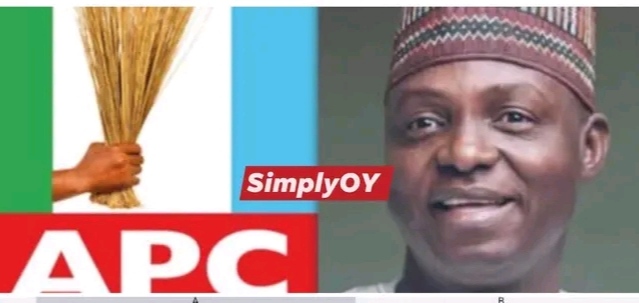
The All Progressives Congress (APC) has officially released the full list of its National Executive Committee members, with Prof. Nentawe Goshwe Yilwatda confirmed as the National Chairman. The detailed roster, which outlines the party’s leadership structure across various offices, was made public in a recent announcement.
Yilwatda heads a comprehensive team of national officers, supported by Ali Bukar Dalori as Deputy National Chairman (North) and Dr. Benjamin Obi Nwoye as Deputy National Chairman (South). Senator Surajudeen Ajibola Basiru serves as the National Secretary, while Prof. AbdulKarim Abubakar Kana takes on the role of Deputy National Secretary.
The list also includes key appointments across critical portfolios: Murtala Aliyu Kankia as National Legal Adviser, Uguru Mathew Ofoke as National Treasurer, and Amb. Haruna Ginsau as National Financial Secretary. Muhammad Sulaiman Argunu OFR was named National Organising Secretary, while Donatus Enyinnah Nwankpa was appointed National Welfare Secretary.
Felix Morka will continue as National Publicity Secretary, with Sen. Abubakar Maikafi as National Auditor. The party’s demographic representation is led by Dr. Mary A. Idele (National Women Leader), Dayo Isreal Abdulai (National Youth Leader), and Aare Durotolu Oyebode Bankole as National Leader for Persons with Disabilities.
The party also announced deputies for several positions, including Hamman Adamu Ali Kumoo (Deputy National Financial Secretary), Barr. Emeka Okafor (Deputy National Organising Secretary), and Zainab Abubakar Ibrahim (Deputy National Women Leader). Other deputy roles were filled by Hon. Meseko Durosinni Josiah (Publicity), Dr. Christopher Michael Akpan (Welfare), Mr. Olugbenga Olayemi (Auditor), Barr. Ibrahim Salawu (Legal Adviser), Engr. Ben Akak (Treasurer), and Jamaludeen Kabiru (Youth Leader).
Rounding out the executive committee are six National Ex-officio members representing the geopolitical zones: Dr. Opawoye Oluwatoyin Bunmi (North Central), Adamu Jallah (North East), KanoMuhammed Jamu Yusuf (North West), Hon. Ikechukwu Umeh (South East), Mr. Francis Kolokolo (South South), and Hon. Bunmi Orinowo (South West).
The announcement underscores the party’s efforts to solidify its leadership structure ahead of upcoming political activities.
A Wake-up Call to Our Youth
By K.H.M Haladu Muhammad
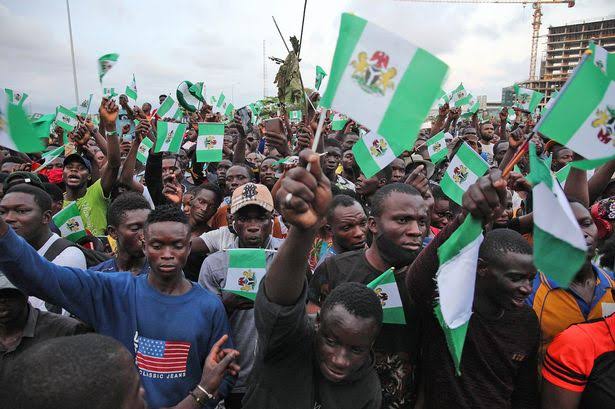
As I wrote this article from my point of view on leadership, or what leadership is all about, we already know that leadership is a collective responsibility, not a one-person business. Some may think leadership is only one person’s business or responsibility, that’s the one people elected or chosen to be in the mantle of leadership.
A leader is a servant of the people, meaning that leaders serve the interests and affairs of the state, not their personal interests. Some people think that if a leader is done with some developmental projects or programmes, my fellow youth and citizens think that the government or the leader is privileged; they forget that anything the government has done is our right, not a privilege.
In these points, I would like to call our attention to what values and self-leadership are. Let us take a look at what values are: beliefs and principles that guide someone on how they think, how they act, how they treat others, and how they make decisions.
Values enable leaders to earn respect and trust, make the right decisions, stay consistent under pressure, and lead without fear.
My question is whether there are some core values that we all have, these are: Accountability, commitment, discipline, fearlessness, integrity, respect for others, tolerance, hardworking and timeless.
Please, are you accountable, committed, disciplined, hardworking, and respectful of others? I just selected five of the nine to see whether any of us are practising the core values.
Let us take a look at self-leadership, a process of intentional self-influence that fosters motivation, direction, and continuous personal growth. It’s taking ownership of your thoughts, actions, and development without waiting for external directions. Why I say self-leadership matters as a young person: it allows you to build confidence, enhances autonomy, increases adaptability, and sharpens decision-making.
Are we all practising self-leadership? Please, if we are not, let us start not tomorrow or later, the time is ticking, we should start now.
We should start taking care of our little problems, because leadership starts from our home, school, office, and even up to where you think the so-called leaders are based. Because change starts with you, not others, if we do not change ourselves, we can’t have the leaders we aspire to.
And lastly, who are those leaders? Their people, like me, you, and us, are from the society and community; they’re like you, so if we don’t change our values and practice self-leadership. We should start making nonsense all over social media or at gatherings because we’re the ones producing the leaders we have.
Please let us look at these core values and reflect on some of them. Thank you
K.H.M Haladu Muhammad wrote from Maru LG, Zamfara State.
US Secretary of War Hegseth Accused of Bias, Racism After Removing Four Black, Female Officers From Promotion List
By Sabiu Abdullahi
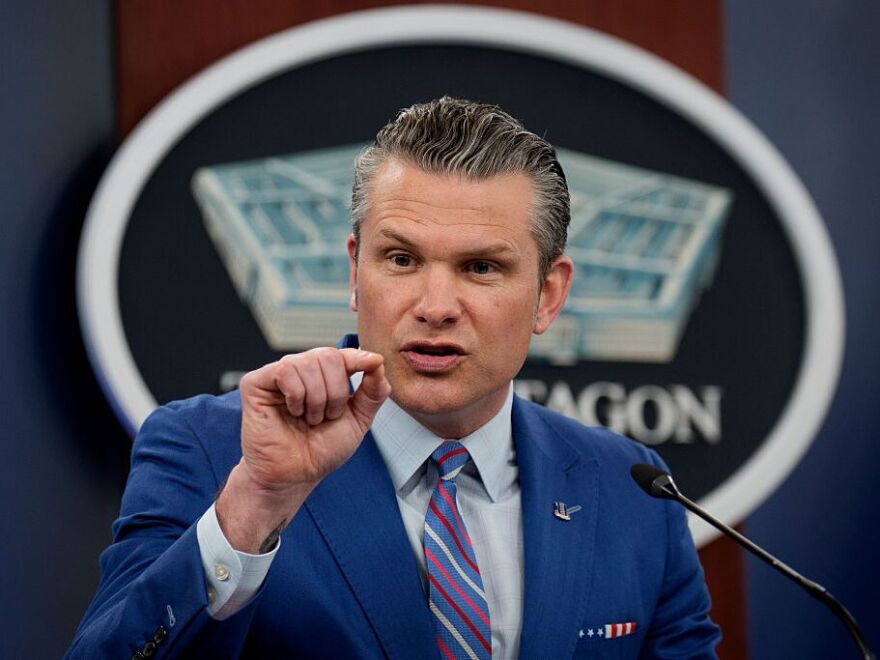
United States Defense Secretary Pete Hegseth has taken the unusual step of blocking the promotion of four Army officers to the rank of one-star general, a move that has drawn concern among senior military officials.
According to officials familiar with the development, two of the affected officers are Black, while the other two are women.
According to a report by The New York Times, the names were removed from a promotion list that includes about three dozen officers, most of whom are white men.
Sources said Hegseth had, for months, urged top Army leaders, including Army Secretary Daniel P. Driscoll, to drop the officers from the list. Driscoll reportedly declined on several occasions, citing the officers’ long-standing records of distinguished service.
The situation changed earlier this month when Hegseth acted on his own to strike the names from the list. It remains unclear whether he has the legal authority to make such a decision.
The list is now under review at the White House and is expected to be forwarded to the Senate for final approval. Officials noted that some Black and female officers are still included.
The decision has attracted rare attention at this level, as promotion lists for one-star generals do not usually face this degree of intervention from a defense secretary. The development has also highlighted divisions within the military leadership.
Hegseth has defended his broader stance on military reforms. He has argued that he is working to overhaul a system he believes was shaped by “foolish,” “reckless” and “woke” leaders from previous administrations.
However, critics have raised concerns that his actions, particularly toward minority and female officers, could undermine trust in a promotion process that is expected to remain neutral and based on merit.
IGP Disu Decorates Jimoh Moshood As AIG, Praises Lagos Policing Record
By Sabiu Abdullahi
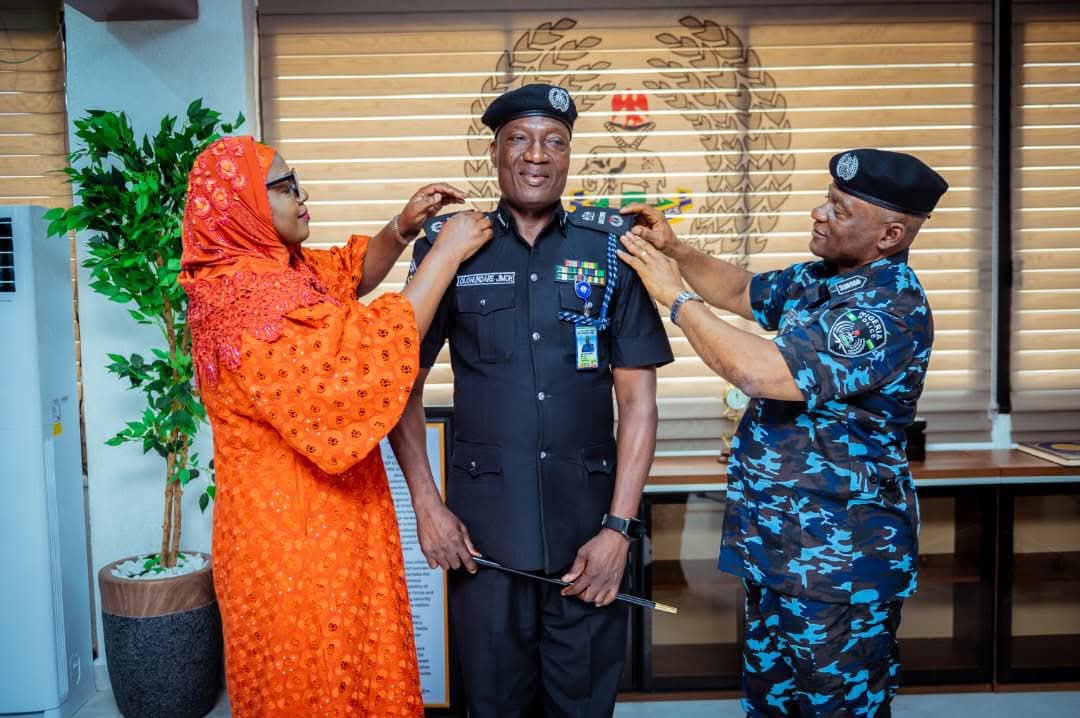
Inspector-General of Police, Olatunji Disu, on Friday formally decorated Moshood Jimoh with the rank of Assistant Inspector-General of Police (AIG) at the Force Headquarters in Abuja.
During the ceremony, the IGP said the elevation was merited. He pointed to Jimoh’s track record of disciplined leadership and clear operational achievements, especially during his time in Lagos, as reasons for the promotion.
Disu also called on the senior officer to apply his experience and professionalism to enhance policing efforts across the country.
“Your promotion reflects the confidence of the leadership of the Nigeria Police Force in your capacity to deliver,” the IGP said, urging the senior officer to sustain his commitment to service, integrity and strategic policing.
Jimoh is among several senior officers recently elevated to the rank of AIG and assigned to different zones and departments within the Nigeria Police Force.
Before his promotion, he served as Commissioner of Police in Lagos. He is now set to take charge of Zone 2, Lagos, in his new capacity.
Iran Players Honour Schoolgirls Killed By US/Israel Airstrike Before Friendly With Nigeria
By Sabiu Abdullahi
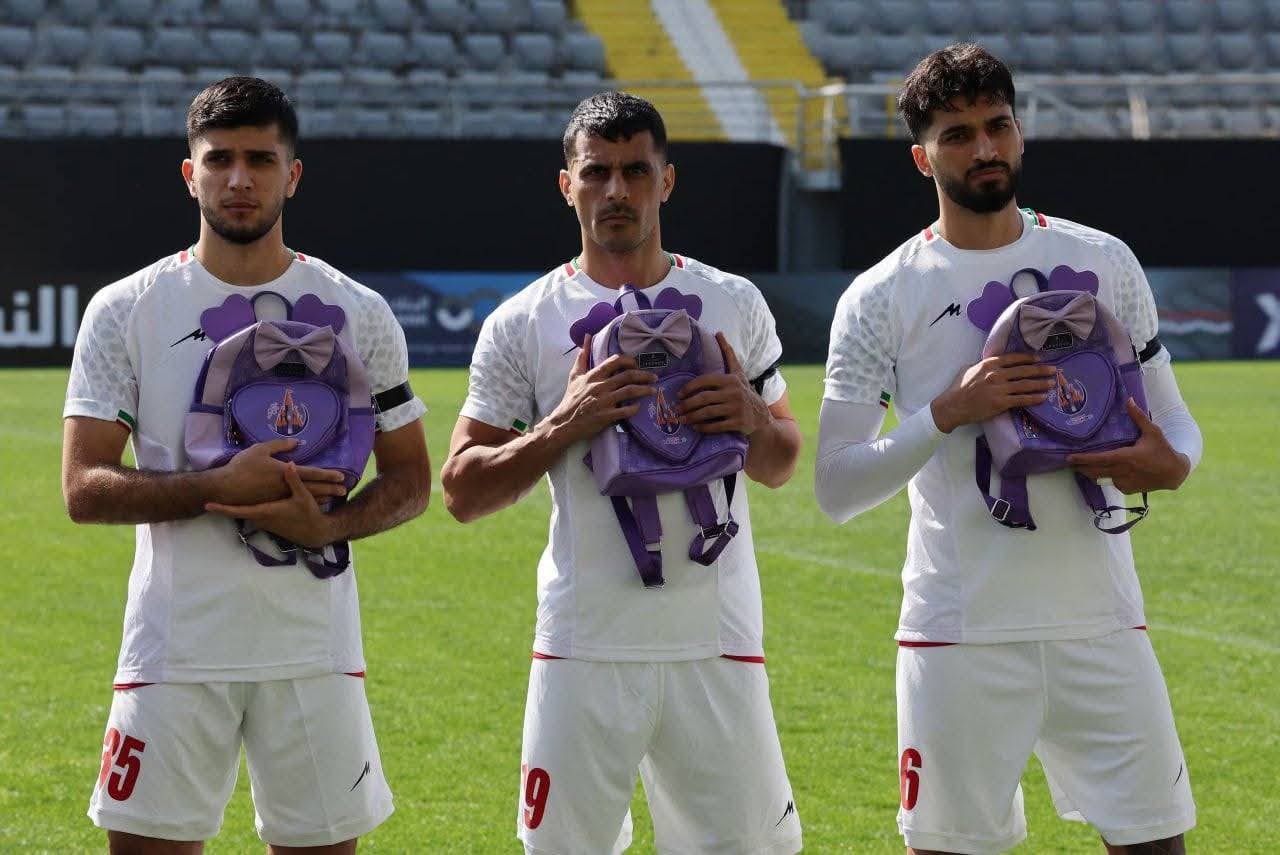
Members of Iran’s national football team staged a solemn tribute to schoolgirls who lost their lives in an airstrike amid the country’s ongoing conflict with the United States and Israel.
The gesture took place on Friday before an international friendly match against Nigeria at the Mardan Titanic Sports Complex in Antalya. Iranian players entered the pitch carrying school bags to symbolise the children killed in the attack.
The tribute followed a deadly incident on February 28, when a US/Israel missile struck Shajareh Tayyebeh Primary School in Minab, located in Hormozgan province. Authorities in Tehran reported that more than 175 people, including pupils and teachers, died in the bombing.
The attack marked the start of a broader conflict that has since claimed over 2,000 lives. The situation also forced Iran to pull out of the upcoming FIFA World Cup, which is scheduled to be hosted by the United States, Mexico and Canada.
In the match itself, Nigeria’s Super Eagles secured a 2-1 victory over Iran. Moses Simon and Akor Adams scored the goals for Nigeria.
Nigeria is expected to face Jordan in its next game on Tuesday. Iran will take on Costa Rica in its final fixture of the international window.
El-Rufai’s Son Announces Father’s Release From Detention
By Sabiu Abdullahi
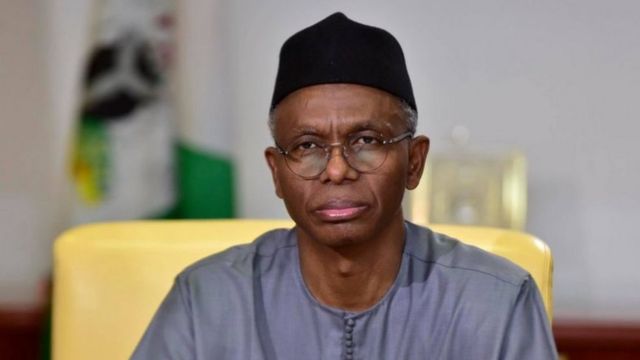
Bashir El-Rufai has announced that his father, former Kaduna State governor Nasir El-Rufai, has been released from detention, a development that has again drawn attention to the former governor’s strained relationship with the current administration.
In a post shared on his verified X account, Bashir wrote, “Alhamdulillah,” before alleging that his father “is being released from his unlawful & illegal detention at the hands of one of the most corrupt agencies in the Federal Republic of Nigeria that is a lame excuse of a pathetic institution.”
He added, “Thank you all for all the support. Our family shall never forget these times. We have overcome, as the El-Rufai’s always do.”
Background to the Detention
Details surrounding the detention were around alleged tapping of NSA Ribadu’s phone calls, as no official statement has been issued by the agency allegedly involved. However, the incident comes amid a period of political tension involving the former governor.
Nasir El-Rufai, a key former figure in the ruling All Progressives Congress (APC) and an early supporter of President Bola Ahmed Tinubu, saw his relationship with the administration deteriorate after the 2023 general elections.
His ministerial nomination by President Tinubu was withheld by the Senate, which cited security concerns. The decision marked a turning point in his standing within the ruling party and sparked speculation of internal disagreements.
Fallout With the Tinubu Administration
Since then, El-Rufai has made several public comments that analysts interpret as critical of the government. He has spoken about governance challenges and internal party dynamics, fueling perceptions of a rift between him and key figures in the administration.
While he has directly declared opposition to President Tinubu, his absence from the current government and his occasional remarks have kept him at the center of political discussions.
Observers say the reported detention and subsequent release may further deepen debates about political alignments within and outside the APC, especially as the country approaches another electoral cycle.
As of the time of filing this report, neither the Federal Government nor relevant authorities have provided clarification on the circumstances of the detention or confirmed the claims made by Bashir El-Rufai.
Outrage As DSS Detains Taraba Pastor For Weeks Without Charges
Tension is rising in Taraba State following the prolonged detention of a cleric of the Global Methodist Church, Reverend Beziel, who was reportedly arrested by operatives of the Department of State Services (DSS).
Sources within the church said the cleric was taken from his residence in the early hours of February 22, 2026. The arrest reportedly occurred around 2am under conditions described as “shocking and unlawful.”
Concern has continued to grow among church members and residents over the development, especially as no official explanation has been given for the arrest.
According to a report by a Nigerian online newspaper SaharaReporters, a church member, Ruhania Idris, expressed worry over the situation. He stated that efforts to secure the pastor’s release have not been successful.
“Our pastor, Reverend Beziel, was taken from his home in the dead of night by DSS operatives without prior notice or explanation. Since then, he has been held for weeks without any clear charges brought against him,” Idris said.
He also alleged that a payment was made in an attempt to facilitate the cleric’s freedom, but the situation remains unchanged.
“We were made to believe that paying N15 million would secure his freedom, but even after raising and paying the money, he is still in detention. This has left us confused, distressed and feeling completely helpless,” he added.
Idris further revealed that the pastor is no longer in DSS custody. He said the cleric has been moved to a correctional facility in Jalingo, the Taraba State capital. He noted that the transfer has raised fresh concerns about due process.
“He is no longer even in DSS custody; he has been moved to the correctional centre in Jalingo, yet no one has told us what offence he committed. We are in the dark,” Idris said.
The situation has become more troubling after claims that a top state government official distanced the administration from the matter.
“The Secretary to the State Government allegedly told us plainly that he does not know anyone who can facilitate the pastor’s release. That statement has deepened our fears that justice may not be served,” Idris stated.
The development has triggered reactions from religious groups and residents. Many are demanding transparency and accountability from the authorities. They are also calling for clarity on the legal basis of the arrest and continued detention.
Family members and church leaders have appealed to civil society organisations, human rights advocates, and the public to intervene. They want either the immediate release of Reverend Beziel or his appearance in court without further delay.
NSA Nuhu Ribadu Offers Condolences To El-Rufai Over Mother’s Death
By Sabiu Abdullahi
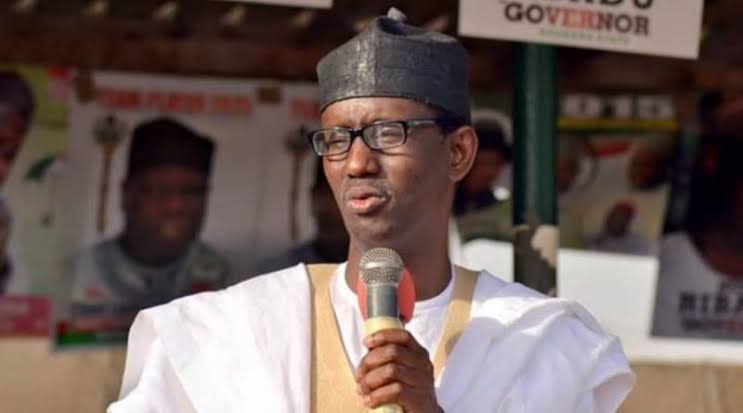
Nigeria’s National Security Adviser, Nuhu Ribadu, has expressed sadness and extended his condolences to former Kaduna State Governor, Nasir El-Rufai, following the death of his mother, Hajiya Umma El-Rufai.
Ribadu made this known in a message shared on his Facebook page, where he said:
“Inna lilLahi wa inna illahir raji’un
I am deeply saddened to learn of the passing of Hajiya Umma El-Rufai, the matriarch of the El-Rufai family. I have fond memories of shared moments with her and her motherly care. At a time like this, words can offer little comfort for such a profound loss. My heartfelt condolences to Mallam Nasir El-Rufai and the entire family. May Almighty Allah forgive her shortcomings, grant her eternal rest in Aljannah Firdaus, and give the family the strength to bear this loss.”
Reports confirm that Hajiya Umma El-Rufai passed away on Friday, March 27, 2026, a development that has thrown her family and associates into mourning.
Ribadu’s condolence message has drawn attention, especially amid perceived political differences between the two prominent figures.
Meanwhile, many Nigerians have continued to send in messages of sympathy and prayers, asking Allah to forgive her and grant her eternal rest.
Kano Deputy Governor Resigns Amid Impeachment Move
By Uzair Adam
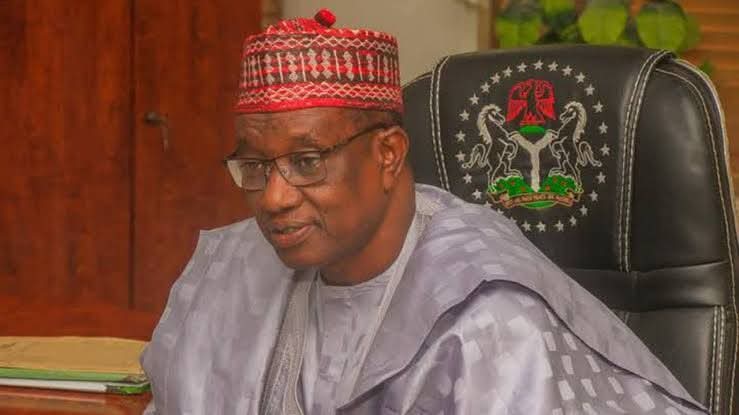
The Deputy Governor of Kano State, Comrade Aminu Abdussalam, has resigned from office following recent political developments in the state.
His resignation was announced on Friday in a statement issued by the spokesperson of the Kwankwasiyya Movement, Dr. Habibu Sale Mohammed.
The development comes after the Kano State House of Assembly initiated impeachment proceedings against Abdussalam earlier in the week.
In a related development, a Federal High Court sitting in Kano on Wednesday dismissed an application filed by the deputy governor seeking to stop the impeachment process.
According to the statement, the Kwankwasiyya Movement formally informed the public, the people of Kano State, and the nation about Abdussalam’s decision to step down from his position.
It explained that the resignation, although difficult, was taken in the interest of the people and to ensure stability in the governance of the state.
The statement noted that recent circumstances had limited the deputy governor’s ability to fully discharge the duties and responsibilities attached to his office, making it necessary to allow the position to function effectively for the benefit of the public.
It, however, stressed that the decision to resign should not be interpreted as an admission of the allegations levelled against him by the Kano State House of Assembly.
According to the movement, Abdussalam maintains his innocence and believes that his record in office and public service reflects his integrity and commitment to the people.
The statement further described the resignation as an act of statesmanship intended to preserve peace and prevent political tension that could affect governance and development in the state.
It added that Abdussalam would now focus on strengthening the Kwankwasiyya Movement, particularly by consolidating its structures and strategies ahead of the 2027 general elections.
The movement also urged its supporters and residents of Kano State to remain calm, law-abiding, and committed to democratic values while assuring that further details would be communicated in due course.
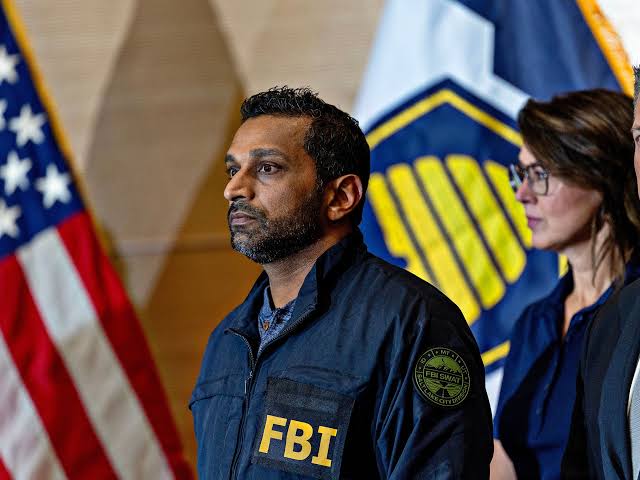
Iran-Linked Hackers Breach FBI Director’s Email, Leak Personal Data
An Iran-linked hacking group has claimed responsibility for breaking into the personal email account of Kash Patel, the director of the Federal Bureau of Investigation, sparking fresh concerns about cybersecurity risks involving top United States officials.
The group, identified as Handala Hack Team, announced the breach online and released what it described as emails, documents and personal photographs obtained from Patel’s private account.
Authorities in the United States have confirmed the incident. Early assessments indicate that some of the materials circulating online are genuine.
A Justice Department official, who spoke on condition of anonymity, said, “We are aware of the incident involving the FBI director’s personal email account. Appropriate steps have been taken to secure affected systems and assess the scope of the breach.”
Security analysts monitoring the group say Handala Hack Team operates as a proxy linked to Iranian cyber interests. Such networks often function independently on the surface, but their activities tend to align with state objectives.
The hackers claimed that the breach uncovered emails spanning nearly a decade, from around 2010 to 2019. They also released images that appear to show Patel in informal personal situations.
There is no evidence at this stage that classified government systems were accessed. Experts, however, warn that personal accounts can still offer useful intelligence to attackers.
The group suggested the operation was carried out in retaliation for recent actions taken by the United States against infrastructure associated with Iranian cyber operations.
The development comes at a time of rising cyber tensions between Iran and the United States. Both countries have repeatedly accused each other of carrying out cyber attacks in recent years.
Despite the breach, officials insist there is no indication that FBI networks or classified systems have been compromised. Investigations into the incident are ongoing, while internal reviews continue within the bureau.
Cybersecurity experts say the episode highlights the growing threat posed by digital attacks, even on high-ranking officials, and the need for stronger protection of personal and official data.