By Sabiu Abdullahi
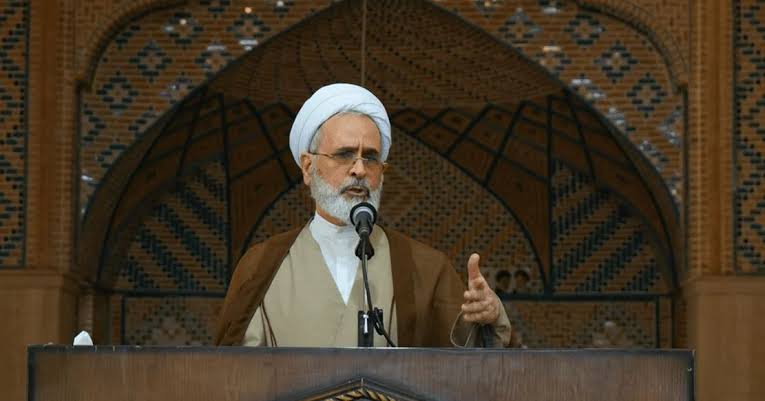
Iran’s newly declared Supreme Leader, Alireza Arafa, has threatened retaliation against the United States and Israel after Tehran accused both countries of carrying out military attacks on its territory.
In a statement released on Tuesday morning across several social media platforms, Arafa said diplomatic efforts had come to an end. He accused Washington of crossing a “red line.”
“The time for negotiations is over. The United States has chosen to cross the red line, the line of irreparable harm,” he said.
“By launching this war, they have signed their own death warrant: they don’t know when or how the axe will fall, but we hold the reins.”
His remarks followed reports of coordinated airstrikes by US and Israeli forces on Iranian military sites and key infrastructure. The operation marked a sharp deterioration in relations among Tehran, Washington and Tel Aviv.
Tensions between the countries have grown in recent months over Iran’s missile programme, its regional activities and allegations linked to nuclear development. The United States has repeatedly accused Iran of supporting armed groups in the Middle East and fuelling instability in the region. Iranian officials have denied those allegations.
Tehran described the recent strikes as “unprovoked.” Authorities insisted that Iran did not initiate hostilities.
Arafa rejected Western claims that the attacks were preventive steps against a nuclear threat.
“They brandish the nuclear specter like a scarecrow, blinded by their arrogance,” he said.
“They have no idea of the true extent of our power or what we are prepared to unleash.”
He directed some of his strongest remarks at Israel and warned of continued retaliation.
“As for Israel, its fate is sealed. Every strike, every crime, every act of suffering they have inflicted will come back to haunt them,” Arafa declared.
“They will remain in our sights, exposed, vulnerable, hunted.”
The exchange of threats has heightened concerns about a wider regional conflict. Armed groups aligned with Tehran in Lebanon, Syria, Iraq and Yemen could become involved if hostilities expand.
Security analysts say a prolonged confrontation could disrupt global energy supplies and deepen sectarian divisions across the Middle East.
In his concluding remarks, Arafa described the crisis as a defining struggle for Iran.
“We walk in the shadow of the Leader, and every step is a lightning bolt,” he said, before ending with the slogan: “Iran does not bend. Iran wins. Always.”
As tensions rise and military activities continue, international actors face growing calls to intervene and prevent a broader conflict that could reshape the region for years.