By Ibrahym A. El-Caleel
First, I am neither a propagandist nor an apologist of any of the personalities mentioned in this article. I am a Nigerian with keen interest in the Nigeria project.
Gov Nasir El-Rufai is many things. I used to say Governor Hajjaj bn Yusuf Al-Thaqafiy of the Umayyad Dynasty and Governor Nasir El-Rufai of Kaduna State share some leadership traits. Both of them are efficient leaders who lead with uncommon pragmatism. They set and achieve their goals not minding whose ox is gored in the process. They made stellar achievements that haven’t been recorded by their predecessors. Both Hajjaj and El-Rufai are vicious in handling political rivalry. They fight it with mightiness, or what Robert Greene would say; crush your enemy totally. Juxtapose everything that Hajjaj did in Iraq with El-Rufai’s lockdown during Covid; mass sackings or what he calls right-sizing; demolition of houses. How El-Rufai demolished the house of his political rival and a serving senator, Suleiman Othman Hunkuyi is an example of how extreme he can handle political rivalry. So this is a man who you should ordinarily avoid when selecting a wrestling mate in the political ring. But somehow, the Kaduna Christian South establishment seemed not to have studied the personality close enough.
Their melodrama was so graphical that they presented the region as a sworn political opposition to El-Rufai. From 2015-2019, El-Rufai’s deputy, the Late Arc Barnabas Bala Bantex was from that region and a Christian himself. They have been friends from their university days and worked amicably as leaders of Kaduna State. El-Rufai would travel and give Bantex the acting governor capacity. But that hasn’t fetch El-Rufai any political capital from the region where his deputy hails from. In 2019, Bantex decided to contest for a senatorial seat in the same Kaduna Christian South but he failed the election. Thanks or no thanks to his dining with a man whose politics they are not in good terms with. On his part, El-Rufai felt he has nothing to gain politically from a people who abhor his politics. So, he decided to pick a Muslim running mate from the minority in that region. He was willing to test the depth of the river with both feet. He must be a daring researcher to experiment a Muslim-Muslim ticket in Kaduna State. No one has tried it since the return of democracy in 1999. He took the calculated risk and it eventually worked. Today, anyone can try it knowing that it flies to victory.
Kaduna State looks like Plateau State from the demographics. El-Rufai must have borrowed the template from neighbouring Plateau State, which despite having a significant Muslim population, have always fielded a Christian-Christian ticket which has always succeeded. It has never been a Christian-Muslim ticket in Plateau. We underestimate these politicians, but they are cunning. We waste so much time insulting and criticising them, while they study us carefully. Bravo to them. In this article, let’s review how they successfully study and beat the intellect of the proletariat. When did the choice of a running mate began to matter?
Five Nigerian heads of state have died while in office. Three were killed in bloody coups, while only two died from natural causes to pass the leadership mantle to their deputies. Few civilian governors died in office to give way to their deputies. In conclusion, most elected leaders complete their tenure. However, there is a developing appetite to discuss the possible death of a president or governor. The main aim is to develop some vibrancy around the offices of Deputy Governor and Vice President; to show that it matters.
These two ”assisting” offices are largely inert. When you occupy either of them, then literally, the only freedom you have is the freedom to choose the type of tea you drink in your office. The president/governor is the man who calls the shots. You don’t get to do much “to your people” unless Oga gives you the go ahead. You will be visibly absent in the news. Indigenes of your village will unconsciously forget that they have their brother in government. I explained this better in the long Hausa article I wrote in defence of VP Atiku who is constantly fired that he hasn’t done anything for the north.
If you ask my view, I would say the Vice President and Deputy Governor positions are ceremonial. Unless you have a boss like President Buhari who will gladly give you the “Acting President” for two months to show your muscle; or you have a boss like Gov El-Rufai who will give you “Acting Governor” position to swing the armchair for 3 weeks. Many ogas never give their deputies any chance to do something tangible. If a deputy is quite ambitious, then his Oga’s men (aka cabal) will easily notice it. They will set him at loggerheads with Oga. He is eyeing your seat! This is how Ogas and their deputies usually start their fight. Go and verify!
How was VP Goodluck Jonathan faring under President Yar’Adua? Was he doing anything spectacular in his native Niger-Delta region? Was Deputy Governor Ramalan Yero even in the mass media while Gov Patrick Yakowa was calling the shots in Kaduna? Deputies are not even visible, talk less of executing anything so serious. VP Yemi Osinbajo is only lucky that President Buhari is a nice Oga. Yemi Osinbajo could even use his ad-hoc “Acting President” muscle to dismiss DG SSS, Lawal Daura. He was given the opportunity as an Acting President to swear-in Justice Walter Onnoghen as Chief Justice of Nigeria after Buhari kept the judge in an acting capacity. Buhari is a soft and simple Oga. No Nigerian Vice President in the last 24 years enjoyed this opportunity and audacity. It was on this basis that I made my case saying VP Atiku was being unfairly flogged over something that was beyond his control. In his case, he was not just ambitious, he was fighting with Oga’s third term agenda. How could Oga give him any breathing space to look politically relevant in his region?
Anyway, back to my main discussion:
Today, these deputy posts have only become a discussion topic because politicians are playing to the gullibility of the fairly-conscious electorate. Religion is serious and appeals to the sensibilities of the average electorate. In a state like Plateau with a very large number of Muslim population, it has always been a Christian-Christian leadership. Currently in Kaduna, APC is hosting a Muslim-Muslim ticket, while PDP is hosting a Muslim-Christian ticket. In Plateau State, both APC and PDP are hosting Christian-Christian tickets. The same faith ticket in Plateau has become a culture in such a way that no one is even talking against it any more. Any major political party that dares host a Muslim deputy governor in Plateau State is already wearing a political disadvantage. Ditto Taraba and Benue States.
El-Rufai and Kaduna APC have understood that a Muslim-Muslim ticket in Kaduna appeals to the majority of the voters in the state as well. It worked perfectly in 2019, this is why the template is re-applied in 2023. The only reason why the success is not guaranteed this time around is because of El-Rufai’s excesses in mass layoffs, demolitions, prolonged lockdown of the major cities and markets during the pandemic and other anti-proletariat actions. This is why some voters are thinking they need to punish El-Rufai by not voting his anointed candidate in the APC. But religion is something we place above everything. When the average voter remembers the Plateau and Taraba scenarios, his mind will draw him closer to vote for the Muslim-Muslim ticket in favour of the APC. Especially since this time around, El-Rufai is not the face on the ticket. Uba Sani is largely seen as generous and will not be as socioeconomically toxic as his friend. This is why Uba Sani has better chances of coasting to victory than Isah Ashiru.
If the APC makes it to the Kashim Ibrahim House another time, then the PDP might have no choice than to also start adopting a Muslim-Muslim ticket effective 2027. I told you that both APC and PDP are fielding Christian-Christian tickets in neighbouring Plateau State. No political party exists to appeal to your personal religious sentiments. What maters to every political party is to win elections by virtue of what majority of the electorate are okay with. This is why it was laughable watching some Islamic scholars on their pulpits explaining how the Tinubu-Shettima ticket is the next best thing to Islam since Salahuddeen Al-Ayyubiy. It is all politics!
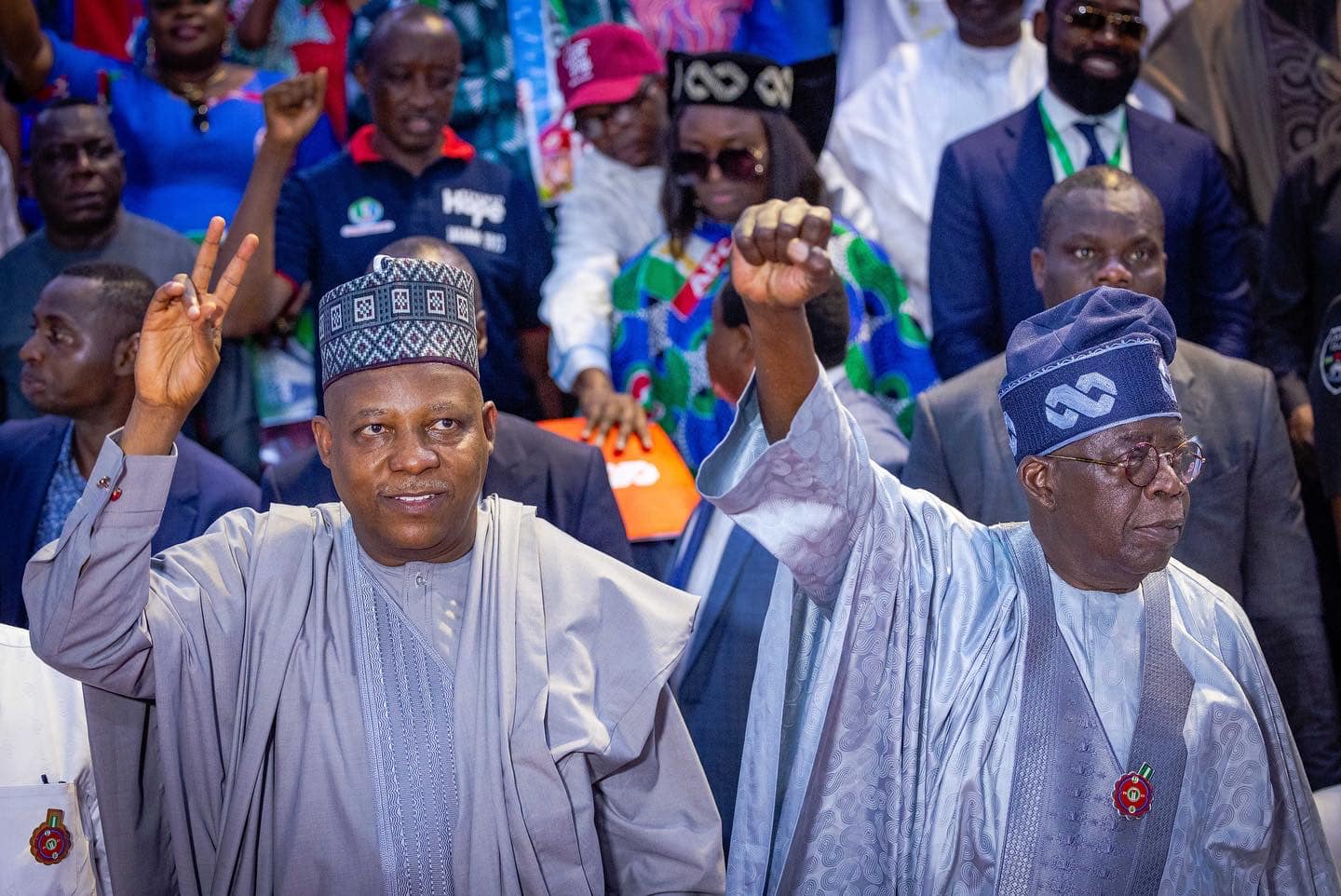
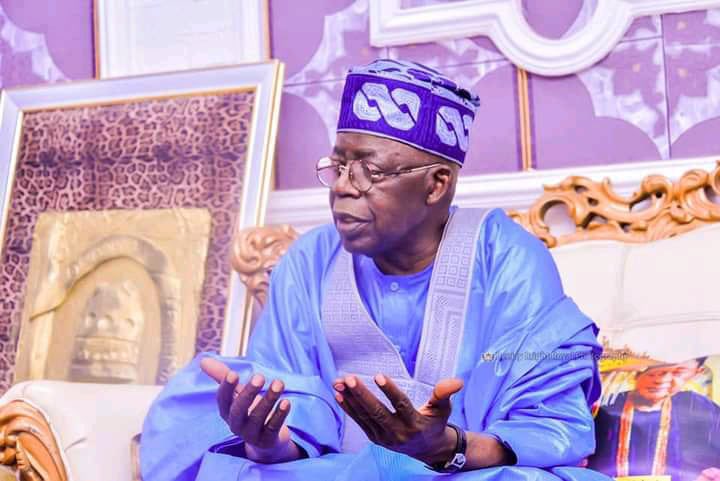
Tinubu is a veteran politician. He knows that picking a northern Christian means he wants the PDP to defeat him as early as 8:00 am on the election day. In your right senses, do you think Tinubu believes that Yakubu Dogara or Babachir Lawal as Christian northerner will earn him the huge political capital laden in the populous Muslim North? It is said that Yoruba Muslims are a minority when you look at the entire population of Southern Nigerian. So Tinubu emerged from the so-called minority there, then he will come to the north and pick a running mate from the Christian minority again? Two minorities on a ticket? Isn’t that a recipe for defeat? This was why he picked Shettima; to tap into the political capital in the Muslim North. Not because he will launch Shari’a in Abuja. If he was that type, he wouldn’t be confidently telling you his wife is Christian. Expectedly, the average Nigerian christian electorate ran away from that ticket as if it was sponsored by ISIS; while the average Nigerian muslim electorate welcomed it as if it was formed by Shehu Usman Danfodio 200 years ago. But it was all politics! Apologies to Simon Kolawole. Tells you that Asiwaju Bola Tinubu knows his onions. A long time ago, even Chief Olusegun Obasanjo has testified that Tinubu is a great politician.
The same faith ticket will still be a key discussion in the 2027 polls especially if Tinubu is able to get it correctly on either security or economy, or both. These two issues are the main troubles affecting the north at this time. Even if he fails every other thing, but gets these two correctly, then the north will still be so passionate about the Muslim-Muslim ticket again. The average northern electorate will only have second thoughts if he sees the same Buhari poor scorecard is what Tinubu is generating. This is when the opposition parties can have a space to gain some votes, just like we are seeing in Kaduna. Uba Sani’s strongest opponent is not Isah Ashiru. It is Gov Nasir El-Rufai. Had people not felt that El-Rufai mercilessly dealth with them, then Isah Ashiru would have been a walk over for Uba Sani. The mere mention of Muslim-Muslim ticket will command a huge voter turnout, and Uba Sani would not have so much to worry about. Especially since Uba Sani appears to be more qualified and ready for the job than Isah Ashiru.
Same-faith tickets give very little room to discuss what matters in a nation like ours. No time to discuss quality of the candidates and what they have to offer for our myriad of problems. In 2023, Nigeria that used to be richer than Singapore does not have a stable electricity; her universities could be closed for a whole academic session because of striking lecturers; her doctors are leaving its underfunded health sector. Many pressing issues. But politicians are using religion to take away the minds of the suffering electorate from all these pressing needs.
It shall be well, someday!
Ibrahiym A. El-Caleel writes from Zaria, and is reachable via caleel2009@gmail.com