Religion

On the Kano Coalition of Ulamas’ giant efforts in promoting sanity and peace in the state

By Salihi Adamu Takai

Kano State Coalition of Ulama comprises the great Islamic clerics of Kano from different sects to promote sanity and peace. The coalition is headed by Sheikh Abdulwahab Abdullah (Imam Ahlussunnah). The clerics, who grouped themselves in the religious effort of making the work of Almighty Allah effective in the state, are very important scholars of impeccable characters.

Kano State happens to be the ancient city in the northern part of Nigeria that is very popular for its religiosity. It is one of the first states in Africa to receive the light of Islam. Many scholars have revealed that Islam was received in the state through Wangarawa and Arab merchants.

The spread of the Islamic religion in the state has made it a very religious city—and the religious aspect has become very sensitive in the state. After some years of the spread of the Islamic religion in the city, there has been the existence of Sufism and other sects of beliefs.

The Islamic reformers played very vital roles in sanitizing the aspects of the religion. They focused vehemently on the teachings. They gave more emphasis to the seeking of knowledge of Islam. This aided the reformation in the religious activities of the State.

The spread of Sunnah came and knocked on every door. The objective of the Kano State Coalition of Ulama is to reform religious teachings to accommodate morality. Despite people having embraced religious knowledge and Western education, there is also a need to reform teaching activities and their adoption.

Sometimes, people have the knowledge, but they need to be guided on how to apply it to their teaching and learning. So, the reformation needs a coalition for its success. It is for the Muslims.

The Coalition of the Ulamas has been intervening in matters of religion. They are very keen on promoting sanity in religious activities. They call for peace—and peace signifies the best way of depicting Islam.

To also achieve the aim of their activities, they refer to themselves as the Coalition of Ulama of Kano. This means they comprise different Ulamas from different sects; from Izala, Qadiriyya, and Tijjaniyya.

The Coalition could also be the source of understanding one’s teachings amongst the Ulamas. The Tijjaniyya Clerics in the Coalition could understand some aspects from those Sunni Scholars.

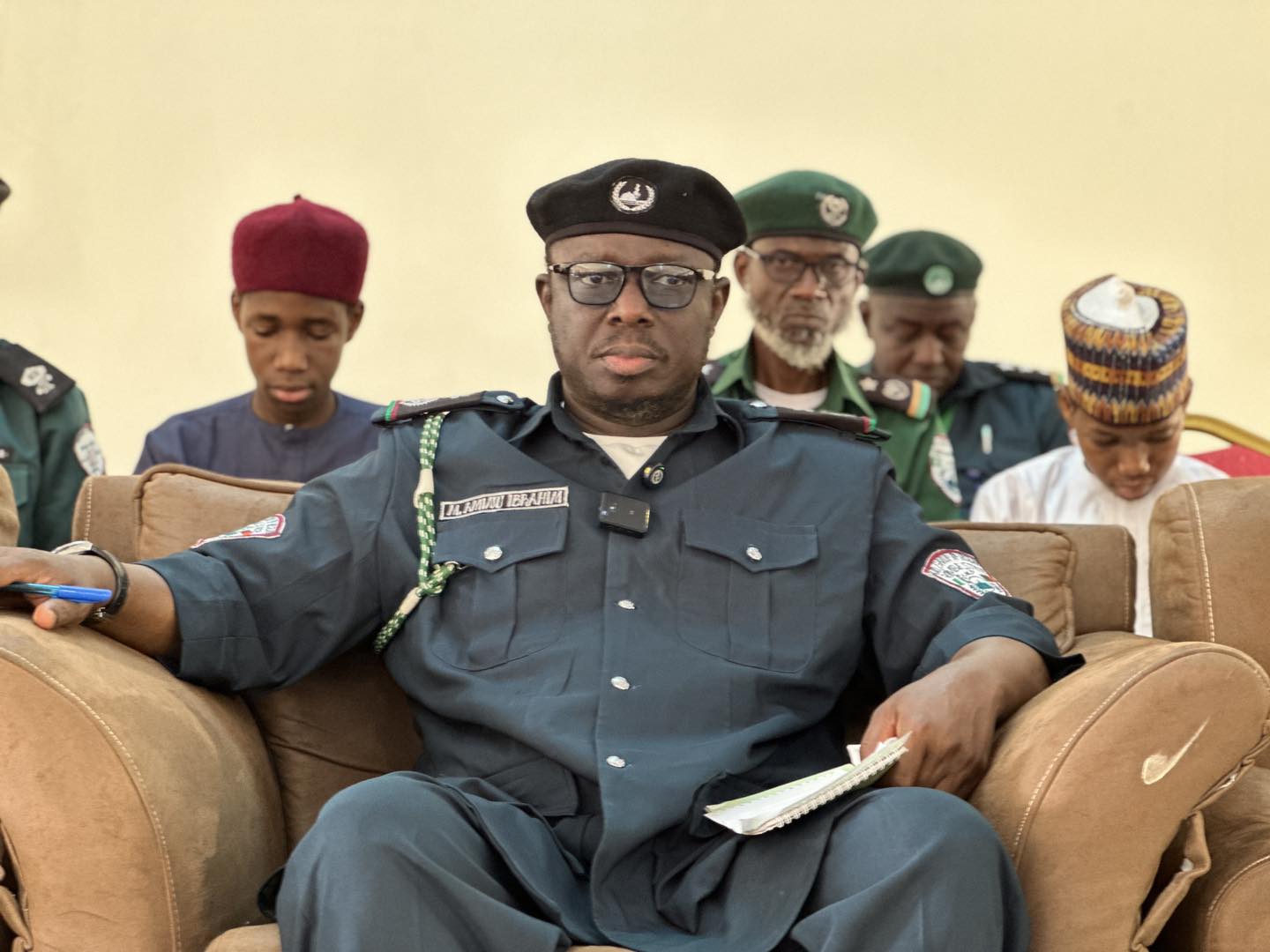
Moreover, the Coalition led by Sheikh Abdulwahab Abdullah reconciled Sheikh Aminu Daurawa with Governor Abba Kabir Yusuf following their misunderstanding about the conduct of the Hisbah corps. Today, Daurawa has resumed his position as the Hisbah Commandant. This is one of the thousands of achievements of the Coalition. They intervene in every matter that affects the public.

May Almighty Allah continue to support the Coalition in achieving their goals, and may He reward them, amin.

Salihi Adamu Takai wrote via salihiadamu8888@gmail.com.

Malam Daurawa’s exit and return

By Abdurrazak Muktar Makarfi

The recent departure of Malam Aminu Ibrahim Daurawa from his role as the commandant of the Kano State Hisbah Board left many people reflecting on the complexities of human relationships and the power of forgiveness. However, what followed was a heartwarming tale of redemption and reconciliation that touched the hearts of all who witnessed it.

Malam Daurawa’s decision to step down initially came as a surprise to the community. Known for his unwavering dedication to upholding justice and righteousness, his absence was keenly felt. Yet, amidst the uncertainty, a beacon of hope emerged in the form of a coalition of Kano Ulamas, who saw beyond the surface and recognised the genuine intentions of both parties involved.

The intervention of the Ulamas was a poignant reminder of the strength of the human spirit and the capacity for forgiveness. In a world often characterised by division and discord, their actions served as a powerful demonstration of the transformative potential of empathy and understanding.

For Malam Daurawa, the journey back to his role within Hizba was a humbling experience. Faced with the opportunity to return, he embraced it with an open heart, guided by the principles of integrity and compassion that had always been the cornerstone of his leadership.

As he resumed his duties, the outpouring of support from the people of Kano was overwhelming. Their unwavering belief in his ability to effect positive change was a source of strength and inspiration, propelling him forward on his mission to create a better future for all.

The bond between Malam Daurawa and the people of Kano and the Kano State governor, Engr. Abba Kabir Yusuf, grew stronger through this experience. Their shared journey of redemption and reconciliation deepened their connection, transcending the boundaries of leadership and community.

Looking ahead, Malam Daurawa’s story reminds us of the enduring values of integrity, compassion, and empathy that bind us together as a community. His journey is a testament to the power of forgiveness to heal wounds and the resilience of the human spirit in overcoming challenges.

Ultimately, Malam Daurawa’s story is not just about leadership or politics – it’s about the triumph of the human spirit and the enduring power of forgiveness to bring us together, even in the most challenging times.

Abdurrazak Muktar Makarfi wrote via prof4true1@gmail.com.

Marabus: Remembering Auwalu Bello Jigirya

By Salisu Shehu 

In Hausa, the word ‘Murabus’ simply means a former or one-time leader. Such a person would either have left the leadership position by duly completing his tenure or removed in some way before finishing the period for his stewardship. Malam Auwalu Bello Jigirya was a one-time Amir of the Muslim Students’ Society of Nigeria (MSSN), Kano State Area Unit (KNSAU) from 1995-2001. 

Since 2001 to date, the word MURABUS has become a daily pronouncement in the MSSN/KNSAU family. It was a respectful and humourous reference to Auwalu Jigirya after he handed over the mantle of Amirship to Malam Ado Garba Yankaji in 2001. MURABUS soon became a household name for Jigriya, and it resonated within the MSSN circle in Kano State. 

Whereas MURABUS means retirement or dethronement, as explained above, it means something different in the case of JIGIRYA. Rather than the ordinary sense of stepping aside, it was for JIGIRYA a metaphor for steadfastness, doggedness, resilience, selflessness, and sacrifice, ornamented by tolerance and forbearance. Instructively, Amirs before and after him held the Amirship and stepped aside, but he was the only one graciously crowned ‘MURABUS’. 

JIGIRYA presented a striking trait rarely found in people. He was a very humble person yet courageous. He would be decorous to those apparently senior to him but would also unrelentingly muster the brevity to advise them when they erred. He always had a demeanour of raw honesty, and frankness imbued with a permanent character of humour and conviviality. 

You would never get bored staying with him. He was, in the KNSAU family, in terms of humour and joy, a natural successor to the late Baba Alhassan Ibrahim Dawanau of blessed memory, who would always play the grandpa, entertaining the brothers and giving some relief that clears away monotony and tension when the situation started getting tough and stressful. To the younger ones, he was a friendly, cheerful, amiable, accessible, and easily approachable mentor. 

Since our adolescence, we grew up together in the Kano State Area Unit for nearly four decades. He was the Amir when I was the Director of Education at Al-Muntada al-Islamy Trust. That was when I started getting to know him at a closer range because Al-Muntada supported the KNSAU MSSN immensely. Not surprisingly, because of his down-t-earth mentoring style, when those younger ones established the ALHASSAN IBRAHIM DAWANAU COLLEGE OF HEALTH SCIENCES AND TECHNOLOGY, Malam Auwalu Jigirya made it to the list of the members of the BOARD OF TRUSTEES of the College. 

We, however, became closest in the last nine (9) years when we worked together in the Islamic Forum of Nigeria. He was a strong pillar in our Local Organising Committee of our Annual Ramadan Lecture and IFTAR RELIEF SCHEME. Not only punctuality and commitment made him a strong pillar of the Committee. It was also because of his dependability and reliability in terms of honesty, trust and probity. He was one person on the committee to whom I would never hesitate to hand over the budget for purchasing food items for the IFTAR RELIEF PACKAGE and would go to sleep. One would not be afraid of failure or fraud. 

As an attestation of Jigirya’s leadership character, the Executive Council of the Islamic Forum unanimously approved his appointment as the Secretary of the Caretaker Committee of the KANO State Chapter when its exco was dissolved nearly two years ago. 

In both the Kano State Area Unit (KNSAU) of the MSSN and the MSSN and the Local Organising Committee of the Annual Ramadan Lecture of the Islamic Forum of Nigeria, we will miss not only the person of Malam Auwalu Bello Jigirya but will seriously miss his loveable characters In all In described In above In. Our greatest solace is that we will have dozens of encomiums on his praiseworthy behaviours with which we will keep consoling ourselves. 

As we keep showering those praises on him, we are sure, as was said by our Beloved Prophet (SAW), we will be “the witnesses of Allah to him on earth”. 

Allahummaghfir lahu warhamhu warhamna ba’adahu wa’anta Khairul ghafireen.

Salisu Shehu, Vice-Chancellor, AL-ISTIQAMA UNIVERSITY, SUMAILA, can be contacted via sshehu.edu@buk.edu.ng.

Kano: Sheikh Daurawa reconciles with Governor Yusuf, resumes work as Hisbah chief

By Muhammad Abdurrahman

Kano State Governor, Abba Kabir Yusuf, has reconciled with the Commander General of the State Hisbah Board, Sheikh Aminu Daurawa, who had resigned his appointment last week.

Daurawa, who resigned from his position through a video that went viral while attending a retreat organized in Kaduna, stated that his decision was influenced by the public’s criticism of the Hisbah operatives and their actions.

Speaking to journalists about the development, the spokesperson to the governor, Sanusi Bature Dawakin Tofa, confirmed the reconciliation on Monday.

Dawakin Tofa said the reconciliation was achieved through the intervention of respected Islamic clerics and a meeting with the governor that lasted for hours.

Some of the people in attendance include Prof. Salisu Shehu, Dr. Saidu Dukawa, Sheikh Abdulwahab Abdallah, among others.

Recitation of the glorious Qur’an

By Salihi Adamu Takai

The recitation of the Glorious Qur’an is beyond anything people can think of or guess how it is limited in terms of positivity. It is everything and beyond. Yes, it is indeed! In addition, the rewards for its recitation are granted based on letters. Each letter recited in a verse is worth 10 rewards, and the rewards multiply.

The recitation of the Glorious Quran is the food that satisfies people to the ultimate satisfaction. It gives satisfaction to those reciting it day and night. While reciting it, the reciter gets satisfaction from it for his/her satisfaction in the thing he/she comes across. Through it, a Muslim can understand the blessings of Allah for all of humanity on Earth. Allah’s creatures were explained. The lives of our ancestors were told; how they lived on Earth before us. This explains the Oneness of the Lord, Almighty Allah.

The recitation of the Glorious Quran makes Muslims live peacefully, and their hearts find peace and composure. The beautiful recitation of the Glorious Quran heals the heart of anger. It does away with agony and temper. The Quran has explained this in Chapter 13, Verse 28: “Indeed, with the remembrance of Allah, hearts find peace.”

When a person starts reciting it, their attention becomes focused on the Almighty Allah and His words. Listening to the words of Allah is the best thing people can do to gain composure, and its recitation gives you everything and draws your heart to Him. You become happy. The world remains peaceful and harmonious for you as you begin reciting it. Therefore, do not stop reciting the Quran. It is the best thing to help you achieve everything on Earth.

Have you been in a dilemma or limbo? If yes, have you recovered? If not, you can recover from any kind of limbo by reciting the Quran. Keep reciting the Quran. It will help you recover and make you happy all the days. If you can’t recite it, listen to it online. There are different recitations of the Quran available online. Go to your Play Store and download it, and keep listening to it offline or online. It is, of course, the best medicine undiscovered by physicians!

Salihi Adamu Takai wrote via salihiadamu8888@gmail.com.

Izalah first aid group member rewarded for returning lost bag containing over N100 million 

By Sabiu Abdullahi 

Salihu AbdulHadi Kankia, a member of the First Aid Group of Jama’atu Izalatil Bid’ah Wa Iqamatus Sunnah (JIBWIS), has been praised and rewarded for his noble act of returning a lost bag containing over N100 million.

The commendation came during the conclusion of a special preaching session in Bauchi, where Engr Mustapha Imam Sitti, the National Director of the First Aid Group, lauded Kankia for his exemplary conduct. 

The Bauchi State branch of JIBWIS took to Facebook to share the heartwarming story, detailing how Kankia discovered the bag and promptly reported it to the authorities.

Upon retrieval, the owner confirmed that nothing was missing from the bag. 

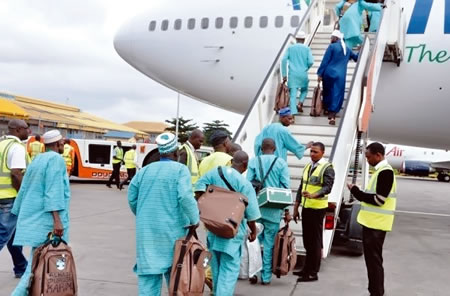
In recognition of his integrity, Kankia was honoured with an award by the Izala group and sponsored for the Hajj pilgrimage this year.

Additionally, he received two million naira from Hon. Abdulmalik Zannan Bangudu and a bus from Governor Bala Abdulkadir Mohammed to kickstart a business venture. 

Kankia’s actions serve as a beacon of honesty and righteousness, inspiring others to uphold similar values in their communities.

His selfless act not only restored faith in humanity but also garnered well-deserved recognition and rewards.

Hisbah saga: governor’s public condemnation, misstep in leadership

By Umar Sani Adamu

The recent public criticism by Governor Abba of the Hisbah board in Kano State has sparked controversy and raised concerns about leadership decorum and responsible governance. While it is crucial for leaders to address concerns and seek improvement within government agencies, the manner in which Governor Abba chose to express his dissatisfaction raises questions about his leadership style and the potential consequences of his actions.

First and foremost, criticizing a government agency publicly, especially one tasked with religious and moral enforcement like the Hisbah board, can create unnecessary tension and undermine public trust in the institution. Governor Abba’s decision to air his grievances in a public forum instead of handling them internally or through diplomatic channels demonstrates a lack of discretion and undermines the credibility of the Hisbah board.

Furthermore, by openly criticizing the Hisbah board, Governor Abba risks exacerbating existing tensions within the community and fueling resentment towards the agency. This could potentially undermine the effectiveness of the Hisbah board in carrying out its duties and could lead to a breakdown of law and order in the state.

Additionally, Governor Abba’s public criticism of the Hisbah board without offering concrete solutions or constructive feedback demonstrates a lack of leadership maturity. Effective leaders understand the importance of providing constructive criticism in a constructive and respectful manner, focusing on solutions rather than simply pointing out problems.

Moreover, Governor Abba’s decision to publicly criticize the Hisbah board instead of engaging in private dialogue with relevant stakeholders, such as Sheikh Mallam Daurawa, further highlights his disregard for diplomatic protocols and his tendency to prioritize personal agendas over the well-being of the community.

Adding the context of Murja Kunya’s situation provides further insight into the potential implications of Governor Abba’s public criticism of the Hisbah board. Murja Kunya, a social media influencer, has been accused by the Hisbah board of encouraging indecency and immorality. In this context, Governor Abba’s public condemnation of the Hisbah board could be interpreted as a form of protection for Murja Kunya.

By publicly criticizing the Hisbah board’s handling of the situation, Governor Abba may be perceived as undermining their authority and potentially shielding individuals like Murja Kunya from accountability. This not only weakens the effectiveness of the Hisbah board in enforcing moral standards within the community but also sends a troubling message about the government’s commitment to upholding moral values and protecting societal norms.

In light of these circumstances, Governor Abba’s public condemnation of the Hisbah board takes on an even greater significance. It not only raises questions about his leadership style and approach to governance but also calls into question his commitment to upholding moral standards and protecting the well-being of the community.

Therefore, it is imperative for Governor Abba to reconsider his approach and prioritize responsible leadership that fosters constructive dialogue and collaboration, while also upholding the values and principles that are essential for the well-being of society as a whole.

Umar Sani Adamu (Kawun Baba) 

Hisbah Arrest: Law and morality

By Aliyu Zangina

The people of Kano State woke up to the news of the resignation of the Commander-General of the Kano State Hisbah Board (Hisbah). This came after criticisms directed at some of the activities of the Hisbah Corps by His Excellency, AbbaKabirYusuf, the governor of the state.

The Hisbah Board is a creation of the Kano State Hisbah Law 2003. Its primary responsibility is to advise on and enforce religious morality within the state. Despite this mandate, the corps has been criticized for violating moral codes and secular laws of the land by making illegal arrests, which are a damning affront to human dignity. It is on this premise that I seek to explore law and morality vis-à-vis the arrest in controversy.

THE INTERSECTION BETWEEEN LAW AND MORALITY

Arguments on the relationship between law and morality in the jurisprudential sense have lasted for ages and still rage on. The controversy surrounding Hisbah brings it to the fore.

Laws are loosely defined as enactments by a state, with binding and coercive force on individuals and institutions throughout the state.

While morality can be loosely defined as a proper behaviour in differentiation of what is right and wrong.

The major difference between them is while a breach of law attracts sanction, A breach of morality can only attract moral reprehension. The long age principle of law is that law and morality are poles apart. However, in the celebrated case of R v. Dudley & Stephens (1884)14 QDB 273 DC it was states that

“Though law and morality are not the same, and many things may be immoral which are not necessarily illegal, yet absolute divorce of law from morality would be of fatal consequence.”

In practice, morality complements the law, as many enactments were propelled by the moral demands of the people. For example, laws prohibiting theft and murder are rooted in the moral consciousness of the fact that taking other people’s property or life is morally wrong. Many laws embody moral principles within them, protecting and guaranteeing fundamental moral values. At the same time, the fundamental force is given by its moral obligation.

ACTIVITIES OF HISBAH

The term Hisbah in Kano has always been associated with controversy from its inception to date. When it is not President Obasanjo accusing the institution of jihadist tendencies, then it is people from the southern part of the country attacking the institution for destroying trucks of alcoholic drinks. The body has always been (in)famous for enforcing morality despite its efforts in curbing social and moral vices.

In November of last year, the Hisbah corps came under attack after raiding several hotels. A video of their operation surfaced on the internet, evidencing male officers harassing and apprehending female suspects and grabbing them in a commando style. Indeed, it was an affront to Islamic moral values. The actions of the Hisbah corps could be qualified as degrading treatment and, hence, unconstitutional. Allusions made to the video by the governor of Kano state prompted the commander-general’s retirement on March 1, 2024.

ARE LAWS REGULATING ARRESTS IN NIGERIA AT CONVERGENCE WITH OUR MORAL VALUES?

Unlike laws regulating search where the search is to be conducted by “persons of the same sex with strict regard to decency” and “reasonable time to withdraw” which must be given to a woman in purdah before a search is conducted on a premise she occupies, the laws regulating arrests in Nigeria have less regards to our moral values and culture as they do not have similar provisions regarding arrests to be conducted by persons of same-sex.

Therefore, the arrest carried out by the Hisbah corps is illegal only to the extent that it was done without a warrant, and their conduct violates the dignity of the suspect. However, the confinement of the female suspects by the male officers with excessive restraint cannot be faulted legally if there was a reasonable apprehension of violence, as our law does not mandate that the arrest of a woman be carried out only by a woman. This is not to serve as a justification for the degrading treatment meted out to suspects by the Hisbah corps during the arrest. They are suspects, not convicts, and even convicts are only deprived of their liberty, not their dignity.

CONCLUSION

“It is tempting to speak of law and morality as if they constitute two completely normative system whose prescriptions sometimes coincide and sometimes conflict. Maybe it is much more exact to consider law and morality as complementary. The complementarity of law and morality belies their separateness even though the two are not parallel streams whose water never mixed at any time.” UZOUKWU V. IDIKA (2022)3NWLR, (PT1818) (P, 462, paras G-H)

Many laws overlap with moral codes in Nigeria. Some laws were enacted to uphold our morality, but where the law does not contemplate our morals, it is our duty to call upon our senses of right and wrong. The Hisbah male officers should not have carried out the arrest of women, even though that alone cannot make the arrest illegal. It is their moral duty to have sent in their female officers to handle the entire scenario with a modicum of professionalism.

It is therefore put forward to our legislators that our Administration of Criminal Justice laws be amended to accommodate the model of arrest that will reflect our morals, culture, and dignity, just like the provisions on search.

Aliyu Zangina is a lawyer, and can be contacted via zanginaaliyu96@gmail.com.

On Shaikh Daurawa’s resignation

By Ibrahiym A. El-Caleel

Resignations are normal in the corporate world. Corporate culture makes employees understand that they work for their bosses, not really the organization per se. Your deliverables are the deliverables of your boss. If you achieve them, he will achieve his. If you fail, he fails. This is why bosses hold employees with high sense of accountability.

As such, employees leave bosses. They don’t really leave organizations. Whenever it goes sour between you and your boss beyond reconciliation, then you look for another job! Take a bow and go. It’s very normal there. That’s what they do. In fact I have met a high performing CEO of one of Nigeria’s beverages companies who told me that he spends a maximum of 5 years in any organization that hires him. And he leaves whenever the ovation is high. Within 15 years of starting his career, he is already an MD/CEO!

It’s only in civil service and public service that people think resignation is a big deal. In corporate world, it’s part of the culture. It is okay for both employee growth and corporate efficiency and effectiveness. An organization does not deserve an employee who is not happy with his job, or who believes his boss is frustrating his job. It impacts corporate performance. You cannot get anything significantly great from an employee who is not motivated to deliver.

Shaikh Daurawa’s resignation from Kano Hisbah is both good for him as an individual, and perhaps Hisbah as an organization. Had he stayed, he will feel tied down by the public condemnation he received yesterday from his boss, Gov Abba Kabir Yusuf. He will not be able to give Kano Hisbah his very best again. He would be an apathetic leader, who no longer cares about how TikTok’s Murja is corrupting the moral upbringing of Kano adolescents. He will now be very doubtful of every single operation he is going to make. What will be the reaction of my boss, Gov Abba? Will he be happy or not? Will he publicly lash me? These questions will always ring a bell in his heart.

Now that he has resigned, he has saved his image and mental peace. It also opens doors for him to greater job opportunities because his next boss will know that the man cannot compromise on his work ethics. It will be part of his discussion with his next boss. And if there’s a governor who truly has interest in moral policing, he would be happy to employ Shaikh Daurawa.

For Kano Hisbah, perhaps Gov Abba will have time to reflect on what he truly wants the organization to be doing under his tenure. Chase alcohol only? Or cut the hair of youth who styled them badly? This resignation gives the governor an opportunity to re-define how the enforcement agency will function in his tenure.

If you ask me, Shaikh Daurawa did very well by resigning. I could have done the same. I wish him the very best in his next job. I also wish Kano Hisbah the very best in getting their next Director-General.

Ibrahiym A. El-Caleel writes from Zaria, Kaduna State.

Aminu Daurawa, Murja Kunya and the defeat of Hisbah in Kano

Isma’il Hashim Abubakar, PhD

If there is one government institution that citizens of Shari’a states in Northern Nigeria ought to regard as their personal property which cannot be politicised and subjected to jeopardy and machination due to its direct relevance and importance in preserving Muslim norms and values, that institution will undoubtedly be the Hisbah Board. 

In other words, by virtue of being Muslims, all Muslims in these states and, of course, in the rest of northern Nigeria are expected to regard themselves as natural and bona fide members of Hisbah, even if they do not wear the Board’s uniform, are not participating in its anti-immorality patrol and of course not in the payroll of government. This, therefore, underscores the collective and societal support and endorsement that Hisbah is supposed to enjoy since its creation and transformation during the tenures of Engineer Rabiu Musa Kwankwaso (1999-2003 and 2011-2015) and Malam Ibrahim Shekarau (2003-2011).

During the administration of Shekarau, the time when Hisbah was entirely transformed and formally mainstreamed into government bureaucracy, representing one of the major arms of Shari’a implementation agencies established by the state government, Hisbah Board confronted daunting challenges and opposition from all angles that only a sincere political will, uncommon determination and superior commitment would have saved it from being scrapped.  

Olusegun Obasanjo, Nigeria’s President (1999-2007) who opposed the transformation of Hisbah, sought to use all the presidential powers at his disposal to not only thwart the Hisbah from undertaking its task of sanitising the moral climate of Kano but also to proscribe it and mischievously label it as a terrorist organisation. Obasanjo’s wrath on Hisbah was merely a manifestation of his unsuccessful struggle to sabotage the implementation of Shari’a, whose winds had blown with an unprecedented force in 12 northern states. Even Obasanjo’s resort to legal machinery could not abort the Shari’a project. He, willy nilly, oversaw a federal government that had to allocate grants to states whose main priority was to promote moral values and eradicate vices that bedevilled the society, the hallmarks of the Shari’ah program as advocated by its proponents at the turn of the 21st century.

Obasanjo ultimately banned Hisbah through an announcement by his Inspector General of Police, who also shamelessly alleged that Hisbah guards were trained in Libya, and ordered the arrest of the Hisbah commandant, the late Shaykh Yahaya Farouk Chadi and his deputy Malam Rabo Abdulkarim. The Kano State Government headed by Shekarau gathered all its strength and entered into a decisive battle with the federal government, irrespective of whether this could culminate into a funny, fruitless and audacious fight between a rat and an elephant, leaving no one with a doubt as to where the victory and defeat ordinarily lied. 

After all, Shekarau was pushing for his second term as general elections were approaching, which explains how the attention of Shekarau and his government would be divided. This scenario could be juxtaposed with the climate of anxiety that befell the current governor, Abba Kabir Yusuf, who almost lost hope after the first and second rulings of the tribunal and appeal courts in favour of his opponent, Nasiru Yusuf Gawuna. The development necessitated a momentary pause in regular government activities. It brought about a wild and arbitrary push of things that could be interpreted as valedictory stages of a short-lived tenure. Stability was restored in the psyche of the government and its supporters only after the Supreme Court issued a final verdict that annulled the rulings of both the tribunal and appeal courts and affirmed victory for Abba Kabir Yusuf.

The Shekarau-led government, which, before institutionalising Hisbah, had followed the legislative procedures to get the Board appropriately legalised and signed into law, summoned enough courage to sue the federal government in court. The legal battle ended in favour of the Kano State Government after the court, in March 2007, a few weeks before the elections, described the arrest of the two top heads of Hisbah as illegal and forced the federal government to pay them damages. Nonetheless, allegations had gained currency in Kano by that time that Farouk Chedi, who died in 2010 after a protracted illness that made him look too frail and emaciated, was a consequence of an intravenous poisoning applied to him while in detention. This gradually ravaged him and eventually took his life.

Like Chedi, Chedi’s successor, Shaykh Ibrahim Maibushra, was also a professor at Bayero University, Kano. He built on the intrepid pedestal chartered by his predecessor and the government that recruited him. Maibushra displayed extreme gallantry by, as I was told by a Hisbah guard, going to the extreme of jeopardising his job when he detained an elite belonging to a royal family who was caught committing a crime. 

Maibushra’s zealousness to discharge his duty was, as evidenced by the report above, not limited to the poor whom his guards frequently chased but rather knew no discrimination between the poor and the elite or between the weak and the strong. The suspect remained in Hisbah’s custody, and even after the interference of bigwigs within and outside the royal family, Maibushra stood on his ground and refused to release the man. With the endorsement of the then patriarch and the most respectful royal figure within Nigeria and beyond, Maibushra continued to retain his detainee and treated him the way every Tom, Dick or Harry was ideally treated once he fell into the hands of Hisbah. 

Maibushra, I was told, was so fearlessly courageous to chase and catch not only low-ranking soldiers but also high-ranking officers like army colonels. Of course, needless to say, without the support of the government of the day, the Hisbah commandant would have been in greater trouble. However, it was likely that Maibushra would not have performed contrarily, regardless of whoever held the reins of power at the time.

When Shaykh Aminu Daurawa emerged as the new commandant of Hisbah after the election of Rabiu Musa Kwankwaso in 2011, only ‘pessimistic’ people would doubt his competence and preparedness to at least show equal sacrifice, even if not outshine his predecessors. After all, Daurawa was one of the most outspoken voices who denounced their membership in Shekarau’s Sharia-related committees, criticised the mode of Shari’a implementation of the Shekarau administration and rallied around Kwankwaso, culminating in the latter’s victory against Salihu Sagir Takai, the candidate of the then ruling ANPP. 

There were high hopes that Daurawa would build on Hisbah’s achievements and improve in the areas he criticised in the past administration. Interestingly, although Kwankwaso did not primarily campaign on the Shari’a mantra, the Islamic clerics within his circles, including Daurawa himself, had assured electorates that Kwankwaso would be more forthrightly supportive toward Shari’a implementation since he was believed to be more no-nonsense, fearless and invincible than his predecessor. 

Although there was a relative shortage in the money allocated to Hisbah for running costs and operations, Kwankwaso deserved commendation for reportedly giving Hisbah’s leadership adequate autonomy to carry out operations with little interference. A source from Hisbah confided in me that Kwankwaso admitted being callow about Shariah and Islamic knowledge in general and, as such, gave Islamic clerics within his circle enormous power to decide on any matter relating to religion, including issues affecting public religious institutions to whose leaderships Kwankwaso assigned the various clerics who campaigned for, supported or backed his election bid. With an intrepid head of government like Kwankwaso and with zero challenge from either the federal government or any other visible quarters, Daurawa was expected to leverage the available power and resources of government to improve in areas he unleashed censures on the past administration. 

Of course, mass wedding (auren zawarawa) was one of the main notable projects and inputs which Daurawa’s Hisbah championed. At the same time, all other ground operations and patrols were conducted not better than what was obtained in the Hisbah under the leadership he inherited. Meanwhile, Daurawa was behind the decline in sacrifice in the model of Chedi’s leadership or Maibushra’s flat and indiscriminate approach toward criminals and their cronies among influential partners. 

It was Daurawa who appeared in one video, which still circulates on social media and confessed that as Hisbah commandant, he deliberately avoided arresting the elite and concentrated on the poor because, according to him, the poor are powerless and easy to deal with, unlike the elite who could use their influence to manipulate his sack from the job. In my opinion, this public confession of weakness and a thirst to remain politically relevant, which Daurawa made, partly set the foundations of what Hisbah is going through at this trying moment. 

Daurawa has been the longest-serving Hisbah commandant since its institutionalisation. He served between 2011 and 2015 during Kwankwaso and was reappointed by Governor Abdullahi Umar Ganduje, serving for more than four years. Even as relations between Kwankwaso and Ganduje worsened, Daurawa, who belongs to Kwankwaso’s camp, was retained at the time. Politicians with political loyalty to Kwankwaso were not carried along. 

Similarly, after resting for only four years throughout the second tenure of Governor Ganduje, which distanced him from the corridors of power, Daurawa successfully reunited with his seat immediately after the emergence of Abba Kabir Yusuf as Ganduje’s successor in May 2023. Although it is an uncomfortable truth that cannot be denied, Daurawa has got so engrossed with his rank in Hisbah more than being too courageous enough to live by the dictates of his old credentials or even at least to maintain the tempo of his predecessors, one of whom had even lost his life in the cause of his Hisbah. In contrast, the second would have lost the job entirely had he not got a superior intervention.

It is precisely this stand and posture that Daurawa is expected to display when tired of the massive campaigns to turn the Muslim north immoral by impolite TikTokers, the Hisbah resorted to preaching and interacting with TikTokers a few months ago with the hope that they shun promoting lewdness and vices which contribute to moral degeneration of northern Muslim society. That was a good move since it would serve as a warning that would justify applying force in bringing TikTokers to order and sanitising the too much spoiled social media space. 

The recent arrest by Hisbah of Murja Ibrahim Kunya, a prominent TikToker, had restored some hope that Hisbah leadership did not only want to, at the time its activities are most needed, remain a timid institution principally different from how it used to be 20 or so years ago. Murja Kunya was taken and presented before the court. It was a relatively good move. Still, it would have been safer and better if she was presented to the court within Hisbah, and of course, this would have saved Hisbah from further disgrace and wanton defeat that resulted from what unfolded later. People woke up on a certain morning in February 2024 with the news that Murja, who was detained in prison and awaiting trial, was arbitrarily released in mysterious circumstances.

Whatever the case and whoever was responsible for her release, someone with even the slightest inkling of the sensitivity of the Hisbah Board and the foundations upon which the institution was set up would never expect a mere arrest of an immoral TikToker would attract the interest of some influential figures within the circle of Kano State Government. Most people rejoiced after Murja’s arrest that the development would mark the end of the ascendance of an empire of vulgarity and obscenity that has taken the grip of northern Muslim social media. 15 or 10-year jail term for Murja, which religiously inclined and Islamic-compliant people prayed Murja would be served with, would have deterred hundreds of TikTokers receiving inspiration from her from treading along her path. 

The release of Murja represents one of the most shameful artificial calamities that Hisbah would witness in its two decades of operation; unless all stakeholders, including the remaining figures in the past administrations and all concerned Muslims, have risen to this big challenge, the decline of Hisbah would be one of the last phases of the fall of Shari’a which started at the turn of the century and reached peak, only to fall to this too low level. Who is Murja Kunya, and how can one ever imagine that she would be an obstacle to Hisbah?  It is disheartening and regrettable that a responsible government in the past would challenge, fight and successfully defeat the Obasanjo-led federal government in a legal battle on Hisbah, but a different, less committed Hisbah leadership cannot fight a mere gullible TikToker.

Daurawa has, during one of his interviews with the press in the aftermath of Murja’s illegal escape from prison, commented that Hisbah has done all within its power, implying that it has no business whatsoever with what transpired afterwards. Although this is partly true, it is altogether unacceptable; Daurawa would have used every means possible to register his protest against the sabotage of Hisbah by a fifth columnist within the government that appointed him. 

There are two reasons for Daurawa’s protest, even though a voluntary resignation would have been a decent solution. Daurawa criticised the Shari’ah implementation process in the past because he was dissatisfied with the government attitude of the day. Now that he was put at the helm of affairs, it would only be reasonable if Hisbah’s principles and values were protected or if he took his leave. Secondly, continuing to remain in a government that has less commitment to eradicating immorality and vices, as illustrated by Murja’s release, would be equal to prioritising one’s position over preserving ideals that one has been preaching for decades.

Finally, although the ugly picture of the fate of Hisbah painted in this essay seems to be discouraging, Hisbah is yet the most visible of all government machinery that has been symbolically and, of course, practically reminding Muslims that Kano and other sister states are still legislatively covered by Sharia. A political will, which we hope will be revived by Kano power brokers, can anytime restore the tempo and spirit of Sharia and decisively tackle and fight the social media agents who have been hell-bent on depriving Muslims of their norms and values. Although very painful to admit, one can say that for now, immorality is gradually winning the war against morality in a society that used to prefer death rather than surrender to a violation and corruption of norms and values. 

One of the most cogent ways of tackling social media immorality, which I hope relevant government agencies like Hisbah will adopt, is having a unified network of a joint task force within Hisbah and similar institutions in some northern states and, if possible, to sign this into law after passing necessary legislative process. This would make it easy for Hisbah to detain criminals everywhere in these states without struggling with issues of arrest warrants and areas of jurisdiction.

Dr Ismail wrote this piece from Rabat, the Kingdom of Morocco and can be reached via ismailiiit18@gmail.com