Politics

You can add some category description here.

Kwankwaso, Kwankwasiyya and Arewa beyond 2023

By Aminu Alhassan Kuba

During the 2023 general elections, Eng. Rabiu Musa Kwankwaso contested for the office of the President Federal Republic of Nigeria under his newly registered party, the New Nigeria People’s Party (NNPP). Unfortunately, he came a very distant 4th, winning just one State out of 36 plus the Federal Capital Territory, Abuja, with a little over 1 million votes. His party also presented candidates for the governorship in a few other states apart from Kano, and the closest it came to winning apart from Kano was in Taraba.

Before the elections, Senator  Rabiu Musa Kwankwaso had been engaged in a fierce political battle with his erstwhile political friend and deputy and present governor of Kano State, Dr Abdullahi Umar Ganduje.

In 2015, Kwankwaso supported Ganduje to succeed him, but afterwards, trouble started. In a video I watched sometime in 2018, Ganduje accused Kwankwaso of envy. He said he did everything to respect and be loyal to his former boss, but it seemed Kwankwaso wanted everything. He accused Kwankwaso of wanting to be governor by proxy.

The fight between the two finally culminated in the now infamous inconclusive governorship election of 2019, where Kwankwaso tried to unseat Ganduje and replace him with his former PA, former commissioner, son-in-law, now governor-elect Eng. Abba Kabiru Yusuf. In that titanic battle for Kano, Ganduje emerged victorious.

The win led to other unfortunate matters, including the dethronement and banishment of the then Emir of Kano, His Royal Highness Muhammadu Sanusi II, the balkanisation of the Kano Emirate into five (5) smaller entities and the eventual appointment of two of Sanusi’s cousins among others as Emirs of Kano and Bichi, respectively.

In the succeeding four years, the political rivalry and fight between Kwankwaso and his old friend and political ally only intensified, culminating in the defeat of Ganduje’s candidate by same Kwankwaso’s son-in-law Eng. Abba Kabir Yusuf in the just concluded governorship election in the State.

Following NNPP’s victory, Kwankwaso’s supporters mainly and some commentators have sought to present Kwankwaso as some political wizard in Northern Nigeria. While this is true to a certain degree and circumstance, it is more accurate if Kano and not Northern Nigeria was the point of reference.

Kwankwaso has indeed managed to remain politically relevant compared to his Northern governor colleagues, alongside whom he contested and won elections to become governor in 1999. However, since his stated goal is not to become or produce the governor of Kano State but to lead Nigeria as President and Commander in Chief, the fairest comparison should be with those who have demonstrated similar ambition. And in this category, the most worthy comparison should be with the President-elect, His Excellency Asiwaju Bola Ahmad Tinubu, former Senator and Governor of Lagos State.

This comparison is even worthier considering that Lagos and Kano share similarities in population, political history, economy and commercial relevance to South and Northern Nigeria, respectively.

Let’s take a dive

In 1992 when Tinubu won a seat to become Senator of the Federal Republic, Kwankwaso won one in Nigeria’s House of Representatives and became its deputy speaker.

In 1999, both Tinubu and Kwankwaso contested and won to become governors of Lagos and Kano, respectively.

In 2003, while Tinubu was re-elected for a second term in office despite Obasanjo’s backstabbing and cynical takeover of the entire South West (except Lagos, of course), Kwankwaso lost his seat to a former permanent secretary, Malam Ibrahim Shekarau, whom he had humiliated and relegated to a classroom teacher. Shekarau went on to serve two full terms as governor of Kano. Kwankwaso was eventually appointed Minister of Defence by Obasanjo.

In 2011 Kwankwaso returned to Kano for a second shot and won. He served the next four years, delivering spectacularly on the massive infrastructural transformation of Kano and investing heavily in education and social services. In addition, he provided scholarships to hundreds of Kano indigenes to undertake postgraduate studies around the world. By the end of his tenure in 2015, he easily transited to the Senate under the newly minted alliance party, the APC, with General Muhammadu Buhari’s CPC, Asiwaju’s AC and Atiku’s rebellious PDP G-5 governors.

 In the same period, Tinubu chose not to run for office but worked to build a formidable political base with the South West as its fulcrum, installing governors in at least four of the region’s six States, many of them his former commissioners and going beyond to support former comrade Adam Oshiomhole to take Edo from the PDP.

In the same period, Tinubu not only built the Lagos-Ogun axis as Nigeria’s financial and economic powerhouse, but his former appointees also became a Vice-President, ministers, governors, chief executives of agencies and parastatals of the Federal Government.

Kwankwaso and his Kwankwasiyya movement have failed to go beyond the borders of Kano into neighbouring states like Jigawa, Katsina, Kaduna, Bauchi, etc.

Notably, they have ruled Kano with his former deputy turned adversary for 16 years. Despite its industrial and commercial potential, Kano has failed to significantly grow its internal revenue base to compete favourably with its peers in the country. In a shocking manifestation of its leadership crisis, a civil service state like Kaduna now generates more internal revenue than Kano.

Again, in education, Kano tops the list of states with the most out-of-school children. This is where I find difficulty in understanding Kwankwaso’s education investment model of sending vast numbers of Doctors, Pharmacists, Nurses, Engineers and other university graduates outside Nigeria to undertake postgraduate studies while millions of children are roaming the streets wretched, hungry and illiterate.

While I do not begrudge the beneficiaries of his scholarship largesse, many of whom I know personally, I think the billions of naira public funds he spent in that endeavour would have been best spent in strengthening Kano’s capacity to educate its underprivileged poor urban and rural population.

Therefore, it’s now twenty-four years after Kwankwaso and Tinubu first became governors; Tinubu could comfortably lose Lagos but still win in the rest of Nigeria and become President; Kwankwaso could only win his Kano and ended up a distant 4th in the same presidential race. This is a testament to how far both have come.

To bolster the point further, while Kwankwaso has managed to build a competent and diverse political team across Nigeria, on the one hand, even in his beloved Kano and over 24 years, he could only find his son-in-law and former PA worthy of his trust to become governor.

Beyond Kano in the wider Arewa, he has failed to create a political support base. Instead, he is mainly seen as the head of a violence-prone, uncouth, fanatic and cult-like group willing to insult and denigrate anyone who dares to disagree with its methods. This is not without justification either. Evidence in utterances, actions and inactions from him, his closest lieutenants and supporters that they are willing to use violence to achieve political ends when push comes to shove.

The behaviour of his supporters after the governorship election in Kano in which his candidate was declared the winner and his silence speak volumes. After attacking and burning down Rarara’s property within the Kano metropolis, no word of condemnation or reproach came from the Madugu [leader] or this party.

Despite Kwankwaso’s failings, however, at this moment of Nigeria’s political journey, Arewa needs a viable opposition to put the APC-led government on its feet from May 29th this year. And Kwankwaso’s NNPP, with a base in Kano, could position itself as a viable platform for the role. From the results of both Presidential and Governorship elections so far declared and its history in this part of Nigeria, PDP can no longer pose a serious challenge to the ruling APC.

Now practically wiped out of the North East, North West and North Central except in some minority enclaves like Taraba and Plateau and unfortunate governance failure examples like Zamfara and possibly Adamawa, PDP is practically dead. In Bauchi and Adamawa (maybe), I don’t see PDP surviving beyond 2027. All these added that Alhaji Atiku Abubakar, its leading financier, is now both old and tired. A Kwankwaso-led NNPP could therefore become a viable alternative for the greater North.

But for NNPP and Kwankwaso to take up this role, I suggest they need to rebrand; Kwankwaso needs to convince the rest of Arewa and Nigeria that his movement can grow beyond the personality cult Kwankwasiyya is now.

He must also convince the rest of Arewa and Nigeria that Kwankwasiyya is not a violence-prone provincial cult that quickly resorts to arson and looting at the slightest opportunity. Finally, he must convince the rest of Nigeria that when his interests clash with that of the State, that of the State will take precedence and that he is willing and able to reign in his supporters.

Aminu writes from Kaduna and can be reached via aminukuba@yahoo.com.

Kano Governor-elect nominates 65-man transition council

By Muhammadu Sabiu  

The 65-person 2023 Transition Committee has been unveiled by Kano State Governor-elect Engr. Abba Kabir Yusuf (Abba Gida Gida) ahead of his inauguration. 

Sanusi Bature Dawakin Tofa, the press secretary to the governor-elect said this in a statement on Friday. According to the statement, Dr. Abdullahi Baffa Bichi, a former executive secretary of the Tertiary Education Trust Fund (TETFUND) and senatorial candidate for Kano North on the platform of NNPP in 2023, has been named chairman of the committee, with Abdullahi Musa, a retired permanent secretary, to serve as secretary. 

The statement says, ‘’His Excellency, the Kano State Governor-elect will inaugurate the Committee on Saturday 1st April, 2023 by 2:00 PM. Below is the full list of the Main Committee membership, while sub-committees on various sectors and sub-sectors would be announced in due course.” 

A report seen by The Daily Reality has given the list of committee members as follows: 

Sen. AB Baffa Bichi, PhD Chairman 

Prof. Hafiz Abubakar Member

Hon. Shehu Wada Sagagi Member

Hon. Umar Haruna Doguwa Member

Hon. Ahmad Garba Bichi Member

Dr Ali Haruna Makoda Member

Barr Maliki Kuliya Member

Barr. Haruna Isa Dederi Member

Dr. Danyaro Ali Yakasai Member

Engr. Muhammad Diggol Member

Dr Ibrahim Jibrin Provost Member

Sheikh Aminu Daurawa Member

Dr. Labaran Abubakar Yusuf Member

Prof Sani Lawan MFashi Member

Alh. Umar S. Minjibir Member

Dr. Danjuma Mahmud Member

Engr. Kabir Jibrin Member

Dr. Farouk Kurawa Member

Engr. Dr. Marwan Ahmad Member

Dr. Aminu Garba Magashi Member

Alh. Aminu Ibrahim Abba Member

Alh. Laminu Rabiu Member

Engr. Bello Muhd Kiru Member

Engr. Garba Ahmed Bichi Member

Hon. Tajudeen Othman Member

Hajiya Sadiya Abdu Bichi Member

Hon. Yusuf Jamo Member

Hon. Nura Dankadai Member

Alh Yusuf Lawan Member

Hon. Umar Maggi Gama Member

Hajiya Azumi Namadi Bebeji Member

Prof. Auwalu Arzai Member

Rt. Hon. Gambo Sallau Member

Bar. Muhuyi Rimingado Member

State Chairman, NLC Member

State Chairman, KACCIMA Member

Alh. Audu Kirare Member

PS Adda’u Kutama Member

PS Aminu Rabo Member

Alh. Sule Chamba Fagge Member

Alh. Usman Adamu Gaya Member

Engr. Tijjani Yunkus Member

Engr. Abubakar Argungu Member

Alh. Yahaya Musa Member

Rt. Hon. Alasan Kibiya Member

Prof. Dahiru Sani Shuaibu Member

Arc. Ibrahim Yakubu Member

Dr. Kabiru Muhd Kofa Member

Dr. Mustapha Sani Member

Sheikh Malam Abbas Abubakar Daneji Member

Bar. Bashir Yusuf Mohd Member

Bar. Ibrahim Wangida Member

Umaru Idi MemberDr. Sulaiman Wali Member

Hon. Rabiu Liliko Gwarzo Member

Alh. Kabiru Gwarzo Member

Hajiya Aisha Kaita Member

Hajiya Aisha Lawan Saji Member

Ali Yahuza Gano Member

Hon. Auwal Mukhtar Bichi Member

Alh. Musa Fagge Member

Hon Wakili Aliyu Garko Member

Tukur Bala Sagagi Member

Dr Nura Yaro D/Tofa Member

PS Abdullahi Musa Member/Secretary 

Uba Sani, Kaduna legislators receive Certificates of Return

By Sumayyah Auwal Ishaq

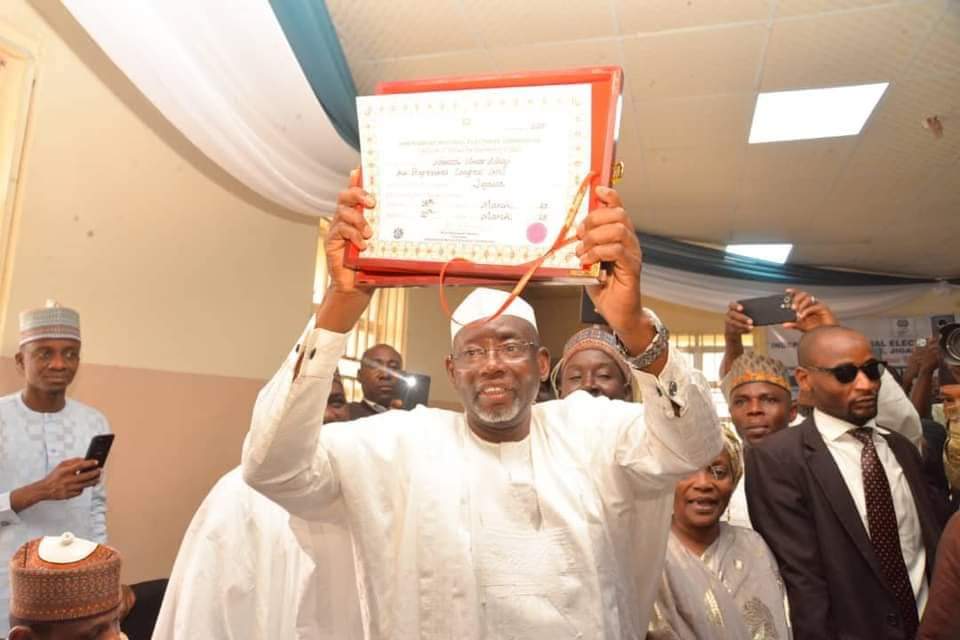
The Governor-elect, Kaduna State, Distinguished Senator Uba Sani, and his deputy, Dr Hadiza Sabuwa Balarabe, were issued Certificates of Return by the Independent National Electoral Commission (INEC) on Friday.

This came after their victory at the March 18 governorship election in the state. Accordingly, the issuance of the certificate of return included lawmakers-elect to the Kaduna State House of Assembly.

Senator Sani, who won the election on the All Progressives Congress (APC) platform, garnered 730,000 votes to defeat his closest rival, Peoples Democratic Party’s (PDP), Isah Ashiru, who polled 719,196 votes.

Abba Kabir and the challenges of education reform in Kano

By Bashir Abdu Muzakkari, Ph.D.

Education is a fundamental right of every individual, and it is crucial to achieving personal and national development. The availability of quality education is a critical factor in reducing poverty, improving health, economic prosperity, and fostering social equality. However, access to quality education remains a challenge in many countries, particularly in developing nations. To address this challenge, governments and stakeholders must take deliberate steps to ensure that education is accessible to all.

The Kano State Governor-elect, Engr. Abba Kabir Yusuf (Abba Gida-Gida), has a keen interest in the provision of quality education in Kano. In his plan to ensure that education is accessible to all, he has outlined several critical policies that will improve access to quality education which include: free education, establishment of additional schools, providing modern furniture, teacher recruitment, school feeding and uniforms, initiation of Mega Schools Policy, and the girl-child education initiative among others.

These critical policies are part of Abba’s Blueprint titled “Our Commitment for Kano: 2023 and Beyond”, and how they can improve access to quality education in Kano state.

To begin with free education: this is a crucial though critical policy in ensuring that education is accessible to all. Abba has proposed the provision of free education for all children in Kano state. This will eliminate the barriers that prevent children from accessing education, particularly those from impoverished backgrounds. Free education will ensure that all children, regardless of their socioeconomic status, can access quality education. The idea is to reduce the number of children – including beggars roaming our streets.

Similarly, establishment of additional schools in under-served areas will help to increase access to education. Abba has proposed the establishment of additional schools in rural areas and areas with a high number of out-of-school children. This will ensure that children in these areas have access to quality education at their doorstep.

In addition, the provision of modern school furniture is essential in ensuring that children can learn in a comfortable environment. His Excellency has proposed the idea “One-Child-One-Chair” to ensure that children can learn in a comfortable environment. This will help to improve schools’ attending and allows teachers to cater for the basic and individual needs of the pupils in their classes.

Moreover, to actualize the above policies, teacher recruitment is necessary. Abba Kabir has proposed the recruitment of qualified teachers to meet the demand for the 21st century learning system. Additionally, teacher training and retraining programmes had been developed to ensure that teachers have the necessary skills and sound knowledge to meet the demands of the standard global system.

Furthermore, school feeding and uniforms are essentials in promoting free education policy. Abba Kabir Yusuf has supported the continuation of school feeding program and distributing free uniforms to improve attendance and ensure that pupils learn with ease. This will help to reduce the burden on families and ensure that children have access to basic needs such as food and clothing.

Not only that, Abba Kabir Yusuf has proposed the initiation of Mega Schools Policy to address the challenges of inadequate resources and infrastructure in many schools. Mega schools are large schools that can accommodate a high number of students and provide all the necessary facilities, including classrooms, libraries, laboratories, and sports facilities. This policy helps to free the existing schools from over-crowded classes and improve free access to education in all parts of Kano State.

Finally, Abba has proposed the promotion of girl-child education initiatives to ensure that girls have equal access to education. This initiative is crucial in addressing the challenges of gender inequality in education, hawking as well as addressing the barriers that prevent girls from accessing education.

Abba’s plan to improve access to quality education in Kano state is comprehensive and addresses critical areas that need attention. By implementing these measures, it is certain people of Kano will have access to free quality education, regardless of their socioeconomic status or gender.

Bashir Abdu Muzakkari, Ph.D. writes from Kano and is a Senior Lecturer at Yusuf Maitama University, Kano.

Stop construction in public places – Kano Gov-elect warns residents

By Uzair Adam Imam

The Kano State Governor-elect, His Excellency, Engr. Abba Kabir Yusuf, has warned residents to stop any ongoing building in public places in the state.

The Govenor-elect also strongly cautioned that anyone who contravenes this warning is doing it at his or her own risk.

He made this warning in a statement Thursday by his Chief Press Secretary, Sanusi Bature Dawakin-Tofa.

There have been popular outrages by the citizens in the state over the selling of some parts of schools and hospitals by Govenor Abdullahi Umar Ganduje.

The statement read, “You are advised to discontinue any construction work on public land within and around the following: All schools in the State, all religious and cultural sites in the State, all hospitals in the State, all graveyards in the State, and along the city walls of Kano.

“You are also advised to discontinue the demolition of, and the construction on, all existing public buildings belonging to the government and people of Kano State.

This Advisory is issued in the public interest, effective from today Thursday 30th March, 2023 till further notice. Any contravener does so at his/her on risk, please,” the statement concluded.

Just In: Kano governor-elect. H.E. Abba Gida Gida appoints Chief Press Secretary

By Muktar Ibrahim

The Kano State Governor-elect H.E. Engr. Abba Kabir Yusuf has announced Sunusi Bature Dawakin Tofa as his Chief Press Secretary for the transition period.

In a letter signed by the Chairman of the Gubernatorial Transition Committee on behalf of the Governor-Elect, His Excellency described Mr. Bature’s appointment as well deserved as it was based on his competence, loyalty, commitment and hard work which he exhibited since 2019.

Sunusi is a seasoned PR guru, development communication and stakeholder engagement expert with 19 years working experience in both international development, private sector and the Media in Nigeria.

He is a winner of the Cambridge education award on investigative journalism in 2008, Bature has worked at different capacities in various national, International and Bilateral organizations such as the British Foreign and CommonWealth Development Office (FCDO), the United State Agency for Internal Development (USAID), Bill and Melinda Gates Foundation, Save the Children International, Discovery Learning Alliance and the Rockefeller Foundation.

He held several positions which include General Manager Corporate Services at Dantata Foods and Allied Products Limited (DFAP), Director Stakeholder Engagement at YieldWise Project, Country Program Manager at Girl Rising (ENGAGE) Project funded by the US Government, State Project Coordinator for MNCH Campaign Project of the BMGF, Deputy Director Operations at Discovery Learning Alliance, State Program Officer, Policy Advocacy and Media Development, Communication and Knowledge Management Specialist among other positions.

Graduated with a Bachelor’s degree (B.A. Hons.) in Mass Communication from University of Maiduguri, Sanusi holds a National Diploma in Mass communication from Kaduna Polytechnic, a Higher National Diploma (HND) and a Postgraduate Diploma in Public Health Education and Promotion.

He also bagged MSc. in Social Work with specialization in Community Development from Ladoke Akintola University of Technology, (LAUTECH) Ogbomosho, Oyo State and another master’s degree in Public Relations (MPR) from the prestigious Bayero University, Kano, Nigeria. He participated in MSc program on Project Management at Robert Kennedy College, Zurich, Switzerland.

Until his appointment, Sunusi Bature served as the Vice President, Nigeria operations for a UK based firm, Kingston Organic PLC.

An open letter to the President-elect and APC’s National Working Community

By Mu’azu Ibn Abdallah

Firstly, I would like to begin by congratulating you on the success of the APC in the recently concluded national elections in which the party won the presidency and majority of seats in both the upper and lower chambers of the national assembly, and also the majority of the governorships and state assembly seats in the country. This is indeed a remarkable achievement which, if adequately sustained, would continue to position the party as the ruling party in the country and the largest political party in Africa.

It is obvious that Nigerians voted for the party because they believed in the messages of RENEWED HOPE which our party promised them. They hope for a better life and a prosperous future, which we can only deliver as a party if we adhere to the principles of social justice, equity and social inclusion.

As the party is set to make a formal announcement with regards to the zoning of political leadership in the country and with the President-elect and Vice President-elect already coming from the South-West and North-East geopolitical zones, respectively, I am strongly drawing the attention of the members of the National Working Committee (NWC) of the party, President Muhammad Buhari, the President-elect Asiwaju Bola Ahmad Tinubu and all other critical stakeholders in the party to consider, as a matter of necessity and in the best interest of the party and the spirit of equity and social justice, zoning the Presidency of the 10th Senate to the North-West especially taking into consideration of the following reasons.

First, there is a need for the party to demonstrate clearly that it always appreciates and rewards members’ confidence, support and loyalty by zoning the senate presidency to the North-West where it got the highest votes from. This will pave the way for the emergence of a competitive race among the zones as to who will produce the highest votes for the party in the subsequent elections, which will, in turn, leads to more and more votes for the party.

Moreover, this has been the tradition in the political arrangement of Nigeria since the return of democracy in 1999, where the region that gives the ruling party the highest votes is favoured for such a position. For instance, during the era of President Olusegun Obasanjo, PDP zoned the senate presidency to the South-East fact that the zone overwhelmingly voted for the PDP. Also, during the tenures of Late President Yar Adua and President Jonathan Senate Presidency was zoned to North-Central Zone for the same reason. Therefore, in the present circumstance, the North-West zone, due to its significant contribution to the victory of APC in the presidential election (the highest votes of 2.7 million among the geopolitical zones in the country), deserved to be rewarded with the senate presidency, especially, looking at the fact that the zone has never produced a senate president despite its strategic relevance in the Nigerian politics.

Secondly, as the largest political party in Africa, the party is expected to draw lessons and experiences from the just concluded 2023 general elections and embark on early preparations and strategic planning towards the 2027 elections so as to address some of the challenges faced in the recent elections and to make sure that RENEWED HOPE is extended to 2031 and beyond. The party should do everything humanly possible to avoid the costly mistakes of losing Kano, Kaduna and Katsina, which ideally should have cost the party its success (if not for the disorganisation of the opposition and the confidence of the Nigerians in the party’s candidates).

Historically, these three states are strategic in Nigerian politics just like California in American politics, and the time to start planning for the recovery of the 3Ks (and the entire north-west and Nigeria in general) is now, specifically by zoning the senate presidency to the zone and ensuring a competent and high-profile politician with a record of effective political strategy and the confidence of the electorates is elected into the coveted position. This would help APC to address the existential threats posed by Sen Rabi’u Kwankwaso’s NNPP, which caused the APC significant harm in the recent elections.

Thirdly, the Senate presidency is a sine qua non to the success of every democratic administration, a sensitive office that may make or mar the realisation of the APC’s much anticipated RENEWED HOPE, and the party should try as much as possible to avoid the repeat the circumstances similar to what transpired in the build-up to the inauguration of the 8th senate which subsequently led to the emergence of the leadership against the party aspiration (including some positions going to the opposition party). To avoid this, the party should, as a matter of national interest and social justice, zone the presidency to the North-West zone due to the fact that the zone is still the stronghold of the APC (with the highest number of registered voters, the highest number of APC card-carrying members, five state Governors and many members of the National Assembly). Also, the zone is blessed with high-profile politicians who can network and canvass the support of senators-elect from across the geopolitical zones for whoever emerges as the candidate from the zone.

Coincidentally, the North-West zone is blessed with a wide range of high-ranking law-makers with effective legislative and administrative experience to fit into the job and, if elected and can efficiently and excellently provide the president-elect with the requisite collaboration and support required for synergy and complementarity to deliver his mission of RENEWED HOPE to the Nigerians. Top on this list is Senator Barau I. Jibrin CON, representing Kano North Senatorial district, who recently declared his interest in running for the post.

Senator Jibrin, a third-term law-maker who has demonstrated his political capability by winning the Kano North senatorial seat continuously for three consecutive elections, and more importantly, in the most recent election, despite the threats of annihilation faced by APC he was able to strategically endure the NNPP’s onslaught and return his senatorial district to the APC and as well large proportion of votes for the presidential candidates. Senator Jibrin is a politician with solid experience and impeccable pedigree, a track record of success working both as a lawmaker and administrator but one who has never been involved in any scandal or incidents any corrupt practices by any of the federal government anti-corruption bodies.

Finally, there is no doubt in the fact that the success or otherwise of the president-elect’s administration and its ability to deliver the much celebrated RENEWED HOPE depends largely on the type of legislative leadership he will work with, as such, for the success of his administration, the president-elect needs no other person as the president of the senate than Senator Barau Jibrin.

Barau is a soft-spoken, laid-back, highly motivated and experienced legislator who has the respect and cooperation of his colleagues and has been responsible and successful in every position he has held due to his approachability and humbleness. An experienced law-maker who has held the position of the appropriations committees in both the House of Representatives and the Senate and has been successful in discharging his duties and guaranteeing thorough budget oversight. Senator Barau has also served as the vice-chairman of the Senate’s committee on Petroleum Resources (Downstream) and later as chairperson of the same committee. He has previously held various positions, such as the chairman of the Kano state Investment and Properties Ltd, Kano state commissioner of Science and Technology and a member of a committee Budgetary procedure.

Conclusively, the just concluded elections have further indicated that Nigerians have higher hope for a better Nigeria, they have spoken with their votes on the direction they want the country to advance, and the elections have indicated that Nigerians have confidence in APC. And from his acceptance speech when INEC issued him with the certificate of return, the President-Elect has clearly demonstrated his commitment and motivation to embark on the renewal journey which he promised Nigerians during the campaigns. As such, he needs a committed and motivated President of the Senate with whom they can deliver effectively to Nigerians the better life and prosperity promised in the RENEWED HOPE messages. To achieve this, the President-Elect must work with an equally motivated, experienced and committed President of the Senate. Among all those who are capable and eligible to contest for the senate presidency, no candidate befits such an exalted position more than Senator Barau Jibrin.

Muazu ibn Abdallah wrote from the Department of Sociology, Federal University Dutse and can be reached via muazuabdullahi29@gmail.com.   

Barau Jibril, Nigeria’s 10th senate leadership and BAT

By Aliyu Gadanya

Though I am an Abba Kabir Yusuf’s staunch supporter and a Kwankwasite by political ideologue, I strongly argue that as a matter of decorum, competence, fairness and justice, Barau I. Jibrin known by many as ‘Maliya’, the Senator representing Kano North, who also is the Senator-elect for the zone at this moment, should be allowed to emerge as the senate president of the Nigeria’s 10th Senate. Taking a few glances down the memory lane of the Nigerian polity as well as the tradition of the Senate itself will validate the above proposition.

The Nigerian Senate is the upper legislative branch of the government which is administered based on its defined rules and regulations whose main function is making laws for the country as enshrined in Chapter One, Section Four of the 1999 Constitution of Nigeria. By rule, after every national election which holds within each four years, a leader, Senate President (SP), who is saddled with the responsibility of presiding over the affairs of the Senate is elected with other excos. The election of the SP is, no doubt, done based on some premise all of which are, arguably, satisfied by Maliya.

The first, though not the most important, is winning a senatorial position on the platform of the ruling party. Jibrin, being loyal to the ruling APC since he began his ambition to become a senator, has won the senatorial position three times; his going to Senate is as old as the ruling party, APC. However, his reelection into the legislative chamber for the third time, as noted by keen observers, is not without obstacles, intrigues, bitter challenges, and intra party political tussles. Notwithstanding, Barau’s allegiance to his party remains unalloyed. He fought dodgedly and tenaciously until he, in the long run, secured the ticket. “I have chosen to stay in APC”, he would always affirm, “even if I will be denied the ticket”.

Next is the candidate’s political geographical location. Nigeria has six geopolitical zones which include, Northwest, Northeast, Northcentral, Southwest, Southeast and Southsouth. For equity and fairness, it has since become a norm for the Nigeria’s major political parties to share the most lucrative positions based on these zones, so that none will feel discriminated against from the affairs of the country. Nevertheless, the contribution of votes from a zone to a party that wins the presidency is an added advantage.

Southwest produces BAT who is the President-elect while Northeast produces the Deputy President. Southeast, Southsouth and Northcentral (produces the party Chairman) being the stronghold of the oppositions, particularly LP and PDP, thus, it will only be fair to pave way for the Senate President to emerge from Northwest, from where Barau coincidentally comes, considering the concentration of votes APC garnered from the zone.

Another salient factor has to do with seniority. According to the Senate standing rules, electing a Senate president should be based on the frequency of one’s going to the house. The higher one is elected into the red house, the more qualified one becomes to captain the chamber. Of all those who have won the positions into the red chamber from Northwest in this election period, in fact, of all those who have made their intentions public to seek for the third most exalted office irrespective of their localities, none is as experienced as Barau Maliya. He was in the lower chamber where he ably represented Tarauni Federal Constituency from 1999-2003. He won senate the first time from 2015-2019 to represent Kano North and, satisfied with his performance during his first tenure, the electorates accorded him the subsequent mandate. Barau is entrusted by his constituents with yet another four year term which is due to commence on 29th May, 2023, as a way of saying “thank you” for an outstanding representation.

If not for him alone, the NNPP, my party, which has won the gubernatorial election in Kano, would have devoured all the political positions contested for in the State.

Moreover, competence and internal politicking are significant shapers upon who is elected into the third most important position in Nigeria. Among the aspiring candidates for this position, none equals the Kano based politician, taking a cursory look at his legislational background. The positions he held in the National Assemblies, among many others, include Chairman House Committee on Appropriation, a member House Committee on Power, Vice Chairman and Subsequently Chairman of Petroleum Resources Committee in 2016 and Chairman of the Senate Committee on Tertiary Institution and Tetfund. He was also a member of the Senate Committee on Niger Delta, Industries, Land Transportation and Appropriation and he is rounding off the 9th Senate as the Chairman Senate Appropriation Committee, a position he has been holding since the beginning of the 9th Senate.

Talking about the Senate internal politics, Barau, exploiting his dexterity and expertise, spearheaded the elections of two Senate Presidents; notably Bukola Saraki and Ahmad Lawan. He was the Secretary of Ahmad Lawan’s campaign organisation which culminated into Lawan’s eventual success. Barau sponsored and co-sponsored numerous bills which are now passed into laws. Some of them include Sexual Harassment in Tertiary Institution Prohibition Bill, Federal Polytechnic Kano Bill, Microbiology Council of Nigeria Bill, Federal University of Agriculture, Dambatta Bill to mention but few. All these buttress the fact that Maliya is fully conversant with the processes of legislation which is an important weapon for anybody seeking to vie for the office of the Senate President.

Furthermore, the presidency factor seems certain in determining who becomes the Senate President or not since the days of yore. However, with the gradual transformation and improvement in the country’s electioneering processes that, obviously, transcend the national general election to other sectors, many commentators maintain that Bola Ahmad Tunibu, the Nigeria’s President-elect, will let democracy take its full course. Being a product of such democratic processes himself. I, similarly, can vouch on BAT that he will not renege or rescind his earlier promise of not interfering, thereby skewing the results of SP and the Speaker’s elections in anyone’s favour.

Finally, on Tunibu’s success, it will not in anyway be an exaggerated statement if it is claimed that no APC member be s/he a governor, senator, member House of Representatives or an exco in the party’s echelon that has contributed in whichever way as immensely as Maliya did. The highest votes for BAT came from Northwest, within the zone, the state that cast the most votes for him is Kano. Examining the voting pattern further confirms the above assertion that Kano North which is Barau’s senatorial district contributed the largest votes in the state.

Notwithstanding all these, we are not asking for the President’s facilitation for the Kano’s son to win the seat, despite having what it takes to be his favourite, because we believe he is the leader for all, all we are asking for is letting the process go without encumbrance.

With Barau Jibrin at the helm of the 10th Senate, considering his loyalty, experience and expertise, it will be a very big plus for the government as it sets out on a journey to deliver on the mandate given to it by the Nigerian masses. It would also ensure that despite losing gubernatorial position in the Nigeria’s most populous state, APC’s structure remains vibrant in Kano. If as a Senator, Maliya can influence the votes that turned out to be the game changer in the election, I believe he will replicate such gesture as the SP.

Kano elections grand finale: The echoes of competence

By Nusaiba Ibrahim

The 2023 gubernatorial elections will go down in history as one of the most highly contested, especially in Kano. After eight years of Dr Abdullahi Ganduje-led government, his party, APC, could not secure the first position. Neither the victory of the President-elect, Bola Ahmed Tinubu, nor the popularity of President Muhammadu Buhari was significant in the tight race that was fiercely fought between the governorship candidates. 

There were just countless permutations, combinations, analyses and whatnot on the proposed outcome of the gubernatorial elections coming from different viewpoints and existing realities, especially after the presidential and upper chamber elections. However, one thing that stood out was the incredible performance of the NNPP in Kano. And this became a challenging point for the ruling APC until the opposition candidate Abba Kabir Yusuf of NNPP emerged victorious.

While the Presidential elections had minimal cases of vote buying, Kano recorded massive acts of vote buying with petty items like soaps, detergents, wrappers and spaghetti during the gubernatorial and state house of assembly elections. In addition, in some strategic locations, there were significant disruptions in the voting and counting processes. But, of course, all of these aren’t out of the normal as tensions had already heightened after the presidential polls.

Nothing summed up the 2023 elections in Kano for me more than the chants of competence over spaghettis. Indeed, “taliya ba ta zabe” (loosely translated – spaghetti doesn’t vote). The likes of Senator Barau Jibrin, among others, only escaped losing their seats because of the hard work they channelled to community service and distinctive competencies. I’m in awe of how each candidate has been weighed based on the capacity to earn the invaluable mandate of the people. Here are my takes on each candidate.

Governor–elect Abba Kabir Yusuf: By resisting all odds to emerge the winner of the elections in Kano State, the heart of Northern Nigeria, you deserve resounding applause. You have also proven your worth to the electorates after losing the 2019 election, which was first declared inconclusive. So, your victory is a testimony of a relentless effort to achieve this desired objective. More so, preserving a loyal fanbase over these years is unimaginable and a strategic tool for your success. But you need to understand that more must be done. The game has just begun.

You would be serving the entire citizens of Kano, which includes your loyalists and a bunch of opposition. It would be easy if you’ve not made many promises during your campaigns, and even if you haven’t, you’ll still be judged anyway. You might face the gigantic task of restoring Kano State to what it used to be. The truth is, that might be impossible to do. Do not waste your time unveiling the errors of the past administration; the people are already full of new yearnings and aspirations. Focus on health, security, education, economy and adverse effects of climate change. They are the priority now.

Nasiru Yusuf Gawuna: Kano is proud of a citizen like you, though you have yet to accept defeat. Nothing compares to being crushed in a public engagement. You’ve taken a wise decision of not resorting to leading thugs to disrupt collation processes this time because you would make news for the wrong reasons, coupled with a widely shared photo of you explaining what happened to police offers. You must have performed your best after serving the people of Kano under three with three administrations in your lifetime. You should be thankful for this rare achievement that not everyone is fortunate to have. You’ve also made the history of being a loyal assistant for eight years – not so many deputies were lucky as you are. Better still, you can go to court if unsatisfied with the results.

Shaaban Ibrahim Sharada: When all youths were wary and incompetent to approach the governorship candidacy, you dared all doubts to stand out. Your candidacy was an ideal reflection of the future of the northern youths. There was so much to cull from what you exuded until the election. Your confidence reminded youths about the times of Tafawa Balewa, Sir Ahmadu Bello Sardauna, Malam Aminu Kano and Maitama Sule. Your grasp of the Kano situation wowed the audience anytime you spoke. You were ready to oppose the status quo even at the risk of your dearest life. But, unfortunately, the political trajectory was faulty. Defeating candidates with an established loyal fanbase needs more time, not a dying-minute preparation.

Mallam Ibrahim Khalil: Like Shaaban, you tried hard to showcase that an Islamic cleric is efficient enough to contest an election. You boldly did not play politics lowkey by supporting some politicians during your sermons and lectures. You challenged the maxim of playing politics as a war without or sometimes with bloodshed. You blocked your ears on people’s thoughts about the inappropriateness of clerics going into politics despite its indecency and ruthlessness. Although you lacked the support of other clerics, you were still confident in your quest. I applaud your effort, mainly because, unlike others, you didn’t hide under religion to back dubious politicians. Unfortunately, the current political trend is not ready for your clean style.

Results from around the country show signs of revolution from all over the nation. It is not just a red cap revolution in Kano but a ‘wake da shinkafa’ [rice and beans] revolution across the country – Zamfara State is one interesting illustration. I’m overly pleased that competence was echoed until it transformed into an actuality.  I hope these revolutionary divergences will be a reason for the prosperity of Kano and Nigeria.

Nusaiba Ibrahim Na’abba is a master’s student from the Department of Mass Communication, BUK. She is a freelance writer and researcher. She can be reached via nusaibaibrahim66@gmail.com.

Breaking: we never called for the review of Kano guber poll – Observers

By Ahmad Deedat Zakari

The Kano State Transition Monitoring Committee, TMG, has denied calling for the review of Kano guber election results and cautioned people with evil intentions not to smear the integrity of credible civil society organisations in the state.

TMG, in a joint press release with the Civil Society Legislative Advocacy Centre ( CISLAC) and the Kano State Civil Society Elections Situation Room, gave the advice in Kano on Saturday.

The organisations totally denounced the reports that they called for the cancellation and review of the governorship election in Kano State.

According to them, unscrupulous persons in the state are hell-bent on sneering at the integrity of civil society groups that have been working hard over the years to ensure electoral integrity in Nigeria.

“For obvious selfish and politically motivated reasons, some faceless groups in conjunction with some willing elements in the media have cooked up fake stories about civil society organisations calling for cancellation of the governorship election in Kano State and other parts of the country. ” The Group disclosed.

They stated that the news is fictitious malicious, and worrisome, and they will not condone attempts to be dragged into the mud.

“The spread of this fictitious and malicious news, in a time when the political space in Nigeria is already heated up, is not only worrisome but also has the potential to further overheat the polity. As champions of democracy, we will not allow sneer-campaigners and people with politically motivated reasons drag credible civil society organisations in Kano State and, indeed, in Nigeria at large into political wars with political parties.”

The group, therefore, called on individuals to disregard the reports making rounds that represented credible organisations in a bad light. They also urge media organisations to filter facts before reporting.