Politics

You can add some category description here.

Obi, Kwankwaso and the Politics of Movement: Strategy, Survival, or a Leap into the Unknown?

By Usman Muhammad Salihu

In Nigerian politics, defections are no longer surprising. What is surprising now is how quickly they happen and how easily political actors move from one platform to another.

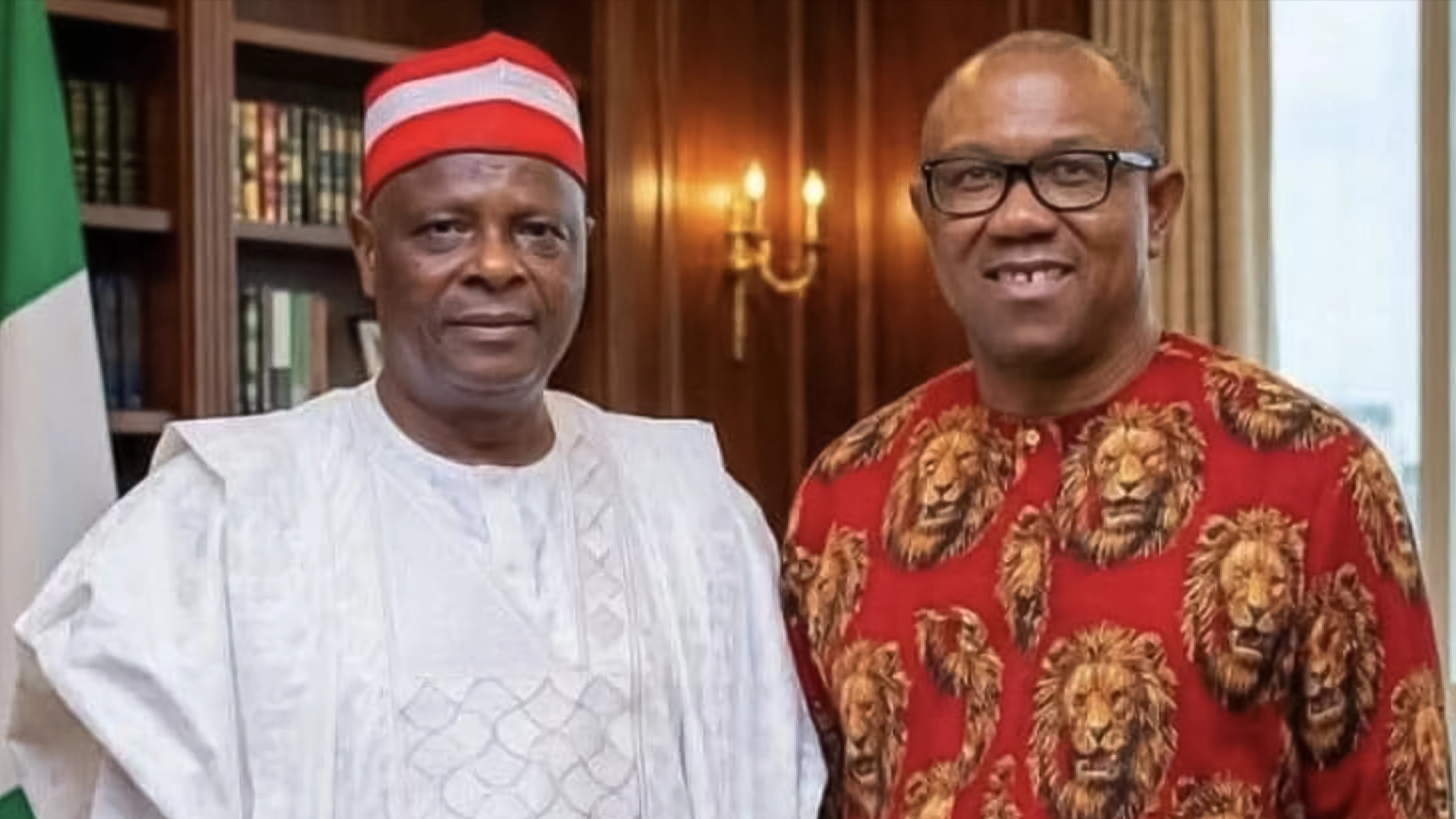
The recent defection of Peter Obi and Rabiu Musa Kwankwaso from the African Democratic Congress (ADC) to the Nigeria Democratic Congress (NDC) is not just another political adjustment. It is a bold move. But bold does not always mean safe.

At first glance, the decision appears strategic. Internal crises within the ADC, legal uncertainties, and the pressure of electoral timelines make stability a priority. From that angle, shifting to a new platform may seem like a necessary step, an attempt to secure political ground ahead of a highly competitive 2027.

There is also strength in the alliance itself. The coming together of Obi and Kwankwaso brings national attention, regional balance, and an existing base of supporters. On paper, that is not just movement; it is potential consolidation.

But politics is not played on paper. It is played among the people. And this is where the real challenge begins.

The Nigeria Democratic Congress is still largely unfamiliar to many Nigerians. Beyond political circles and elite discussions, its presence at the grassroots remains limited. For a significant number of voters, especially at the lower levels, NDC is not yet a known political identity.

And in Nigerian elections, familiarity matters. Voters do not just choose candidates. They choose what they recognise. They choose what they trust. They choose what they understand. That is the gap this move must overcome.

Beyond visibility, there are emerging concerns about the platform’s stability. Reports suggest that the Nigerian Democratic Congress may be grappling with internal legal disputes. If proven true, this introduces an even more delicate risk. Moving from one troubled platform to another does not resolve instability; it simply transfers it. And in politics, uncertainty is a cost few can afford at this level.

Because this is no longer just about transferring political influence, it is about building voter awareness from the ground up within a limited time frame. That is not a small task. It is one thing to move with loyalists. It is another thing to move with the electorate. And history has shown that the two do not always align.

There is also a deeper concern. Frequent political movement, no matter how strategic, raises questions of consistency. When platforms change too often, voters begin to look beyond the movement itself and ask a more difficult question: What exactly is constant? Is it ideology? Is it vision? Or is it simply positioning?

These questions matter because today’s voter is less passive than before. There is growing awareness, scrutiny, and an expectation for clarity. So while this move may be necessary from a political standpoint, it is also risky from a public perception angle.

Because speed in politics can be a double-edged sword. Move too slowly, and you lose relevance. Move too quickly, and you lose trust. And right now, this move feels fast. Perhaps calculated. Perhaps unavoidable. But still fast.

So, is this a strategy or a survival tactic? It is arguably both. Strategy, because the timing aligns with political realities. Survival, because unstable platforms leave little room for hesitation.

From another angle, this move is not just a strategy or a matter of survival; it is a gamble. A calculated one, no doubt, but a gamble, nonetheless. It rests on the assumption that political influence can be transferred faster than voter trust can be built. And in a system where recognition often shapes voting decisions, that assumption may prove too optimistic.

But beyond both lies a more uncomfortable possibility: That this could be a leap into a platform that has yet to fully exist in the minds of the people. Because, in the end, political strength is not measured by alliances alone, but by acceptance. And acceptance cannot be transferred overnight.

So, while the move may look bold in Abuja, its real test will come far away from strategy rooms, in markets, in villages, and at the polling units. Where names are remembered, where symbols are recognised, and where unfamiliar platforms are often rejected.

And if that gap is not closed in time, what appears today as a strategy may tomorrow be seen as a miscalculation. Because in Nigerian politics, you can move ahead of the system, but you cannot move ahead of the people. And when that gap exists, even the most calculated move can quickly turn into a costly gamble.

Ultimately, this move will be judged by one metric: conversion rate. How many Obidients and Kwankwasiyya become NDC members, not just in spirit but on the ballot? If the answer is “most,” then history will call it strategy. If the answer is “some,” then it was survival. If the answer is “few,” then it was a miscalculation dressed as ambition. The voters are watching, and their silence right now is louder than any endorsement. For Obi and Kwankwaso, the real campaign did not start in Abuja. It starts the day a trader in Aba and a farmer in Gaya can point to the NDC logo and say, “That is us.”

Usman Muhammad Salihu was among the pioneer fellows of PRNigeria and writes from Jos.

muhammadu5363@gmail.com.

2027 and the Opposition Dilemma: Unity or Another Gift to APC?

By Abdulhamid Abdullahi Aliyu

As Nigeria moves gradually toward the 2027 general election, the most consequential political drama may not be unfolding within the ruling party, but among those seeking to unseat it. Across the opposition space, there is visible movement: coalition talks, strategic meetings, defections, counter-defections, legal disputes and renewed ambitions. Yet beneath all the activity lies an old and stubborn question: can Nigeria’s opposition finally unite around a credible alternative, or will familiar rivalries once again deliver victory to the incumbent?

The latest controversy surrounding Senator Rabiu Musa Kwankwaso’s political future has brought that question sharply into focus. Reports recently circulated that the former Kano State governor and his political associates were considering leaving the African Democratic Congress (ADC) for another platform, the Nigeria Democratic Congress (NDC), citing fears that the ADC had become vulnerable to legal complications and possible political sabotage. The speculation intensified after statements from individuals linked to the Kwankwasiyya movement suggested fresh political calculations were underway.

Kwankwaso himself later issued a clarification. He stated that no final decision had been taken regarding his political future or that of his associates, while confirming that consultations were ongoing with stakeholders across multiple parties. It was a carefully worded intervention. It neither closed the door to the ADC nor ruled out future movement elsewhere. In effect, it confirmed what many political observers already suspected: Nigeria’s opposition remains in a season of negotiation rather than consolidation.

For many Nigerians dissatisfied with the current direction of governance, the ADC had recently emerged as a possible umbrella for a broad anti-incumbent coalition. With the Peoples Democratic Party weakened by years of internal crisis and the Labour Party still struggling to convert popularity into a nationwide structure, the ADC appeared to offer something useful: a relatively fresh platform around which major opposition actors could gather.

But Nigerian political history offers a warning. Coalitions are easiest to announce and hardest to sustain.

The challenge before the ADC was never simply about attracting prominent names. It was always about managing them. Once major political figures occupy the same platform, difficult questions naturally arise. Who gets the presidential ticket? Which region should produce the candidate? Who controls party machinery? Who funds mobilisation? Who steps down for whom? These are not procedural details. They are often the very fault lines that break apart coalitions.

Kwankwaso’s position illustrates this reality. He remains one of the most significant opposition actors in northern Nigeria, with a loyal political base that has survived multiple party transitions. The Kwankwasiyya movement has demonstrated unusual cohesion and emotional commitment over the years. That makes him valuable to any coalition seeking national competitiveness.

Yet his role also generates tension. Admirers see him as experienced, disciplined and electorally relevant. Critics see him as a strategic power broker whose bargaining posture can complicate broader unity efforts. Social media reactions to the latest controversy reflect this divide. Some accuse him of prioritising leverage over coalition stability. Others argue that he is merely refusing to lead his supporters into another uncertain political arrangement.

Both arguments contain elements of truth. No serious opposition coalition can ignore Kwankwaso’s political weight. But no coalition can thrive if every major actor insists on maximum personal advantage.

Peter Obi presents a different but equally important dimension of the opposition equation. He commands strong youth enthusiasm, urban support and reform-minded voters who remain deeply invested in his message. His appeal extends beyond conventional party structures and taps into a wider demand for cleaner governance and fiscal discipline.

But Obi’s popularity also raises difficult coalition questions. Can a politician with genuine national momentum agree to play a subordinate role in a unity arrangement? Can rival blocs accept him as lead candidate? Can supporters who see him as a transformative figure embrace compromise for strategic reasons?

This is where opposition politics in Nigeria repeatedly encounters its greatest obstacle. Many leaders endorse unity in theory, but hesitate when unity demands sacrifice in practice.

Perhaps the most revealing aspect of Kwankwaso’s recent statement was the emphasis on legal uncertainty. He referenced court rulings, disputes over party legitimacy and fears that political platforms could be weakened through prolonged litigation. Whether one accepts that interpretation or not, the perception itself is politically significant.

In politics, uncertainty can be as damaging as defeat. If opposition actors begin to believe that party platforms are unstable or vulnerable, they will spend more time shopping for alternatives than building durable institutions. Time that should be used to mobilise voters gets consumed by legal consultations. Energy that should be spent presenting policy alternatives is diverted into internal survival battles.

While opposition figures debate platforms and personalities, the ruling All Progressives Congress quietly benefits from something often underestimated in Nigerian politics: structure. Incumbency provides access to nationwide networks, state-level influence, mobilisation machinery and the psychological confidence that comes with power.

The APC does not necessarily need the opposition to disappear. It only needs the opposition to remain divided.

That is why many analysts argue that the greatest ally of incumbency is not popularity, but fragmentation among rivals. If 2027 becomes a contest between one organised ruling machine and several competing opposition ambitions, the arithmetic naturally favours the government. If it becomes a disciplined one-on-one contest built around a credible coalition, the political equation changes considerably.

The decline of the PDP has made this moment even more significant. Once the dominant national platform for anti-government sentiment, the party now appears burdened by unresolved disputes, declining elite confidence and repeated internal turbulence. That vacuum created the opening for newer coalition experiments such as the ADC.

But replacing the PDP as a headline platform is easier than replacing it as an electoral structure. National parties are built ward by ward, polling unit by polling unit, not merely through high-profile defections and conference-room agreements. The opposition still lacks a clearly dominant institutional vehicle.

If opposition leaders are serious about challenging the APC in 2027, three urgent tasks stand before them. First, they must settle on a credible platform early and avoid endless migration between parties. Constant movement signals instability to voters. Second, they must resolve leadership questions through transparent negotiation rather than ego-driven public contests. Third, they must move beyond elite arithmetic and present a practical agenda on inflation, jobs, insecurity, electricity and governance reform.

Many Nigerians are frustrated with present realities. But frustration alone does not automatically translate into votes for the opposition. Citizens may desire change and still distrust the alternatives before them.

The latest Kwankwaso controversy is therefore not merely about one politician considering another party. It is about a deeper truth in Nigerian politics: opposition forces often agree on what they oppose, but struggle to agree on what they want to build.

That remains the central dilemma of 2027.

If unity prevails, the election could become genuinely competitive. If ambition prevails, the ruling party may receive another gift from its opponents—without having to ask for one.

Abdulhamid Abdullahi Aliyu is a journalist and syndicate writer based in Abuja.

Gov. Kaura’s Defection to APM: A Political Suicide or a Stitch in Time?

By Usman Muhammad Salihu

In politics, timing is everything; at the same time, timing alone is never enough.

The defection of Governor Bala Abdulkadir Mohammed (Kauran Bauchi) to the Allied Peoples Movement (APM) has continued to generate debate. With key loyalists reportedly moving with him, what initially appeared as a risky political leap is now being interpreted by some as a calculated repositioning.

But beneath the surface of strategy lies a more complex electoral reality, one that could ultimately decide whether this move succeeds or collapses. At the heart of the argument is the voter.

While Bauchi State has seen moments when lesser-known parties gained traction, particularly at the legislative level, where individuals have won seats in the State House of Assembly outside dominant party structures, statewide or nationwide politics operate on a far wider and more demanding scale.

The dynamics are different. The visibility is broader. The stakes are higher. And most importantly, party identity still carries significant weight.

At the level of electoral reality, however, the risks cannot be dismissed. Nigerian elections—especially at the governorship level—are still heavily influenced by party identity. Voters, particularly in rural strongholds, often associate credibility with established platforms rather than emerging ones.

In that sense, defecting to a less dominant structure, such as the Allied Peoples Movement, introduces an immediate disadvantage: the loss of automatic party loyalty.

Campaigning under such conditions creates a double burden. It is no longer just about selling a candidate—it is about introducing and legitimising a political platform simultaneously. That dual responsibility can stretch time, resources, and political influence thin, especially in a competitive race involving the All Progressives Congress (APC) and the emerging coalition around the African Democratic Congress (ADC).

From this view, the move carries a real risk of political isolation if voter perception does not align quickly enough with elite-level strategy.

Yet, it would be premature to interpret the move purely as risk. Nigerian political history also rewards early structural repositioning. Movements that eventually became influential often began as unpopular or misunderstood alignments.

In that context, Gov. Kaura’s move may be less about immediate electoral gain and more about long-term political architecture—building a platform where loyalty is personal, structure is controlled, and direction is defined internally rather than inherited from party hierarchies.

There is also a strategic possibility that this move is an attempt to build or shape a movement similar in political culture, if not in scale, to the Kwankwasiyya associated with Rabiu Musa Kwankwaso, a structure rooted in identity, loyalty, and grassroots emotional connection rather than party stability alone.

If sustained, such a model can evolve into a political identity strong enough to survive beyond a single election cycle. But like all movements, it requires time, consistency, and deep voter penetration.

If the electorate does not understand or accept the new platform in time, the strategy weakens. If the structure grows slowly but steadily, the strategy strengthens. Either outcome is possible.

Because while elite political calculations move fast, voter acceptance does not. And in elections, voters, not strategy rooms, ultimately decide outcomes. So, is Gov. Kaura’s defection a political suicide or a stitch in time?

From one angle, it introduces clear electoral risks that cannot be ignored. From another, it suggests a longer-term ambition to build something more controlled and identity-driven. Both interpretations hold weight.

So whether this move is a masterstroke or a misstep remains uncertain. The calculations may be clear. The intentions may be bold. But in politics, certainty is a luxury.

For now, all eyes remain on the unfolding reality… because, in the end, time will tell.

Usman Muhammad Salihu writes from Jos, Nigeria, via muhammadu5363@gmail.com.

BREAKING: Bauchi Governor Bala Mohammed Dumps PDP, Joins APM

By Sabiu Abdullahi

Bauchi State Governor, Bala Abdulkadir Mohammed, has officially left the Peoples Democratic Party (PDP) and joined the Allied Peoples Movement (APM) after weeks of consultations.

He made the announcement on Saturday at the Government House. His decision comes after prolonged uncertainty about his political direction. The uncertainty followed the internal crisis within the PDP.

The governor had earlier described the party as “headless”. He also showed readiness to consider other political platforms. Observers believe his exit could weaken the PDP and affect its grassroots strength.

Speaking on the recent Supreme Court ruling on the PDP leadership dispute, Mohammed said the judgement stopped any group from taking total control of the party. He explained that neither his faction, led by Kabiru Tanimu Turaki (SAN), nor the group loyal to the Minister of the Federal Capital Territory, Nyesom Wike, achieved full victory.

“We have succeeded in ensuring that no single individual hijacks the party,” he said.

In an interview with BBC Hausa Service, the governor stated, “As democrats who respect the rule of law, we accept the judgement. But it is not a victory for anyone.”

He added that the party’s Board of Trustees would manage its affairs for now. He said this arrangement would remain until a caretaker committee is formed in line with the party’s constitution.

Mohammed also accused Wike of acting against the interests of the PDP. He alleged that the FCT minister and his allies maintain links with the ruling All Progressives Congress (APC).

The governor said his defection aims to provide a stable political platform for his supporters ahead of the 2027 general elections.

“Our hearts remain with the PDP, but politically we must move forward,” he said.

He also confirmed plans to contest the Bauchi South Senatorial seat in 2027. He noted that his move to the APM followed consultations with other political parties.

Supreme Court Reinstates David Mark as ADC Leader

By Muhammad Abubakar

The Supreme Court of Nigeria on Thursday set aside an order of the Court of Appeal to maintain the status quo ante bellum in the leadership crisis rocking the African Democratic Congress, ADC.

A five-member panel of the apex court, led by Justice Mohammed Lawal Garba, held that the Abuja Division of the Court of Appeal acted without jurisdiction when it issued the order after already dismissing the case filed by a rival faction.

The decision effectively restores the recognition of the party’s executive committee led by former Senate President David Mark.

Prior to the ruling, the Independent National Electoral Commission, INEC, had removed David Mark and his executive team from its portal in compliance with the lower court’s status quo order.

The Supreme Court directed all warring factions to return to the Federal High Court to continue and fully determine the substantive suit regarding the party’s leadership.

The ADC has been embroiled in a leadership crisis following a restructuring that brought David Mark in as National Chairman and former Osun State Governor Rauf Aregbesola as National Secretary, a move fiercely contested by a rival faction led by Nafiu Bala Gombe.

Bala Wunti and Bauchi-Qatar: A High-Drama Comparison

It is no longer surprising, though still highly debatable, that any political outing by Dr Bala Maijama’a Wunti unsettles opponents and triggers a wave of commentary. Such reactions often generate more noise than substance, with some analysts offering arguments that appear less objective and more dismissive. At times, this tendency reflects a reluctance to confront observable realities or to revisit history in ways that enable a more informed understanding of current developments.

Wunti’s second major appearance since declaring his interest in the gubernatorial race has sparked fresh debate. Central to the discussion is his comparison of Qatar and Bauchi State, which he supports with logical reasoning and verifiable data. For me, this was not the first time I had heard him draw such parallels. I recall a previous engagement where he elaborated extensively on this comparison and shared some insights.

One striking point he raised is the contrast in population. As of January 2026, Qatar has an estimated population of about 3.3 million, while Bauchi State is home to over 8 million people, more than double Qatar’s population. Yet, despite its smaller population, Qatar boasts one of the highest GDPs per capita in the world, supporting a high standard of living, robust infrastructure, and extensive social services. In contrast, Bauchi and Nigeria more broadly continue to grapple with unemployment, inadequate electricity supply, limited access to clean water, and a struggling economy.

Land size presents another compelling contrast. Bauchi State spans approximately 45,837 square kilometres, making it more than four times larger than Qatar, which covers roughly 11,600 square kilometres. Despite its smaller size and limited arable land, Qatar has built a thriving economy. Bauchi, on the other hand, is richly endowed with vast agricultural land, offering significant potential to diversify and expand its economic base.

In terms of natural resources, Qatar produces approximately 2 million barrels of oil per day, forming the backbone of its economic strength. Bauchi State also holds promise in this regard, particularly with the Kolmani oil reserves, though these remain largely undeveloped. The contrast, therefore, is not one of absence but of utilisation. While Qatar has effectively harnessed its resources, Bauchi’s remain underexploited.

Dr Bala Wunti’s experience in the oil and gas sector adds weight to his argument. His perspective invites a reconsideration of what is possible, urging stakeholders to reflect more deeply on the state’s untapped potential.

With strategic planning and a commitment to good governance, transformative progress is achievable. Qatar’s success story is, at its core, a product of deliberate policy choices, effective leadership, and sustained investment. Bauchi State, with its abundant human and natural resources, possesses the foundational elements required for similar advancement.

Mallam Musbahu Magayaki writes from Sabon Fegi, Azare.

An Open Letter to Governor Babagana Umara Zulum on the Future of Borno State

By Imam Malik ABDULLAHI Kaga

Your Excellency, Sir,

Permit me to respectfully introduce myself. My name is Imam Malik Abdullahi Kaga, a young advocate for youth inclusion in governance in Borno State. I hail from Wajiro village in Kaga Local Government Area and currently reside in Jere Local Government Area.

Your Excellency, I write this letter with two sincere intentions. First, to express my profound appreciation for the remarkable transformation that Borno State has experienced under your leadership. Second, to humbly advocate for the emergence of a worthy successor who will continue, and perhaps even surpass, the legacy you have built.

History often remembers leaders not only for what they achieved while in office, but also for the institutions, systems, and leaders they helped shape for the future. In this regard, your tenure stands out as one that will be remembered for courage, sacrifice, and a relentless commitment to rebuilding a state that once stood at the centre of one of the most difficult humanitarian and security crises in our nation’s history.

Since assuming office as Governor, Borno State has steadily moved along the path of recovery, stability, and development. Across critical sectors, specifically security stabilisation, education revival, healthcare expansion, infrastructure rebuilding, and human capital development, your administration has restored confidence and renewed hope among citizens.

Across the state, the impact of your leadership is visible. The name Zulum has come to represent resilience, discipline, and purposeful governance. In the eyes of many citizens (both indigenous and non), you have demonstrated that leadership is not merely about holding office, but about service, courage, and responsibility.

Indeed, like every human endeavour, governance inevitably carries moments that fall short of expectations. Yet the weight of your accomplishments far outweighs such moments. May Allah forgive your shortcomings and reward your sincerity and dedication in the service of the people of Borno State.

Your Excellency, Sir,

As elections gradually approach, conversations about the future leadership of Borno State will naturally intensify. This moment, however, not merely presents a political transition, but an important historical responsibility. 

The foundations your administration has laid must not only be preserved but strengthened. The Borno 25-Year Development Framework provides a clear vision for transformation and development; the leadership that succeeds you will be responsible for ensuring this vision continues to move forward with the same discipline and determination.

Over the years, Your Excellency, you have mentored and entrusted many young, capable individuals with leadership responsibilities across government parastatal and ministries. Many of them have grown under your guidance and have demonstrated commitment, discipline, and service in various capacities. This is one of the enduring strengths of your administration. You have not only governed but also cultivated leadership.

Among those who have served under your watch are individuals who have observed your work ethic, your decisiveness, and your relentless focus on results. Such individuals understand the philosophy that has driven your administration. 

Your Excellency, therefore, you are uniquely positioned to recognise who among those you have mentored possesses the character, vision, courage, and administrative capacity required to sustain the momentum of your achievements.

Your Excellency, sir, across the world today, younger leaders are increasingly demonstrating the capacity to drive reform, strengthen institutions, and accelerate economic development. When youthful energy is combined with discipline, experience, and mentorship, it often yields bold, transformative leadership.

Sir, closer to home, the youthful leadership within your administration stands as clear proof that young minds can bring innovation, energy, and integrity to governance. These qualities speak directly to the four enabling foundations of the Borno 25-Year Development Framework. 

One of the most defining qualities of your leadership has been decisiveness. At critical moments, your ability to make firm and timely decisions restored confidence in governance and accelerated progress across many sectors. This quality has become a hallmark of your administration.

As Borno looks toward the future, it is important that the leadership which follows continues to embody this same strength of character, clarity of purpose, and courage in decision-making. Such leadership will ensure continuity, preserve stability, and sustain the progress already achieved.

Your Excellency, sir, many citizens across the state quietly share a hope that the next phase of Borno’s leadership will not only preserve your legacy but also elevate it even further. In most conversations across the state, one often hears a phrase that captures this aspiration in simple language, the desire for what some describe as a “Zulum Pro Max.”

By this, people mean a leader who embodies the courage, discipline, integrity, and commitment to service that have defined your tenure, while also building upon the strong foundation you have established.

Your Excellency, the decision regarding the future leadership of Borno State carries immense significance. History will remember not only the progress achieved during your tenure but also the path charted for the years that follow.

May Allah continue to guide your wisdom, strengthen your resolve, and bless Borno State with lasting peace, stability, and prosperity.

In my next letter, I intend to respectfully share my thoughts on one of your mentees, whom many Bornoans believe reflects the qualities needed to advance this vision and carry Borno State to the next level of development.


Yours sincerely,
Imam Malik Abdullahi Kaga.

When They Claim the North Never Criticised Buhari While in Office, is it Ignorance or Hypocrisy? Let the Facts Speak

By Mohammed Bello Doka 

History is a stubborn thing. It does not bend to the whims of revisionists, nor does it dissolve under the weight of repeated falsehoods. For some time now, a particular narrative has been carefully cultivated and spread across social media platforms and traditional dinner tables. This narrative suggests that during the eight years of Muhammadu Buhari’s presidency, the North maintained a conspiratorial silence, shielding itself while the country drifted. It paints an entire region as a monolith of blind loyalty. But as the saying goes, a lie can travel halfway around the world while the truth is still putting on its shoes. Today, the truth is fully dressed and ready to walk.

If the people making these claims are truly ignorant of the facts, this record will serve as a much-needed education. If they are speaking from a place of hypocrisy, then this record will serve as a mirror to their own intellectual dishonesty. To suggest the North was silent is to erase some of the most daring, scathing, and consequential political and intellectual battles fought against the Buhari administration from within its own base.

Let us begin with the most intimate of critics. On October 14, 2016, through the BBC Hausa Service, the First Lady of Nigeria, Aisha Buhari, stunned the world. She did not just offer a mild critique; she declared that her husband’s government had been hijacked by a few people who did not even know the party’s vision. She stated plainly that out of fifty people the President had appointed, he probably didn’t know forty-five of them. 

This was not a Southern critic or an opposition politician speaking; this was the President’s own wife. She followed up on December 4, 2018, as reported by Punch and Premium Times, during a leadership summit in Abuja, where she challenged Nigerian men to stand up to two or three people dominating the government. On May 25, 2019, as reported by Channels TV and Daily Trust, she attacked the administration’s Social Investment Programme, labelling it a failure in the North and questioning the procurement of mosquito nets. If the North was silent, was the First Lady’s voice not Northern enough?

The intellectual and traditional pushback was equally fierce. As the Emir of Kano, Sanusi Lamido Sanusi used his platform to deliver economic lectures that the presidency found deeply uncomfortable. On August 24, 2016, during the 15th meeting of the Joint Planning Board in Kano, as reported by Punch Newspapers, he warned that the Buhari administration was on the path of the Jonathan government if it did not end its flawed foreign exchange policies. Years later, as reported by Vanguard on August 20, 2023, he provided a post-mortem, stating that the administration had decimated the economy and left a thirty trillion naira debt through illegal central bank borrowing.

Then there is the Northern Elders Forum. For years, this group acted as a stern watchdog. On June 14, 2020, as reported by The Guardian and The Cable, the Chairman of the forum, Professor Ango Abdullahi, issued a statement titled Life has lost its value under Buhari. He described the administration as a total failure in the face of escalating banditry and insurgency. He noted that the North was completely at the mercy of armed gangs. 

This sentiment was echoed repeatedly by the forum’s spokesperson, Doctor Hakeem Baba Ahmed. In April 2022, following the Zabarmari massacre, Baba Ahmed appeared on Channels TV and was quoted in Daily Trust stating that in any civilised nation, a leader who failed so spectacularly to provide security would have resigned. He was one of the most consistent voices debunking the myth that the North was satisfied with the status quo.

Even the clergy did not stay silent. Sheikh Ahmad Gumi, once considered a supporter of the President’s integrity, became a vocal opponent. In an interview with Punch on July 7, 2018, Gumi stated that he knew Buhari would make Nigeria worse than it was when Jonathan left. He accused the administration of being worse than its predecessor and criticised what he called the deification of the President.

When we turn to the political theatre, the evidence of Northern opposition is even more undeniable. Consider Buba Galadima, one of the original signatories to the formation of the APC. On July 4, 2018, as reported by Punch and Premium Times, Galadima led a faction to form the Reformed APC. He held a press conference in Abuja where he described the party’s leadership as a charade and the government as a disappointment. In an exclusive interview with Premium Times on July 22, 2018, he accused Buhari of betraying the loyalists who built his political career to empower a clannish inner circle.

Rabiu Musa Kwankwaso, the former Governor of Kano, also broke ranks early. On July 24, 2018, he was among the senators whose defection was reported by Punch and Premium Times as part of a mass exodus from the APC to the PDP. Throughout 2018 and into the 2023 election cycle, Kwankwaso was a relentless critic. 

On August 27, 2018, as reported by Punch, he stated in Owerri that Buhari lacked the capacity to improve the economy. Later, on April 15, 2022, as reported by Channels TV, he expressed deep worry that a retired General could allow insecurity to reach such levels, calling the administration’s second term a missed opportunity.

The most dramatic phase of Northern criticism occurred in the build-up to the 2023 general elections. 

This was not just rhetoric; it was a legal and constitutional war. Nasir El-Rufai, the then Governor of Kaduna State, became the face of internal resistance. Long before the currency crisis, El-Rufai’s critical stance was documented in a 30-page memo dated September 22, 2016, which was eventually leaked by Sahara Reporters on March 16, 2017. In that memo, he warned the President that the APC was losing its supporters’ trust and that the government was adrift. 

By 2023, the tension culminated in a Supreme Court lawsuit. On February 3, 2023, as reported by Channels TV and The Punch, El-Rufai, along with Governors Yahaya Bello and Bello Matawalle, sued the Federal Government over the naira redesign policy. On February 16, 2023, after Buhari’s national broadcast, El-Rufai issued a counter-broadcast in Kaduna, which was transcribed by Vanguard and The Cable, where he told his citizens to continue using the old notes, effectively challenging the President’s authority in a way no Southern governor dared at the time.

Abdullahi Umar Ganduje, the then Governor of Kano, was equally confrontational. On January 28, 2023, as reported by The Niche and Daily Post, Ganduje officially asked the President to postpone a visit to Kano because the people were too angry over the currency policy to guarantee a peaceful reception. 

In early February 2023, a viral video reported by Daily Trust and Sahara Reporters showed Ganduje mocking the President’s political history, noting that Buhari only won after a merger was formed for him and was now trying to destroy the party on his way out. On February 14, 2023, as reported by The Cable, Ganduje threatened to demolish any bank in Kano that refused to accept the old notes, promising to replace such banks with schools.

How then can any honest person say the North was silent? We have the names, the dates, and the publications. From the First Lady’s BBC interview in 2016 to the Supreme Court case in 2023, from the intellectual rebukes of Sanusi Lamido Sanusi to the scathing memos of Nasir El-Rufai, and the open defiance of Abdullahi Ganduje, the North was a hotbed of criticism. Those who claim otherwise are either victims of a deep ignorance or are intentionally peddling a hypocritical double standard.

The North is not a monolithic political entity that blindly follows a leader. It is a region with a rich tradition of debate, dissent, and internal correction. When the Buhari administration faltered, it was the Northern elders who first called for his resignation. When the economy drifted, it was Northern intellectuals who provided the most data-driven critiques. When the currency policy threatened to trigger a social crisis, it was Northern governors who took the President to the Supreme Court.

To repeat the lie that the North never criticised Buhari is an insult to the courage of those who risked their political standing to speak truth to power. It is an attempt to rewrite history to fuel division and promote a false narrative of regional complicity. But the records are in the archives of Daily Trust, Punch, Vanguard, Premium Times, and Sahara Reporters. 

The records are in the transcripts of the BBC and Channels TV.

Let this be a final answer to those who peddle this falsehood. The facts do not just speak; they shout. The North did not just criticise Buhari; it provided some of the most formidable and effective opposition his administration ever faced. Whether it was on the pages of newspapers, in the chambers of the Supreme Court, or from the pulpits and palaces of its traditional leaders, the North spoke up. To ignore this is to choose a lie over the truth, and to repeat it after reading these facts is to move from the camp of the ignorant to the camp of the hypocritical. The truth has been told, the evidence has been presented, and the myth of Northern silence is hereby destroyed.

Mohammed Bello Doka can be reached via bellodoka82@gmail.com.

Kano’s Red Pants Controversy and the Cost of Political Spectacle

By Abdulhamid Abdullahi Aliyu

Politics often produces strange moments, but every now and then a controversy emerges that says more about a society than it first appears. The recent uproar in Kano over viral images of women displaying red underwear allegedly linked to supporters of the state government is one such moment. What began as social media comedy quickly evolved into a serious conversation about political culture, digital misinformation, public dignity and the growing danger of supporter excesses in Nigeria’s democracy.

At the centre of the controversy are competing narratives. One version claims the act was staged by enthusiastic supporters seeking to mock the red symbolism associated with Senator Rabiu Musa Kwankwaso and the Kwankwasiyya movement. Another insists no government official procured or distributed such items, and that the women involved purchased them independently as a form of protest. A third line of argument points to manipulated or AI-generated images, especially those showing Governor Abba Kabir Yusuf’s photograph printed on the underwear.

Whichever version one believes, the broader lesson lies elsewhere. In the age of instant virality, perception often outruns fact. Once provocative visuals hit the internet, they begin to live independent lives. By the time clarifications arrive, opinions are already formed, jokes already shared, and reputations already bruised. That is the brutal logic of modern information warfare.

This is why the Kano episode should not be dismissed as mere comedy. It highlights how politics in Nigeria is increasingly shifting from policy contests to symbolic warfare. Rather than debates over education, healthcare, water supply, youth unemployment or urban planning, public attention is hijacked by spectacles designed to humiliate opponents and energise online loyalists. The result is a shrinking space for serious governance discourse.

Kano is especially vulnerable to this kind of politics because of its unique political history. The state is one of Nigeria’s most politically conscious arenas, where colours, slogans, movements and personalities carry deep emotional weight. The red cap is not merely fashion; it represents a political identity. Any attempt to ridicule that identity will naturally provoke backlash. Supporters may consider such mockery clever mobilisation, but politics rooted in humiliation often boomerangs.

There is also an uncomfortable gender dimension to the saga. Across Nigeria, women are too often reduced to props in political performances—assembled for rallies, tokenised for optics, or used to dramatise partisan messages. Whether voluntary or orchestrated, any political theatre that places women at the centre of ridicule or sensationalism raises ethical questions. Political communication should elevate citizens, not use them as instruments of mockery.

For the Kano State Government, the greater challenge may not be the incident itself but how it is managed. Governments today do not only govern roads and budgets; they govern narratives. Silence can sometimes be wise, but in a digital environment, prolonged silence can also create a vacuum into which falsehood rushes. A vacuum of credible information often becomes fertile ground for stereotypes.

That is why communication experts increasingly advise a strategy of rapid clarification and narrative replacement. Rather than angrily chasing every rumour, a government can calmly provide facts, support independent fact-checking, and then redirect public attention to measurable achievements. If the public conversation is trapped on underwear for days, then governance has already lost valuable oxygen.

There is wisdom in the suggestion that the state should flood the public space with verifiable stories of schools rehabilitated, hospitals improved, roads completed, youth programmes launched, and social interventions delivered. This is not propaganda when the facts are genuine. It is simply the discipline of agenda-setting: ensuring governance performance is louder than viral nonsense.

Equally important is internal message control among supporters. Many governments underestimate the damage their unofficial defenders can cause. Overzealous loyalists often believe they are helping, while in reality, they create liabilities. Mockery, coded insults and reckless satire may thrill partisan circles, but they alienate undecided citizens and embarrass the leaders they claim to defend.

This is not a Kano problem alone. Across Nigeria, politicians increasingly face a paradox: their strongest online supporters can also become their biggest reputational risk. In a hyperconnected society, one foolish stunt can overshadow months of policy work. That reality demands more disciplined political engagement from parties and movements nationwide.

The final lesson is simple. Leadership should be measured by competence, compassion and delivery—not by who wins the latest viral skirmish. Kano deserves national attention for industrial revival, educational progress, urban reform and social development, not for underwear controversies. If this episode prompts a rethink of political conduct, media literacy and supporter behaviour, then an embarrassing moment may yet produce a useful correction.

Democracy is serious business. When politics becomes a permanent performance, everyone eventually loses.

Abdulhamid Abdullahi Aliyu is a journalist and syndicate writer based in Abuja.

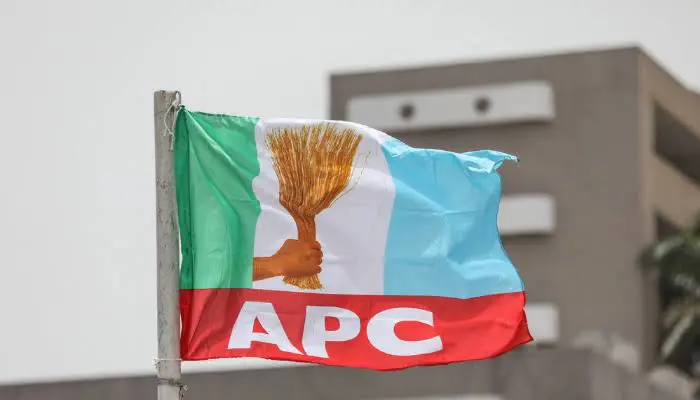
APC Shifts Presidential Primary to May 23, 2026, as Party Releases Revised Election Timetable

By Abdullahi Mukhtar Algasgaini

The All Progressives Congress (APC) has rescheduled its presidential primary election to May 23, 2026, moving it from the previously proposed May 15–16 dates, the party announced on Thursday.

The party’s Deputy National Publicity Secretary, Duro Meseko, disclosed the changes after the 186th National Working Committee (NWC) meeting in Abuja. According to Meseko, the adjustments comply with the Constitution, the Electoral Act 2026, and the Independent National Electoral Commission’s (INEC) revised timetable for the 2027 general elections.

Under the new schedule, the governorship primaries will now hold on May 21, 2026.

The sale of nomination forms will run from April 25 to May 2, 2026, with a submission deadline of May 4, 2026.

Screening of aspirants is scheduled as follows:

1· May 6–8, 2026: House of Assembly, House of Representatives, Senate, and Governorship aspirants

2· May 9, 2026: Presidential aspirants

Screening results will be published on May 11, 2026, while screening appeals will be heard on May 12–13, 2026.

Primary election date:

a· May 15, 2026: House of Representatives

b· May 18, 2026: Senate
· May 20, 2026: State House of Assembly

c· May 21, 2026: Governorship

d· May 23, 2026: Presidential

Post-primary appeals are slated for May 18 (Reps), May 20 (Senate), May 21 (Assembly), May 23 (Governorship), and May 25 (Presidential).

Meseko also released a schedule for ward, local government area (LGA), and state congresses in Zamfara State, beginning April 28, 2026. Ward congresses will hold on April 30, followed by LGA congresses, while state congresses are to wrap up by May 3, 2026, with appeals running concurrently.

The NWC adopted both direct primary and consensus options as provided in the Electoral Act 2026.

“Aspirants are free to decide their preference. Where consensus works, it stands. Where an aspirant disagrees, it automatically reverts to direct primaries,” Meseko said.

He dismissed claims that nomination forms would be restricted to select individuals, stating: “Forms are available for all aspirants under the APC, not exclusively reserved for anyone.”

INEC has fixed the Presidential and National Assembly elections for January 16, 2027, and Governorship/State Assembly polls for February 6, 2027. Party primaries must hold between April 23 and May 30, 2026.

Campaigns for presidential and NASS elections will begin on August 19, 2026, while governorship and assembly campaigns start on September 9, 2026.

The APC said state chapters were notified of the changes on April 20.