Opinion

The frequency of my story: How BBC Hausa shaped my path to journalism

By Alhassan Hassan Salihu

How BBC Hausa shaped my journey into journalism, from childhood mornings filled with the voices of BBC Hausa to my first day inside a studio, radio has been more than just background noise; it has been my teacher, my guide, and my inspiration.

This is the story of how listening turned into learning, and how learning shaped my journey into journalism.

Becoming a journalist was a natural progression for me, sparked by a lifelong habit of listening, reading, and watching the news. For as long as I can remember, news has been a daily ritual to me, something that felt less like a choice and more like a tradition I inherited from my father.

Growing up, our mornings and evenings were defined by the voices on the radio. We would start the day by tuning in to Voice of America at 6:30 AM, then switch to the BBC Hausa Service at 7:00 AM, followed by DW Hausa at 7:30 AM, and return to the BBC Hausa Service at 8:30 AM. And at night, the whole family would gather again, this time before television, to watch NTA Network News at 9:00 PM sharp.

These routines were more than just ways of staying informed; they became a profound part of my upbringing. The sound of the BBC Hausa and Radio Nigeria Kaduna, in particular, was not just a broadcast; they were a culture. 

They shaped entire generations in northern Nigeria, creating shared experiences and anchoring people to both local and global realities. For many of us, storytelling comes naturally, but the absolute obsession with stories and even the dream of becoming journalists often started with our parents’ love for radio. 

Families gathered around to listen, not only to know what was happening in the world, but also to feel a sense of belonging to a broader conversation.

But here lies a challenge; unlike the generations before us, today’s families are not always gathering around radios or televisions at fixed hours. 

Instead, parents are glued to smartphones, and children often consume fragmented bits of information through digital media. 

This shift raises an important question: what will become of the younger ones if they grow up without the discipline, focus, and collective culture that radio once provided?

The beauty of the radio era was its structure. Programs are aired at specific times, forcing families to pause their lives and share a common moment of learning. 

I later realised how insightful and educational this exposure had been, especially when I began studying mass communication at the university. 

During my first and second years, I took courses like Media English I & II, which helped me connect the dots and apply what I had unconsciously been absorbing for years.

While many struggled with the art of broadcasting, I found it surprisingly simple. It felt effortless, like second nature, because I had been learning by listening to experts all along. News isn’t merely about headlines; it is about understanding context, undercurrents, and implications. 

Critical engagement with news empowers people to navigate the world’s complexities and contribute meaningfully to conversations that shape positive change.

In today’s fast-evolving environment, staying informed should not be seen as a casual habit but as a necessity for growth, development, and societal progress.

I still remember my first day in the studio. My coach, Hajarah Bala Sidi, was impressed by my performance and asked if I had previously worked at a radio station. In truth, I had done nothing more than to follow her simple guidance, yet I was able to compile and voice an excellent report. 

That moment confirmed what years of exposure had quietly built in me: a confidence with words, rhythm, and storytelling.

It was not just news, it was an education in patience, attention, and dialogue. Digital media, while faster and broader, often lacks this collective discipline. Stories are consumed in isolation, and context is sometimes lost in the flood of content.

Along the way, I also developed a deeper appreciation for language mastery, particularly in Hausa. Radio programs were filled with proverbs, metaphors, and eloquence that enriched my communication skills.

This influence even stretched back to my secondary school days; subjects like Government, History, Current Affairs, and English Literature became easier for me because the insights I picked from the radio gave me a head start.

This makes it even more important for parents, educators, and journalists to rethink how news is introduced to children today.  This background provided me with the basic tools to analyse and judge the world around me. Those early lessons still influence the way I view society today.

This background provided me with the basic tools to analyse and judge the world around me. Those early lessons still influence the way I view society today. 

Journalism, for me, isn’t just a profession; it reflects how I was raised: constantly aware, always questioning, and always learning.

News sharpens critical thinking and broadens worldview. It provides insights into emerging trends, global challenges, and innovative solutions.

If BBC Hausa and Radio Nigeria Kaduna once shaped generations through the power of sound, then perhaps the task now is to find new ways of shaping generations through the power of both sound and screen. 

Whether through radio, television, or digital platforms, one truth stands out: societies thrive when their citizens are informed. 

Staying informed is not passive consumption; it requires active engagement: reading thoroughly, listening carefully, and watching with intent. 

As a journalist, I hold to this principle: the newsrooms of my childhood might have changed, but the lesson remains the same.

The world may no longer gather around a radio at dawn or a television at night, but the responsibility to stay informed remains timeless, and if we can pass this culture on to our younger ones, they too will learn that news is not just about headlines; it is about understanding the world, questioning it, and striving to make it better.

Alhassan Hassan Salihu wrote via hassanalhassan8785@gmail.com.

No work, no pay: A threat that solves nothing

By Muhammad Umar Shehu

Once again, the federal government is threatening the Academic Staff Union of Universities (ASUU) with its usual tactic, no work, no pay. It’s the same tired strategy used by previous administrations whenever the union pushes for the full implementation of agreements that were voluntarily signed. But history has shown that this policy does not resolve issues; it only increases mistrust, diminishes morale, and further weakens our universities.

During President Muhammadu Buhari’s administration, the no-work-no-pay policy was enforced after the 2022 ASUU strike, which lasted eight months. Lecturers were unpaid despite the government’s failure to fulfil promises that caused the strike. Buhari’s approach focused on punishment rather than dialogue, leading to resentment and strained relations with academics. The key issues- poor funding, unpaid allowances, and decayed infrastructure- remain unresolved.

Education is not like any other sector. ASUU is not just another pressure group that you can intimidate or silence with threats. This is a body of intellectuals, people whose weapon is knowledge and whose struggle is for national development. You can’t use the same tactics that might work on transport unions or political protesters on an organisation built on principles, history, and intellectual resistance.

Globally, similar unions in countries such as South Africa, the United Kingdom, and even the United States have stood their ground when governments have failed to meet academic demands. In 2016, for instance, the South African “Fees Must Fall” movement forced the government to rethink its policies and increase education funding. In the UK, university staff have repeatedly gone on strike over pay and working conditions, yet the government has had to return to the negotiating table rather than threaten them. These examples show that dialogue and respect for agreements are the only sustainable paths, not coercion.

In Nigeria’s own history, ASUU has endured decades of intimidation and threats. From the military era to the present democratic dispensation, their fight has remained consistent to protect public universities from total collapse. They have been banned, unbanned, and blacklisted, yet they stay because they represent something more profound than just salary negotiations. They represent the conscience of our educational system.

The government’s repeated use of the “no work, no pay” policy is not just short-sighted; it is a confession of leadership failure. Instead of fixing the root causes of the strikes, those in power prefer to silence those who expose their neglect. The result is what we see today: poor learning conditions, brain drain, and a generation of students whose academic lives are constantly interrupted.

It’s time the government understood that ASUU’s strength lies in its moral ground. Their struggle is not for personal gain but for the survival of education in Nigeria. Threats won’t work; intimidation won’t help. Only commitment, dialogue, and respect for signed agreements will bring peace to our universities.

If we truly want to equip our education system for the poor and the future, we must stop treating teachers as enemies and start treating them as partners. A nation that punishes those who fight for education has already given up on its future.

Muhammad Umar Shehu wrote from Gombe and can be reached viaumarmuhammadshehu2@gmail.com.

Saliu Mustapha: The echo Ilorin cannot ignore

By Haroon Aremu Abiodun

There are mornings in Ilorin when silence feels heavier than sound. The call from the mosques echoes through the still air, the streets breathe quietly, and the city wears its memories like scars. Old voices recall leaders who once came with grand promises of tomorrow, only for those promises to collapse into dust. Over time, people have learned to wait with folded arms, half-expecting betrayal, half-resigned to it. In such silence, names either fade away or return as stubborn echoes. For Ilorin, one such echo is Saliu Mustapha.

Ironically, his story does not begin with privilege or inherited power. Born on September 25, 1972, he followed ordinary paths: Bartholomew Primary School in Zaria, Command Secondary School in Kaduna, then Kaduna Polytechnic, where he studied Mineral Resources Engineering. His foundation was not gilded, but shaped by discipline and a technical education that sharpened his instinct for problem-solving, a skill he would later carry into politics.

Politics did not come to him as an inheritance. He carved his own space, first as the National Publicity Secretary of the Progressive Action Congress, and later as the National Deputy Chairman of the Congress for Progressive Change. These were not glamorous titles but challenging, foundational roles in party-building, long before the APC became the political behemoth it is today. His fingerprints are etched into the DNA of Nigeria’s political evolution, even before his name became widely recognised on the Senate floor.

In 2021, Ilorin’s political and traditional calculus shifted when Mustapha was turbaned as Turaki of Ilorin. What many saw as a mere ceremony was, in fact, a rupture of entrenched political alignments. For the first time, a politician already known for grassroots philanthropy was formally woven into the traditional fabric of Ilorin. That title would become part of his political identity, following him into every campaign, every negotiation, every conversation.

Today, he serves as the Senator representing Kwara Central and chairs the Senate Committee on Agriculture Production, Services, and Rural Development. This portfolio is not symbolic; it is central to Nigeria’s survival. In a country where food crises threaten households and livelihoods, the committee he leads touches what matters most: food on tables and jobs in villages.

But Abuja titles mean little without ground truth. On the streets of Ilorin and across Kwara Central, his presence is felt through the quiet but steady work of the Saliu Mustapha Foundation. From funding scholarships and refurbishing classrooms to constructing the Al-HikmahOnimalu road, his interventions blend education, infrastructure, and empowerment. His scholarship program for Arabic and Islamic Studies students, under the NBAIS framework, reflects cultural sensitivity that is often absent from mainstream politics.

Even his empowerment programs carry an unusual personal stamp. With ₦100 million branded as Turaki Cash, artisans and traders were lifted into small but meaningful stability. Unlike many politicians who shy away from direct ownership of initiatives, Mustapha attached his name to the initiative, underscoring his responsibility and intent.

There is also philanthropy done quietly, beyond the glare of headlines — clearing hospital bills for indigent patients, including children whose stories might otherwise never be heard. These gestures rarely make it into campaign flyers, but they build a loyalty deeper than billboards ever could.

Perhaps most striking is his approach to accountability. Unlike most of his peers, Mustapha documented his first year in the Senate with a public scorecard, published on his official website. Every project, every intervention, is laid out for public scrutiny. This transparency may not make him the loudest voice in the chamber, but it makes him one of the most accountable to the people he represents.

Recognition has followed. In 2025, the University of Ilorin hosted him as a Distinguished Personality, a rare academic acknowledgement that demonstrated his relevance had extended beyond politics into civic and intellectual spheres.

So what does all this mean on his birthday? It means that, unlike many whose legacies are written in lofty speeches, Saliu Mustapha’s is being written in roads, scholarships, markets, and farms. It means that, in a society addicted to noise, he has chosen the language of implementation. And it means his name has become that stubborn echo Ilorin cannot ignore.

Happy birthday to Senator Saliu Mustapha, Turaki of Ilorin. History has not given you a free pass; it has given you a challenge: to turn your uncommon record into an indelible legacy.

Haroon Aremu Abiodun is an Associate Member of the Nigerian Institute of Public Relations (NIPR).

A new dawn at FUD as Professor Gumel assumes the role of vice-chancellor

By Abbas Datti

The Federal University Dutse (FUD) has ushered in a new era of purposeful leadership with the election of Professor Ahmad Muhammad Gumel as its 4th substantive Vice Chancellor, a development widely welcomed across the academic community as a well-deserved victory for merit, experience and vision.

Gumel’s emergence followed a competitive and transparent selection process that drew seasoned academics from across the country. Muhammed Gumel’s victory reflects the confidence of the University’s Governing Council in his proven capacity to lead, innovate and consolidate the gains recorded since the institution’s establishment.

A scholar of high repute, Gumel is widely respected for his intellectual depth, administrative acumen and unwavering commitment to academic excellence. Over the years, he has distinguished himself as a disciplined researcher, an inspiring teacher, and a consensus builder who understands the complexities of managing a growing federal university in a dynamic educational environment.

Colleagues describe him as a visionary leader with a clear understanding of the mandate of Federal University Dutse—to serve as a centre of learning, research and community development. Gumel’s leadership style, marked by inclusiveness, transparency and firm decision-making, is expected to strengthen institutional stability and staff morale while enhancing students’ academic experience.

As the 4th substantive Vice-Chancellor, Gumel is expected to build on the solid foundation laid by his predecessors, with a strong focus on academic quality, research output, infrastructural development, global partnerships and community engagement. Gumel’s background in university governance and strategic planning positions him well to navigate contemporary challenges, including funding constraints, staff development, and the drive for international relevance.

In accepting responsibility, Gumel reaffirmed his commitment to service, pledging to work collaboratively with staff, students, alumni, and stakeholders to advance the university’s vision. He emphasised that leadership is a collective task and expressed readiness to harness the vast human resources within FUD to move the institution to greater heights.

The election of Gumel has been widely celebrated as a triumph of competence and integrity. Many within and outside the university community view his emergence as Vice-Chancellor as timely and reassuring—a signal that Federal University Dutse is firmly on the path of sustainable growth, academic distinction and national relevance.

With Gumel at the helm, expectations are high that FUD will consolidate its reputation as one of Nigeria’s fast-rising federal universities, driven by purposeful leadership and an unrelenting pursuit of excellence.

Abbas Datti writes from Dutse, Jigawa State, via comradeabbasdatti@gmail.com.

INEC cannot walk into 2027 with this crisis hanging over its Chairman

By Yakub Aliyu

Nigeria has entered dangerous territory. The country has appointed as Chairman of the Independent National Electoral Commission (INEC) a man whose most prominent public writing is an 80-page brief accusing whole communities of committing genocide. That document, published in 2020, framed national violence almost entirely through a Christian-victimhood narrative and presented sweeping, contested claims that many Nigerians find offensive, incomplete, or simply inaccurate.

Today, the author of that brief is the referee of our national elections. And yet, the political class, from the Presidency to the Senate to the parties, is maintaining a silence so absolute that it borders on negligence.

It is this silence, not the controversy itself, that is now the real danger.

The Integrity of Elections Is a National Security Issue
Every Nigerian knows elections in this country are not routine administrative events. They are national security operations involving millions of citizens, overstretched security agencies, and volatile political identities. The neutrality of INEC is therefore not optional. It is foundational.

When the person leading that institution has authored a highly divisive document, which is now weaponised against the country by some foreign powers, the question is no longer academic. It becomes a matter of national security.

If the chairman once wrote that a section of the country was engaged in “genocide,” how will those communities trust him? How will they interpret his decisions? How will they accept results in a tight contest? And what happens if the outcome of 2027 is close enough for suspicion to matter?

These are not theoretical questions. They are national security scenarios.

How Did This Appointment Pass Through Screening?
The more the issue is examined, the more troubling the answers become.

  1. The Executive Vetting Was Inadequate.
    It is difficult to believe that the Presidency did not know about the 2020 brief. It is publicly available and widely circulated among advocacy groups. If the government did not know, it raises questions about the quality of its due diligence. If it knew and ignored it, that is an even bigger problem.
  2. The Senate Screening Was Superficial
    A nomination of this magnitude requires hard questions about ideology, neutrality, and past publications. No such questions were asked. The Senate treated one of the most sensitive constitutional positions as a formality. This is a failure of oversight.
  3. Political Actors Fear Religious Backlash
    Many southern politicians do not want to appear to be “attacking a Christian advocate.” Many northern politicians do not want to inflame tensions by addressing a document they consider deeply inaccurate. And politicians on both sides fear being dragged into arguments that can harm their coalitions.

The easiest solution for them is silence.

  1. Some Actors Prefer a Weak INEC
    A chairman under suspicion is easier to pressure. A weakened INEC is more pliable. Some forces benefit from an institution whose credibility can be questioned but whose cooperation can be secured.

This is the cynical logic but it must be acknowledged.

Why the Silence Is Dangerous

The real risk is not that the chairman is personally biased. The risk is that millions of Nigerians may believe he is, especially when political temperature rises.

Nigeria’s democracy cannot run on suspicion. If a northern, Muslim candidate loses narrowly, the chairman’s own words from 2020 will be used immediately:
“How can the election be fair when the umpire once accused us of genocide?”

This single sentence is enough to delegitimise an election. In a fragile environment, it is also enough to trigger unrest.

Nation-states collapse not from the actions of one individual, but from the inability of institutions to command trust. INEC cannot afford this weakness. Nigeria cannot afford this gamble.

The Moral Issue Cannot Be Ignored
Beyond politics lies a moral question. Every section of Nigeria has suffered from violence. Christians in some regions have endured brutal attacks. Muslims in others have buried thousands. Any narrative that elevates one community’s pain while erasing another’s deepens division.

The brief published in 2020 was not balanced. It did not acknowledge the wide pattern of atrocities across faith and region. That lack of balance is precisely what raises concern today, not whether the author meant well or not.

Leadership of INEC must be above suspicion. It must be acceptable to all parts of the country. At present, that foundation has been shaken.

Why Is Everyone Silent?
The Presidency is silent because acknowledging the issue means admitting an error in judgment. The Senate is silent because speaking now exposes the weakness of its oversight. The political parties are silent because taking a position risks angering key religious blocs. Security agencies are silent because the moment they comment, the crisis appears larger.

But silence does not preserve stability. Silence delays conflict. Silence leaves the field open for extremists, propagandists, and opportunists.

Nigeria cannot enter 2027 with a question mark hanging over the referee.

What Needs to Happen

Three things are necessary.

  1. The INEC Chairman must address the Brief publicly. He does not need to renounce his past or apologise for advocacy, but he must clarify:
    —that INEC belongs to all Nigerians,
    —that all communities have suffered, and
    —that his role demands strict neutrality. Not making this clarification would mean he has lost the moral authority to remain in that office.
  2. The government must break the silence.
    Here, the Presidency must explain whether the brief was vetted, how it was evaluated, and why the appointment proceeded. Nigerians deserve transparency.
  3. Political leaders must safeguard the integrity of elections. If trust cannot be rebuilt, other constitutional options exist. The aim is not punishment but protection of national stability.

A Final Word

Nigeria stands at a crossroads. This issue will not disappear. It will resurface at the most dangerous moment: during the heat of the 2027 elections. The silence of today will become the crisis of tomorrow.

The country cannot sleepwalk into an avoidable disaster.

If INEC is weakened, Nigeria is weakened. If trust in the umpire collapses, no winner will have legitimacy. And if political leaders continue to pretend that this controversy is insignificant, the consequences will arrive at a cost far higher than the discomfort of speaking the truth today.

It is time to speak. It is time to act. And it is time to protect the Republic.

AI and the uncertain tomorrow of journalism

By Rabi Ummi Umar

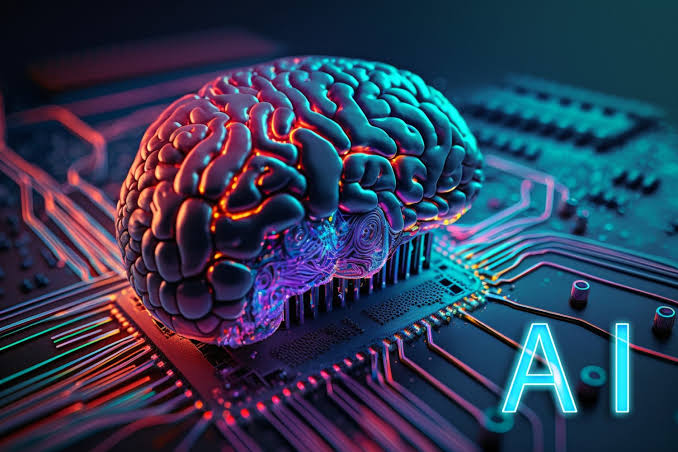
Technology has always been transformative, easing burdens, accelerating processes, and reducing the burden of human effort. The emergence of artificial intelligence (AI) is no exception. 

According to the International Data Corporation (IDC), AI is projected to add $19.9 trillion to the global economy by 2030, representing 3.5% of global GDP. Small wonder nations are scrambling to embrace its promise, racing to uncover new applications and transformative capabilities across industries.

AI has simplified nearly everything, from routine office work to academic research. Yet, it embodies the very phrase “double-edged sword”. Like every innovation before it, it carries both promise and peril. Social media once dazzled with its vast resources for learning, but soon revealed its darker influence, with studies linking its overuse to declining academic performance. 

Could AI be following the same path? The questions now hang heavy: What is the result of excessive reliance on AI in journalism and communication? What happens to our collective intellect when we let machines think for us? Will AI make man redundant, or will it sharpen our creativity?

Already, teachers in secondary schools and universities lament students’ overdependence on AI. Before this wave, young learners combed through pages of books and libraries, piecing together assignments and research with sweat and patience. 

That very process gave them a broader horizon of knowledge. Now, the temptation is to let AI provide shortcuts. Is it truly an aid or a crutch? For journalism, the stakes are even higher. AI now creates deepfakes, fabricates news, disseminates disinformation, and facilitates copyright theft at an alarming rate. 

Fake content often passes for truth, staining reputations and distracting journalists from developmental reporting as they are forced instead into endless fact-checking.

Yes, using AI to polish grammar, punctuation, and spelling is helpful. But handing over the soul of reporting—the storytelling itself—to machines erodes accuracy, credibility, and that irreplaceable human touch. Readers can sense when a piece lacks heartbeat. 

Journalism, at its core, thrives on ethics, context, and empathy. AI cannot carry those values. The danger is clear: unchecked dependence on AI undermines the profession of communication. Anyone can now generate a passable article and publish it online, blurring the line between trained journalists and casual content creators. 

The profession risks losing its gatekeeping role if carelessly diluted. So, what does the future hold? Are we surrendering decades of built expertise to algorithms? Will there be a conscious regulation of AI use? How far are we willing to go to defend the integrity of journalism?

What is certain is that AI brings challenges but also opportunities. With discipline, ethical restraint, and wisdom, journalists can harness AI for richer storytelling without compromising their responsibility to the truth. 

The future of journalism in the AI era depends not on machines, but on the choices of those who hold the pen.

Rabi Ummi Umar can be reached via rabiumar058@gmail.com.

On the national health financing dialogue

By Oladoja M.O

The Ministry of Health convened a timely, critical, and necessary gathering earlier last month: the National Health Financing Dialogue. A gathering with so much relevance and significance to address the almost comatose state of the Nigerian health sector. Reflecting on all said during the “dialogue,” there are just many thoughts creeping in here and there, which I feel compelled to just put up here for public consumption, and hopefully get across to the rightful authority to pick one or two important things. 

The dialogue, as noted earlier, was undeniably timely. I was not disappointed at all at various thematic areas buttressed on, ranging from health financing, health out-of-pocket spending (OOP) reduction, call for increment of the Basic Health Care Provision Fund (BHCPF), accountability and budgeting, over reliance on external health funding, insufficient resources as needed in the health sector, the need for proper, timely data to guide government decisions, the role of the media, and civil society organization in health sector, and holding government accountable, inclusivity of citizens in the budgeting process, budget execution, status of LG autonomy, the gap between research and policy making, establishment of proper framework for mental health in Nigeria, amongst many other things the dialogue rallied around. Reiteratively, all of these are core and vital to ensuring a positive paradigm for the national health sector state and to delivering on the interests of the citizen at large. Indeed, it was a worthwhile and insightful meeting. 

Though we still have quite a long way to go, I cannot help but acknowledge the works of the government of today on how far we’ve come in policies, increased allocation, investment in facilities, equipment, and a healthy workforce as regards health, captured in my work “Tinubu’s Healthcare Reforms: A Turning Point or Déjà Vu?”. During the course of the dialogue, a lot of observations kept creeping in, questions, suggestions, which there was not enough time to even express.

On observation

(1) We are unprepared to solve the country’s health problems, especially the issue of LG autonomy. The government focuses on superficial solutions instead of addressing root causes. LG autonomy is treated lightly compared to its importance. Primary care, which, if improved quickly, could significantly boost our health status. Unfortunately, the government is unable to do so. When I talk about autonomy, I mean actual, constitutionally granted autonomy, not superficial gestures like the Supreme Court’s jamboree. My writings, “LG: The Employed Man with no Office” and “Federalism and the Paradigm of Healthcare Accessibility,” elaborate on my views on this. The primary health issue affects p

(2) Make us talk truth, behind the blinking good intentions, health-related matters are often used for political publicity rather than long-term structural impact. Hence, many government interventions in healthcare are politically motivated rather than development-driven. 

(3) Still on the LG thing, I am more than disappointed at the way and manner in which the ALGON representatives at the dialogue spoke. What do you mean that you, as a stakeholder, come to such a stage to complain like every other person?? Basically, no form of cognitively presented way forward or suggestion, just another “we are being victimised” rhetoric. So Shameful! I was expecting them to flare up, demand something meaningful, but chai! My expectations were shattered. I thought they would speak about actual autonomy, driven by the constitution, not some half-baked, almost non-enforceable liberation.

In fact, the LG people present were just disappointed. We are talking about how to mobilise money, generate revenue for development, generate more liquidity to fund health, fund infrastructure, and none of them could make a meaningful comment on how funds can be generated rather than “if the autonomy sets in, we will ensure that all the allocation from the FG will be fully maximised.” As cool as that sounds, it was just another “we cannot do anything aside from what the FG says” kinda statement, and it only made me feel like this autonomy thing sef fit be another set-up… God abeg…. 

(4) On the role of media, it is crucial to even lean towards the perspective that the media is a culprit for where we are. Unfortunately, many media outlets and media handles are so fixated on just saying something, rather than saying something correct, and something from a knowledgeable stance, which to me, is even more dangerous than no information at all. Notably, the media are failing to pass information effectively. Especially the way they handle headlines. It is unfortunate, but it is the reality of our Nigerian populace that we have less of a reading habit. Hence, it is easy just to pick a headline, usually different from the content of the post, and run with it. Which is causing more harm to available information in the media space? Careless or sensational headlines have the potential to mislead the public, especially regarding sensitive policies such as those related to health. The issue of meaningless government secrecy is another thing I observed… and much more the issue of partisanship in politics by various media platforms and handling is another very obvious issue, causing every bit of information, especially unfinished policies or updates that are still in the pipeline, to be twisted for “political goals.” 

(5) In research, I observed that independent researchers and young passionate individuals in public health are often ignored, not encouraged, nor recognised, despite the need for data provision to help the government in setting priorities on health, and assisting in policy-making. 

(6) There’s just little or no innovative lawmaking pursued to fix systemic problems, especially wasteful constituency projects.

(7) Also, there seems to be too much focus on “there’s limited of…” What happened to the effective and efficient usage of the ones available?? Both in resources and in data.

And upon all the gbogbo atotonu of the dialogue, I was able to curate some suggestions which might be found useful;

(1) One of the major highlighted themes of the dialogue is the need for health insurance. It cannot be overemphasised that the importance of awareness still needs to be emphasised, especially to get the informal sector on board, because even among the small number of health insurance adopters, the major participants are those in the formal sector, with government employment. This awareness is not just something that will be around; “there is health insurance, and it is good for you.” But down to explaining various packages and what they cover, which can help guide expectations, correct misconceptions, and promote positive word-of-mouth about health insurance.

To meet up the ambiguous target of 40 million by 2030 and get more people from the informal sector onboard, I think a referral model (like those used in Ponzi schemes or digital marketing) could be adopted, making Civil servants primarily to act as “agents of change” or in this case, referral ambassadors, with promise of small tokens as reward for each successful referral. Because these civil servants are friends of people in communities, and even in places where government jingles and banners cannot reach, they help propagate.  No matter how we put it, the mouth-to-mouth campaign remains a powerful promotional strategy.

Another strategy is to tie health insurance enrolment to certain civic entry points, such as marriage registration. It can be mandated as part of the requirement to be submitted to the registry, where intending couples must show evidence of insurance. Procedural inefficiencies and bottlenecks should be removed to improve efficiency and ease the process, because I believe they are part of what discourages enrollees. Because even some who are already on health insurance coverage sometimes, because of long processes, delays, and stress, abandon the health insurance thing and pay out-of-pocket to get “sharp sharp” attention to their need. These negative experiences contribute to negative user feedback, and it spreads faster to non-users, worsening perceptions of health insurance enrollment.

(2) Though it may feel morally vexing, I suggest that health subsidies be tied to individual health behaviours. Those with risky lifestyles (alcohol, smoking) could face different treatment costs compared to people with unavoidable illnesses or accidents. This could encourage preventive lifestyles and behavioural change.

(3) On constituency projects, motorcycles, tricycles, food items… even outreaches) seems wasteful. I would suggest that a ban be placed, or at least regulations be given to what exactly these funds can be used to do… but then, who are those to impose that ban or restrictions, other than the actual people guilty of the bad behaviour? By direct analysis, these funds can be used to build facilities instead… whether school, or even hospitals, in this regard, left to the management of an independent body to be used efficiently and be used productively to generate money, money that can even be enough to run the operations and cover costs on its own, at least, and since the focus is to be able to generate liquidity to operationalize the facilities, the cost would be meager. They should not be free but rather run like a private entity to promote productivity. The billions lavishly spent on those meaningless things, if used in this manner, will result in more than 5–10 facilities at the senatorial district level or at whatever level of representation. Imagine if this number of facilities joined what we have??

(4) On the failure of some states in meeting their counterpart funding for BHCPF, they should not receive interventions from the FG. FG should publicly announce those states, carry the citizens along, and allow them to hold such state(s) accountable. There’s not enough funding. Therefore, the one we have must be spent in a way that is strictly tied to value and commitment.

(5) It is my suggestion that stronger media regulation be deployed to curb the spread of harmful and incorrect information (such as more dangerous than no information). And there should be a regulation/restriction on every journalist’s participation in politics. The place of media is quite sensitive, and they must remain sterile and neutral. Involvement in politics should be punishable by a ban on practising. This will give credibility to the profession and what their position is in the process of building a better state of the nation.

(6) On mobilisation of funds for health, I would suggest that the FG create something like a Health Bond, similar to commercial papers, to mobilise funds for health.

(7) Research should be given all the support it may ask for. A nation without accurate data is one with a lack of radar for progress… and I think one of the ways the government can support young, enthusiastic researchers (especially to gather young brains who are ready to help the government generate actual data for purpose of health policy and priorities) is to create access to platforms to show their works, something like a journal. We all know how much publications mean to researchers, and for young fellas like that, it can boost morale, knowing that their work is not wasted and is seen, whether it is to publish for free or at a very subsidised cost.

Lastly, I have been, and I remain, an advocate for the proper integration of the traditional health care system into the general healthcare system in Nigeria, especially at the grassroots level (Primary Health Care). My advocacy and thoughts are captured in some of my writings on Blueprint and HealthDigest. Health is people; people are culture. Nothing screams culture more than the traditional health care system. We cannot only tech-chase ourselves into a proper healthcare system in Nigeria.

Yes, technology is excellent, and AI is great, but the actual health burden we face requires that we not focus solely on these technologies. To me, I ask: why are we running? There’s a system that has been in place all this time; it should not be ignored. Many big economies have this included. The place of this traditional health system is beyond just provision of care (because, yes, a lot needs to be moderated). Still, these people can be brought in as agents, and their already established, patronised platforms can be used to promote government activities. Yes, they can assist in care provision. In fact, they have to. Knowledge of healing from generation to generation should not be neglected or allowed to die out.

Oladoja M.O writes from Abuja and can be reached at: mayokunmark@gmail.com.

Who will save Nigerians from road accidents?

By Isah Kamisu Madachi

On Thursday, 4th December 2025, my cousin Tajuddeen bade us farewell on his way to Lafia, Nasarawa State. They left early in the morning in a Hummer bus. Around 10 a.m., they had a terrible accident in a town near Bauchi metropolis. All the passengers in the vehicle were badly injured. Tajuddeen, along with the bus driver and two others, instantly slipped into coma.

Other passengers were either with more than one fracture or several wounds. On the evening of 6 December, the driver’s suffering came to an end as he passed away. The following day, another one of the passengers in the coma also died. On 8 December, the third victim in coma breathed his last, leaving my cousin still in the ICU section of the Abubakar Tafawa Balewa University Teaching Hospital, Bauchi.

The cause of the accident was tyre failure. While they were on the road hoping to reach Jos in the afternoon, their back tyre burst and the bus somersaulted several times. The primary cause of the tyre failure was actually overload. Coincidentally, as I was on a phone call with a friend, he narrated how another terrible accident occurred close to my hometown as a result of tyre issue which instantly claimed two lives and left others badly injured.

I was really shocked and worried because not long ago, on a trip to Lagos, our own bus was carrying two commercial vehicles in addition to overloaded luggage of passengers and waybills. Even before the vehicles were brought, one had to ask whether humans would still get a seat after such loads were mounted. Lo and behold, the vehicles were arranged in a way that you couldn’t even see them inside the boot.

Last month, on our way back home from Kano, we witnessed another accident around Shuwarin town in Jigawa State. It was a jam-packed hummer bus obviously heading to either Damaturu or Maiduguri. They also had a tyre failure which resulted in several deaths. By the time we arrived at the accident scene, out of more than 20 passengers including the driver, only two people were still alive. The rest appeared lifeless.

If I were to narrate all the road accidents I have witnessed, most of them caused by tyre failure, I would have to write a book of a hundred pages. Road accidents are too many across Nigeria. Less than one week ago, I saw a picture on social media that stirred wide reactions. A commercial bus was overloaded to the extent that if one wanted to go out at a transit point, they had to pass through the boot as the doorway was blocked by bags. Even in the case of an emergency, no one could use the door because luggage completely covered the entrance. Many people commented that this is common in Nigerian motor parks.

When we talk about things that claim the lives of Nigerians, I believe road accidents is of course one of the biggest culprits, even more than insecurity in some cases. Anyone who travels widely by road knows this fact. And most of these accidents are avoidable if only we take transport safety seriously.

To bring to an end or at least reduce the intensity of the problem, we need a comprehensive transport policy that tackles overload and the abuse of luggage space. Parks should be mandated to use dedicated cargo buses. If a passenger’s luggage is above 10kg, it should automatically be transferred to a cargo vehicle, not stuffed into a bus carrying humans. For waybills, there should be separate buses whose only function is to transport goods from one state to another; especially the popular routes between Northern and Southern Nigeria or even within the North along routes like Kano-Borno, Taraba-Kaduna, Abuja-Adamawa and others.

Another important solution is the deployment of safety personnel to every major park. Their only job should be to inspect buses and car tyres to ensure they are in good condition before departure. Once there is no compliance, the driver must not be allowed to go. Of course in Nigeria some people may try to offer bribes to bypass checkpoints. To address that, these safety officers should not be local staff. They should report directly to an independent transport safety unit with strict oversight, rotating officers frequently to reduce compromise.

Still, digital systems can be introduced. Each bus should be scanned and cleared through an electronic checklist linked to a central database. If a bus fails safety checks, it should not receive the clearance code required to leave the park. With this kind of structure, even bribery becomes difficult to offer because safety approval will depend on digital authentication, not an individual officer’s discretion.

Nigeria needs to take road safety as seriously as other deadliest national issues. The number of lives cut short on our roads is heartbreaking. Families are losing loved ones every day due to accidents that could be prevented if we enforce discipline, regulate overload, inspect tyres, and treat transport safety as a matter of policy, not luck. 

Isah Kamisu Madachi is a policy analyst and development practitioner. He wrote from Abuja, and can be reached via: isahkamisumadachi@gmail.com

Kwara’s false sense of security: How complacency risks a regional catastrophe

By Iranloye Sofiu Taiye

The crackle of gunfire shattered the night’s calm in Patigi Local Government Area last August. For hours, residents hid in terror as militants believed to be linked to the Mahmuda terrorist faction ransacked homes and farms, leaving behind a trail of displacement and despair. This wasn’t in conflict-ridden Zamfara or Borno. This was Kwara State, Nigeria’s so-called “State of Harmony”, now facing the brutal reality of spillover violence from neighbouring conflicts.

For years, Kwara has been regarded as an oasis of peace. While northern states battled insurgencies and northwestern states negotiated with bandits, Kwara’s security strategy primarily relied on these measures. This complacency is now our greatest vulnerability. As armed groups face increasing pressure in Nigeria’s northwest and the Sahel, they are seeking new territories and routes, and Kwara’s under-protected border communities present the perfect opportunity.

The data reveals an alarming trend: while Kwara recorded 70 violent incidents in 2024, representing a sharp increase from previous years, with ACLED data showing 21 fatalities signalling emerging threats. Meanwhile, neighbouring Niger State suffered 179 incidents with 514 deaths, over 2.5 times Kwara’s rate. This disparity highlights both Kwara’s relative peace and its growing exposure. Nigeria’s overall security situation has deteriorated dramatically, with the country dropping to 148th on the 2025 Global Peace Index and suffering over 2,266 deaths from banditry and insurgency in just the first half of 2025, exceeding the entire 2024 total.

The False Comfort of “Relative Peace”

Kwara’s peaceful reputation has created a dangerous paradox: the state appears secure compared to Nigeria’s raging conflicts, yet this very perception has led to critical underinvestment in security preparedness. With a meagre ₦350 million (approximately $230,000) security vote in its 2025 budget, Kwara has insufficient resources for basic border surveillance, let alone comprehensive counterinsurgency measures. This budgetary neglect reflects a fundamental misreading of the evolving threat landscape.

The nature of modern conflict doesn’t respect artificial boundaries. Militant groups operate across porous borders, exploiting governance vacuums and ethnic kinship. The emergence of groups like Mahmuda around the Kainji Lake area demonstrates how terrorist organisations establish footholds in perceived “safe havens” before expanding their operations. As security reports have noted, there have been at least 13 ISIS-Sahel-linked attacks in central Nigeria in 2025 alone, indicating a strategic southward expansion.

The situation mirrors concerning patterns elsewhere in West Africa, where jihadist insurgency has spread from the Sahel toward coastal states. The southward spillover alarmingly threatens countries like Benin, Togo, Ghana, and Côte d’Ivoire, which until recently had been mostly spared jihadist violence. Kwara now faces precisely this dynamic, compounded by the added vulnerability of having dismissed the threat until it arrived at its doorstep.

Recommendation: A Community-Based Solution

Some advocate for a traditional security response: deploying additional military forces along border areas, establishing checkpoints, and implementing drone surveillance. While these measures have short-term deterrent effects, they come with significant tradeoffs: escalating tensions with communities, straining federal-state relations, and diverting scarce resources from development needs.

A more effective approach combines strategic security presence with community empowerment. I recommend that Kwara State immediately establish a Community-Led Early Warning and Resilience Program (CLEWRP) to train and equip more than 5,000 local volunteers in conflict mediation, digital reporting, and response coordination. This approach recognises that security is not merely about repelling attacks but about building resilient communities capable of preventing, withstanding, and recovering from violence.

The evidence supporting community-based security is compelling. When local populations are empowered as first responders, they provide hyperlocal intelligence that external forces cannot access. They understand the terrain, recognise outsiders, and can distinguish between legitimate herders and criminal elements. As the tragic incidents in Kwara’s south communities have shown, top-down security responses often arrive too late after attacks have occurred and perpetrators have vanished into the forest corridors connecting Kwara, Niger, and Kogi states.

The proposed CLEWRP program would unfold in three phases: planning and stakeholder consultations across Kwara’s 16 LGAs; pilot implementation in high-risk areas; and statewide scaling, with continuous evaluation. The Kwara State Ministry of Homeland Security and Vigilante Affairs would lead implementation, partnering with the National Emergency Management Agency for federal coordination, local governments for ground implementation, and international organisations for training expertise.

Financing the $3-5 million USD program would require a blended approach: 60% from the state budget and 40% from federal security grants and humanitarian NGO partnerships.

A National Security Imperative

Kwara’s security crisis represents a microcosm of Nigeria’s broader challenges. The federal government’s 2025 budget allocated ₦4.91 trillion to defence and security, about 8.9% of total expenditure, recognising that without security, economic development is impossible.

The national security strategy must therefore prioritise preventing the southward spread of violence in states such as Kwara. This requires both regional cooperation and smarter resource allocation. The Accra Initiative, which promotes intelligence-sharing among coastal West African states, offers a promising model that should be expanded to include central Nigerian states facing spillover threats.

Furthermore, security funding should incentivise preventive approaches rather than merely funding reactive measures. The federal government could establish a matching-grant program for states that develop community-based security initiatives, thereby encouraging locally adapted solutions rather than one-size-fits-all approaches.

The Time for Action Is Now

Kwara stands at a precipice. The state can continue its complacent approach, hoping that violence will spare its territories, or it can acknowledge the changing threat environment and build resilient systems before the crisis becomes a catastrophe. The choice is stark: invest modestly in prevention now, or pay enormously for response later.

The CLEWRP program offers a practical, cost-effective solution that aligns with Kwara’s cultural traditions of community cooperation while incorporating modern technology and coordination methods. It acknowledges that security is not solely the government’s responsibility but a shared undertaking between authorities and citizens.

History shows that complacency amid spreading instability is a recipe for disaster. West Africa’s security landscape has deteriorated dramatically in recent years, with jihadist groups expanding their operations. Kwara cannot assume it will remain immune.

The phrase “State of Harmony” should not be a relic of Kwara’s past but a promise for its future. Preserving this harmony requires honest acknowledgement of emerging threats, courageous investment in preventive measures, and collaborative implementation across government and communities. The time for action is now, before the next attack becomes a full-blown crisis.

Iranloye Sofiu Taiye is a Policy Analyst specialising in Peace Building and Conflict Resolution, Digital Governance, and Service Delivery, and can be contacted via iranloye100@gmail.com.

My experience at the Africa Youth Health Summit in Abuja

By Saifullahi Attahir

I had the privilege of attending the Africa Youth Health Summit organised by the Federation of African Medical Students’ Associations (FAMSA). It was a 3-day event, a highly engaging program in which over 200 young and passionate healthcare students and professionals gathered at the United Nations House to learn, network, discuss, and chart the future of the healthcare system in Africa.

The delegates come from many African countries and represent diverse cultures, languages, backgrounds, religions, and colours. We had the privilege of hearing from representatives of leading agencies, including the World Health Organisation (WHO), the Africa Centre for Disease Control (CDC), the United Nations, the Nigerian Minister for Youth, Information Technology experts, and several other non-governmental organisations (NGOs).

Several hands-on workshops were organised on public health advocacy, cutting-edge cancer management, transformational leadership, reproductive health issues, and policy formulation. I was fortunate to sit next to the Nigerian Minister for Youth, Mr Ayodele, and even took a memorable photo.  

As a side trip, we visited memorable places like the Africa Medical Centre of Excellence Hospital (AMCE), the NIKE ART AND GALLERIES, and Abuja Magic Land.

AMCE is a state-of-the-art facility built by AFREXIM Bank to curb health tourism by Africans to Europe. The facility is a replica of King’s College Hospital in London, featuring the latest technologies and expertise.

My visit to NIKE GALLERY left a lasting impression on me about the human ability to turn waste into wealth through talent. The gallery contains thousands of beautiful paintings, some made from trash (bola/shara). Indeed, Nigeria is full of untapped potential!

As a President, National Association of Jigawa State Medical Students (NAJIMS) National Body, I make the best use of the opportunity in this summit to network with a lot of like-minded individuals, to voice out my opinion, and to shine Jigawa State on the radar of African maps.

I am aware of the challenges of the healthcare system in Jigawa State, ranging from maternal mortality, under-5 infants mortality, vaccination misconceptions, mental health, adolescent challenges, infrastructural and manpower shortages. I’m fully equipped with the knowledge to help my dear state and medical students back home.

Panels were organised around essential topics such as the efficient use of Artificial Intelligence in medical practice, data-driven research, Japa syndrome, and youth inclusion in healthcare system leadership.

The trip was worth attending, the investment priceless, and the experience handy. I love travelling to important places like these, as it broadens my horizons, pushes me out of my comfort zone, lets me interact with like-minded individuals, and teaches me things books or classrooms could never teach me.

Saifullahi Attahir is the President of the National Association of Jigawa State Medical Students, NAJIMS National Body. He can be reached via saifullahiattahir93@gmail.com.