Opinion

[OPINION]: Of the mosque bomb blast in Maiduguri: Headlines matter

By Ibrahim Badamasi Abdulrahman

Amid the widespread circulation of fictitious conspiracy theories alleging a so-called Christian genocide in Nigeria by Muslims, narratives often promoted by a few self-interested actors for personal gain and the advancement of narrow agendas, to the detriment of national cohesion and Nigeria’s sovereignty, one would expect a media house of Channels Television’s standing to exercise heightened objectivity and sensitivity.

Such care is essential, particularly given how these narratives were weaponised to invite foreign hostility under the guise of protecting Christians.

In reporting the same incident, Al Jazeera English headlined: “Explosion rocks crowded mosque in Nigeria, killing at least five.”

The BBC World Service reported: “Bomb blast in packed Nigerian mosque kills five.”

Sadly, Channels Television chose the headline: “BREAKING: Many Feared Dead As Bomb Blast Rocks Maiduguri On Christmas Eve.”

This choice is troubling, particularly given the well-known reality that casual or “lazy” readers far outnumber those who read beyond headlines. To such readers, and to warmongers or actors with selfish interests, the dominant keywords become “dead,” “bomb blast,” and “Christmas.”

These are easily stripped of context and repackaged to advance dangerous and divisive narratives.

Even international outlets such as The Times of Israel reported the incident as a mosque bombing, yet a Nigerian media organisation that prides itself on being Nigeria’s most awarded television station for over fifteen years failed to appreciate that, in this environment, headlines often matter more than the content beneath them.

This may not have been deliberate. However, it was reckless, and it was insensitive, especially in a country already grappling with deep religious fault lines and the harmful consequences of misinformation.

A media house of Channels Television’s stature ought to lead in restraint, precision, and contextual responsibility, particularly at moments when careless framing can inflame tensions and deepen existing harm.

It is within this context that the media is regarded as the Fourth Estate. This designation is not in a vacuum. Rather, it reflects the media’s role in filling the gap of accountability, transparency, and public awareness left by the three arms of government in a democracy.

As a watchdog, the media observes, questions, exposes, and informs the public. While it does not exercise the powers of governance, legislation, or adjudication, it carries the grave responsibility of ensuring that the successes and failures of the three arms of government are accurately, responsibly, and sensitively presented to the people, especially in a society where careless framing can inflame tensions and deepen existing harm.

Ibrahim Badamasi Abdulrahman wrote in from Borno State, Nigeria.

Nigeria’s Economic Resilience: Good policies or good luck?

By Ahmed Usman

As the year 2025 draws to a close, moments of reflection naturally set in, especially for an economy that has endured sharp shocks, painful adjustments, and cautious reforms. In an era of global economic turbulence marked by uneven commodity prices, persistently tight financial conditions, rising geopolitical tensions, regional insecurity, and an international retreat from development aid, many emerging economies have suffered currency instability, capital flight, and fiscal distress. 

For Nigeria, however, the year presents an unusual picture. Amid global uncertainty and domestic strain, key economic indicators are beginning to stabilise, prompting a deeper question about whether the country is merely ending the year on a fortunate note or finally turning a policy-driven corner.

The International Monetary Fund (IMF) projects that Nigeria’s economy will grow by about 3.9 per cent in 2025, with growth expected to strengthen modestly to around 4.1 per cent in 2026, driven by macroeconomic stabilisation and reform efforts across key sectors. While these numbers may not yet place Nigeria among the world’s fastest-growing economies, they mark a notable improvement from the passive growth of recent years and signal a gradual return of confidence.

One of the most significant recent developments is Nigeria’s GDP rebasing, which revealed that the economy is about 30 per cent larger than previously estimated. This adjustment is not merely a statistical exercise. It reflects the growing importance of services, digital trade, creative industries, and telecommunications, sectors that employ millions of Nigerians, particularly young people.

For households, a larger and more diversified economy is essential because it reduces overdependence on oil and expands opportunities for income outside traditional sectors. For policymakers, it improves Nigeria’s standing in global markets and provides a clearer picture of where growth is coming from, enabling more targeted policies.

The rebasing has also reshaped Nigeria’s debt profile. The debt-to-GDP ratio now stands at about 40 per cent, well below the levels seen in many peer emerging economies. More importantly, debt service as a share of government revenue has fallen to below 50 per cent, from much higher levels in previous years. This easing of fiscal pressure means the government now has slightly more flexibility to allocate resources to infrastructure, education, healthcare, and social protection. However, the challenge remains that Nigeria’s revenue base remains among the weakest globally, making sustained revenue mobilisation critical.

Perhaps the most tangible improvement for households and businesses has come from the foreign exchange market. After years of volatility and sharp depreciation, recent months have seen a reduction in exchange rate volatility, a narrowing of the gap between official and parallel market rates, and a gradual buildup of external reserves, now estimated at over $36 billion. This stabilisation has practical consequences. It helps slow imported inflation, reducing pressure on food, fuel, and medicine prices. Foreign portfolio inflows have also picked up, reflecting renewed investor confidence.

Nigeria’s capital markets are also telling a positive story. The stock market is enjoying its strongest rally in nearly two decades, with the All-Share Index posting record gains. This surge reflects expectations of improved corporate earnings and better macroeconomic coordination. Similarly, Nigeria’s bond market has entered a bullish phase, with falling yields and strong demand from both domestic and foreign investors. Lower bond yields reduce government borrowing costs and can eventually translate into lower interest rates for businesses and households seeking credit.

After reaching painful highs, inflation (food inflation) has begun to ease, FX conditions have improved, and supply pressures have eased. Although prices remain elevated, the slowdown in food prices offers some relief to households whose purchasing power has been severely eroded over the past two years.

Perhaps the most encouraging fiscal development is the sharp rise in government revenue. This improvement reflects tax administration reforms, subsidy removal, and better compliance. Higher revenue is central to Nigeria’s long-term stability. It reduces reliance on borrowing, strengthens public services, and allows targeted social spending to cushion vulnerable households from reform-related shocks.

Despite these gains, Nigeria’s resilience should not be mistaken for strength. The economy remains vulnerable to oil price swings, climate shocks, global financial tightening, and domestic security challenges. Monetary pressures, fiscal constraints, and external risks continue to interact in ways that could quickly reverse progress.

However, resilience built on sound fiscal management, credible monetary policy, and structural reform is fundamentally different from resilience driven by temporary luck. Strengthening domestic revenue, managing debt prudently, investing in human capital, and deepening diversification are not optional; they are essential.

Is the question whether Nigeria’s current resilience is the product of good policies or good luck? The evidence increasingly points toward policy-driven stabilisation, though aided by favourable timing and improved coordination.

The fundamentals are improving, confidence is returning, and the economy is stronger than it has been in years. The challenge now is to convert this fragile resilience into inclusive and durable growth, growth that raises living standards, creates jobs, and restores hope for millions of households.

Ahmed Usman wrote via ahmedusmanbox@gmail.com.

Saving Nigeria starts with honest self-reflection

By Suleiman Usman Yusuf 


Right now, I am deeply pained and genuinely confused, perhaps like many other well-meaning Nigerians who still believe this country can rise above its failures. If all I have to offer is my voice and my pen, then I will continue writing about Nigeria’s lingering security crisis until my last strength fades. Silence is no longer an option when the nation is bleeding this profusely.

This country is bruised. Every week, the news reminds us that Nigeria is fighting for its own life, not in theory but in blood and dust. Yet we move on too quickly, as if these tragedies belong to someone else.

The death of Brigadier General M. Uba should stop us in our tracks.

Not just because he was a senior officer. Not because his story is more important than the stories of countless others who fell before him. But because his final hours reveal both the extraordinary courage of the men defending this country and the painful weaknesses of the institutions meant to protect them.

Two days ago, Nigerians were told he was alive and safe. Today, the truth arrived from insurgent propaganda channels rather than from the State he served. That alone should trouble every citizen who still believes this country can be redeemed.

But beyond the misinformation, beyond the chaos of battle and the failures of communication, there was a man. A man who fought through one ambush, shielded his men, and kept talking on the radio even as danger closed in from every direction. A man who understood the terrain, the risks, and the meaning of service in a way many of us never will.

His killers did not find him by magic. They found him because insurgent groups in the North-East have evolved into highly adaptive, intelligence-driven networks. They have spotters, informants, trackers, and a familiarity with the terrain that gives them dangerous advantages. Our troops face that reality every day with limited resources and uneven institutional support. Yet they still go out, still patrol, still hold their ground.

Brigadier General Uba died in uniform, under a harsh Borno sky, in the service of a country that has not yet learned how to protect its defenders fully. His death is not just a battlefield loss. It is a national failure.

But this is where our story must change.

Nigeria cannot survive if we continue pretending that insecurity is a Northern problem, or a Christian problem, or a Muslim problem, or a regional competition in suffering. Nigeria is bleeding in too many places for that false comfort.

This is a Nigerian problem. All of us are inside this fire.

If we want to save this country, we must begin by admitting the truth.

We have an overburdened military fighting a war that politicians treat like background noise. We have intelligence agencies that do not always speak to each other. We have a society more invested in ethnic debates than national survival. We have families quietly burying soldiers while the rest of us argue online. We have institutions that hide failures rather than learn from them.

But we also have something else. We have citizens who still believe in Nigeria. We have communities ready to cooperate when trust is restored. We have young officers and men who refuse to give up on this country, even when this country sometimes gives up on them. We have people like Brigadier General Uba, whose courage reminds us of the Nigeria that is still possible.

If his death is to mean anything, it must push us toward a national rebuilding rooted in truth, accountability, and collective responsibility. It must force us to demand better communication protocols, better extraction procedures, better intelligence coordination, and better welfare for every man and woman who carries a rifle for this country.

Saving Nigeria is not a slogan. It is a long, disciplined, painful process that requires leadership, honesty, citizen cooperation, and institutional courage.

Brigadier General Uba has paid his share in full. The account is now with us.

Suleiman Usman Yusuf, a Governance, Security, and Development Consultant, AI Policy and Governance Advocate, and a Shaper of Africa’s Tech Future, wrote via suleimanusmanbac@gmail.com.

Democracy vs. Military Rule: No contest

By Abdullahi Muhammad Yalwa

Sometimes, intellectual masturbation makes people say despicable things. That’s how they say foolish things without actually knowing. If not intellectual premature ejaculation, what else would possibly make an educated person compare democracy with military rule? You can’t compare the two at all. In fact, it’s an insult to real thinking to mix them up without a strong reason as to why and how.

Yes, Nigerians are frustrated with democracy because we’ve suffered under it. Presumably, every Gen Zer born from 1999 to date has suffered, or is suffering, from the discontents of democracy. Corruption, poverty, and bad leaders all strangulate our growth. As such, it’s easy for someone who never lived through military rule — or never thoroughly read about it — to think it was better. Nevertheless, it’s inexcusable to make that comparison in the 21st century. With all the history and information one click away. This is lazy thinking.

Nigeria’s story explains the tension between Democracy and Autocracy. Since independence in 1960, Nigerians have swung between dreams of democracy and military high-handedness. The First Republic, which started in 1963, collapsed into coups by 1966. Then came 30 years of mostly military rule, with a short democratic break from 1979 to 1983.

Within this duration, Gowon fought the Biafran war from 1967 to 1970, which resulted in millions of deaths and the fangs of deadly hunger almost flung Nigeria into an abyss. After Gowon, Buhari came in the 80s with his “War Against Indiscipline” rhetoric. Though some changes were recorded only minimally, his government, too, was a failed experiment. Then, Babangida followed his coup and ruled Nigeria through military rule for almost 10 years. His scandalous cancellation of the 1993 election brought General Abacha, who also killed activists in a cold-blooded manner, abducted critics, and censured opposition. Under Abacha, Nigeria became a global pariah, an outcast because of misrule, corruption, and human rights abuses. So, the soldiers promised order but delivered fear, theft, and failure. Beyond the Gun tirade, a lot of them proved to be nothing but unscrupulous, self-centred, and avaricious.

When democracy returned in 1999, it wasn’t perfect — but it was progress. From Obasanjo to Yar’Adua, Jonathan, Buhari, and now Tinubu, we’ve seen peaceful transitions. That alone is a miracle compared to the blood and chaos of coups, which are primarily scathing and scary.

Democracy works and is better than military rule because it gives people a voice. Under democracy, leaders are elected. The constitution limits their powers, and Citizens can question, join them, or change the government. Nigeria’s record is full of incidents in which the people removed the government despite its resistance. Elections since 1999 have been taking place, even though with low turnout and many flaws.

Furthermore, democracy still allows movements and protests like that of #EndSARS in 2020. As such, people can protest against abuse without the nation collapsing. That’s democracy in action.

Equally, in a democracy, the law stands above all. Rights like speech, movement, and association are still protected despite shortcomings. The media and civic groups expose scandals and corruption. Dan Bello is our standard example here. Leaders feel pressure because they can be voted out. They are still afraid of the people’s might. Similarly, growth comes from debate, not decree. Policies get tested and refined before execution. Sometimes they are reversed after execution because of pressure. All these are happening because of the grace of Democracy.

Now, compare that with military rule. Under soldiers, power is seized by guns, not ballots. A few officers give orders. No dialogue, no accountability, only decrees that replace laws. The constitution goes silent. Many of its parts got scraped and unscripted. Rights become suspended, or mere names on papers. Dissent under the military is punished with the barrels of guns. Abacha’s regime proved it — hidden trials, executions, silence. Thus, there is no right to protest, no matter the height of injustice.

Nevertheless, some people may say the military will bring discipline, build roads, and promote infrastructure. But all of that without justice is short-term. Order without fairness is not peace; it’s fear, which eventually erupts into chaos in disguise. 

We have tested the military. And the reflex is there in history for the discerning minds. Under the generals, Nigeria’s economy sank, institutions died, and corruption deepened. Stability built on fear never lasts. Once soldiers take power, they rarely leave it peacefully. Hence, there is no rotation of government. You only get stuck with whatever you’ve got.

Although Democracy has its flaws, issues like bad elections, corruption, and insecurity remain rampant in our country; nevertheless, it is by far a better option. At least, it gives us freedom to protest, options for dialogue, and hope in change. By contrast, military rule gives us nothing but fear, silence, and graves.

The worst democracy is still better than the best dictatorship. Democracy lets us correct our mistakes. Military rule buries them.

So, all these comparisons and happiness over the aborted coup against Tinubu is nothing but nostalgia from frustrated people who refused to learn better. Democracy is not Nigeria’s problem. Nigeria’s main issue is bad leadership. If only we’d vote for responsible leaders, they’d fix the system, without destroying it. They’d strengthen our votes. Protect our rights. Hold leaders accountable. All these would happen only when democracy grows. Thus, democracy grows, Nigeria grows.

No gun can build what the people can build together.

Abdullahi Muhammad Yalwa, a Law graduate based in Azare, Bauchi State, can be reached at abdullahimuhammadyalwa02@gmail.com.

Bandits and Betrayal: Why negotiation is not the answer

By Muhammad Isyaku Malumfashi

There are people within this government who support negotiations with bandits, and this piece aims to address them. I wrote against former Governor Masari’s governance when he had negotiated with bandits in an article published by The Daily Reality newspaper, titled “How Governor Masari is Wrongly Governing Katsina State.” I’m doing the same to refute any move to negotiate with bandits at the expense of the government’s power.

Meanwhile, apart from the government’s “data boys,” the problem we now have is the “negotiation lawyers” who protect the government from criticism of negotiating with terrorists. As I have been saying, it is a failure of the government to negotiate with terrorists.

Not only I, but many security experts have opined that negotiating with bandits is futile. In fact, the governor himselfDr Dikko Umaru Radda, admitted during a call-in interview with Channels Television that he wouldn’t negotiate with bandits at their weakest point. We all applauded, as they have no justifiable reason for their actions and hence no grievances to present to the government for it to listen to. They should either surrender and cease fire, or the government should use force to wipe them out.

We’ve seen many such negotiations with bandits in both the previous administration and the present that have not borne fruit. Perhaps the Fulani terrorists breached the truce by breaking the agreement, thereby continuing to commit crimes against innocent citizens. 

The biggest problem is that they will come into town with weapons, as we’ve seen in the Kankara Local Government area, until people become accustomed to seeing them. Then, some will start to befriend them, so they, too, can get the opportunity to handle weapons. Thus, the country might become like Libya – God forbid – where arms became available to citizens as a result of government carelessness in the name of self-defence, and subsequently turns into a lawless state.

Because in Libya today, one with more sophisticated arms is the most feared and powerful being, just like a government. They can do and undo as they want. Nigeria, particularly Arewa, might face a similar fate, but I believe God will embarrass them. The worst thing about this negotiation is that even if there is negotiation, these Fulani bandits won’t take up any job that will earn them money. Instead, they’ll move to another town where there’s no security problem and continue their terrorist activities. If there’s another negotiation, they’ll move forward.

They wanted to pursue an agenda of conquest with great force, as in the 1804 Jihad. I know historians among us will relate better, though I’m not one; I’m a history enthusiast and studied it in secondary school. Thus, we’re not ignorant of the past. If we don’t forget, those Fulani bandits camped at the Kankara forest under the notorious bandit leader Babaru, aka, had to negotiate with the people of Yar Goje town, before they could target some villages.

Then, they got the opportunity to attack the Mantau village in Malumfashi, where they killed many worshippers during dawn prayers in the mosque and thereafter kidnapped many residents and took them to their camps. Although they later released them, the government claimed the release was due to a firefight with troops, but Zuma Times reported the opposite. We believe the latter, as the government didn’t present any evidence of casualties.

The Mantau village has been a headache for the bandits for years. They’re well-prepared and gallant, and on many occasions, they’ve hidden at routes where bandits pass by to attack and kill them. The village was a no-nonsense and fearful place for bandits. Even the day they attacked them, it was a raid, not face-to-face, which shows an act of cowardice. Therefore, the Fulani won’t stop terrorising; they’ll move forward until they’ve conquered the Hausa land entirely, as captured and masterminded by their ancestors for centuries.

Negotiation with bandits, even though it has never happened at the state level but at the local governments’ level, as seen in Jibia, Batsari, Kurfi, Kankara, and others, makes us suspect that even those that happened at the local governments’ level were with the governor’s consent. He doesn’t want to admit his failure or is afraid of reversing his stance on non-negotiation with bandits.

The idea is totally archaic and reckless because not everybody will sit down and watch people who killed their loved ones or bankrupted them through ransom payments be forgiven and allowed to roam freely, while the people they killed are no more. The properties destroyed or collected for ransom are not compensated.

Even the government’s careless move to empower repented bandits is not welcoming because they have enough money collected from ransom payments. Why should the government empower them with our money? I think the best approach is to empower the victims, not the repentant bandits. The government should also reintensify its security approach, especially given the recent surge in banditry attacks in eastern and southern Malumfashi over the past two days. May Allah restore absolute peace and stability in our towns, states, and the country at large.

Dangote’s next battle!

By Zayyad I. Muhammad

The Petroleum Industry Act (PIA) 2021 does not prohibit the importation of petroleum products into Nigeria. There is no outright ban; instead, the Act supports a deregulated market with regulatory oversight governing imports.

Dangote’s grievance with the Nigerian Midstream and Downstream Petroleum Regulatory Authority (NMDPRA) under Engr. Farouk Ahmed centres on the continued issuance of import licences to petroleum marketers. And the failure to impose heavy levies and taxes on imported petroleum products 

According to the NMDPRA, Nigeria’s petrol imports averaged 52.1 million litres per day in November 2025.

The Nigerian Midstream and Downstream Petroleum Regulatory Authority further disclosed that the NNPC imported the bulk of Nigeria’s petrol requirements in November 2025, with total imports by all marketers amounting to 1.563 billion litres during the month.

In the first round of this battle, Dangote appears to have “won,” as President Bola Ahmed Tinubu has replaced Engr. Farouk Ahmed of the NMDPRA and Gbenga Komolafe of the Nigerian Upstream Petroleum Regulatory Commission (NUPRC). Oritsemeyiwa Amanorisewo Eyesan has succeeded them as Chief Executive Officer of the NUPRC and Engr. Saidu Aliyu Mohammed as Chief Executive Officer of the NMDPRA, subject to the Senate’s approval.

The bottom line is that this battle will continue. The new chief executives cannot outrightly ban the importation of petroleum products by the NNPC or other marketers, as there is no law to support such a ban. However, they are likely to engage Dangote cautiously to avoid the fate that befell Farouk Ahmed and Gbenga Komolafe. Which is not a good thing for any regulator in any industry 

If Dangote truly seeks full market patronage, pricing is key. His products must match or beat the cost of imported petroleum products. Marketers operate on a simple philosophy: buy good, sell good. 

If Dangote Refinery’s prices and processes are competitive or superior to imported products, no marketer would endure the challenges of sourcing foreign exchange, freight costs, and time delays when a cheaper and readily available alternative exists at their doorstep.

 Zayyad I. Muhammad writes from Abuja via zaymohd@yahoo.com.

How courts are becoming the final arbiters in West Africa’s elections

By Abu Turay

Across West Africa, a silent but powerful transformation is taking root: the judicialization of politics. The courts, once arbiters of constitutional order, are increasingly the final arbiters of electoral contests. Nowhere is this trend more visible than in Nigeria, where nearly every major election ends not at the ballot box, but at the bench.

This expanding role of the judiciary in electoral outcomes raises complex questions: Are the courts rescuing democracy from flawed elections? Or are they replacing the people’s will with judicial verdicts, thereby shifting the center of gravity in democratic governance?

Courts as Electoral Arbiters

In Nigeria, the 2023 general elections showcased the scale of post-election litigation. Dozens of gubernatorial, legislative, and even presidential results were contested, with tribunals and appellate courts deciding outcomes. In some states, candidates initially declared losers were later declared winners by judicial rulings.

This is not unique to Nigeria. Ghana, Senegal, and Sierra Leone have all witnessed major electoral disputes resolved by courts. The judiciary has become both a battleground and a battlement—a place where democracy is either affirmed or redefined.

At face value, this suggests a maturing democracy where the rule of law reigns supreme. But the implications are not always reassuring.

Why Judicialization Is Rising

Several forces are driving this trend.

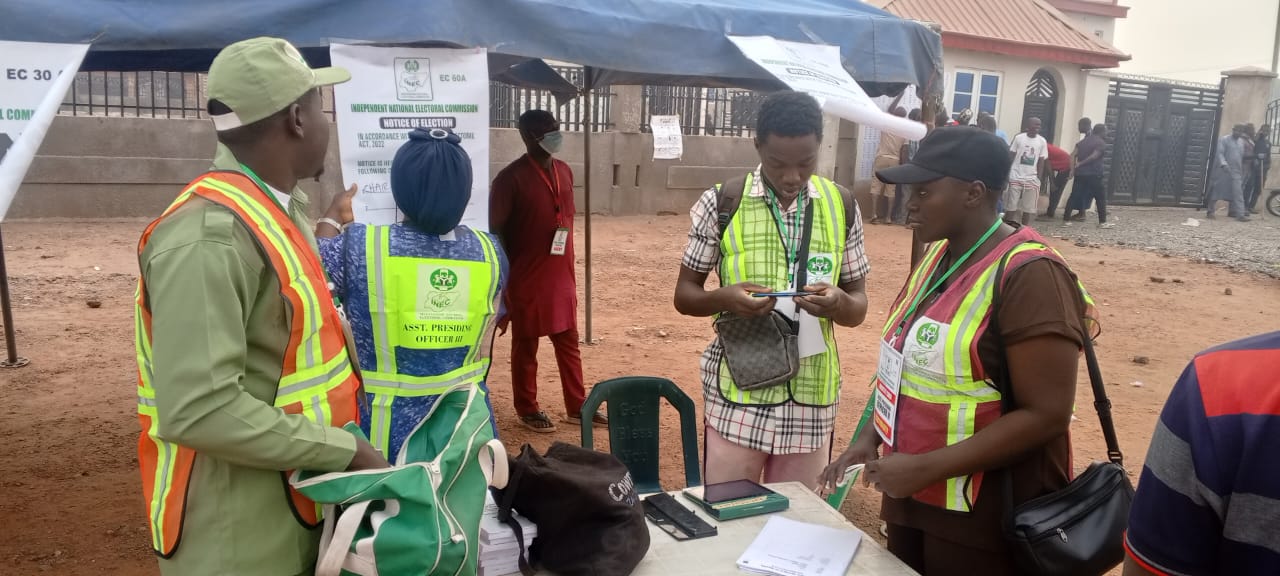
First, the deterioration of electoral credibility. When institutions like the Independent National Electoral Commission (INEC) are accused of logistical failures, transparency lapses, or bias, the courts become the last hope for justice.

Second, electoral malpractice, including voter suppression, ballot snatching, vote buying, and misinformation, creates fertile ground for legal contestation.

Third, the increasing legal codification of elections means that technicalities—like improper nomination, overvoting, or irregular result collation—can overturn popular mandates.

Finally, the high stakes of public office in West Africa create desperation. Access to state power can mean access to wealth, immunity, and patronage. In such a zero-sum environment, litigation becomes not just a legal process but a political strategy.

The Benefit and Risks of Judicialization

There’s no denying that courts have played a vital role in correcting flawed elections. In theory, their intervention strengthens democracy, punishes rigging, and reinforces accountability. For disenfranchised voters and honest candidates, the courts can offer justice.

However, the risks are real—and growing.

  • Erosion of Voter Confidence: When elections are routinely overturned or validated by judges, citizens may begin to see voting as irrelevant. If judges, not voters, decide winners, what incentive remains for civic participation?
  • Perception of Bias: Even when courts follow the law, public trust can erode if verdicts appear to favor the ruling party or lack consistency. Allegations—often unproven—of judicial compromise further deepen distrust.
  • Political Pressure on Judges: With so much at stake, courts may face overt or subtle pressure from powerful actors. This politicization of the judiciary undermines its independence and the democratic process.
  • Weakened Electoral Bodies: Overreliance on courts can take pressure off electoral commissions to improve. If every error or illegality is expected to be “fixed” in court, institutional reform stalls.

Striking the Right Balance

The solution isn’t to remove the judiciary from politics, but to restore balance in democratic governance. That starts with a few key reforms:

  1. Strengthen INEC: Electoral commissions must be empowered and insulated from political interference. Technology, transparency, and real-time result transmission should be prioritized.
  2. Judicial Reform: Appointments should be merit-based and transparent. Courts must deliver verdicts speedily, especially before swearing-in ceremonies, to avoid situations where incumbents retain power during prolonged litigation.
  3. Public Legal Education: Citizens must understand the legal basis for judgments. Civic education can prevent misinformation and temper partisan outrage.
  4. Political Party Reforms: Many disputes begin with flawed primaries. Strengthening internal party democracy would reduce court cases tied to candidacy irregularities.
  5. Pre-election Dispute Resolution: Early intervention by courts—before elections—on candidate eligibility, party symbols, and procedural concerns can limit post-election chaos.

Democracy in the Dock

The growing judicial role in elections reflects both the fragility and resilience of West African democracies. It shows that, although the ballot may be compromised, the Constitution still carries weight. Yet, democracy must not become a perpetual courtroom drama.

The judiciary is not an electoral umpire. It is a guardian of law, not a generator of legitimacy. When citizens believe their votes don’t count, the social contract frays. When politicians believe they can win in court what they lost at the polls, the democratic ethic decays.

Ultimately, a nation where every election becomes a lawsuit is one where democracy risks death by litigation.

To end this piece, I ask: Do we want a democracy that is judicially rescued or an institutionally reliable democracy? The difference will shape not only our politics but our future.

Abu Turay is an Embedded Technical Expert on Electoral Affairs at the Electoral Assistance Division of ECOWAS Peace, Security and Governance (EPSG) Program. He can be reached via bainam2010@yahoo.com.

[OPINION]: Life after NYSC: Navigating Nigeria’s tough labour market

By Usman M. Shehu

One of the most unsettling thoughts for any corper is the harsh reality of the Nigerian labour market. I know this firsthand—I’m in Batch C Stream 2, due for my Passing Out Parade (POP) on 18th December 2025. Finishing service brings not just doubt, but real anxiety and fear: fear of losing the monthly allowance (allowee), and the daunting task of distributing your curriculum vitae (CV)—via email or in person—to companies, agencies, and contacts.

The dynamics of the job market have shifted dramatically. It’s no longer just about what you know (your skill set), but increasingly about who you know (your connections). This is driven in part by the sheer volume of graduates entering the market each year. Take my field, geology, for example: it’s not one of the most competitive courses, yet about 80 students graduated in my class alone, with degrees ranging from first class and second class upper (2:1) to second class lower and third class. This pattern repeats across faculties from sciences and engineering to humanities. When you do the math, thousands of graduates flood the market annually, far exceeding the combined absorption capacity of the public and private sectors.

This oversupply is a major reason why many graduates and even their guardians rely on connections to secure jobs. It’s an affront to the merit-based ideals of our educational system and a key factor behind the declining efficiency in the public sector. When nepotism and connections trump competence, institutions suffer. The civil service is already crumbling under this weight, as we see today. Fixing it remains a hot topic in public discourse, but the goal should be clear: employment public or private must prioritise what you know over who you know.

Another major challenge is the age barrier. Since 2009, the NYSC certificate prominently displays your date of birth to prevent age falsification. This makes it harder for anyone over 28 years whether due to late entry into university or academic delays to get interviews or even apply. Most job portals and advertisements specify strict requirements: age limits, degree class, skills, and years of experience. Often, if you’re above the age threshold, you can’t even access the application portal. These restrictions hit hardest in white collar jobs.

The Way Forward: Despite these systemic hurdles, individual agency matters. To move forward, we must be enterprising and proactive: work hard, strategically build in-demand skills (like digital marketing, data analysis, coding, or entrepreneurship), and stay humble while relentlessly pursuing opportunities whether through networking, job hunting, or starting your own business.

That said, this moment isn’t entirely bleak. We’re excited about the transition and earning our certificates. It opens doors to jobs that require NYSC completion. And if we take these steps seriously upskilling, staying resilient, and thinking creatively we won’t just be employable; we’ll become highly sought-after prospects.Happy POP to my fellow corpers, Batch C Stream 2 2025! Let’s step into this next chapter ready. For by failing to plan, we are planning to fail.

Usman M. Shehu writes from Kano State, Nigeria.

[OPINION]: 12 months in office: How Prof. Salisu Shehu is steering NERDC forward

By Anas Abbas

When Professor Salisu Shehu assumed office as Secretary-General of the Nigerian Educational Research and Development Council (NERDC) twelve months ago, expectations were naturally high. His background spanning academia, public service, and university administration suggested a leader well-versed in both theory and practice. One year on, those expectations are steadily taking shape in policy actions and institutional reforms.

Born in Tafawa Balewa, Bauchi State, Professor Shehu’s career journey reflects a deep and consistent engagement with education. From advising former Bauchi State Governor Isa Yuguda on education matters to serving as Vice Chancellor of Al-Istiqama University, Sumaila, his professional life has been shaped by classrooms, policy chambers, and research institutions. That experience would soon inform his approach at NERDC.

Upon assuming office, one of his first priorities was the internal part. Professor Shehu believed that effective national reform could not emerge from a divided institution. He therefore placed strong emphasis on building harmony and mutual understanding among staff members. In his view, a research and development council can only thrive when its workforce operates as a cohesive unit, driven by shared purpose rather than fragmented interests.

Yet, beyond institutional culture, curriculum reform remains the centerpiece of his leadership. For years, the national Teacher’s Guide had been limited to junior secondary schools, leaving a noticeable gap at the senior secondary level. Under Professor Shehu’s stewardship, the guide underwent a comprehensive review by subject experts and was subsequently expanded to cover senior secondary education a landmark achievement for the Council. With the support of the Minister of Education, the updated Teacher’s Guide has now been implemented nationwide, marking one of NERDC’s most significant interventions in recent times.

Professor Shehu’s vision, however, extends beyond a single reform. He argues that education systems must evolve in step with a rapidly changing world. To this end, he has proposed a quarterly review and update of Nigeria’s national curriculum an ambitious but strategic move aimed at ensuring Nigerian students remain competitive with their counterparts in developed economies.

In the same forward-looking spirit, the Secretary-General has drawn attention to the growing influence of artificial intelligence in global education. As AI increasingly shapes teaching methods, learning content, and assessment models, he maintains that Nigeria cannot afford to lag behind. NERDC, he says, has begun exploring ways to integrate artificial intelligence into curriculum planning and design, signaling a decisive shift toward future-ready education.

Another critical area under his watch is the long-standing debate on mother-tongue instruction in early education. While Professor Shehu supports the policy in principle, he is equally clear about the need for caution. According to him, successful implementation requires proper groundwork, particularly through structured “train-the-trainer” programmes to equip teachers with the necessary skills before nationwide rollout.

Despite the technical demands of policy reform and institutional leadership, Professor Shehu consistently returns to a simple but powerful message especially for young Nigerians. Education, he believes, remains the most reliable pathway to personal growth and national development. His call to the youth is direct and unwavering: embrace learning, build capacity, and prepare for a future shaped by knowledge and innovation.

As he enters his second year at the helm of NERDC, the direction of his leadership is becoming increasingly clear. Reform the tools, update the knowledge base, embrace emerging technologies, and equip the next generation for a world already in motion. For Professor Salisu Shehu, the task of shaping Nigeria’s educational future has only just begun.

Anas Abbas is a final year student of mass communication, Bayero University, Kano.

COP30 and Niger’s turn to shine on climate action

By Abdulsalam Mahmud

Across the world today, governments are recalibrating their economies to fit a green and sustainable future. From Brazil’s vast reforestation drive in the Amazon to Morocco’s solar revolution in Ouarzazate, nations are realising that the path to prosperity now runs through the low-carbon economy. 

The green transition has become more than an environmental necessity; it is the new global economy in the making — one that rewards innovation, resilience and foresight. For Africa, this transition is both an urgent challenge and a rare opportunity. 

As the continent most vulnerable to climate change, Africa stands to lose the most from inaction. Yet, it also possesses immense natural capital — sunlight, land, biodiversity and youthful human potential — that can power a sustainable transformation. Countries that act early and boldly will not only build resilience but also attract the finance, partnerships and technologies shaping the next century.

In this global context, Niger State, under the visionary leadership of His Excellency, Farmer Governor Mohammed Umaru Bago, has chosen to define its future differently. Over the last two years, the state has pursued one of the most ambitious subnational green economy transformations in Nigeria’s history. 

By linking local realities to global climate ambitions, Niger is steadily positioning itself as a hub for climate-smart agriculture, clean energy, and green industrial development. Governor Bago’s administration began by recognising an undeniable truth: climate change is not just an environmental issue but an economic one. 

Desertification, flooding and deforestation have long undermined livelihoods across the state. To confront these threats, Niger launched its “Green Economy Blueprint”, an integrated strategy designed to build resilience while creating green jobs and sustainable prosperity. From that moment, the state’s engagement with the world deepened. 

At COP28 in Dubai, Niger presented its blueprint before international partners, and by COP29 in Baku, it had become a recognisable name in subnational climate leadership. These appearances were not symbolic. They yielded partnerships that have since defined the core of Niger’s transition agenda.

One of the most transformative was the Memorandum of Understanding with Blue Carbon, a UAE-based company committed to developing sustainable climate solutions. The agreement to plant one billion economic trees across one million hectares in Niger State is among the largest private–public reforestation programmes on the African continent. 

Beyond ecological restoration, the initiative promises rural employment, carbon credit generation and long-term economic dividends from timber, fruit and non-timber forest products. Equally significant was the partnership with FutureCamp Germany, a globally renowned firm in carbon markets. This collaboration aims to unlock over ₦1 trillion in climate investments and build the technical framework for Niger’s carbon market activation.

For a subnational entity, this is pioneering work — one that could see Niger emerge as the first Nigerian state to fully participate in voluntary carbon trading, attracting new revenue streams while promoting transparency in climate finance. The MoU with the NNPC Limited extends Niger’s climate action to the energy frontier. 

It covers a suite of renewable and low-carbon projects, including a Greenfield hydroelectric power plant, mega solar parks for institutions and home solar systems targeting 250,000 households. The agreement also envisions an ethanol plant capable of producing 500 million litres annually, powered by crops cultivated across 100,000 hectares — a project that will create value chains, empower farmers and reduce dependence on fossil fuels.

Meanwhile, the collaboration with ECOWAS Bank for Development and the Environment for an $11 million Madalla Green Economic Market promises to turn commerce itself into a model of sustainability—blending trade, recycling, and renewable energy into a single modern ecosystem. Similarly, Niger’s partnership with the Turkish firm Direkci Camp is reshaping agribusiness through smart agriculture, irrigated soya cultivation and export-oriented value chains.

These developments are not isolated. They are coordinated through the Niger State Agency for Green Initiatives (NG-SAGI), the institutional anchor established two years ago and now led by Dr Habila Daniel Galadima. Beyond a doubt, NG-SAGI is more than a bureaucracy; it is a policy engine designed to harmonise the state’s environmental, agricultural, and energy programmes into a coherent climate-resilience framework.

Under this framework, Niger hosted Nigeria’s first-ever subnational Green Economy Summit in 2023, attracting investors and development partners from across the globe. The summit’s outcomes validated the Governor’s approach: local action can be globally relevant if guided by a clear vision and credible governance. The pledges and partnerships secured there continue to serve as foundations for current projects — from afforestation to renewable energy and sustainable agriculture.

Another milestone was the creation of the Niger State Agriculture Development Fund, with ₦3.5 billion in startup capital from the state and local governments. The fund is enabling 1,000 young farmers to access ₦1 million in grants, along with hectares of land for nurseries across all 25 local governments. This initiative has quietly triggered an agricultural mechanisation revolution, empowering a new generation to view farming as a business —and sustainability as a strategy.

Partnerships with the United Nations Industrial Development Organisation (UNIDO), the Energy Commission of Nigeria, and the Global World Energy Council are driving new frontiers in wind energy and industrial decarbonization. Niger’s growing alignment with UNIDO is already yielding plans for circular-economy models within the agro-processing free trade zone, blending job creation with environmental responsibility.

And while some of these projects are at different stages of implementation, the direction is unmistakable: Niger State is building a green identity anchored on innovation, inclusion and international collaboration. Even modest steps, like installing solar-powered streetlights across Minna, tell a larger story — one of a government deliberately moving toward a future powered by clean energy and driven by public safety and climate consciousness.

As the world prepares for COP30 in Brazil next month, Niger State’s delegation is expected to present these achievements not as isolated efforts, but as part of a coherent subnational climate narrative. It will highlight how a state, once challenged by deforestation and poverty, is now leading a structured march toward carbon neutrality and green prosperity. 

The focus this time will be on climate-smart agriculture, renewable energy expansion, youth inclusion, and green finance innovation—key pillars aligned with the global call for just and equitable transitions. At COP30, Niger’s voice will also speak for Nigeria’s broader subnational climate movement — demonstrating how state-level leadership can accelerate the nation’s commitments under the Paris Agreement. 

The lessons from Niger are clear: climate action must be localised, data-driven and economically beneficial. Beyond the conference halls of Brazil, Niger’s agenda carries deep human meaning. Every hectare reforested, every solar panel installed, every youth trained in sustainable agriculture is a statement of faith in a livable future. 

Climate action here is not an abstract ambition; it is a lived policy that transforms communities, restores hope and redefines governance as stewardship. If properly amplified, Niger’s story could inspire other states to view climate change not as a threat but as an opportunity—a chance to create industries, attract green finance, and protect generations unborn. 

That is the broader promise Governor Bago’s vision now represents: that sustainability is not an aspiration for rich nations alone, but a shared moral and developmental duty for all. As COP30 draws near, Niger’s turn to shine on climate action is not just about showcasing progress; it is about reinforcing possibility. 

For a state once defined by its rivers and farmlands, the journey toward a green economy may well become its most enduring legacy — one that proves that in Africa’s heartland, the seeds of a sustainable future are already being sown

Mahmud, Deputy Editor of PRNigeria and a rapporteur at the maiden Niger State Green Economy Summit, writes via  babasalam1989@gmail.com.