Opinion

AbdulJabbar and the free speech conundrum

By Muhammad Mahmud

The recent debate between AbdulJabbar and representatives of Kano Ulama on the former’s reprehensible method of uttering unprintable words on the person of the Messenger of Allah (Peace be Upon Him) on the pretext of deduction and/or inference has opened yet another question on the freedom of expression. Some few supporters of AbdulJabbar decided to hinge their support on the hype of freedom of expression, saying that they are supporting him because he represents their free speech advocacy.

Nevertheless, a simple glance will expose this fallacy because if criticising other ideas is sanctioned by the freedom of speech article, AbdulJabbar himself does not seem to believe in it given his radical stance on the right of different sects to propagate their understanding. He condemns other people (sometimes using all available invectives) for no reason other than expressing opinions that contradicts his stance. He attacks other sects with impunity, descending on the personalities of many revered sheikhs, who were not even aware of his existence, in order to hurt emotionally and psychologically injure their admirers who disagree with him on one issue or another.

It is, therefore, hypocritical to premise supporting the man on the shaky ladder of free speech advocacy. This is even more evident as the peddlers of this chicanery never, even for once, voiced their dissatisfaction with the man’s assault on others who spoke their minds.

Now that the issue of freedom of expression is introduced into the unfolding drama, it is pertinent to ask what precisely this freedom of expression is? What is its scope, length and breadth? To what extent is it applicable? Who determines what it is and who will decide who is guilty of violating its principles?

We must address this because without fully knowing and understanding these, we may never have the much sought “liberty” to express ourselves. Unfortunately, many questionable elements will hide under it to deny us our own right to express ourselves.

It looks like almost every blasphemer or assaulter of people’s sacred places and/or scripture will find a supporter among the advocates of freedom of expression. Are the majority of people whose religion is attacked NOT free to express their anger? Why the intolerance against intolerance? It seems we are faced with what we can call a tyranny of the minority.

Section 39 (1) of the Nigerian constitution says: “Every person shall be entitled to freedom of expression, including freedom to hold opinions and to receive and impart ideas and information without interference.” Why should this only be applicable when those opinions are from the minority?

Am I not free to hate and despise anyone who infringes on my liberty and attack me, my religion or culture? Put aside those reasons, am I not free to hate anyone, including AbdulJabbar, for no reason at all? Why should someone then try to gag me when I have a reason to hate and express my anger towards him when he attacks what I hold dear?

Some of them used to argue that we abhor dissent. This is also not true. We have been living with dissent throughout our history. Even after Sheikh Dan Fodio’s Jihad, there were non-Muslims who went about their businesses without any harassment. Throughout our towns, there are a handful of brothels known as Gidan Magajiya. There were singers and dancers. There were even ‘yan daudu in addition to prostitutes. They live here. None of them was reported to have been attacked by the people or the authorities, to the best of my knowledge.

Also, the Ulama differ. They write books for and against what they believe and what they do not believe. People follow any sect they feel they are more at home with. They form and join groups. All these existed in Arewa before Nigeria even existed; they still exist. What gave the impression that we hate dissent is yet to be enumerated. Therefore, this is not about disagreement; it is about attacking and insulting what people hold dear and sacred while waving the card of free speech.

Before the next ‘AbdulJabbar’ rears his ugly head

By Abubakar Suleiman

No thanks to his polemics, fiery tongue and boastfulness, AbdulJabbar Nasiru Kabara, the scion of the famous and revered Islamic scholar Shaykh Nasiru Kabara, has dominated the tongue and pens (though in the negatives) of most Hausa-speaking Muslims after the long-awaited debate has been laid to rest. He stirred the hornet nest and got stung from all directions.

Over the years, he has gained currency due to his unrestrained and unhinged attempts during preachments to create a hole in the validity of the Sunni Canons, especially Sahih al-Bukhari and Sahih al-Muslim. Plus, he has also never relent efforts in casting doubts into the minds of his gullible and unsuspecting followers on the narrative integrity of the Companions of the Prophet Muhammad (SAW). He is actually not the first to cast doubts on authentic Prophetic traditions, but he is the most reckless one I have come across.

Tellingly, in all his attempts, AbdulJabbar bucked context, methodological principles in the science of Hadith, Arabic nuances and even cultural conceptualisations or idiosyncrasies, especially in translations. And these translations ended up impugning the sacredness of the Prophet. Moreover, save for Allah’s intervention through the Kano state government, his dogmatism and preachings might have led to bloodshed and loss of lives and property.

This saga should once again bring to the front burner the issue of regulating preachers and preaching in Nigeria. One’s ability to translate Arabic text or to graduate from an Islamic university or a Christian theological seminary in Nigeria or abroad should not automatically confer on anyone the authority or absolute freedom to preach or use media houses to propagate ANY kind of religious ideology devoid of a vetting process.

There is no gainsaying that some religious clerics have exploited or abused the freedom of religion or expression for both personal and even political gains through dangerous indoctrination, misinterpretation of religious diktats and the preaching of skewed versions of religion. AbdulJabbar is a good specimen of how to throw decency to the dogs with the help of jarring sounds from a cheering and unsuspecting crowd in preference for personal gains.

Unfortunately, as a society, we most times abhor regulations on seemingly everything. Unfortunately, this nonchalant attitude has often come with a huge and devastating price, as we have witnessed in the case of Maitatsine and, now witnessing in the aftermath of Muhammad Yusuf’s death and the subsequent upsurge of the Boko Haram insurgency and, also AbdulJabbar’s preachments.

Regulation in religious matters is a sensitive issue. Still, it is a pertinent key in taming extreme tendencies, reducing margins of errors in religious fatwas and enhancing positive social policy and social integration. Yes, we can contemplate the government’s tendency to enact laws on preaching in erecting barriers that would insulate them from accountability or criticisms as humanly possible. However, we cannot underestimate the effects or the grave consequences of leaving preachers of any kind unchecked in our current realities.

The government at all levels should, as a matter of urgency, collaborate with relevant religious organisations in building or tweaking existing institutions which shall be backed by law. The institution should be shouldered with the responsibilities of, among others, screening and issuing a licence to preachers, judiciously and sincerely implementing the enacted rules and periodically revising and amending the laws in tandem with current realities or evolving peculiarities.

The solution, as mentioned earlier, is not a one-size-fits-all. Still, we desperately need a system or mechanism to check religious excesses and undue preachments before the next ‘AbdulJabbar’ or religious demagogue rears his ugly head and throws us into another quagmire that may be costly to our lives, religion, time and wealth.

Abubakar Suleiman writes from Kaduna and can be reached via abusuleiman06@yahoo.com.

Appreciating Alhaji Kabiru Tsoho

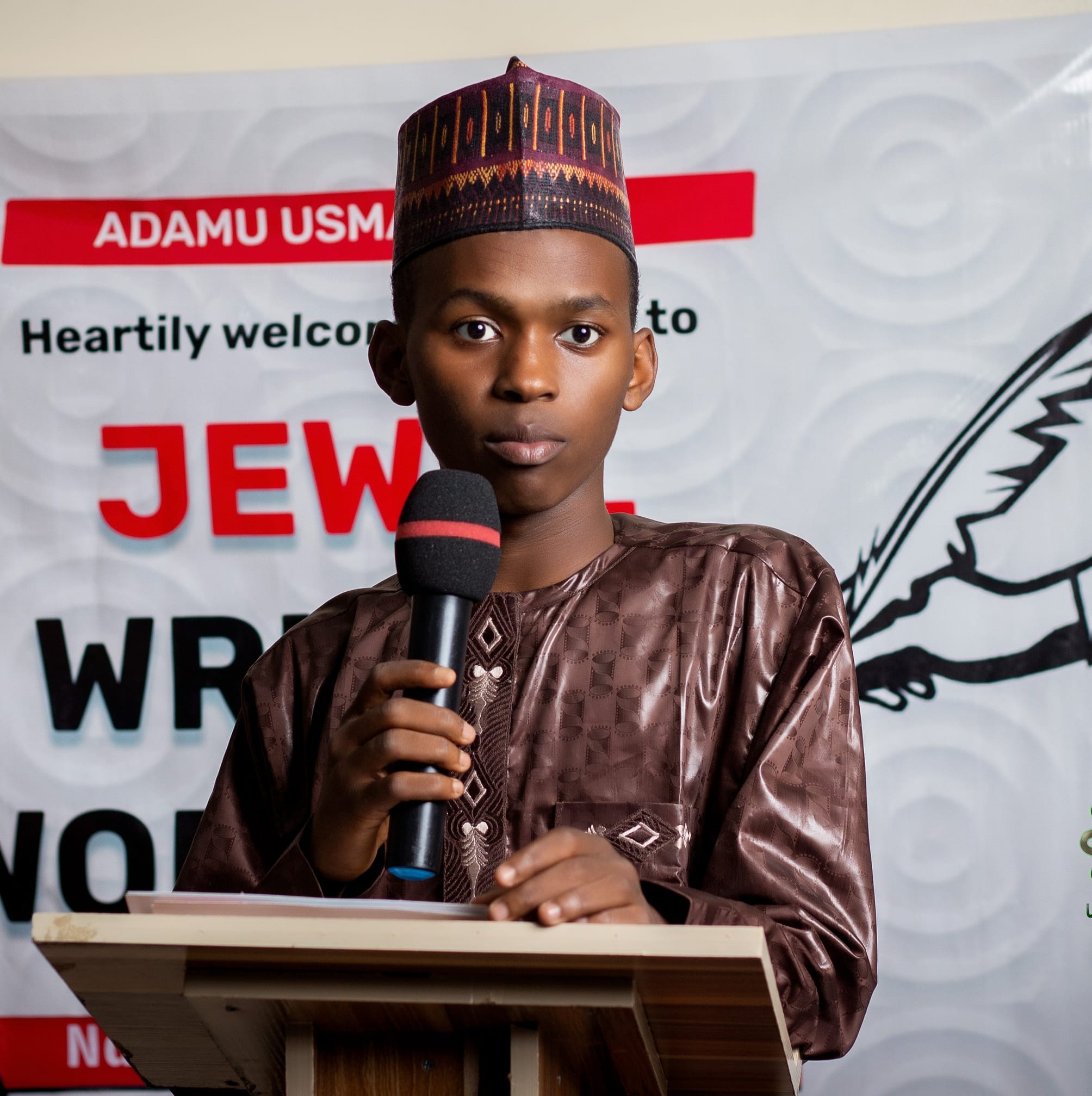
By Adamu Usman Garko


Our esteemed mentor, Mallam Muhsin Ibrahim, nudged us to appreciate people who have impacted our persons and careers through their selfless doings. This noble orientation inspired my decision to beam the fluorescence of my appreciation on Alhaji Kabiru Tsoho, the person who supported me with books, sponsored the publication of my premier collection When Day Breaks, and in other ways that will be laid bare in this piece. As time permits, I will beam this same light on several others who continue to pillar my growth as an individual, but, for now, enjoy this memoir of appreciation for Alhaji Kabiru Tsoho. 


Before I delve into Alhaji Kabiru Tsoho’s long list of generous deeds, please permit me to re-emphasise that I am willing to immortalise heroes who have been contributory to our strides as individuals and as a community of young writers with my writings since their kindness is so immense that repayment will be futile. It is, in fact, global truth that impact can not be fully compensated with money, but writings of this nature are efforts to display our continuous gratitude and appreciation for these people.


Cherished readers and friends! Behind the glitters of my successes that many of you take pride in stands a selfless and generous pillar who caught them at infancy and nursed them. Allah in His Sublimity has this divine act of using people driven by pure generosity, sincerity, knowledge and experience as thresholds of the successes of other people. For me, this person is Alhaji Kabiru Tsoho.


In 2017 when I began the intellectual struggle of creative writing for public consumption through my social media platforms, I was very young. I posted a poem on my page, and Alhaji Kabiru Tsoho dropped a comment under the poem to show his heartfelt admiration for the work. He asked if I lived in Gombe, and I replied in the affirmative. This engagement would later birth the offer of his library for my usage; this signifies the beginning of his many contributions to my craft.


Before this blessed encounter with him, my medium of studying was my TECNO Y4. It was herculean to read on the phone due to its small storage capacity and small screen size. So, imagine how difficult it was to read for someone like me who was bred in a community bereft of the love for reading and writing. These days, I awake to the fascinating sights of shelves brimming with books I own and this, to me, signifies exponential growth and exaltation.


In fact, the story of how I picked this bizarre interest in writing despite the general lack of interest in such preoccupation and without a significant predecessor still astounds me. That I awoke to the blur images of me; reading and writing, is something that still leaves me in great awe, thanks to Mr Nongo Asor, my first English Literature teacher, in whose practical class I fell in love with writing. 


Sequel to Alhaji Kabiru Tsoho’s offer, I visited him in great anticipation to see his library brimmed with books I had fantasised about. His humility is as broad as the sky, and his comeliness was huge even mountainous does not fit. He was and still is an influential figure in the state. However, his jovial persona during my first visit belied his public status, and he has not ceased being that warm person. 


After a brief conversation with him, he walked me into his rich library and directed me to the fiction section that beheld the best of fictional writings. My interest then lay deeply in fiction. We resolved that I would take 5 – 8 books every month, read them, and discuss them with him thereafter. At this juncture, it is important to add that I have not come across a book wiz like him; he remembers all details of any book with astute precision. 


The arrangement continued as agreed upon. Then, my transition began from a hungerer for books over-stressed by his phone to an accessory of a library stacked with diverse fictional writings across all genres. Alhaji Kabiru is always procuring new books and constantly consuming more and more. His thirst for knowledge is insatiable, and this never cinched off his virtual and physical engagements. 


Apart from the aforementioned, he is one of the very few from whom I got honest feedback. The feedbacks that were ever encouraging and challenged me to do more. Consequentially, Alhaji Kabiru’s house in Gombe became my second home, and a place of consolation and direction where he was/is ever ready to be a guide even on my personal choices and decisions. He doubled as a father figure and literary mentor. 

When, in 2018, I received an invitation to, alongside two others from Kaduna and Kano states, represent the North at the Wole Soyinka International Cultural Exchange, he was the second person I called. Alhaji Kabiru was delighted to learn that I would be meeting the esteemed Nobel Laureate in his hometown in Abeokuta and assured me of his continued support. Funny as it may sound, that journey was my first travel out of Gombe state. Now that I have travelled to many states in the South and North of this country, it is a delight that I never travelled for any other purpose apart from educational and literary matters, and all were strictly by invitation.


Alhaji Kabiru said that I was supposed to have begun writing a book. He was thrilled when I informed him that I had about three unpublished manuscripts already. He quizzed about what delayed their publication, and I stated that it was due to a lack of sponsorship. Alhaji Kabiru offered to sponsor the publication to the last naira. I searched for my poetry collection manuscript, When Day Breaks and sent it to a publishing press. The publishers replied with some options, and I opted to print five hundred copies, totalling a considerable amount of money. Without batting an eyelid, Alhaji Kabiru made full payment, and the publication began. 


By Allah, this gesture came unexpectedly as our society is brimmed with people who never help even when they can do that. But here was Alhaji Kabiru Tsoho selflessly offering me a largesse I would hold onto forever. 


When the book was eventually published, and the five hundred copies were sent to me, Alhaji Kabiru Tsoho was the first person I called while carting the books home. I said I would take the books to him first so he would be the first to see them. But to my utter surprise, he asked me not to bother that this was his way of supporting Gombe and challenged me to keep making the state proud. 


The book copies were delivered in 2018, but they remained in my drawer due to insufficient funds to organise the launch. I embarked on massive promotion of the book through several fora as buildup towards a launch I had no idea how to execute. Almost a year after, Alhaji Kabiru Tsoho quizzed me on why the book had not been released to the public despite the wildfire spread of its title. I informed him of my predicament. He immediately asked for a range of the cost which I provided, and he promised full financing of the book launch.  


Alhaji Kabiru has a heart filled with honesty, generosity, unrestrained warmth, and passion for exemplifying good for the sake of Allah without expecting anything in return. When the date for the launch was fixed, and everything had been readied for the book presentation/launch, I requested him to chair the occasion. To my surprise, he declined and asked to grace the event as a spectator rather than as a special guest. See humility? But I insisted because I couldn’t think of any other person. Upon my insistence, he accepted.


However, the day scheduled for the presentation coincided with his official duty in Kano. Despite that, he still came to honour me at the book presentation with a rich speech chronicling his encounter with me. Immediately after his speech, he apologised that he would be leaving for the said appointment.


It is an understatement that the publication of my book inspired many young people in many states to take their pens and begin to write. Here, in Gombe especially, the release of When Day Breaks led to the discovery and rise of many young talents. I wouldn’t be off track to say this book brought me out of obscurity to the little limelight I enjoy now. Not only has it allowed me some level of financial independence and granted me the luxury of owning books of all genres, but it has also won several awards and taken me to places I had never imagined. 


The same book brought me access to Professor Saleh Abdu, an internationally renowned scholar who had nurtured many Professors, including the popular critic, Professor Farooq Kperogi. Out of his sheer passion to encourage me, Professor Saleh Abdu wrote the forward to the book and doubled as the book reviewer during the Book Presentation. But he didn’t stop at that. He recommended the book to his university students, which spiked demand for the poetry collection written by a high school student. In addition, the same book was enlisted by the Daily Trust newspaper in 2018 among the 15 best books in Nigeria.


All of these happened because Alhaji Kabiru Tsoho breathed reality into my dreams and gifted me the keys to open doors in a society replete with apathy for talent promotion. These strides were possible because of Alhaji’s benevolent decision to gift me support and acceptance in a community characterised by a longstanding culture of celebrating mediocrity. 


Alhaji Kabiru Tsoho isn’t only dedicated to supporting people like myself; he doubles as a trailblazing administrator and ardent public servant who worked with the previous Governor in the area of finance and has since been re-elected to serve the present administration in a superior capacity in the same department due to his level of transparency and expertise. 

His choice as an administrator is not political. It results from his ingenuity, doggedness, and selfless service to humanity, which has drawn people from every class and background to him despite his apathy for attention. With many success stories at his disposal, he could use the media for self-promotion. Still, he has chosen otherwise because he values hard work, supports creativity, and anticipates his reward from Allah. 


His is a life devoid of pretension. Like many he has helped, my success story will never be complete without special tribute paid to him. He wasn’t just a mentor but a beacon of light, a pillar and a parasol that shields. He is a father and a confidant who is deeply vested in change and development. 

If I had written a compendium of eulogy to show gratitude, they would not suffice. He was there when there was no one. He was present when the journey was rough and the path uncharted. He spurred me on with love and acceptance. He encouraged and moulded me with his warm hands. In an attempt to pay it forward, I have assumed the role of a pillar in my little ways to numerous other young minds. 


I remember Alhaji Kabiru Tsoho whenever young minds under my tutelage show their appreciation whenever I gift them books or access to opportunities to launch their careers (two of them are about to get their dream manuscripts published). So what I am doing now is nothing compared to the kindness I have received and am still receiving from Alhaji Kabiru Tsoho. 


I will continue working tirelessly to impact young minds without any expectation of reward. In fact, it is indeed a source of delight to be a beacon of light to others like someone very dear has been to you. This is how to keep the world circling in a continuum of compassion. 

For his deep devotion to helping people and his selflessness and understanding during the course of growth, and for his service to Gombe at large, I say thank you.
These words are not enough to thank him for his voluminous acts of kindness. I pray that Allah keeps elevating me on this path so I can reflect Alhaji Kabiru’s goodness for global appreciation. May Allah also grant Jannah to his parents, bless his family, forgive and grant him the highest place in Jannah. 


May Allah further bestow him the economic wherewithal, mental stamina, spiritual aptitude and physical strength needed to continue the excellent work. 

Adamu Usman Garko writes from Gombe State. He can be reached via adamugarkousman@gmail.com.

More takeaway from the Kano Debate

By Abubakar A. Bukar

In an attempt to demystify what he regards as Salafists’ deification of Bukhari, ‘Jabbar ended up with this raw Rushdification of the Prophet (SAW). All these references and inferences of indecency attributed to the Prophet (wa’iyaz billah, except for the debate, very few knew that the profanity is such great in its filthiness) remind one of many passages in the Satanic Verse. To which, Kano cannot keep silent. To which, the North cannot be indifferent. Nay, nor the Muslim world as a whole. When Rushdie attempted, the Ummah reacted. No less when similarly caricatures oozed with the stench from Denmark. While France’s Charlie Hebdo got more than what it bargained. Of recent when Macron assented to such insanity, we’re all appalled and nearly went berserk in search of lines from Namangi’s Wakokin Imfiraji:

         Wa ya kai, wa yai kamarka?

         Wa ya san asali ya naka?

        Wa ya san matukar rabonka?

        Tun da Allah ya yabe ka,

        Duk wanda ya ki ka ma yi gaba

Where the honour of the Prophet is at stake, an average Muslim would accept being intolerant, antediluvian and worse descriptions far readily than expected in lieu of the desecration. The interrelation of the Prophet’s personality and its sanctity with a Muslim devout is beyond mere belief, obedience and homage. It’s about the latter’s existential significance. It is on this note the Muslim relates with any threat thus – which appears incomprehensible to non-Muslim. This signification is beautifully captured by the American anthropologist Saba Mahmoud in her engagement with Judith Butler. See Religious Reason and Secular Affect:…where she says, ‘the Aristotlean term schesis captures this living relation because of its heightened psychophysiological and emotional connotations and its emphasis on familiarity and intimacy as a necessary aspect of the relation.

What interests me in this iconophile tradition is not so much the image as the concept of relationality that binds the subject to the object of veneration. Those who profess love for the Prophet do not simply follow his advice and admonition to the umma (that exist in the form of the hadith) but also try to emulate how he dressed; what he ate; how he spoke to his friends and adversaries; how he slept, walked, and so on. These mimetic ways of realising the Prophet’s behaviour are lived not as commandments but as virtues where one wants to ingest as it were, the Prophet’s persona into oneself… Muhammad, in this understanding, is not simply a proper noun referring to a particular historical figure but the mark of a relation of similitude…  The sense of moral injury that emanates from such a relationship between the ethical subject and the figure of exemplarity (such as Muhammad) is quite distinct from one that the notion of blasphemy encodes. The notion of moral injury I am describing no doubt entails a sense of violation, but this violation emanates not from the judgment that “the law” has been  transgressed but from the perception that one’s being, grounded as it is in a relationship of dependency with the Prophet, has been shaken’.

And I think it is from this prism Bala Mohammed, former Trust columnist, wrote that where the Prophet is involved, we are fanatics or something of that import in his reaction to the Danish cartoons.

The Sheikh in question obviously feels so much saturated (if not intoxicated) with counter-argument that he severally warned his interlocutors not to send a “tiny” representative, which he would bulldoze in a matter of seconds. But they defied by seemingly playing out this logical David-Goliath with him. I have never heard of this Rijiyar-Lemu Jnr. beforehand. And since the Sheikh’s encounter with Alkasim Hotoro, one could notice his ill-preparedness for conventional debate; that he’s more well-exercised and blabbermouth only in the absence of an antagonist. In a word, he’s a disappointment to the usual assertiveness of dissident voice. This becomes clearer when one juxtaposes Tal’udis vs Ja’far Adams debate. You may argue that besides the clerical establishment, the government too is posed against the dissenting Sheikh, making it nearly impossible to win the card. The fact of the matter is that since Socrates and Milton, dissidents grapple in/with the same circumstances. It’s the power of their argument, the logicality of the presentation of their stand – which considers and surmounts their opponents’ in Millian fashion – that extricate and exonerate them at least in the view of current sympathisers and later generation of dispassionate examiners.

In all this, the biggest lesson is on the centrality of humility and sincerity in the acquisition and transmission of knowledge.

Similarly, I’d also felt our teacher shouldn’t have been the moderator in this debate. But upon listening through the 5 hours of exchanges, nothing could be fairer than Professor Salisu Shehu’s handling of the interlocking scenario. Partisan, yes he is, but I think he has ably transcended that with calmness and justice. After all, it was not a stark case of the Sufi-Salafi divide as many framed it to be, misleadingly. Among Sheikh Jabbar’s interrogators are representatives of Tijjaniya, Qadiriya, JIBWIS and Salafi.

Beyond winning and losing, the debate, to me, raises more questions than answers which calls for re-debate, or, once more, putting ‘Jabar on the dock – as it was. The Sheikh was, for instance, caught complaining that what was presented to the public by his debaters as his scholastic stand on the controversy was only a ‘text’ – with utter disregard to the context. In the name of fairness, could he be granted, in hindsight, the chance to hear him out through and through on the context? Or he just be asked to produce a book exhausting whatever burhan he has on this? Wouldn’t it be creditable if the classical Baytul Hikmah is reincarnated thus? To what extent is our toleration of dissent and dissidents in the name of freedom of opinion and expression thereof? Or are these concepts alien in our tradition? To what extent are the canons open to critique? What are the political and economic dimensions of these blasphemous shenanigans? And the international connections – how does it lubricate the engine of globalisation? Is it true that all the ahadith wherein the Prophet prescribed capital punishment were mere fabrication and distortions as the Sheikh lately claimed? Is the Sheikh alone in this, especially with regard to blasphemy? In the power asymmetry and contestation between the fringe and the mainstream, how do we save the truth from being the first casualty  – with apologies to Phillip Knight? Ad infinitum.

Bukar wrote in from ABU’s Mass Communication and can be reached via aabukar555@gmail.com.

Mr President, are we fighting insecurity?

By Mallam Musbahu Magayaki


Nigeria is hallowing in many annoying obstacles, but insecurity is one of the awful encounters of her recent havoc. Her citizens are now obstructed from undertaking their daily activities.


However, this series of sad incidence is induced by jobless youths as a result of unemployment. Many suspected criminals arrested claim that the primary root cause of their unlawful acts is joblessness.


Given the above sad stories, there is a need for the government to become exigent in providing jobs opportunities for our teeming youths and introducing skills acquisitions training schemes in all regions of the country. This can be actualised by collaborating with governors, senators, reps, and members of the state house of assembly.


Though, there are ongoing government programs meant for curbing the suffering of Nigerians, especially those not on government payroll through ministries of Youths and Sports and Humanitarians Affairs, Disaster Management. But these would not pave the way and solve our current predicament; instead, they would reduce it.


Furthermore, Nigeria needs to eliminate the escalating insecurity to employ unemployed youths, not necessarily with white-collar jobs but even black-collar one.


Nevertheless, giving full power and support to traditional rulers would also help in combating the insecurity. This is because these traditional rulers are closer to commoners than the government officials. As such, whoever is observed in every community exploiting unlawful acts worthy of investigating should be caught and brought to book.


More so, as you have publicly advised the security personnel to change tactics in the fight against insurgency, you have to furnish them with advanced weapons and motivational dues to enable them to confront the enemies of our country. But every years’ budget, a humongous amount of funds are approved and released for arms purchase to combat security challenges. Alas! Nothing positive is observed in eradicating the menace of insecurity. Nonetheless, our security agencies should be trained and retrained by experts in more strategic tactics in the war against terrorism. Even though this is ongoing, but there is a need for efforts redoubling.


In a nutshell, I would, therefore, like to urge you to adopt the remedies mentioned above if we honestly want to impede this challenge of security that is crippling our country.


Mallam Musbahu Magayaki writes from Sabon Fegi, Azare, Bauchi State (musbahumuhammad258@gmail.com).

Significance of the ten days of Zhul-Hijja


By Tajuddeen Ahmad Tijjani

According to the highest body saddled with the responsibility of moon sighting in Nigeria (the sultanate council), Sunday the 11th of July 2021 was declared the first day of the month of Dhul-Hijjah in Nigeria.


The first ten days of Zhull Hijja (the last month on the Islamic calendar) are observed with reverence by Muslims worldwide. Prophet Muhammad, peace and blessings of Allah be upon him (PBUH), said: There are no days on which good deeds are more beloved to Allah than the days of Hajj.


Muslim faithful globally assemble in Meccah to perform one of Islam’s fundamental principles (Hajj). Unfortunately, due to the Covid-19 pandemic, only Saudi nationals are allowed to perform the Hajj this year. However, those who cannot visit the holy land are not left behind to accomplish good actions. Those at home are admonished to thank their Lord frequently, seek forgiveness, intensify prayers and fast throughout the nine pivotal days or at least fast on the Arafat day.  Muslims are enjoined to make sacrifices on the tenth day to seek Allah’s pleasure. 


According to Islamic teachings, remembering Allah wipes away sins, cures problems, and eliminates calamities no matter how burdensome they may be. Speaking about difficulties and calamities, indeed Nigeria is a country in a critical period; now is the perfect time for our Muslim brothers and sisters to intensify prayers and seek Allah’s intervention to free the country from the shackles of Boko Haram, banditry, kidnappings, armed robbery, violent secessionists, domestic violence, and other forms of terrorism.


Sallah is in a few days, but ordinary Nigerians can no longer afford the Salla ram, thanks to inflation. So while it’s part of Sunnah to make sacrifices by slaughtering an animal at the end of the ten days, it is strongly advised that the fortunate among us should give aid to the less privileged. Doing so will increase their wealth and will please Allah, adding more blessings to their wealth.

 
Tajuddeen Ahmad Tijjani writes from Galadima Mahmud street, kasuwar-kaji Azare, Bauchi State.

On the Abduljabbar debate – Binta Spikin

I have never seen the devil. In fact, my assumption is mortals do not get a chance to have a one-on-one chat with him. However, sometimes, I wish I could see him – even if it is only to call in a conversation. See, he’s misguided from the old and young, men and women, rich and poor, from all strata of life and social circles. Hence I wish it were possible to call him to order – you can imagine us sitting him down and telling him point-blank something like: “hey dude, you’ve caused enough havoc in this world, so leave us be, or some similar stuff”. But that is just on a lighter mode.


On a serious note, sometimes, we are quick to heap every blame for our wrongdoings on the devil. However, there are those of us who are headstrong, those who, if given a chance, could beat the devil at his turf when it comes to misleading people. We all witnessed a similar scenario this weekend when a united group of Kano Islamic Scholars took on M. Abduljabbar Nasiru Kabara in a debate organised by the Kano State Government to put to bed some spurious claims Abduljabbar made against the Person of the Prophet (SAW) while making reference to some Hadith.


For the non-Muslims who could be reading this, I would like to explain that Islamic Jurisprudence is premised on four sources, and it is from there, the Shari’a (Islamic law) takes its root. They are:1- The Qur’an, which is the Holy Book revealed to Prophet Muhammad (S.A.W); 2- Hadith, which are the sayings and deeds of the Holy Prophet, and that which met his silent approval; 3 – The Ijma’, which is the consensus of opinions of Islamic scholars on issues; 4 – The Qiyas, which encapsulates all that which sits right on the conscience.

 
From goings-on, what Abduljabbar is (was?) challenging borders on the authenticity of some Hadith. However, in the process, he ends up violating every right-thinking Muslim by making some unsavoury and disrespectful statements regarding the person of the Prophet and his companions. I have never taken out time to really listen to him outside the “gaba-gadi” rant he was famous for. So when the audio clips were played during the debate, like most Muslims, I was hurt and disgusted by his utterances, the sheer abundance with which he makes the claims, with mirth and confidence is belittling. Those utterances were abusive to all Muslims with a conscience. 

On this note, we must commend Dr Abdullahi Umar Ganduje, OFR, Khadimul Islam, the Governor of Kano State, who made the debate possible, and through it, made the Muslim Ummah a united family. Those young gentlemen and scholars who participated in the discussion, despite specific ideological differences, united in protecting the sanctity of the religion and the honour of the Prophet. May Allah reward you for your service to Islam. Every right-thinking Muslim, globally, should be proud of what you have done. 


As for the Government of Kano State, I’d say this is a significant breakthrough. Our Governor, the Khadimul Islam, stood in for us using wisdom and skill; the debate was organised down to every detail, security was more than adequate, especially for the participants, etc. But the most significant victory for the Governor is that the people appreciate this act of service to religion and humanity.  

To M. Abduljabbar Nasiru Kabara, who is in fact the son of the late leader of the Kadiriyya movement, I hope this is a turning point for him. I hope this puts a stop to his skewed, misleading, contentious sermons. May Allah forgive him and us. May all our ailments heal. May our society be more prosperous. May Allah enrich our leaders with foresight. 
Masha Allahu la quwwata illa billah. 

Hajiya Binta Spikin is a Senior Special Assistant on Research and Documentation, Kano State. She can be contacted via bintaspikin@gmail.com.

The Abduljabbar Saga: Where he got it wrong – Prof. Yakubu Azare

By Prof. Yakuri Azare

I followed the entire debacle that lasted slightly over five hours with the attendant result from the moderator, Professor Salisu Shehu. It was thorough and the laid down procedural regulations were apt and full. I don’t intend to review what happened there; I intend to explain a phenomenon I viewed to have made Abduljabbar slipped. The entire dispute revolves around the concept of translation, which is seen as a primary machine that allows us to decipher messages encoded in another language. The whole concept of understanding religious principles is encapsulated in its translation into the language we fully understand. For any text to be wholly deciphered, there has to be suitable communicative translation and faithful in some instances—failure of translation results in catastrophe. As we often tell our students, a slight mistake in translation could trigger unrest. The case of Abduljabbar is one pointer.

Sacred texts should be translated with the uttermost caution to avoid pitfalls and possible uproar. Therefore, aspects of semantic addition and omission are not so much at the liberty of the translator. Of course, the translation author can be – and is – allowed to make additions or omissions, where necessary, to press meaning to the audience; however, in the case of sacred texts (mostly religious documents), such liberties are highly restricted. 

Overall, the whole saga was about Abduljabbar making unsubstantiated claims about certain prophetic traditions, which he claimed were mistakes by some of the finest scholars that history can never forget. He attributed certain heavy libellous statements to these scholars. Abduljabbar often reads the Arabic rendition with subsequent translation and exegesis of the tradition. This is a usual trend by all Ulamas intending to communicate across people of diverse linguistic backgrounds. What is worthy of noting here is how the original message is rendered and transmitted into the receptor language, in this case, Hausa.

Almost throughout the debate, there was a conspicuous absence of direct utterances of Abduljabbar in the original Hadith. This narrows down the accusing finger to Abduljabbar. No amount of denial or persistent argument would absolve him from the shackles of law and accusations. The exegesis cum translations here are, therefore, the root cause. Cultural nuances are essential to issues worthy of consideration when translating, as diverse cultures have varying ways of apportioning meaning to certain utterances. Abduljabbar was, quite evidently, never considerate of such slippery edges. Instead, he translated, explained and attributed conclusions to statements entirely out of context in the bid to attain heroism, demonstrate a more profound or better understanding of the scriptures.

Adding so much into translation in most instances has the tendency of making meaning obscure and or vague. Sacred texts are not only carefully knitted but are sometimes seen as dogmatic. In other words, religious texts express what they appear to have said. Making unnecessary additions may result in meaning change. Abduljabbar was attacked based on his utterances throughout, and in all the challenges posed to him, the central question is, where did you see this or that. Wrong translation understandably played a key role. In one such case, the moderator drew his attention to the contextual meaning and differences between “Haajaa and Shahawaa“. He explained that the former could not be given the contextual meaning of the latter. Each has its way of being expressed to denote what is intended.

Thus, between Hausa and Arabic, some cultural differences arise in how they attach meanings to ideas, subjects and so on; nonetheless, Abduljabbar was not so keen on that. Instead, he occupies the Arabic messages with haphazard translations that devour our cultural and religious context and, often, sensibilities. Both in our religion and culture, the place of the Prophet (SAW) is sacred, secure and untouchable. Therefore, making and creating controversial statements to his person is not only wrong but blasphemous. All the traditions cited by Abduljabbar and the other clerics, there was no one place, and I mean one place, that equates the heavy words of Abduljabbar in his Hausa explanation.

The central point here is, wrong and mismanaged translation played a significant role in this saga. It suffices to say, “Translation is a serious business and is not haphazardly done.” Understand, and master its art before engaging in it. Be vast in the cultural nuances of both languages, and understand that pragmatics is key to assigning meaning to words in certain situations. Also, know that sacred texts do not go with our whimsical preferences. Additions or omissions are made with caution to avoid slippery edges.

May Allah guide us always. May peace and blessings be on our most revered Prophet.

Prof. Yakubu Magaji Azare wrote from Bayero University, Kano. He can be reached via ymazare@yahoo.com.

Abduljabbar Saga: Another fresh perspective

By Dr Muhammad Sulaiman Abdullahi


Abduljabbar wanted to hide behind some distorted and concocted sayings. Even if there are sources, he will not dare reveal their sources to discredit Bukhari, Muslim, and most prominent Muslim scholars and even the Prophet’s companions. He concocted naked lies against the Holy Prophet directly, but claiming that he was defending the Holy Prophet! What a twisted-childish mentality.


In reality, what he was trying to do was not a direct attack on the personality of the Noble Prophet; it was indirect. This is because he accused others of saying what he said. He was asked to SHOW just a SINGLE line, where such lies were reported, but he woefully failed to do that. This is the reason why some of his sympathisers feel like he holds some valid arguments.


The problem is that most Muslims have forsaken Islamic Studies for a long time. They resort to google-google is inadequate for in-depth learning – it is a teach yourself style. This cannot take a real Islamic student anywhere. Someone needs to go to a real school.


Abduljabbar has eventually met his Waterloo. He asked for it and got it. He said he was prepared to meet all the scholars in the world to defend whatever people find heretic in his sermons. Therefore, those who try to defend him are now telling us that he wasn’t prepared. He said he was ready at first lie; he later realised his fall and said he wasn’t. These blanket followers accept whatever rubbish he spat. I pitied him, but I pitied those who felt and hoped he would win. It is a clarion call to all of us not to delve into Islamic affairs anyhow. We try very hard to know our areas of specialisation but take Islamic teachings for granted, thinking that we can manipulate them the way we manipulate our followers.


Another point that shows the super-amazing-human-position of the Holy Prophet (S.A.W) was that yesterday’s sitting was more of vindication to the most revered Islamic Muhaddithin – Bukhari and Muslim – who Abduljabbar sought to malign. He has been insulting them, the way I never heard anyone insulting his respected father, despite the sectarian differences. We still have respect for his father, whom even Sheikh Gumi admitted was a great scholar. May Allah have mercy on both of them. Abduljabbar thought he could go scot-free by insulting Bukhari and Muslim and even Anas bn Malik, not knowing that Allah will vindicate, protect and defend them. Allah says, “Inna lanansuru rusulana wallaziyna aamanu”, we will surely help our messengers and those who believe […]. Bukhari, Muslim and all those who Abduljabbar ignorantly and mercilessly abused were clearly assisted, defended and vindicated by Allah the almighty through his servants.


It was not only Abduljabbar who hate Islam/some Ahadith which stop them from doing bad. I am amazed by how these poor victims of Nigerian corruption think. With or without Bukhari and Muslim, they are already doomed. With or without Bukhari and Muslim, they are not enjoying life. Such people should focus on their insecurity and kidnappings, lack of good electricity, and then return to tarnish Islam’s image ignorantly.

It is now up to those who rant and insist on mischief even after seeing clear and undeniable proofs beyond any reasonable and even unreasonable doubts. Some accepted the truth wholeheartedly, while others insist on their mischief and being “strong-headed”. This shows the diversity of human understanding and the sincerity/insincerity of individual mortals. Some agree quickly, while others will never agree. Allah says: innal laziyna haqqat alaihim kalimatu rabbika layu’minuwn. Walau jaa’at’hum kullu aayatin hatta yarawul azabal aliym. Some will never agree until when they see real punishment and disastrous ending. 


To those who keep beating about the bush on the chairman of the occasion, the timing, lack of live broadcast, Abduljabbar wiping buckets of sweat, not allowing Abduljabbar to go and pee while he practically show the signs of that need and many other baseless and silly excuses should go and complain to Baba Ganduje. Such and some will never understand.


I am happy that many people accept this with transparent and open minds. Some hoped that Abduljabbar won. But, alhamdulillah, he didn’t, and he woefully failed. I am happy because I see the shameful end of two – most recent – people with blasphemous dispositions. One is in faraway France. He received a heavy and dirty slap which was equal to his position, while the other received a super intellectual blow which shattered his many years of madness.


The holy Prophet (S.A.W) is a human being like no other. Allah promised to protect his mention anywhere. Abduljabbar manipulated things beyond what can be accepted. And in this case, there is no “moderate” or “neutral” stand. It is like what Bush said, “it is either you belong to us, or you belong to the terrorists”.

May the Almighty Allah continue to help the truth even when everyone is against it, amen. Abduljabbar – the cave owner – dug his grave, and I hope he alone would fall into it. But, unfortunately, he failed, and wallahi, we are happy, alhamdulillah.

Italy Conquers Europe

By Muhammad Muzdaleefa


The Euro 2020 Cup ended in Italian hands after the Azzurri defeated England at Wembley Stadium. What a journey it has been. The winning team has shown us that it is not what happens to you but rather how you react to it that matters. Some fall and stay down there; others fall and dust themselves off and rebuild. 


No doubt, it was a hotly contested final. Southgate’s team had got off to an impressive start with Luke Shaw’s goal after just two minutes. But the Italians equalised in the 67th minute through Leonardo Bonucci. After much anticipation, England’s dream was shattered as Italy won the match in penalty kicks. One thing is for sure; this loss will be seared into the national consciousness of English people for generations to come. It was simply nothing like it as a nation that treasures soccer fell in one of the most crucial matches in its football history.


The performance of both sides from the beginning of the tournament to the end was quite impressive. However, the defeat will remain a footnote. Few will remember that England played well, but many will recall that Italy won the final at the Wembley Stadium. The final was a great feat for Italian team manager Roberto Mancini. A man who attracted a lot of scepticism when he took over the reins of a team in a state of utter disrepair is the one who has masterminded its return to the top of European football and possibly world football. He did it silently and always with the smile and assured confidence of a stoic.


The coaching philosophy of both Mancini and Southgate must be saluted. The philosophy is that excellence can be achieved through hard work, which explains why they gave chances to their players as long as they are willing to put in the work and the stamina—everybody in their squad matters. As a result, many great players will surely emerge from both sides.


For now, Italy has conquered Europe and a big congratulations to the Azzurris for this important milestone.

Muhammad Muzdaleefa wrote from Kaduna. He can be reached via mohammedadamu736@gmail.com.