Opinion

NLC should join ASUU to end the lingering strike

By Muhammad Mahmud

I believe that Nigeria Labour Congress (NLC) should join the Academic Staff Union of Universities (ASUU) in solidarity. An injury to one is an injury to all.

I recall that an affiliate union embarked on industrial action during the military regime. I can’t remember exactly which, but the NLC joined in a solidarity move.

After some time, without a positive response from the government, the labour union directed all other affiliated unions to join. Thus, the PENGASSAN, NUPENG, NURTW etc., joined. Before you can say UTAS or PANTAMI, the nation was halted.

No flights were flying, no taxis or buses plying any road as fuel was absent, etc. This forced the government to give in to the demands of the workers.

I believe this is the only strategy that the politicians will understand. The NLC should initiate the process and start preparing for the mother of all strikes in solidarity with the ASUU.

Malam Muhammad writes from Kano. He can be reached via meinagge@gmail.com.

Poetic Wednesdays: Putting us on the right side of history

By Junaid Sharfadi 

For many a century, poetry has been used as a veritable tool to pass on religious, historical and social ideas in northern Nigeria. In Kano, for instance, scholars during my grandad’s generation – and beyond – were good at deploying Arabic and Hausa poetic means when forming an opinion.

Women and children too never missed an opportunity to ululate and chant poetic verses, laden with moral messages, when conveying a bride or on other occasions. The famous Charmandudu poem or the works of Sultan Bello, Aƙilu Aliyu, Nasir Kabara, Mudi Spikin, Asma’u Bint Fodio and Modibbo Kilo serve as an example.

Thus, Art and Culture enthusiasts and promoters like the late Abubakar Gimba or Professor Abdallah Uba Adamu would be delighted to see a literary fraternity sprouting from the fertile land of northern Nigeria, spreading its maturing branches across the country. 

Poetic Wednesday (PW) Initiatives started six years ago as an online platform for poets to engage, grow, entertain and convey impactful messages every Wednesday. From agriculture to artificial intelligence, climate change, peace, conflict, education, love etc. the group writes on diverse, important issues.

The founders, led by Salim Yunusa, have succeeded in unleashing the full potentials of the weekly participants by critiquing and publishing their beautiful and virgin poems that drown readers into poemgasms. Budding poets have since joined to unbutton their poetic minds on marginless screens. No boundaries or limitations, just pure chutzpah and truth that reveal the primordial yet sacred content of the heart.

It is imperative to state that Poetic Wednesdays’ remarkable online presence has been effectively utilized in organizing webinars, competitions and workshops to fuel the passion for literature among youth. Prof. Hussein Nasr was right when he emphasized the significance of poetry in shaping Persian, Arab and Chinese societies. Therefore, with literary groups like PW, this society is on the right side of history.

Big bigot in Kperogi’s mirror

By Aliyu Barau, PhD

Farooq Kperogi is among the few Nigerians who elegantly sandwich scholarship, media and English language expertise. On the contrary, I am neither a language expert nor a political analyst. Here, I am just trying to figure out the naughtiness of Kperogi’s thinking machinery. How Kperogi thinks substantially determines his writings and opinions.

No doubt, Kperogi’s articles are a cynosure of the eyes of many Nigerians across political, cultural and social divides. Some of his Nigerian readers pluck his linguistically well-crafted and yet asymmetric views and dye them in the colours of their sentiments or ignorance. It is very normal to manipulate any text on this planet. Interestingly, it is not unusual for bohemians and intellectuals to dress and feast on controversies.

I see Kperogi as a sort of a roller coaster dripping joyful and sorrowful moments on public sentiments and obsessions. Indeed, considering Nigeria’s contested socio-political landscapes, Kperogi personifies Hankaka (a pied crow in Hausa) which they say, “whoever sees its black must see its white too.

I am indifferent to Kperogi’s criticisms of the powers that be. I don’t care about his tirades and vituperations directed at the political class who sold their moral rights at the markets of failures and misgovernance.

So, what’s my headache with Kperogi? Well, I am deeply touched by his overriding superficiality, unidirectional views, bigotry, extremism and spider mannerisms. To be fair to Kperogi, no elites in the social and political divides of this country are immune from his pen. Nevertheless, his seamless and borderless forays are in many instances unconscionable and peddling post-truth constructs. My labelling of Kperogi is based on my readings and analysis of his recent blog stuff:

• Presidents Who’ll Make Me Renounce Nigeria (https://www.farooqkperogi.com/2022/03/presidents-wholl-make-me-renounce.html)

• Osinbajo’s RCCGification Part of Plot for Theocratic State Capture (https://www.farooqkperogi.com/2022/04/osinbajos-rccgification-part-of-plot.html)

• 10 Reasons Osinbajo Will Ignite a Religious Civil War (https://www.farooqkperogi.com/2022/03/10-reasons-osinbajo-will-ignite.html)

As a transdisciplinary environmental researcher, I always prefer wider views, co-produced, and inclusive opinions. I am diametrically opposed to ‘single story’ constructions – as Chimamanda Ngozi Adichie would say. My reading of the above articles has convinced me of Kperogi’s single story-driven narrowed conclusions on crucial and critical national issues. Before I explain my points, I have tried further analysis of Kperogi’s knowledge production mannerisms to see how that fits my labelling. For instance, I conducted a rapid assessment of his authorship of academic works on leading research archives namely Researchgate and Google Scholar. Both repositories reveal in him a professor with a very limited network and co-authorship. By implication, any scholar with limited networking and co-authorship will have little room for alternative views, tolerance and thorough analysis. This evidence convinces me as to why he writes less holistically and cares less to get into deep layers of issues.

Kperogi is a good reflection of the proverbial Dubarudu – a character in one of the Hausa riddles. Dubarudu owns a mirror in a town where no one owns any. He alone uses it and no one can use it including his wife. Nigeria is a mirror that we need to share to see our faces and appreciate our different outlooks.

My reading of the three blog articles produced by Kperogi leads me to carry out further analysis of how this versatile writer thinks. Scholars make use of Low-Order Thinking Skills (LOTS) and Higher-Order Thinking Skills (HOTS) to determine the thinking capacity of scholars and students. I always assume that the Nobel Prize winners and other high ranking scholars utilise HOTS. Without prejudice, blog articles produced by Kperogi appear to belong to low-order thinking skills.

Then, how is he seen as a low thinker at least in the three articles under consideration? The answer is discernible to all his readers who care. He uses interrogatives such as ‘when’, ‘where’, ‘which’, ‘how many’ and ‘who’ in driving his opinions in the three articles. We could see mentions of places, names of persons, the number of persons, places, when and where in his labelling of religious bigotry by VP Osinbajo. Healthy and informed minds would care only about the HOTS interrogatives such as ‘why’, ‘how’; ‘what evidence is there?’, ‘cause and consequences’ etc. Unfortunately, less informed and sentimental Nigerian readers can easily be misled by the lots of LOTS he always amplifies.

At this point, I am bringing out my real problems with this language scholar. I really find it very nauseating and irritating when he declared in his blog, on March 28, 2022, that he would renounce his Nigeria citizenship if any of the four individuals he listed in an article would become Nigeria’s next president.

The four Nigerians he condemned were Osinbajo, Tinubu, Bello and Wike. How on earth! What depth of hatred is this? What if God has decided one of them to be? To me, this is exotic bigotry, branded intolerance and egregious extremism. Where is his knowledge of the language of contestations, resistance and resilience that characterize the works of Edward Said, Frantz Fanon, Michel Foucault, and Karl Marx? Maybe, I should remind him of the struggles of the Irish activists captured in Feargal Mac Ionnrachtaigh’s Language, Resistance and Revival. Such a Kperogian declaration amounts to cowardice, hopelessness and disillusion. How can I give up my citizenship on account of a tenured president that could be at the mercy of the judiciary, parliament, media and civil society? I never expected him to easily forget how spirited men and women stood against the caudillos (strongmen of Latin America) seen in Pinochet of Chile, Stroessner of Paraguay, Somoza in Nicaragua, and Trujillo in the Dominican Republic. I wish good luck to the listed four and to Kperogi, especially when one forsakes Nigeria for America where black lives matter. The people brutalized by the Nigerian junta yesterday are princes of the Aso Rock Villa of today. That is how time works.

No little thanks to Farooq for giving us a neologism -RCCGification through his April 14th 2022 blog opinion. I was distraught reading that as I saw in it that article tight shortness of sight and breath considering it is coming from a scholar. Saying that one church denomination will overrun Nigeria is a devilish statement. Even Satan might call that the last post-truth reality. Nevertheless, I find solace in Mehdi Hassan’s response to Anne-Marie Waters during Oxford Union Debate On Islam held at the Oxford University in the UK sometime in 2015.  Putting your article in the context of that debate and Mehdi’s response means Kperogi is a big fanatic and bigot. Why? Because RCCGification is the same thing as Islamisation.

Every time a Muslim rules Nigeria some Christian bigots use the thread of Islamisation to weave clothes of suspicion and division. So what’s the difference between the advocates of Islamisation and RCCGification? Is it not flipping sides of the same coin? I would be happier to have as a leader, a just Christian than an unjust Muslim. RCCGification of Islam, Catholicism, Protestants, and traditional religions are all mirages. RCCGification of Nigeria is a charade since this church has not even seen the intergenerational transition of itself let alone overrun others.

Let us be frank with ourselves, it has been a standing tradition of Nigerian political, religious and business leaders to bring close to them the people that they know. Hence, I am unruffled by any list of political appointees associated with the RCCGification agenda. I am always amused by fears of Islamisation and I always see weak and ignorant Christians as its drivers and authors.

When you insist on going on pilgrimage to Jerusalem as Muslims do in Mecca, you are just Islamising Nigerian Christianity. When you say let us block the Muslims or deny them their rights what is your name? Islamaphobe, unjust, conspirator or still a Christian? What I like most about religion is the sweet taste of spirituality. Those forwarding the RCCGification agenda are either mischief makers or ignorant of Nigeria’s social, historical and political institutions. 

When I saw the casket of Chief Odumegwu Ojukwu draped in Nigeria’s flag and carried by the Nigerian military officers, that is the day I realised that Nigeria is bigger than all its citizens. Nigeria overwhelms anybody with any hidden agenda. A critic must learn how not to be like a spider. Its knowledge of design is superb and its nest is outstandingly beautiful. However, the skinny guy builds its nest on the common pathways not minding trapping everybody.

Aliyu Barau, PhD, is an Associate Professor from the Department of Urban and Regional Planning, Bayero University, Kano, Nigeria. He can be reached on Twitter via @aliyubarau.

Dattijo: The embodiment of youthful competence

By Dauda Idrees

I woke up to the rather sad news of Muhammad Sani Dattijo’s withdrawal from the race to Kashim Ibrahim House of Kaduna state and couldn’t help but start chanting supplications as though I’ve lost a loved one. Although, as careful political observation, I’ve seen that coming almost two years ago, the impact of this news on me was unlike anything I’ve ever imagined. 

Whatever political calculations that led to this conclusion have not done justice to the youths of Kaduna state, considering the exuberance with which they came all out campaigning for their comrade pro-bono. Many have never met him in person but are up-to-date with all he does through social media platforms. 

Being in the forefront of the Kaduna Urban Renewal Development Project from 2015 to date, it’s undeniably agreed that he’s the right candidate that would effectively carry the project to completion, as evidenced by the development plan he presented from the early days of his campaign. But, sadly, the political radar did not point in our favour. I doubt if any other candidate has presented any plans, he has for the state yet. 

Governor El-Rufai made it clear in his criteria for selecting the new emir of Zazzau that the emir’s relatively youthful age and his international network gave him an upper hand over other candidates. So naturally, we expected this same criteria to be applied in choosing his successor, but we can see that political office is not the same as a traditional title.

So, while we pray that Dattijo’s political future be bright, we’re also worried that the youthful fury with which he does things now might be dampened by age in years to come when the kingmakers deem him old enough to run for the governor’s office.

One may argue that he started falling out of favour when he called Muhammad Sanusi II, the governor’s close friend, “former emir,” which is valid. However, the truth is that there is still that reluctance to release the mantle of leadership to the youth even in Kaduna, the self-proclaimed youth-friendly state.

Although his name “Dattijo” is a perfect match for the  Senate, which Hausawa call “Majalisar Dattawa”, it is sad to hear that Kashim Ibrahim House is losing such treasure to the Red Chambers because he’s not a Dattijo by age. He’s Dattijo by heart. Either way, we thank Allah and pray that he gets to represent not just Kaduna youth but set an example that all young people if given the right opportunity and mentorship, would get things done in a way that the older generation wouldn’t have thought possible. 

Dauda Idrees wrote from Kaduna via idreesdauda.a@gmail.com.

The need to introduce sign language as a core course in Nigerian schools

By Ibrahim Tukur

Communication barrier is one of the major problems holding many deaf people back. Living in an inclusive world—a world that comprises people with differences, one has to know the others better to get along together. We can only achieve that through communication. Unfortunately, however, many people have immensely misunderstood due to the communication barrier. Some see people with hearing impairment as stupid, insane, mad, etcetera.

Communication barrier has brought various challenges that not exclusively affect the personal achievement of the deaf but also their educational, spiritual and economic development.

Due to this barrier, many deaf experience loneliness, depression and isolation at home because they have no one to communicate with as most of the family members don’t know how to communicate with them. In the same vein, their parents often neglect them and find it challenging to communicate with them in their day-to-day interactions and operations. Thus, this makes many deaf children, if not all, grow up morally deficient.

In many tertiary institutions, deaf students face many academic challenges that interfere with their studies. Although all tertiary institutions are inclusive, they are not offering special services like Sign Language interpreters. Consequently, those students often sit in the class watching their lecturers lecturing verbally and their coursemates with no hearing loss drinking from their knowledge flow.

Deaf people face immense challenges when it comes to employment. Many organisations and companies find it difficult to employ deaf people due to this barrier, as good communication is one of the essential requirements in entrepreneurship. This is why many deaf people have automatically been disqualified during job interviews despite meeting all the requirements.

Again, because of this barrier, deaf people are denied from getting jobs as doctors, engineers, journalists, lecturers, lawyers, accountants, etcetera. Many deaf who have studied others fields are forced to become classroom teachers as if teaching is the only profession for the deaf.

Although the current administration has enacted a law that prohibits discrimination against people with disability, thanks to their bid for inclusion, they failed to trench the underlying causes of the discrimination. 

To nip the deaf-based discrimination in the bud, Sign Language should be introduced as a core curriculum in all schools since the communication barrier is its underlying cause.

Sign Language specialists should be employed in all schools and tertiary institutions to teach Sign Language so that everybody will learn to communicate with the deaf and get to know them better.

Teaching Sign Language in schools nationwide will improve this communication gap and end the disparagement, discrimination, and stigmatisation they experience. It will equally create a comfortable environment for the deaf folks to live in this Inclusive world.

Ibrahim Tukur is a 400 level student of Bayero University, Kano. He can be reached via inventorngw@gmail.com.

Consolidating literary strides: Six years of Poetic Wednesday initiative

By Tijjani Muhammad Musa

Poetic Wednesday Initiatives (PW) was started by a group of poets of Arewa extract, but global in netizenry that have their muses tied confidently and securely to their minds.

Young, talented, prolific and spontaneous males and females write poetry with a passion that can surpass the fieriness of the sun as well as the soft and gentle subtleness of a sprouting flower.

As a poet myself, I have had close contact with the founding pillars of the movement and have interacted poetically with their brilliant works at an individual level on various literary platforms on and offline.

And when they, Salim Yunusa, Nasiba Babale, Abdulbasit Abubakar Adamu and a few others decided to unite as one, pulling their writing prowess and resources together and initiating PW, I knew something big was in the offing.

What I find fascinating about the whole Poetic Wednesday Initiatives thing is the innovation and strategy with which the youthful minds developed the idea into a viable literary concept that has turned out to be a force reckon with.

Soon, it became the in-thing to have a poet’s piece published on their platform or else it’s not worth reading. Everybody eventually started talking about the beautiful works coming from different hitherto unknown bards, all thanks to their featuring on Poetic Wednesday.

Budding poets on this side of the divide and those across the Niger river found it a challenge to up their writings to meet the unofficial standards set by the PW team. And on social media, the “Poetic Wednesday!” echo was all over the place.

To encourage further participation by shy and underdeveloped poets, PW started offering poetic lessons and coaching to young and not so young struggling poets to develop their skills. They even began a state by state tour in which they taught many the basics of writing good poetry.

Many who have benefitted from such an initiative have developed not just their words craftsmanship, but the confidence to share their poetry on various social media poetry sites. So many were the collections had never seen the light of the day earlier.

There is no doubt that the initiative within the first six (6) of its existence has successfully awakened the inert poets residing in many of us. The question now on many people’s minds is; how do PW consolidate on its success and achievements so far?

Well, for a start, PW is no more a mere platform for poetic talents, both budding, seasoned or veterans, to come and showcase their creative stuff and then walk away. The PW guys have turned the set-up into a fully incorporated business entity. Way to go!

Having been upgraded into a registered business outfit, PW is hoped to set out not only to promote creative literary works but, in collaboration with other stakeholders, to make it its affair to promote, sponsor, and publish writings from writers and poets, making them published authors among other things.

As part of their future strives, PW should also look into the potential of organizing literary workshops, seminars, webinars, shows etc. that will give opportunities to talents in the literary circle to be taught how to measure up in meeting requirements for entering and winning competitions and contests at local, national and international levels.

It will also be an outstanding achievement on PW’s part if it can organize sponsored literary competitions and contests for primary, secondary, and even tertiary institutions to discover hidden literary talents in society and connect them with corporate sponsors to publish their books and anthologies.

I would not mind seeing PW start an institution of learning where poetry, poets and writers in other genres of literature from across the world can find a haven to come and exchange ideas and technical knowhow towards furthering the development of writing skills in various languages such as Hausa, Yoruba, Igbo, Nupe, Kanuri among others via the art of writing.

Congratulations to the PW team for achieving such a monumental milestone. It has been six exciting and value-adding years for society. This is definitely worth going to the moon for. Thus we are pleased to associate with you and your success and believe that if careful planning, focus and dedication to execution would hold sway, more wins are assuredly guaranteed.

Tijjani Muhammad Musa – Poetic Tee is the Chairman of the Association of Nigerian Authors (ANA) Kano Chapter.

Why Adamawa Governors Must Emulate the Murtala Nyako Youth Empowerment Model

By Lukman Dahiru Abubakar 

Youths, they say, are the leaders of tomorrow. This is a saying we have heard since primary school days. Thanks to their productive and economically active age, youth should be frontrunners in nation-building. Adamawa State is blessed with educated and entrepreneurial people but tested with desperate and self-centred leaders who take advantage of these unsuspecting youths.

Please take a look at the administration of Gov. Murtala Nyako, CFR, GCON, from 2007 until his impeachment in 2014, spearheaded by incumbent governor Ahmadu Fintiri. Nyako ran the affairs of the state in an exemplary manner, leaving an indelible mark that won’t fade in the sands of time and making it almost impossible for his successors to fill his void. Nyako once described growing unemployment and unskilled youth as ‘enemy armies facing the nation’.

Gov. Nyako did not see the youths as commodities and tools for praise-singing on social media. He had a plan and a vision for them. His government established youth-centric empowerment programs for the benefit of all and sundry. Farming Skills Acquisition Centers were established all through the state. Vocational and technical training centres were instituted and equipped with German technology and managed by German expatriates. Monthly stipends were also given to the trainees for their upkeep.

Other youths were placed on the government payroll as special assistants. The Nyako Youth Empowerment Model was a visionary, focused, and purposeful one which paved the way for a promising future for the youths in the state.

Governor Umaru Jibrilla Bindow, riding on the change mantra in 2015, promised to revitalize and remediate these centres to ensure a continuum. Unfortunately, upon his ascension, he reneged on his promise, and because he doesn’t fulfil promises most of the time, he earned himself a nickname called digital. However, he had other plans for the youth and unveiled his youth empowerment package.

The Bindow Model includes the distribution of iPads for social media praise-singers and the disengagement of some staff from their places of work. This led to the birth of thuggery, criminality in the state, and even the Shila boys started around that time. The Shila Boys engage in street robbery and have been terrorizing the residents of Yola for years. He failed the litmus test and was kicked out of office in 2019.

Incumbent governor Ahmadu Umaru Fintiri assumed office in 2019. He looked the real deal at that time. However, he is in his third year now and doesn’t look like he has a cogent plan for the youths. Albeit last month it was reported that he purchased mobile phones for his social media warriors. This shows he did not learn from the blunders of his predecessor and is following in his footsteps, and until he adjusts, he’s likely falling into the same pit as ex-governor Umaru Jibrilla.

The youths must therefore rise and use the period of their youthfulness for something good and beneficial. Do not let politicians use you; use them instead.

Lukman Dahiru Abubakar wrote from Yola, Adamawa State, via ldahyu@gmail.com.

Negotiating with bandits: A license to more attacks

By Aliyu Nuhu

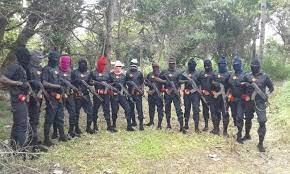
It has been revealed that the Federal Government of Nigeria is reaching an agreement to release Boko Haram commanders and give them hefty amount of money for the release of the Kaduna train victims the terrorists abducted, according to some media reports.

The major reason a nation should not negotiate with terrorists is very simple, sensible and straightforward.

When a government rewards terror for perpetrating evil by giving the terror what it wants, it is reasonable to expect that they will, like others before them, continue their horrendous acts of violence, knowing that there may well be a prize for them afterwards.

Releasing people who have blood in their hands and giving them millions of dollars in return for release of some captives may bring a temporary relief to the nation and happiness to their families. However, always know that more families are put on the line to suffer the same agony in the future. The nation will enjoy reprieve only temporarily as terror has no rule of engagement. There will be more train attacks in the future, mark my words.

One area used effectively to defeat terror is denying it funding from all sources so that it will be unable to fund its heinous operations by paying salaries, hiring more fighters and getting fresh supply of weapons. Nigerian government has unwittingly been doing the opposite, by freeing Boko Haram commanders and giving them money to carry on with their acts of terror against hapless Nigerians. And this is the same government that is creating a law to make ransom payment a criminal offense.

The government knows where the captives are kept. Like what governor Nasir El-Rufai said, the place should be raided and rescue the victims. There may be some casualties but that is more acceptable than rewarding terrorists with what they want. The government will be releasing dangerous people to the society knowing that they will never repent. There are many ways to rescue the victims safely without much casualties. The government can gas the area. If it doesn’t know the technology, it should consult experts.

Another alternative is violent crackdown on them. History is replete with many examples. Nigeria has relative peace in the Northeast today not because it bought peace but because it carried arms and crushed Boko Haram. Patience and intelligence gathering will always produce results. Terror without money and fresh recruits crumble and die.

Nigeria is neither patient nor tactical enough in its approach. If it cannot do the job, it should invite mercenaries.

Aliyu Nubu is a public commentator. He writes from Abuja, Nigeria.

Jolly times with Poetic Wednesday

By Namse Udosen

I came across Poetic Wednesday on Facebook. It was refreshing to see young people telling their stories in verse. During the Covid-19 lockdown, I followed keenly as Eclectic voices sang tunes that ranged from despair to hope.

Poetry is a beautiful part of literature often not paid deserved attention in this climes. It breathes colours and creates philosophy. Therefore, immersing myself in the words of the poets of Poetic Wednesday provides me with a refreshing view of life in Northern Nigeria.

Aside from providing an outlet on social media for budding poets, they have organized a series of offline creative writing workshops for more than 300 secondary school students in Kano, Katsina, Yobe, and Kaduna. These workshops provide opportunities for non-formal education in creative writing. These workshops also expand the thinking range of these students and them better in their academic work. As a result, many young writers have participated in and won writing competitions which are essential for building confidence.

Poetic Wednesday has used its online presence to drive narrative around pressing societal issues in Arewa. The works have been bold and daring, covering domestic violence, Almajirci, drug abuse, and girl-child education. The conservative toga around Northern Nigeria is regularly broken by the strength of the poetry published.

I have also had the opportunity of attending some of the physical poetry events. Asides from the big players in Kaduna, they have one of the best poetry events in Kaduna.

They have been able to collaborate and partner with several literary organizations such as The Art-Muse Fair, Open Arts, Ahmadu Bello University Arts Festival (ABUFEST), Poets In Nigeria (PIN), Creative Writers Club, ABU Zaria, Minna Book and Arts Festival (MinnaBAF), For The Love of Poetry, Campus Watch, The AlhanIslam Tutoring Center, Chapter One, Open Arts, Hausa International Book and Arts Festival and several others to support and promote literary activities.

I am glad to be part of their growth and successes. I don’t know where they get their drive from, but I appreciate the sacrifices of the young men and women behind the initiative. Long live Poetic Wednesday.

Namse Udosen wrote from Kaduna via namse.udosen@gmail.com.

Till death do us part

By Dr Abubakar Mohammed Gombe

It is interesting to understand the divine marriage between a country and its citizens, specifically between Nigeria and Nigerians. In such a marriage, no amount of lives lost puts asunder. The mysterious marriage keeps producing low-quality products who believe eliminating half brothers will better their lives. Nonetheless, the marriage produced the golden voice of the continent that was, however, eliminated by the products of his mother.

The first army General who coordinated the marriage affair was also eliminated by the same products. Many more military coordinators in charge of the Nigerian marriage were eliminated. The latest were the homemade healthy transition of General Sani Abacha GCON; the prison made transition of MKO Abiola with General Shehu Musa Yaradua, and the contagious transition of President Umaru Musa Yaradua GCON. Yet, the marriage stands. It was only death that did them part.

A three-year civil war could not put asunder. The Ojukus were forcefully retained for the survival of the marriage of interest that occasionally accepts religious and tribal killings and hailing such acts by pardoning popular champions like General Zamani Lekot of the Zangon Kataf crises by the IBB regime and rehabilitating others for communal reintegration by the Buhari regime. These are sincerely done to sustain the cracked marriage until death.

The emergence of popular movements like Boko Haram, IPOB, Kidnapping, Cattle rustling, Herdsmen, Bandits, and Terrorism move to ensure the marriage failure. Still, the lifetime Unity in Corruption among the children of the marriage, which recently pardoned Joshua Dariye and Jolly Nyame, is stronger than the distraction of the popular movement groups that also exploit brothers of the same marriage.

While Unity in Corruption ensures poor education for brothers and sisters of the same marriage, BH went on destroying primary and secondary schools. They also vandalized electricity supplying poles and transformers to complement Unity in Corruption’s idea of rural electrification. IPOB, in its territorial states, declares Monday as an additional weekend while Kaduna officially declares Friday as the beginning weekend. In their territorial states, Bandits know all the army free zones where they peacefully operate without stepping on army toes. Cattle rustlers also know where there are no cattle, and so, instead of taking away cattle, they take the lives of entire villages that provoke them by not keeping cattle, their needs.

Nigerian lives are not safe on the road, on rail and at the airport. One finds it difficult to comprehend a passage in which children of the same mother kill within the home. Yet, the marriage stands and keeps producing children. Everyone identifies with the mother in a polygamous family and blames half brothers. In the Nigerian case, there is only one mother with several tribal lands. It seems only the Fulani have no land. Yet, the Fulani also join the powerful elites’ movement of Unity in Corruption. Under the same mother, the socio-political and economic status becomes the dividing line. The certified children that form Unity in Corruption blame the Almajiri for retrogression.  

Then, the most disturbing effort of closing universities to seek the attention of the I Assure You Regime by the educated class that formed ASUU appeared with the support of their supporting staff of SSANU and NASU to seek revitalization. ASUU believes closing universities and sending brothers and sisters home will pain Unity in Corruption. It indeed doesn’t. Instead, ASUU complements Unity in Corruption in denying access to university education and actualizing BH’s mission while in self and family hunger. While most state universities in the north religiously observe the ASUU strike, some state universities in the south graduate students. Yet, the marriage stands till death do us part.  

Considering the time, the response of the previous regimes, the regime of assurance with less action, and the possible incoming regime, ASUU ought to have a comprehensive retreat, call off its hunger strike, restrategize and declare regime change in Nigeria with the support of SSANU, NASU, Colleges, Polytechnics, NUT, students, parents and good citizens.

All Nigerians are deeply involved, and all political and armed movements are sponsored either to sustain Nigeria’s marriage for sponsors’ personal gain or to put asunder. With all the prophesies, projections and armed movements, the marriage of amalgamation remains. What Nigeria needs is the game-changer, and that changer can be found in ASUU. Nigeria needs focus and determination. ASUU must go into governance en mass. Otherwise, one or two members hardly make a meaningful impact.

ASUU should simply declare for the office of the Federal and State University Visitors, Senatorial Districts, Federal and State Houses of Assembly in the 2023 general elections and work with SSANU, NASU, Colleges, Polytechnics, Monotechnics, NUT, students, parents and good citizens. Nigeria must be saved. We remain Nigerians till death do us part. 

ASUU must retain its strong UTAS team and set in motion its national planning and enforcement team, policy enforcement team, economic team, company revival and creation team, employment creation team, national security management team, education monitoring team, patriotism enforcement team, salary and pension enforcement team, manufacturing promotion team, local and international lobby team, Crude oil and refinery enforcement team, action or resignation enforcement team, among others,  

Let’s use our hunger to save our country. With ASUU, SSANU, NASU, Colleges, Polytechnics, Monotechnics, NUT, students, parents and good citizens, Nigeria can be saved.

Let’s save Nigeria till death do us part.

Dr Abubakar Mohammed Gombe wrote from Gombe State University. He can be reached via amgombe2@yahoo.com or +23408060839578.