Opinion

Can Atiku crack the Wike’s puzzle? (II)

By Tordue Simon Targema

Secondly, there is the notion of power shift to the South which is shared even among Southern politicians that are not positively disposed to Wike. Indeed, all political stakeholders in the party are unanimous in their conviction that power should shift to the South, as President Muhammadu Buhari is completing a second term, an uninterrupted eight-years Northern presidency come 2023.

This conviction has earned what many in the South would have ordinarily termed ‘Wike’s unnecessary self-centred nagging and ranting’ some form of legitimacy, giving him strong strength to bargain on the negotiation table. Worthy of note is the fact that even though Atiku dreads this negotiation table like a house infested with leprosy, he has no option than to face it, and fillers from the discussions so far indicate that the standard bearer is not finding it funny yielding to the demands of his ego-centric demigod of a rival.

What are the Issues on the Negotiation Table By-the-Way? Fillers from the negotiation table indicate that Wike clearly wants to show Atiku that he is not a force to relegate in the opposition party that he strive hard to sustain from 2015 to date when most party big-wigs including Atiku deserted it for the APC and other political formations. From what is in the public domain so far, few things stand out from Wike’s litany demands.

First and foremost, Atiku must do just one term and return the presidency to the South by the next election season, i.e. 2027. Secondly, Ayu must resign as the National Chairman of the PDP and a new chairperson for the party should emerge from the South West to balance the power structure in the party. Thirdly, Wike will install key ministers in Atiku’s cabinet, etc.

Of course, these are not by any means, too difficult conditions to meet if the standard bearer is determined to unite his house and put forth a formidable campaign team to challenge the ruling APC and other emerging opposition parties. After all, politics is all about concessions.

Already, His Excellency Atiku Abubakar has made his intention to run for just a single term known to the general public, even as such promises hardly hold water in politics if previous experiences in the country’s political landscape are worthy to go by. This is the more reason why Wike requires a concrete commitment to that effect, not just a promissory note that would likely bounce in the bank of equity when the time to cash it is due.

The third condition too is not too difficult to meet, considering that Wike is considered a big name in the party in his zone and likely to pull substantial votes for Atiku in the South. Lest we forget that the ‘Obi-dient’ movement and Tinubu’s effect are critical factors that would collapse whatever structure Atiku has in the South but for the support of strong party pillars in the region like Wike.

Indeed, Atiku needs a formidable team in the South, and no amount of concessions in terms of political appointments will be too big to woo the right people on board, his campaign train. Perhaps, the biggest hurdle right at the moment is for Ayu to accept to resign. As at the last minute, the third-republican political juggernaut is still holding unto his mandate, solidly. In fact, with an air of confidence like one who is firmly in charge, he describes those calling for his resignation from the party’s top seat as ‘small children’ who should not be taken seriously.

Indeed, this boast followed a vote of confidence passed on him by members of the party’s National Working Committee in Abuja, recently which Wike simply dismissed as the same path that Ayu’s predecessor, Prince Uche Secondus followed in his inglorious exit from the party’s top seat. Indeed, all indications point to Ayu’s eventual resignation in no distant time. It is in line with this expectation which seems the only sure path for a likely truce that the Board of Trustees Chairman of the party, Senator Walid Jibrin resigned his position in Abuja recently as a move towards uniting the party.

At the moment, calls for Ayu’s exit have reached advanced stage as all is set for formal commencement of campaigns later in the month. In a South-West stakeholders meeting of the party at Ibadan, Governor Seyi Makinde, one of the key members of the Wike’s camp reiterated their position that Ayu must go.

Makinde described the need to reshuffle leadership positions in the party as the party’s demonstration of commitment towards restructuring which has been its mantra since 2019; although Atiku dismissed this premise and maintained that even if Ayu resigns, a northerner is constitutionally most likely to take over as the party’s henchman given the provision of the party’s constitution.

A power shift in the party, Atiku explained, is only possible in the event of a constitutional review of the party’s constitution which is not likely in the current circumstances. In the meantime, Ayu jets off to Europe on vacation.

Meanwhile, several questions bug the curious mind as follows: is this trip a tactical move to pave the way for peaceful transition in absentia? Is Ayu working on his transition notes to hand over to a new party chairman upon return from vacation in line with the demands of Wike’s camp?

Is His Excellency Atiku Abubakar willing to sacrifice Ayu and broker a truce with Wike, or he is ready to call off Wike’s bluff and dare the consequences? By-the-way, does he has adequate time right at the moment to fully contemplate his options before formal commencement of campaigns later in the month?

The composition of the campaign team with Wike’s camp relegated to the background is a pointer to this line of thought. But if previous experience is anything to go by, then His Excellency Atiku Abubakar is threading on a treacherous ground.

Recall the revolution in the PDP that led to the emergence of the new-PDP which eventually joined forces with the APC in 2014, thereby forming a formidable opposition party that sent the PDP to the debris in 2015 general elections. Apparently, this history is about to repeat itself with the Wike’s puzzle. Coincidently, Just like2015, the current travail of the party starts from Rivers State.

One is, thus, curious to pose: is history repeating itself in the PDP camp? Can the Wike factor cost Atiku the price that former President Goodluck Jonathan paid in 2015 for ignoring Governor Chibuike Rotimi Amaechi? Wike’s puzzle is certainly a hard one for Atiku to crack, and until he is able to crack it successfully, it remains a clog in the wheel of what seems his final shot at Nigeria’s top job.

How best he cracks this puzzle and steers the party to victory remains to be seen, as other political movements are restlessly cashing into the crack in the party to consolidate their holds on the South-South zone which, hitherto, was PDP’s stronghold.

Tordue Simon Targema writes from the Department of Journalism and Media Studies, Taraba State University, Jalingo. Email: torduesimon@gmail.com

A perspective on the resurgence of interest in Hausa identity on social media

By Aliyu A. Ammani

Those following happenings in social media could not have missed the debates and controversies generated by the rise in tribal identity consciousness among the Hausa in Nigeria. Identity among the Hausa has been suppressed by the mischievous use of the tag “Bamaguje”, masked by “Hausa-Fulani” and “Arewa” labels, and tacitly put into question over the years. Many people see in this increasing consciousness a threat to the coexistence between the Hausa and the Fulani, two tribes living together for centuries in Hausaland.

A series of conspiracy theories are churned to explain the genesis of this resurgence on social media, most of which sound somewhat ridiculous. The conspiracy theorists appeared not to see the wood for the trees. There are two primary reasons behind the resurgence of interest in Hausa identity in Nigeria today.

First, the Bororo Fulani banditry in mainstream Hausaland on populations that are essentially Hausa, and its attendant destruction of lives and properties, maiming, looting, raping of women, kidnapping for ransom etc. Thousands of towns and villages across Hausaland have been sacked. Communities of free law-abiding citizens are forced back to the dark age of slavery; abled-bodied men are attacked and abducted, sometimes right inside mosques on Fridays. The perpetrators of these heinous crimes are always willing to tell the world they are Fulani, fighting for Fulani against the Hausa. The reader can hear from the Horse’s Mouth in the following audio-visual documentaries available on YouTube: (i) BBC Africa Eye Documentary “The Bandit Warlords of Zamfara”, (ii) Trust TV’s “Nigeria’s Banditry ‘The Inside Story” and. (iii) video coverage of Dr Ahmad Gumi’s meeting with Zamfara Bandits at Shinkafi.

Second, and most importantly, the attitude of city-dwelling Fulani, including some notable traditional and religious leaders in Hausaland, in the face of Bororo banditry. Instead of publicly dissociating themselves from the atrocities or publicly declaring that terrorists like Bello Turji, Dogo Gide and Ado Aleru do not represent the Fulani, they seem more comfortable fabricating excuses for the bandits in tongue-in-cheek statements.

The leaders say, “their cattle were rustled”, “traditional cattle routes were blocked by new farmlands and settlements”, “the Fulani are not in it alone, there are other tribes including the Hausa aiding and supporting them”, and “the governments neglect the Fulani, …” etc. Not a single traditional ruler in mainstream Hausaland came out to publicly take an impartial stand, as did the emir of Muri. Even Miyetti Allah, the Fulani association that is always quick to cry blue murder whenever the interest of the Bororo appeared threatened, appeared to lose its voice. Thus, projecting an impression that while Bororo Fulani are busy terrorising and destroying Hausa populations and settlements, city Fulani are busy manufacturing and propagating excuses and justifications for the atrocities.

Can one sincerely justify banditry or rebellion by Fulani in Hausaland, a land that is practically a Fulani territory? The most important traditional rulers in Hausaland are Fulani. The key political figures and public officials in Hausaland are Fulani. The most notable Islamic clerics and religious leaders are Fulani. Even in Hausa settlements outside Hausaland, the heads of the communities, known as “Sarakunan Hausawa” (singl. Sarkin Hausawa) majority are Fulani. Therefore, the Fulani should be the last to rebel in Hausaland!

The Hausa, hitherto feeling that he has ‘his back covered’ by the Fulani, feels betrayed. With the scales falling off his eyes, he began to see the writing on the wall: “You are on your own”. This ignites the process that sparked the chain of reactions that we now see on social media as the resurgence of interest in Hausa identity, what others see as the dissociation of Hausawa from the Fulani.

There is indeed the tendency that a reawakening of identity consciousness among the Hausa is capable of igniting an equal spark in Fulani identity among the almost “hausanised” Fulani in Hausaland. This could lead to an upsurge in identity politics among both groups, leading to extremism where elements from both tribes could begin to see and interpret processes and events on a “we versus them’ basis. Traces of such extremism are already visible. However, the possibility of such a tendency should not be reason enough to deny the Hausa of their rights to tribal identity, association and aspirations for the simple reason that other Nigerian tribes have been enjoying such rights without posing any threat to their coexistence with other tribes in Nigeria.

The upsurge in Hausa identity revival has started and cannot be stifled or halted. The genie is already out of the bottle. The question that begs an answer is, “which way forward”? The way forward is not in the identification and clamping down on the persons or group managing pro-Hausa identity revival social media handles as is being suggested by some Islamic clerics across Northern Nigeria. This is more likely to compound rather than solve the problem.

The solution is for the ‘organised Fulani front’ to confront and respectfully address the fears of the Hausa people (of a conspiracy to annihilate them). They should also give them their assurance and publicly dissociate the Fulani from the activities of terrorists like Bello Turji & Co, and commence the process of rebuilding mutual trust and respect between the Hausa and Fulani.

Aliyu A. Ammani wrote via aaammani@yahoo.co.uk fromU/Shanu, Kaduna, Nigeria.

Cholera kills 20 surrendered Boko Haram fighters

By Uzair Adam Imam

At least 20 surrendered Boko Haram fighters have died as a result of cholera outbreak that stormed Borno State.

A source told journalists in Borno that health workers with the support of Non-Governmental Organisations and the World Health Organisation are trying to control the fatalities.

He said, “At least 20 Boko Haram surrenders have died as a result of cholera outbreak in Hajj and four others died in Bama camp. 

“Also, three reportedly died in the Muna Garage IDP camp. Nearly 1,000 cases have been reported so far, and hundreds are currently receiving treatments in various health centres,” he added.

However, in what appeared to have contradicted the earlier statement, a top ministry of health staff, said the figures were incorrect.

The staff who pleaded for anonymity told journalists that only 11 repentant Boko Haram insurgents and three others in the Muna Garage IDP camp were killed by cholera, not 20 people.

He stated that, “the ministry and its partners are on top of the situation.”

The Daily Reality gathered there are about 12,000 Boko Haram fighters that have laid down their arms and surrendered to the troops of the Nigerian Army in Borno State.

Kannywood movie review: Ruwan Dare

By Muhammad Abubakar

Having watched this movie and seeing its lessons, I decided to review it. Doing so will, by God‘s will, will wake up those graduates—who are unknowingly killing, or more correctly, misleading themselves into believing that it’s shameful for graduates to get themselves engaged in a low-income business, let alone being a labourer.

The movie was released in 2018. It‘s directed by a veteran Kannywood director, Yaseen Auwal. The film is about the situation and the kind of life our nowadays students, particularly graduates, live.

Kamalu (Sadiq Sani Sadiq), the son of the lowest-income businessman (Rabi’u Rikadawa), happened to be a close friend to Bashir (Aminu Sharif Momoh), a brother to the husband of Jamila Nagudu. Their respectable, reasonable, deep-thinking friend, Lawal (Baballe Hayatu), always tries his best to advise not only Kamalu and Lawal but anyone too ambitious not to rely on the government job entirely. At least they should find something to do to improve their lives.

However—unfortunately for them, they always don’t see his advice as something important. One fateful day, Kamalu and Bashir came to the cafe where they almost every day buy stuff without payment. They lie to the tea seller (Ahmad Aliyu Tage) that when they become billionaires in the future, they will pay back everything he now gives them and give him more.

Unfortunately, the tea seller, Ahmad Aliyu Tage, rejected their request, complaining that he was tired of their ‘when-we-become-billionaires’. Luckily for them, Lawal came to buy something at the same cafe too. Although they undermined his sense recently, he surprised them by assigning the tea seller, Ahmad Aliyu Tage, to cook one packet of noodles alongside a whole roasted chicken for each of them. Sadly, this has not served them as a lesson.

One thing that inspired me is: Lawan never worried himself about a government job. He, in the end, made it, leaving them still suffering from poverty as usual.

The film is fascinating, indeed. We see how Lawal and Bashir suffer due to their laziness in going and refusing to hustle. As a result, they end up pushing a truck and teaching at primary school. In addition, the movie passes the message that: Whoever is not content with what God gives him will end up missing a lot in life.

The camera work and sound are up to the mark. And the subtitler has perfectly played his role. Even though he mixed with Hausa in some scenes, this is not an issue. Since the message is precisely delivered – this film was purposely made to call on the attention of graduates like Kamalu and Bashir.

It’s a must-watch film.

Can Atiku crack the Wike’s puzzle? (I)

By Tordue Simon Targema

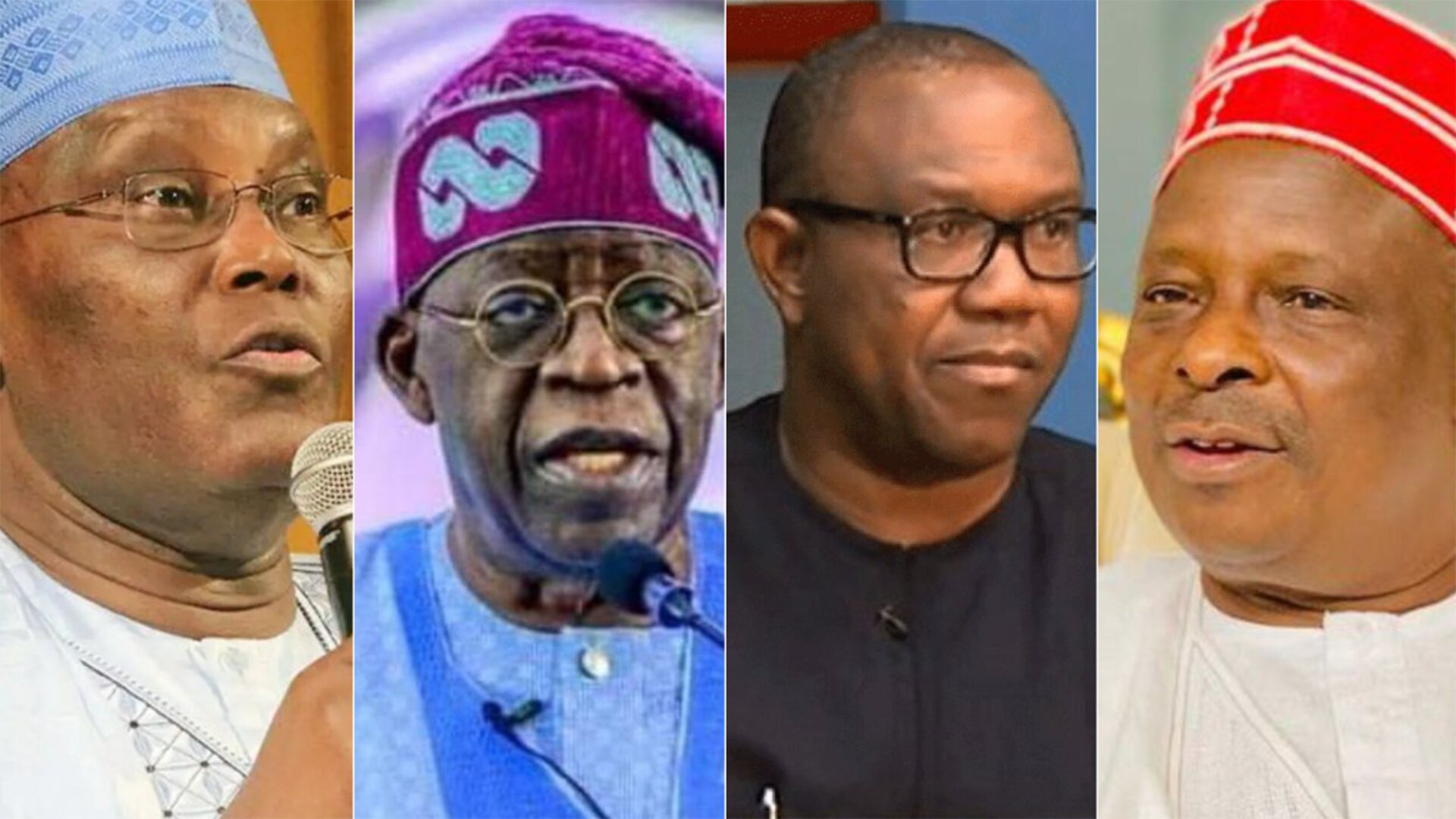
The Rivers State Governor, Ezenwo Nyesom Wike’s puzzle is proving extremely difficult to crack by the presidential flag bearer of the People’s Democratic Party (PDP), His Excellency Alhaji Atiku Abubakar.

Like the proverbial lizard on the edge of the water jar, Wike has proven to be Atiku’s biggest dilemma in his current presidential bid. The options before him are weighty: to ignore Wike and put up with the consequences given the latter’s influence in the leading opposition party and seaming control over the party’s structure especially in the South-South geopolitical zone; or give in to his weighty concessions as an act of either compromise or cowardice and subjugation to the whims and ego of an emerging emperor in the party’s fold.

These are certainly weighty options, serious enough to cost an ambitious aspirant- desirous of occupying Nigeria’s topmost seat as a crowning moment of his age-long political career- his precious sleep.

As events in the aftermath of the party’s presidential primaries continue to unfold, Wike has emerged the most sought-after political bride in Nigeria. Just last month, he was entangled in a series of meetings in London with the three topmost aspirants- Bola Ahmad Tinubu of the All Progressives Congress (APC), Peter Obi of the Labour Party (LP) and his arch political rival, Atiku Abubakar of the PDP who is at the centre of the whole palaver.

The meetings were graced by household names in Nigeria’s political arena such as former President Olusegun Obasanjo, incumbent governors and several other political stakeholders. Prior to these marathon meetings in London, his Port-Harcourt residence had suddenly turned to a venue of political pilgrimage by Nigerian presidential hopefuls and their emissaries.

Apparently, Wike’s grudge seem like one massaging his personal ego after suffering a resounding defeat in a keenly contested jostle for the main opposition party’s flag. This explains why he has not hidden his rift with the party’s National Chairman, Senator Iorchia Ayu.

A day after the primary election, when Wike was busy nursing the agonizing wounds of the defeat, Ayu was caught on camera- flanked by His Excellency Atiku Abubakar- showering praises on Governor Aminu Waziri Tambuwal of Sokoto State as the “hero of the convention”. Of course, Tambuwal’s abrupt withdrawal at the last minute in support of Atiku was, no doubt, influential to the latter’s victory; a move that Wike interpreted as a well-orchestrated conspiracy, laced with ethno-regional bigotry to edge him out of the race and scuttle his ambition of occupying the country’s top seat.

From that moment, he made his instant decision- and publicly so- that Ayu must go as the preeminent condition for peace to reign in the party. However, subsequent developments have further deepened the crisis in the party and made it messier for the party in general, and Atiku Abubakar in particular, to handle.

For instance, having lost the flag, one would have expected that as the first runner up, Atiku would compensate Wike with the vice presidential slot to run a joint ticket, or at least, give him the benefit to nominate a protégée to run as a move towards reconciliation.

Incidentally, having won the ticket from the North, the vice presidential slot automatically was expected to come from the South, and as the leading figure of the party in the region, all eyes were on Wike for the vice presidential slot. Atiku’s snubbing of Wike for the Delta State Governor, Ifeanyi Okowa is clearly understood by many political analysts.

Everyone would prefer a calm, cooperative and more introverted vice to a lousy, boisterous, loquacious, egoistic and power-drunk demigod who is so full of himself and intoxicated with self-invested powers and a sense of relevance that defies all principles of logic. Yes, this is my personal opinion about the person of Governor Wike, but I am sure many would share the same opinion about him, and it is likely the foremost reason why His Excellency, Atiku Abubakar snubbed him without a second thought to the damning consequences to his campaign.

Yes, Wike would have been a difficult candidate to sell especially in the Northern region where his controversial position on states control of the Value Added Tax (VAT) that Rivers State has the lion share, restructuring and other controversial national issues lurking the Nigerian federation leave him with more enemies than friends.

Yet, others dislike him for being excessively assertive and domineering, dictatorial in his approach to handling complicated political situations and crude in his dealings with delicate political matters without minding hurting sensitivities and stepping on toes. All these understandably culminated into Atiku’s eventual preference of Okowa, who is more subtle- if one is careful of using diplomatic- in his political approach as a co-flag bearer.

But having made his choice- barring all consequences, the effects are right here with him, and have, at the moment, overwhelmed the leading opposition party. How best His Excellency Atiku Abubakar and his party navigate the challenges confronting it and form a formidable all-inclusive campaign team remains to be seen, as efforts to woo Wike and his allies back to the fold have always hit brick walls.

Already, the presidential campaign team is set with Governor Emmanuel Udom of Akwa Ibom State- Wike’s neighbour- as the Chairman and Governor Tambuwal of Sokoto State as the Director General. Key members of the Wike’s camp such as governors Seyi Makinde of Oyo State, Samuel Ortom of Benue State, Okezie Ikpeazu of Abia State and Wike himself are sandwiched in the list as members, with the exception of Makinde who is named the Vice Chairman (South).

The big question to ask at this point is: will these governors throw their weight behind the campaign as they should, given the prevailing state of affairs? Perhaps, some historical illusions would be in order to put things into perspective. One is tempted to infer that the complications that confront the PDP at the moment are capable of repeating the ugly 2015 nightmare.

Yes, Wike is a force to reckon with. It is to his credit that he sustained the PDP in states where it was nose-diving to oblivion. His macho in odd-hour elections such as Edo, Osun and Anambra among a host of other states confer on him, the prestige in the party that is second to none among his fellow governors. It is no wonder that they rally around him in his moment of great travails.

To be continued

Tordue Simon Targema writes from the Department of Journalism and Media Studies, Taraba State University, Jalingo. Email: torduesimon@gmail.com

Governor Fintiri and the complex cattle tax increment

By Zayyad I. Muhammad

Taxes and royalties collection is a fundamental avenue for a government to generate revenues to fund infrastructure and human capital development.

Adamawa State needs other sources of revenue apart from the free petro-dollar from the centre. The state is poor, with a fragile economy, including thousands of unemployed youths and people engaged in unproductive jobs.

The World Bank says – most developing countries with fragile economies “often face the steepest challenges in collecting taxes.”

There is a correlation between the timing of introducing new taxes, peoples’ economic strength and politics. No government can survive local politics if it introduces new taxes at the wrong time- especially when it faces a re-election bid. Governor Ahmadu Umaru Fintiri is seeking re-election in the 2023 governorship election.

Governor Ahmadu Umaru Fintiri’s introduction of a new cattle tax regime appears ill-timed, unplanned, and poorly communicated to the concerned people. So many explanations from the Governor’s aides, yet no one understands them because the basics in tax administration were left out – new tax collection should be optimized, but with minimal burden on the taxpayers, it should be fair & equitable, and at the appropriate time.

The Adamawa state government said that the ‘Adamawa State Agribusiness Support Programme (ADAS)’ is designed to take full advantage of the agricultural opportunities within the state and will focus on three areas of the Crop Value chain, Livestock and Aquaculture. The government further said – the Agric bond will draw twenty-five billion Naira annually, which will be used to offset many of the state’s liabilities and loans, and open a window for generating huge revenue as well as galvanizing the market in the Agric business, especially the livestock subsector” including the upgrade of cattle markets in Mubi, Ganye, Song, Gombi, Ngurore, Tungo, Malabu, and Wuro Bokki.

The Fintiri government failed to do its homework in two areas – balancing the economic needs and political necessity. The cattle tax is as historic as northern Nigeria. The five thousand Naira (N5,000) imposed on every cattle is exorbitant and unaffordable according to many people in the business

On the other hand, there are thorny politics associated with the cattle tax’, and the people related to the business are complex and critical in the socio-political settings of northern Nigeria, thus before tinkering with the tax, there is a significant requirement for discussion, engagements, and understandings. The livestock business is a vital sector, so to speak!  as a result of poor timing and lack of discussion with stakeholders on the new increase in the cattle tax, the Mubi cattle market, one of the biggest in the north, didn’t operate last week. The security agents sealed the market on Tuesday, September 13, 2022.

Well, the Governor has found himself in a catch-22 situation because the upward review on tax for cattle and grains was one of the conditions the government must fulfil in accessing the capital market’s 100 billion naira agribusiness bond. Governor Fintiri has already collected 25 billion Naira from the 100 billion. And the investors are the ones to be collecting the taxes

Governor Fintiri is a history, policy, and strategy student, but often some of his decisions lack political strategy. He doesn’t have good political advisers or seeks any advice most of the time.

Zayyad I. Muhammad writes from Abuja, 08036070980, zaymohd@yahoo.com.

Online politics and yellow journalism: A pathway to 21st century ideal journalism

By Aliyu Dalhatu

Journalism and politics are two distinct ways of serving the public. Know the limitation of the former and stop publishing fiction for your own interest.

Magaji Danbatta wrote in his autobiography “Pull of Fate”: “I knew that to be a good journalist, a reporter or a columnist, one must have a good command of English language, rich in general knowledge and specialization in one or more subjects which could come with wide reading. One must also be a keen observer and a clean thinker and posses the ability to mix with people easily, feeling equally at home with low, the high and the mighty” (p. 116-117).

That is not all, he also added that there are plentiful stories to be told if you are willing to be an all round journalist, such as healthcare, sports, legal matters, trade, commerce, cultural performances, entertainment, among others.

Journalism, whether we see it as a profession or craft, it deserves to be treated with high sense of accuracy, fairness, integrity and ethical judgement. Not quite long ago, I had a discussion with a one veteran journalist on the disgusting nature of the visual misrepresentation of journalism profession by guerilla journalists. One thing for sure that contributed to this journalistic ill is the emergence of Internet vis-a-vis User-Generated Content (UCG).

Though, media houses can use these new media technologies in reporting, editing, publishing and disseminating news and information to their diverse audiences, however, on the other hand, these modern technologies are now seen as the global social forces that have intensified in breeding yellow journalists on social media to disseminate and fabricate lies, disinformation, hate speech, misinform and defame the character of important personalities: politicians, traditional leaders, religious symbols and other institutions with the sole aim of seeking attention, patronage and other ethno-religious agendas.

Just recently, I attended a One-Day public lecture series organized by the Department of Mass Communication, Kano state Polytechnic.

As one of the special guests, I have learned a lot about the practice journalism profession from the Associate Professor, Mainasara Yakubu Kurfi, the Head Department of Mass Communition (BUK) who presented a paper on “The 21st Century Mass Communication Student” and the one on “Crime and Judicial Reporting” presented by the Chairman, National Union of Journalists, NUJ Kano state chapter, Comrade Abbas Ibrahim and the last one by Badamasi Aliyu Abdullahi a Bookworm, who talked on “Reading: A Pathway to Entrepreneurial Journalism.”

Such opportunity had exposed me to know that for you to be a 21st century journalist or in other words “a jack of all trades”, you should remember that the world is no longer a “global village” as coined by Marshal McLuhan but now a “global room.”

Therefore, in journalism profession, “it is better to miss the story than to mess the story” as advised by Comrade Abbas Ibrahim. Furthermore, publishing fiction is not journalism, but an act of junk journalism.

Mal. Aliyu Dalhatu writes from Kano State.

Ummita murder: that Chinese killer must be punished

By Tajuddeen Ahmad Tijjani

It was a very horrible incident how a Chinese man unjustly killed Ummakulsum in Kano State on Friday, September 16, 2022. No one could understand the real motives about how the young lady died so young in the hands of the evil man who was alleged to be her lover.

In Nigeria, the lives of ordinary citizens are becoming so easily taken and only become viral on social media without pursuing the incident to a logical conclusion. Indeed, it’s a duty upon the authorities to unravel the circumstances in which criminal activities are occasionally occurring in our country. Perhaps, we take it for granted that a foreigner could be allowed to perpetrate this criminal act in our midst. Even though every immoral act stands condemned no matter who’s involved.

Ummi or Ummita, as she’s popularly known, wasn’t the only case that happened in the community. Most young girls find fun in associating with people of different colours and unknown backgrounds. We must be concerned and warn our sisters to be cautious of who they associate with, and the community should, of course, be wary of people of questionable character approaching our sisters.

Sadly, the search for  exuberant life exposes women and girls to rapists and urchins who hide behind the cover of white skin to harm and spoil, thereby causing untold psychological, mental, health and physical trauma to young ladies in the country. Even though this happened in a most horrible way, but it shouldn’t be left to fade and wane, we must take precautions. In most cities, for example, we see young girls hiding behind as secretaries or even direct lovers to these white men, resulting in disasters and the destruction of their lives.

In general, what you can’t take away from us is that our inbuilt traits are not dead in us. It is true we love foreigners, mostly white men, for the simple fact that we feel they are more distant from us and we crave to make them feel at home, make them feel more comfortable in Nigeria, but that should not be taken for granted to take advantage of our kindness and inflict untold hardship on us. The gruesome murder of Ummita is highly unfortunate and indeed unacceptable.

However, security agencies must ensure the Chinese man is punished according to the law of the land to serve as a deterrent to others with similar bad intentions.

Tajuddeen Ahmad Tijjani writes from Galadima Mahmoud Street, Kasuwar Kaji Azare, Bauchi State, Nigeria.

eNaira: Changing the narrative of financial transactions in Nigeria

By Abbas Badmus

The idea of eNaira comes from the ever-expanding developments in digitalization and the need for a secured means of effecting transactions across borders. 

eNaira is a central bank digital currency issued and regulated by the Central Bank of Nigeria (CBN). As a compliment to the existing forms of CBN-issued legal tender currency, the eNaira serves as both a store of value and a medium of exchange, offering efficiency in Nigeria’s payment ecosystem.

President Muhammad Buhari launched the eNaira on 25 October 2021, under the slogan: “Same Naira, More Possibilities”.

The introduction of the eNaira by the CBN immediately put Nigeria in the global spotlight as the first African country to launch the Central Bank Digital Currency (CBDC).

If fully embraced, there are several benefits for Nigerians and the business community, thereby eradicating many issues surrounding cash transactions.

Some benefits include speedy delivery, safe, simple trading and transactional opportunities for customers and end-users.

More specifically, the benefits to the merchants and business owners include reduced cash handling cost, elimination of failed transactions, instant settlement, increased speed of transactions, improvement in records keeping and elimination of Challenges associated with giving change to customers, amongst others.

Recently, CBN Deputy Governor, Economy Policy, Dr Kingsley Obiora, made it known in the just-concluded Abuja eNaira Merchants Mega Events held at Abuja Chambers of Commerce and industry that there is a reward scheme for merchants and business owners using the eNaira platform.

“I am pleased to inform you that the central bank of Nigeria approved a reward scheme for merchants and other users of the eNaira.

“This reward scheme includes providing merchants with the required scheme includes providing merchants with the required promotional (marketing) materials, subsidizing the current merchant service charge by 50% and activation of a nationwide sensitization which early business adopters of eNaira can leverage on to market its wider adoption “.

It is also important to note that the eNaira platform can now facilitate payments using QR codes, USSD, Wallet ID and eNaira wallet tag. Value-added services on the platform include branch or sub-wallets, employee management, and interoperability with other enterprise applications. Furthermore, these services are provided in a secure environment as the eNaira platform was built using a secure security protocol.

Ample opportunities for increasing business income abound through the adoption of eNaira. For instance, the availability of the eNaira payment option on e-commerce merchant platforms such as Remita is expected to complement the existing digital payment system, translating to about 50% increments in e-commerce transactions at a lower cost.

Going by the innovations and advantages of the eNaira, and the greater understanding that the relaunch is expected to build, it is most likely that the eNaira will, in no distance time, be embraced to enhance financial inclusion further.

Abbas Badmus is with TechDigest Abuja and can be reached via abbasbadamasi946@gmail.com.

On Things Fall Apart

By Abba Musa Ibrahim

When Europeans came to Africa and said, You have no culture, no religion, no civilization, no history; Africa was bound sooner or later to reply by displaying her own accomplishments. To do this, her writers and intellectuals- stepped back into what you may call the purity before the coming of Europe. What they uncovered there they put into their books and poems, and this became known as their culture, their answer to Europe’s arrogance.   – Chinua Achebe

Things Fall Apart (1958) is a text on colonialism by Achebe. As Ngugi asserts, “There is no writing in a vacuum”. Equally, Stanley Fish, Raymond William, Edward Said, and Homi K. Bhaba, among others, strongly believe that writing consciously or unconsciously reflects political, historical or social issues at the time of its birth.

In response to Joseph Conrad’s Heart of Darkness and Joyce Carry’s Mister Johnson, Achebe came up with Things Fall Apart to rectify the distorted image of Africa popularised by the Europeans. As he was quoted, “My role as a writer is to help my society regain belief in itself and put away the complexities of years of denigration and self-abasement”.

Things Fall Apart is recognized as one of the 100 novels ever written in history. It has also been translated into more than 50 different languages. Achebe gets the title of the text from W.B Yeats, an Irish poet, in his poem, “The Second Coming.”

“Turning and turning in the widening gyre

The Falcon cannot hear the falconer

Things Fall Apart; the centre cannot hold

Mere anarchy is loosed upon the world.”

The text has 165 pages, twenty-five chapters, and three phases, each discussing a distinct matter. The first part talks about the culture, tradition, norms and values and political system of Igbo society. Meanwhile, the second part talks about the major character, Okonkwo’s exile to his mother’s kinsmen in Mbanta when he kills a boy during a funeral festival. Then, lastly, is the happenings that lead him to hang himself.

The first part of the text opens with Okonkwo, who gets renown by wiping the floor with Amalinze; his celebrity circulates far and wide. He’s also a man of action, industrious and works tirelessly to go contrary to his bone idle and workshy father. Ikemefuna is brought to Okonkwo’s household before his future is decided. Pronto, the boy, owns the love of Okonkwo.

We also glance at Okonkwo, who has four wives and children and run them with heavy hands because he wants them to shun being inactive. His strictness makes him break a week of peace by beating his wife in black and blue. He also cuts Ikemefuna down, which Ezeadu forewarns him, “That boy calls you father, do not bear a hand in his death” (P.45). He does this and takes the life of sixteen years inadvertently, which in their custom is exile for seven years.

Secondly, the second part opens in Mbaino, Okonkwo’s mother’s town, where he serves for seven years. He receives a helping hand from his boon companion, Obiereka, by looking after his remnants of farm and letting him know about the arrival of white men who wiped out Abame altogether, and oracles apprise them that;

“The strange man would break their

Clan spread destruction among them” (p.111)

He also accepts the worsened situation:

“… Now he has won our brothers and our clan

Can no longer act like one; he has put a knife

On the things that held us together and we have fallen apart” (p.141)

Thirdly, the last part of the text is on Okonkwo’s return from Mbaino, where he loses his celebrity and social prestige. He finds out that white missionaries take everything up. They erect churches, courts, government and schools. He stands up against missionaries, fighting back his fame, social prestige and customs. But, drearily, he fails by not getting any co-operation from his clan, and this frustrates him to the core, and he takes his own life.

Abba Musa Ibrahim can be reached via abbamusa6888@gmail.com.