Opinion

Nigeria at 62: Which way forward?

By Habibu Maaruf Abdu

Nigeria gained independence from Britain in 1960. That’s 62 years ago. Unfortunately, however, the country has made no significant advances since then. In my opinion, it takes the collective efforts of all Nigerians to change the story. Nigeria’s ethnically diverse people must agree to unite and develop a sense of working together to move the country forward. In other words, Nigeria must first be united to reach its destined greatness.

To achieve a united Nigeria, the government of the federation must endeavour to command a ‘national loyalty.’ That is, to get support from the people of every part of the country. The government could get this if it gives members of all the parts an equal opportunity in the government and its agencies. This will send a sense of belonging and satisfaction to them. The government should also treat all Nigerians equally, regardless of their regions, religions, tribes, and political affiliations.

Another thing that can bring Nigeria together is leadership rotation across the six geo-political zones. This should be regarded considering the reality in the southeast today. There are grumblings, and even mass agitations, from the southeasterners, mainly because they have never produced a president since the second republic. This fact makes them feel as though they are treated as outcasts in the country and therefore agitate. When leadership rotation is implemented correctly, such agitations will unlikely arise again. Also, the federal government should ensure that no region is envious of the other by making fair zoning of capital projects and equal distribution of resources across every part of the country.

For the peaceful coexistence of ethnically and religiously diverse Nigerians, all ethnic and religious groups must reject their prejudices against one another. They must also understand their differences genuinely. This is necessary for them to have a common ground for respecting and tolerating their differences (cultural, ethnic and religious). It will also help them to live in harmony and build a society with strong human potential and economic progress.

‘Discipline’ and ‘patriotism’ are also areas of emphasis. No nation can be great without these values instilled in the psyche of its citizens. This is why many countries, like china, have a whole ministry for national orientation. Nigeria should copy these countries and launch a massive and consistent campaign for the ethos of civic behaviours and responsibilities in Nigeria. This will help to build discipline, respect and love of the country, as well as national pride, in the society. When these values are present in society, the people will uphold discipline and patriotism. They will reject corruption and all other harmful habits that could cripple their dreams and inhibit their country’s development.

On another side, economic diversification should be considered to put Nigeria on the right track. The country’s economy is, at present, heavily reliant on the revenue derived from the export of crude oil. This leads to low economic growth, which, in turn, favours poverty as there is no room for massive job creation. But the diversification of the economy will certainly change the story. Therefore, Nigeria should diversify into areas like agriculture and industrialization. The agricultural sector, which was the mainstay of the country’s economy before the discovery of oil, has a long value chain. And a firm industrialization policy can create thousands of manufacturing jobs for people.

Nigeria should also make policies that will attract more foreign investors, especially those who produce different kinds of products and machines. This, together with reasonable provisions for private enterprises, will go a long way in reducing unemployment and alleviating poverty in the country.

Notwithstanding the above, Nigeria should do better for the education sector. The saying, “No country can really develop unless its citizens are educated,” cannot be more correct. Unfortunately, Nigeria spends very little on education (less than 8% of its total GDP). The number of out-of-school children is high, and universities remain closed for over seven months due to an indefinite strike by the Academic Staff Union of Universities (ASUU). To save education from this mess, Nigeria should increase its expenditure on the education sector; map out a plan for revamping it, and see the plan through with maximum commitment.

At this juncture, I want my fellow Nigerians to remember that; all the developed countries we currently admire have, at some point, been where Nigeria is today. It’s therefore valid to believe that Nigeria can equally develop. Fortunately, the country is blessed with both material and human resources to facilitate the process. However, it is rightly said that Rome wasn’t built in a day. Progress is made with sustained effort over time. Therefore, we need to unite, do our patriotic duties, uphold discipline and get professional and morally upright leaders to drive the country.

I will conclude by quoting Chinua Achebe in his book The Trouble with Nigeria, published in 1983, where he opined that “Nigeria can change today if she discovers leaders who have the will, the ability and the vision. Such people are rare in any time or place. But it’s the duty of enlightened citizens to lead the way to their discovery and to create an atmosphere conducive to their emergence. If this conscious effort is not made, good leaders, like good money, will be driven out by bad.”

It takes our collective efforts to move Nigeria forward.

Habibu Maaruf Abdu wrote from Kano, Nigeria, via habibumaaruf11@gmail.com.

On writing business

By Sulaiman Maijama’a

A barrage of questions troop into my inbox daily from people outside the writing circle, declaring their interest to come in. Some questions are worthy enough, while some are funny and crazy. For example, a young lady asked me to teach her “Article Writing” via WhatsApp. Another once asked, “can I become a writer in one week?”  Somebody told me “kai kam rubutu bayi maka wahala“. What a wrongful assumption!

Let me, in order not to give a wrong impression of myself, humbly submit that I’m just a fledgling writer aspiring to be a pen wizard one day. My decision to write on “writing” this time was prompted by the fact that those who excelled are too busy to avail themselves and become beast of burden for aspiring writers. Be that as it may, a dot in the circle (like me?) may have something to offer. And as the saying goes, “there is love in sharing”. Thus, I will share the following tips for aspiring writers:

1. BE PASSIONATE AND AMBITIOUS. This, in my view, is the first step to becoming a writer. Writing is daunting, time-consuming, attention-demanding and a continuous learning process.  Whoever tells you the contrary is leading you astray. But your passion and ambition are the driving force that will keep propelling you to defy all odds and cross the blocks on your way to the promised land. I believe that one (1) inspiration can overcome ninety-nine (99) perspiration.

Haven’t you ever asked yourself why some people who read English or Mass Communication write poorly or don’t write? But others who are trained scientists are writing professionally standard _Medical Doctors, Zoologists, Agriculturalists among others write well. This is to tell you that writing is a product of passion and ambition. Regardless of what you read, you can be a writer per excellence.

2. MASTER YOUR LANGUAGE. Reasonable proficiency in a language is a prerequisite for any writer who wants to be taken seriously by his readers. Not necessarily English Language, but any language you write in. Master the language to the level that the native speaker will appreciate you. Nobody can afford to devote his time to reading trash in the name of writing. Nobody will take you seriously when your essay contains grammatical errors, sentence fragments, dangling modifiers, and incoherent and incohesive sentences and paragraphs.

3. READ. I do not know a better way a writer can improve than by taking an avid interest in reading. Reading good writings is what makes good writers. And the volume of the text you read must supersede the magnitude of your writing. For instance, you need to read and analyse at least ten articles when writing a single piece. Before you write a single book, read and review one hundred books. Do you know that when a writer stops reading, it reflects in their writings?

4. HAVE MODEL(S) AND MENTOR(S). In any profession one wants to excel in, they must have people they look up to. Different writers have different styles of writing. As a young aspiring writer, identify your hero(s), look up to them and read them more. While having a model(s) will help you raise the bar of your success by dreaming bigger, having a mentor(s) will, on the other hand, help you be on the rightful terrain to the promised land. Mentors are a blessing; they show you the way, and when you feel like giving up, they reinvigorate your confidence.

5. WRITE FREQUENTLY. It is impossible to learn writing by theory; it is learnt by the practical application of theoretical ideas. But, like a muscle getting stronger by exertion, writing improves through frequent practice. If you write frequently, you will discover that today’s writing is better than yesterday’s. Your writings this week are better than those of previous weeks. That’s one magic about it. So, never get tired of writing if you want to become a good writer.

6. HAVE AN AREA OF INTEREST.  A writer should specialise in a given area, preferably the area they are more interested in. For instance, some people are sport-loving, some follow every trend in politics, some on entertainment, some on terrorism etc. The wisdom behind identifying an area of interest is that whatever you are interested in, you will not find it too daunting but rather fun that will push you to break the glass ceiling. But this does not mean limiting yourself to a single area; a good writer should be able to write on every topic under the sun.

7. DON’T BE DECEIVED BY ENCOMIUMS: Writers carried away by flattering are likely to feel complacent. Most of the encomiums coming from people are not genuine. Regrettably, this has led to the downfall of many writers. Some people will overrate you; some will send you positive responses even without reading you. However, positive responses are motivating, but be relaxed, know your level and keep improving.

8. ACCEPT CORRECTIONS AND KEEP LEARNING. Nobody has a monopoly in this business. There is no level of professionalism a writer can attain where they are above mistakes. Even globally recognised writers make mistakes. Always keep your doors open for corrections, learn from them, and keep learning every day.

Maijama’a is a student at the Faculty of Communication, Bayero University, Kano and wrote via sulaimanmaija@gmail.com.

At 62: Nigeria’s independence and the future we desire

By Babatunde Qodri

It can be argued that ever since Nigeria got her independence in 1960, the country hasn’t gotten worse like it’s today. Every year is filled with insurmountable challenges beyond the control of both leaders and citizens. It appears, sincerely, as if the country has been cursed. Every opportunity to believe in Nigeria’s prosperity is dashed by a litany of crises ranging from insecurity, poor education and health systems and economic downturn. The country seems to have been brought to her knees.

The occasion of independence does not move people from different corners of the country. On the contrary, the convention of this remarkable celebration is a history remembered with joy and happiness. Many other African countries celebrate their independence with scores of impressive feats, despite avoidable crises. Unfortunately, the case isn’t the same here in Nigeria, where leaders expected to make people proud resort to disappointing charades to the country’s detriment.

The ongoing industrial action by university lecturers says a lot about how blighted Nigeria has been. Students have been away from classrooms for months. One would expect that a 62-year-old country should have grown past deleterious distractions capable of creating barricades in the way of her education system. It hurts that a sector as eminently necessary as education can be allowed to suffer while the Government continues to fund frivolities. The question is, which country develops or has developed without serious attention to education? 

In other words, education in Nigeria is now in a comatose state. It’s hard to believe that this is Nigeria where Sir Ahmadu Bello, Obafemi Awolowo, and others once lived and governed. Nigeria’s present predicament, evident in her leaders’ shameless willingness and obsession with greed, has ruined those past years of free education packaged to liberate Nigerians for genuine patriotism. What used to be, in terms of quality, transformative education now constitutes a culture of abandonment, taking a heavy toll on the survival and growth of the country.

Insecurity is another problem. Severalerians have been in captivity for years. We are now the headquarters of banditry and kidnapping for ransom. Non-state actors have taken advantage of the country’s vulnerability to unleash horrors daily. And the complete loss of strength by people constitutionally paid and expected to protect lives and property heightens fears. Because of this unwholesome reality, the country has become a no-go area for foreign investors who should have helped her economically. The fact that people are becoming strangers in their homeland explains the mass migration of Nigerians out of the country in search of averagely better and more peaceful climes. Internal unrest, sadly, continues to drag the country backwards.

This reality is worsened by intractable corruption. Despite being an oil-producing country, it’s still disgusting to hear that Nigeria cannot refine her oil, which makes the country hugely indebted. While other OPEC countries leverage the international market amid restrictions posed by the ongoing Russia-Ukraine crisis, Nigeria is wallowing in a financial crisis resulting from endless oil theft. Isn’t it funny that the country has to borrow to service her debt? This is indicative of the depth of mess in which Nigeria is in.

Unarguably, Nigeria needs urgent solutions through the diversification of its economy. We must take advantage of modern agriculture to produce what we consume and vice versa. The country should stop wasting funds meant for critical goods on exotic cars for politicians. Our Government must invest in the education sector, health care system, and others.

Plus, effective legislation is paramount. Nigeria is in dire need of a fresh set of leaders with brand new ideas, leaders who are committed to viable plans and collective change. The issue of climate change must also be given urgent attention. Climate change and poverty have the exact root cause, and their impact contributes to the national underdevelopment the country is witnessing.

As we move into 2023, Nigerians should understand that our country deserves a befitting future. So we must be interested in candidates who will focus on doing the right thing at the right time. We must go for candidates with clear readiness and vision to transform our education system and uphold justice and transparency. We must do away with activities capable of fueling the embers of disunity in the country. 2023 should be about these.

Babatunde Qodri can be reached at babatundelaitan@gmail.com.

Unpopular tales of unsatisfied Muslim wives

By Khadijah Tijani

There are many untold stories of Muslim women who are dissatisfied in their marriages due to sexual starvation. But unfortunately, people are not ready for the conversation. Many reasons are responsible for the apathy towards this problem.

Here are some of my thoughts:

Most women are “expected” to have a lower libido than men. However, experience has shown that many women have a high libido but often find ways to actively suppress their unattended desires. People think it’s a rare thing, but really, it’s more common than you think.

They are “expected” to accept whatever their husbands throw at them without complaining. But, since polygamy is not for women and divorce is not easy to get, they endure the sexual incongruity and bottle in the heightened emotions.

They are “expected” to focus on their children and care less about their sexual urges. However, in reality, some women begin to understand their sexuality only after reaching full maturity (age 35 and above). For some, this may happen after birthing all their children! They become more self-aware and assertive enough to demand sex. In fact, some women don’t stop wanting sex even after menopause! Conversely, men tend to become less sexually active in their late 30s and 40s. They’re more likely to be physically and emotionally absent from home due to work, business or further studies. For some men, even if they’re present, chronic medical conditions may have set in, putting them at risk of erectile dysfunction and lower sex drive.

They decide not to complain because no one will listen anyway. 8 out of 10 women would rather not speak against sexual dissatisfaction because of these high expectations. If they ever summon the courage to speak, they are often shushed by families, friends and religious clerics. Many don’t have access to professional help or the money to pay for such services.

In a survey I conducted among a small group of married Muslim women last year, I found out that 40% of them have difficulty achieving sexual satisfaction. This could be due to an inability to reach orgasm (a real psychosexual disorder) or enjoy regular, satisfying intimacy with their husbands. A larger percentage of these women cannot express their dissatisfaction for the reasons I have mentioned above.

The first solution to this problem is for men to normalize taking feedback from their wives. Don’t assume that you’re done because YOU are done. You don’t even need to ask if she’s satisfied; you only need to look at her face and feel her body language. A well-bedded woman will keep smiling at you for the rest of that day, if not longer. She will show other verbal and nonverbal cues to endorse that you have done a good job.

You need to acknowledge and validate her feedback to show that you care.

“I can see that you are smiling all the way. So that’s a good sign, right?”

Or,

“You’re not smiling. What’s wrong?”

“You know I’ve been under too much stress lately. Please give me some time to rest. I’ll make it up with you very soon.”

These validations will reassure her of your interest in satisfying her and encourage her to open up and communicate her needs.

If there’s an unsettled problem, feel free to talk about it. Avoid sweeping issues under the carpet and using sexual starvation to punish your wife. It works sometimes, but it can also be counterproductive at other times. She may begin to doubt herself and second-guess her choice of marrying you. This may negatively impact her mood and self-esteem.

And if you’re one of those who joke about the importance of sex and intimacy in marriage (“is sex a food?” Really?!), remember that the lady can get everything she needs without marrying you; let’s face it. She left her father’s house just for sex and procreation!

Also, remember that shaitan is always lurking around to identify loopholes to invade your marriage. A dissatisfied wife is one of such loopholes. She might begin to hear whisperings on how to satisfy her needs through haram ways. She may start cheating subtly, looking for means to unleash the pressure and engaging in unwholesome activities to douse the tension. We seek Allāh’s refuge against such.

In conclusion, I implore men to study their wife’s sexual needs and try to satisfy them as much as possible. Communicate freely and assist each other to achieve happiness through halal intimacy. Seek professional advice and therapy if possible. Do not shame your spouse for wanting a little bit more than usual. What makes your marriage what it is, if not the permission for intimacy?

Khadijah Tijani is a medical doctor. She writes from London, Ontario and can be reached through askodoctorkt@gmail.com or @AskDoctorKT.

Can we see people beyond their looks?

By Aisha Musa Auyo

Perhaps the only group of people that see women beyond their looks are the blind. They judge us based on our character and attitude and, with time, our intellect and intelligence.

I often get judged based on my looks, which pisses me off. It took time, patience, and convincing to come to terms with the reality that people will always judge one by his looks. I want us to ponder that our looks have nothing to do with our intelligence and demeanour.

Personality psychologists have argued that physical appearance is a significant factor in personality development because people form opinions by what they see in a person physically and respond to that person accordingly. In turn, people tend to fulfil the expectations they believe others have for them. 

For example, short people are said to be too aggressive or demand too much respect, or tall people are foolish. And in our society, it’s believed that rich people are evil and will go to hell, while poor people are good people. So they say, “Ku ci a nan, ma ci a can”, meaning “You enjoy this life, and we – the poor – will enjoy in the hereafter”. 

Other common myths that align personality with looks are: slim girls tend to be arrogant and lack patience, while chubby girls are easygoing and humble. Looking good and dressing well makes you arrogant automatically, or driving an expensive car is a showoff. 

Please, let’s study people before we pass judgement, as people’s behaviour evolves with time, education and experiences (these are what make and shape us) regardless of their physical traits. Let’s not allow people’s expectations or comments to shape our thinking. I know it’s easier said than done, but can we try?

I can remember some years back when I went to write a Senior Secondary School entrance aptitude test. After greeting the panels, one of them said, “Miss, I hope you have something to bring to the table beside your good looks. I was 13 years then, and his rhetorical question sent a doubt in my mind that I may not pass the exams. It took convincing myself that if I couldn’t do it, I wouldn’t be illegally adopted as a mercenary for someone else, implying that if I had allowed his comment get me, I might probably fail the exams. This is an example of how people’s expectations shape our thinking.

After the general exams, we were to go for another test, this time one by one with the examiners. I was given a mathematics exercise to solve fractions and square roots. God helped me solve that equation in less than a minute, and the judges were awed. It happened that I was the first one to solve that particular question since they started the test that very day. That man asked me again, which school are you attending? To him, it must be the school that is good, not me. 

A similar incident happened recently during my PhD coursework. I was doing statistics tutorials for my cluster, and the news spread that a tutorial was going on. Some groups of women decided to join. As they entered the class and saw me at the board with a marker, one of the women said, “so there’s a brain inside that fine face”. 

I retorted. My brain is finer than my face, in my mind, of course, as this woman is old enough to be my mom. But this time around, I didn’t let her statement intimidate me. All thanks to age and experience. I just pretended not to hear and continued with the class: If I’d allowed that to get through me and said what came to my mind aloud, it would prove that slim ladies are arrogant.

These cases should sound like compliments, but they’re an insult. Why do people believe that beauty and brains are mutually exclusive? What does our look have to do with our brain? My best friend, the best in mathematics in our class, is one of the most beautiful people I’ve met. She’s a civil engineer now.

My other best friend, a tall, fair, beautiful Fulani lady, is now a medical doctor. I have also met short people who are soft-hearted and humble. I’ve met wealthy people who are down-to-earth, simple and have a kind heart. I’ve met not so good looking people who are also not so brilliant but have strength in kindness, empathy, and excellent marketing skills. 

Each person has strengths, so also weaknesses. For example, a blind person may have superpowers that someone with eyes may not. I’ve seen disabled people do things with their only leg or hand that are humanly impossible. 

This debate of physical traits and how they manifest in our personality is beyond human comprehension, for it involves genetics, life experiences, grit, tenacity, and willpower. This unending nature-nurture debate could only be laid to rest if we agree that these matters are beyond us.

Nigeria: Understanding flood and the outbreak of infectious diseases

By Adam Mustapha, PhD

Floods are natural disasters that occur globally, destroying lives and property, especially in developing countries like ours. As a natural disaster, it is caused by climate changes and human activities which distort the balance of environment, hosts and pathogens. Factors such as high sea level rise, urbanization, destruction of river banks, and deforestation increase the risk of flood disasters.

Flood results in the disturbance of the epidemiological triangle; environment, host and infectious agent, and as such, it could result in the emergence of new agents or re-emergence of infectious agents that previously existed. Therefore, the potential outbreak of infectious diseases is a matter of great concern, and urgent intervention is needed to break the chains of transmission.

Flood is known to increase the global burden of various infectious diseases, mortality, social and economic disruptions and displacement of people, which can result in both physical and psychological trauma. Of great concern is how flood causes the outbreaks of infectious diseases, as germs can easily be transported and contaminate drinking water sources, which will provide a conducive environment for the completion of the vector life cycle.

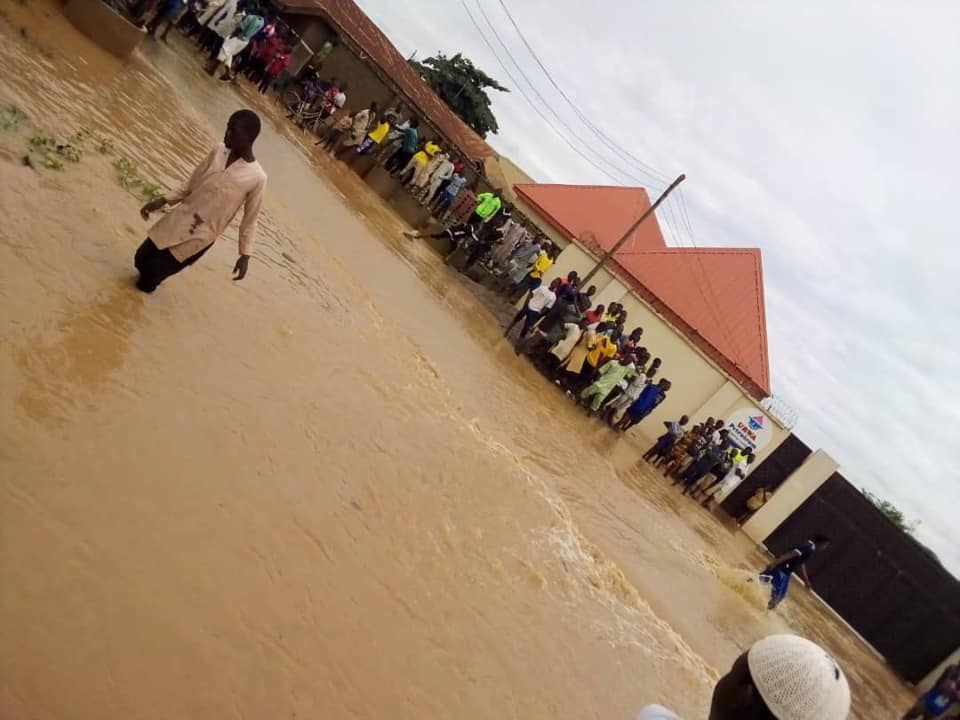
Like other developing countries, flooding has become an annual event in Nigeria, and many towns and cities are vulnerable and susceptible to it. This year, the Nigerian meteorological agency (NiMet) warned some states that they were at high risk of flooding in its yearly prediction of rainfall. Therefore, it was unsurprising that flooding hit many such states, states like Jigawa and Yobe have significantly been hit. In contrast, others such as Borno, Adamawa, Gombe, Kebbi, Kano, Kaduna, Lagos, Kogi, Niger, Delta, Rivers, Zamfara, Taraba, Ogun, Osun, Ondo, some parts of Ekiti, Edo and FCT are affected from moderately to low levels.

Flooding can cause waterborne diseases such as cholera, non-specific diarrhoea, typhoid and viral diarrhoea caused by Rotavirus. These diseases are known to peak after flooding as the pathogens such as bacteria, viruses, and parasites can be transported. In addition, the crowded nature of displacement camps can potentially result in and aggravate the outbreak of respiratory diseases.

The crowded nature of displacement camps can potentially result in the outbreak of respiratory diseases of different etiological agents. Wastewater is a breeding ground and carrier of infectious diseases. For instance, wastewater has the potential of spreading viruses, as they are known to be good-chance takers of a flood, which take days after flooding to meet their incubation cycle. Viral diarrheal diseases, such as hepatitis A and E, vector-borne viral diseases such as Yellow fever, and many others are also some diseases that could potentially spread after the flood.

The genome of some viruses, such as SARS-CoV-2, are known to be detected in community wastewater and this call for concern as it can be disseminated during a flood. Another agent to worry about due to flood is Naegleria fowleri, a brain-eating amoeba causing primary amoebic meningoencephalitis (PAM). As water level and temperature rise, such a situation could fuel the growth of the agent. Environmental contribution to the development of infectious diseases is a significant public health concern that should not be ignored. Antibiotic-resistant bacteria and antibiotic-resistant genes are quickly disseminated in environmental wastewater, which could be further transported into the water system, which calls for concern.

Furthermore, the vector-borne disease can occur as a result of a flood because the development cycles of vectors are provided. For instance, mosquito-borne diseases such as malaria and West-Nile fever tend to increase after floods. Rodent-borne diseases also expand during flooding because the flood increases contact between rodents and humans, resulting in outbreaks of such diseases. Common rodent-borne infectious agents due to flooding include Leptospirosis, Hantavirus pulmonary syndrome, Hemorrhagic fever with renal syndrome etc.

Health interventions

 First, public health measures are essential in preventing infectious diseases due to floods. Therefore, preventive measures should be taken before, during and after the flooding.

Second, the provision of crucial intervention. The critical intervention is an active early warning system that can alert governments to prepare for possible outbreaks and send signals for evacuation of people at risk.

Third, the activation of rapid emergency response is also a necessity. This includes the provision of basic materials and health care services.

Fourth, after the flood, the activation of an effective surveillance method is mandatory for the early detection of an outbreak.

The key intervention is active early warning systems which can alert governments to prepare for possible outbreaks and send signals for evacuation of people at risk. At this stage, all stakeholders and the public must act on time. However, compliance is low due to a lack of an alert system or people refusing to abide by the warning system. Furthermore, risk assessment is needed to ensure that no basic amenities are disrupted due to floods.

Moreover, there is a need for vector control after the flood to break the chains of transmission. There is a need for collaboration among all public health stakeholders. Public enlightenment and outreaches are equally essential intervention measures.

Finally, provisions of clean water, sanitation and hygiene after the flooding to prevent infectious disease outbreaks are also very significant.

Adam Mustapha, PhD, is a clinical and medical microbiologist. He wrote from the Department of Microbiology, University of Maiduguri, via adadmustapha@unimaid.edu.ng.

2023 Election: How Fintiri-Binani ‘clash’ will look like (I)

By Zayyad I. Muhammad

Governor Ahmadu Umaru Fintiri, the Peoples Democratic Party (PDP) governorship candidate, and Aishatu Dahiru Ahmed– Binani, the All Progressive Congress (APC) governorship candidate, have one similarity associated with their tickets- both are being challenged in the court of law.

Ambassador Mohammed Jameel Waziri is challenging his illegal exclusion from the May 22nd, 2022, Adamawa PDP Gubernatorial Primary Election, while Mallam Nuhu Ribadu is challenging Binani’s victory in the APC’s May 26th, 2022, Gubernatorial Primary Election, because of the alleged over-voting.

Senator Binani won the APC Gubernatorial Primary Election with 430 votes, Nuhu Ribadu came second with 288 votes, former governor Bindow got 103 votes, Abdul Razak Namdas scored 94 votes while Wafari and Mustapha got 21 and 39 votes respectively.

The Fintiri-Binani game promises to be interesting, just as it appears to be a zero-sum one. It will be the first time a woman will be a big force to reckon with in the governorship race in Adamawa state. And, from all indications, Binani’s candidacy has altered many political calculations, including sending shivers down the Fintiri-Team’s spine- Finitiri has been forced to pick a woman as his deputy so as to face Binani’s threatening challenge.

Binani is coming to the race with many advantages over Fintiri, while Fintiri is coming into the race with few advantages over Binani, plus a lot of political baggage, that Binani will use to her own advantage.

While Fintiri heavily relies on 2 fulcrums- incumbency and war chest, Binani will rely on 5 fulcrums- sustained local empowerment, the ‘center’, smart political calculations, and enormous and clever application of war chest, including the very strategic youth and women grassroots support.

The women folk will for sure stand for her- for instance, during the APC gubernatorial primary election- Aishatu Dahiru Ahmed Binani came to the race with assured votes in her ‘handbag’- women constitute nearly 40% of the delegates. When Binani entered the voting arena, the entire women among the delegates welcomed her with a melodous nasal sounds (Guɗa). That was a big signal to her opponents that she was ready for the game.

Another Fintiri’s weak point that Binani will capitalize on is his poor relationship with many PDP stakeholders- Binani will easily negotiate with them to get their ‘covert’ support. During the 2019 presidential and national assembly elections, Binani was able to get votes from PDP supporters in the central zone – she smartly negotiated her way- she even secured more votes than Buhari!

Binani always plays the ‘Mintzberg Political Games’- Building her influence and political structure through attaching herself to those who can help her in the future- the masses. The strategy is that- the lower-down people’s support will pressurize the higher-up people to give her the needed support when the time comes.

In a nutshell – Fintiri will heavily rely on the very important incumbency and massive war chest, while Binani will deploy her unprecedented strong grassroots support from women and youths, enough war chest, and capitalize on Fintiri’s errors and mistakes.

Notwithstanding the court cases associated with both candidates’ tickets- if elections were to be conducted today, Binani will beat Fintiri.

Zayyad I. Muhammad, is a Public Affairs analyst and he writes from Jimeta

The trend of bleaching among Kano people

By Usman Usman Garba

Taking good care of the skin among females has been an age-old desire and culture for years. Consequently, they develop various skin care practices to look beautiful and attractive. Girls of all generations, past and present, have been involved in this art, in which one area of focus recently may be skin bleaching, which seems to have become trendy among Kano ladies.

Skin bleaching is considered purposefully and deliberately an act of changing one’s skin colour by applying substances or solutions on the skin, with the sole intent of making the skin colour look lighter and brighter.

Research has shown that the idea of “Fara ko mayya ce“, which literary means “even if a lady is a witch”, by Kano male citizens has drastically driven females into the habit of bleaching their skin to look more attractive, fashionable, elegant and adorable.

According to some, women bleach their skin to remove skin imperfections such as rashes, dark spots and pimples and make or maintain softer skin. Some can meet the westernized standard of beauty, make themselves look “more attractive” in the eyes of their potential partners, and impress or meet their friends’ approval.

It is hard within Kano today to see a group of females without seeing one or some of them bleaching her or their skin. Unfortunately, it has become a tradition that even light-skin females bleach themselves in the sense that their bride price will be high or their class will increase in courtship or marriage.

Wives, too, are not left behind in this act. They engage in it to maintain their husbands out of fear that those ladies that bleach might snatch them away and in another way round, to help them maintain their marriages.

Men, too, are not excluded. They engage in it to become attractive to their female counterparts and celebrities or to copy local and western musicians and actors.

Before, when a male person bleached his skin, he did so because he was effeminate, but today, he does so to become a celebrity or popular and respected.

Others use pills to steam themselves while others use steaming drugs which remove their skin to be light as society considers white as beauty. They ignore that bleaching, as research has shown, has no benefits but harm.

Economically, instead of spending their hard-earned income on something beneficial, they end up squandering it on harmful bleaching products. 

The situation has become so bad that many women now have disturbing discolouration, contrasting colours and dark spots. The knuckles, knee caps and elbows are not spared as they carry different colours.

As disclosed by Dr Shamsudden Haladu, a dermatologist at Yadakunya General Hospital known as Bela Hospital, skin bleaching creates significant health problems for the users. Sadly, in Kano, its use had become widespread due to easy access to various brands of bleaching creams at multiple markets and shops.

A body that has been bleached becomes very light, fragile and tears quickly. Bleaching also leaves spots on the skin after being scratched or hard hit by an object. Such spots make the skin look rough and unattractive.

The doctor reveals that people differ in colour based on the five layers that human beings have: stratum corneum, stratum lucidum, stratum granulosum, stratum spinosum and stratum basale.

The basale layer, which is the last, has some cells called melanocytes, which make melanin and give our skin a dark colour.

All human beings have the same melanocytes. The only difference is the amount of melanin that melanocytes produce.

Skin bleaching has been established to have severe side effects. It has also been identified as the source of serious health-related issues among users, especially those who subject their bodies to creams formulated without proper safety precautions regarding chemical contents used in their production. 

The use of skin bleaching has also been reported to be responsible for skin cancers, skin discolouration, and depression among users leading to negative outcomes. Other risks include skin damage and severe depigmentation.

According to Dr Haladu, one should contact a dermatologist or visit a hospital before using any bleaching cream or soap. If possible, one should eat fruits as they contribute more to treating and whiting skin than any cream product.

Usman Usman Garba wrote from Kano via usmangarba100@gmail.com.

In defence of Professor Yuval N. Harari

By Rabiu Muhammad Gama

Prof. Yuval N. Harari might be a fake scholar, as some critics are desperately “begging” us to accept and believe. Some critics also imply that he might be the most grossly over-hyped and rigorously marketed scholar in the West. Harari might be basking in unearned attention. He might even be an irritating know-it-all or an intellectual nuisance.

The scientific community might have debunked most of his claims. His works might be riddled with some historical and scientific errors here and there. He might not deserve the wide global acclaim he is receiving today. His works might be replete with idle speculations and groundless generalizations that many scholars find annoying.

However, you cannot dismiss the fact that Harari always asks the big questions – the earthshaking questions that every intellectual worth his salt should be obsessed with. And there’s some “indismissable” magic that seems to clothe his books: when you read his books, you can’t help but feel a bit smarter and/or more informed than anyone who hasn’t read them.

To say Harari is highbrow is a sheer understatement. He is a perfect definition of a polymath. He is blessed with an unusual brain, a razor-sharp brain. His grasp of the esoteric world of science and the humanities is as baffling as it is admirable. Very few scholars can merge science and the humanities as Harari does.

If anything, the torrent of bashings and roastings that Harari is receiving lately from some of the finest critics in the world is a testimony that he has come up with something fascinating that makes his readers curious and his critics restless. Of course, some people might like to dismiss him as a mere talented storyteller. Nonetheless, and at the risk of sounding hyperbolic, he is one of the greatest intellectuals around!

Rabiu Gama wrote from Kano, Nigeria via rabiumuhammadgama0@gmail.com.

Nigerian agricultural prowess and the current insecurity

By Lawal Dahiru Mamman 

Nigeria is so blessed with agricultural land that all that needs to be done is to tickle the soil with a hoe, and it smiles with a harvest. Therefore, the name Nigeria ought to be synonymous with agriculture by practice, not just by name, because our identity depicts agriculture; the green colour of the National flag shows land for agriculture, and the shield on the national coat of arms represents the fertile soil for same. Unfortunately, a good number of citizens suffer from malnutrition as a result of acute hunger. 

In the assumption that there is insufficient rainfall, the name Nigeria was suggested in the late 19th century by a British journalist, Flora Shaw, who married the British colonial administrator Lord Frederick Lugard. The nomenclature was derived from the River Niger, which enters the country from the northwest and flows down to the Niger Delta, emptying into the Atlantic Ocean through its many tributaries. With this feature (if harnessed properly) alone, we could produce crops and rear animals all year round.

Before the discovery of crude oil in 1956, agriculture used to be the country’s mainstay. When the nation realised it had to reclaim its past glory, feeding the teaming population and directing funds otherwise used for importing various food items to other infrastructural and human capital development, boom! Insecurity strikes from different angles, with each geopolitical zone with its peculiarities. Going back may not be possible if insecurity is not squarely addressed because farmers are afraid of being killed or kidnapped away from the civilisation where they have their farms.

The vociferation to achieve self-sufficiency in Agriculture and food security in the country may not be feasible anytime soon because of insecurity. Poverty is the inability to access basic human needs like food, shelter, clothing, portable drinking water and medical care. Those in this category become angry at all other persons in the society because they believe the society has failed them by depriving them of their fundamental human rights. With food on the top of the chart for these basic necessities, the agriculturist believes that most of the world’s problems will be solved if food is made available and affordable. 

These groups of people can easily be brainwashed by miscreants hell-bent on bringing the nation down to its knees, committing horrendous crimes against other humans and threatening the state’s sovereignty when offered as little as a meal.

In January 2020, the country became the largest rice-producing country in Africa, with 8 million tonnes per annum as against the total of 14.6 million tonnes produced in the continent, with progress being recorded in the production of other food crops simultaneously. At this point, citizens and even government officials started having a glimpse of hope in the independence we crave in agriculture. The hope faded into thin air when the agricultural practice became inversely proportional to insecurity. By implication, increased insecurity leads to a decrease in farming activities 

This is because for a farmer to practice, they would have to look over their shoulder, making those still willing to produce have divided attention – which is not good for any practice willing to succeed while others abandon the profession in totality because ‘Life is Precious’. 

For agricultural practice to continue and develop beyond the old-fashioned, the unwanted elements causing the unrest must be eliminated from the equation with efforts from the administrators, our gallant security forces and even citizens – by extending hands of fellowship to the less privileged.

Mamman, a corp member, writes from Abuja and can be reached via dahirulawal90@gmail.com.