Opinion

Astronomical World: City Killer, Intelligent Beings and Earth Astrophysics

By Bilyaminu Abdulmumi

The first time I came face to face with a cosmic event was during the solar eclipse back in 2006. Before the event, the meteorologist announced it was coming, but while the naysayers kicked against it, the curious others, including myself, waited with bated breath. In Jega Kebbi State, a partial eclipse was experienced at about 9:40 am. The entire horizon slowly became dark for about an hour. In some other areas of the country, the eclipse was total darkness. Afterwards, the sky became clear and normal. Those who were asleep had only woken up to learn about it.

A couple of days back, on the 25th of March, another startling cosmic phenomenon took place; an asteroid passed between Earth and Moon’s orbits, specifically 175,000km away from Earth. According to astronomers, this is very close! The asteroid was nicknamed City Killer, indicating its potential to harm a city should it strike Earth on a habited area. But it was not as the name implies because, by God’s grace, the asteroid passed harmlessly as predicted.

Like all other cosmic events, the City Killer passage was discovered long before for possible action and announcement to the public, so people across the globe could follow the event live! The burning question here is, if Europe and other developed countries stand toe-to-toe proactively defending our Earth: in what part is Africa contributing? Are we stakeholders in these unfolding events?

The area of astronomy is both interesting and, at the same time, frighteningly complex; astronomy is an embodiment of epic proportions. Whenever something is referred to at the cosmic level, it is near impossible or almost infinite.

From what we learn from time to time from astrophysicists, the Sun is the centre of our solar system, and other planets, such as our Earth (and the 7 other known planets), rotate around it. To further complicate our life, the Sun is in constant spiral motion rotating around its axis, while the planets orbit around it!

The cosmic phenomenon would begin to go wild in our imagination when the concept of size and distance were brought up. The size of our Earth is about 12,800km, but compared to the size of the Sun of 1,400,000km, it is like comparing a dot with a circle. In addition, the distance between our Earth and the Sun is about 150 million km. Now imagine the size of our solar system!

The size of our galaxy (Milky Way) is mind-boggling. According to what astronomers told us, there are billions of solar systems in our galaxy. At this level, the distance is no longer measured in km but in light years. For instance, the distance between our star (Sun) to the closest Sun in our galaxy is about 4.25 light years. Light travels at the speed of 3,000km per second, so at this rate, it will only take light to travel from Borno to Lagos (a distance of about 1600km) about half a second. Now, this light that can travel in half a second from Lagos to Borno has to continue travelling for 4 years and 3 months to reach the next Sun close to ours. Pray! They told us there are billions of galaxies in the universe.

Because of this cosmos proportion, scientists such as Stephen Hawking believe that we can’t be the only intelligent in the universe. This view espouses that in one of the billions of galaxies in the universe, in one of the billions of solar systems in a galaxy, a celestial being like our Earth (bursting with intelligence) must exist. The universe is too vast to contain just one intelligence. The intelligent might be at par with us in terms of advancement, we could be way smarter than them, or the reverse may be the case. One astronomer said that it is scary anyhow one looks at the scenario: to say that we are not alone in the universe or we are alone.

The terrifying part of the multi-intelligence theory is, should the other intelligent locate us, what will be our fate? Are they going to destroy us in their search for raw materials just like we human beings are increasingly wreaking havoc on climate and habitat in exchange for raw materials (for technological advancements)? Or are they going to cooperate with us to add to our knowledge? It is equally frightening for the single intelligence theory: we are the only ones in this vastness of space. As much fantasy as the former theory looks, developed nations are not joking, as they committed a multi-billion dollar research centre in this direction: SETI (Search for Extraterrestrial Intelligence).

Unlike SETI, Earth astrophysics has been bagged. Earth doesn’t rotate on its axis for 24 hours to complete a cycle only but rotates around the Sun 365 days to complete a cycle. By God’s grace, the 24-hour cycle ensures night and day, while the 365 days cycle ensures seasons. The moon does similar; it rotates around the Earth in a month as a source of light for us, to keep time management, and to ensure Earth’s stability. Should the moon be trapped in the Earth’s shadow it will be a lunar eclipse, or should the moon pass between Earth and Sun hence blocking the Sunlight, we get a solar eclipse.

It is understandable for “people” to exhibit sheer amusement in the discussion of cosmic events. During the 2019 lunar eclipse, one deeply amused person asked: if our Earth rotates, why are we still in Nigeria? He appeared to mean that if the Earth actually rotates, then we should not be where we are now. Maybe we should be in Saudi Arabia by now!

Abdulmumin can be reached via: bilal4riid13@gmail.com.

A crack on Hadiza Gabon’s wall: Humanizing Northern Nigerian stories

By Sa’id Sa’ad

Being a lover of reality shows, award nights, behind-the-scenes and documentary movies, I’d always dabbled from one interview to another, especially exclusive interview rooms that humanise celebrities from various industries. Something that often allows me to see these people beyond their screen-portrayed selves, beyond their polished English-speaking tongues in sets, and beyond their filtered pictures on Instagram.

From Steve Harvey’s show to Trevor Noah’s. From Coffee with Karan to dozens of international shows of the same make-up. Each of them has always fed me the dose of vitamins I needed to see different fantastic interviewees in their human form. Sometimes, I would wonder deeply how one person could have this widened, divergent existence.

However, in Nigeria, shows like #WithChude hosted by Chude Jideonwo have become relevant to Nigeria’s entertainment industry, bringing music artists and Actors – Nollywood – to live through personal exclusive discussions that spark varying conversations. Meanwhile, the advent of Ebuka Obi Uchendu’s Black Box Interviews has presented a new dimension for this art. Through bringing similar personalities as #WithChude’s, the Black Box interviews – geared by Ebuka’s mastery in media and moderation makes it more humane, deep – yet story-driven and intense conversations that would take about fast-phased 2-hour discussion that would leave you wanting more. Undoubtedly, these contents have been the source which news media and bloggers would often plug their ‘stories’ and ‘gossips’ from, giving more relevance to the celebrities and promoting their art. And above all, selling the stories of these people, majorly, using it to their career advantage.

As you might already predict, Northern Nigeria’s entertainment industry has lagged same platforms, except for a few interview programmes produced by media companies. BBC Hausa’s Daga Bakin Mai Ita and Arewa24’s Kundin Kannywood are a few examples of what it was for the industry. Perhaps – as perceived by many – as a lack of “capacity” or “interest” to pursue the same, especially from the industry players. Or rather, others believe that as a result of the notion that northerners do not appreciate northern content. The latter, as sad as it may sound, has continued to place a borderline between contents from the region and its market. However, a robust attempt – from the industry players as thus they benefit from it – would have been a Noah’s Ark to what northern Nigeria’s storytelling would become and even the industry market. Hence, Hadiza Gabon’s Room.

Since the advent of the show – as much as I hardly ever skipped Daga Bakin Mai Ita – I am one of those who’ve watched every episode of Hadiza Gabon’s Room since its inception. Being a household name in northern Nigeria, Hadiza Gabon’s Room, a personal show produced by the actress lately, has gained attraction in the region. This should raise an eyebrow as to how northerners react to northern content or stories specifically produced in Hausa. Prior to the production, the most likely, perhaps consistent programme that ‘tries’ to do this task of humanising the northern entertainment artists has been Daga Bakin Mai Ita which, of course, contributed, though very shallow.

Another close ally to that was what used to be Kundin Kannywood, produced by Arewa24 – the first indigenous Hausa-speaking TV channel – and hosted by ace Kannywood actor Aminu Sheriff Momo. With the wider reach and technical skills invested in producing them, the duo have proven to have a lighter foundation of sustainability as they are run, produced and aired by media organisations who might – at any moment – halt, pause or terminate the programme, especially if any of its episodes attempt to wobble with the organisation’s reputation. But one would never separate celebrities and trends. Or can we?

I agree that “northern Nigeria does not appreciate northern Nigerian content” due to my experiences with middle-class-elite Hausa-speaking northern Nigerians who find their faces wrapped in shame to consume anything northern or anything Hausa. Be it music, film or any form of art. But even more, sometimes you could drop your jaw at how much northerners “dismiss” what becomes of Hausa celebrities from the region. Many were caught “bragging” about how much they didn’t recognise a certain northern celebrity they bumped into at a shopping mall.

But this is not so much different from what the same generation of Yoruba and Igbo does to their indigenous language promoters and contents as well. Perhaps the only difference between the Hausa-consuming northern Nigerian population and the others is that the typical educated middle-class or elites half-baked exposed northerner consume Hausa-produced content with ‘shame’. While a Yoruba or Igbo population consumes these contents in their own languages with ‘pride’. Unless for few who are bold hit the table, some have made it a subject of mockery to their friends who listens to Hausa songs or watch Hausa movies. Making it a “measure of exposure”.

Ordinarily, I’d assume that only a few people like myself – who are interested in storytelling and care about northern stories – consume Hadiza Gabon’s Room until a few weeks ago when the host interviewed a Kannywood actress who’d broken down on the show over what people would describe as “poisonous love” with another unnamed artist. This brought numerous comments from different people in the industry and beyond. But most surprising, from the same “typical educated middle-class or elites half-baked exposed northerners” admitting to having “been watching” the show. Perhaps this can also reflect a hypocritical-denial and intentional lack of acknowledgement. So, it’s safe to say these two contributed to placing the region’s storytelling where it is. Maybe even moved it farther.

Now, self-made analysts on social media have been placing the show on a scale weighing Hadiza Gabon’s skills in media or journalism, and some even going to the extent of breaking bits and pieces of how the questions should be asked. In all honesty, it is not balanced to completely dismiss the fact that there is still more to do from the producer in terms of the technicalities of the show, but it is also imperative to understand that Shows like these grow, get better and improve, with time. This could be reflected in what Ebuka Obi Uchendu or Chude Jideonwo’s shows were ten years ago and what they are now.

However, as a writer and a communications specialist, I would rather than analyse, admit that Hadiza Gabon would have become one of the bravest from northern Nigeria’s entertainment industry to self-produce such funnel that would feed – good or bad – stories from what creatives do in northern Nigeria. At least, a good or bad story is better than no story. Or better still, if Ebuka’s Black Box Interview Show could tell deeply personal stories about the life, career journey and even growth of certain entertainment stars from other parts of Nigeria, then there is a likelihood that Hadiza Gabon could be to northern Nigeria celebrities what Ebuka Obi Uchendu is to Nigerian Celebrities.

Though balancing stories is an essential part of storytelling, it is also unimaginable to think that one day you would find Chude Jideonwo interviewing Hamisu Breaker or Ado Gwanja on his show. This is not to be dismissive about the possibility of that, but the prospect as of now is blurry. Therefore, these stories from these people from northern Nigeria have to come out from northern Nigeria. And that is why Hadiza Gabon should be commended for that.

On the other side, celebrities have soon produced multiple of these shows – using their popularity to sell their stories – while putting a spotlight on their artists, storytellers, entrepreneurs, writers, tech gurus and even educators. And like tomatoes spread out on the front line of an open market, these have been central to the stories they tell the world about themselves. Since we refused to do the same, we are left with our favourite duo, “Almajiri and poverty” narratives.

Imagine if Hadiza Gabon’s Room is a Live show where these guests will speak – without filters, editing or CUT!? Such that truth will be told as raw as it should be, and the eyes will communicate a lie? Imagine if other writers and journalists would consistently write about whatever in-creatives-sake is coming out from northern Nigeria in theatre, movie, and music, such as Muhsin Ibrahim? Imagine if there were multiple consistent shows produced by the industry players who would use their popularity to air their stories, such as what Hadiza Gabon does in her Room? Imagine if consuming these contents in local languages is seen as mere “interest” rather than as a “measure of exposure”? Imagine! Imagine! Imagine!

This is a crack created by Hadiza Gabon’s Wall. We have now seen the gap. And there is more to see. Storytelling does not rest on the edge of a singular art form. Rooms as well, have ways of speaking. They have walls that portray. They have a roof that reflects. They have floors that nurture. We can only humanise our stories when we hang them on the walls and paint them. But what will become of us if our walls continue to crack?

Sa’id Sa’ad is a Nigerian writer, poet and playwright from Maiduguri. He is the NFC Essay Award Winner 2018 and the Peace Panel Short Story Prize Winner 2018. He tweets at @saidsaadwrites and can be reached via saidsaadabubakar@gmail.com.

Time Waits for Nobody: A Ramadan reminder

By Salim Samaila Marafa

It was like yesterday, The crescent of Ramadan was sighted, and we started fasting. But here we are today, with a few days to Eid-el-Fitr. Indeed, the speed at which time flies is amazingly alarming.

Among God’s creatures, time is an independent creature that exists without hinging on anything. It flies without waiting. It comes and goes without notification, so you either learn how to manage it or fall victim to “lack of time.”

Time is an undefeated warrior. It saw the rising and falling of great heroes and significant events and memorable moments. But, It put all of them in the bin of history. That’s all. The only warriors who can defeat time are those who know how to use it well. Therefore, we should learn how to use and manage our time to our advantage before it shows its habit of slipping away without notice. Since our time is limited and our days are numbered.

Ramadan is the month’s name in the Islamic calendar, while the month is a small portion of the time. Therefore, we should use this time, Ramadan, wisely, positively and to our advantage.

Ramadan is Islamically considered a holy month of blessings and Allah’s abundance of mercy. Our beloved prophet (pbuh) even narrated that during Ramadan, Satan is chained, doors of hell fire are closed, and those of paradise are widely opened.

Also, Ramadan is Islamically considered a glorious period during which Allah spreads the mat of his forgiveness to his servant. So, as we are observing the fasting of day 18 today, skip reading this reminder and ask yourself this question “From day one of this month up to date, what did I do that can earn me Allah’s  forgiveness and blessing.” 

If the answer to the above question is ” I did this and that”, it is okay, but not enough. Redouble your effort within these few remaining eleven or twelve days. To have more blessings in your possession.

 However, if the answer to the above question is ” I did not do anything good,” then this is where your problem started. But don’t panic; you are not that too late. You still have 11 days ahead of you; you can turn over a new leaf before it’s over and be forgiven by Allah the almighty.

What should I do to be forgiven and blessed by Allah? 

This is a good question we should all ask ourselves. There are uncountable positive things one can do to earn Allah’s forgiveness in this holy month of Ramadan. 

First, take your Qur’an, open it with good intentions and read as many verses and chapters as possible. Remember, every alphabet (harafi) of the holy Qur’an attracts ten rewards when you read it in the sacred month of Ramadan due to the holiness and glory of the month. So, if you. You can read two chapters daily, meaning you can read the Qur’an before the month slip away.

Secondly, help those needy people around you. Give out voluntary charity (sadaqah) to those who deserve it. Allah will surely reward you and forgive you for it long as you did it for His sake.

Thirdly, do you have parents alive?

If yes, be obedient to them, and show a kind gesture towards them. Allah loves those who love and take care of their parents. If your parents are no more, Don’t worry, do what you should have done to them, to their friends and to old people in your neighbourhood.

And to your dead parents, ask Allah’s forgiveness and mercy for them whenever you observe a prayer or any act of ibadat. This is another way you can get Allah’s mercy and forgiveness.

When night spreads darkness over the world, don’t just sleep from A to Z. Wake up when night ages, perform ablution, observe at least two rakat Voluntary prayer ( salat) and ask Allah whatever you wish. The night is a special period during which Allah accepts the prayers of his servants.

Remember, you can do many other things to get Allah’s forgiveness and blessings, which I did not mention here. Just Do them. This is a Ramadan reminder from your brother in Islam. Have a good Reading.

May Allah accept our fasting, prayers and every act of ibadat. And may He count us among those He forgives in this holy month of Ramadan.

Salim Samaila Marafa wrote via salimsamailamarafa82@gmail.com.

Now that he has clinched the Certificate of Return: Then what next?

By Abdulrahman Yunusa 

The fact that election is the major hallmark of democracy is enough to be an apparent reason for anyone that thinks they can cheat the process under a democratic state to make it to any political seat that requires such periodic election is but an outright implausible and wishful thought.

Meanwhile, unlike other affairs, elections are conducted across the nation occasionally (after every four years in the case of Nigeria). It’s an avenue upon which the political actors compete and make it to a particular political position in government. 

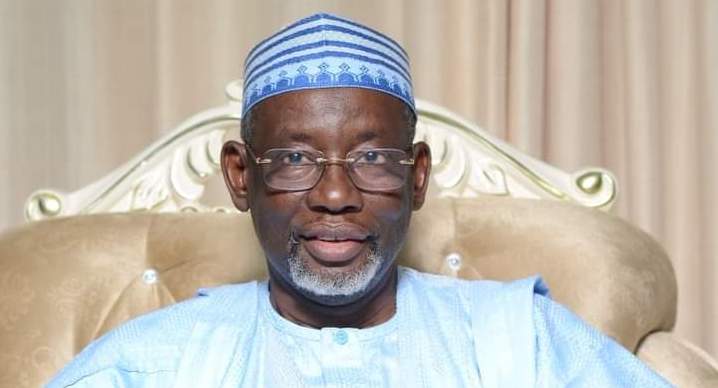
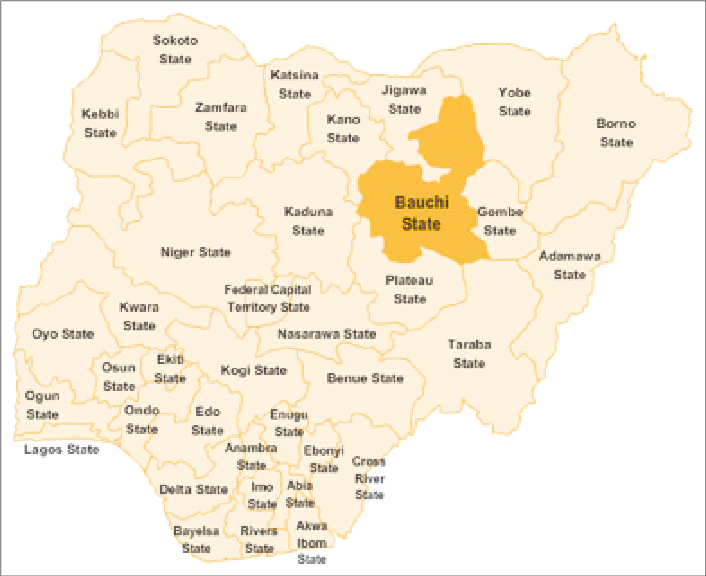
Therefore, the re-emergence of Governor Bala Muhammad for the second time as the Governor-elect of Bauchi state won’t be an exception since he passed all the above required constitutional procedures during this fierce political battle to emerge the champion of the 2023 governorship poll. 

Yet, this hasn’t come to me as a surprise, for he met all the prerequisite requirements needed to make it for the second term. His handworks are there, manifesting themselves from all angles of governance. But the hurdles he went through to make this task and yet glamorous journey possible is what left me befuddled. 

Once more, I congratulate His Excellency Governor Bala Muhammad of Bauchi state for making such a historical and spectacular political breakthrough against all odds. You have indeed shown how shrewd you are political. 

For muzzling, silencing, dismantling, and burying the politics of godfatherism in the state, I can’t relent in thanking you for such a magnificent job. Hence, permit me to boldly inform your detractors that you have set precedence upon which the future generation must care to imitate in their future respective political affairs in the state.

However, without impacting the lives of your people, this feat couldn’t have been achievable by you at this tragic moment. For you have gone through all the series of political threats from friends, masters and foes, and you dismayingly thrash them down, thereby making them irrelevance in the game once more time. 

Given that Governor Bala has received his certificate of return for the second time, shall we inquire about the shallow-minded gang who, over the past weeks, has been parading and making some baseless claims that their man is coming? Coming from where to where for God’s sake?  

Is this not enough for them to bury their face in shame? Is this not sufficient for them to retreat from making other gibberish in the name of mandate reclamation through the court of law upon baseless allegations? Why couldn’t they stop making themselves ridiculous objects in politics? 

Thank God for making such a rare move, throwing such a formidable political gang un to the dungeon of history amidst a critical moment. Thus this success has genuinely reflected the outcome of your tireless effort, resilience, hard work, perseverance, dedication and, above all, the incessant prayer you stick to. 

I hope you will maintain the tempo and make the state among the top infrastructurally and economically. I further pray that the second tenure will be more productive for the state’s citizens. And may the state’s resources be judiciously utilised for the benefit of all. 

May Bauchi succeed once again under the didactic watch of Governor Bala Muhammad Kauran Bauchi.

Abdulrahman Yunusa is a social and political affairs analyst. He writes from Bauchi and can be reached via abdulrahmanyunusa10@gmail.com.

Reminiscing Shaykh Ja’afar Mahmud Adam

By Abubakar Suleiman

The Holy month of Ramadan is the month wherein the glorious Qur’an was revealed; hence, virtually all practising Muslims worldwide are occupied by its recitation while they ponder its meanings.

Ramadan in Northern Nigeria is greeted with Tafsir sessions, that is, the exegesis of the glorious Qur’an by different Islamic clerics or scholars. Many of these sessions are aired on television, radio and sometimes live on Facebook and other social media platforms.

However, during this period, controversies are unfortunately never in short supply among the Muslim Ummah as scholars from different sects or strands in a sect reel out interpretations of some verses. Scholars who consider some of these interpretations as skewed or deliberate distortions of the intended meaning of those verses dish out rejoinders.

Therefore, rebuttals and counter-rebuttals are being voiced out from pulpits. Followers of these scholars, too, take to their keyboards and engage in online arguments or knowledge exchanges. Unfortunately, sometimes these arguments are not without ad hominem. And if one is not careful, the essence of Ramadan, a month wherein Muslim faithful devote a considerable part of their time to acts of worship, repentance and seeking Allah’s forgiveness, would be lost amidst fierce arguments on religious matters.

Despite being dead 16 years ago, people usually comb the archives to unearth Shaykh Ja’afar Mahmud Adam’s explanation or exegesis on trendy religious arguments. And often, the resurfaced audio or video clips serve as an arbiter or at least give clarity to the subject matter. Late Shaykh Ja’afar is that blessed.

This morning, I stumbled upon a video clip of the erudite scholar, Late Shaykh Ja’afar, wherein he elucidated the value of constructive argument as he gave the exegesis from the glorious Qur’an. The clip reminded me of my distant encounters with the blessed teacher.

Whenever I was in Kano state while he was alive, I would leave my relatives’ residence in the ancient city just to go listen to his sermon in his Jummuat mosque in Dorayi. After observing the Friday prayers, I would also rush to the mosque in Gadon Kaya and book a place with a praying mat for the Tafsir session that would take place in the evening after Magrib. After quenching my thirst for new knowledge on that day, I always look forward to the following Friday with eagerness and glee.

Far away from Kano, I always stayed glued to the radio with my pen and note to write maxims from Usuul Fiqh, Qawaa’idu At-tafsir, and many poems. I memorised many religious diktats from the late Shaykh long before I eventually came across them in books during my tutelage.

There are arguably many Islamic scholars who are more learned than him in the North, but he is arguably the most eloquent and knowledgeable when it comes to the exegesis of the glorious Qur’an. In addition, his unique style of translating the Qur’an with the Qur’an – the flawless and effortless ability to quote various verses relating to a verse under discussion – endeared him to many.

Plus, his didactic prowess and eloquent delivery are also laced with authentic prophetic traditions as understood by the companions of prophet Muhammad (SAW), who lived with him and were present when the revelation of the glorious Qur’an was taking place.

His telling and bold voice reverberate with powerful and meaningful Islamic knowledge. Furthermore, his ability to decompose complex religious issues into lucid tidbits made him phenomenal and outstanding. 

Despite these qualities, he is not without flaws, but Allah has blessed him with the humility to succumb to superior arguments and even own up to mistakes. He never hesitates publicly, acknowledging his errors, wrong perception, or explanation of a religious topic. It is normal to hear him say my explanation on so and so matter yesterday was not completely accurate, and here’s the correct explanation for it. This humble attribute is not very common among many religious clerics.

I was still carrying the pains of my mother’s death when the Shaykh was assassinated. My mother died six months earlier. However, the news of his assassination sent shivers down my spine. On that very day, knowledge was buried, wisdom was dwarfed and eloquence in didactic prowess nosedived. We seek solace in the fact that his legacies live on in the students he has groomed and his documented audio and video.

May Allah accept his martyrdom and grant him the highest stations in Jannatul Firdaus, amin.

Abubakar Suleiman writes from Kaduna and can be reached via abusuleiman06@yahoo.com

The truth behind our emotions: What goes around comes around

By Aliyu Abdulkadir Atiku

The reaction of our people towards the mind-boggling story of Rakiya Moussa from Hadiza Gabon’s Talk Show shows how most of us are driven by emotion. Love has been an emotional rollercoaster, and so would it forever be. It is an accident (yes, you read me right)  usually triggered by interest. That’s why it dissipates with time as the material that interests the other party fade.

Delving wholly into someone’s heart is akin to driving a car with a blindfold  — know the right person to shoulder the repercussions! While I believe pure love does exist, that’s only if the objection did not cross beyond the confines of biological love. Besides the love of parents and siblings and close relatives, every love develops with certain circumstances depending on the preference of one another.

Moreover, whenever someone narrates a story that profoundly aches their psyche, they are more prone to leverage the story in their favour, thereby attracting public sympathy. I may not be precisely accurate to say the lady in question has once played with the mindset of a man in the name of love and ended up breaking his heart into smaller pieces than hers, but something near-equally enticing must’ve happened. Who knows? 

It’s high time we acknowledged that the interest we build in love often determines fate. Most, if not all, the love we complain of today is not intended to culminate in marriage but rather to speed up the time, have fun and quench some thirst. 

Aliyu Abdulkadir Atiku wrote via aliyuabdulkadiratiku48@gmail.com.

A letter to Dr Dikko Radda, the Governor-elect of Katsina State

By Yusuf Murtala

With great delight, pleasure and excitement, I write to congratulate you on this marathon achievement of being elected Governor of Katsina State in the recently concluded election. Your success is a sign that Katsina state is on the verge of becoming a greater state again. I pray you to achieve your plans for Katsina state in sha Allah.

I write to inform or remind you about the current or sorry state of my dear town, Maska, which I believe is part of your plans to restore the good image of rural areas and carry them all along in your administration, which you stated in your blueprint that they could also contribute to the development of our dear State.

With a population of over 50,000, Maska is left behind by previous administrations/governments because they’re not informed about the abundant natural resources. It has, which can if carefully managed, generated a handsome amount of revenue for the state.

I Would not hesitate to remind you about the dirty Condition of our (Maska Community Comprehensive Hospital) which was built a long time ago by a patriotic citizen to save the town and its environs from the suffering they experience in an attempt to carry their patients to the local Government near them for treatment. It’s in a dirty condition as inadequate or lacking infrastructural development to treat patients. Female and male wards are left shattered that even animals will suffer to live therein. Toilets and maternity wards where our parents ( Pregnant women ) are received is also a thing to cry out for. I hope his excellency will consider us on this too.

Our local market (Maska Monday Market) is undoubtedly a hub of the economy, where millions of transactions are carried out every Monday. Thus, reconstructing it by providing or building newly constructed shops or stores will ensure much attendance, especially in the rainy season. This will also encourage investors or businessmen from and around the town to participate actively and hugely contribute to the economy of my dear state and the country at large.

I will not forget to remind you again about the Dam in my town which, if also given a concern, will save several unemployed youths from roaming the street. Moreover, reconstructing it will also create jobs for the teeming populace as it will be used to enhance dry season farming, popularly known as (Noman Rani) and encourage fishing farming which is also a means of generating income for the state.

Security issues of the state are among the top priorities you highly placed in your blueprint, and we firmly believe they will be drastically eradicated quickly.

Finally, your excellency, we hope and pray that this letter will reach you in good and sound health. We also pray that your administration will be smoothly carried out.

Yusuf Murtala can be reach via yusufmurtala595@gmail.com

For Government’s Success: An open advice to President-Elect Bola Ahmed Tinubu (I)

BY Umar Ardo, PhD

PREAMBLE

First, let me seize this opportunity to congratulate Sen. Bola Ahmed Tinubu on his well-deserved victory in an unarguably the most keenly contested presidential election in Nigeria’s history. For me, I feel fulfilled in that the incipient seed of this outcome was sown by my humble self way back in January 2012, when I conceived the idea of the merger between Buhari’s CPC and Tinubu’s ACN, premised on the former being President and the latter Vice President. Aware of the previous failed attempt at such a merger, I sold the idea to Buhari in such a way and manner that I was confident he would accept. Even though he had then publicly announced that 2011 would be his 3rd and final attempt to contest for the presidency if he lost that year’s election, it turned out easy for me to get his buy-in to the idea as within three hours, he consented and promised me of approaching Tinubu with the plan. I then knew my job was done, as I was certain Tinubu, too, would consent to it.

And lo and behold, about five weeks later, Buhari called me to a meeting in Abuja, at which he briefed me on his meeting with Tinubu on the merger and that the man had accepted the proposition. I felt elated, knowing there and then that change had come to the country. The rest, as they say, is now history. (The details on this concept and how it was worked out are contained in chapter 7 of my book titled “Court and Politics: Chronicling my Experience in the Nigerian Theatre”, published by Sungai Books; New Jessy, USA, 2020. Both the president and the president-elect have copies of the book).

2. THRUST OF THIS ADVICE

Now, having won this hard-earned victory against so many odds, it is important for the sake of the country and the President-elect’s legacy that the regime succeeds. And this success is largely dependent on, among three other things, the thorough implementation of government policies.

The campaign manifesto of the President-elect has no doubt enunciated laudable core policy initiatives capable of resolving the teething problems facing this country. But this will depend largely on one thing – i.e. diligent implementation! In practical terms, this means that:-

➢ No matter how good a policy, maybe its end product lies in implementation;

➢ Citizens assess governance by what is implemented on the ground, and so citizens interact with public policies only at the implementation level;

➢ As the regime starts its term in office, it must ensure that its policies are fully implemented; and

➢ Without fully implementing its policies and making a difference at the implementation level, the regime also risks ending up a failure like previous regimes.

Yet, the major recurrent concern of governance in Nigeria over the years has been the failure to implement policies as conceived and formulated by governments successfully.

3. JUSTIFICATION

The fact that successive governments, not excluding the outgoing one, would come up with laudable policy initiatives, well-conceived and elaborately articulated, but eventually fail at the implementation level, to the disappointment of the public and discredit of the government itself, calls for a new approach to public policy implementation in Nigeria. To this end, it is important to highlight that:-

➢ The primary reason for this gap between excellent policy initiatives and pitiable policy implementation is mainly a lack of [or poor] monitoring and evaluation mechanism;

➢ Even with a strong will on the part of leadership, it has always been difficult to get things to happen in government organisations because of endemic vested interests that create resistance, inertia, discouragements and even sabotage to such policy implementation attempts; and

➢ Good ideas and the will of the government to implement the same are not sufficient; drive and follow-through are equally important, yet often insufficiently appreciated and applied.

Against this backdrop, so as to help the government overcome these challenges and make a difference in performance and achieve set policy objectives, I respectfully make this open advice for the kind consideration and approval of Mr President-elect, please.

4. ACTION STEPS

➢ Establish a Policy Implementation, Monitoring and Evaluation [PIME] Unit under the Office of the President by means of an Executive Order; and

➢ Appoint a Special Adviser to the President on Policy implementation, Monitoring and Evaluation as head of the Unit. Such a person must be knowledgeable, patriotic, trusted and of impeccable character.

5 STRUCTURE, FUNDING AND MODE OF OPERATION

➢ The PIME Unit is to be a policy Monitoring and Advisory Outlet constituted by an Executive Order to operate within the Office of the President;

➢ The Head of the Unit should report directly to the President;

➢ The Unit’s budgetary funding is to be within the budgetary provisions of the presidency; and

➢ Hold monthly 1hr Update Briefing Sessions with the President on the activities, findings and suggestions of the Unit for any further necessary actions.

6. AIMS AND OBJECTIVES OF THE UNIT

The PIME Unit should have the following aims and objectives:-

➢ To ensure full implementation of government policies, designs, projects and programmes for efficient delivery of expected results;

➢ To devise and drive new national policy-performance-design capable of reversing the endemic failure syndrome in policy implementation by the government; and

➢ To create and sustain a positive image of the government in terms of policy and budgetary implementation attitudes nationwide.

7. SCOPE AND FUNCTIONS OF THE UNIT

The PIME Unit should have the following scope and functions:-

➢ Design, develop and implement a systemic monitoring and evaluation framework to track, monitor, assess and report on the performance of all entities in relation to the government’s plans, activities and timeframes so as to improve the quality and quantity designs in policy, programme and/or project implementation relative to government interests;

➢ Monitor, assess and evaluate the performance of ministries, agencies, institutions, departments, projects and programmes of the government to ensure compliance with policy intentions, outputs, outcomes and impact on the polity;

➢ Organize, undertake and provide [if, where and when necessary] training and technical assistance to implementing entities and partners on specific policy implementation initiatives as may be required for the attainment of government goals;

➢ Produce and submit monthly Reports and prepare presentations of the Unit’s activities, findings and recommendations to the president;

➢ Advice the president on all issues relating to the full implementation of government policies, programmes, projects and obligations; and

➢ Perform any other scope and function as may be assigned to it by Mr President.

8. EXPECTED BENEFITS AND SIGNIFICANCE OF THE UNIT

The PIME Unit will yield the following benefits:-

➢ It will ensure that government policies, programmes and projects are fully implemented as conceived, and government’s goals are achieved;

➢ It will end the failure syndrome of government in policy implementation forthwith and ensure rapid and visible development of the country;

➢ It will establish and maintain inter-agency coordination in policy implementation and provide a consolidated source of information showcasing policy implementation progress, highlight lapses where they occur and devise necessary corrective measures forthwith, hence allowing operators to learn from each other’s experiences, building on expertise, knowledge and synergy;

➢ It will generate written reports that will contribute to transparency, accountability and efficiency, allowing lessons to be shared more easily and experiences and templates used as bases for steering decision-making processes;

➢ It will establish and deepen the culture of transparency, accountability and efficiency in public institutions and public services; and

➢ It will provide the presidency with a veritable measurement tool of the performances of public institutions and public servants.

9. CONCLUSION

The rationale for this open advice now is that I feel Nigerians are actually tired of the unending cycle of failures of successive governments of the country and that we need to put a halt to it. The sole objective of this memo, therefore, is to help create the needed momentum from the start of the incoming Tinubu-led regime that will make it succeed in breaking this failure syndrome in the most critical area where all other regimes had failed – policy implementation; to positively enhance the developmental fortunes of our country, and as a result at once mould public opinion favourable to President Tinubu and his new regime, both at home and abroad. This way, one will fill more gratified that one’s efforts in trying to bring positive change to our country and society have at last yielded fruits.

Danmodi and the burden of history in Jigawa

By Kabir Musa Ringim

Now that the election is won and lost, the winners are strategizing and restrategizing, the losers are grieving or heading to court, the politicians are politicking, lobbying, and cross-caperting to be invited to the dining table, the contractors and investors are hoping for their returns on investments, and the technocrats are lurking while the masses are waiting for the transition to start enjoying the dividends of democracy.

Jigawa, as the most peaceful and most homogenous state in the country, witnessed one of the best gubernatorial elections nationwide this year, characterized by being largely peaceful, free, and fair with little or no incident of violence or strife. Contrary to the presumptions prior to the poll, people shamed the rabble-rousers, the agents of disunity, and the promoters of strife with the intent to sow discord and instability by voting the most competent candidate all over the state without minding his zone. It is heartwarming that Mallam Umar Namadi Danmodi won in 26 out of 27 LGAs and got more than 30,000 votes in the remaining LGA; the figure is higher than that of most LGAs thought to be his bases or strongholds.

The result stopped a dangerous precedent that may be the cause of mayhem and instability in our dear state. A few weeks before the elections, both protagonists and antagonists latched onto the intense emotions of the gullible by fueling turmoil to score cheap political goals. It was reported that our hidden enemies with evil agendas were disappointed to learn that we’re still united, and we left no clue as to when and how they will see us divided. Jigawa people are united in every aspect: in faith, language, dress, houses, economy, education, etc. No amount of intrigue, espionage, or blackmail will make us lose our guard and allow the purveyors of hatred to cost us our peaceful coexistence, which was the envy of most states.

But as the transition date of May 29th approaches, I start to sympathize with the incoming governor. The vast expectations on him are far too many. The people are looking up to him as a messiah to rescue them from the pangs of poverty and hunger. The masses hope he will resuscitate the ailing educational sector and revive the falling health sector while maintaining the progress made in the economy, roads, and infrastructure championed by his immediate predecessor. I can say without any fear of contradiction that no Jigawa governor-elect in history has enjoyed the widespread support Danmodi is currently enjoying, to the extent that the opposition is almost crushed and driven into extinction. Thanks to his great personality, personal integrity, magnanimity, and charming character.

The first task of great priority facing the new governor is how to strengthen the peaceful atmosphere by being fair and just to all, irrespective of zone or political affiliation. He should strive to be the governor for all and sundry. Another urgent task of equal importance is that he should put an end to the recent widespread and politically motivated suspension of traditional rulers so as to save our traditional institutions and cultural heritage from mockery and extinction. More importantly, while deciding on his prospective cabinet members, he should consider the technocrats to work with him alongside the usual politicians; I believe he will do this by considering his speeches at the meetings he held with us, the Jigawa academics, at different times in Dutse.

The selection of cabinet members is what determines the success or failure of any administration. The composition of the cabinet will make or break any administration. Danmodi should exercise restraint and not reward political loyalty by imposing incompetence on Jigawa people. As Professor Sheikh Mansur Sokoto recently advised the Zamfara state governor-elect in a widely shared video clip, there are so many ways to reward politicians, not necessarily by appointing them to sensitive positions they are incapable of managing. My advice to Danmodi at this crucial stage is to consider professionalism, competence, capacity, and character when choosing his political appointees. A square peg in a round hole will result in nothing but disaster, and history will not be kind to Danmodi if he enables that.

Secondly, our governor-elect should build on the progress of his predecessors in all sectors and capitalize on their weak areas. Saminu Turaki’s ICT development, Sule Lamido’s institutions and infrastructure, free girl child education, and haihuwa lafiya, Badaru Abubakar’s gains in economy, revenue generation, and infrastructure, should be sustained or resuscitated. Recruitment of teachers and health workers should be treated as a matter of urgent attention. A state of emergency should be declared on poverty and unemployment among youth and women to arrest the sad situation of living in extreme poverty amidst abundance of wealth prospects and means of prosperity. Flood mitigation procedures should be employed so as not to exacerbate the already dire situation of perennial flood incidents.

Lastly, I wish the governor-elect all the best as he steers the affairs of our deer state in the next four years. I pray that he finds a way to deliver in this difficult terrain. The hopes are high, the expectations are immeasurable, and the politicians seeking relevance or appointments are numerous, but the mandate belongs to us, the masses and ordinary citizens, as we are by far the largest in number.

Kabir Musa writes from Ringim and can be reached via ringimkabir@bupoly.edu.ng

Ripples from the Adamawa 2023 inconclusive governorship election

By Zayyad I. Muhammad

The Independent National Electoral Commission (INEC) has fixed Saturday, April 15th, 2023, as the day for the Adamawa state governorship supplementary election in 69 polling units across the state. Governor Ahmadu Umaru Fintiri is going into the supplementary election with a margin lead of 31,249 votes. Senator Aishatu Dahiru Ahmed Binani needs a miraculous miracle to dilute this margin from the 37,706 expected votes in the 69 polling units where the supplementary election will be conducted. Though miracles, they say, do happen!

Despite the opened anti-party she faced from some members and executives of her party. Her disregard for the crucial aspect of politics – collaborations with everybody and anybody, plus her failure to send an olive branch to some of the APC governorship aspirants who lost to her during the APC governorship primaries, including the indifference to her candidacy exhibited by some stakeholders of the Adamawa APC, Binani has proved a point- Binani shook Governor Fintiri in a way he never expected.

Candidate Fintiri came to the March 18 governorship election over-confident but with poor calculations and with so many off-the-shelves strategies. For instance, he thought that his 2019 bloc vote was still intact, but he was wrong- many people in the bloc vote have realised that they’ve nothing to gain from it- it was mainly Fintiri’s ‘cousins’ and close associates who mostly enjoy the goodies meant for the bloc vote. Fintiri’s second mistake was the poor deployment of logistics – this is obvious from how he performed in the Adamawa North Senatorial District- his primary constituency- Fintiri got only 53% of votes, losing 3 of the 5 LGAs. Though Binani also performed poorly at her central zone- she got only 45% of the total votes – winning only 3 of the 7 LGAs.

When the controversial Fufore LGA result was announced, Gov was pictured celebrating victory with his Aides. However, a few minutes later, when the final result was declared inconclusive – again Fintiri was pictured in a deflated mode. Students of politics and history should study INEC’s declaration of Adamawa 2019 and 2023 governorship elections as inconclusive relative to the man ‘ Ahamdu Umaru Fintiri’- it always brings out ‘the punctured him’. In 2019 when the election was declared inconclusive, Fintiri ran to former Vice President Atiku Abubakar for help and equality in 2023.

When his re-election was also declared inconclusive, Fintiri returned to Atiku for another help. In fact, in 2019, former governor Boni Haruna saved the day for Fintiri. In a press conference, Boni highlighted the difference and the importance of registered voters and PVC collected, which today has become a working document for all political parties and INEC itself.

 Fintiri is a man that often boasts that he is a man of great political sagacity, he often claims to have retired many people or has ‘shaved’ their heads from politics, but whenever he is faced with an intricate political situation, he suddenly becomes punctured and runs to same people for help.

As earlier mentioned, Binani needs a miracle, or the 8th wonder of the world, to upstage Fintiri’s 31,249 votes lead from a pool of just 37,706 votes. Nevertheless, whoever wins the 2023 Adamawa governorship election, will face a big legal tussle; that’s why people were shocked when Fintiri and his convoy were seen returning from Fufore LGAs, in the name of collection results to the state collation centre. It is simply bizarre- when a contender in an election turns himself into the electoral and collation officer.

 Politics is about interest and survival – the APC members and executive who worked against Binani – did it to survive- For the executive to protect their seat, while for some of the stakeholders- it is about 2027 calculation if there is an incumbent governor from the APC, the ticket is closed for eight years. And supporting Fintiri is also another of their calculations. If he wins, he will leave the scene after four years. Thus, 2027 will be free for all.

For some of the prominent PDP stakeholders who were also indifferent to Fintiri’s candidature, they did it to remind Fintiri that ‘big’ is ‘big’- Fintiri went to the election almost solo with his lieutenants, but he could not get an outright victory but managed an underdog-like inconclusive win.

 In conclusion, Governor Fintiri has the brightest chance of coasting to victory in the April 15th supplementary election, but he’s the biggest ‘loser’ in this election- his political might has been reduced to its lowest. He now knows that going to the Senate in 2027 is not as easy as he thought, and bringing a successor from the PDP is not in his absolute control. Another loser is the APC and some of its executives that opened antiparty – Adamawa APC remains fragmented for some time to come- this will hunt the party in the next cycle of elections, as pay-back-time will be the order of the day in the party for many years to come.

Binani, on the other hand, her chance of winning the election is near zero, but she is one of the biggest winners in the election – despite little support from her party in the state and open anti-party from some party executives, she made points and strong political statements. Another winner of this election is some PDP stakeholders and the PDP itself- this election has removed them from any shackle – had it been that Fintiri had a smooth ride; won the election with a significant margin effortlessly, he would attempted to ride on anybody in Adamawa politics in his second term.

 Zayyad I. Muhammad writes Abuja via zaymohd@yahoo.com.