Opinion

Of Abba’s triumphant welcome and court’s escape from embarrassment

By Mansur Hassan, PhD.

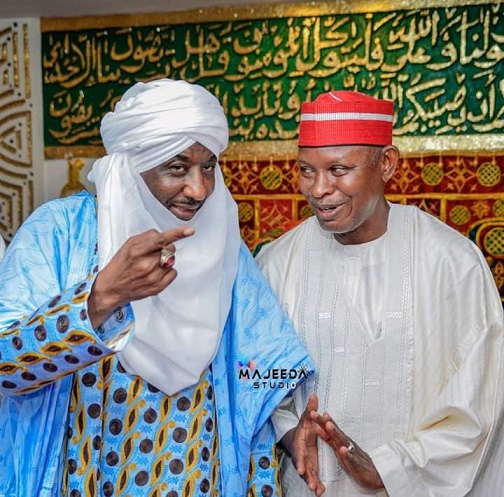
The executive governor of Kano state, His Excellency Abba Kabir Yusuf, made a triumphant return to Kano in grand style after the Supreme Court affirmed his position as the duly elected governor.

The air in Kano was filled with excitement as millions of residents gathered yesterday to welcome their leader to the commercial city centre.

His Excellency embarked on the journey from Kaduna at 9 am, and despite the approximately 13-hour journey, he arrived at Filin Mahaha Kofar Na’isa in Kano state by 10 pm. The extensive duration was attributed to the massive crowds that lined the streets, eager to catch a glimpse of their beloved governor.

The overwhelming love demonstrated by the people of Kano towards Governor Abba Kabir Yusuf serves as a powerful testament to the justice upheld by the Supreme Court. This judicial affirmation not only solidifies democracy but also underscores the importance of respecting the choices made by the masses.

Notably, President Bola Ahmad Tinubu hailed Governor Abba Kabir Yusuf as a hero, acknowledging his steadfastness and reaction during the previous judgements of the tribunal and the Court of Appeal. The governor’s resilience in the face of challenges has earned him widespread admiration.

As Governor Abba Kabir Yusuf begins his tenure, we express our heartfelt wishes for a successful term and the continued implementation of pro-masses policies that uplift the welfare of the people of Kano state.

In extending our wishes, we also hope for good health and wisdom for Senator Dr. Rabi’u Musa Kwankwaso, the grand commander of the Kwankwasiyya movement. May his guidance contribute to the betterment of the state and the nation as a whole.

Dr. Mansur Hassan is a Senior Lecturer in the Department of Mathematics, Yusuf Maitama Sule University Kano

X-Raying the physical and mental effects of bullying

By Maimuna Katuka Aliyu

I find it difficult to believe that the majority of those reading this piece right now do not know what bullying is all about. Bullying, as a matter of fact, is a common phenomenon among us now. Being bullied is both heartbreaking and miserable for those targeted.

But many adults, unless they too have been bullied, have a hard time understanding just how much kids can suffer from being bullied. They fail to realize that the consequences of bullying are significant and can have a lasting impact on one’s mental and physical health.

According to the National Institute of Child Health and Human Development (NICHD), bullying has a lifelong impact on the social and emotional development of children, which puts them at risk for everything, from severe mental health issues to stunted professional growth later in life.
Bullying is the use of force, coercion, hurtful teasing or threat to abuse to aggressively dominate or intimidate an individual. The behaviour is often repeated and habitual.

In Nigeria, this mostly occurs in boarding schools among seniors who take advantage of their timid and weak juniors, thereby forcing them to do their bidding, such as washing clothes and assignments, cleaning their rooms, collecting their food, and punishing and beating them as they wish.

According to NICHD, children who are involved in bullying experiences (on either side of the situation) are at an increased risk of developing issues in both mental and physical health aspects. Bullying can have physical, social and emotional effects, too.

The physical effects of bullying include:
– Stress response
– Headaches
– Muscle pain
– Digestive upset
– Weight changes, etc.

Those who are bullied are at increased risk for mental health problems such as:
– Depression and anxiety
– Low self-esteem and personal drive
– Trouble focusing and falling grades
– Behavioral problems
– Social and relationship issues
– Substance abuse later in life
– Dropping out of school
– Self-harming behaviours, etc.

Bullying can also affect other children who witness the acts, even if they aren’t directly involved. While it may seem obvious that those who are bullied have a higher risk of developing developmental issues, what’s less obvious is that bullying also affects the on-lookers.

Bullying brings negative effects to everyone who witnesses the act by way of creating what feels like an unsafe environment. It can make children feel as though they are helpless, planting a deep seed of insecurity and disdain for their classroom (and classmates) as a whole.

It also makes kids feel as though they can’t be protected by those they trust (teachers, aides, parents, etc.), which can lead to withdrawal and a failure to thrive. Research shows that bullying and harassment can cause adult symptoms of post-traumatic stress disorder (PTSD).

In fact, one study examining mental health in college students found experiencing bullying to be the strongest predictor of developing PTSD symptoms.

Oftentimes, it is withdrawal that is the first and most obvious sign that bullying is taking place, apart from actually seeing the incident in person.

Over time, if the bullying continues, those who witness it will likely begin to show other signs such as attention issues, fear of participating in normal activities, acting out or other behavioural problems such as vandalism or destroying toys or objects. Because kids rarely tell an adult when they experience bullying, it’s important that parents, teachers, and other caregivers are aware of the warning signs.

For instance, kids may hint that they are being bullied by saying there is drama at school, that kids are messing with them, or that they have no friends. These are all signs that they are experiencing bullying. If your kids confess to being a target, tell them you are proud of them for having the courage to talk about it.

This reinforces that you value having an open dialogue about issues they’re facing. It’s also important that you believe what your kids tell you and that you make a commitment to work with them to find solutions. While it can be difficult, try to keep your emotions in check. Instead, remain calm and work with your child to make a plan.

When kids feel as if they have options, they are less likely to be overwhelmed with negative feelings. In addition, efforts to advocate on behalf of victims will not be effective unless people truly comprehend how painful and traumatic bullying can be.

Kids who are regularly targeted by bullies often suffer both emotionally and socially. Not only do they find it hard to make friends, but they also struggle to maintain healthy friendships. Part of this struggle is directly related to low self-esteem.

A lack of self-esteem is a direct result of the mean and hurtful things that other kids say about them. When kids are continuously called “fat” or “losers,” they begin to believe these things are true. Many times, kids feel like they need to accept occasional bullying in order to belong. As a result, they will succumb to peer pressure and accept bullying as a way to maintain their social standing.

Kids who are victimized often yearn for acceptance from the very people who are bullying them. In order to remain part of the group, they may tolerate fake friendships and mean behaviour, especially if the person bullying them has a higher social standing than they do.

In fact, research shows that 50% of students between the ages of 12 and 18 who have been bullied report that the bully had more social influence. In addition, 31% indicated that they had more money. Bullying victims also tend to experience a wide range of emotions. They may feel angry, bitter, vulnerable, helpless, frustrated, lonely, and isolated from their peers.

Consequently, they may skip classes and resort to drugs and alcohol to numb their pain. If bullying is ongoing, they may develop depression and even contemplate suicide. Aside from the bumps and bruises that occur during physical bullying, there are additional physical costs. For instance, bullied kids often experience anxiety. This stress on their bodies also will result in a variety of health issues, including being sick more often and suffering from ulcers and other conditions caused by persistent anxiety.

Bullied kids also may complain of stomachaches and headaches. The bullying they experience may aggravate other pre-existing conditions like eczema. Skin conditions, stomach issues, and heart conditions that are aggravated by stress all worsen when a child is being bullied.

Kids who are bullied often suffer academically, too. Bullied kids struggle to focus on their schoolwork. In fact, slipping grades is one of the first signs that a child is being bullied. Kids also may be so preoccupied by bullying that they forget about assignments or have difficulty paying attention in class.

Additionally, bullied kids may skip school or classes in order to avoid being bullied. This practice results in falling grades. When grades begin to drop, this adds to the stress levels the bullied child is already experiencing. A study conducted by the University of Virginia showed that kids who attend a school with a severe climate of bullying often have lower scores on standardized tests.

When a child is bullied, it is not uncommon for the parents and siblings to also be affected. Parents often experience a wide range of consequences, including feeling powerless to fix the situation. They also may feel alone and isolated. And they may even become obsessed with the situation, often at the expense of their own health and well-being. It also is not uncommon for parents to feel a sense of failure when their child is bullied.

Not only do they feel like they failed to protect the child from bullying, but they also may question their parenting abilities. They may even worry that they somehow missed the signs of bullying or that they did not do enough to bully-proof their child along the way. The truth is that no one can predict who bullies will target.

Parents can do everything right and still find out that their child is being bullied. As a result, they should never feel responsible for the choices a bully makes. Instead, they should place the blame where it belongs and focus on helping their child heal from bullying.

Research shows that bullying has a lot of effects which last well into adulthood. In fact, one study found that the consequences of being bullied by peers may have a greater impact on mental health in adulthood than originally thought. Remember, the experiences that people have while they are children help mould them into the adults that they later become. So it is not surprising that the effects of bullying linger well into adulthood.

However, having a counsellor help your child with the recovery process may speed things along. If you were bullied as a child and are still experiencing the side effects, the first step toward recovery from childhood bullying is acknowledging what happened to you. Do not dismiss what happened to you or minimize the severity.

Be truthful with yourself about the pain you experienced. You also need to make healing a priority. Take time to take care of yourself and consider talking with a counsellor about your experience. A counsellor can help you make sense of your feelings and move past the negative experience of bullying. He also can help you reframe your thinking and reclaim control over your life.

While it may be painful to think about the bullying you experienced as a kid, if it is still impacting your everyday life and the way you view yourself, then it is best to face the issue head-on. Once you have come to terms with what you experienced and changed the way you view yourself and others, you will be on your way to recovery.

Conclusively, bullying prevention has been put in the spotlight in recent years and has gained momentum in educational facilities across most countries or worldly. Many schools and childcare providers now implement some variation of an anti-bullying policy, which has had a major impact on developing minds everywhere.

Most anti-bullying policies include tips such as keeping a watchful eye, utilizing activities that encourage kids to speak up about their experiences and keeping an open line of communication with youngsters to ensure they are comfortable with sharing any unwanted behaviours by others. It is time bullying in whatever form is stopped in Nigeria. One hopes that the government, school management and society at large will do something to tackle the vicious malaise.

Maimuna Katuka Aliyu is an executive intern with PRNigeria in Abuja, Nigeria.

PR New Dawn: Dr Neliaku’s 120-day game-changer for practitioners

By Tanimu Ibrahim Gambo

In the dynamic realm of public relations, leadership acumen plays a pivotal role in shaping the trajectory of professional institutions. Dr. Ike Neliaku, FNIPR, assumed the presidency of the Nigerian Institute of Public Relations (NIPR) on 24th August 2023 with his “New Dawn” vision that has materialised into transformative accomplishments within the first 120 days of his tenure.

In the space of 120 days, Dr Neliaku has hit the ground running by spearheading the seamless automation and integration of payment systems between state chapters and the national Secretariat. This not only streamlines financial transactions but also fosters greater efficiency in the Institute’s operations.

A significant milestone being pursued and which is on the verge of realisation under his leadership is the successful inclusion of the public relations cadre in both federal and state civil services. The process is at an advanced stage following the nod it received at the National Council on Establishment’s meeting, which was held in Bauchi, Bauchi State, between 11th and 13th December 2023. This achievement underscores the Institute’s commitment to elevating the standing of public relations professionals within the broader public sector.

Embracing the digital age, NIPR, under the guidance of Dr. Neliaku, is actively engaged in a comprehensive Digital Transformation Project. This initiative encompasses the digitisation of general information, the creation of a membership portal, an education portal, a dedicated NIPR app, and the provision of electronic training certificates and badges.

In a bid to amplify its reach, NIPR is set to unveil new online handles, ensuring a robust and real-time presence across digital platforms. This strategic move aligns with contemporary communication trends, enhancing the Institute’s visibility and engagement.

The Institute’s Governing Council, which Dr. Neliaku chairs, is driving the development of the NIPR Finishing School Project. This initiative aims to establish a dynamic, accessible, and smart training facility, providing members with creative opportunities to enhance their professional capacities.

Looking ahead, NIPR is poised to hold the 2024 Annual General Meeting and Conference in April at Abeokuta, Ogun State. This event promises to be a convergence of practitioners across the Nigerian states, ministries and industry leaders, fostering networking and knowledge exchange.

The Institute, under Dr. Neliaku’s leadership, is gearing up for the grand celebration of its Golden Jubilee between March and May 2024. This milestone not only commemorates the Institute’s rich history but also signifies its enduring commitment to advancing public relations scholarship and practice in Nigeria.

In just 120 days, Dr. Ike Neliaku has laid a robust foundation for the NIPR’s continued growth and relevance. His strategic initiatives are not only shaping the present landscape but also positioning the Institute as a trailblazer in the evolving field of public relations in Nigeria. As NIPR marches confidently towards its Golden Jubilee, the achievements under Dr. Neliaku’s presidency exemplify a commitment to excellence and innovation in the realm of public relations in Nigeria.

Tanimu Ibrahim Gambo is the Secretary of the NIPR Bauchi State Chapter.

Curbing career choice struggles in teenagers

By Munirah Ibrahim Yusuf

Growing up as a teenager, one of the most challenging questions you could ask me was the almighty… “What do you want to be in the future”? I dabbled from one self-proclaimed pretty “Science course” to another for years…

All I knew was that it had to be a course in the Science field. First, it was ophthalmology, then pharmacy, and even estate management. Who am I kidding? It was a crisis.

It felt worse when I got to SS1 and saw the other options I could have had in different fields, like art and commercials. I was good in their subjects too.

I couldn’t quite understand why I chose to go to the Science Field. I couldn’t find why I decided to go there, so I held on to the fact that Allah was in control and had led me to pick it with good faith.

Years later, one morning….it hit me like a revelation. I suddenly knew why I never went to art or commercial class. It was because “THEY WERE NEVER AN OPTION”.

A certain teacher we looked up to had categorically told us things that created the impression. For example, whoever was blessed with anything close to an IQ had nothing to do with anything other than in the science field. And, like, that’s where the money is….And, like, that’s where great people and great professions belong….blah blah blah. 

Who wouldn’t want to be Great, tho? I subconsciously ruled out other fields. I still remember when we were asked to pick classes after JSS3. I knew I wanted to choose “Science” but didn’t want anything too deep in science (medical science) because of all the blood and flesh business. 

I had settled to write down courses I thought wouldn’t have too much messy work (blood, wounds), and Opthalmology was what I went with (LOL again, who am I kidding?)

Secretly, many people still regret the paths they chose in their education. Family, friends or society influenced some of us,and now we have discovered what we want for ourselves.

Let’s think about it; I don’t know about you, but in my area, kids around ages 12-14 are already in JSS 3, where they get to choose fields. Is a child that young capable of knowing what’s best for them? It’s screaming NO. The schools differ, ranging from private or government-owned, but most I’ve seen make them choose a field after JSS3.

I heard about a principal who would make the JSS3 finalists come to school during the long break after their Junior NECO exams. He would then teach them art, sciences, technical and commercial subjects and finish with some exams.

This system gave the students a little insight into what they would be dealing with when they got to Senior class and helped them make better choices regarding the subjects they found more intriguing and good Counselling. Great, don’t you think? May Allah bless his soul. Either way, no one seems to do that anymore, and we have to move on.

As a teacher or an educator whom kids look up to and adhere to with all beliefs, you should be careful with the kind of information you give kids.

Courses might be ranked, but the individual is responsible for how much utility they can produce using it. Every course is important. If not, it would not be a cause to study. (P.S.: We will talk about the effect of our country on education some other day).

As a parent or caregiver, it is important to practice mindful parenting and carry out routine checks with your kids to understand their choices and lifestyle and make sure they choose the best for themselves.

Many of us had that ‘follow follow’ stage that comes with growing up. And then you snap! And you reach the point where you have to take a step back, assess the situation and realise that this is not who you want to be.

Then, we live our lives trying to find ourselves with ever-changing wants and needs. Many of us are past that now, but you might know a kid or two going through these struggles. It is easy to recognise these stages when they talk and be on the lookout for help.

Let us give them better than we had.

Munirah Ibrahim Yusuf can be reached via ibrahimnurah99@gmail.com. 

Ali Nuhu’s appointment as MD of Nigerian Film Corporation is well-deserved 

By Habibu Ma’aruf Abdu

An interesting incident at the Awgu NYSC orientation camp, Enugu State, revealed to me the far-reaching popularity of Ali Nuhu in 2018. 

It was the early evening glow at the camp. As we strolled back from the training ground, a young Ijaw lady approached me with a cool smile on her face;

“Brother, may I ask you a few questions, please?” she inquired. 

“Why not?” I responded politely.

“Your platoon member, Oluwaseun, told me you are a Hausa from the North…”

I nodded my head in agreement: “Yes.”

“So, do you know Ali Nuhu?” she asked, her curiosity evident.

“Yes, I know him very well,” I affirmed.

Her face lit up with joy upon hearing my answer, and she muttered to herself: “No wonder!”

Curious, she continued, “Is he a brother to you…?”

Surprised, I responded, “Why this question? I know him as a famous actor. Nothing more. After all, who doesn’t know Ali Nuhu in the North? “

“Please don’t take offence; it’s just that I noticed a resemblance in your looks and actions…

“He is my favourite star. I love watching his films,” she added with enthusiasm.

From there, our conversation delved into a discussion about Nigerian cinema. I then discovered that the young lady knew no actor from Northern Nigeria besides him!

Ali Nuhu is probably the only Nigerian actor whose popularity transcends regional boundaries. His exceptional achievements in both Northern Nigeria’s Kannywood and mainstream Nollywood firmly established him as a pan-Nigerian superstar. 

I once encountered a young man in a faraway village in Igbo land wearing a T-shirt adorned with Ali Nuhu’s image. Again, when I visited Kebbi state in 2013, their most frequent question was, “Have you ever met Ali Nuhu?”

I, therefore, deemed his recent appointment as the Managing Director of the Nigerian Film Corporation by President Bola Ahmad Tinubu to be well-deserved. It is a testament to his dedication and significant contributions to the Nigerian film industry. Wishing the King of Kannywood continued success in this new position!

Habibu Maaruf Abdu wrote from Kano via habibumaaruf11@gmail.com. 

A brief analysis of metaphysics of societal differences

By Mohammed Usman

Every society comprises class and caste, dividing its members into the same or similar status, profession, occupation, etc. This division makes the society function and able to move forward. It is the factor that enables each member to, directly and indirectly, benefit from another to sustain a living. 

We can say that these societal classes and castes are God Made since they have existed since time immemorial. More so, they exist even in the heavenly kingdom of God, the Almighty, for not all the angels of God are of the same status andrank. But each one of them remains an Angel of God, anyway! And being one angel of a status lower than the other doesn’t make him less than an angel. The difference in status resulted from the different purposes for which each one was created to serve. 

Similarly, mankind is made into different statuses, occupations and professions. We are all cut out for various reasons, so we can never be the same or go the same path in life’s journey. We are being driven, all of us, by the force of destiny that is beyond our control. It is in the hand of God, our dear creator. He is the one who penned down what and who each of us will be after being born and given a lease of life.

This, therefore, is worthwhile for us to fathom the metaphysical differences we have in perception of life phenomenon, passions, and craves_which are the fundamentals of our existence and our purpose for living, or one of the essential purposes for which we are created, and of course, the reason why we belong to a different caste. 

Having this at the back of our minds and having understood it fully, we shall never assume that belonging to an assumably superior societal class or caste makes us superior to another in entirety. It is foolish to think this way. As I said above, we all need each other. And we benefit from each other to sustain living. That makes us less than superior than we think we are! 

For more emphasis, belonging to that societal class or caste is, or the other, not a consequence of our own doings or mental engineering. It is something within the orbit of our destiny made and controlled by God, the owner of insurmountable power. 

So the earlier we come to this wisdom, the better and more balanced society we shall make for ourselves, and as a result, we make the world a better place for mankind to live to the fullest. 

May Allah grant us understanding. Aameaan! 

Mohammed Usman (Noble-pen) wrote via mohammedusman5706@gmail.com.

In Memoriam: MB Mohammed

By Muhammad Yakubu Abare

In the quiet corners of our shared memories, a vibrant, so enduring soul exists that even the passage of time cannot diminish its brilliance. MB Mohammed is a name that resonates with the echoes of laughter, shared dreams, and the unspoken bond of a friendship that weathered the storms of life. It is with a heavy heart that we bid farewell to a companion, a confidant, and a cherished friend who, after a valiant three-decade struggle, succumbed to the relentless grip of sickle cell anaemia on the 1st of November, 2023.

Our journey together began in the embrace of a shared childhood, where our families were not just neighbours but kindred spirits united by the thread of fate. From when our parents toiled side by side in the pursuit of livelihoods to their eventual retirements and relocations, MB and I traversed the meandering paths of life hand in hand. An enthusiastic learner, he possessed an insatiable thirst for knowledge, which propelled him to pursue Economics at the University of Maiduguri, from which he emerged with commendable distinction. 

In the journey of life together, MB faced challenges that would have deterred a less resilient spirit. Living with sickle cell anaemia, he confronted each hurdle with courage that spoke volumes of his determination. His path, marked by periodic bouts of illness, bore witness to a remarkable strength that defied the limitations of his physical condition. Beyond the confines of health struggles, MB was not only a scholar but also a tech virtuoso. His proficiency in programming and computer skills illuminated a path of endless possibilities. 

Before venturing into the humanitarian sector, MB donned the hat of a dedicated teacher at a private school. Here, he harnessed his programming prowess for the greater good, developing software solutions for school management, including salary vouchers, results computation, and attendance tracking – all offered selflessly, free of charge. His passion for education extended beyond the classroom as he initiated science-based student clubs, fostering a love for learning.

During his one-year service in the NYSC, MB’s altruism shone brightly. Despite battling his health challenges, he engaged in community services, particularly in education. His efforts included distributing free books to school libraries, which garnered him well-deserved awards. This selfless dedication defined his remarkable life, turning adversity into opportunities for others. Though he grappled with sickle cell, his existence was a testament to the extraordinary resilience that marked his every endeavour.

Our closeness transcended mere friendship; it was a kinship forged in the crucible of shared aspirations and mutual support. Our mothers often remarked on the uncanny synchronicity of our thoughts as though our minds danced to the same rhythm. As we embarked on our respective careers, we found solace in exchanging our companionship. CV reviews, career advice, and shared triumphs became the threads weaving the tapestry of our intertwined professional lives.

In a moment of need, MB opened his doors and heart, welcoming me into his rented apartment for an entire year when I embarked on the employment journey. His generosity and unwavering support were a testament to the depth of our connection. He stood as a pillar of strength, a beacon of guidance whenever the tides of life grew tumultuous. It is with a profound sense of disbelief and grief that I learned of his passing, a mere four days after our last communication on the 27th of November via WhatsApp.

The news of his departure on the 1st of November shook the foundations of my world, leaving a void that words struggle to fill. Yet, in this time of sorrow, I find peace in the memories we created, the shared laughter, and the indomitable spirit that defined MB Mohammed. As we mourn his physical absence, let our hearts be united in prayers for the eternal peace and tranquillity of his soul. In these days of grief, we turn our hearts heavenward, seeking solace in the divine and entrusting the departed soul to the mercy of Allah.

“Inna lillahi wa inna ilayhi raji’un” – Surely, we belong to Allah, and to Him shall we return. May MB’s soul find tranquillity in the divine embrace, and may his memory continue to illuminate our paths as we navigate the journey of life.

Muhammad Yakubu Abare wrote via muhammadyakubuabare@gmail.com.

Letter to my eternal friend Dennis

Dear Dennis,

I am writing this letter to you from a very far distance from you. Even though I am unsure where you are now, I can never forget where you were on 9th May 2022. There is no way I can forget that fateful day and what has now gone down as an encounter of historic proportion. One that defied the scheming of ethnic militiamen and escaped the wrath of vainglorious agents of darkness. 

That day, it was brought to the fore in the most flagrant way: human injustice and hatred against fellow humans. It encapsulated the merit and importance of being good. It portrayed the essence of virtue, which great men utilise in the arduous task of nation-building and, of course, for the benefit of mankind. 

Dear Dennis, I am breathing in and out to this point for the mercy of God and His guidance in giving me the wisdom to react in the manner I did in the hands of my would-be killers. Naturally, the clear understanding of a great man like you, who comprehended my message and resonated with it, played a huge part. 

At that moment, when nothing was assured. But that one may never live to see the next 15 minutes without being hacked most painfully by people whose only crime is their ethnicity and faith. Although I have lived all my life advocating for peaceful coexistence among people of all tribes, religions, and backgrounds. 

It was agonising and ironic that the cause of my death would have been what I had lived all my life striving to address. The world would know no evil if great men like you discern the messages of people like us, whether the world accepts them or not. You did not only listen as I spoke amid large swaths of people gathered in Takum. You had come as one of the passers-by, but you strategically intervened by supporting my points and taking me to the back of your motorcycle. You did all these because humanity means humanity to you with all its benevolence. This, fellow Nigerians, should learn.  

No doubt we are in a tangled situation. Prices of commodities have skyrocketed, and earnings have remained largely the same or dropped significantly. Nigeria’s inflation has remained at double digits since 2016. ‘In September 2023, the headline inflation rate increased to 26.72% relative to the August 2023 headline inflation rate, which was 25.80%.  On a year-on-year basis, the headline inflation rate was 5.94% points higher compared to the rate recorded in September 2022, which was 20.77%,’ National Bureau of Statistics.

Anything that could instigate the people against the people has been in place. However, the best bet is to persevere, as things won’t remain stagnant. There will be changes. Yes, positive changes if Nigerians continue to stand for what is right no matter the provocation, threats, and hazards that can lead one to do otherwise, just as Dennis, my eternal friend, rose to support me at a moment when not only my life but also his were in danger by his stance. 

This is a letter from a grateful heart to a good Nigerian, Dennis, wherever you could be at this hour, as I have lost your contact.  Your maturity, actions, and position on 9th May 2022 are the way forward for Nigeria. Therefore, Nigerians worldwide will be in a better position to flourish if we follow this path that leads to nothing except development for the most populous black nation on earth. I am eternally grateful, Dennis until we meet again.

Abdulrazak Iliyasu Sansani wrote from Turaki B, Jalingo, Taraba State. 

Northern youths and the malaise of drug addiction 

By Lawan Bukar Maigana

After watching a Hausa video from Kano State a few days ago on different social media platforms, I was deeply saddened to witness a young man confessing to security officials how he fatally stabbed and murdered his father. Saying he committed the act “out of love for him” forced tears out of my eyes.

The most heartbreaking part was when he acknowledged his father’s care, provision, education, and immense love towards him, expressing that he killed him to ensure his father’s peaceful rest in heaven.

When asked about his name by the interrogator, he confidently said, ” My name is Abu Kasim Bin Ya’u Bin Ibrahim Bin Abubakar.” Surprisingly, he doesn’t even know the crime he committed before his arrest by the staff of the Nigerian Civil Security and Defense Corps (NSCDC).

While reminding him that he killed his father, he unapologetically explained that whoever is killed goes to heaven—paradise—without any questions from angels. ”I killed him, and whoever kills someone will go to hellfire. I am a certified member of Hellfire, but my father is a dweller of paradise, and I don’t care about the situation I will find myself in. That is not my problem.”

When asked why he didn’t kill himself,  he replied, saying he loves his father more than himself. ”He paid my school fees, and I became a wayward person and killed him, qualifying me to be judged accordingly. We must tell the truth no matter what. I am in the know that I killed him, and I will not lie to you, Officer.”

These were the words of the young man from Nigeria who killed his hard-working and promising father after getting high on hard drugs, exposing the level of crime that a drug addict can commit if he or she is high.

Similarly, I overheard a story of a young man, 21, who forcefully slept with his 17-year-old sister after being high at night, leading to her pregnancy. He said he thought he was at a hotel where he spent the night.

Another case of drug addiction that got me thinking some months ago was a case of a man who threatened to kill his father if he cautioned him about his lifestyle.

Yesterday, I read a report by TheCable that the National Drug Law Enforcement Agency, NDLEA, has raised concerns over the abuse of psychoactive substances among Borno’s young people, outlining fermented human urine, lizard dung, camel urine, Lipton soaked in gin, and mentholated spirits mixed with soft drinks as the most abused substances in the state, which resulted in prostitution, extortion, and other social ill-practices.

This was contained in a statement by Iliyasu Mani, the Commander of the Narcotics of the NDLEA, Maiduguri, Borno State.

He explained that some youths are inhaling toilet fumes and gutter dirt to get high and commit different kinds of crimes to the detriment of the state, aside from the ongoing insurgency that has claimed thousands of lives and businesses, leaving people poor and helpless.

Mani went on to say, “Let me categorically state here that these new psychoactive substances that are commonly abused today include cannabis sativa, skunk, cough syrup with codeine, ice, tramadol, rRohypnol diazepam, pentazocine, rubber solution, and glue,” concluding that some use 10-year-old human urine to get high.

According to the United Nations Office on Drugs and Crime, a household survey conducted in 2018 and reviewed in 2021, the level of substance abuse in Nigeria is at 14.3 percent which was three times higher than the 5.6 percent global average. This alone calls for action to come up with realistic and achievable ways of tackling drug addiction in the country.

Recently, one of my relatives escaped death after a botched attack by terror drug addicts at his residence in Gwange Sabon Layi in Maiduguri. They went to his house at night, attacked him with knives, and snatched his cell phones, one among the many crimes they commit daily.

This is the situation of many young people today in the North. Their addiction to hard drug consumption has already taken a frightening dimension. That is why the government must do something to arrest the dangerous situation. 

Lawan Bukar Maigana writes from Borno State and can be reached via email lawanbukarmaigana@gmail.com

The dangers of the ‘Cotonou Certificate’

By Zayyad I. Muhammad

The excellent investigative report by the Daily Nigerian and the subsequent suspension of accreditation of degree certificates from Beninese and Togolese universities by the federal government of Nigeria has put a dent in every certificate genuinely or ill-obtained from institutions in these West African countries and some other African countries. This includes certificates from Eastern Africa as well.

The urge for these certificates, particularly among young Nigerians, is simply the price we pay for our inclination toward seeking easy solutions and allowing personal interests to override the national image.

One interesting aspect of the Cotonou ‘easy’ certificates is that they predominantly attract young people from Nigeria’s ‘semi-middle’ class and lazy individuals from wealthy families. For them, obtaining a bachelor’s degree often involves pursuing studies at Benin or Togo universities, which admit anyone can pay for the desired degree.

Another unfortunate aspect is that someone who obtains a bachelor’s degree in less than two months can easily secure a job in a sector involving life and death, make critical decisions in vital areas of Nigerian public life, or lead a group of competent individuals who have diligently earned their certificates. We hope there are no doctors, pharmacists, engineers, etc., practising in Nigeria who obtained their certificates through ‘crooked ways’ from Benin, Togo, etc. However, Nigeria’s professional and regulatory bodies should have prevented them from gaining entry.

Fake certificates pose a serious threat to the nation. This issue would be treated as a ‘war’ against the country in more developed countries. The Nigerian government should suspend accreditation from these countries and take decisive action to shut down these irresponsible institutions targeting Nigeria and punish the perpetrators.

However, Nigeria shouldn’t throw away the baby with the bathwater; some individuals have obtained certificates from reputable institutions in these African countries. Nigeria should address the issue from both ends—domestically and with these countries. Domestically, authorities must address why our young people opting for universities abroad. The answer lies in our universities being plagued with incessant strikes, some lecturers being unnecessarily sadistic, and sometimes foreign certificates being undeservedly celebrated.

Secondly, serene learning environments are attractive; some of Nigeria’s university lecture classrooms and theatres are overcrowded and in poor condition. In contrast, foreign universities provide beautiful and appealing learning spaces. Additionally, it raises questions about why graduating from a private university in Nigeria is often easier than a public university, especially when many lecturers at private universities are the same individuals teaching at public universities.

To address the issue at its source in these African countries, Nigeria should leverage its diplomatic influence in West Africa, compelling these nations to mandate that private universities adhere to established standards and penalise offenders. Those implicated should face legal consequences, as certifying unqualified individuals is akin to warring Nigeria’s human resources development and socio-economic sectors.

Fake degree certificates from Benin and Togo involve two actors: the institutions in those countries and their collaborators in Nigeria. Moreover, fake degrees are not confined to Benin and Togo; they are a global issue. According to a report by the Academic Credentials Evaluation Institute, Inc. (ACEI Global), based in Los Angeles, CA, USA, on December 2, 2023, Israeli police arrested 40 Israeli doctors, medical interns, and pharmacists who had presented false credentials to Israel’s Health Ministry. These individuals are suspected of purchasing medical and pharmacy degrees from three universities in Armenia despite never completing studies at those institutions—St. Tereza Medical University, Haybusak University, and Mkhtiar Gosh Armenian-Russian International University. The report also highlights controversies surrounding Punjab Technical University (PTU), India, including the issuance of fake degrees, leading to the arrest of four administrators for aiding failed students in passing.

If someone has genuinely obtained their degree from Benin or Togo, the current controversy has cast a shadow over it, and it may take some time to restore its credibility.

Zayyad I. Muhammad writes from Abuja via zaymohd@yahoo.com.