Security

Nigerian soldiers arrest Boko Haram drone supplier, neutralise commander in Zamfara

By Sabiu Abdullahi

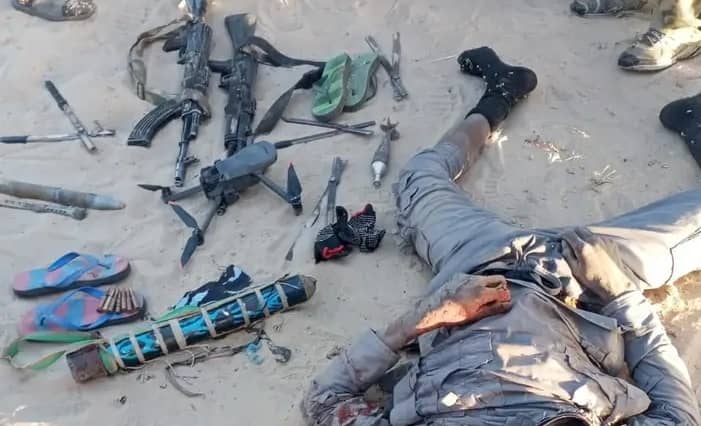
Troops of Operation HADIN KAI, working alongside local vigilantes and hunters, have neutralised a senior Boko Haram figure identified as Abdullahi Mafa in the Madagali axis of Zamfara State.

Security sources disclosed that Mafa, described as a former hybrid commander of the terrorist group, was killed during a coordinated operation in the area.

In a separate development, troops also apprehended a suspected logistics and drone supplier to the insurgents, Dauda Usman Gubula, during another mission in Madagali Local Government Area.

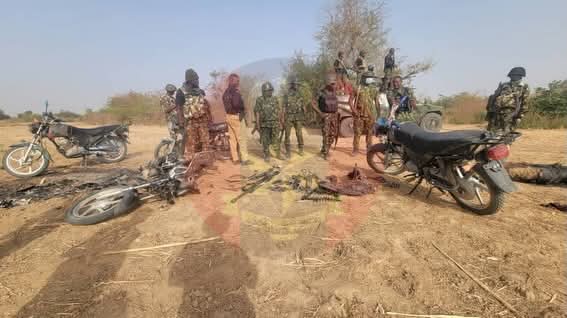
According to security analyst, Zagazola Makama, the encounter took place on Thursday. He said troops came in contact with suspected Boko Haram fighters during an ambush along the Visik River corridor.

The confrontation led to the death of the terrorist commander after an exchange of fire.

Makama further revealed that the alleged collaborator was arrested in a different operation. He said the suspect was picked up during a raid carried out at Madagali Motor Park.

Quoting officials, he stated that security operatives recovered several items from the suspect. These included two aerial drones and 20 solar power banks believed to be meant for terrorist operations.

The suspect remains in custody as investigations continue.

Meanwhile, troops have sustained offensive actions across the region. The ongoing operations are targeted at dismantling Boko Haram cells and restoring normalcy in affected communities.

Troops sustain anti-terror operations, recover ₦37 million linked to insurgent financing

By Sabiu Abdullahi

The Joint Task Force (North East) Operation HADIN KAI has continued its offensive against terrorist networks, with fresh operations targeting logistics and financial structures that sustain insurgent activities.

Military authorities said the renewed push followed recent defensive victories recorded in Pulka and Madara-Girau. The successes, they noted, created the momentum for troops to expand operations aimed at cutting supply routes and weakening terrorist support systems across the theatre.

According to the press statement, the coordinated efforts are designed to retain operational advantage, restrict the movement of insurgents, and dismantle their logistics and funding framework.

On 16 February 2026, troops of Sector 1, working with Vigilante Forces, launched a night ambush along a crossing route often used by ISWAP عناصر moving from the Cameroon axis into Nigeria. The fighters were unaware of the concealed troop positions. They advanced into heavy enfilade fire and retreated in confusion after the engagement.

Security forces later searched the scene of the encounter. They recovered a large quantity of logistics materials believed to have been meant for terrorist resupply. The development, according to military sources, has reduced the group’s ability to sustain operations in the area. Troops still dominate the location and continue follow-up actions to consolidate their hold.

In a separate operation, soldiers at the Forward Operating Base, Chabbal Checkpoint, intercepted a suspicious vehicle carrying five occupants. A detailed search led to the discovery of approximately Thirty-Seven Million Naira (₦37,000,000.00) hidden in bags. Several mobile phones were also recovered. Authorities suspect the items are linked to terrorist financing and coordination.

The military described the interception as a major success in efforts to dismantle financial channels believed to support insurgent logistics and operations.

Officials added that the combined actions reflect a broader strategy focused on choking supply chains while targeting funding sources. Pressure on transit routes and support networks, they said, is intended to weaken terrorist elements and limit their ability to rebuild combat strength.

The Military High Command praised the vigilance, professionalism, and resilience of troops as well as collaborating security agencies. It stated that the morale and combat efficiency of personnel remain high.

Operation HADIN KAI reaffirmed its commitment to defeating terrorist threats and restoring lasting peace and economic stability across the North-East region.

The statement was signed by Sani Uba, Lieutenant Colonel and Media Information Officer, Headquarters Joint Task Force (North East) Operation HADIN KAI, and dated 16 February 2026.

Court orders DIA to produce Kaduna cleric detained over alleged coup plot against Tinubu

By Sabiu Abdullahi

A Federal High Court in Abuja has directed the Defence Intelligence Agency (DIA) to produce a Kaduna-based Islamic cleric, Sani Zaria, before it on February 18 over allegations linking him to a coup plot against President Bola Tinubu.

The order followed proceedings on Friday before Justice Peter Lifu, who presided over a fundamental rights enforcement suit filed by the cleric. Zaria has remained in custody since December 2025.

Earlier in January, the Defence Headquarters confirmed the arrest of 16 military officers during the first week of the month in connection with an alleged attempt to overthrow the current administration.

Court documents showed that the cleric was first arrested by the Economic and Financial Crimes Commission before he was transferred to the custody of the Defence Intelligence Agency.

Respondents in the suit include the EFCC, DIA, the attorney-general of the federation, and Jaiz Bank Plc.

The applicant is asking the court to order his release. He argued that his continued detention has no lawful basis.

During the hearing, the federal government was unable to present a valid court order authorising his detention. The development drew criticism from the bench.

Justice Lifu had earlier instructed the DIA to produce any detention order or provide legal justification for holding the cleric under applicable laws, including provisions of the Administration of Criminal Justice Act.

The judge faulted the length of the detention. He subsequently ordered the intelligence agency to produce the cleric in court. The appearance, the court noted, will allow consideration of his bail application pending the continuation of the case.

Suspected BH fighters kiII 21 in fresh Niger State attacks

By Sabiu Abdullahi

Suspected Boko Haram fighters carried out fresh assaults in parts of Borgu and Agwara Local Government Areas of Niger State late Friday night.

The attacks were disclosed by security reporter and analyst, Comrade Zakari Y. Adamu Kontogora, through a post on his Facebook page where he detailed the incident.

He reported that the armed men moved across several communities. They opened fire on residents and set houses ablaze during the raids.

Quoting security operatives who spoke with his newspaper, he said no fewer than 21 people lost their lives after the gunmen invaded Konkoso community.

The sources also revealed that the assailants extended their attacks to nearby settlements such as Pissa, Zango and Tungan Maƙeri. Casualties were recorded in the affected villages. Properties were destroyed as homes and shops were burnt.

Residents were said to be gripped by fear as the attackers reportedly remained within the general area as of the time this report was filed.

There has been no official statement yet from security authorities regarding the incident or the number of casualties recorded.

Despite his evil notoriety, Epstein was afraid of Nigerian scammers

By Ibrahym El-Caleel

Jeffery Epstein, despite being a MOSSAD agent who successfully lured high profile individuals and world leaders into his web to obtain their dirty secrets, was afraid of Nigerians scamming him in oil deal.

Epstein is afraid of Nigerians. Hehe.

Ladies and gentlemen, I want to officially tell you that I am also afraid of Nigerians from now going forward.

But jokes aside, Nigerians are a special breed. If a Nigerian decides to settle for anything, he ensures that he masters it to the best of his or her ability.

In the wake of the US’s disregard for Nigeria’s sovereignty in December last year, I read a post on X made by a security analyst. The handle is @GallantDaletian, and he opined that yes, the US military might have the tech, air power, and naval dominance, but when it comes to guerrilla and asymmetric warfare, the Nigerian military is a force to be reckoned with!

He said, the US may have advanced technology, drones, and aircraft carriers, but Nigeria’s military has mastered the art of unconventional warfare, leveraging local knowledge and intelligence to outmaneuver adversaries.

It’s not about comparing strengths, but acknowledging different areas of expertise. Nigeria’s focus on regional security, counter terrorism, and peacekeeping has earned it respect, while the US excels in global reach and high tech warfare.

Clearly Jeffery Epstein, despite his notoriety, believes that the fear of Nigerians is the beginning of wisdom. Sharp guy.

Despite peace agreement, bandits raid Katsina community, burn down homes, vehicles

By Sabiu Abdullahi

Residents of Doma community in Faskari Local Government Area of Katsina State have been thrown into renewed fear after armed bandits carried out a fresh attack on the area, despite a peace and surrender agreement earlier reached between local authorities and armed groups operating there.

It was gathered on Tuesday that the attackers arrived in Doma in large numbers, opened fire on residents, and set several houses and vehicles on fire.

According to a report by an online Nigerian newspaper, SaharaReporters, the incident has unsettled the community, especially as it came after a reported peace agreement between stakeholders in Faskari Local Government Area and bandit leaders. The deal was expected to end hostilities and encourage displaced residents to return to their homes.

A Katsina-based security expert, Bakatsine, confirmed the development and warned that the attack was still ongoing in Doma and nearby communities within Faskari LGA.

Bakatsine raised concerns over the safety of civilians and appealed for immediate security intervention in the area.

“Urgent deployment of security forces is needed to Doma and surrounding communities in Faskari LGA to protect civilians, stop the ongoing violence, and prevent further loss of lives and property,” the alert stated. “Immediate action could save lives.”

At the time of filing this report, there were concerns that casualties may have been recorded. However, the exact number of those killed or injured could not be independently verified.

Faskari Local Government Area remains one of the areas most affected by insecurity in Katsina State, with years of persistent bandit attacks, kidnappings, cattle rustling, and large-scale displacement of residents.

On September 17, 2025, SaharaReporters reported that a known bandit commander, Isya Akwashi Garwa, who was armed with an AK-47 and ammunition, released 28 abducted persons in the local government area after a peace arrangement.

Those released were mostly residents of Mairua, Kanen-haki, and Yar Dabaru communities, who had spent weeks in captivity.

Local authorities later confirmed that the release followed reconciliation efforts aimed at restoring peace and reducing violence in the area.

A security source, Zagazola Makama, also revealed on X that community leaders in Faskari welcomed the development and described it as a positive step. They urged all parties involved to sustain the “peace process.”

The leaders also appealed to the bandit commander to persuade other armed groups still carrying out attacks in the area to lay down their arms and embrace peace.

Police in Sokoto arrest suspected bandits’ Informants, financiers

By Sabiu Abdullahi

The Sokoto State Police Command has arrested suspected informants and financiers linked to bandit activities during a security operation in parts of the state, with several rustled cattle recovered.

Details of the arrests were made public in a post shared on X on Tuesday by security analyst Zagazola Makama. According to the post, the operation took place in the early hours of Monday at about 1:00 a.m. in Sarma Village, Tangaza Local Government Area.

Makama said operatives of the Sokoto State Police Command, in collaboration with members of the community guard, carried out the intelligence-led raid, which led to the arrest of two suspects identified as Nura Dan Haruna, 20, and Buhari Salah, 18.

The suspects were found with seven cows suspected to have been stolen, as well as a motorcycle without a registration number.

Makama reported that preliminary findings showed the suspects were acting on instructions from two other individuals who remain at large.

“The suspects confessed they were sent by two individuals, Abdullahi Gulum and Dan Iko, who are currently on the run, to deliver the cows to Hamza Ibrahim, 56, of the Kara area in Illela,” Makama wrote.

He added that police later arrested Hamza Ibrahim in connection with the case.

“Hamza was later arrested by the police,” Makama wrote.

Further inquiries by the police also uncovered that Hamza Ibrahim admitted to selling two of the cows last month to Abubakar Muhammad, 31, from Gwadabawa Local Government Area. Police confirmed that Abubakar Muhammad has also been arrested.

Authorities said investigations into the case are continuing, while efforts have been stepped up to track down and arrest the remaining suspects linked to the alleged bandit network.

Nigerian soldiers overrun kidnappers’ camp, free eight captives In Kaduna

By Sabiu Abdullahi


Troops of Sector 7 under Operation ENDURING PEACE (OPEP) have dismantled a kidnappers’ hideout in Badurum Kasa Forest, located in Kauru Local Government Area of Kaduna State, and rescued eight abducted persons.

This is contained in a statement released by the Nigerian Army today via their official Facebook handle.

The operation took place on January 28, 2026, after the troops received credible intelligence on the activities of the criminal group.

Acting swiftly, the soldiers moved into the forest in a coordinated mission alongside operatives of the Zango Kataf Police Area Command, members of the Civilian Joint Task Force, Forest Guards, and local hunters.

According to military sources, the joint team advanced deep into the forest and made contact with the kidnappers at about 5:59 p.m. The criminals reportedly became overwhelmed by the firepower and tactical advance of the security forces. They abandoned their captives and escaped into nearby bushes.

As a result of the operation, eight victims were rescued without injuries and later reunited with their families. Those freed are Mrs Rashida Musa (19), Mrs Hafsat Nuhu (18), Mr Zakari Saleh (52), Miss Hasiya Yahaya (13), Mr Ahmed Yahaya (14), Mr Ibrahim Saiba (11), Miss Salma Yahaya (14), and Mr Sophan Idris (18).

The operation highlights the Nigerian Army’s continued cooperation with other security agencies and local support groups. It also reflects ongoing efforts to safeguard lives, secure key areas, and limit the activities of criminal groups within Kaduna State and beyond.

NAF neutralises 23 bandits fleeing Kano after night attacks

By Uzair Adam

At least 23 suspected bandits were neutralised in a coordinated military operation after armed groups launched attacks on Shanono and Tsanyawa local government areas of Kano State between the night of January 1 and the early hours of January 2, 2026, according to the Nigerian Army.

The development was disclosed in a statement issued on Sunday by the Assistant Director, Army Public Relations, 3 Brigade, Nigerian Army, Major Babatunde Zubairu, who said the operation involved joint task force troops on the ground and the Air Component of Operation FANSAN YAMMA.

According to the statement, troops successfully contained the attacks in Kano. They inflicted heavy casualties on the assailants before tracking the fleeing bandits to Karaduwa village in Matazu Local Government Area of neighbouring Katsina State. 

Acting on credible intelligence, the Air Component pursued the group as they attempted to regroup after escaping Kano.

The Army said intelligence reports revealed that the bandits were in the process of burying some of their members killed during the initial clashes when they were located at Dan Marke in Matazu LGA. 

Air Component Sector 2 of Operation FANSAN YAMMA reportedly trailed their movement until several motorcycles converged after crossing a dry riverbed.

“A precision airstrike was immediately launched,” the statement said, noting that the operation was supported by aerial Intelligence, Surveillance and Reconnaissance missions. 

The strike, according to the Army, resulted in the neutralisation of at least 23 terrorists, while several others were believed to have sustained injuries. 

It also damaged the group’s weapons and other equipment.

Reacting to the operation’s outcome, the Commander of 3 Brigade, Nigerian Army, commended both the air and ground troops for their exceptional courage. 

“Their bravery and resilience in the face of adversity are commendable,” he said.

The Army added that the security situation in Kano State remains calm, with troops sustaining robust patrols and close monitoring of flashpoints. 

It stated that troop morale and operational efficiency remain “very satisfactory.”

The Nigerian Army also appealed to the public to continue supporting security agencies by providing timely and credible information.

Such cooperation, it said, would further aid efforts to disrupt banditry and other terrorist activities.

Major Zubairu stressed that troops, working alongside other security agencies, remain committed to safeguarding lives and property nationwide and will continue to take all necessary measures to ensure national security.

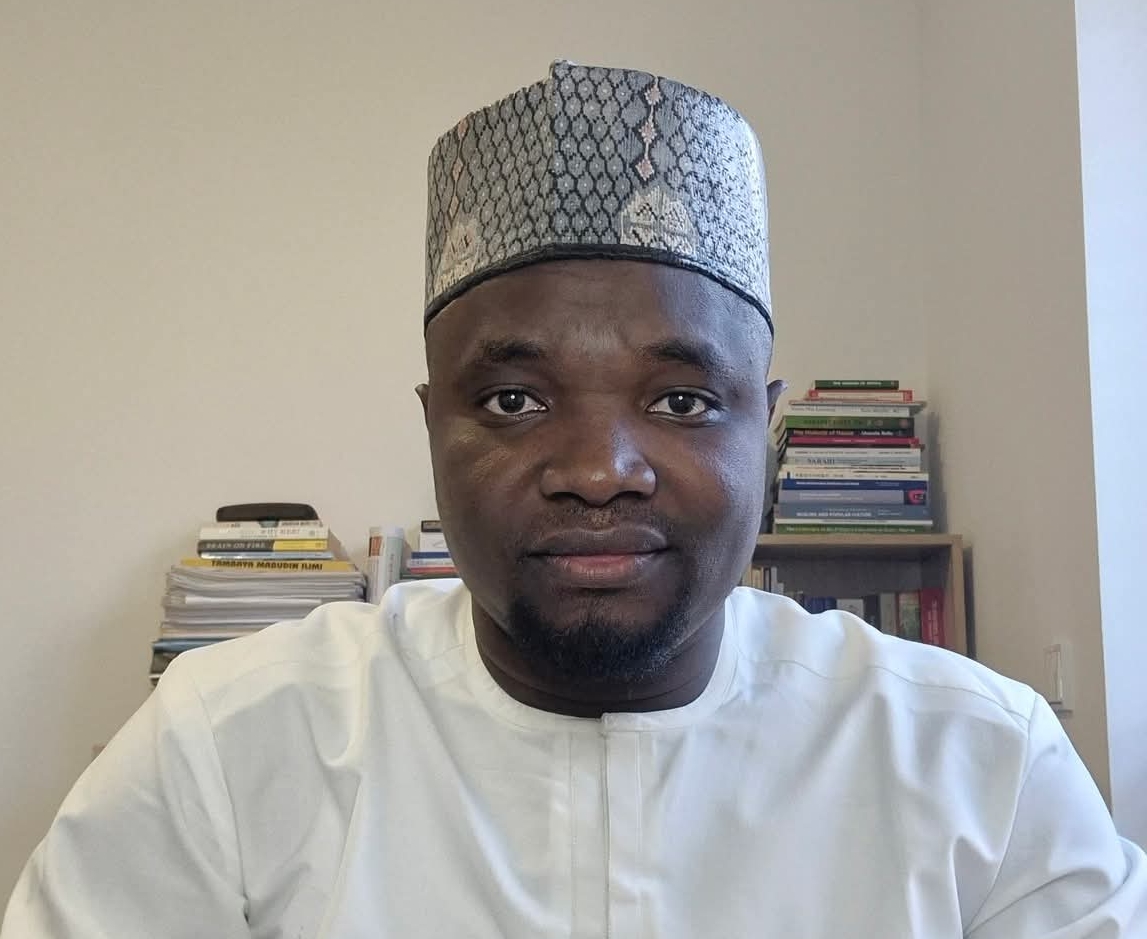
Nigeria must turn to modern technology to defeat insecurity

By Aminu Babayo Shehu

Nigeria is facing one of its toughest internal security battles in decades. From the kidnapping of schoolchildren in Kebbi and Niger states to the killing of senior military officers, including a Brigadier General, criminal groups continue to operate with increasing boldness. Bandits, kidnappers and terror cells now openly upload videos on platforms like TikTok and WhatsApp, displaying weapons, hostages and propaganda with little fear of consequences.

This is no longer an era where outdated tactics can secure the nation. Criminal groups are becoming more technologically aware, while the state still relies heavily on manual intelligence and slow-response systems. Countries facing similar threats have adopted advanced tools and strategies. Nigeria must follow the same path.

The United States and Israel use drones, satellite intelligence and geolocation trackers to disrupt hostile organisations long before they strike. Rwanda has established a modern drone command system to enhance surveillance and national security. India employs mobile tracing, SIM mapping and digital pattern analysis to dismantle kidnapping networks. These examples show that even in challenging environments, technology can expose criminal movements, reduce their operational freedom and strengthen national response.

Nigeria can apply the same approach effectively.

Real-time aerial surveillance remains one of the most critical gaps in Nigeria’s security architecture. High-altitude drones equipped with night-vision cameras and thermal sensors can monitor large forest areas where bandits hide. Such drones transmit live data to command centres, enabling tracking of movements and coordination of precision strikes. In many cases, soldiers need not be deployed on foot into ambush-prone areas; operations can be guided or executed remotely.

Mobile intelligence is another powerful asset. Every phone, even when switched off, leaves digital traces. With firm collaboration between telecom operators and security agencies, criminals can be located through cell-site analysis, call patterns and movement anomalies. India has successfully used these tools to reduce large-scale kidnapping syndicates.

Satellite imaging, when paired with artificial intelligence, can detect camps, vehicles, and human movement in remote areas. Modern software can analyse thousands of images within minutes and flag suspicious activity such as heat signatures, makeshift shelters, or recently cleared land. This drastically improves early detection and reduces operational delays.

State governments can also invest in early-warning technologies. Community CCTV networks, automated alarm systems and remote-sensor alerts can shorten response times. Local initiatives that once existed in a few states need consistent funding and national integration.

At the federal level, the Presidency should coordinate a national security technology blueprint. This would bring together drones, cyber-intelligence tools, biometric systems, satellite monitoring, and geospatial-analysis platforms into a single central command. Strategic partnerships with technologically advanced nations can reduce costs and strengthen capacity.

Nigeria’s security forces have courage and dedication, but courage alone cannot defeat modern criminals who rely on speed, shock and terrain mastery. Technology is the equaliser. It exposes hideouts, cuts communication lines and allows the state to strike before criminals mobilise.

The tools exist. They are affordable. They have worked in other nations. What Nigeria needs now is clear political will, long-term investment and an understanding that 21st-century threats demand 21st-century solutions.

If embraced, technology can save lives, disrupt kidnappers and terrorists, and restore the confidence of millions of Nigerians who deserve safety.

Aminu Babayo Shehu is a Software Engineer and Mobile Developer with experience building technology-driven solutions, including systems for logistics, telecommunications, e-commerce, and security-focused applications. He writes on technology, national development and digital transformation.