News

Governor Yusuf to Inaugurate Garo as Kano Deputy Governor Tuesday


Uzair Adam

Kano State Governor, Alhaji Abba Kabir Yusuf, is set to inaugurate the state’s Deputy Governor, Murtala Sule Garo, on Tuesday.

The swearing-in ceremony will hold at the Coronation Hall, Government House, Kano, by 11:00 a.m.

A statement issued by the governor’s media aide, Ibrahim Adam, indicated that stakeholders, party loyalists, and members of the public are expected to attend the event.

The Daily Reality recalls that Garo was cleared by the Kano State House of Assembly last Monday following a successful screening conducted by a 12-member committee.

Xenophobia: Nigeria Launches Emergency Returns For Its Citizens in South Africa

By Muhammad Abubakar

The Nigerian government has launched an emergency voluntary repatriation program for its citizens in South Africa following a violent wave of xenophobic attacks and anti-migrant demonstrations.

Foreign Affairs Minister Bianca Odumegwu-Ojukwu confirmed on Monday that at least 130 Nigerians have already registered to leave, with that number expected to climb as tensions persist. The decision follows the reported killings of two Nigerians in separate incidents involving local security personnel, alongside viral footage showing the harassment of African migrants in several South African cities.

“The safety of our nationals is non-negotiable,” the Minister stated, noting that the government has summoned South Africa’s acting High Commissioner to express “profound concern” over the deteriorating situation.

The Nigerian High Commission and Consulate are currently coordinating logistics to facilitate the return of those who feel unsafe. This surge in violence has also prompted other West African nations, including Ghana, to issue emergency safety advisories to their citizens.

While both governments have historically worked to maintain strong bilateral ties, Nigerian officials warned that the continued failure to protect foreign nationals could severely strain the relationship between the continent’s two largest economies.

The Daily Reality Editor Loses Father


By Sabiu Abdullahi

One of the editors of The Daily Reality, Dr Muhammad Sulaiman Abdullahi, has announced the death of his father, Malam Sulaiman Abdullahi, who passed away on Monday, May 4, 2026.

According to the family, the funeral prayer for the deceased is scheduled to be held at Kandahar Mosque in the Rijiyar Lemo area at about 11 a.m. on the same day.

The news of his passing has thrown family members, friends, and associates into mourning, as many continue to express grief and offer prayers for the repose of his soul.

Prayers are being offered for Almighty Allah to forgive his shortcomings, grant him mercy, and admit him into Aljannatul Firdausi.

Who Will Save The North?

By Fatima Abdulmalik

The Northwestern part of Nigeria has been plagued by heinous crimes, including banditry, cattle rustling, kidnappings, and the rise of Lakurawa criminal gangs. These gangs claim to fight for religious reasons, but their actions only bring suffering to innocent civilians. The question on everyone’s mind is: why does the North always seem to be at the epicenter of these atrocities? This cycle of violence is rooted in power and control dynamics, where the perpetrators exert dominance over the victims through coercion and manipulation.

The North’s struggles with violence and crime have become a recurring nightmare. It’s imperative that we acknowledge the complexity of this issue and the need for collective action. We must address the root causes of this violence, including poverty, lack of education, and social inequality. By providing access to quality education and economic opportunities, we can empower the youth and reduce the appeal of criminal gangs. Effective leadership and collaboration are crucial in safeguarding the North. Leaders must put aside their differences and work towards a common goal: protecting their people.

To safeguard the North, we need to invest in education, economic empowerment, and social welfare programs. Community leaders play a vital role in promoting peace and stability. They must speak out against violence and encourage their followers to do the same. By fostering a culture of tolerance and understanding, we can break the cycle of violence and build a more harmonious society. Security forces must intensify their efforts to combat crime and protect civilians. This includes intelligence gathering, strategic operations, and community engagement.

The youth are the future of the North, and it’s essential that we empower them with education, skills, and opportunities. By doing so, we can redirect their energy towards positive change and development. We must also address the economic and social factors that drive young people to join criminal gangs. This includes providing job opportunities, vocational training, and mentorship programme.

Understanding the cycle of abuse is crucial in addressing the North’s violence. The cycle consists of tension building, acute battering incident, and reconciliation. Recognizing these stages can help individuals and communities break free from the cycle of violence. Support from healthcare providers, professional counselors, and domestic violence organizations is vital in ending the cycle of abuse.


In conclusion, the North’s cry for help requires collective action from all stakeholders to address the overwhelming problems plaguing the region. It’s imperative that leaders, community members, organizations, and individuals put aside their differences and work towards a common goal: safeguarding the North. This collaborative effort will empower the youth, promote peace and stability, and break the cycle of violence. Effective stakeholder engagement is crucial in achieving this goal. By identifying and prioritizing key stakeholders, the North can develop a comprehensive plan to address the root causes of its problems.

This includes investing in education, economic empowerment, and social welfare programs. Community leaders must speak out against violence and encourage their followers to do the same, fostering a culture of tolerance and understanding. By addressing these areas, stakeholders can create a safer, more prosperous North. The international community must also support Nigeria’s efforts to address these challenges. Simply put, we can break the cycle of violence and build a brighter future for the North.


Fatima Abdulmalik, Department of Mass Communication, University of Maiduguri.

Kwankwaso, Obi Obtain NDC Membership Cards


By Anwar Usman

Peter Obi, the 2023 Presidential Candidate of the Labour Party (LP), and former Kano State governor, Rabiu Kwankwaso, have formally joined the Nigeria Democratic Congress (NDC).

Kwankwaso and Obi, were officially registered as members of the party on Sunday at its national secretariat in Abuja, where they obtained their membership cards, signalling their formal entry into the party.

It was reported that, Kwankwaso received his membership card first, followed by Obi, as party officials and supporters witnessed the process.

Their defection followed Obi’s resignation from the African Democratic Congress (ADC), due to internal wrangling, while Kwankwaso had earlier revealed that he was engaged in “wide-ranging consultations” with the NDC.

The development follows a closed-door meeting held just hours earlier between the two leaders and top figures of the NDC at the Abuja residence of the party’s National Leader and former Bayelsa State governor, Seriake Dickson.

The meeting, which took place at Dickson’s residence in Abuja, is believed to be part of broader efforts to consolidate opposition forces and build a formidable coalition ahead of the next general elections.

Gawuna, Binani Attend Dickson’s Closed-door Meeting Alongside Obi, Kwankwaso


By Anwar Usman

Key political figures on Sunday, attended a  closed-door meeting between former Anambra State Governor, Peter Obi, Rabiu Kwankwaso, and the National Leader of the Nigeria Democratic Congress, Seriake Dickson, in Abuja.

The 2023 governorship candidate of the All Progressives Congress (APC) in Kano State,  Nasiru Gawuna alongside former Adamawa State governorship candidate, Aishatu Binani; ex-lawmaker representing Zamfara Central Senatorial District, Kabir Marafa; and the Senator representing Anambra Central, Victor Umeh were all seen at the meeting.

The meeting, held at Dickson’s residence in Abuja, is believed to be part of ongoing political realignments among opposition figures ahead of the 2027 general elections.

The two former governors  had earlier arrived at Dickson’s residence with a crowd of supporters under the Obi-Kwankwaso Movement, who chanted “O-K is okay” as the two leaders were ushered into the premises.

The development comes barely 24 hours after the Secretary of the Board of Trustees of the New Nigeria People’s Party, Buba Galadima, disclosed that two prominent politicians would unveil a new political platform on Monday, further fuelling speculation over an emerging opposition coalition.

Sokoto Advancement Forum Postpones Youth Drug Abuse Summit Due to Last-Minute Venue Denial

By Dahiru Kasimu Adamu 

The Sokoto Advancement Forum has postponed its scheduled summit on youth drug abuse in Sokoto State following a last-minute denial of its venue.

The brainstorming session, aimed at examining the growing challenge of drug abuse among Sokoto youth, was slated for today, May 2, 2026, at the Sokoto Guest Inn. This was according to an earlier press release signed by Associate Professor Sajo Muhammad Sanyinna, Chairman of the Forum’s Media and Publicity Team.

However, the event was abruptly called off after the management of the Guest Inn informed organisers late Friday evening that the programme could not be held.

Addressing journalists at the venue, Professor Riskuwa, speaking for the Forum, thanked invited guests and members of the press for honouring the invitation and apologised for the inconvenience.

“Sokoto Advancement Forum thanks our invited guests for honouring our invitation to this brainstorming session on curbing drug abuse. Due to unforeseen circumstances, we have had to postpone this activity to a later date,” Prof. Riskuwa said. 

He added: “Details of the reasons behind this postponement will be issued to newsmen. Once again, we sincerely apologise for the inconvenience. In sha Allah, we will keep you informed of the new date and venue for the brainstorming session, as well as of all our future activities. We pray Almighty Allah continues to bless our state and guide us to the right path.”

An apology letter signed by the Forum’s Secretary-General confirmed the development. It stated that the management of Sokoto Guest Inn contacted the Forum late on Friday, May 1, 2026, directing that the programme not be held. The hotel refunded the fees paid for the venue and, according to the letter, “stated clearly that the powers that be have insisted against the conduct of the brainstorming session.”

“It is pertinent to mention that all necessary arrangements were made for the conduct of the programme, but late evening of Friday, 1 May 2026, the attention of the Forum was drawn by management of Sokoto Guest Inn that the programme should not hold,” the letter read.

The Forum emphasised its non-partisan stance and reaffirmed its commitment to the development of Sokoto State.

“It is worth mentioning that Sokoto Advancement Forum remains undaunted in its commitment to contribute its quota to the development of Sokoto State in all areas of human endeavour. The Forum has remained non-partisan and will continuously seek the support of Government and all patriotic citizens in pursuit of its objectives,” the statement added.

Efforts to get a response from Sokoto Guest Inn on the reasons or individuals behind the venue denial were unsuccessful at press time.

However, some members of the Forum, who spoke off the record and requested anonymity, blamed political actors they believe view the Forum as a threat. They cited previous difficulties in securing venues in their earlier programs, noting that the current event was earlier scheduled to be held at Umaru Ali Shinkafi Polytechnic before “some issues arose” that forced a change.

“Even this event was earlier scheduled to be held at Umaru Ali Shinkafi Polytechnic, but some issues arose, and we were denied,” one member said.

The Sokoto Advancement Forum comprises high-profile figures, intellectuals from institutions within and outside Sokoto, and Islamic clerics. The Forum, which describes itself as non-partisan, was said to have organised the summit in response to rising criminal activity and in light of the 2027 political atmosphere, to engage stakeholders in tackling the menace of drug abuse in the state.

Before the postponement, the venue was already filled with distinguished attendees. Islamic scholars, including Professor Mansur Ibrahim Sokoto, MNI, as well as intellectuals from institutions within and outside Sokoto, high-profile dignitaries, members of the press from local, national, and international media organisations, and prominent social media influencers, had all arrived to cover the event.

Tinubu Shifts Departure Date For France, Kenya, Rwanda Trip To Sunday

By Sabiu Abdullahi

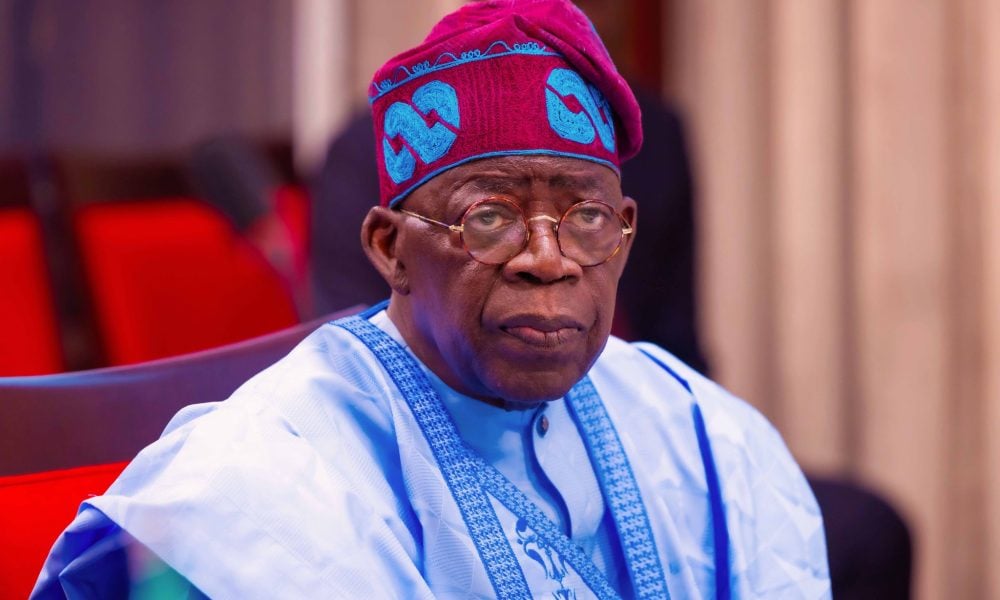
President Bola Tinubu has postponed his planned departure for an official visit to France, Kenya, and Rwanda.

Bayo Onanuga, the special adviser to the president on information and strategy, had earlier announced on Friday that Tinubu would leave Abuja on Saturday. He said the president would first head to France before travelling to Nairobi, Kenya, to attend the Africa-France summit.

However, Onanuga later issued another update on Saturday through his X handle. He stated that the president would now begin the trip on Sunday instead of the earlier scheduled date. He did not state any reason for the adjustment.

In the earlier statement, Onanuga explained that the Africa-France summit would be co-chaired by French President Emmanuel Macron and Kenyan President William Ruto. He said discussions at the meeting would cover energy transition, green industrialisation, digital transformation, restructuring of the global financing architecture, and climate action.

He added that Tinubu is expected to take part in the summit, which is billed for May 11 and May 12. The participation, he said, forms part of efforts to deepen strategic ties between Nigeria, other African nations, and France.

The summit carries the theme, “Africa forward: Africa-France partnerships for innovation and growth”. It will gather leaders from Africa and France to discuss issues such as economic transformation, climate resilience, infrastructure, youth development, technology, and peacebuilding.

Onanuga also disclosed that after the Kenya meeting, the president will travel to Kigali, Rwanda. There, he will attend the Africa CEO forum scheduled for May 14 and May 15.

The forum, with the theme “Scale or Fail”, will bring together business leaders, investors, and policymakers. They are expected to examine ways to boost economic growth through regional cooperation and cross-border investment.

Pantami Distances Self From Controversial Facebook Post, Suspends Admin

By Sabiu Abdullahi

Former Minister of Communications and Digital Economy, Professor Isa Ali Pantami, has disowned a controversial message shared on his Facebook page. He said the post, which described critics and non-supporters as hypocrites, did not have his approval.

In a statement issued on the same platform, Pantami explained that the content was published by one of the page administrators without his consent.

He said, “My attention has been drawn to a post on this page by one of the admins, containing a strongly worded message suggesting that anyone who does not support Prof. Pantami is a hypocrite, and that any cleric who does not support him is equally a hypocrite. I would like to state clearly that this message was not authorised by me, nor does it represent our approach to leading the affairs of our state. Furthermore, the admin in question has been placed under suspension until further notice.”

The former minister stressed that political engagement should allow room for differing opinions. He noted that respect for all individuals must be upheld, regardless of their views or affiliations.

Pantami also stated the importance of criticism in leadership and public discourse. He stated, “First, it is important to note that in politics, everyone is valued and respected, regardless of sectarian differences. Moreover, as an administrator, academic, former Minister, and, most importantly, a religious cleric myself, I understand the value of criticism. It is a vital ingredient that shapes discourse, upholds standards, and sustains development.”

He further reiterated his commitment to inclusive leadership, especially in a diverse society. According to him, “I would also like to state that, as a politician aspiring to lead a heterogeneous, multi-ethnic, and multi-religious society, I am for everyone. Islam equally enjoins every leader to be just to all, irrespective of differences, and I hold firmly to these values.”

Pantami added that his team reflects a mix of backgrounds and beliefs. He said, “It is also noteworthy to reiterate that my team comprises individuals of impeccable character from diverse ethno-religious backgrounds. It includes people of different faiths, both Christians and Muslims, as we understand that our diversity across many dimensions makes us stronger and greater as a people.”

He ended the statement with a brief note of appreciation to his supporters and followers.

Empowering Nigerian Youth for Climate Action

By Esther Remilekun Abidoye

Climate change is no longer a distant concern; its effects are increasingly visible in every part of Nigeria. Rising temperatures, erratic rainfall, desertification, floods, and droughts are disrupting lives, threatening livelihoods, and weakening the nation’s environment, economy, and public health.

While every segment of society feels these impacts, young people are among the most affected. This is because many depend directly on natural resources and environmental stability for their daily survival and future prospects. Yet, Nigerian youth also hold the greatest potential to lead the fight against climate change due to their energy, numbers, creativity, and adaptability.

Mobilizing Youth for Climate Action

Governments, NGOs, and research institutions can play a vital role in empowering young Nigerians to take action. One effective way is through awareness campaigns. Youth are the most connected demographic in today’s digital world, with social media providing an accessible platform to share information, educate communities, and advocate for change. By equipping young people with knowledge and communication tools, they can become powerful voices spreading climate awareness across Nigeria.

Sustainable Agriculture and Green Jobs

Another promising avenue is sustainable agriculture. Training and equipping youth with eco-friendly farming techniques can help reduce environmental degradation while generating income. With proper funding, access to modern tools, and technical support, young farmers can adopt climate-smart practices that boost food security, create jobs, and protect the ecosystem. Both urban and rural youth stand to benefit from such programs, making them central to Nigeria’s environmental and economic resilience.

Tree Planting and Environmental Stewardship

Youth involvement in tree-planting initiatives can also promote environmental protection and wealth creation. Communities could designate land for economic tree planting, allotting small plots to individuals or groups of young people. Over time, these trees would not only enrich biodiversity and combat desertification but also provide financial returns when mature. Greening Nigeria’s cities and towns through such schemes can transform urban landscapes, generate employment, and foster a culture of environmental stewardship.

Technology and Renewable Energy Innovation

Nigeria’s tech-savvy youth can further drive progress through innovation in renewable energy. Training young people to design, fabricate, and maintain solar or wind-powered systems can create new green industries. This approach not only addresses energy challenges—especially with frequent power outages and the removal of fuel subsidies—but also encourages local manufacturing and entrepreneurship. Despite challenges like fluctuating fossil fuel prices and material shortages, the growing awareness and acceptance of renewable energy across Nigeria point to an opportunity for youth-led innovation.

In conclusion, engaging youth in climate action is not just a strategy; it is a necessity. By investing in awareness, sustainable farming, tree planting, and renewable energy initiatives, Nigeria can harness the power of its young population to tackle climate change head-on. Empowered youth bring creativity, energy, and determination, ensuring that environmental protection becomes a shared mission for a sustainable future. Through these collective efforts, Nigerian youth can truly become the driving force behind a greener, more resilient nation.

Esther Remilekun Abidoye, Department of Mass Communication, University of Maiduguri.