News

Workers’ Day Without Workers’ Wages!

By Dr. Muhammad Sulaiman Abdullahi

There are some few, effortless and simple things, which I have already assured myself that, if they are not confronted and solved squarely and completely in Nigeria, we should all continue to consider Nigeria as a joke. In other words, if the Nigerian rulers and the ruled are unable to solve these simple managerial crises, we should all forget about anything development and continue to wallow in our self deception mode. On these issues, I have assurance but I remain to be corrected. They are only four (4) simple things, among others;

1) Fixed date for the payment of salary: this doesn’t mean that, salaries should be paid on 24th, 25th… it should be paid on whichever day chose!n by the government. However, one thing must be considered, that’s FIXING a specific date for that purpose. Salary is something that must be paid, then, why this deceptive and unorganized approach? Right now that I am talking to you, many workers haven’t received their pay for April, and May is already on.

For Nigeria to even start thinking of development, workers must be truly and carefully considered. Their rights must be paid on time, because, as they say, it is not a privilege. If the government likes, let it pay it on 30th of each month, or even make every month to contain 31 days and pay it on the 31st. Let’s have a fixed date please. If not, let’s take the police for instance. A police may not know when to get his salary for risking his entire life to protect people; however, he is sure, he can be bribed by the poor through corrupt ways. How can you deny him something that he is certain about with an uncertain? This penetrates deeper into every sector.

2) Respecting time: one of the cantankerous evil that people abuse all the time. It comes to the extent that responsible people would call for a meeting and say 4pm, but deep down in their mind they know the meeting would start by 5pm. If you ask them why, they would say people would not come on time. I use to be confused on this. So in Nigeria we respect late comers more than how we respect punctual people! We give them extra time and we don’t mind those who come on time. They, their punctuality and the respect they give to time should all go to hell. Unless we change this attitude, we will never do it right.

If you want to fight with (responsible) Nigerians insist on punctuality. Many of us, including leaders fail in this respect.

When we are in Nigeria, we hardly do official things on their respective timing. But when we go elsewhere we keep to time. Therefore, it is obvious that the problem is from us and we can easily adjust if we know there is repercussions.

3) Scheduling the epileptic power supply: distribution must be scheduled and properly planned. We are not even talking about standard supply, we are talking standardizing the supply of the short one we get. The little we have must not be given at random. People are entitled to know when they should expect the little light. Let it be 10:20am-11:20am on Wednesdays? Saturdays and Sundays nights? Two hours every day? When? All these must be planned and relayed to the payers if we are not jokers! This electric power people switch on and off at their will and we pay for the rubbish.

4) The National Carrier: this is bigger than us due to corruption. We should have a National career at least for our internal development. There are so many countries around the world especially in Africa which Nigeria and Nigerians underrate and undervalue, however, they have their Sudan, Ethiopian, Mali, Malawi, airlines, but the so-called giant of looting rely on ants for its air transport survival. This is a mischief of the highest order.

5) The over dependence and over reliance on dollar. Mark what I say, overdependence! Nigeria can use dollar. This is one of the obvious weaknesses which many people have agreed to live with, especially the Nigerians. However, the overdependence is alarming! Almost every individual in Nigeria, big or small, knows about dollar. Nigeria should learn to uplift its currency and leave dollar alone. Even ordinary people now know how to hoard dollar at the expense of the economic development of the nation. The bigger you are the more detached you are from using Nigerian currency. Kobo, 1 Naira coin have all gone into extinction physically but they are still there in our calculations. Now Tinubu’s government has made 5, 10 and 20 naira notes valueless and meaningless. They look so ugly to be touched by a clean hand.

There are so many other simple things which you can help to count. In other countries they are not even remembered because they are subconsciously arranged for over hundred years. But in Nigeria, we are still battling with something which can be corrected in two months. In Nigeria we face price hikes, lack of infrastructures, no medicines, no qualitative education, no good roads and no nothing….. You can continue counting our lacks, they are so many. However, the above mentioned five things are very simple, they can be corrected with a simple verbal order, without putting much money and effort. May Nigeria be great soon!

Muhammad Kano
May day 2017

NB: This was written in 2017, with little correction now but nothing much has changed.
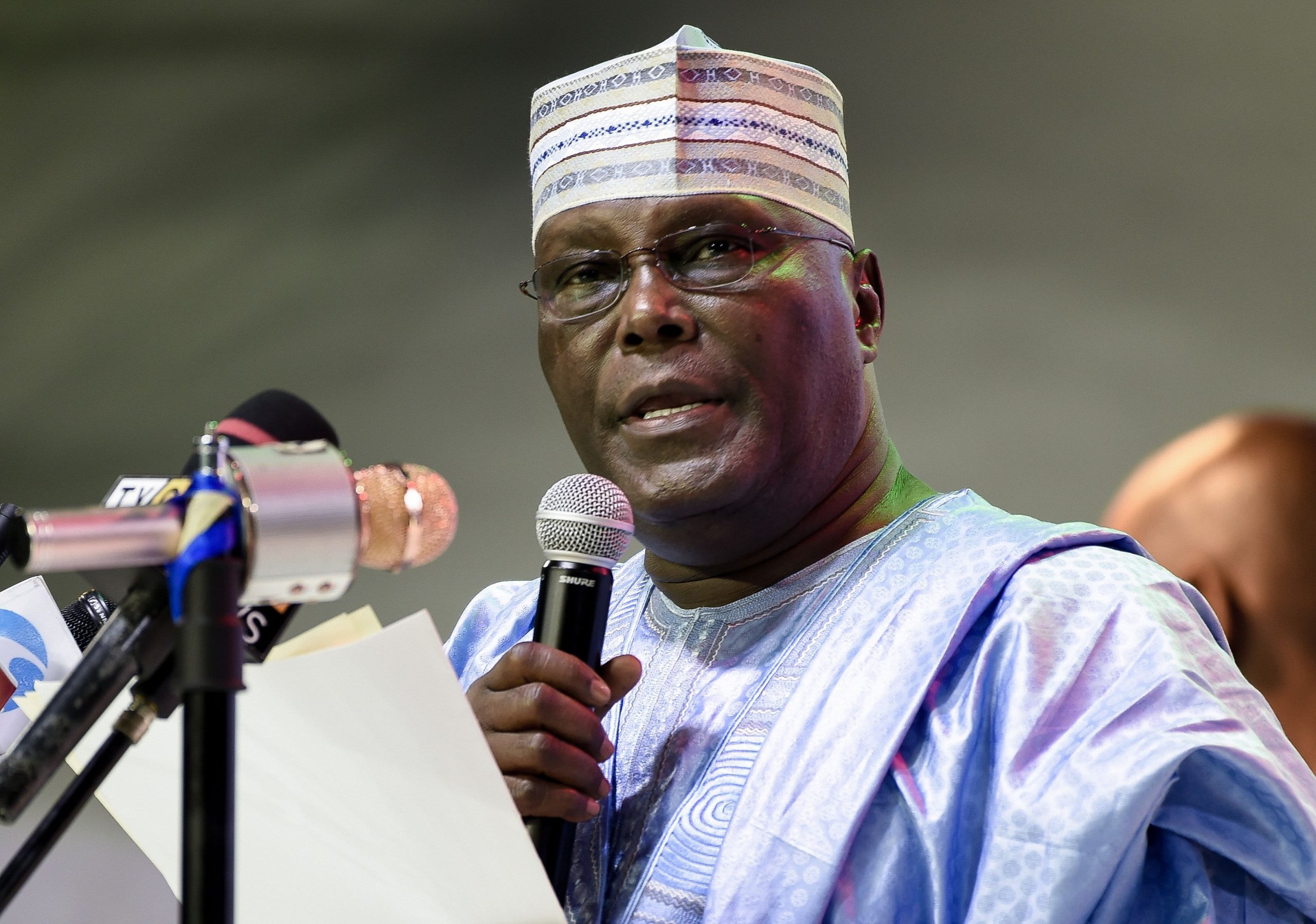
Workers are the nation’s driving force, not tools, Atiku tells FG

By Anwar Usman

Former Vice President Atiku Abubakar has said that workers play a crucial role in helping the country to grow and achieve its aims.

This was contained in a statement to commemorate the 2025 Workers’ Day on Thursday, he called on the Federal Government to see workers not just as tools for economic growth but as important partners in building a great nation.

The vice president said “The Nigerian worker remains the indomitable engine driving our nation towards the long-anticipated promise of prosperity.

“In the face of persistent hardship and inadequate remuneration, Nigerian workers have continued to shoulder the burdens of our economic ambitions with quiet heroism.

“It is deeply disheartening that those entrusted with the responsibilities of governance and policymaking have failed to respond to this unwavering dedication with tangible support and justice,” the statement added.

Workers demand action on killings, wages at May Day rally

By Uzair Adam 

At this year’s Workers’ Day celebration in Abuja, organised labour unions issued a strong 20-point demand to the Federal Government, calling for urgent measures to address Nigeria’s deepening socio-economic crisis, including rising insecurity and wage stagnation.

In a joint address, leaders of the Nigeria Labour Congress (NLC) and the Trade Union Congress (TUC) urged the government to end the widespread killings across the country and implement economic reforms that prioritise the well-being of citizens. 

They also advocated for justice, respect for democratic principles, and transparency in governance.

Themed “Reclaiming the Civic Space in the Midst of Economic Hardship,” the event saw the labour centres decry what they described as unconstitutional actions, particularly the suspension of the elected government of Rivers State through a declaration of emergency, which they argued lacked a legal basis.

Other demands included an immediate salary review aligned with the economic situation, clarity on the Pay-As-You-Earn (PAYE) taxation system, and the withdrawal of controversial tax bills before the National Assembly. 

Labour also called for more inclusive policymaking, emphasising that workers must have a seat at the table when critical decisions affecting their welfare are being made.

Details to follow…

Borno: Heatwave triggers explosion at Giwa Barracks ammunition depot

By Abdullahi Mukhtar Algasgaini

An explosion, caused by extreme heat, has rocked the Giwa Barracks ammunition storage facility yesterday, the Headquarters Joint Task Force North East Operation HADIN KAI has confirmed.

Authorities attributed the blast to soaring temperatures in Maiduguri, which ignited some munitions.

Emergency responders, including the Borno State Fire Service and security agencies, swiftly contained the situation.

Troops have been deployed to maintain security and prevent any potential unrest.

The military urged the public to disregard rumors of an attack and assured residents that the incident posed no further threat.

No casualties were reported, but investigations are ongoing to assess the full extent of the damage.

North sets conditions for 2027 election support—ACF

By Abdullahi Mukhtar AlgasgainiThe Arewa Consultative Forum (ACF) has stated that Northern Nigeria will only back presidential candidates in the 2027 elections who prioritize the region’s interests.

ACF Board of Trustees Chairman Alhaji Bashir Dalhatu made the declaration on Wednesday during a meeting in Kaduna, attended by prominent Northern leaders, including former governors, ministers, and top political figures.

Dalhatu, a former Minister of Power and Steel, stressed that the North’s support will go to leaders committed to advancing its development, not to any specific party or politician.

“The North has the numbers, land, and political strength to shape Nigeria’s future, but we must stay united,” he said.

The region holds 19 states, the majority in the National Assembly, and about 60% of Nigeria’s population.

The ACF urged Northern stakeholders to work together, warning that division would weaken the region’s influence.

Bashir Aliyu Umar assumes presidency of Shari’ah council

By Anas Abbas

The Supreme Council for Shariah in Nigeria (SCSN) has appointed Sheikh Dr. Bashir Aliyu Umar as its new president following the passing of its former leader, Sheikh Abdul Rasheed Hadiyatullah, on Monday.

In an official statement issued by Malam Nafiu Baba Ahmed, the Secretary General of SCSN, the council expressed deep sorrow over the loss of Sheikh Hadiyatullah, emphasizing that his death is a significant loss not only to the council but also to the broader Muslim community in Nigeria and beyond.

The statement included prayers for Allah (SWT) to forgive Sheikh Hadiyatullah’s shortcomings and grant him a place in Jannatul Firdaus.

The announcement confirmed that Dr. Bashir’s appointment was made in accordance with the council’s constitution and established protocols.

“Sheikh Dr. Bashir Aliyu Umar OON has been unanimously endorsed as the new President of the Supreme Council for Shari’ah in Nigeria,” the statement read.

The council expressed full confidence in Dr. Bashir’s leadership abilities, scholarly expertise, and steadfast dedication to the principles of Shari’ah and justice.

Dr. Bashir is a distinguished scholar in Islamic studies and finance, holding a Ph.D. in Hadith and Islamic Studies from the Islamic University of Madinah.

He has been actively involved in various committees concerning Shari’ah and Islamic banking both nationally and internationally, including serving on the Shari’ah Advisory Committee of Stanbic IBTC Bank and the Council of Experts on Islamic Banking at the Central Bank of Nigeria (CBN).

Husband laments negligence in death of wife at Minna hospital

By Hadiza Abdulkadir

A grieving husband has alleged gross negligence and unprofessional conduct at Jummai Babangida Aliyu Maternal and Neonatal Hospital, Minna, following the death of his wife, Ramatu, after a surgical procedure on April 24, 2025.

UB Shehu, who shared a detailed account of the events leading up to his wife’s death, claimed that his wife was the last of nine patients to undergo surgery that day. During the procedure, an unstable power supply reportedly forced staff to switch from the main source to a smaller backup generator, which Shehu emphasized was not a diesel-powered unit but a basic household generator.

According to Shehu, Ramatu showed signs of critical distress immediately after surgery. While other patients were reportedly stable, his wife began bleeding excessively due to a drainage bag not being properly attached — a task he claimed the attending nurse was unqualified to perform.

“She told me she didn’t know how to plug the bag,” Shehu stated, expressing frustration that a doctor did not attend to the situation until five hours later. Even then, she only gave brief instructions without examining the patient.

Shehu described a harrowing night in which his wife’s condition worsened, alleging that she was repeatedly denied water and food and that his pleas for medical assistance were ignored or delayed. As her condition deteriorated, he said senior nurses refused to help, citing departmental responsibilities.

By 7:04 a.m., his wife began gasping for air. Despite his cries for help, Shehu said the ward lacked oxygen, prompting a rushed transfer to the ICU, where attempts to administer oxygen reportedly failed due to ill-fitting equipment. Ramatu was pronounced dead at 7:24 a.m.

The hospital has yet to respond to the allegations. The account has sparked conversations online about healthcare standards and the need for reform in patient care practices across public hospitals in Nigeria.

Kano govt approves over N51bn for infrastructural development projects

By Anwar Usman

The Kano State Executive Council has approved an over N51 billion for critical infrastructure and public service delivery projects across the state, as part of the administration’s efforts to enhance socio-economic development.

This was contained in a statement issued by the governor’s spokesman, Sunusi Bature Dawakin-Tofa following the 27th Executive Council meeting held on Tuesday, 28th April 2025.

According to the statement, the Council gave the green light for multiple key projects, including major road rehabilitations, installation of traffic systems, expansion of public buildings, and electrification upgrades.

Part of the approvals is the release of N5.4 billion for the rehabilitation and asphalt overlay of roads stretching from Mumbayya House to Tal’udu Junction, Gadon Kaya, Yahaya Gusau Road, and Sharada Road.

Another N3.4 billion was set aside for the provision of wireless solar traffic lights across Kano metropolitan under the Urban Renewal Program.

Additional funds were approved for the construction of Miller Road to Mission Road and the renovation of key public facilities, including the Kano Educational Resources Department and the Governor’s Lodge in Kaduna.

The Council also approved N1.46 billion for the upgrading and modernization of the Ministry of Power and Renewable Energy located in Sharada Phase I Industrial Layout.

“These approvals highlighted the administration’s commitment to sustainable urban development and improved public service delivery,” the statement revealed.

Louis Theroux explores life inside Israel’s West Bank settlements in new BBC documentary

By Muhammad Abubakar

Acclaimed British documentary filmmaker Louis Theroux returns to the screen with his latest project, The Settlers, an in-depth look at the controversial and deeply divisive issue of Israeli settlements in the occupied West Bank.

Premiering this week on BBC Two, The Settlers offers viewers unprecedented access to life inside some of the most ideologically driven and politically sensitive Israeli settlements.

Known for his immersive style, Theroux embeds himself in communities where religious conviction and nationalist sentiment run high, engaging with settlers, Palestinians, and human rights activists alike.

The documentary explores the motivations behind the settlers’ presence in the region, the tensions it creates with Palestinian residents, and the broader implications for peace in the Middle East.

Theroux approaches the subject with his signature calm and probing demeanour, seeking to understand rather than judge, even as he confronts conflicting worldviews and stark realities on the ground.

Critics have praised the documentary for its nuanced storytelling and bold exploration of one of the most intractable issues in modern geopolitics.

As Theroux notes in the film, “What’s striking is not just the conflict, but the normalization of it — the way people live their daily lives in a place most of the world sees as a flashpoint.”

The Settlers is currently available on BBC iPlayer and will be broadcast internationally in the coming months.

NNPC undergoes major restructuring, over 200 officials sacked

By Abdullahi Mukhtar Algasgaini

The Nigerian National Petroleum Company (NNPC) has carried out a major restructuring, leading to the dismissal of over 200 officials, including top executives.

The shake-up, ordered by newly appointed Group CEO Bayo Ojulari, marks his first major action since taking office on April 4.

Among those affected are Bala Wunti, former head of the National Petroleum Investment Management Services (NAPIMS), and Lawal Sade, NAPIMS’ chief compliance officer.

Ibrahim Onoja, Managing Director of the Port Harcourt Refinery, was also removed. Sources within NNPC say the restructuring aims to create more leadership opportunities for women and minority groups.

Maryamu Idris has been appointed as the new Managing Director of Trading, replacing Sade, while Obioma Abangwu takes over as Chief Liaison Officer for NNPC’s management board.

NNPC’s corporate communications team has not yet commented on the development. Ojulari, a former Shell executive, replaced Mele Kyari, who led the company for five years before his removal.