News

Tinubu: Reforms are working, Nigeria is on path to stability and growth

By Hadiza Abdulkadir

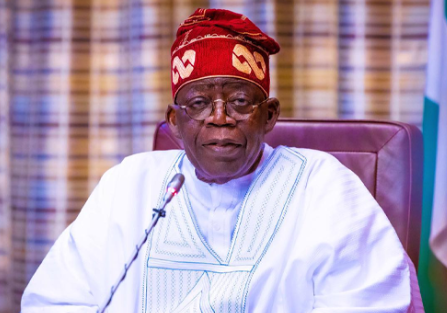
President Bola Ahmed Tinubu marked the second anniversary of his administration on Wednesday with an optimistic national address highlighting the government’s achievements and reaffirming commitment to economic reform, national security, and human capital development.

Speaking from the Aso Rock Presidential Villa, President Tinubu declared that his administration had made “undeniable progress” despite the sacrifices demanded of citizens, especially following the removal of fuel subsidies and the unification of foreign exchange rates.

“We are halfway through the journey that began 24 months ago. Today, I proudly affirm that our economic reforms are working,” he said, citing improvements such as easing inflation, increased foreign reserves, and higher state revenues.

According to the President, the federal government recorded over ₦6 trillion in revenue in Q1 2025 and successfully reduced the fiscal deficit from 5.4% of GDP in 2023 to 3.0% in 2024. Additionally, the country’s net external reserves rose sharply to over $23 billion by the end of 2024, a fivefold increase from the previous year.

In the energy sector, Tinubu noted a 400% increase in oil rig activity since 2021 and over $8 billion in new investments. “We have stabilised our economy and are now better positioned for growth and global shocks,” he added.

The President also highlighted reforms in taxation, infrastructure development, and the health sector. He announced the expansion of primary healthcare centres, the establishment of new cancer treatment centres, and a tax policy overhaul aimed at supporting low-income households and small businesses.

“Together, we are creating a system where prosperity is shared, and no one is left behind,” he said.

Tinubu celebrates economic resilience, sets sights on inclusive growth

By Muhammad Sulaiman

President Bola Ahmed Tinubu has reiterated his administration’s commitment to inclusive economic growth, declaring that the country’s economic resilience is beginning to yield tangible benefits for citizens across sectors.

Addressing the nation on the second anniversary of his government, President Tinubu described 2025 as a year of fiscal turnaround and recovery, driven by bold reforms under the Renewed Hope Agenda.

“Despite the bump in the cost of living, we have made undeniable progress,” he stated, noting improvements in inflation, food prices, and investor confidence.

A key highlight of the President’s remarks was the government’s aggressive tax reform agenda, which pushed the tax-to-GDP ratio from 10% to over 13.5% within a year. Tinubu explained that this success was made possible by simplifying tax policies and offering relief for low-income households and small businesses.

“We are eliminating the burden of multiple taxation and introducing a fairer tax system. Essential services like food, healthcare, and education will attract 0% VAT,” he announced.

President Tinubu also underscored the importance of sustainable national finances, stating that wasteful and opaque tax waivers had been abolished in favour of targeted incentives supporting high-impact sectors such as manufacturing, agriculture, and technology.

The administration is establishing an independent Tax Ombudsman to ensure accountability. The President says this move will protect small businesses and vulnerable taxpayers.

“We are creating an economy where investment is welcome, businesses can thrive, and every Nigerian can benefit from shared prosperity,” he added.

The President noted that subnational governments had also reaped the benefits of the reforms, with an increase of over ₦6 trillion in state revenues in 2024. This has enabled them to meet debt obligations and invest more in critical infrastructure.

“Our reforms are not just fiscal adjustments. They are about restoring confidence, strengthening institutions, and building a foundation for future generations,” Tinubu concluded.

TikTok influencer Murja Kunya jailed for naira abuse, becomes EFCC, CBN ambassador

By Abdullahi Mukhtar Algasgaini

Popular TikToker Murja Ibrahim Kunya has been sentenced to six months in prison for abusing the Naira, following her conviction by the Federal High Court in Kano.

Justice Simone Amobeda handed down the verdict after Kunya pleaded guilty to spraying and stepping on Naira notes during a hotel celebration in December 2023, violating the Central Bank of Nigeria (CBN) Act.

Initially arrested in January 2025, Kunya fled after being granted bail but was later re-arrested in March. The court gave her an option to pay a ₦50,000 fine instead of imprisonment.

In a unique twist, Justice Amobeda also appointed Kunya as an EFCC and CBN ambassador, tasking her with using her social media influence to campaign against Naira abuse.

She must now educate her followers on the legal consequences of currency misuse.

The Economic and Financial Crimes Commission (EFCC) hailed the judgment as a deterrent against Naira abuse while promoting public awareness.

Technical college students to earn N45,000 monthly — FG

By Anwar Usman

The Federal Government has announced a monthly stipend of N45,000 for students in technical colleges across states in Nigeria.

This move was to be part of a plan to bring new life to Technical and Vocational Education and Training.

Idris Bugaje, the Executive Secretary of the National Board for Technical Education, revealed this in an interview in Abuja while speaking on the second year of President Bola Tinubu’s administration on Wednesday.

He said the plan was part of a bigger effort to improve the TVET system and make it more appealing than regular university education.

Bugaje explained that the main ai was to grow the TVET sector fast and get more students to enrol in technical colleges.

He added that the government will not only pay the monthly stipend but will also cater for other costs.

Bugaje said, “The government will pay school fees, give money to industry-based supervisors (called master class instructors), and cover the cost of skill certification.

“With this, young people will find it more attractive to come to a technical college, obtain the relevant skills and qualifications, get jobs locally and even beyond the borders of Nigeria.

“This way, the whole sector is being repositioned. We are at the moment facing what you may call either a resurrection or a rebirth of TVET.”

He noted that TVET used to be well-supported in Nigeria in the past.He further revealed that Tinubu’s government has set aside N120 billion to support students under this new TVET plan.

“This money will be given through the Nigerian Education Loan Fund (NELFUND).He further clarified that “The N45,000 is not a loan, but a grant. Students who enjoy this are not going to pay back. We want to encourage more people to enrol in technical education”.

To keep the programme running, Bugaje said the Minister of Education was working on a bill.The bill aims to create a National Skills Fund under the new Nigerian Skills Qualification Framework.

Buhari urges Tinubu to lead with wisdom, care

By Abdullahi Mukhtar Algasgaini

Former President Muhammadu Buhari has congratulated President Bola Ahmed Tinubu on his two years in office, calling for continued support for the ruling All Progressives Congress (APC) government.

In a statement, Buhari emphasized that leadership is a continuous journey and urged Nigerians to remain patient as reforms take time to yield results.

Buhari warned against allowing necessary policy changes to be derailed by political disputes, stressing the importance of unity in achieving progress.

He also expressed support for the administration’s efforts to tackle poverty and inflation but noted that the responsibility should not rest on the government alone.

“The private sector and all citizens must contribute in any way they can,” he said.

Encouraging optimism, Buhari advised Nigerians to manage their expectations while remaining confident in the country’s future.

He concluded by wishing Tinubu success, saying, “May you keep leading with wisdom and care.”

Kano govt, NGO celebrate menstrual hygiene day with support for schoolgirls

By Uzair Adam

The Kano State Government, in collaboration with Womanhood Africa Initiative, has commemorated this year’s World Menstrual Hygiene Day with a major outreach campaign targeting female students in secondary schools.

Speaking during the event, Abdulkarim Ibrahim Abubakar, Director of Planning, Research and Statistics at the Government House, said the initiative was designed to ease the financial burden many students face due to the rising cost of sanitary products.

“Most of our girls are struggling with managing their menstrual periods due to the current economic situation. This effort will reduce that burden and allow them to focus more on their education,” he said.

Abubakar stated that the program would be expanded to cover more schools in the state. He also revealed that plans were underway to empower students with the skills to produce reusable sanitary pads.

“This will not only help them manage their hygiene needs but could also become a source of income for them after school,” he explained.

Representing Womanhood Africa Initiative, Mr. Edidiong Etefia said the campaign aims to raise awareness about the importance of menstrual hygiene and equip students with practical tools.

“We believe the future is female. If young girls don’t take menstrual hygiene seriously, it could lead to long-term health issues that may affect future generations,” he said.

As part of the outreach, reusable sanitary pads certified by NAFDAC were distributed to students.

The organization also donated a fully stocked first aid box to the school clinic to help manage health emergencies.

The Principal of First Ladies College, Atine Mohammad, welcomed the initiative and described it as a critical intervention.

“Every day, we try to teach the children about hygiene, but it has a greater impact when people from outside come in to educate them. It reinforces the importance of the message,” she said.

Mohammad also appealed to the state government to sustain the effort.

“Most of our students can’t afford sanitary pads, and we often step in to provide them. This support reduces the burden on us significantly,” she noted.

Expressing her appreciation on behalf of the students, Faiza Yusuf, an SS3 student and prefect at the college, described the program as life-changing.

“We are grateful for this heartfelt support. As girls, menstrual hygiene is central to our well-being. Without it, we feel helpless. We hope to see more of such programs in the future,” she said.

The event marks the beginning of a broader campaign to promote menstrual hygiene and empower young girls in Kano State.

Bagwai/Shanono constituents demand probe into N1.3 billion constituency projects under Hon. Yusuf Badau

By Abdullahi Mukhtar Algasgaini

A civic coalition under the umbrella of “Bagwai/Shanono Together for Progress” has issued a petition against their member, Federal House of Representatives. The petition called for an investigation into Hon. Yusuf Ahmad Badau, the member representing Bagwai/Shanono Federal Constituency, over alleged misappropriation of public funds and fraudulent execution of constituency projects.

The petition, signed by concerned constituents and stakeholders, accuses the lawmaker of diverting funds, inflating budgets and failing to execute or properly complete multiple projects between 2019 and 2025. The group alleges that millions of naira allocated for road construction, youth empowerment, flood relief and other initiatives were either mismanaged or left abandoned.

Some of their key allegations, as contained in the petition Include:

2019: N20 million allocated for road construction from Kiyawa to Romo allegedly not executed.

2020: N53 million meant for flood victims, teachers’ training, and youth empowerment reportedly unaccounted for.

2021: N290 million allocated for motorcycles, youth empowerment and provision of fridges/computers for traders allegedly mismanaged.

2022 to 2025: Over N700 million budgeted for tricycles, fishing materials, football programs, sewing machines, and road construction, with constituents claiming little or no implementation.

The petitioners are urging the House Committee on Ethics and Public Petitions, as well as anti-graft agencies (EFCC and ICPC), to launch a full-scale probe into the allegations. They also demand the recovery of diverted funds and prosecution if misconduct is established.

“We believe these projects were either abandoned, poorly executed or the funds were diverted,” the petition read. “We call for justice to ensure public resources are accounted for.”

No official response has been issued by Hon. Badau at the time of filing this report.

Police crack down on officers over extortion incident along Benin bypass

By Muhammad Abubakar

The Nigeria Police Force has taken swift action against six officers caught in a viral video engaging in extortion along the Benin bypass.

The officers, including a Chief Superintendent of Police who supervised the team, were brought before the Inspector-General of Police, Kayode Adeolu Egbetokun, at the Force Headquarters. The IGP described their conduct as “shameful, distasteful, and utterly unacceptable ” and ordered immediate disciplinary action.

According to a police statement, the officers have been queried, and orderly room trials for the Inspectors involved are underway.

The Force said this move underscores its commitment to professionalism, integrity, and accountability. The public was assured that such misconduct would not be tolerated and that appropriate sanctions would follow.

April Fools? Not for Nigerians—A stark glimpse into security and anti-graft realities

By Haroon Aremu Abiodun

April is traditionally a month of pranks and laughter. But in Nigeria, the joke was on no one except, perhaps, on a nation whose security architecture is under siege from terrorists, bandits, and kidnappers.

Far from fearing our security operatives, criminal elements across the country displayed shocking audacity, reminding us that the battle for Nigeria’s soul remains bloody and unresolved.

In a horrific display of lawlessness, notorious bandit leader Bello Turji celebrated Eid in Sokoto by executing kidnapped victims, recording and broadcasting the gruesome act without fear of consequences. Across parts of Katsina, Kaduna, and Zamfara, bandits not only continued their reign of terror but have begun levying taxes and operating parallel governments in areas still supposedly under state control.

Compounding public anxiety, National Security Adviser Nuhu Ribadu made headlines when he advised families of kidnapped victims to “stop paying ransom.” While theoretically sound, the reality is far more brutal. Without swift and credible government intervention, desperate families have no option but to finance their tragedies. Until state forces can decisively rescue captives, this vicious cycle will continue.

In just one month, attacks escalated across Plateau, Kwara, and Benue States, leaving communities in mourning. Boko Haram and ISWAP insurgents resurfaced with deadly ambushes, signalling their continued relevance in Nigeria’s security equation.

April’s bloodshed has revealed operational lapses and a deep strategic and moral crisis. The Office of the National Security Adviser (ONSA) must urgently intensify efforts, especially by working discreetly with rescued victims to extract intelligence, boost surveillance systems, and dismantle criminal networks worldwide.

While commendable successes by security operatives, such as rescuing hostages and recovering illegal arms, were recorded, they were dwarfed by the scale of atrocities witnessed within just 30 days.

The Department of State Services (DSS), often criticised and even facing calls for disbandment, must seize this moment to redeem itself. Encouragingly, recent commendations from the Plateau State Government and Governor Uba Sani of Kaduna for the DSS’s contributions to curbing insecurity suggest a glimmer of institutional reliability. Their successful arrests of gunrunners and dismantling of kidnapping syndicates are steps in the right direction.

Notably, the DSS also intercepted a British Army Major in Delta State attempting to smuggle 50 AK-47 rifles and ammunition—a major bust, and a signal that the service can perform under pressure. Their ability to withstand calls for the suspect’s release further strengthens public confidence.

Going forward, DSS and ONSA must strengthen collaboration through real-time joint operations, intelligence sharing, and visible outcomes. The Nigerian Intelligence Agency (NIA) also must integrate its overseas capabilities with ONSA’s domestic strategies. Today’s criminals are sophisticated—our response must be smarter.

Beyond the battlefield, Nigeria’s fight against corruption also demands attention. The Economic and Financial Crimes Commission (EFCC) must intensify efforts with ongoing arrests of internet fraudsters and by pursuing justice in high-profile cases involving figures like Betta Edu and Sadiya Umar Farouq.

Regarding Aisha Achimugu’s case, the EFCC must adhere to due process and uphold its promise to act with diligence and integrity. Recent arrests, including that of Bauchi State Accountant General Sirajo Muhammad Jaja, show the commission is active, but visibility and transparency are critical.

Despite receiving accolades, such as the Government Spokesperson Award and the Courage in Justice and Transparency Award from the Nigerian Human Rights Community, EFCC must do more to recover funds stolen through schemes like CBEX. Collaborating with Interpol to dismantle international fraud networks and prevent future scams using forged EFCC certificates will reinforce the commission’s credibility locally and abroad.

Transparency is the only antidote to growing public cynicism about the Commission’s integrity.

The Independent Corrupt Practices and Other Related Offences Commission (ICPC), though laudably organising programs like its stakeholders’ meeting on accountability in local government, must now transition from talk to action. Corruption within Ministries, Departments, and Agencies (MDAs) remains rampant. A recent ICPC report showed that over 60% of corruption cases involved diverting healthcare funds—a scandal demanding decisive intervention.

April has ended, but the wounds it inflicted are still fresh. If we’ve learned anything, it is that the fear of the Nigerian state must be restored—not with hollow rhetoric, but through coordinated, courageous, and relentless action.

The enemies of Nigeria no longer fear our uniforms, our institutions, or the name “government.”

The time to act was yesterday. Today is already a dangerous gamble. Tomorrow may be too late.

Haroon Aremu Abiodun is a PRNigeria Fellow and author. He can be reached via exponentumera@gmail.com.
World Bank urges FG to increase taxes on alcohol, tobacco, sugary drinks as loan condition

By Abdullahi Mukhtar Algasgaini

The World Bank has advised the Federal Government of Nigeria to impose higher excise duties on harmful goods, including alcohol, tobacco, and sugar-sweetened beverages, as a key condition before approving a $750 million loan.

The recommendation is part of broader measures aimed at boosting non-oil revenue and reducing Nigeria’s reliance on petroleum earnings.

The World Bank believes that increasing taxes on these products will help improve public health by discouraging excessive consumption while generating additional government income for development projects.

According to the World Bank, the proposed tax hike will:

1 Enhance public health by reducing the consumption of harmful products.

2 Increase government revenue for critical infrastructure and social programs.

3 Support economic diversification by strengthening non-oil sectors.

This suggestion comes at a time when Nigeria’s economy faces significant pressure, including rising debt, inflation, and declining oil revenues.

The move aligns with global efforts to curb health risks associated with tobacco, alcohol, and sugary drinks while ensuring sustainable economic growth.

The Federal Government is expected to issue an executive order to implement the new tax policy as part of the loan agreement.

If approved, the measure could mark a major shift in Nigeria’s fiscal strategy, balancing public health concerns with economic recovery efforts.