News

Only 10% of Kano pupils can read well, UNICEF warns

By Sabiu Abdullahi

The United Nations Children’s Fund (UNICEF) has expressed concern over the low literacy levels in Kano State, revealing that only 9.6% of primary school pupils in the state have adequate reading skills, while 11.2% demonstrate basic numeracy abilities.

This was disclosed by Rahama Mohammed, the Chief of UNICEF’s Kano Field Office, during a news conference in Kano to mark the 2025 International Day for Education.

Citing the 2021 Multiple Indicator Cluster Survey (MICS), Mr. Mohammed highlighted that nearly one million children—about 32% of Kano’s primary school-age population—are not enrolled in formal education.

“This is not just a statistic; it represents the dreams and potential futures of nearly one million children being cut short. Urgent action is required to address this crisis,” he said.

Efforts to Tackle the CrisisTo address the alarming situation, UNICEF has launched several initiatives, including integrating Quranic schools into the formal education system. Under this program, over 290 Quranic teachers and proprietors in Kano and Jigawa states have been trained to combine religious and basic education for children.

Mr. Mohammed added that UNICEF has improved infrastructure in 33 schools across Kano and Jigawa by constructing and rehabilitating Water, Sanitation, and Hygiene (WASH) facilities, benefiting 39,432 children.

“UNICEF has also supported the training of 1,109 teachers in critical areas such as Reading and Numeracy Activities (RANA), Early Childhood Development, and non-formal Quranic school education through the ‘HASKE’ initiative,” he said.

In addition, over 630,249 teaching and learning materials have been distributed to schools, focusing on enhancing early childhood and primary education.

Collaborations and Future PlansUNICEF acknowledged its partners, including the European Union and the Foreign, Commonwealth and Development Office (FCDO), for their contributions to the Education and Youth Empowerment (EYE) Programme and the CRIBS project in Kano and Jigawa.

“We remain committed to collaborating with the governments of Kano, Katsina, and Jigawa to achieve better basic education outcomes. Education is the cornerstone of development, and we must not let these children down,” Mr. Mohammed stated.

The conference served as a call to action for stakeholders to work collectively in addressing the education crisis threatening the future of Kano’s children.

DEVASTATING: Petrol tanker explosion hits Enugu, claims multiple lives

By Sabiu Abdullahi

A petrol tanker accident occurred early Saturday morning on the Ugwu Onyama Federal Highway in Enugu State, resulting in the loss of numerous lives and injuring several others.

The incident also destroyed multiple vehicles and comes just a week after a similar tragedy in Niger State claimed at least 98 lives.

Eyewitnesses described the harrowing scenes at the site, with a tanker driver, Eziechina, recounting the catastrophic events.

“A tanker carrying premium motor spirit (PMS), otherwise known as petrol, fell at the hilly road and spilled the product down the road.

“Unfortunately, it caught fire, and all the vehicles plying the road at the time caught fire and burned people beyond recognition.”

According to Eziechina, over 10 people, including children, were burnt beyond recognition, with many others transported to nearby hospitals for treatment.

Rescue operations are ongoing, and authorities are yet to release an official death toll from the Enugu explosion.

FCT hospitals reopen as doctors end warning strike

By Uzair Adam

The Association of Resident Doctors in the Federal Capital Territory, Abuja, has called off its warning strike following the intervention of the FCT Minister, Nyesom Wike.

In a statement issued on Friday, the President of the Association, Dr. George Ebong, confirmed that the FCTA, under Wike’s leadership, has addressed their key demands.

The doctors had shut down all FCTA-owned hospitals on Wednesday to protest unpaid salary arrears and other unresolved issues.

However, Dr. Ebong announced that members of the association have started receiving alerts for their six-month salary arrears, prompting the decision to end the strike.

According to the statement, Minister Wike also approved and ordered immediate payment of the accoutrement allowance owed to health workers, reduced the medical residency bonding to two years, and sanctioned the immediate employment of additional doctors and allied health workers to address the acute shortage of manpower.

Furthermore, he approved and facilitated the payment of locum doctors and other health workers who were owed outstanding wages.

The association has directed its members to resume work on Saturday, January 25, 2025, averting an imminent indefinite shutdown of hospitals in the capital.

Dr. Ebong expressed appreciation for the minister’s swift response, which resolved the immediate concerns but urged him to address other outstanding demands to prevent future industrial actions.

“These demands include the payment of hazard allowances, upgrading and rehabilitation of healthcare facilities, and converting post-part 2 doctors to consultant cadre,” Dr. Ebong stated.

He further praised Wike’s commitment to transforming the health sector in line with the Renewed Hope Agenda and extended an invitation for the minister to visit district hospitals in the near future.

The association also reaffirmed its support for Wike’s efforts to enhance healthcare delivery in the FCT.

Hamas to release 4 Israeli hostages in truce swap agreement

By Sabiu Abdullahi

Hamas is set to release four Israeli women soldiers who have been held hostage since the October 7, 2023 attack, under a truce deal aimed at easing tensions in the Gaza conflict.

The exchange is part of an agreement expected to see a second group of Palestinian prisoners freed as well.

Israel confirmed on Friday that it had received the names of the hostages due to return, but neither side has specified how many Palestinians will be released in exchange.

The four Israeli soldiers who will be freed are Karina Ariev, Daniella Gilboa, Naama Levy, and Liri Albag.

Albag, who turned 19 while in captivity, and the other women, now 20 years old, were captured during the deadly Hamas assault on Israel in October 2023.

As part of the ongoing ceasefire agreement, Hamas spokesperson Abu Obeida stated on Telegram that “as part of the prisoners’ exchange deal, the Qassam brigades decided to release tomorrow four women soldiers.”

Israeli Prime Minister Benjamin Netanyahu’s office confirmed the list of names had been received through mediators.

Palestinian sources indicated that the releases could begin by noon, though no specific timing has been confirmed by either Hamas or Israel.

This release is part of a fragile ceasefire deal brokered by Qatar and the United States, which began on January 19, 2025.

The agreement is meant to pave the way for a permanent resolution to the conflict.

The deal’s first phase, which commenced last Sunday, includes the return of 33 hostages in exchange for approximately 1,900 Palestinian prisoners.

Thus far, Israel has seen the return of three hostages—Emily Damari, Romi Gonen, and Doron Steinbrecher—in exchange for the release of 90 Palestinians, predominantly women and minors.

The upcoming phases of the agreement are expected to focus on negotiations for a lasting end to the war and the reconstruction of Gaza, while also facilitating the return of the bodies of deceased hostages.

“Avoid congested places”: Kano police alert residents of possible terrorist attacks

By Anwar Usman

The Kano State Police Command has alerted members of the public on suspected terrorists planning to launch attacks on public gatherings in strategic locations within the state.

This is contained in a statement issued by the command’s Public Relations Officer, SP Abdullahi Haruna Kiyawa, on Friday.

“The Kano State Police Command, in liaison with other security agencies, has received intelligence reports of suspected terrorists planning to launch attacks on public gatherings in strategic locations within Kano State.

“In response, we hereby urge residents to exercise caution and avoid crowded places and environments until further notice as a preventive measure to enable security operatives to identify and dislodge possible attackers”.

He further stated that, as part of an effort to ensure a peaceful Kano State, necessary security arrangements have been put in place.

“A team of experts from the command’s Explosive Ordinance Disposal, Chemical, Biological, Radiological and Nuclear units have been deployed to strategic locations and are on high alert.

“The unit can be reached through: 08169884988 or 07067157218 for report of suspicious persons or item(s),” Kiyawa said.

He called on members of the public to report any suspicious activity to the nearest police station or contact the state command through the designated mobile phone numbers.

He said the command remains committed to safeguarding lives and properties as well as maintaining law and order in Kano State.

“We appreciate the support and cooperation of the good people of Kano State and urge everyone to remain vigilant. Your vigilance and cooperation are crucial in ensuring public safety,” the statement revealed.

Tinubu approves Ganduje, Gawuna, 43 others for federal board positions

By Uzair Adam

President Bola Tinubu has appointed new board Chairpersons and Chief Executive Officers for 42 federal organizations, alongside a secretary for the Civil Defence, Immigration, and Prisons Services Board.

The announcement was made on Thursday through a statement released by the president’s Special Adviser on Information and Strategy, Bayo Onanuga, confirming that the appointments take immediate effect.

According to the statement, Tinubu also named a new Managing Director for the Nigerian Railway Corporation and a Director-General for the National Board for Technology Incubation.

He directed all appointed board chairpersons to refrain from interfering with management operations, emphasizing that their roles are non-executive.

Below is the full list of the appointees and their respective organizations:

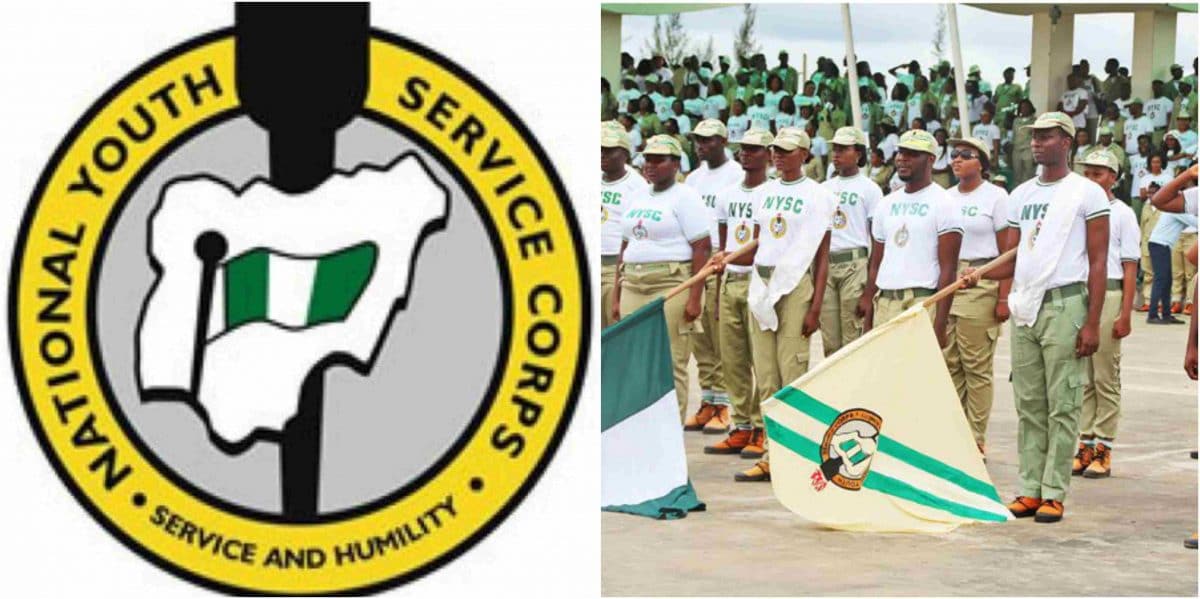
  1. National Youth Service Corps, Ministry of Youth Development
    Hillard Eta, Chairman (Cross River State)
  2. Nigerian Institute of International Affairs
    Prof. Bolaji Akinyemi, Chairman (Lagos State)
  3. Federal Airport Authority of Nigeria, Ministry of Aviation
    Abdullahi Ganduje, Chairman (Kano State)
  4. National Sugar Development Council
    Surajudeen Ajibola, Chairman (Osun State)
  5. Nigeria Bulk Electricity Trading Company
    Sulaiman Argungu, Chairman (Kebbi State)
  6. National Agency for Great Green Wall
    Senator Magnus Abe, Chairman (Rivers State)
  7. National Teachers Institute
    Festus Fuanter, Chairman (Plateau State)
  8. National Board for Technology Incubation (NBTI)
    Raji Kolawole, Director-General (Oyo State)
  9. Nigerian Institute of Educational Planning and Administration
    Victor Giadom, Chairman (Rivers State)
  10. Teachers Registration Council of Nigeria
    Mustapha Salihu, Chairman (Adamawa State)
  11. Industrial Training Fund
    Hamma Kumo, Chairman (Gombe State)
  12. Nigerian Institute of Science Laboratory Technology
    Donatus Nwankpa, Chairman (Abia State)
  13. Sheda Science and Technology Complex
    Senator Abubakar Maikafi, Chairman (Bauchi State)
  14. Federal Mortgage Bank of Nigeria
    Nasiru Gawuna, Chairman (Kano State)
  15. National Office for Technology Acquisition and Promotion
    Senator Tokunbo Afikuyomi, Chairman (Lagos)
  16. Nigerian Postal Service
    D.J. Kekemeke, Chairman (Ondo)
  17. National Inland Waterways Authority
    Musa Adar, Chairman (Sokoto)
  18. National Steel Council
    Prof. Abdulkarim Abubakar, Chairman (Nasarawa)
  19. National Environmental Standards and Regulations Enforcement Agency
    Garba Muhammad, Chairman (Kaduna)
  20. National Bio-Safety Management Agency
    Mu’azu Rijau, Chairman (Niger)
  21. Nigerian Building and Road Research Institute
    Durosimi Meseko, Chairman (Kogi)
  22. Federal Teaching Hospital, Gombe
    Zainab Ibrahim, Chairman (Taraba)
  23. Nigerian Railway Corporation
    Dr. Kayode Opeifa, Managing Director (Lagos)
  24. Federal Teaching Hospital, Ido-Ekiti
    Durotolu Bankole, Chairman (Ogun)
  25. Federal Medical Centre, Abeokuta
    Mr. Dayo Israel, Chairman (Lagos)
  26. Federal Medical Centre, Asaba
    Mary Alile Idele, Chairman (Edo)
  27. Federal Medical Centre, Lokoja
    Chidi Duru, Chairman (Anambra)
  28. Federal Medical Centre, Owerri
    Emma Eneukwu, Chairman (Enugu)
  29. Civil Defence, Immigration and Prisons Services Board
    Maj-Gen. Jubril Abdulmalik (retd.), Secretary (Kano)
  30. Federal Medical Centre, Umuahia
    Mr. Uguru Ofoke, Chairman (Ebonyi)
  31. Federal Medical Centre, Yenagoa
    Felix Morka, Chairman (Delta)
  32. Federal Medical Centre, Yola
    Bashir Gumel, Chairman (Jigawa)
  33. David Umahi Federal University Teaching Hospital, Ubuhu, Ebonyi State
    Dr. Ijeoma Arodiogbu, Chairman (Imo)
  34. National Oil Spill Detection and Response Agency
    Edward Omo-Erewa, Chairman (Edo)
  35. Nigerian Maritime Administration and Safety Agency (NIMASA)
    Yusuf Abubakar, Chairman (Kaduna)
  36. Nnamdi Azikiwe University Teaching Hospital, Nnewi, Anambra State
    Ali Dalori, Chairman (Borno)
  37. Ahmadu Bello University Teaching Hospital, Shika, Zaria, Kaduna State
    Lawal Liman, Chairman
  38. Federal Medical Centre Katsina
    Dr. Abubakar Maiha, Chairman
  39. Raw Materials Research and Development Council (RMRDC)
    Isa Achida, Chairman (Sokoto)
  40. Federal Medical Centre Birnin Kudu
    Dr. Mohammed Hassan, Chairman (Zamfara)
  41. National Building and Road Research Institute
    Yahuza Inuwa, Chairman (Nasarawa)
  42. Sokoto-Rima River Basin Development Authority
    Abubakar Wurno, Chairman (Sokoto)
  43. Aminu Kano Teaching Hospital
    Augustine Umahi, Chairman (Ebonyi)
  44. Federal Scholarship Board
    Babatunde Fakoyede, Chairman (Ekiti)
  45. Nigerian Social Insurance Trust Fund
    Shola Olofin, Chairman (Ekiti)

Suspended Adamawa REC Hudu Ari seeks indefinite adjournment in court

By Uzair Adam

The suspended Resident Electoral Commissioner (REC) of the Independent National Electoral Commission (INEC) in Adamawa State, Barrister Hudu Yunusa Ari, has appealed to the Adamawa State High Court to adjourn the case against him indefinitely.

During a hearing on Thursday, Ari, through his counsel, M. Tijanni, submitted an application requesting the court to stay proceedings in the case pending a decision on his appeal filed at the Court of Appeal, Yola Division.

The Daily Reality gathered that the application, dated January 21, 2025, urged the court to put the trial on hold.

However, the state’s counsel, Chief L. D. Nzadon, strongly opposed the plea, describing it as a challenge to the rule of law and the administration of criminal justice.

He argued that the law does not permit such applications in criminal matters and called on the court to dismiss Ari’s request.

Following arguments from both parties, Justice Benjamin Manji Lawan adjourned the case to January 30, 2025, for a ruling on the application.

Ari’s legal troubles stem from his controversial actions during the 2023 governorship election in Adamawa State. While serving as INEC REC, he declared a winner before the collation process was concluded, bypassing the Returning Officer’s authority.

The incident sparked widespread criticism and led to his suspension by the Federal Government under former President Muhammadu Buhari.

He now faces charges for the alleged electoral offence.

Student leaders reject Tinubu’s rice palliatives, demand focus on educational reform

By Abdullahi Mukhtar Algasgaini

Student union leaders from Obafemi Awolowo University (OAU) in Ile-Ife and Ahmadu Bello University (ABU) in Zaria strongly disapprove of President Bola Tinubu’s distribution of rice palliatives to student leaders across Nigerian tertiary institutions. They call for more substantive reforms in the education sector.

In separate statements, the Student Union Government (SUG) Presidents of both universities criticised the gesture, highlighting that the rice distribution fails to address the deeper challenges Nigerian students face, particularly tuition costs and poor university infrastructure.

Damilola Isaac, the SUG President at OAU, emphasised that he had not received any rice palliatives and made it clear that he would not accept them, even if offered. Isaac stressed that his administration focuses on advocating for systemic change in the education sector rather than accepting temporary handouts that do not address the root causes of student hardship. He called on the government to prioritise measures that would reduce tuition burdens, improve university infrastructure, and generally enhance the quality of education across the country.

“While the government may have good intentions, it is crucial that efforts are directed toward addressing the real issues in education,” Isaac said. “We are committed to fighting for the interests of students and ensuring accountability in the education sector.”

Similarly, Ibrahim Nazeer, the President of the Students’ Representative Council at ABU, voiced his rejection of the rice palliatives. Nazeer, through his media advisor Abdulrazak Shuaibu, said he would not accept the rice unless it were ensured that all students at ABU received their fair share. He urged the government to focus on creating an environment where students can afford necessities like food without relying on sporadic palliative distributions.

Instead of periodic rice handouts, Nazeer suggested that the government focus on long-term solutions that ensure students have access to basic necessities year-round.

While some student leaders, including Fahad Abdullahi, the SUG President of Abubakar Tafawa Balewa University (ATBU), confirmed receiving the palliatives, several other institutions, including Usmanu Danfodiyo University, Sokoto (UDUS), and Moshood Abiola Polytechnic (MAPOLY), reported being unaware of the distribution.

The rice palliative, which allocated two 25kg bags of rice to each SUG President, has been criticized for being limited to student leaders rather than the entire student body. Many students expressed concerns over the perceived unfairness of the selective distribution, noting that all students, not just those in leadership positions, are affected by the country’s economic challenges.

Anas Abdulrahman, a student from UDUS, questioned why only student leaders received the palliative. He stressed that all students should benefit from government initiatives, as they are all citizens of Nigeria. “We all voted for this government, and we should all be considered for such palliatives,” he remarked.

The rice distribution is part of the government’s repeated efforts to alleviate the economic hardship exacerbated by the removal of the petrol subsidy and the floating of the naira, leading to high inflation and food price increases. Despite these measures, inflation has reached 34.8%, with food inflation soaring to 38.94%, according to the National Bureau of Statistics (NBS).

Many students and citizens are questioning the effectiveness of distributing rice as a response to the economic crisis, with some suggesting that more meaningful policy changes are needed to address the underlying economic issues facing Nigerians.

As Nigeria grapples with economic instability, student leaders are calling for a shift in focus toward lasting educational reforms, improved infrastructure, and sustainable solutions to the challenges faced by students.

Truecaller launches real-time caller ID for iPhone users

By Sabiu Abdullahi

Truecaller, the caller identification and spam-blocking application, has unveiled a new real-time caller ID feature specifically for iPhone users.

In a statement released on Wednesday, the company explained that this feature leverages Apple’s ‘Live Caller ID Lookup’ framework, which was introduced with iOS 18, to securely deliver real-time caller identification services.

The update, according to Truecaller, is a response to persistent user demands for the iOS version of the app to match the functionality of its Android counterpart, while maintaining a strong commitment to user privacy.

Rishit Jhunjhunwala, the CEO of Truecaller, emphasized the significance of the update, stating, “We are excited to bring the full power of Truecaller to iPhone. We see tremendous potential and growth in our iPhone user base, and parity with Truecaller’s Android experience has been top of their wishlist. This update does that and more while preserving privacy for all calling activity.”

Apple also highlighted the innovation in its release notes, stating, “New APIs allow developers like Truecaller to fetch information from their servers and provide live caller ID for incoming calls, in a privacy-preserving way.”

The feature, which became available on January 22, is currently exclusive to premium subscribers. Users can activate it by navigating to settings, selecting the phone option, and enabling call blocking and identification.

Free users, however, can still access specific features such as ad-supported number searches and verified business caller IDs.Truecaller added that the update includes a redesigned interface, with caller names prominently displayed above phone numbers.

The company also disclosed plans to incorporate caller images in future updates to further enhance user experience.

This development marks Truecaller’s first major release since its co-founders, Alan Mamedi and Nami Zarringhalam, stepped down from daily operations in November 2024.

BUK alumni celebrate lecturer for achieving PhD milestone

By Uzair Adam

The 2022 graduates of the Mass Communication Department, Bayero University Kano (BUK), have celebrated their former level coordinator, Dr. Ummi Muhammad Hassan, in recognition of her recent PhD achievement.

The event, held on Tuesday at BUK’s new site, was attended by family members, alumni, and lecturers from the Faculty of Communication and related departments.

It featured a cake-cutting ceremony, an award presentation to Dr. Ummi, and speeches from invited guests.

Dr. Ummi’s PhD research focuses on the Challenges and Perceptions of Muslim Hausa Female Rap Artists in Kano and Kaduna States.

Speaking at the event, the students said the celebration was a way to honor Dr. Ummi as their “academic mother” and acknowledge her dedication to their success.

“We wanted to express our gratitude to Dr. Ummi for all she did for us during our time at BUK,” said Umar Isa Dandago, one of the event organizers.

He added, “She treated us as family, and this celebration is our way of giving back.”

In her response, Dr. Ummi expressed heartfelt appreciation. “When one of my students, Uzair Adam, informed me about this, I was speechless.

“I consider my students as my second family, and seeing them organize this for me melts my heart,” she said.

The Head of the Mass Communication Department, Dr. Gambo Nababa, lauded the students for their thoughtfulness.

He also encouraged Dr. Ummi to continue her academic journey and expressed optimism about her attaining the rank of professor soon.

Dr. Ummi’s husband, Dr. Musa Labaran, who also serves as the department’s examination officer, shared his pride and gratitude.

He noted that the gesture reflected Dr. Ummi’s devotion to her students.

Other notable attendees included the Head of the Information and Media Studies Department, Dr. Nura Ibrahim, as well as Dr. Hadiza J. Ibrahim, Dr. Ibrahim Siraj, and Dr. Muhammad Danja.

They described Dr. Ummi as a remarkable academic who has left an indelible mark on her students.

The celebration underscored the enduring bond between Dr. Ummi and her students and highlighted her contributions as an educator and mentor.