News

Al Jazeera Correspondent Killed In Israeli Strike As Journalist Death Toll Rises In Gaza

By Sabiu Abdullahi

An Al Jazeera correspondent, Mohammed Wishah, has lost his life after an Israeli strike reportedly hit his vehicle in Gaza City.

The incident happened amid ongoing clashes despite a ceasefire brokered by the United States to ease tensions. Wishah’s death has increased concern over the rising number of journalists killed in the conflict.

According to Al Jazeera, the strike directly hit his vehicle, killing him at the scene. Details surrounding the attack remain uncertain, and Israeli authorities have not issued an immediate response.

In a statement released on Wednesday, the network said: “Al Jazeera Media Network strongly condemns the heinous crime of targeting and killing Al Jazeera Mubasher correspondent, Mohammed Wishah, following a strike on the vehicle in which he was travelling west of the Gaza Strip.

“This constitutes a new and flagrant violation of all international laws and norms, and reflects a continued systematic policy of targeting journalists and silencing the voice of truth.”

The organisation described the incident as part of a broader pattern of attacks against media workers. It said the development signals an escalation that threatens press freedom and limits coverage from the region.

“Mohammed Wishah joins the ranks of Al Jazeera journalists killed by Israeli occupation forces in Gaza: Samer Abu Daqqa, Hamza Al Dahdouh, Ismail Al Ghoul, Ahmed Al Louh, Hossam Shabat, Ibrahim Thaher, Mohammed Qreiqea, Mohammed Nofal, Anas Al Sharif, and Mohammed Salama,” Al Jazeera said.

“As Al Jazeera mourns its correspondent Mohammed Wishah, who joined the Network in 2018, it affirms that his killing was not a random act but a deliberate and targeted crime intended to intimidate journalists and prevent them from carrying out their professional duties.”

The network said it holds Israeli forces responsible for the incident. It added that the action forms part of a consistent pattern aimed at silencing its reporters and restricting coverage on the ground.

Al Jazeera extended condolences to the family and colleagues of the deceased. It stated that such incidents will not stop its work. The organisation also urged the international community and rights groups to act. It called for accountability and an end to attacks on journalists.

The network said it will pursue legal steps to ensure justice for its staff and other journalists killed in Gaza.

Wishah’s death brings the number of Palestinian journalists killed since October 2023 to 262. The figure has raised fresh concerns among press freedom groups about the safety of reporters in conflict zones.

Elsewhere in Gaza, violence has continued. Health officials said at least 10 people died in an Israeli airstrike near a school that sheltered displaced residents in central Gaza.

“At least 10 people were killed and dozens injured, including six in critical condition, by Israeli shelling and clashes east of Maghazi refugee camp,” the Al-Aqsa Martyrs Hospital said in a statement.

Witnesses reported that drones fired missiles during the incident. The attack followed clashes between residents and members of a militia said to have Israeli backing.

“The residents tried to defend their homes, but the occupation forces targeted them directly,” Ahmed al-Maghazi told Reuters.

The latest developments have increased scrutiny on conditions faced by journalists and civilians in Gaza, where access to safe environments remains limited amid continued military operations.

Hundreds Killed And Injured As Israel Launches Massive Strikes Across Lebanon

By Sabiu Abdullahi

Hundreds of people have been killed and many others injured after Israeli forces carried out a fresh wave of airstrikes across Lebanon, Lebanese Health Minister Rakan Nassereddine has said.

The attacks followed an announcement by the Israel Defence Forces (IDF), which confirmed it had executed what it described as its most extensive coordinated military action in Lebanon since the launch of “Operation Roaring Lion.”

In a message shared on its official X account, the IDF stated, “In 10 minutes, the IDF completed the largest coordinated strike across Lebanon since the start of Operation Roaring Lion.”

According to the Israeli military, more than 100 locations linked to Hezbollah were targeted during the operation. These included “headquarters, military arrays, & command-and-control centers in Beirut, Beqaa and southern Lebanon.”

The IDF added that the strikes also focused on “intelligence command centers and central headquarters used planning terror attacks,” alongside “infrastructure of firepower and naval arrays, responsible for launching missiles.”

It further disclosed that the operation hit “assets of the Radwan Force, & the Aerial unit—Hezbollah’s elite units.”

The bombardment affected several parts of the country, including Beirut, the Beqaa Valley, and southern Lebanon. The scale of the assault marks a sharp escalation in the ongoing hostilities between Israeli forces and Hezbollah fighters.

Lebanese authorities confirmed a high number of casualties. However, they have not provided a precise breakdown of those killed or injured. Emergency teams are still working at multiple sites to rescue victims and assess the damage.

Israel indicated that its military campaign will continue. The IDF said it intends to maintain pressure on Hezbollah due to security concerns in northern Israel.

“We will continue striking the Hezbollah terror organization and will utilize every operational opportunity. We will not compromise the security of the residents of northern Israel. We will continue to strike with determination,” said IDF Chief of the General Staff, Lieutenant General Eyal Zamir, who supervised the operation.

The situation has heightened tensions across the region, with fears growing that the conflict could widen. Cross-border exchanges between Israel and Hezbollah have intensified in recent days.

Israel had earlier stated that it would sustain its strikes on Lebanon despite a two-week ceasefire agreement between Iran and the United States in the broader Middle East conflict.

Several countries have previously urged Israel to halt military actions in Lebanon. Israel, however, maintains that Hezbollah, an ally of Iran, remains a significant threat due to its presence in the country.

Amid the ongoing crisis, Lebanon’s Foreign Affairs Minister, Youssef Raggi, announced a diplomatic move against Iran. He revealed that Lebanon had withdrawn its approval for Iran’s designated ambassador, Mohammad Reza Shibani, and ordered him to leave the country.

In a statement, Raggi said, “I instructed today the Secretary-General of the Ministry of Foreign Affairs and Emigrants to summon the Iranian Chargé d’Affaires in Lebanon to inform him of the decision to withdraw the agrément for the designated Iranian Ambassador, Mohammad Reza Shibani, declare him persona non grata, and request that he leave Lebanese territory no later than 29 March 2026.”

Donald Trump, CNN Punch Each Other Over Iran ‘Victory’ Report

By Sabiu Abdullahi


United States President Donald Trump has criticised CNN over a report linked to Iran’s claim of victory after a ceasefire agreement, alleging that the network relied on a false source.

The president made the allegation on Wednesday through his Truth Social platform. His comments came shortly after he announced a two-week ceasefire arrangement between the United States and Iran.


Reacting to a statement attributed to Iranian authorities, Trump said, “The alleged statement put out by CNN World News is a fraud, as CNN well knows.”

He also claimed that the report originated from an unreliable platform. According to him, “The false statement was linked to a Fake News site (from Nigeria) and, of course, immediately picked up by CNN, and blared out as a ‘legitimate’ headline.”

Trump maintained that the version circulated by CNN did not reflect Iran’s official position. He said, “The Official Statement by Iran was just released, and posted on TRUTH, below.”

In another post, the president intensified his criticism of the network. He said, “No one can believe that Fake News CNN put out a knowingly false and dangerous statement pretending it came from the upper levels of the Iranian Government. It didn’t! It was totally made up and posted, as a headline, for purpose of, perhaps, inflaming a very delicate situation.”

He further alleged that the report came from “a new, trouble-making site from Nigeria,” and added that “CNN just got caught cheating — a very dangerous thing to do.”

The disputed report was said to have been issued by Iran’s Supreme National Security Council. It claimed that Tehran recorded a “historic and crushing defeat” against the United States and forced Washington to accept parts of its negotiation terms.

Trump rejected the claim and insisted that Iran’s official statement did not support such conclusions. He also called on CNN to withdraw the report and issue an apology.

He said, “Authorities are looking to determine whether or not a crime was committed on the issuance of the Fake CNN World Statement, or was it a sick rogue player.”

He added, “CNN is being ordered to immediately withdraw this statement with full apologies for their, as usual, terrible ‘reporting.’ Results of the investigation will be announced in the near future.”

Trump’s reference to Nigeria has drawn reactions, although he did not provide evidence to support the claim that the report came from a Nigerian-based platform.

The Chairman of the US Federal Communications Commission, Brendan Carr, supported the president’s position and faulted CNN’s handling of the report.

Carr said, “Fake news is bad enough for the country, but pushing out a hoax headline in such a sensitive national security moment as this requires accountability.”

CNN, however, defended its report and declined to retract it. A spokesperson for the network said the information came directly from Iranian officials and was confirmed by several state media outlets in Iran.

The spokesperson stated, “We received the statement from specific official Iranian spokespeople who are known to us,” and noted that similar versions appeared in English and Farsi across Iranian platforms.

The network insisted that its report reflected information provided by Iranian authorities at the time. It added that standard verification processes were followed before publication.

The disagreement comes amid global attention on the ceasefire between the United States and Iran. The agreement was reached shortly before a deadline set by Trump for possible military action.

Both countries have claimed success in the standoff. The ceasefire has, however, been widely seen as a step toward reducing tensions, especially due to the importance of the Strait of Hormuz to global oil supply.

Iran’s Foreign Minister, Abbas Araghchi, confirmed that safe passage through the strait would be ensured for two weeks under the agreement.

Dangote Refinery Cuts Petrol Price To N1,200 After Crude Oil Decline

By Sabiu Abdullahi

The Dangote Petroleum Refinery & Petrochemicals has reduced the ex-gantry price of Premium Motor Spirit (petrol) to N1,200 per litre. This marks a reversal of its earlier price increase after a drop in global crude oil prices linked to geopolitical developments.

The new price reflects a reduction of N75 from the previous rate of about N1,275 per litre. The refinery had earlier raised prices due to rising international oil costs and concerns over supply.

A senior official of the refinery confirmed the adjustment on Tuesday night. He explained that the decision followed changes in global crude oil benchmarks and market conditions.

“The adjustment is in line with global market trends. You are aware of the ongoing tensions in the Middle East and their impact on crude oil prices. These are external factors that directly influence refined product pricing,” the official, who spoke in confidence due to the lack of authorisation to speak on the matter, stated.

He also said, “Petrol has been reviewed upward by N75 to N1,275 per litre, which is about a five per cent increase, while diesel has increased more significantly by N200 to N1,950 per litre. These changes reflect the realities of the international market.”

By Wednesday morning, the same official confirmed that the refinery had reversed the earlier increase. He said the latest decision followed a sharp drop in crude oil prices after former United States President Donald Trump announced a conditional two-week ceasefire arrangement with Iran. The development reduced concerns about possible supply disruptions in the Middle East.

Data showed that Brent crude fell by 13.28 per cent to $94.76 per barrel on Wednesday. US West Texas Intermediate also declined by 14.72 per cent to $96.31 per barrel.

The drop in prices followed signs of easing tensions after Trump said the United States would suspend planned military action against Iran for two weeks. The move depends on restoring safe passage through the Strait of Hormuz.

“Yes, the price has been reversed. This follows the current price of crude oil,” the official added during a telephone interview.

The refinery also issued a statement to address speculation about further price increases. It clarified that no additional hike had been introduced and that prices were instead adjusted downward.

“A source at the company confirmed that its pricing structure remains intact, with the gantry price at N1,200 per litre and the coastal price at N1,153 per litre.

“We are maintaining our existing price and have not implemented any new pricing for our customers,” the statement read.

The company added that it remains focused on ensuring consistent fuel supply within Nigeria and across the region.

The development comes at a time when Nigeria’s downstream petroleum sector faces continued uncertainty due to fluctuations in global oil prices, exchange rates, and supply chain challenges.

Since it began operations in September 2024, the Dangote refinery has played a major role in shaping fuel supply and pricing in the country. Its latest move highlights the growing link between domestic fuel prices and global market trends following the deregulation of the sector.

Iran Says US Accepts Peace Proposal ‘In Principle’ Ahead Of Talks

By Sabiu Abdullahi

Iran has announced that the United States has accepted “in principle” a 10-point proposal aimed at ending the ongoing conflict between the two countries.

According to Iran’s state-run Islamic Republic of Iran Broadcasting (IRIB), the country’s Supreme National Security Council said on Wednesday that the proposal would form the basis for upcoming negotiations. The talks are expected to focus on reaching a comprehensive agreement to end hostilities.

The report stated that the proposal includes guarantees of non-aggression, continued Iranian control over the Strait of Hormuz, and recognition of Tehran’s right to enrich uranium. It also calls for the removal of all US primary and secondary sanctions, the end of measures imposed by the United Nations Security Council and the International Atomic Energy Agency, as well as compensation payments and the withdrawal of US combat forces from the region.

The council emphasised that any final deal would depend on whether Iran’s conditions are met and on the completion of detailed negotiations. It added that safe passage through the Strait of Hormuz would be maintained during the negotiation period in coordination with Iran’s armed forces.

Negotiations are scheduled to begin on Friday in Islamabad, with Pakistan acting as mediator. The discussions are expected to last up to two weeks.

Earlier, US President Donald Trump said Washington would pause attacks on Iran for the same period, describing Tehran’s proposal as a “workable basis” for discussions.

Iranian media reported that the plan outlines an end to hostilities across all fronts, including Lebanon, and proposes a broader framework for a lasting settlement.

The New York Times reported that the proposal was delivered through Pakistani mediators and is intended to serve as a comprehensive roadmap towards a permanent resolution of the conflict.

The proposal also includes provisions to reopen the Strait of Hormuz to maritime traffic, with a fee of $2 million per vessel to be shared between Iran and Oman. Instead of direct compensation, Iran is expected to use its share of the transit revenue to rebuild infrastructure damaged during recent attacks.

U.S. Senator Urges Trump’s Immediate Removal, Cites Security Concerns

By Sabiu Abdullahi


A U.S. Senator, Edward J. Markey, has demanded the immediate removal of President Donald Trump from office. He described the president’s recent remarks as dangerous and without precedent.

In a statement issued in Boston on April 7, 2026, Markey said, “With each passing day, it becomes increasingly apparent that Donald Trump is unstable and a clear and present danger, not just to the American people but to the world. He must be removed from office before he causes incalculable and unfathomable harm.”

He dismissed the idea that limited legislative steps would address the situation. Markey stressed that stronger action was necessary.

“At this point, a war powers resolution, although required under our constitutional order, will not be enough. We have a warmonger in the White House,” he said.

“He has threatened war crimes on an apocalyptic scale and appears eager to commit them, including through the possible use of nuclear weapons. We cannot fund this illegal war. The Congress must act now.”

The senator called on lawmakers to move quickly. He outlined constitutional options available to Congress and the executive branch.

“The House and Senate must return to session. The House must pass articles of impeachment, and then the Senate must vote to convict and remove the President. Or, the cabinet and Vice President, with congressional concurrence, must invoke the 25th Amendment and remove Trump,” he said.

Markey warned that the situation carries serious global implications.

“His threats cannot be dismissed as mere rhetoric. This is as grave a moment as the world has faced in the nuclear era,” he said.

Meanwhile, Republican Congressman Nathaniel Moran has taken a more cautious stance. He distanced himself from extreme rhetoric linked to the rising tension between the United States and Iran.

In a statement released on April 7, 2026, Moran emphasized the importance of strong national defense. He also stressed that military action must follow legal and moral standards.

“The United States of America must always be prepared to use overwhelming military force when necessary to defend our national security interests and protect Americans at home and abroad,” Moran said.

He added that presidential powers must remain within constitutional limits.

“And, a President should have the latitude to make decisions to that end, but only to the extent that those decisions are also consistent with the inherent authority of a Commander-in-Chief under the U.S. Constitution and the provisions of the War Powers Resolution,” he stated.

Moran explained that his earlier support for Trump’s actions on Iran was based on their alignment with national security and legal authority.

“To date, I have supported the President’s decisions relating to the Iranian conflict because they were consistent with these authorities and the ultimate goal of protecting national security interests,” he added.

However, he rejected calls that suggest wiping out an entire society. He said such statements go against American values.

“At the same time, what sets America apart is not only our strength, but how we use it. Our nation has always conducted military operations for just causes and through just and moral means. This must continue in the future; otherwise we forfeit our legitimacy to lead the world,” Moran said.

“So, let me be clear: I do not support the destruction of a ‘whole civilization.’ That is not who we are, and it is not consistent with the principles that have long guided America,” he said.

Reaffirming his position, Moran said, “I have and will continue to support a strong national defense—one that is focused, disciplined, and firmly rooted in protecting the safety and security of the American people. But, how we protect the lives of the innocent is just as important as how we engage the enemy.”

He concluded by stating, “America is great because America is good.”

The remarks from both lawmakers come amid growing political reactions to President Trump’s recent comments on the Iran crisis. The president had earlier warned that “a whole civilization will die tonight” as tensions continued to rise.

He also said, “However, now that we have Complete and Total Regime Change, where different, smarter, and less radicalized minds prevail, maybe something revolutionarily wonderful can happen, WHO KNOWS? We will find out tonight, one of the most important moments in the long and complex history of the World. 47 years of extortion, corruption, and death, will finally end. God Bless the Great People of Iran!”

CBN Leads Historic Banking Overhaul as Recapitalisation Hits ₦4.65 Trillion

By Salmanu Isa Darazo


Nigeria’s banking sector has entered a new phase of strength and global relevance following the successful completion of a sweeping recapitalisation exercise spearheaded by the Central Bank of Nigeria (CBN).

The exercise, which mandated banks to meet new capital thresholds by March 31, 2026, is widely regarded as the most significant reform since the 2005 consolidation era—signalling a bold regulatory shift aimed at repositioning the financial system for long-term economic transformation.


A Strategic Reform Anchored by the CBN

At the heart of the exercise is the CBN’s vision to build a resilient, well-capitalised banking system capable of supporting Nigeria’s ambition of a $1 trillion economy. By enforcing higher capital requirements, ranging from ₦10 billion for regional non-interest banks to ₦500 billion for international commercial banks—the apex bank has effectively reset the industry’s financial architecture.

The results are striking: Nigerian banks collectively raised ₦4.65 trillion, with 33 institutions meeting the new thresholds. Notably, the recapitalisation attracted both local (72.55%) and international (27.45%) investments, underscoring renewed investor confidence in Nigeria’s financial system and regulatory credibility.


Strengthening Stability and Global Competitiveness

Analysts note that the recapitalisation significantly enhances banks’ ability to absorb economic shocks while aligning Nigeria’s financial system with global standards such as Basel III.

Beyond compliance, the reform signals a transition to stronger corporate governance, improved risk management, and enhanced regulatory oversight—all driven by the CBN’s supervisory framework.

This positions Nigerian banks not just as domestic financial intermediaries, but as competitive players in the global financial ecosystem.


Unlocking Financing for National Development

A key outcome of the CBN-led reform is the expansion of banks’ lending capacity. With stronger balance sheets, financial institutions are now better equipped to fund large-scale projects across critical sectors, including infrastructure, energy, manufacturing, and technology.

This increased capacity is expected to accelerate Nigeria’s industrialisation drive and support export diversification—key pillars of the Federal Government’s economic agenda.


CBN’s Role in Policy Coordination and Economic Stability

The recapitalisation also reflects growing synergy between monetary and fiscal authorities. By aligning its policies with government growth objectives, the Central Bank of Nigeria is strengthening policy transmission mechanisms, improving liquidity management, and reinforcing inflation control measures.

This coordinated approach enhances macroeconomic stability while ensuring that financial sector reforms translate into real economic outcomes.


A Foundation for Inclusive Growth

Beyond macroeconomic gains, the reform carries significant implications for financial inclusion. A stronger banking system is better positioned to expand credit access to small and medium enterprises (SMEs), support grassroots economic activities, and deepen financial penetration across underserved communities.

The CBN’s broader objective, analysts say, is to build a financial system that is not only robust but inclusive—capable of delivering growth that is both sustainable and widely shared.


The Road Ahead

While most banks have met the new requirements, those yet to fully recapitalise remain operational and are progressing toward compliance under CBN supervision.

Industry observers agree that the recapitalisation marks a turning point—laying the groundwork for a stronger, more transparent, and globally competitive banking sector.

Conclusion

The recapitalisation exercise is more than a regulatory adjustment—it is a strategic economic intervention led by the Central Bank of Nigeria. By strengthening financial institutions, boosting investor confidence, and aligning with national development goals, the CBN has set the stage for sustained economic growth and stability.

For Nigeria, the message is clear: a resilient banking system is not just desirable—it is essential for the future.

Salmanu Isah Darazo is an analyst and publisher, he can be reached via Salmanudrz@gmail.com

US-Israeli Strikes Destroy Tehran Synagogue, Kill Dozens Across Iran

By Sabiu Abdullahi

A synagogue in Tehran was “completely destroyed” following United States-Israeli airstrikes, Iranian media reported, as overnight attacks across Iran left more than a dozen dead.

“According to preliminary information, the Rafi-Nia Synagogue … was completely destroyed in this morning’s attacks,” reported Shargh newspaper on Tuesday.

Iran’s semi-official Mehr news agency said the synagogue collapsed after an adjacent residential building in central Tehran was targeted. Video footage showed civil defence workers amid the rubble, with Hebrew-language books scattered on the ground.

The report added that narrow streets around the attacked building caused significant damage to the exterior and interior of neighboring structures. There was no immediate confirmation of casualties at the synagogue.

In a video shared on Telegram by Iran’s official IRIB News, Homayoun Sameh, a Jewish representative in the Islamic Consultative Assembly, said: “the Zionist regime showed no mercy to this community during the Jewish holidays and targeted one of our ancient and holy synagogues. Unfortunately, during this attack, the synagogue building was completely destroyed and our Torah scrolls were left under the rubble.”

Judaism is among Iran’s legally recognised minority religions, and the country has a small Jewish population, though many fled after the 1979 Islamic revolution. Shargh described the synagogue as “one of the most important places for Khorasan Jews to gather and celebrate.”

The strikes were part of a series of US-Israeli attacks overnight. Local media reported at least 15 people killed across Iran. Mehr stated that six bodies were recovered from rubble in Pardis, east of Tehran, while officials confirmed nine fatalities in an Israeli air attack on a residential area in Shahriar, west of Tehran province.

Kebbi Assembly Speaker Muhammad Zuru Dies While Receiving Treatment in Egypt

By Sabiu Abdullahi

The Speaker of the Kebbi State House of Assembly, Muhammad Usman Zuru, has passed away.

Zuru died on Monday night in an Egyptian hospital, where he was receiving treatment for an undisclosed illness. Sources close to the Kebbi State Government confirmed his death, but details of his condition were not released.

Until his passing, Zuru represented Zuru Constituency in the state assembly and was considered a key figure in the legislature.

Confirming the development, an aide to the governor on Communication and Strategy, Idris Zuru, described the news as shocking.

“The death of the Speaker, Rt. Hon. Muhammad Usman Zuru, came to us as a rude shock. It is a painful loss not only to Kebbi State but to the entire nation,” he said.

He added that further information would be shared by the government.

“We are still gathering full details surrounding his passing. The government will make an official statement and announce burial arrangements in consultation with the family,” Idris Zuru stated.

Additional announcements regarding funeral arrangements are expected from both the state government and the family.

Nigerian Army Arrests Five Over Death of Teenage Girl From Stray Bullet in Maiduguri

By Sabiu Abdullahi

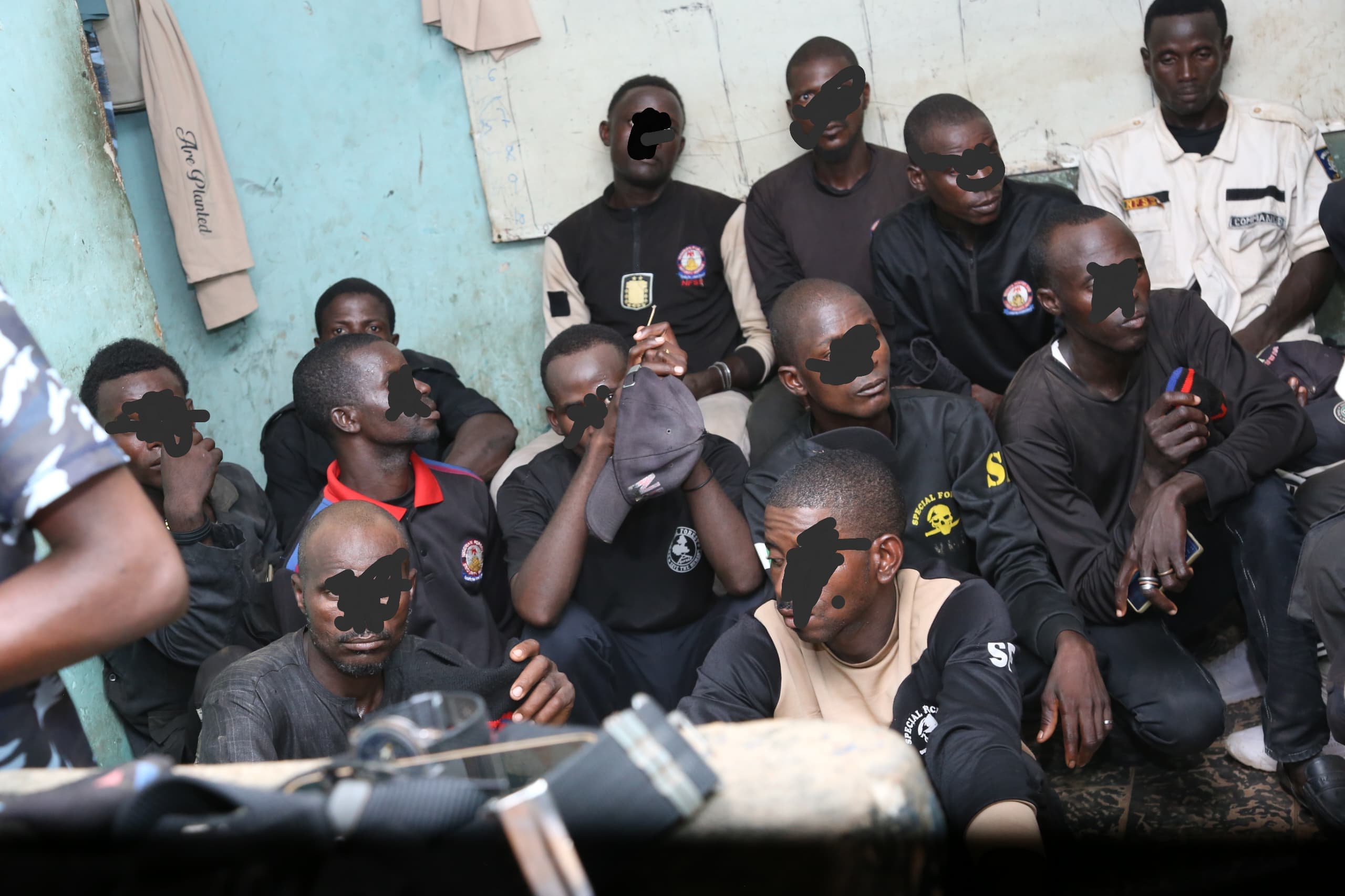
The Theatre Command of the Joint Task Force (North East), Operation HADIN KAI (OPHK), has apprehended five individuals linked to the unlawful discharge of firearms at a social gathering, which resulted in the death of a teenage girl.

Reports show that a stray bullet, allegedly fired by members of a vigilante group, claimed the life of a 14-year-old girl last Saturday inside her family home at the University of Maiduguri Teaching Hospital (UMTH) quarters.

In a statement released Monday, the Media Information Officer of OPHK, Lt. Col. Sani Uba, said the troops of Operation HADIN KAI, together with the Civilian Joint Task Force (CJTF), arrested the five suspects in the Ngomari general area.

“The incident occurred at about 2:00pm on April 4, when vigilantes, later identified as members of an escorts team attached to the Chairman of a Local Government Area engaged in sporadic firing into the air during a wedding celebration at Umaru Musa Yar’Adua Teachers Staff Quarters.

“The reckless act led to the death of a young girl. The troops acted swiftly, traced and apprehended five suspects identified as Muhammad Husaini (28), Abba Jiddu (25), Abba Kolo Mohammed (20), Ali Adam (20), and Nura Mohammed (18).”

Lt. Col. Uba added that the suspects are currently in custody and will be handed over to the appropriate authorities for further investigation and prosecution in accordance with extant laws.