National

You can add some category description here.

Tinubu defies critics, declares tax reforms unstoppable

By Uzair Adam

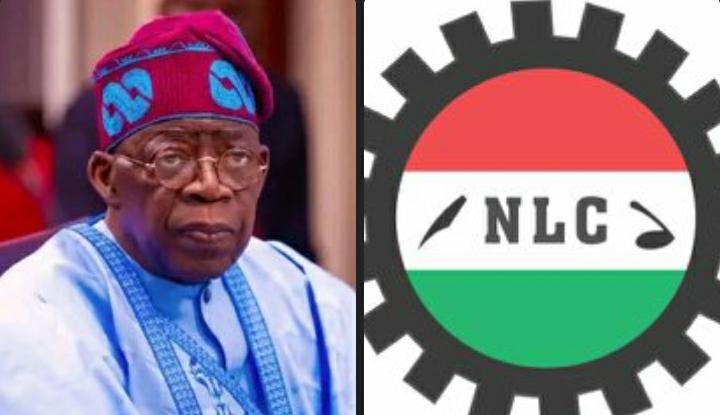
President Bola Ahmed Tinubu has reiterated his administration’s unwavering commitment to implementing tax reforms, emphasizing their importance for Nigeria’s economic transformation.

The Daily Reality reports that the president made this assertion during his first presidential media chat on Monday night in Lagos State.

The proposed reforms, encapsulated in several bills before the National Assembly, include the Nigeria Tax Bill, Nigeria Tax Administration Bill, Nigeria Revenue Service Establishment Bill, and the Joint Revenue Board Establishment Bill.

Despite facing backlash, particularly from Northern leaders, and prompting calls for further consultation, Tinubu defended the reforms as being pro-poor and aimed at restructuring outdated colonial tax structures.

“Tax reform is here to stay,” Tinubu stated, adding, “In today’s economy, we cannot continue to rely on outdated systems.

“The essence of these reforms is to eliminate colonial-based assumptions in our tax environment. The vulnerable will not be subjected to taxation.”

Addressing concerns about the controversial Value-Added Tax sharing model, the President expressed his willingness to engage in negotiations but insisted that the reforms would proceed.

“Tax matters are subjects of debate, reviews, and negotiations until consensus is reached,” he said.

Tinubu also remarked that good leadership requires decisive actions at critical moments.

“The hallmark of a good leader is the ability to do what you have to do when it needs to be done. That is my philosophy,” he added.

The proposed tax reforms aim to create a fairer tax system, though Tinubu acknowledged that they might not be universally accepted.

Tinubu: No regrets over fuel subsidy removal—it was a must-do reform

By Uzair Adam

President Bola Ahmed Tinubu has reaffirmed the necessity of his administration’s decision to remove the fuel subsidy, describing it as an unavoidable step to secure Nigeria’s economic stability.

During his first presidential media chat on Monday night, Tinubu maintained, “I have no regrets whatever removing subsidies. It was necessary.”

The President explained that the subsidy system was unsustainable and akin to jeopardizing the nation’s future for immediate gratification.

“We were not investing; we were just deceiving ourselves. The reform was necessary. We cannot have expenditures we don’t have revenue for,” he stated, urging Nigerians to embrace fiscal discipline and prudent financial management.

“Cut your coat according to your size,” Tinubu advised, adding that the removal was imperative to ensure a sustainable future for upcoming generations.

He acknowledged the challenges posed by the reform, including resistance from smugglers, and emphasized the need for stringent enforcement and structural adjustments.

“I can see smugglers fighting back,” Tinubu remarked, vowing to address these challenges through necessary reforms and strong measures.

The President also extended his condolences to the families of victims of recent stampede incidents at a charity event, calling for improved organization and contingency planning to avoid similar tragedies.

“It is sad that people are not respected or are abused in situations like this. If you don’t have enough to give, don’t publicise it,” he said, urging event organisers to prioritise safety and crowd control.

Tinubu reiterated his administration’s commitment to making difficult but essential decisions, asserting, “No matter how you phase it, you still have to meet the bill.”

Quranic Isah and Biblical Jesus: Muslims migration to Abyssinia

By Bin Isah

It’s funny how we attempt to submit Islam to our unwise wisdom. The most recent one is that, if we want to talk about Jesus (AS), we should be saying Isah (AS) instead of Jesus, because it infuriates a set of furious Christians to hear, “Jesus is not God”. But if we say “Isah is not God”, they won’t care.

However, come to think of it. Is Jesus not an English name of Quranic Isah? And the last time we can remember, we still call Moses as Musa, Jacob as Yakub, Solomon as Suleiman, Joseph as Yusuf, all as English names given to them. Why are we singling out Jesus and calling him Isah instead? Well, the wisdom has been stated but it’s nothing but a subversion of truth.

The idea is that the Nigerian Christians do not care about Isah, as these wise Muslims also tend to think. Now, a set of lame Christians are asking Muslims to use Isah when they want to talk about Jesus, that is, a name that they have in their Quranic scripture. Out of great ignorance, they have failed to understand that the term “Isah” is even more original to Jesus in their Bible than the term Jesus itself. Supposedly, when we use Isah, it’s even more biblical than Jesus.

In fact, there are Christians that still use “Esu” or “Yesu” or “Yeshua” instead of Jesus —and you can hear “Isah” in them. There are Hausa Christians in the North that use “Yesu” instead of Jesus, in fact, they think it’s a Hausa term. Yesu Almasihu is the chant of Arewa Christians, we all know that, which is similar to Jesus Christ, which is Isah Almasih in Quran. The evolution or corruption of the term Jesus from Hebrew to English is quite nothing new.

This is all an attempt to misrepresent Islam in the name of wisdom. Muslim and Christian scholars of remarkable repute have used Jesus in all their English works as the substitute of Isah, not any deceptive tactic to make Christians or Muslims confused about whom is being implied. We should not make Islam look like it doesn’t know what it’s addressing. The blame falls on us.

And the fact remains, there is no Christian who believes in Jesus as a God that would find anything less damning about the cancellation and condemnation of the Divinity of Jesus Christ as stipulated by Quran. You can call Jesus by Isah or whatever, but as long as you believe that he is not God, you can still be labelled as an offender, and Islam as a violent, offensive religion. It’s all about the Islamic belief on Jesus (peace be upon him), not about putting it on a banner.

Isah is not God

YET, another beautiful history to remember is that of first migration in Islam. THE COMMUNITY that provided a home to the early Muslims in Islamic history was Christian. Due to persecutions under their people, Muslims migrated to the Christian Abyssinia and, they were accepted in best manner. In fact, good Christians existed, and they will not cease to exist.

Yet, these Muslims that migrated to Abyssinia, continued to live as Muslims under a Christian rulership. Yet still, they didn’t compromise their beliefs, values or lifestyles. Contrary to the general belief of the host society, they made it clear they didn’t believe in Jesus as a God. The king of the state, king Negros, who later converted to Islam, gave them all rights to live under his domain of rulership.

The Quraysh sent a delegation to Abyssinia to persuade the king to release the Muslims to them as criminals who fled away from justice. They even told the king that the Muslims even insulted and blasphemed against his Lord, Jesus Christ, because they didn’t consider Jesus to be a God. Well, these are weighty allegations, especially the one directed at the religious belief of his nation.

The king invited the Muslim migrants to his court and interviewed them. They responded to the allegations put against them by the polytheists of Makkah, and the king didn’t find them guilty of any crime neither against the polytheistic Meccan society nor against the Christian nation. They informed him about how Islam regards Jesus AS as one of the greatest messengers of God, and they believed in him and they revered him as all other prophets sent by God. The request of Quraysh didn’t find acceptance.

They left Abyssinia and went back to Makka in loss. THE POINT IS THAT: The Christian king of Abyssinia was not a bigot that considered being a Muslim as any social problem, and there was no reason to expel the Muslims based on their belief and declaration on Jesus AS not being God or son of God but simply a great prophet and messenger of God. To him, their belief is their belief, and his belief is his belief. And they are free to publicly worship and wear the symbols of their faith.

This is a cardinal cornerstone of Islamic attitude towards other faiths: “You have your religion, and I have mine.” Yet, the Christian bigots of our time that have little to nothing to offer and the de-Islamized Muslims will continue to have a problem with Islamic beliefs and symbols. What else could they offer apart from what they have? What they cannot do is dousing the light of Islam as the last, true religion of God SWT.

May peace be upon our beloved prophet Muhammad SAW and his brother prophet Jesus Christ AS.

Bin Isah writes from Kano State.

ACF takes step toward tax reforms with new committee

By Abdullahi Mukhtar Algasgaini

The Arewa Consultative Forum (ACF) has established a Tax Reform Committee to tackle the challenges of taxation in Nigeria, especially the four proposed tax bills currently undergoing legislation. 

The committee, chaired by Senator Ahmed Muhammad Makarfi, former Governor of Kaduna State, comprises members with diverse expertise in finance, law, taxation and economics.

Other members of the committee include:

Dr. Mansur Mukhtar former Minister of Finance, Dr. Yerima Ngama, former Minister of State Finance, Joe-Kyari Gadzama SAN, Prof. Kabir Isa Dandago, Gambo Hamza, Kabiru M Ahmed, Mouftah Baba-Ahmed, Tajuddeen A Dantata, Chris Umar SAN and Abdullahi Ali Gombe, mni

The establishment of the Tax Reform Committee is a significant step towards addressing the tax challenges facing the region and Nigeria as a whole. 

The committee’s recommendations are expected to contribute to developing a more effective tax system in the country.

Niger accuses Nigerian diplomat of plotting to destabilize the country

By Abdullahi Mukhtar Algasgaini

Niger’s foreign minister has called in the Nigerian charge d’affaires, accusing Nigeria of using its territory as a base to destabilize Niger. The allegations come amid ongoing tensions between the two nations since Niger’s military coup in 2023. 

Niger’s government claims that Nigeria has been complicit with foreign powers and officials of the ousted regime, continuing to fuel instability despite efforts to normalize relations. Although security cooperation between the two countries resumed in August, the recent accusations have led to renewed diplomatic friction. 

Niger has also reaffirmed its commitment to participating in the Multinational Joint Task Force (MNJT) to combat jihadist groups along the borders.

Jesus Christ (peace be unto him) is not God!

By Bin Isah

In the last couple of days, social media platforms were inundated with discussions about a banner posted in front of Lekki mosque with this message: “Jesus Christ is not God! He is a prophet and messenger of God!”

It appears this simple and clear message from the Qur’an does not sit well with some Nigerian Christians who see it as an attack on their religion or in other words, a provocation and, a blasphemy.

This misunderstanding is either rooted from the ignorance of other religions, Islam for example, or some people want to shout fire while there’s no even smoke. This reminds me to ask of what use are all those interfaith gatherings between Nigerian Christians and Muslims?

Is it a new thing to Nigerian Christians that Jesus is not God in Islamic religion? Or saying that in a banner in front of a mosque (not church) is what makes it a sin? A provocation? A blasphemy?

The problem is that Muslims have Jesus Christ in their Islamic faith, but a Jesus Christ with a mission as a Messenger of God. Not like the Christians that claim to have no Muhammad SAW in Christianity, which means they have little to say about him.

For this reason, Muslims have a set of beliefs about Jesus Christ as one of the prophets of Allah in whom we believe. And the beliefs are diametrically not in sync with the mainstream concept of Jesus Christ in Christianity. So, whenever we portray Jesus Christ the way he is conceived in Islam, it would be a problem to them. It’s offensive, and nobody actually intended to offend them.

The thing is that, the Muslim community have an obligation to convey the message of Islam, and to declare its proclamations with no fear or compromise. Its plain truth! Our religion requires us to declare Jesus as a prophet and messenger of God, not as a God himself. Jesus is not God is a message of Islam to the world. In no time or place, Muslims are asked to state otherwise.

The trouble is that, Christians will never settle with the Islamic concept of Jesus Christ. In the same vein, however, Muslims seem to tolerate Christians that declare Jesus as God, because it’s offensive to Islam and Muslims to declare Jesus as such, because it’s part and parcel of Islamic core beliefs to believe and declare that Jesus is not God, but a prophet sent by God SWT.

In fact, the Christians write “JESUS IS LORD” with total freedom on banners at different places of worships and even on the main roads on billboards, yet Muslims cannot state their own belief in Jesus Christ in like manner. In fact, it’s offensive to Muslims and Islam, but we accept this is what Christians believe. So, if according to Christian faith, Christians can write Jesus is God, then Muslims should have the right to write Jesus is not God, according to their faith.

I blame the Nigerian clergy people for not properly teaching their congregants knowledge of other religions and their scriptures. It is a clear mischief which leads to interreligious conflicts.

Indeed, Jesus is not God but a revered prophet and great servant of God.

Nigeria Customs Service promotes 1,419 junior officers

The Nigeria Customs Service (NCS) has announced the promotion of 1,419 junior officers across various ranks.

This decision was made during the 10th Management meeting, chaired by the Comptroller General of Customs (CGC), Bashir Adewale Adeniyi MFR, on November 29, 2024.

The promotion list includes both General Duty and Support Staff who excelled in the 2024 promotion exercise.

A total of 346 General Duty and 384 Support Staff officers were elevated from Assistant Inspector of Customs (AIC) to Inspector of Customs (IC).

Additionally, 4 General Duty and 13 Support Staff officers advanced from Customs Assistant I (CAI) to Assistant Inspector of Customs (AIC), while 372 General Duty and 59 Support Staff officers moved up from Customs Assistant II (CAII) to Customs Assistant I (CAI).

Furthermore, 188 General Duty and 54 Support Staff officers were promoted from Customs Assistant III (CAIII) to Customs Assistant II (CAII).

According to the NCS, this strategic advancement underscores the transformative leadership of the NCS management team under the visionary stewardship of CGC Adeniyi.

“By prioritising career growth as a cornerstone of workforce motivation, his administration inspires a culture of excellence, empowering employees to achieve their full potential and driving the organisation toward unparalleled service delivery”.

The CGC has urged the newly promoted officers to redouble their efforts in fulfilling the Service’s core mandates of revenue generation, suppression of smuggling, and trade facilitation.

The promotion list for senior officers is currently being processed, pending approval by the Nigeria Customs Service Board.

NBS: Over 25 million phones stolen in Nigeria within a year

By Uzair Adam

The National Bureau of Statistics (NBS) has revealed that over 25 million phones were stolen in Nigeria between March 2023 and April 2024.

This is according to findings from the bureau’s Crime Experience and Security Perception Survey 2024.

The report highlighted that approximately 17,965,741 individuals experienced phone theft during the reference period, making it the most prevalent crime at the individual level.

It noted that 13.8% of Nigerians reported phone theft, which accounts for a significant proportion of the 21.4% of citizens who reported being victims of crime overall.

The survey further disclosed that seven out of every 10 stolen phones were taken either at home or in public spaces.

Despite this, less than 10% of victims reported these incidents to the police, citing various reasons for their reluctance.

Among those who reported, only 11.7% expressed satisfaction with the police response.

This report underscores the pervasive nature of phone theft in the country, emphasizing the need for improved security measures and better law enforcement responses.

Kemi Badenoch on the cross of ignorance: A rejoinder to her misrepresentation of British and Northern Nigeria’s history

By Sanusi Maikudi 

In her recent remarks, Rt. Hon. Kemi Badenoch, the leader of the UK Conservative Party, reportedly dismissed associations with Nigeria beyond her Yoruba heritage. She distanced herself from Northern Nigeria and associated it narrowly with Islamism. These comments, replete with historical ignorance and political misjudgement, reflect poorly on her understanding of the intertwined histories of Britain and Nigeria and, by extension, her role as a leader in one of the world’s oldest democracies.

It is troubling that Badenoch, a figure who aspires to statesmanship, would exhibit such a parochial view of her heritage and the complex relationship between the United Kingdom and Northern Nigeria. Her remarks not only betray an ignorance of British colonial history but also reflect a failure to grasp the significance of global citizenship—an essential quality for anyone seeking to lead in a post-imperial world.

Misunderstanding History

Badenoch’s attempt to disassociate herself from Northern Nigeria exposes a glaring lack of awareness about the region’s rich and diverse history. Long before colonialism, Northern Nigeria boasted a sophisticated socio-political structure exemplified by the Sokoto Caliphate and other emirates. These entities maintained written records, produced scholarly works in Arabic, and upheld organised governance systems.

British colonial explorers and missionaries documented these structures extensively. Figures like Hugh Clapperton, Mungo Park, and Frederick Lugard not only travelled through Northern Nigeria but also admired its governance systems. The British colonial administration, recognising the efficacy of Northern Nigeria’s traditional leadership, adopted the system of indirect rule to govern the region. This is a testament to the historical and administrative depth of the region—a depth Badenoch seems to have overlooked.

Furthermore, the Christian missionaries who ventured into Northern Nigeria risked their lives not to trivialise or divide but to understand and engage with its people. Their contributions are preserved in archives that form part of Britain’s collective memory. Denying or dismissing this history is ignorant and disrespectful to the legacy of British-Nigerian relations.

A Failure of Diplomacy

As a leader in a global power, Badenoch is expected to demonstrate diplomatic acumen and cultural sensitivity. Her dismissive remarks, however, suggest a narrow worldview that is unbecoming of someone in her position. Britain’s legacy as the patron of the Commonwealth—a union of diverse nations shaped by shared history—requires its leaders to embody inclusivity and understanding.

Badenoch undermines her credibility by distancing herself from Northern Nigeria in such a derogatory manner. Her comments seem less like the musings of a seasoned statesperson and more like pandering to fringe nationalist sentiments. Was she addressing British society, which has long recognised and documented the importance of Northern Nigeria? Or was she appealing to a clandestine audience of Yoruba nationalist agitators? Either way, her remarks reveal a political novice more concerned with short-term rhetoric than long-term statesmanship.

The Irony of Her Position

Badenoch’s position as a British politician of Nigerian descent is itself a product of the historical forces she now dismisses. Like many others from former colonies, her parents benefited from the opportunities created by Britain’s imperial legacy. She was born in London, a city shaped by centuries of global migration and colonial history. Ironically, the very system she now seeks to lead is a product of the multiculturalism and interconnectedness she seems to reject.

It is also worth noting that Badenoch’s rise to prominence coincides with the UK’s struggles with political leadership. The Conservative Party’s internal crises have eroded its cadre of charismatic leaders, paving the way for figures like Badenoch. Yet her divisive rhetoric and lack of historical understanding alienate mature voters and diminish her standing as a potential statesperson.

Populism and the Far-Right Trap

While Badenoch may be tempted to align herself with the growing populist and far-right ideologies in Europe, she is ultimately a victim of these movements, not a beneficiary. The same far-right ideologies that demonise immigrants and minorities would not spare someone of her background. Her attempts to position herself as “more Catholic than the Pope” by demonising others only highlight her vulnerability within such spaces.

Conclusion

Rt. Hon. Kemi Badenoch’s recent remarks reveal a troubling ignorance of British and Nigerian history. Her attempt to distance herself from Northern Nigeria not only disrespects the region’s rich heritage but also undermines her credibility as a leader in a globalised world. Her rhetoric, steeped in parochialism and divisiveness, starkly contrasts the qualities of diplomacy, wisdom, and inclusivity required of a true statesperson.

Rather than deriding others, Badenoch would reflect on the interconnected histories of the nations she represents and aspire to a leadership style that unites rather than divides. As history has shown, those who fail to learn from the past are often relegated to its margins. Let her words serve as a reminder of the perils of ignorance and the importance of informed leadership in a complex, interconnected world.

Sanusi Maikudi wrote from the Network for Justice, Kaduna, Nigeria, via sanusihmaikudi@yahoo.com.

49 rescued from Benue boat mishap– NEMA

By Anwar Usman

The National Emergency Management Agency on Monday said a total of 49 persons have been rescued and three dead bodies were found from the boat accident that occurred along River Benue in Agatu Local Government Area of Benue State.

A statement by NEMA indicated that the accident involved 76 passengers in the boat, as the driver, unaware of a submerged tree in the river accidentally navigated into it, causing the boat to tip off and capsize.

“The unfortunate incident took place on Saturday, December 15th, around 7:00 PM. The passengers were said to be returning home from the Ocholonya Market, a major economic hub that draws traders from several communities in Agatu and neighbouring states, including Nasarawa State.

“Aoart from the rescued passengers, one of the victims managed to swim to safety while 23 persons are still missing. Most of the boat passengers were from Odenyi Magaji and other communities of Nasarawa State,” it stated.

The agency emphasised that it is working with the Benue State Emergency Management Agency and other stakeholders including the local authorities and divers to expedite the ongoing search and rescue operations to trace the remaining missing passengers.

“NEMA has also established contacts with the Nigerian Navy to provide more support for the search and rescue,” it added.