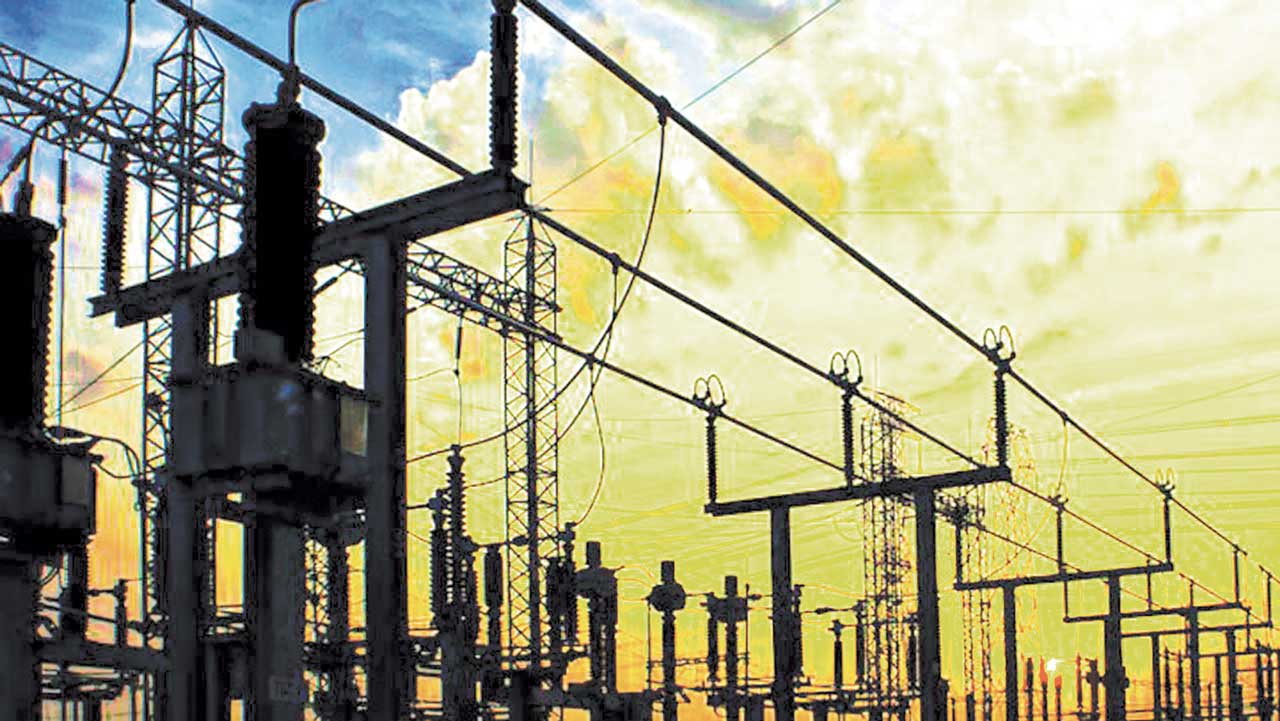
Nigeria was thrown into darkness on Monday after the national electricity grid experienced another system failure following a sharp drop in power generation.
Findings showed that the disruption occurred at about 3 pm when major power stations supplying electricity to the grid suddenly lost generation, forcing the system to shut down.
Data obtained from industry sources indicated that electricity output earlier rose to about 4,800 megawatts on Monday. The figure later fell steeply to 139 megawatts as of 3 pm, which triggered the collapse of the grid.
The immediate cause of the failure was not confirmed at the time of reporting. However, the incident happened while the Nigerian Independent System Operator was working to increase electricity supply after recent gas shortages that followed cases of pipeline vandalism.
Checks further revealed that as of the time this report was filed, all 22 power plants connected to the national grid had dropped off from electricity generation.
The development left several parts of the country without power supply, as distribution companies struggled to restore electricity to affected areas.
More details are expected as authorities continue to assess the situation.
U.S. President Donald J. Trump has claimed that the United States carried out a “powerful and deadly” military strike against ISIS targets in northwest Nigeria.
In a statement released on Thursday night, Trump said the operation was conducted under his direction as commander in chief and targeted ISIS fighters accused of killing civilians, particularly Christians. He described the strikes as highly successful and warned that further military action would follow if the violence continues.
There has been no independent confirmation of the operation from U.S. defense officials, and no details have been provided regarding the exact locations, casualties, or scope of the strikes.
As of the time of this report, the Nigerian government has not issued any official statement responding to or confirming the claims.
Channels Television has come under intense criticism following its headline on the Christmas Eve bomb blast in Maiduguri, Borno State, which many Nigerians have described as biased and insensitive.
The television station had reported the incident with the headline: “Many Feared Dead As Bomb Blast Rocks Maiduguri On Christmas Eve.”
The blast, however, occurred inside a mosque, with Muslim worshippers as the primary victims.
Critics argue that the omission of both the mosque and the victims’ religious identity from the headline distorted the gravity and context of the tragedy.
A journalism expert and Facebook user, Aisar Fagge, accused the station of deliberately reframing the narrative in a manner that downplayed the victims and their place of worship.
“The bomb blast occurred in a mosque but Channels TV chose to remove the mosque from the headline of the story and replaced it with ‘Christmas,’ showing a lack of sympathy for the people (Muslims) who were killed,” Fagge wrote.
He further alleged that such editorial decisions reflect deeper problems within sections of the Nigerian media.
“In Nigeria, we do not only fight Boko Haram; we also fight what I call ‘Truth Haram’ media outlets — the likes of Channels,” he added.
Another Facebook user, Abubakar Suleiman, also criticised the station, stating that the headline exemplified what he described as “the politics of headline framing.”
According to Suleiman, the editorial choice influenced how the public processed the information by shifting attention from the actual victims and location of the attack.
“The bomb blast happened in a mosque, and the victims were Muslims. However, Channels TV chose to headline the story by removing the place and the victims of the heinous attack, replacing them with ‘Christmas Eve,’” he stated.
He added that although the incident occurred on Christmas Eve, the wording of the headline effectively erased the victims’ identity and dignity.
“Yes, it is true that the bomb blast happened on Christmas Eve, but the presentation of the headline controlled the perception of the targeted audience and eroded the victims of any mention, identity, or dignity,” Suleiman wrote.
Suleiman further alleged that the omission of the mosque was linked to a broader narrative that does not align with the interests of certain ideological groups.
“The exact place where the bomb blast happened — a mosque — also does not matter, because it does not fit into the narrative of Reverend Dachomo, which advances the ‘Christian genocide’ propaganda,” he stated.
Drawing parallels with global media practices, Suleiman said skewed narratives in international media had forced other regions to establish their own independent broadcast platforms.
“When the Arab world grew tired of skewed and silenced narratives, massive propaganda, double standards, and hypocrisy from the likes of Fox News, the BBC, and CNN, they did not stop at complaining; they established competent and reliable broadcast media and employed credible journalists to present their stories,” he wrote.
Quoting Chinua Achebe, he added: “Until the goats learn to write their own history, the history of the hunt will always glorify the hunter.”
Suleiman also warned that sensational reporting encourages division in a multi-religious society such as Nigeria.
“Even if Nigerians choose to live in peace with one another regardless of religion, region, or ethnicity, the Nigerian media will always find a way to sow the seeds of hatred and discord. You know why? Because fear sells much faster and more easily than hope, or than the effort required to deliver a nuanced message,” he stated.
He concluded with a call for responsible journalism and urged Channels Television to exercise greater sensitivity in future reporting.
“Anyway, I hope Channels TV will do better next time because all we wanted is, to quote Ben Affleck: ‘We just want to eat our sandwiches, go about our lives, mind our own business, without being targeted, demonized, or expected to condemn things that have nothing to do with us,’” he said.
The National Identification Number (NIN) issued by the National Identity Management Commission (NIMC) will automatically function as a Tax Identification Number (Tax ID) for Nigerians starting from January 2026, the Federal Inland Revenue Service (FIRS) has announced.
According to the FIRS, the policy is part of broader efforts to harmonise government databases, improve tax administration, and expand the country’s tax net. By linking tax records directly to the NIN, authorities aim to reduce duplication, enhance compliance, and make it easier for individuals and businesses to fulfil their tax obligations.
Officials said the integration would streamline identification across government services while strengthening transparency and efficiency in revenue collection.
Nigerians are therefore encouraged to ensure their NIN details are accurate and up to date ahead of the January 2026 implementation.
The move aligns with ongoing digital reforms by the Federal Government to modernise public administration and improve service delivery nationwide.
Nigeria has entered dangerous territory. The country has appointed as Chairman of the Independent National Electoral Commission (INEC) a man whose most prominent public writing is an 80-page brief accusing whole communities of committing genocide. That document, published in 2020, framed national violence almost entirely through a Christian-victimhood narrative and presented sweeping, contested claims that many Nigerians find offensive, incomplete, or simply inaccurate.
Today, the author of that brief is the referee of our national elections. And yet, the political class, from the Presidency to the Senate to the parties, is maintaining a silence so absolute that it borders on negligence.
It is this silence, not the controversy itself, that is now the real danger.
The Integrity of Elections Is a National Security Issue Every Nigerian knows elections in this country are not routine administrative events. They are national security operations involving millions of citizens, overstretched security agencies, and volatile political identities. The neutrality of INEC is therefore not optional. It is foundational.
When the person leading that institution has authored a highly divisive document, which is now weaponised against the country by some foreign powers, the question is no longer academic. It becomes a matter of national security.
If the chairman once wrote that a section of the country was engaged in “genocide,” how will those communities trust him? How will they interpret his decisions? How will they accept results in a tight contest? And what happens if the outcome of 2027 is close enough for suspicion to matter?
These are not theoretical questions. They are national security scenarios.
How Did This Appointment Pass Through Screening? The more the issue is examined, the more troubling the answers become.
The Executive Vetting Was Inadequate. It is difficult to believe that the Presidency did not know about the 2020 brief. It is publicly available and widely circulated among advocacy groups. If the government did not know, it raises questions about the quality of its due diligence. If it knew and ignored it, that is an even bigger problem.
The Senate Screening Was Superficial A nomination of this magnitude requires hard questions about ideology, neutrality, and past publications. No such questions were asked. The Senate treated one of the most sensitive constitutional positions as a formality. This is a failure of oversight.
Political Actors Fear Religious Backlash Many southern politicians do not want to appear to be “attacking a Christian advocate.” Many northern politicians do not want to inflame tensions by addressing a document they consider deeply inaccurate. And politicians on both sides fear being dragged into arguments that can harm their coalitions.
The easiest solution for them is silence.
Some Actors Prefer a Weak INEC A chairman under suspicion is easier to pressure. A weakened INEC is more pliable. Some forces benefit from an institution whose credibility can be questioned but whose cooperation can be secured.
This is the cynical logic but it must be acknowledged.
Why the Silence Is Dangerous
The real risk is not that the chairman is personally biased. The risk is that millions of Nigerians may believe he is, especially when political temperature rises.
Nigeria’s democracy cannot run on suspicion. If a northern, Muslim candidate loses narrowly, the chairman’s own words from 2020 will be used immediately: “How can the election be fair when the umpire once accused us of genocide?”
This single sentence is enough to delegitimise an election. In a fragile environment, it is also enough to trigger unrest.
Nation-states collapse not from the actions of one individual, but from the inability of institutions to command trust. INEC cannot afford this weakness. Nigeria cannot afford this gamble.
The Moral Issue Cannot Be Ignored Beyond politics lies a moral question. Every section of Nigeria has suffered from violence. Christians in some regions have endured brutal attacks. Muslims in others have buried thousands. Any narrative that elevates one community’s pain while erasing another’s deepens division.
The brief published in 2020 was not balanced. It did not acknowledge the wide pattern of atrocities across faith and region. That lack of balance is precisely what raises concern today, not whether the author meant well or not.
Leadership of INEC must be above suspicion. It must be acceptable to all parts of the country. At present, that foundation has been shaken.
Why Is Everyone Silent? The Presidency is silent because acknowledging the issue means admitting an error in judgment. The Senate is silent because speaking now exposes the weakness of its oversight. The political parties are silent because taking a position risks angering key religious blocs. Security agencies are silent because the moment they comment, the crisis appears larger.
But silence does not preserve stability. Silence delays conflict. Silence leaves the field open for extremists, propagandists, and opportunists.
Nigeria cannot enter 2027 with a question mark hanging over the referee.
What Needs to Happen
Three things are necessary.
The INEC Chairman must address the Brief publicly. He does not need to renounce his past or apologise for advocacy, but he must clarify: —that INEC belongs to all Nigerians, —that all communities have suffered, and —that his role demands strict neutrality. Not making this clarification would mean he has lost the moral authority to remain in that office.
The government must break the silence. Here, the Presidency must explain whether the brief was vetted, how it was evaluated, and why the appointment proceeded. Nigerians deserve transparency.
Political leaders must safeguard the integrity of elections. If trust cannot be rebuilt, other constitutional options exist. The aim is not punishment but protection of national stability.
A Final Word
Nigeria stands at a crossroads. This issue will not disappear. It will resurface at the most dangerous moment: during the heat of the 2027 elections. The silence of today will become the crisis of tomorrow.
The country cannot sleepwalk into an avoidable disaster.
If INEC is weakened, Nigeria is weakened. If trust in the umpire collapses, no winner will have legitimacy. And if political leaders continue to pretend that this controversy is insignificant, the consequences will arrive at a cost far higher than the discomfort of speaking the truth today.
It is time to speak. It is time to act. And it is time to protect the Republic.
On Thursday, 4th December 2025, my cousin Tajuddeen bade us farewell on his way to Lafia, Nasarawa State. They left early in the morning in a Hummer bus. Around 10 a.m., they had a terrible accident in a town near Bauchi metropolis. All the passengers in the vehicle were badly injured. Tajuddeen, along with the bus driver and two others, instantly slipped into coma.
Other passengers were either with more than one fracture or several wounds. On the evening of 6 December, the driver’s suffering came to an end as he passed away. The following day, another one of the passengers in the coma also died. On 8 December, the third victim in coma breathed his last, leaving my cousin still in the ICU section of the Abubakar Tafawa Balewa University Teaching Hospital, Bauchi.
The cause of the accident was tyre failure. While they were on the road hoping to reach Jos in the afternoon, their back tyre burst and the bus somersaulted several times. The primary cause of the tyre failure was actually overload. Coincidentally, as I was on a phone call with a friend, he narrated how another terrible accident occurred close to my hometown as a result of tyre issue which instantly claimed two lives and left others badly injured.
I was really shocked and worried because not long ago, on a trip to Lagos, our own bus was carrying two commercial vehicles in addition to overloaded luggage of passengers and waybills. Even before the vehicles were brought, one had to ask whether humans would still get a seat after such loads were mounted. Lo and behold, the vehicles were arranged in a way that you couldn’t even see them inside the boot.
Last month, on our way back home from Kano, we witnessed another accident around Shuwarin town in Jigawa State. It was a jam-packed hummer bus obviously heading to either Damaturu or Maiduguri. They also had a tyre failure which resulted in several deaths. By the time we arrived at the accident scene, out of more than 20 passengers including the driver, only two people were still alive. The rest appeared lifeless.
If I were to narrate all the road accidents I have witnessed, most of them caused by tyre failure, I would have to write a book of a hundred pages. Road accidents are too many across Nigeria. Less than one week ago, I saw a picture on social media that stirred wide reactions. A commercial bus was overloaded to the extent that if one wanted to go out at a transit point, they had to pass through the boot as the doorway was blocked by bags. Even in the case of an emergency, no one could use the door because luggage completely covered the entrance. Many people commented that this is common in Nigerian motor parks.
When we talk about things that claim the lives of Nigerians, I believe road accidents is of course one of the biggest culprits, even more than insecurity in some cases. Anyone who travels widely by road knows this fact. And most of these accidents are avoidable if only we take transport safety seriously.
To bring to an end or at least reduce the intensity of the problem, we need a comprehensive transport policy that tackles overload and the abuse of luggage space. Parks should be mandated to use dedicated cargo buses. If a passenger’s luggage is above 10kg, it should automatically be transferred to a cargo vehicle, not stuffed into a bus carrying humans. For waybills, there should be separate buses whose only function is to transport goods from one state to another; especially the popular routes between Northern and Southern Nigeria or even within the North along routes like Kano-Borno, Taraba-Kaduna, Abuja-Adamawa and others.
Another important solution is the deployment of safety personnel to every major park. Their only job should be to inspect buses and car tyres to ensure they are in good condition before departure. Once there is no compliance, the driver must not be allowed to go. Of course in Nigeria some people may try to offer bribes to bypass checkpoints. To address that, these safety officers should not be local staff. They should report directly to an independent transport safety unit with strict oversight, rotating officers frequently to reduce compromise.
Still, digital systems can be introduced. Each bus should be scanned and cleared through an electronic checklist linked to a central database. If a bus fails safety checks, it should not receive the clearance code required to leave the park. With this kind of structure, even bribery becomes difficult to offer because safety approval will depend on digital authentication, not an individual officer’s discretion.
Nigeria needs to take road safety as seriously as other deadliest national issues. The number of lives cut short on our roads is heartbreaking. Families are losing loved ones every day due to accidents that could be prevented if we enforce discipline, regulate overload, inspect tyres, and treat transport safety as a matter of policy, not luck.
Isah Kamisu Madachi is a policy analyst and development practitioner. He wrote from Abuja, and can be reached via: isahkamisumadachi@gmail.com
Google Trends has released its Year in Search 2025 report, revealing the Nigerians who drew the most online attention throughout the year. Leading the list is Senator Natasha Akpoti, whose political activities and rising national profile kept her at the centre of public conversation.
Natasha Akpoti, the recently reinstated senator, has remained at the centre of national attention following a turbulent political year marked by her suspension after accusations from the Senate President, Godswill Akpabio, and an ongoing defamation suit he has filed against her.
Sen. Akpoti’s return to the Senate coincides with a period of renewed visibility at home, where she celebrated her 46th birthday and launched several constituency projects, including a new maternity hospital. In a gesture that drew widespread public reaction, she also gifted houses to some of her aides, further solidifying her image as a polarising yet impactful political figure.
The second most-searched Nigerian is Eberechi Eze, the England-based football star of Nigerian descent, whose impressive performances and debates over his international future fueled widespread interest. Siminalayi Fubara, Governor of Rivers State, ranks third as developments in the state continued to dominate headlines.
In fourth place is Chika Ike, the acclaimed actress and filmmaker whose resurgence in Nollywood and strong social media presence kept her trending. Closing the top five is Mr Eazi, the Afrobeats musician and entrepreneur whose creative and business ventures sustained considerable public curiosity.
The 2025 search trends show Nigerians’ keen engagement with politics, entertainment, and global sports. It also offers insight into the personalities who shaped national discourse over the past year.
Do not wait until the conditions are perfect to begin. Beginning makes the conditions perfect.— Alan Cohen
It is unfortunate that Nigerian youths are preoccupied with PR and brown-nosing politicians on social media, mistaking sycophancy for loyalty or mentorship. Not only that, but we are comfortable scrolling TikTok, posting pictures on Instagram,and debating at what age we should start paying attention to the state of the nation, let alone running for office. Why are the youths indifferent to our sick polity that is rotten from the core? Why are they comfortable staying on the fence and serving as spectators instead of actors? Why do our youths somehow believe that they are the leaders of tomorrow and not of today?Though it is the norm that young people, while growing up, usually learn from the older generation, what is there to learn from our current crop of terrible politicians who hold our nation by the jugular? They hide under the guise of “politics is a dirty game.” The old guard have the money, the influence, and the networks; what is lacking or is in decline are vision, energy, and perhaps conscience and discipline—attributes that are essential for good leadership. Unfortunately, what they have will not be willingly given, and what the youths need often seems lacking or absent. The joy of the youths when the Not Too Young to Run Act was passed by the National Assembly and signed into law on 31 May 2018 by President Buhari quickly dissipated when they realised that reality is different from what is written on paper or in Senate resolutions. It does not surmount all the barriers. Money continues to dominate our polity. Only a few youths can afford party nomination forms; the cost of contesting is so enormous that even the smallest elective office is far beyond the reach of most young people. Political parties prefer candidates who can fund them. These challenges are reinforced by the illusion that youths are inexperienced, impatient, and unprepared for leadership.
But then I often ask myself: do we have what it takes to lead, especially now that we are bedevilled with so many crises? It is like a person afflicted with multiple diseases—these include an identity crisis, the collapse of leadership from top to bottom, and a sick civil society. Fixing these issues is daunting even for experienced and seasoned leaders, let alone those still learning the ropes. It will only be possible through self-education, mentorship, and massive orientation and mobilisation. As Usman Sarki, Daily Trust columnist, rightly put it: “A new generation of rational leaders must arise from the ranks of men and women unafraid to confront entrenched interests, guided by data, driven by conscience and inspired by service.” A corrupt youth cannot be good for the health of our Federal Republic. Only youths of integrity can enhance the good health of our community.
Youths must acquire relevant skills such as adaptability and emotional intelligence, educate themselves, and build strong networks. For youths to be taken seriously, they must be sober, visionary, disciplined, and driven. Before we hold others accountable, we must start with ourselves. With the desire for change and disillusionment with the status quo, youths can become actors, seize power, and replace some of the politicians who treat power as if it has no expiry date—which is why they often disappear from the spotlight without warning.
In a nation where political power is seen as conquest and humility as weakness rather than virtue, the youths must be brave and courageous in asking for power or running for office. We must sketch a realistic roadmap and hold a vision of rescuing our polity that is being dragged down the drain. With the election season only inches away, the time to act is now.
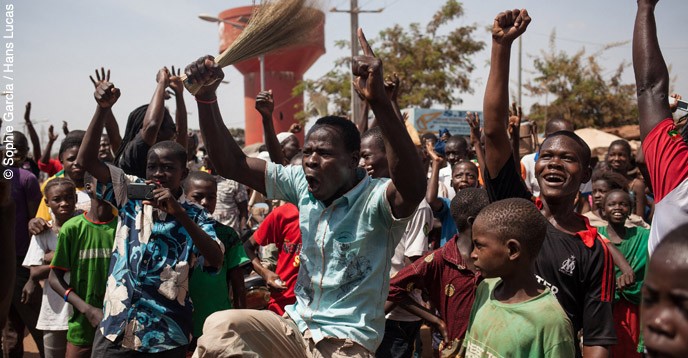
Tensions erupted at the Bariki Market in Enugu State when a group of Igbo butchers reportedly confronted and attacked their Hausa counterparts over a disagreement tied to meat prices.
According to eyewitnesses, the incident began when Hausa butchers allegedly sold their meat at lower prices, a move that some Igbo traders viewed as undercutting the market. The disagreement escalated into a physical altercation, resulting in injuries and disruption of business activities in the area.
Observers have noted that Igbo traders operate freely across markets in Kano and other parts of northern Nigeria, with no reports of similar incidents. Some commentators expressed concern that the Enugu clash had not received widespread media attention, suggesting that the coverage might have been more prominent had the situation been reversed. However, a video clip of the clashes has been widely shared on social media in Northern Nigeria.
There are also concerns that, in other contexts, such disputes risk being misrepresented as ethnic or communal violence, further heightening tensions.
Market authorities and local security agencies are yet to issue an official statement on the incident.
President Bola Tinubu has welcomed the release of 100 students kidnapped from the Papiri Catholic School in Niger State, while ordering security agencies to swiftly secure the freedom of 115 students and their teachers still held captive.
The President commended security forces for their “steadfast work” in returning the first group of students to their families following the abduction on November 21.
In a statement, President Tinubu directed that the rescue of all remaining abducted Nigerians nationwide remains an absolute priority. “We must account for all the victims,” he said.
He assured parents that federal and Niger State authorities are collaborating closely to reunite all hostages with their families. Governor Umar Bago was also praised for his efforts.
Looking forward, the President issued a stern mandate to prevent further attacks on schools.
“Our security agencies, working with the governors, must prevent future kidnappings,” Tinubu stated. “Our children should no longer be sitting ducks for heartless terrorists intent on disrupting their education and subjecting them and their parents to unspeakable trauma.”
He reaffirmed the government’s commitment to working with all states to secure schools and ensure a safer, more conducive learning environment.