Local

Lawyer Threatens Legal Action Against Nigerian Army Over Alleged Assault In Sokoto

By Sabiu Abdullahi

A legal practitioner, Abdurrahman Muhammad Jariri, has accused personnel of the Nigerian Army of reckless conduct and intimidation, following an incident he said occurred in Sokoto.

Jariri made the allegation in a Facebook post, where he claimed that soldiers in a convoy acted aggressively while he was driving with a friend in the city.

According to him, the incident happened amid heavy traffic, when the military convoy approached from behind. He alleged that the soldiers shouted and applied pressure on road users to clear the way, despite the congestion.

Jariri stated that he could not immediately move his vehicle due to the traffic situation. He further alleged that the soldiers then rammed into his car.

He said, “Today in Sokoto, while I was driving my car with a friend, a convoy of soldiers suddenly approached us from behind, shouting, applying pressure, and wielding sticks, insisting that we must give way despite the heavy traffic and congestion on the road.”

He added, “Our inability to immediately clear the way due to the traffic situation did not deter them; instead, they deliberately rammed into my vehicle while continuing to shout aggressively.”

The lawyer described the action as reckless and inhumane. He claimed that such behaviour reflects a pattern of alleged abuse against civilians.

Jariri also announced his intention to seek legal redress against the Nigerian Army and its leadership.

“I will certainly take legal action against the Nigerian Army, the Chief of Army Staff, and the respective military authorities in Sokoto and Kebbi States, in order to hold them accountable and teach them a lesson for the reckless and inhumane actions of their personnel,” he said.

As of the time of filing this report, the Nigerian Army has not issued an official response to the allegations.

Security Fears Stall ‘Uromi-16’ Screenings in Three Cities

By Hadiza Abdulkadir

Screenings of the documentary Uromi-16: The Story, scheduled for Abuja, Kaduna, and Kano, have been postponed indefinitely due to what the producers described as “credible security concerns.”

In a statement dated April 22, 2026, legal representatives for the producer, A.A. Mustapha & Co., said the decision was taken after a reassessment of the immediate environment for the film’s release. “The safety of all stakeholders, particularly viewers, remains paramount,” the statement said.

The documentary by Sa’id Sa’ad Abubakar details the killing of 16 Kano travellers-hunters in Uromi, Edo State, seen as jungle justice. The victims, reportedly en route, were attacked and killed by a mob after suspicion and community outrage. It also seeks to correct what its makers call widespread misinformation while promoting accountability and justice.

The firm stressed that the postponement does not signal a withdrawal from the project but is a precautionary measure in the public interest. It added that consultations are ongoing with authorities and other stakeholders to address concerns around safety and rights.

Ticket holders will receive refunds within three weeks through the ticketing platform, the statement said, while new dates or alternative release plans will be announced later.

The producers also urged the public to remain calm and law-abiding as efforts continue to ensure the film’s safe rollout.

Gov Yusuf Welcomes Shekarau to APC, Says Party Gaining Strength in Kano

By Uzair Adam

Kano State Governor, Abba Kabir Yusuf, has welcomed former governor and senator, Ibrahim Shekarau, into the All Progressives Congress (APC), describing his return as a major boost to the party’s strength in the state.

This was contained in a statement issued on Sunday by the Governor’s Chief Press Secretary, Mustapha Muhammad, who said the development reflects the party’s growing appeal and consolidation in Kano.

Governor Yusuf said a date would soon be announced, in consultation with the party’s national secretariat, for the formal reception of Shekarau into the APC.

He noted that the party “continues to witness increasing support and consolidation,” positioning it as a dominant force in the state.

According to the statement, the governor expressed confidence in the party’s readiness for future elections, stressing that unity and strategic political alignments are key to its rising strength.

He added that the APC is “battle-ready to win all elective positions” in the forthcoming polls.

Yusuf further assured members that the leadership remains committed to strengthening internal cohesion and expanding its grassroots base across Kano.

He urged party loyalists to remain steadfast and intensify mobilisation efforts.

“We call on all party faithful to remain committed and continue mobilising support as we prepare for future political contests,” the governor said.

Kano First? Then Deputy’s Choice Should Not Be Difficult

By Muhammad Sani Ilyasu

Over the past few days, Kano’s political atmosphere has been gripped by what should have been a routine decision — the selection of a Deputy Governor. Instead, it has dragged, stretched, and unsettled expectations. As the Hausa proverb reminds us, wankin hula yana neman kai. Sooner or later, the moment of decision arrives, and when it does, it reveals more than preference. It reveals judgment.

But truthfully, this is not a difficult decision.
Once the list of nominees from the old APC bloc surfaced, one name did not merely appear — it stood apart. Alhaji Rabiu Suleiman Bichi. Not because of sentiment, and certainly not because of noise, but because of something far more scarce in today’s politics: substance.

This is a man shaped by governance, not just politics. He has moved through the system at its highest levels — serving as Secretary to the State Government, managing policy at the governor’s office, and working across institutions where decisions are not announced for applause but executed for impact. That kind of experience does not shout. It shows. And in moments like this, it matters enormously.

Yet the weight of this decision extends well beyond qualifications. The governor did not simply make a political realignment — he justified it with a principle: putting Kano first. That declaration raised the stakes. It transformed every subsequent decision into a test of consistency. Because once Kano becomes the stated priority, convenience must give way to capacity, and politics must submit to judgment.

You cannot declare Kano first and then treat this appointment as negotiable. The office of Deputy Governor is not ceremonial. It is not a token for balancing interests or rewarding loyalty. It is a quiet but powerful engine of governance — where coordination happens, where pressure is absorbed, and where experience prevents the kind of costly mistakes that erode public trust. It is not a place for learning on the job. That is precisely why Rabiu Suleiman fits this moment.

Rabiu Sulaiman Bichi carries a rare combination that politics often separates: administrative competence and genuine political experience. As a founding figure of the Kwankwasiyya movement, a former PDP State Chairman, and later Director-General of the APC’s 2023 campaign in Kano, he has operated credibly across political lines without losing his footing. That is not inconsistency. It is relevance across eras — the mark of someone who understands how power works without being consumed by it.

More importantly, he brings reach. His network — spanning national and international circles — is not ornamental. It is functional. It is the kind of capital that attracts serious partnerships, aligns policy with opportunity, and positions Kano beyond its immediate boundaries. At a time when states compete not only internally but on a broader stage, that kind of exposure is not a luxury. It is a strategic asset.

And then there is the other side of the equation — the part many would rather avoid, but which cannot responsibly be ignored. Leadership is defined not only by what is built but by what is tolerated. To elevate a deputy whose public record is clouded by ongoing court cases involving serious allegations of corruption and financial misconduct is not merely a political risk. It is a statement — and a loud one.

Because once made, that choice will not remain local. It will travel. It will shape perception, invite institutional scrutiny, and define the governor’s seriousness in the eyes of allies, investors, and the wider Nigerian public. You cannot stand on reform and lean on controversy. That is not balance. It is contradiction. And Kano cannot afford contradiction at this level of governance.

This is not a moment for experimentation. It is a moment for clarity — a moment to demonstrate that governance here is still anchored on competence, credibility, and consequence. In Rabiu Suleiman Bichi, that clarity already exists. Which is why this decision, despite the delay, remains straightforward.

If Kano truly comes first, the answer is already known. Anything else is not a strategy. It is a misstep.

Muhammad Sani Ilyasu writes from Maryland, United States of America and can be reached via msaniiliyasu@gmail.com

Air Strike Destroys ISWAP Logistics Hub in Borno, Dozens of Terrorists Killed

By Abdullahi Mukhtar Algasgaini

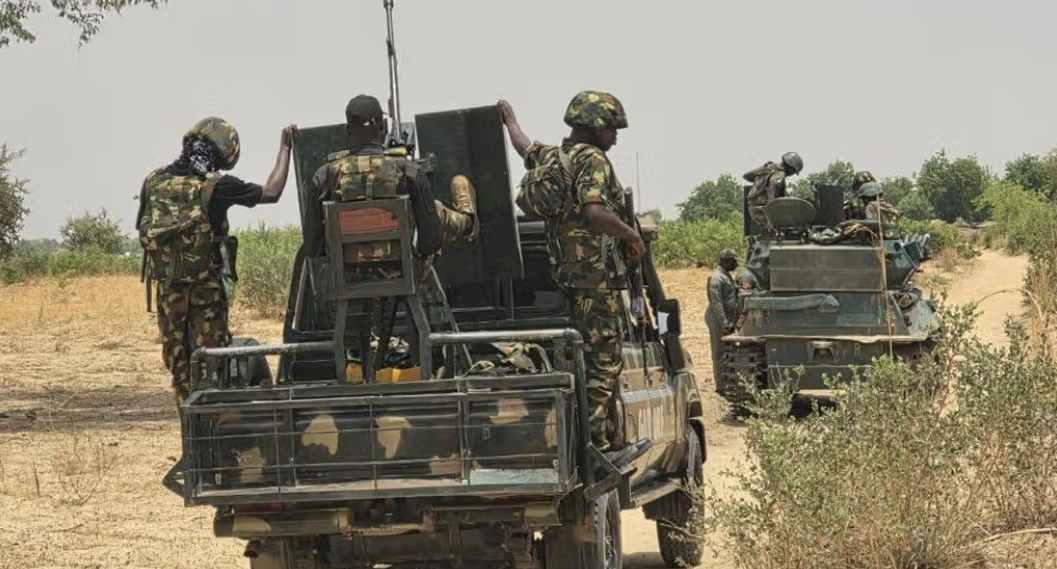
The Air Component of Operation HADIN KAI has destroyed a major terrorist logistics hub and enclave near the abandoned village of Jilli in Gubio Local Government Area of Borno State, following a precision air strike on April 11, 2026.

Military authorities said the operation was driven by sustained Intelligence, Surveillance, and Reconnaissance (ISR) missions over the Bindul–Jilli axis—a known corridor for Islamic State West Africa Province (ISWAP) terrorists and their collaborators.

The strike came after a series of deadly attacks linked to the same network. In January 2026, troops moving from Gubio toward Damasak suffered an Improvised Explosive Device (IED) attack at Bindul, killing eight soldiers and wounding several others. More recently, on April 9, coordinated attacks in Ngamdu and Benisheik were traced back to the same logistics cell.

On the day of the strike, surveillance spotted multiple gun trucks and motorcycles moving toward Jilli, with additional vehicles converging at the same point. Human intelligence sources confirmed the gathering included terrorists, logistics handlers, and collaborators. Following a rigorous targeting process, precision strikes were launched while surveillance aircraft monitored the scene in real time.

Post-strike assessment confirmed the enclave was destroyed with high accuracy. Scores of terrorists were neutralized, and their vehicles and technicals were wrecked. Survivors were seen fleeing in multiple directions. Intelligence later revealed the group was finalizing logistics for coordinated attacks on military positions in the Gubio axis.

In a related development, on April 12, a terrorist logistics courier named Turja Bulu was arrested at Ngamdu Town. During preliminary interrogation, he confessed to participating in the April 9 attack on 29 Brigade location at Benisheik. He also stated that ISWAP had dispatched him from Jilli—where many of his fellow terrorists were hiding—to deliver food to another terrorist group around the Magumeri-Gubio area.

The Theatre Command reiterated that the use of motorcycles remains strictly prohibited across the North East operational theatre, especially in Borno and Yobe States, due to their role in terrorist movement and attacks.

Lieutenant Colonel Sani Uba, Media Information Officer for the Joint Task Force (North East), assured residents that operations would continue with renewed intensity until all terrorist enclaves are dismantled and lasting peace is restored.

Kano Honours Legendary Hajiya Mariya Galadanchi: Celebrating Six Decades of Impactful Broadcasting

By Khalid Imam 

Arguably, in Kano and beyond, if one is searching for one of the most consistent and dominant pioneering female Hausa Muslim broadcasters—whose eloquent voice has shaped and continues to shape generations through a myriad of captivating radio and TV programs—there is no doubt that such a singular, towering presence belongs to the revered and tireless Hajiya Mariya Galadanchi. She is an iconic, multi-talented veteran journalist who is retired but not tired. Hajiya Galadanchi, who spent six decades as a powerful influence and household name synonymous with Radio Kano, a station popularly known as Gidan Bello Dandago, is a popular figure known for her uncommon courage and unshakable faith in God.

An all-round journalist whose foray spans both print and broadcast media, the legendary Hajiya Mariya Galadanchi, popularly known as an anchor of Filin Zaɓi Son Ka, among other programs, began her career as a health worker. Out of a deep passion for the media, she metamorphosed into one of the most dedicated and accomplished radio and television personalities. A skilled radio dramatist, she began her journey into journalism by writing life-transformative articles, mostly addressing issues related to women and children, over half a dozen decades now in the pages of Gaskiya Ta Fi Kwabo. Hajiya Galadanchi ventured into public service in 1964 as a health worker at Marmara Hospital and was later posted to several other hospitals within the old Kano City, where she served with remarkable zeal and dedication.

After joining Radio Kano at the age of 35, initially not as a full-time staff member, she handled women’s programs on Thursdays and children’s programs on Fridays as her first assignments. Thereafter, she went on to anchor and contribute to several notable programs, including Ruguntsumin Salla. Through Zaɓen Sada Zumunci, she mentored many female broadcasters, including Mariya Ummakati. Hajiya Mariya Galadanchi is undoubtedly one of the pioneering Hausa Muslim female broadcasters and can rightly be described as a glass-ceiling breaker, having opened the floodgates for the rise and dominance of women in radio and TV broadcasting in Kano today, many of whom now occupy enviable positions as directors within the public and private media ecosystem in Kano and beyond.

No doubt, her persistent voice is a testimony to a living era, one well-defined by knowledge, brilliance, advocacy, and deep love for culture and the uniqueness of Kano’s traditional ways of life. She mentors the womenfolk on the complexities of managing the home: living with a husband and his relatives, navigating life with co-wives, and raising a successful family. She constantly discusses topics such as pregnancy, childcare, and parenting, while teaching women, especially the young, the best of Hausa traditional cookery, including dishes served during festive seasons and ceremonies.

Acknowledged for her honesty, courage, faith, patience, loyalty, dedication, and respect for time, she was also famously known as one of the first women to ride a bicycle and drive a car in Kano City, being among the few female pioneers to be educated in Western schools in the old Kano City. Hajiya Mariya was born at Kankarofi Ward 97 years ago, in Kano Municipal LGA.

Among the dignitaries who graced the special celebration of the life and times of Hajiya Mariya Galadanchi were the Honourable Commissioner of Information, Ibrahim Abdullahi Waiya; Prof. Abdalla Uba Adamu, former Vice-Chancellor of the National Open University of Nigeria; Prof. Abdulrashid Garba, Vice-Chancellor of Khalifa Isyaku Rabi’u University, Kano (KHAIRUN); and Malam Ibrahim Khalil, among other seasoned and distinguished media practitioners too numerous to mention.

During the event professionally curated by an erudite academic, seasoned broadcaster and popular columnist, Malam Bala Muhammad as a Master of the Ceremony, there was a special appeal to the Kano State Government to name the road between Diso and the junction of Hasiya Bayero—or any other notable monument in Kano—after the veteran broadcaster, Hajiya Mariya. Again, Prof. Abdalla Uba Adamu also called on the organisers to establish a fellowship in her name to promote young female journalists in Kano.

Alhaji Dr Aminu Ladan Abubakar (Alan Waƙa), Sarkin Adabin Harshen Hausa; Mudassir Ƙassim; and Hajiya Fati Nijer thrilled the audience with scintillating songs. Hajiya Rabi Tanko Yakasai, a close associate of the celebrant, also spoke on Hajiya Mariya Galadanchi’s political activism through Jam’iyyar Matan Arewa, urging young females from the North to emulate her.

The Commissioner of Information, Ibrahim Abdullahi Waiya, described Hajiya Mariya Galadanchi as a shining example of a female journalist of great substance and announced the Kano State Government’s donation of ₦10 million as a take-off fund for the proposed Hajiya Mariya Galadanchi Young Female Journalist Fellowship Fund.

The Kano community celebration of Hajiya Mariya Galadanchi at 97, which was attended in large numbers by media practitioners, academics, the ulama, the celebrant’s family and friends, and people from all walks of life, could best be described as a huge success. Dozens of goodwill messages were received, especially from notable female broadcasters in Kano, who expressed deep appreciation for the pioneering mentorship role Hajiya Mariya Galadanchi has tirelessly played.

Some of the major highlights among the series of fascinating activities that made the event memorably captivating were the keynote speech presented by Hajiya A’isha Sule; two separate audio and audiovisual documentaries were presented to the patient audience on the life and times of Hajiya Mariya Galadanchi; and special tributes from both senior and young female broadcasters by Hajiya Hafsah Iliyasu and Hajiya Zainab Sherif, respectively. 

There was also a stimulating panel discussion featuring Maryam Babayaro, Dr Fatima Damagun, A’isha Bello Mahmud, A’isha Sule, and A’isha Usman, moderated by Hajiya Mariya Bakori from Katsina State. To allow feedback from the massive audience, there was a Q&A session, the presentation of awards, and a plaque to the celebrant, led by Malam Sheikh Ibrahim Khalil and Malam Abubakar Darma. The event ended with an exhibition of Hajiya Mariya Galadanchi’s memorabilia, which included her photos, sound bites, broadcast archives, and merit awards.

Khalid Imam is a Kano-based writer, educator and President of Kano Literary Space. He can be reached via email: khalidimam2002@gmail.com.

Governor Badaru and Governor Namadi and the Dutse International Airport: A Misuse of N11.5 Billion of Jigawa State’s Public Funds

–A costly decision demanding accountability, public scrutiny, trust, leadership priorities, and responsibility

By Nura Jibo MRICS, MNIQS, PQS, RQS, UN-DCP

If Muhammad Badaru’s eight-year stewardship as Jigawa State’s governor could not provoke his conscience to reflect on the abandonment of the N11.5 billion Dutse International Airport, from which Jigawa State’s public money was taken and used by Governor Sule Lamido, nothing will! 

If Governor Umar Namadi’s one-year display of overt leadership anger, just to play to the gallery while inspecting projects at Dutse General Hospital and Rasheed Shekoni, is any indication of god-fearing, at this point, he should be seeking Allah’s repentance and forgiveness for neglecting the Dutse International Airport that Governor Sule Lamido spent N11.5 billion to construct.

The issue is: It is not just about campaigning and winning public office. It is not about aspiring to be a governor, senator, minister, or president while relegating public responsibility. Indeed, it is about taking a substantial amount of Jigawa State’s money to build an airport that its ordinary citizens (Talakawa) have never benefited from. It is about earning public trust, accountability, responsibility, and excellence by safeguarding public funds and ensuring that the people of Jigawa State receive value for their money.

Anything short of this, one would inevitably appear before Allah SWT and answer for all misdeeds, inactions, and karmic retribution.

It is very painful to witness a project one participated in constructing being abandoned by Governors Badaru and Namadi after an enormous sum of N11.5 billion was spent on it. And the governors who do this are sleeping with both eyes closed! They forget that a day of reckoning is coming when they must appear before their Creator and answer the most difficult questions of their lives. 

The engineers from Jigawa State’s Due Process involved in this airport project are also unhappy with the abandonment of the Dutse International Airport.

The person who hired this writer as a supervising consultant for Dutse International Airport in 2013, Mallam Rabi’u Shuaibu Kazaure, then director of building at Jigawa State’s Due Process and Project Monitoring Bureau, has passed away. He was a man of integrity, sincerity, and honesty who diligently discharged his duties. May Allah bless him with Jannah and continue to reward his efforts in the airport project. 

Therefore, the deliberate killing and systemic lack of foresight and vision by the two governors regarding the Dutse Airport is not only negligent but also significantly affects the weak, crushing the innocent’s opportunity cost and marginal propensity to invest their billions in agribusiness and other Jigawa State science and technology developments.

Indeed, airport construction and management are not for everyone! It is not merely a governor’s affair! It is not a long-standing academic practice in which a governor would recruit or “shop” lecturers from universities and give them “lucrative” positions in Jigawa State, expecting them to perform miracles, while their true expertise lies in marking students’ scripts for years. They know nothing about industry knowledge beyond their rules of engagement as academics and their involvement in academic staff unionism, which they spent decades pursuing with little success! 

Managing Jigawa State’s departments and agencies is certainly beyond a mere academic exercise. It requires industry knowledge, not academic learning. It does not require mastery of the English language, where certain DGs in Governor Namadi’s cabinet, for example, could deceive the governor with all sorts of English grammar or polemics in the name of “fetching” Jigawa State government investors from abroad.

This could be elaborated more succinctly in a subsequent discussion on the mismanagement of Jigawa State’s funds by Governor Namadi and his DGs on foreign trips under the pretext of seeking investors for Jigawa State. If time permits, photos and videos could be released to substantiate this point!

Now back to the wasteful venture of the Dutse International Airport.

Governor Sule Lamido’s efforts must be acknowledged and appreciated for the construction of the Dutse International Airport. He single-handedly started this project in February 2013 and completed it in 18 months! This is certainly commendable for a governor who is primarily an administrator and a lifelong politician rather than a technical expert.

However, even Governor Lamido’s vision and mission for the airport could be faulted for his limited understanding of how airports are managed globally, particularly when the client (owner) lacks the resources to manage it. This writer has repeatedly communicated with Governor Lamido about the importance of handing over the entire airport to a reputable airline to operate it on behalf of the Jigawa State government. This is akin to an agreement reached with Captain Edward Boyo, the CEO of Overland Airways, who scheduled a three-day flight connecting Abuja, Dutse, and Bauchi. Unfortunately, the memorandum of understanding agreed upon with Overland was not honoured by Governor Badaru and his entire cabinet. Neither was it honoured by Governor Namadi, courtesy of political disputes arising from party differences, which ultimately led to the waste of Jigawa State’s people’s money and resources in perpetuity.

Very recently, in a conversation with top political office-holders in the state, they recounted their ordeals over their inability to make the airport functional and useful.

An investigation revealed that a South African company interested in the Dutse International Airport came and went without arriving at a common standpoint. Ethiopian Airlines was also revealed to have an interest in turning it into a cargo airport, but Governor Badaru and Governor Namadi’s lack of interest has hindered this line of business.

It is, therefore, foolhardy to talk about or dream of good governance when these two governors came and found a functional airport and, provocatively, made it dysfunctional for political reasons and personal interests best known to them, which are diametrically opposed to public interests. With this kind of behaviour alone, Allah SWT will, insha’ Allah, never allow them to go scot-free, given their lack of responsibility and public trust in sustaining the airport for well over 10 years now! The airport could have at least covered its full construction cost by now! 

For instance, the Murtala Mohammed International Airport in Ikeja, Lagos, is a federal asset managed by the Federal Airports Authority of Nigeria (FAAN) and the Nigerian Customs Service (NCS). Its Customs revenue alone as of 2025 was reported at N202.9 billion! The airport’s FAAN revenue in 2024 was the highest in Nigeria, accounting for an average of 67% of its total revenue of N256 billion.

Malam Aminu Kano International Airport in Kano generated N20.2 billion in revenue, accounting for 5.3% of FAAN’s total revenue in 2024!

Therefore, the Dutse International Airport could have generated at least N50 billion in 10 years (2015-2025) if it had not been left idle or used solely for Hajj ceremonial shuttling by Governor Badaru and Governor Namadi.

Though the revenue from the Ikeja and Kano airports goes to the federal government of Nigeria, by comparison, Lagos State and Kano benefit from increased economic activity due to the presence of NAHCO and SAHCO, as well as from personal income taxes paid by workers and businesses operating in the airports’ vicinity.

This is what the people of Jigawa lost due to Governor Badaru and Namadi’s neglect of the Dutse International Airport for well over 10 years! 

Indeed, on a daily basis, Ikeja airport’s customs could generate an average of N555 million in import/customs duties if its reported 2024/2025 revenue of N256 billion is anything to go by. 

Governors Badaru and Namadi’s avoidance of this airport responsibility since 2015, by portraying it as a ceremonial airport for commuting Hajj pilgrims, is not only detrimental but also exposes the political leaders’ lack of foresight and mismanagement of public funds. 

The indecision regarding the Dutse International Airport by Governor Badaru and Governor Namadi contravenes FAAN’s three measurable KPIs, which include on-time operations, revenue growth, and passenger satisfaction.

Solutions 

Globally, airports are assessed against standards and quality. Dutse International Airport was built to standard. Its runway is 3 kilometres long, and the airport’s width is 60 metres. It is, by all standards, suitable for large aircraft such as the Boeing 747 to land on its runway, with an average concrete and asphalt thickness of seven meters! This does not fall short of the global requirements for the longest runways at the world’s biggest and top 10 airports, with an average length of three to five kilometres.

The financial and economic losses at Dutse International Airport are significant due to the Jigawa state government’s lack of leadership priorities, as evidenced by the management of international airports in Rwanda, Addis Ababa, Qatar, Gatwick, and Heathrow, among others. Taking time, for example, by Governor Namadi to go to the Qatari Embassy in Abuja with a very junior high school colleague to meet with the Qatari Ambassador or inviting him to see the airport, is not the way to woo partners or encourage Qatar Airways to partner with Dutse International Airport. The ambassador’s duty is certainly diplomatic, not technical; he is not in any way going to help the Jigawa state government, technically speaking, make its airport useful. The Qatari people are law-abiding individuals known worldwide for their uprightness and accountability. They mostly engage in charitable and educational programs for deprived communities, as witnessed in Gaza, Palestine, Syria, and in Dutse and Hadejia, Nigeria.

To make Dutse International Airport useful, one must look beyond the banal and quibbling issues of political sentiments and personal interests.

The airport could have been taken in partnership with Qatar Airways if the proper partnership channels had been communicated to Qatar Airways’ commercial department in Doha. It could have been salvaged if, for example, direct contact had been established with Rwandan Airlines rather than Ethiopian Airlines. It could have doubled its construction cost in revenue if the two governors had done their homework very well through Jigawa State’s international partnerships and linkages. This department could have liaised with Gatwick or London Heathrow Airports, for example, in the United Kingdom, or even with Frankfurt Airport in Germany, to take over the management of Dutse International Airport and enter an agreement, inter alia and ab initio, at a 50-50 business fee. 

Lufthansa, for example, offers extensive partnerships and connections linking East and North Africa. There is no harm whatsoever in giving the Dutse International Airport management to Frankfurt’s Lufthansa as an up-taker, or to Madrid Barajas Airport (MAD), which is currently interested in African partnerships by shuttling its flights to connect to various African geographical locations such as Chad, Niger Republic, Rwanda, Ghana, Cameroon, Kenya, Uganda, Senegal, and Mali, to mention but a few. 

Royal Air Maroc could also have been a strong partner to the Jigawa State government and to Dutse International Airport, beyond the Overland domestic partnership that was caught up in Badaru’s and Namadi’s political acrobatics. Indeed, Dutse International Airport, within this 10-12-year period of neglect by the two governors, could have been used to provide serious dollars to the Jigawa State government from abroad and a couple of billions of naira on domestic flight arrangements and agreements, because it would have certainly offered the highest frequency of flight influx and a “buffer” zone from Europe to the west and Sahelian Africa, allowing easy accessibility to passengers and cargo into major African airports like Cape Town, Casablanca, and Addis Ababa etc.

Unfortunately, the current governor is busy shuttling between China and India to invite investors to invest in Jigawa State, with minimal progress that is often overamplified by his new media aides.

Therefore, what is wrong, useless, and should be avoided is what an academic once described as hot-air jargon, popularly known as Dogon Turanci. The Jigawa State government should take the management of its international airport seriously by inviting up-takers to handle the airport for a couple of years, with its staff and technical personnel. No Nigerian or Jigawa indigene should be employed to work at the check-in and check-out counters or security points to avoid passengers begging for money (dollars), which is typical of Nigerian-trained and employed airport staff and has caused significant damage to Nigeria’s integrity and national image. 

Nura Jibo writes for the West African Research Association (WARA) and the African Studies Centre at Boston University, United States.

Rebuttals to this piece are welcome and healthy. They can be submitted to jibonura@yahoo.com.

B’Haram Releases Video Of 416 Abducted Women And Children In Borno, Victims Beg For Government Intervention

By Sabiu Abdullahi


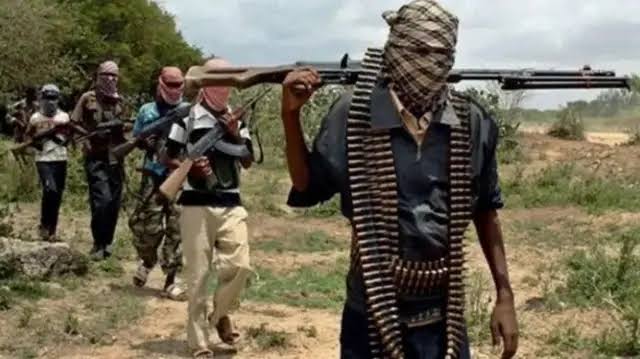
Terrorists believed to be members of Boko Haram faction Jama’atu Ahlis-Sunna Lidda’Awati Wal-Jihad (JAS) have released a video showing 416 abducted women and children from Ngoshe community in Gwoza Local Government Area of Borno State.

The footage shows the captives seated on the ground in an open area while armed insurgents stand guard around them. Some of the gunmen wore face coverings, while others had their identities exposed.

The video was reportedly produced after a request by a group known as the Borno South Youths Alliance, which had demanded proof that the abducted persons were still alive amid ongoing efforts to secure their release.

In the recording, one of the insurgents spoke in Hausa through a loudspeaker, presenting the group and addressing Nigerian authorities.

“All praise is due to Allah, and may peace and blessings be upon the Messenger of Allah and his family. Peace, mercy, and blessings of Allah be upon you,” he began.

“We are members of Jama’atu Ahlis-Sunna Lidda’Awati Wal-Jihad, under the leadership of Imam Abu Umaymatul.

“We have gathered here today to present a few important matters. God willing, we intend to deliver a message to the Government of Nigeria, based on requests made by members of the Borno South East Alliance and others who asked for clarification about the condition of the women from Ngoshe.

“The women of Ngoshe wanted to be seen, and here they are. They are alive and in good condition. We have not harmed them in any way, nor have we mistreated them. We have kept them according to what we believe is our duty before Allah. This is because our religion instructs us to act in this manner.

“Without wasting time, since members of the Borno South East Alliance requested a video so they could see them with their own eyes, we will now allow the women to speak directly. You will hear from them and see them yourselves.”

After the statement, the captives were questioned by the insurgents and asked to confirm their identities and status. A spokesperson among the abducted persons, speaking in Hausa, confirmed they were from Ngoshe and said they were alive.

“First of all, we thank Allah (Subhanahu wa Ta’ala) who brought us to this place. Alhamdulillah, we are grateful.

“We are people from Ngoshe town. This trial and destiny befell us there. By the grace of Allah, we are alive and in good condition, together with our children, women, and elders. All of us are safe.

“Those who were injured or unwell have received treatment and care. Some of our children arrived without clothes, no shirts, no trousers, but they have now been given clothing. We have been provided with shelter and food. Alhamdulillah, we are being taken care of.”

She also expressed emotional distress over the situation and appealed for intervention from the Nigerian government and local leaders.

“Our stay here has not been difficult in terms of basic needs; we have no immediate complaints about our treatment. However, we are deeply worried and distressed because of what has happened to our relatives.

“Some people were killed when an aircraft struck, and others suffered different tragedies. Because of this, we are in emotional distress and constant worry. Our families back home are also anxious; some of them do not even know whether we are alive or dead. But now, with this video, they will at least know that we are alive.

“We are sending this message to the world so that people know we are alive and in good condition.”

She further appealed directly to top officials, including President Bola Tinubu, Vice President Kashim Shettima, Borno State Governor Babagana Zulum, Senator Mohammed Ali Ndume, and other leaders from Gwoza and Southern Borno, urging urgent action to secure their release.

“We are calling on all of them for help, assistance, and intervention.

“We sincerely wish to return to our homes because we are not used to living like this. The lifestyle here is very different from what we are accustomed to. Our children are distressed, we women are distressed, and our families back home are also suffering emotionally.

“Living in a place that is unfamiliar to you is very difficult. We are appealing for intervention so that we can be helped and returned to our homes, reunited with our children, parents, and loved ones.

“War is not good, it only brings suffering.”

Another woman, speaking in a different local language, repeated similar concerns, praising their survival while calling for urgent rescue efforts. The captives also repeatedly thanked their captors and appealed for help.

The video highlights the continuing humanitarian crisis in Nigeria’s North-East, where prolonged insurgency has displaced communities and left many civilians in captivity.

In a related background, earlier reports had indicated repeated attacks on Ngoshe and surrounding areas, including assaults on military bases and civilian settlements, which have led to deaths, destruction of property, and displacement of residents.

Kano Governor Sacks Commissioner for Investment, Shehu Wada Sagagi, Orders Immediate Handover

By Ibrahim Yunusa 

Governor Abba Kabir Yusuf has relieved Alhaji Shehu Wada Sagagi of his duties as Kano State Commissioner for Investment, Commerce and Industry with immediate effect.

 The decision was announced in a statement issued on Thursday by the governor’s spokesperson, Sunusi Bature Dawakin Tofa.

According to the statement, Sagagi has been directed to hand over the ministry’s affairs to the Director of Commerce without delay.

 The move forms part of what the government described as an ongoing strategic realignment aimed at strengthening administrative efficiency and repositioning the state for sustainable growth.

Governor Yusuf expressed appreciation for Sagagi’s contributions during his tenure, particularly in the areas of politics, religion, and support for small and medium enterprises. 

He wished the former commissioner success in his future endeavours and reaffirmed his administration’s commitment to effective service delivery and good governance in Kano State.

This development comes amid ongoing suspicions that some key figures are undermining and backbiting the governor following his split from his former political godfather, Rabi’u Musa Kwankwaso.

Reports also indicate growing confusion within the cabinet and among several appointees in government parastatals, as uncertainty persists over loyalties, specifically on who remains aligned with the governor and who is still loyal to his former mentor.

One Year After Promise, Kano Foreign Scholars Still Await Jobs

By Uzair Adam

One year after Kano State Governor Abba Kabir Yusuf announced automatic employment for 54 postgraduate students trained in India, the beneficiaries say the promise remains unfulfilled, raising concerns about accountability and policy follow-through.

The graduates, who studied at Symbiosis International University under the Kano State Government’s foreign scholarship programme, returned to the state on March 22, 2025. 

The Daily Reality recalls that during an official reception and Iftar held in their honour, the governor declared that the students would be absorbed into the state civil service.

“I was pleased to have Iftar with another set of our students who returned from India after completion of their studies,” the governor said at the time, adding that the 54 beneficiaries would be given automatic employment.

He also urged them to justify the investment made in them by contributing meaningfully to the development of the state, stressing that they should “repay the state by working assiduously.”

However, despite the governor’s public promise of automatic employment, the graduates remain without jobs one year later. 

The delay has created uncertainty and hardship for the scholars, who had planned their careers around the assurance, while no formal communication or timeline has been provided by the authorities.

Speaking on behalf of the affected graduates, a student’s representative who pledged anonymity said the commitment has not been implemented despite repeated follow-ups through appropriate channels.

“During the reception, His Excellency publicly announced automatic employment for all 54 returning scholars,” he said.

He explained that many of the graduates had structured their professional plans around the governor’s promise, but the delay has left them facing uncertainty and hardship. 

According to him, there has been no formal communication or clear timeline from the authorities regarding when the employment will take effect.

He said the situation has persisted for a year despite the group’s efforts to seek clarification.

“We believe this is a matter of public accountability and policy follow-through,” he added, calling for attention to the issue.

The Director General, Media and Publicity to the governor, Sunusi Bature Dawakin Tofa, did not respond to several calls seeking comment. 

Efforts to reach the governor’s Chief Press Secretary, Mustapha Muhammad, were also unsuccessful due to network constraints at his location.

The development comes amid ongoing state government investments in foreign education programmes to build skilled manpower, particularly in critical sectors such as health and education.

Many people believe that delays in implementing such commitments could weaken public confidence in government policies and affect future beneficiaries of similar programmes, even as the affected scholars remain hopeful that the promise will eventually be fulfilled.