Literature

A whirlwind of fate

By Aeesha Abdullahi Alhaji

I winced while taking the journals I studied back into their bookshelf. Next, I rubbed my back slightly due to sitting in one place for so many hours. Then, I remembered I had a funeral to attend later in the day. So, I called Annabelle, my housekeeper, to prepare a light lunch for me to eat while I freshen up for the day’s businesses.

My junior colleague at the office lost his wife while giving birth. As I arrived at the venue, there was a commotion because Mr Andre, the bereaved, refused to allow his deceased wife’s body to be lowered into the grave. He was crying profusely. Looking at his unshaven face and unkempt beard, I knew he must have gone through a lot these past few days.

My eyes burned with unshed eyes, making me remember a fleeting memory of the worse day I pray never happens to any mortal on the face of the earth. I quickly shrugged off the bitter moment and walked over to the crowd gathered around Mr Andre. He was being consoled, but all was futile. He was devasted at the loss of his dear wife. After the burial, Mr Andre refused to leave his wife final resting place.

After an hour of waiting for him at his house to pay my final condolence, his older brother walked in, worries written over him. He attempted to explain to sympathizers how Andre refused to leave the cemetery. I smiled bitterly and told his family members I would get him.

I went back to the funeral ground, met him staring at her final abode, tears running down his cheek. I sat quietly behind him, asking him why he couldn’t accept destiny and let go of what had been ordained by the Creator. After all, death is a plane all of us will board.

He turned to look at me with a grief-stricken face saying, “Prof. Akin, you won’t understand. My wife and I have been through a lot. She had been through thin and thick of life trials and tribulations with me, but when my hard work is paying off today, she is no longer here with me. So what’s the essence of all I have endured getting if my loving wife is not here to enjoy it with me?”

I chuckled, swallowing a bitter taste that erupted in my mouth. I looked into his eyes. “Andrew, whatever has happened to you today, worse of it has happened to others, and I am one of them.”

My statement startled him. Yes, I nodded, adding: “Do you remember how often you asked me about my family, and I often shunned the topic? Let me tell you something today; I am the last of my kin.” Andre looked more surprised in disbelief.

Thinking about it, I started recollecting the sad memory.

“Darling, please, I have a senate meeting at the university. So I won’t be able to come with you to pick up our kids and their families at the airport but please, help me explain to them. But I will try to go home early enough for the family reunion dinner. Bye, my love,” I told my wife.

I hung up the phone with a big relief. I was not happy I could not pick up our kids coming home after a year abroad. But what could I do as official duty at times comes first?

An hour later, I received a call from an unknown number to come to a fatal crash scene involving a motorcade of cars. I ran out of the meeting; only God knew how I got to the accident scene with my sanity intact.

I could not believe my eyes until I saw the dead bodies of my wife, my three kids, daughters-in-law, seven grandchildren all lying dead. My world turned upside down. Though many people lost their lives in that accident, my loss was colossal. I lost my entire family that fateful day.

I later heard the cause of the accident was that they were in the traffic when, unfortunately, an oil tank lost brake and collided with many cars, going up in flames and affecting the other vehicles.

So you see, Mr Andre, your loss is nothing compared to mine. That tragic incident left me shattered. I go home every day from work with no family to welcome me. I have no family left, No kin to continue my lineage. I can no longer have kids talkless of remarrying because I am old now. My bones are crumbling, but what keeps me going is the sheer pleasure and smiles on my students’ faces. I take solace in them, seeing them as my kids.

So, be grateful at least you still have kids your late wife left behind. You better man up and start being a mother and a father to them. Please, don’t mourn for a lifetime because you have kids waiting for you to fill the vacuum of a mother and a father to them. Death is a whirlwind of fate that comes unannounced into our lives, but anyway, we are leaving the seasonal shade of life someday.

Mr Andre looked at me, dumbfounded. My life story numbed him. I patted his back and told him to go home. He stood up, smiling faintly grateful for my kind words and left. I stood watching the sunset in, a favourite pastime of my late wife.

Aeesha Abdullahi Alhaji is a student at the Ibrahim Badamasi Babangida University, Lapai, Niger State, Nigeria. She is also a member of the prestigious Hilltop Creative Art Foundation, Minna Literary Society, etc.

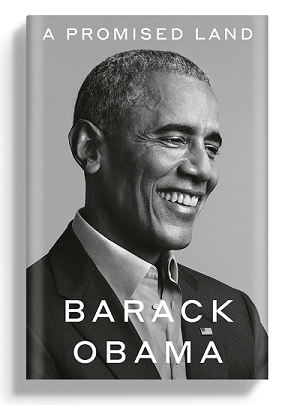
Book Review: ‘A Promised Land’ by Barack Obama

By Marzuq Ungogo

I have read Barack Obama’s A Promised Land for the past five months. I started with an E-book and bought the hard copy, hoping to speed up my reading. While I have read dozens of books this year, this 751-page book is the most impactful I have read.

Obama started with a summary of his life and his foray into politics while trying to avoid repeating details present in the Dreams from My Father and Audacity of Hope. After that, in an impressively comprehensive style, Obama described the chronology of events in the Democratic Party nomination.

One thing was clear that in addition to the fact that he was well prepared, Obama happened to be in the race just in time when there was a need for a fresh voice, a different perspective at the face of the failure of the familiar. His informed opinion about the Middle East and Afghan war, the American economy and the plight of ordinary citizens, have endeared Obama to many. Notably, Obama put forward an agenda for national unity using stories that revealed how much reality and fate Americans share beyond racial and demographic characteristics. The fact that he was running against a respected woman, Hillary Clinton, with a track record of excellence and dedication to family made the competition for the Democratic candidature very tough. However, it did not come as a surprise when Obama won the candidature, making history as the first black person to go that far.

However, the race even got hotter as Obama faced the Republican candidate John McCain and his running mate Sarah Palin. But he was ready! Obama was able to speak in a language young people, progressives, people of colour, minorities, anti-war, affordable healthcare advocates, and environmentalists could understand. Benefiting from a coordinated network of internet-savvy young volunteers, Obama’s message ‘Yes, We Can’ spread far and wide, growing number of supporters and currying more dollar donations. Knowing fully that many of his potential voters, the youth and minorities, were not registered to vote, a part of his campaign was dedicated to ensuring new voters were duly registered.

As Americans went to poll in November 2008, victory was well in sight for the 47-year-old contestant. Barrack Hussain Obama won the seat of the 44th President of the United States of America following a victory in both electoral college and popular votes.

Going forward, the book dedicated some chapters on how Obama assembled his cabinet and staff. There were two key priorities, economy and security. Unfortunately for Obama, he won the seat when a recession was ripe, arising from Wall Street and other financial malpractices. Sadly, the Bush administration underestimated the whole situation and its impact on average citizens who lost both their mortgages and jobs. Therefore, Obama and the new team started working on injecting and stimulating the economy before his inauguration. Given his promise to minimise America’s troops and funding in the Middle East and Afghan war, strategic appointments related to security were also carefully made to ensure that.

Obama was not economical with words on his proud The American Recovery and Reinvestment Act. This detail provides outsiders like me with a deepening explanation of the American senate and house politics in a straightforward language. Factors and concepts such as the filibuster, lobbying, the categories of republicans and democrats, and the arts of political compromises were alive throughout. The project involved injecting 800 billion dollars into the account through multiple sectors. This big money was hoped to halt the worsening of the recession, build consumer and investor confidence and at the same time drive some infrastructure development.

At last, the bill was passed to the relief of the economic team. As Obama would claim later in the book, the project has tremendously contributed to putting the US economy in shape. In addition, Obama worked towards a bill that protects consumers against future recklessness of the banks and other financial institutions. A similar level of detail was used to describe the politicking around Obamacare Act and decarbonisation agenda, and so on.

In a dedicated section of chapters ‘The World as it is’, Obama narrated his global political agenda, actions, visits, and collaborations. Obama generously educated his writer about the structure and place of Iraq and Iran in the scheme of Middle East geopolitics, of course, through the American lens. The writer did the same epistle on Russia, China and other world political players. He narrated his famous visits to Russia, China, Egypt, Japan and other countries in an attempt to promote world peace and extend a handshake with America’s perennial rivals. Although there were some futile attempts at balance, the writer didn’t hesitate to black paint Iran, Russia, and China in that typical American cliche. Nevertheless, ‘A promised land’ provides an interesting short course on global politics.

Another part, ‘In the barrel’, was dedicated to an exhaustive account of Obama’s life as the US President and other day-to-day internal affairs. Disasters, damage control, action, response, bills, acts, and politics all sandwiched in a maze that keeps the president of the USA exhausted. This was followed by the last part, ‘On the High Wire’ centred around the fight against terror and yet again the complex international politics. Notably, Obama proudly gave a detailed account of the Abbottabad raid that led to the successful neutralisation of Osama Bin Laden in 2011. The book was carefully terminated at that point, amplifying victory against evil and a sense of fulfilment for the families of victims of 9/11.

Obama tried not to go into details on the politicking process for the 2012 presidential election. This suggests that the stories were saved for another day, likely packaged currently in a different book.

The author’s mastery of language, the gift of oration, interesting sense of humour and occasional sarcasm have beautified the book in a manner that captures the imagination of the reader.

In summary, the writer successfully highlighted lessons in politics of principles, the audacity to dream the ‘impossible’, the perseverance to push against all odds and the smartness in utilising modern technology and the resource of young people. The book also extolled the virtue of intense preparation for aspiring leaders. In addition, this book highlighted the achievements of Obama’s first presidency, especially the control of economic recession and creation of jobs, better access to healthcare, decarbonisation efforts, international alliance and fight against terror.

Be your neighbour’s keeper

By Adamu Isah Babura


“Baban Khalifa”, Hafsat called me.

I don’t like this Baban “father of” appellation. Since the tradition demands that she, as my wife, should not call me “Muhammad”, which is my name, why not something like “Sweetheart”, “My Love” and so on that she used to give me before we were blessed with children? Khalifa is the nickname of our first child. He too has his real name hidden. I named him after my eldest brother, Abubakar. As another tradition requests, we should not call him by that name. It would look quite disrespectful.

“Baban Khalifa,” she repeated, now a bit louder, interrupting my thoughts.

“Yes,” I responded and looked at her with rapt attention. I knew she wanted something, a request or a favour, I guessed. I would grant her wish, regardless of the difficulty, I said to myself. The setting and timing could not be better.

It was on a peaceful Sunday morning. It had been raining since dawn. The rain began soon after we finished the early dawn prayer (Subh) at the mosque, which was behind our street. We barely reached home when it became so strong. Most likely, those faithful staying behind after the prayer for Zikr could not make it home without getting drenched. Or, they could extend their stay in the small, poorly ventilated mosque, especially as its single door and two tiny windows had to be closed to prevent the rain from coming in. Whatever it was, I was back at home. I slept until after 8:00 am when Hafsat woke me up for breakfast. As usual, she had already arranged everything and more, for she had put on one of her best clothes. There was scented air blowing beautifully from a lighted incense. Moreover, the electricity company had brought back power, which went off during the rain. It is their habit always to take it off whenever it rains. Almost everyone now expects power outage as soon as it starts raining. Quite unusual of my wife today, she insisted that we listen to my favourite music by Nura M. Inuwa. I agreed.

The children were still asleep. After all, nobody would wake them up this early for any reason on a Sunday morning. On the weekends, their Islamic school opens at 2:00 pm. For now, the house was ours, Hafsat and me. I was expecting her to ask for something pricey or a complex task, but she came up with a question I was not ready to answer. No, I could explain it there and then, but I did not want to revisit that unfortunate event that had shaped my life forever.

“I want to know you better,” she uttered with a serious yet smiling face. That was quite uncharacteristic of her. “Tell me, why are you so dovish?” she asked and then added that she had never seen a man like me who, as others, including my friends and hers, told her, acted like a spineless woman. We had never had a little argument since our marriage seven years ago.

Well, I did not know where to begin. Marcus Aurelius, a character in the famous Gladiator movie succinctly said, “Waste no more time arguing what a good man should be. Be one.” Quite early in my life, I started doing exactly that. Additionally, I expected others to do the same, not only for themselves but also for the sake of humanity. I envisioned a world where peace and understanding exist and reign in all quarters. You may call it El-Dorado on earth. I was well aware that some close friends jibe me on that, saying that this world could not be what I wanted and that I was simply an idealist. I never argued further, for I considered myself a pragmatist. Therefore, engaging them in a debate would be futile. None of us was willing to believe with the other, and that would contradict my principle.

People could be born like that, but I was not. I then narrated to Hafsat a life-shaping incident that happened during our childhood to a neighbour called Tijjani. It left an indelible mark on my personality. Since then, I agreed with the Hausa maxim that says “Mutum rahama ne”, meaning “a human being is a mercy”. Before the unfortunate incident, Tijjani never cared to talk to anyone in the community. The most shocking fact about his antisocial behaviour was his being poor. Often, it was the rich that looked down on the low-income individuals. That was not the case here. However, his wife was somehow unlike him as she used to visit one or two friends in the neighbourhood before he forbade her. In short, no one knew anything about him and his family.

On one fateful day, Tijjani, who lived in Hotoro, a suburb of Kano city in those days, took his wife to their house in the metropolis. That was their routine whenever he was travelling. However, quite unusual f their schedule that day, the wife returned to the home in the evening. With a phone in one hand, she picked up a piece of stone and knocked at their door repeatedly, loudly. As she later revealed, he didn’t answer or return her several calls since they parted in the morning. Therefore, she suspected that he might have abandoned the idea to travel and came back home. But, the house was still locked. She frantically called his phone number, again and again, no response. She gave up and went back home.

Days and almost a week passed, nobody heard of Tijjani. All efforts to trace his whereabouts proved in vain. His wife, whose name I cannot recall, could not ask anyone around, for she very well knew that her husband did not interact with anyone. She resorted to reporting the case to the police who later came and forcibly opened the house. To everyone’s sheer shock, they found an almost decomposed body of Tijjani inside their bedroom. No doubt, people in the neighbourhood had been complaining of a strange smell recently. He was gagged, both hands and legs bound with curtains, and his stomach ripped. The house was almost empty, and everything had been packed away. Upon investigation, people in the neighbourhood could only recall seeing some unknown individuals with a truck carting away property from the house. Nobody asked them why, how or anything whatsoever. The few eyewitnesses interviewed by the police thought that Tijjani was simply relocating to another area.

Hafsat’s eyes were already filled with tears. She gently argued that that was the highest form of I-don’t-care attitude on the neighbours’ part and prayed to Allah to rest Tijjani’s soul in peace, and for the punishment of his cruel murderers. Although I said “Amin,” I didn’t agree with her entirely. It takes two to tango. We should be our neighbours’ keepers. Both our religion and culture teach us to do that, for inevitably, we reap what we sow.

Adamu Babura is a lecturer at the Department of English and Literary Studies, Bayero University, Kano. He can be reached via adamubabura@gmail.com.

Onyemelukwe-Onuobi wins NLNG prize for Literature, 2021 worth $100,000

By Hussaina Sufyan Ahmad

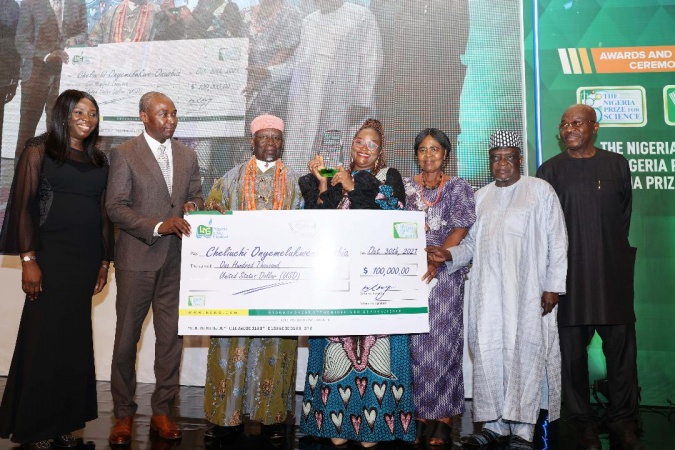
Cheluchi Onyemelukwe-Onuobi at the NLNG award night at Lagos on October 30, 2021, won the $100,000 NLNG Prize for Literature, 2021.

Chairman of the Advisory Board, The Nigeria Prize for Literature & Literary Criticism, Prof Akachi Adimorah-Ezeigbo, disclosed that Cheluchi Onyemelukwe-Onuobi’s “The Son of the House” beat two other shortlisted novels, Abi Dare’s “The Girl with Louding Voice” and Obinna Udenwe’s “Colours of Hatred” to emerge the winner.

“The journey leading to the event started several months ago with the receipt of 202 novels for the Literature Prize since the genre in focus is Prose Fiction. Immediately the Panel of Judges were constituted, they swung into action and despite the challenges imposed by the pandemic, found creative ways to do their work meticulously, using a set of 11 clearly defined and approved Criteria. The Panel of judges also worked in close coordination with the Advisory Board, and the Secretariat of the Prize to produce evaluate and prune down the 202 entries to 50, then 25. From this point, they were able to produce a long list of 11 and thereafter, a shortlist of 3,” she said.

According to Adimorah-Ezeigbo, “Cheluchi Onyemelukwe-Onuobi’s “The Son of the House” was published in 2019 by Parresia Publishers. The novel presents the predicaments of two women, Nwabulu a one-time housemaid and a successful fashion designer; and Julie, an educated woman who lived through tricks, deceits and manipulation, as they meet in captivity.

Both women decide to tell each other their stories. They soon discover that their lives had crossed at different points. The subject matter of the novel is developed through the rupture of traditional plot and the mediation of a single narrative voice. It is made up of a prologue and three-part story moments, each dominated by multiple points of narration, “The Son of the House” is an experimental novel with a complex plot structure made up of the main plot and several subordinate plots that intercept.

Yes-man

By Muhsin Ibrahim

Religion is one single thing Nigerians of whatever dispensations take in high esteem. Religion is often viewed as the opium of the subjugation of the masses or as their Achilles’ heel. To Rahama, the story is different; religion means nothing to her. It is simply an identifier that she’s a Muslim lady. One might think having grown up in a multi-religious house would intuitively teach her to have respect of some sort for religion, wrong. Her Imams and pastors do not use Qur’an or Bible.

A 28-year-old, stout Rahama Tsoho belongs to a disreputable family of three. Her father, an ex-serviceman, divorced their mother when she was only two. She stays with the father, and her sister with the mother. She had longed to marry since her teenage, but she couldn’t. She always attributes this to her look and family. So, she vows to live a better life in the future by hook or crook and begins to use highly effective and expensive bleaching creams to brighten her skin. She also hunts for a suitor via dubious ways such as flaunting her bosoms and derrière at the workplace and visiting the so-called Malamai, fortune-tellers and sorcerers.

After long and tedious trials and retrials, she meets a fine young man in their office, a newly transferred staff from another state. Without a doubt, she knows he’s beyond her league, but she believes it’s worth a try. But, as feared, the fine-looking new staff turned down her offer right away.

“I swear I will marry that guy by all means”, she declares. Soon after that, she starts consulting her fixers for the aid of whatever nature. “All I want”, she confesses to one of them, a mighty sorcerer who lives atop a high mountain, “is to marry him”.

“That’s easy for us as drinking water”, he assured her. “There are, however, rules, as you well know”.

“I am more than ready to abide by them. All of them, provided my wish will be granted”.

For a start, she’s instructed to visit their family house, which is far away, which is uncommon in the culture of that locality. She unhesitatingly goes. She introduces herself as his colleague. Simple. She, throughout her stay, behaves the most innocent girl-type and spreads greetings to his stepmother and siblings and everyone who cares to respond.

Oga Rabiu has been very helpful”, she warily announces. “I, therefore, felt duty-bound to visit his family as I am here for another reason, actually a relative’s wedding”.

In the evening of the same day, I saw Rabiu looking bothered and lonely. I was about to ask him what was up when he told me about Rahama. He said she was a magic-savvy lady who shamelessly told him their marriage would yield many blessings. When he asked her how she knew that, she said her Mallam told her.

I was bewildered. I quite well know that she’s neither fit for him nor his scholastic family. He halts my busy mind, which is trying hard to dissect the whole scenario: “Muhammad”, he calls my name, “marrying Rahama would be the greatest mistake in my life”. That relieved my besieged mind, for I was contemplating whether or not I should tell him not to accept her proposal. “So, rest assured; I will avoid it like the plague”.

A few days or weeks, I can’t recall exactly, passed by, and I heard nothing from my dear neighbour cum friend, Rabiu or about Rahama’s blunt, in fact, unheard-of proposal. I had just started thinking the issue was dead and buried for good when he came to me with a bombshell.

“I am getting married next week”.

Wow! I said. I know he and his younger brother have been searching for a fitting life partner for him in the neighbourhoods. I also know he’s rich enough to solemnise his marriage within a few days if both parties agree. Thus, I ask:

“Who’s the lucky girl?”

His look changed from thrilled to timidity in a split second. I wish I could retract my question. But, in this deportment, he managed to respond: “Rahama”.

After calculating the atmosphere, I feel convinced that there is no need for any further explanation on how it comes to that. Her magic, shameless pursuit and insincere insistence have ultimately worked out. Therefore, I pray for the Almighty to bless the union and call it a day.

A few years later, I began to think that we all, who earlier condemned her, were proven wrong. She seems a wife everyone would want to have: caring, loving, dutiful, and generous towards him and his family. Yet, her significant frailty remains in how she handles religion. That too, we reason that she’s from a different background. Therefore, we shouldn’t expect her to behave the way we do or as we want.

Unbeknown to us, she’s simply buying time to portray her authentic self. She’s a wolf in sheep’s cloth. She is now doing the unthinkable; Rabiu has literally been her “yes man”. He worships her; he does everything to please her and parts with everyone she doesn’t like, including his brothers and sisters. He’s, to sum it up, blanketed in her world.

Rabiu is known for much discretion, but not any longer. You dare to tell him your undisclosed secret; you would hear it spoken of in the neighbourhoods. If you ask who told them, they would say Rahama.

Uncharacteristically enough and against Islam, Rabiu has, on several instances, bequeathed his wealth to be given to her should he die, as they don’t have any children yet. He cannot even reflect or recall that his father, who should rightly get the lion’s share, is still alive.

There is a single path to get to Rabiu now, and that’s through Rahama. Rabiu is for Rahama, and Rahama is for her family and pocket. He sees, but he cannot decipher. So everyone believes that he’s conjured. And that doesn’t last forever.

Muhsin Ibrahim is a student and staff at the Institute of African Studies, University of Cologne. He can be reached via muhsin2008@gmail.com.