Literature

The Messenger

At a time when ignorance reigns 

When human’s soul lost its sense

Amidst Banu Hashim emerged a light

Which illuminations light the earth 

He led the Beduins on the right path

To save them from God’s wrath 

He was sent to the whole of humanity

To be the doctor of the heart and mind

I envy the cloud above his head 

Which followed and gave him shade

I envy the disciples that learnt from him

They learnt the Qur’an directly from him

I envy the soldiers that went on Jihad

For if I were there, I would work hard

I envy the eye that stared at his face 

It’s the most handsome of the Human race

I envy the she-camel that led his Mi’irage

For it was very great a voyage

I envy the spider that sprong its web

Which appeared to the foes as a cobweb

I envy the cup that gave him drink

For it fed his tongue, the truthful ink

I envy those that smelled his scent 

For his body emanated smell; fragrant

I envy the pot that cooked him food

Not excluding the recipes and firewood

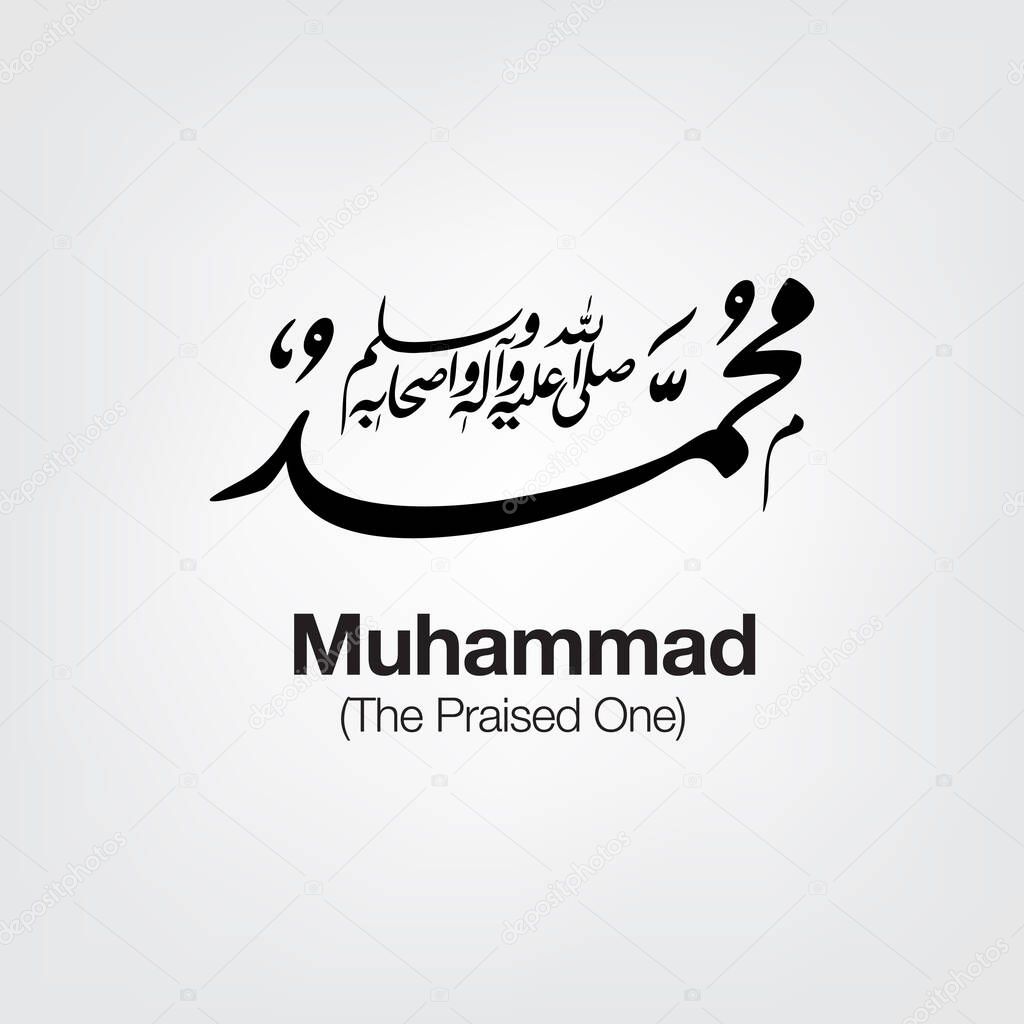
He is Muhammad, the chosen one

He is Ahmad; the praised one

Those are the few I can mention

For his blessings have no dimension

Written by

Hussain Abdullahi,

©Avicenna

PWI at 6: A Northern Nigerian Literary Voyage

By Shehu Mubarak Sulaiman

“I believe that the best learning process of any kind of craft is to look at the works of others” – Wole Soyinka

About a month ago, I woke up to a message on my Facebook Messenger. I was perplexed as to why a message would come in that early. It was dawn, and the skies had not brightened significantly enough for the layman’s morning to be declared.

The sender was someone who had once informed me of his interest in poetry. He had slid into my inbox a couple of months ago, and had registered his love for my writings, after which he requested that I mentored him.

Without wasting much time, I had introduced him to Poetic Wednesdays Initiative and urged him to follow-up on their activities. I had also introduced him to similar platforms, like the Poets in Nigeria Initiative Facebook Group.

 A week later, I sent him a flyer for a forthcoming workshop and asked him to register. The workshop was organized by Poetic Wednesdays Initiative, and was to be facilitated by top-notch poets: Umar Abubakar Sidi and Dr. Ismail Bala. To cut the long story short and hit the nail on the head, Abdul-Rahman Jafaru Wali, a medical student of Ahmadu Bello University, Zaria was the person in my inbox.

He had messaged me that early to inform me of his emergence as one of the ten winners of the recently-concluded “The Nigeria I See” poetry competition organized by MOP (Movement of the People). His feat had come just about a month after he had registered for a workshop organized by Poetic Wednesdays Initiative.

That is a practical portrayal of how much of a platform Poetic Wednesdays Initiative is, one does not come and leave empty-handed.

For three years now, I have been approached consistently by people slightly younger or even older than I am. Their solicitation has over the years lost every element of surprise. Whenever I receive a message from a stranger on Facebook, half of the time, it’s about poetry writing or writing pertaining to other genres of literature.

The question had always been the same from all of these people. They keep asking: “How can I learn poetry?” This is such a difficult question to answer, as there is a never-ending debate about whether poetry writing is an innate or a learnt skill.

Regardless, I refer back to Wole Soyinka’s quote about learning the craft of writing; how it relies heavily on imitation, and Poetic Wednesdays Initiative had always been my first recommendation for them.

First, if the advances are offline, I will ask them if they have a Facebook account. And if they answer in the affirmative, I’d urge them to like the page, and submit poems of any quality every Wednesday of the week. Over the years, I have lost count of people I had introduced to this platform.  Some of them have now grown to become a significant fraction of the finest writers that we have around.

The journey of these wonderful poets and wannabe poets reminds me of my own journey. I had started just like them, a newbie, and a sprouting seed.  In the concluding months of the year 2016, I had grown tired of talking about my dream of becoming a writer. The more I talked about it, the more I felt like a fraud, my impostor syndrome was becoming more and more intense that I had contemplated giving up writing altogether.

I was at the crossroads, one road led to an Eldorado of a life I had always made up in my head; the fantasies of what a celebrated writer’s life seems, and the other led to a path of giving up, a one-way route to despair.

Being a science student was more than enough deterrent already. I talked to a friend who had graduated from the university a year before me and who I believe had more life experience than I. He spoke of his friend called Salim Yunusa, who has founded this small literary platform that aims at nurturing young talents in literary-inclined endeavors.

I talked to Salim Yunusa and he introduced me to a platform called Poetic Wednesdays, that was before it became Poetic Wednesdays Initiative. It was the newly-founded platform of his. I had written a couple of poems before then, but I had posted none, they were all in my phone’s notepad, longing to be seen.

So, all I did was waited for that fateful Wednesday before making my entry. My poem was handpicked and afterwards posted on the page. I followed the poem up, and relished some of the praise-coated comments. That was my first official encounter with poem writing.

As time went by, submissions from me became more and more regular. I enjoyed every bit of it; the praise, the feeling of having written something someone else enjoyed reading. Amidst all that nursing school monotony, consistent memorization, and voracious reading to stay afloat, I found an escape.

I had started to look forward to every Wednesday, it felt refreshing reading through poems on the page, and sometimes using them as a blueprint to craft mine. I started to make friends online, Facebook transfigured from a place where I come to catch up on viral gossip, or post pictures, to a place where I have direct contact with intellectuals and like minds. My time online started to become more of an educative endeavor rather than a fun-seeking one.

Weeks passed by and I had started to play with different themes, I had become a favorite on the platform. People looked forward to every Wednesday, so they could catch a glimpse of my poem and savor all its flavors. I had copied styles of poets like Maryam Gatawa, Salim Yunusa, Sani Ammani, Nasiba Babale, and a host of others, before I had come to find my feet.

In 2018, there was a literary hangout somewhere in Ahmadu Bello University, Zaria organized by this selfless platform. We dined, and recited poems for the relish of fellow poets and literature lovers present. We had a swell time. In 2019, I rendered my masterpiece titled “I AM NORTH” at one of Poetic Wednesday Initiative’s get-together at Kongo Campus, Ahmadu Bello University, Zaria.

It is the reception it received that had led me to promoting it on different platforms. The video of the poem was played at the 2020 edition of the Nigerian Students Poetry Prize event that held in Lagos. The written form of the poem was published on Daily Trust Newspapers, Yasmin El-Rufai Foundation official website, and other notable platforms in Nigeria.

The creatively titled essay of Sa’id Sa’ad “Poetifying the North” is not a coincidence. I particularly love the witty coinage of the word ‘Poetifying’. Indeed, the North has been ‘Poetified’.   Today, in northern Nigeria, as opposed to the nearest past, there is a resurgence of literary activities and discussions like never before. There has been a fast-rising awareness of what literature stands for, and many have continued to embrace it.

Virtually all the states in northern Nigeria have one festival or the other, celebrating literature and further educating young minds on the importance of both literature in English as well as in other indigenous languages. This is not to say that the region had always been dormant in the realms of literature and arts, that won’t be fair to a region that has produced notable writers like Helon Habila, Abubakar Imam Kagara, Abuabakar Adam Ibrahim, Ahmed Maiwada, Ismail Bala, Aliyu Kamal, Victor Dugga, Maria Ajima, Zainab Alkali, Abubakar Gimba, and many others.

It is to say that the awareness about writing, reading, and other literary-inclined endeavors has been quite unprecedented in the last decade. Many young people have come to find it as interesting as any other thing young people enjoy. There are now more festivals, literary contests, literary magazines, literary organizations, school-based literary clubs and so on.

The younger generation had come to transform reading and writing from a tortuous exercise to something exceptionally pleasurable.

The perception towards literature has taken an entirely different dimension. If I am asked to pinpoint literary organizations in the north that have contributed immensely to this growth and literary resurgence, I will place Poetic Wednesdays Initiative amongst the first five on my list.

For the fact that it deals basically with young people and neophytes who may have or have not written anything before, it lays a solid foundation for those who develop cold feet when literary matters are being brought to the table.

This is quite hypothetical, but if one is to assemble ten young writers in northern Nigeria today, I am rest assured that two to three of them would attribute their literary indoctrination and growth from having to read, follow, or interact with poets and literature lovers like the likes of Salim Yunusa, Nasiba Babale, Aliyu Jalal, Mujahid Ameen Lilo, Abdulbasit Abubakar Adamu, Abdul-Rahman Abu-Yaman, Hajaar Muhammad Bashar,Usman Karofi, Maryam Gatawa, Sani Ammani, Abduljalal Musa Aliyu, Sa’id Sa’ad Ababakar and many more.

These writers that I have all had or still have something to do with Poetic Wednesdays Initiative. Nothing makes one more proudhearted.

Poetic Wednesdays Initiative’s six years anniversary is a celebration of poetry, literature, passion, creativity, community development, man-power development, and social change. As it stands, the initiative has organized offline creative writing workshops for more than three hundred secondary school students in Kano, Katsina, Yobe, and Kaduna. It has organized several literary hangouts for free, while also partnering with literary organizations like PIN (Poets in Nigeria), Ahmadu Bello University Arts Festival (ABUFEST), The Arts-Muse Fair, Open Arts, Creative Writer’s club, ABU, Minna Book and Arts Festival (MinnaBAF), Hausa International Book and Arts Festival (HIBAF) and many others, all to promote literary activities, especially in northern Nigeria.  

If this literary organization is assisted in its selfless strides, the future of literature in northern Nigeria will be as rosy as it could ever get.
Poetic Wednesdays: Putting us on the right side of history

By Junaid Sharfadi 

For many a century, poetry has been used as a veritable tool to pass on religious, historical and social ideas in northern Nigeria. In Kano, for instance, scholars during my grandad’s generation – and beyond – were good at deploying Arabic and Hausa poetic means when forming an opinion.

Women and children too never missed an opportunity to ululate and chant poetic verses, laden with moral messages, when conveying a bride or on other occasions. The famous Charmandudu poem or the works of Sultan Bello, Aƙilu Aliyu, Nasir Kabara, Mudi Spikin, Asma’u Bint Fodio and Modibbo Kilo serve as an example.

Thus, Art and Culture enthusiasts and promoters like the late Abubakar Gimba or Professor Abdallah Uba Adamu would be delighted to see a literary fraternity sprouting from the fertile land of northern Nigeria, spreading its maturing branches across the country. 

Poetic Wednesday (PW) Initiatives started six years ago as an online platform for poets to engage, grow, entertain and convey impactful messages every Wednesday. From agriculture to artificial intelligence, climate change, peace, conflict, education, love etc. the group writes on diverse, important issues.

The founders, led by Salim Yunusa, have succeeded in unleashing the full potentials of the weekly participants by critiquing and publishing their beautiful and virgin poems that drown readers into poemgasms. Budding poets have since joined to unbutton their poetic minds on marginless screens. No boundaries or limitations, just pure chutzpah and truth that reveal the primordial yet sacred content of the heart.

It is imperative to state that Poetic Wednesdays’ remarkable online presence has been effectively utilized in organizing webinars, competitions and workshops to fuel the passion for literature among youth. Prof. Hussein Nasr was right when he emphasized the significance of poetry in shaping Persian, Arab and Chinese societies. Therefore, with literary groups like PW, this society is on the right side of history.

Consolidating literary strides: Six years of Poetic Wednesday initiative

By Tijjani Muhammad Musa

Poetic Wednesday Initiatives (PW) was started by a group of poets of Arewa extract, but global in netizenry that have their muses tied confidently and securely to their minds.

Young, talented, prolific and spontaneous males and females write poetry with a passion that can surpass the fieriness of the sun as well as the soft and gentle subtleness of a sprouting flower.

As a poet myself, I have had close contact with the founding pillars of the movement and have interacted poetically with their brilliant works at an individual level on various literary platforms on and offline.

And when they, Salim Yunusa, Nasiba Babale, Abdulbasit Abubakar Adamu and a few others decided to unite as one, pulling their writing prowess and resources together and initiating PW, I knew something big was in the offing.

What I find fascinating about the whole Poetic Wednesday Initiatives thing is the innovation and strategy with which the youthful minds developed the idea into a viable literary concept that has turned out to be a force reckon with.

Soon, it became the in-thing to have a poet’s piece published on their platform or else it’s not worth reading. Everybody eventually started talking about the beautiful works coming from different hitherto unknown bards, all thanks to their featuring on Poetic Wednesday.

Budding poets on this side of the divide and those across the Niger river found it a challenge to up their writings to meet the unofficial standards set by the PW team. And on social media, the “Poetic Wednesday!” echo was all over the place.

To encourage further participation by shy and underdeveloped poets, PW started offering poetic lessons and coaching to young and not so young struggling poets to develop their skills. They even began a state by state tour in which they taught many the basics of writing good poetry.

Many who have benefitted from such an initiative have developed not just their words craftsmanship, but the confidence to share their poetry on various social media poetry sites. So many were the collections had never seen the light of the day earlier.

There is no doubt that the initiative within the first six (6) of its existence has successfully awakened the inert poets residing in many of us. The question now on many people’s minds is; how do PW consolidate on its success and achievements so far?

Well, for a start, PW is no more a mere platform for poetic talents, both budding, seasoned or veterans, to come and showcase their creative stuff and then walk away. The PW guys have turned the set-up into a fully incorporated business entity. Way to go!

Having been upgraded into a registered business outfit, PW is hoped to set out not only to promote creative literary works but, in collaboration with other stakeholders, to make it its affair to promote, sponsor, and publish writings from writers and poets, making them published authors among other things.

As part of their future strives, PW should also look into the potential of organizing literary workshops, seminars, webinars, shows etc. that will give opportunities to talents in the literary circle to be taught how to measure up in meeting requirements for entering and winning competitions and contests at local, national and international levels.

It will also be an outstanding achievement on PW’s part if it can organize sponsored literary competitions and contests for primary, secondary, and even tertiary institutions to discover hidden literary talents in society and connect them with corporate sponsors to publish their books and anthologies.

I would not mind seeing PW start an institution of learning where poetry, poets and writers in other genres of literature from across the world can find a haven to come and exchange ideas and technical knowhow towards furthering the development of writing skills in various languages such as Hausa, Yoruba, Igbo, Nupe, Kanuri among others via the art of writing.

Congratulations to the PW team for achieving such a monumental milestone. It has been six exciting and value-adding years for society. This is definitely worth going to the moon for. Thus we are pleased to associate with you and your success and believe that if careful planning, focus and dedication to execution would hold sway, more wins are assuredly guaranteed.

Tijjani Muhammad Musa – Poetic Tee is the Chairman of the Association of Nigerian Authors (ANA) Kano Chapter.

Jolly times with Poetic Wednesday

By Namse Udosen

I came across Poetic Wednesday on Facebook. It was refreshing to see young people telling their stories in verse. During the Covid-19 lockdown, I followed keenly as Eclectic voices sang tunes that ranged from despair to hope.

Poetry is a beautiful part of literature often not paid deserved attention in this climes. It breathes colours and creates philosophy. Therefore, immersing myself in the words of the poets of Poetic Wednesday provides me with a refreshing view of life in Northern Nigeria.

Aside from providing an outlet on social media for budding poets, they have organized a series of offline creative writing workshops for more than 300 secondary school students in Kano, Katsina, Yobe, and Kaduna. These workshops provide opportunities for non-formal education in creative writing. These workshops also expand the thinking range of these students and them better in their academic work. As a result, many young writers have participated in and won writing competitions which are essential for building confidence.

Poetic Wednesday has used its online presence to drive narrative around pressing societal issues in Arewa. The works have been bold and daring, covering domestic violence, Almajirci, drug abuse, and girl-child education. The conservative toga around Northern Nigeria is regularly broken by the strength of the poetry published.

I have also had the opportunity of attending some of the physical poetry events. Asides from the big players in Kaduna, they have one of the best poetry events in Kaduna.

They have been able to collaborate and partner with several literary organizations such as The Art-Muse Fair, Open Arts, Ahmadu Bello University Arts Festival (ABUFEST), Poets In Nigeria (PIN), Creative Writers Club, ABU Zaria, Minna Book and Arts Festival (MinnaBAF), For The Love of Poetry, Campus Watch, The AlhanIslam Tutoring Center, Chapter One, Open Arts, Hausa International Book and Arts Festival and several others to support and promote literary activities.

I am glad to be part of their growth and successes. I don’t know where they get their drive from, but I appreciate the sacrifices of the young men and women behind the initiative. Long live Poetic Wednesday.

Namse Udosen wrote from Kaduna via namse.udosen@gmail.com.

Who can deliver us from the clutches of tyrants in the jungle?

Nigerian Universities lament…

Are we not akin to nursing mothers?

With maternal tenderness and compassion, we breed.

Etiquettes and knowledge in our students

Isn’t it from our breast they suckle?

The milk of freedom and wisdom

To enable them differentiate right from wrong

And to make their future bright

But melancholically,  with choppers, these tyrants unceasingly chopped off our udders.

Who delivers us from the clutches of tyrants in the jungle? 

Nigerian students lament

Dear Mother, beloved patron of our course.

In every whisper, they hear your anguish

In lieu of salvation, to the ground, they malevolently choose to turn their ears.

From the serenity of academic society, they always exile us

To the ennui of waiting idly in our parents’ home

When and what will halt this malice?

When do we have our basic rights to education?

Who will shake sense in the diseased brain of these monsters?

Who can deliver us from their shackles?

Inhabitants of Northern Nigeria lament.

Our beloved students and varsities

Your blues and agonies we are sorry for…

By her visage, we say the country is extremely sick

And remedy from the omnipotent Lord we should only seek 

Strong security measures they feigned

Yet in homes, our lives are at stake

We are famished but our  farmlands irrigate with our blood

Enroute to worship, work,  business places we are waylaid

Quotidian reports place our pogroms and theft at a toll of  hundreds of thousands rate

But to the mercy of the blood-sucking beast we are always left.

Chorus: God we are helpless in the hands of tyrants. 

Only You can deliver us from the clutches of their mischief…

Abba Muhammad Tawfiq is a 500L Medical Rehabilitation Student University Of Maiduguri.

A moment with the late Abubakar Gimba

By Umar Nasale Ibrahim

Whoever wants live in the world with others after his body leaves the open space should write. A reader, they say, lives a thousand lives before he dies. A writer, as he is also a reader, lives many other lives after he dies. Thus, a writer benefits more than a reader.

Abubakar Gimba died some years back, leaving a handful of books of great might to the posterity to enjoy. Although I haven’t met him to learn of his living policies yet, he had sent them to me before he departed, reaching me late the previous year. He published many books, out of which only three came to me to read for the time being.

“Witnesses to Tears” is the first I encountered, and out of pleasure and amusement of how I enjoyed it, I looked for “Sacred Apples”. Not long after finishing it, a friend came with “Footprints”, and I snatched it to read. These are the books, out of almost twelve publications he had/has, I could lay my hands on. Reading them has been like a conversation of the admonition of how to live with others. In fact, this is my takeaway from the books.

“Footprints”, for example, is permeated with political inequities of the civilian and military governments of a fictional state I presume to be Nigeria. The political paradox discussed in the book, in the end, turned out not to be what I learned from it. The social relationship of the characters in the narration that develops its plot still fascinates me. Though in this regard, one may say that the writer is conscious of it, not all the readers may apparently take care of it.

The central home in the book is composed of two living parents with three children. Two males and a female, though the other male is much of a minor character. The female child, Farah, is a university graduate teaching at a secondary school her younger brother joins later in the book. This is one of the fascinating things the book has left me with. The male parent, Jibran, was a teacher, so his child became one. She engages in a relationship with her co-teachers, and Jibran has never been aversed in the relationship. The open-arm welcome to the teaching profession, the loving arms with which it is embraced and the burning desire to turn the lives of others in the book through the good profession is an emulable action.

That’s one. And to be precise, not to say much, the most important other issue is the interfaith relationship of the characters. Haytham and Basil are the intimate co-working mates of our female character, Farah. Haytham is a Christian and has been the boyfriend of Farah for a long time before Basil turned to show interest in her and thus married her later. The duo has become constant visitors of the house, first as friends, for courtesy and later, for a date. No matter the nature of the visit, Jibran would warmly engage them in conversation about the leadership of the country and the way out. Farah, with her father, would be supporting the country’s civilian activists to be given power, while others would intellectually be opposing her views. Usually, the conversations last long and no way in it one would dare include religion in it. The actual outlook of one’s humanity is the concern.

This was ringing in my ears while I was reading the book. Just telling me of how Gimba lived in the community he lived. And for sure, he was a religious man of dignity. But, to say he was a reader is just an insult to his reading avidity.

May Jannatul Firdaus be his current comforting home, amin

Umar Nasale Ibrahim can be reached via: umarnasaleibrahim@gmail.com.

Mentorship is all they need

By Maryam Muhammad Lawan

They both entered Ammi’s room with crestfallen faces.

“Ammi, I don’t know what’s wrong with this boy. I saw him in the afternoon wandering about the street with those ludicrous coteries and now with a gamepad instead of a book!” Yaaya exclaimed. 

Ammi sighed as if she could not utter a word.

I know she could, for she has been trying her best. Anis would only pick his book to study when Ammi sounds emphatic. Not sure if it’s hearty, for he would start to sleep shortly after he starts reading, and that will be the end. 

Yaaya broke the silence in the silent room with a query. “What exactly do you want?”

Mentorship! I answered the question for Anis quiescently.

 He continued, “Unless you straighten up and fly right, our efforts will be fruitless.”

Anis is blessed with a quick cognitive capacity but is prone to play.

 “I’ll try my best and make sure he get his acts together, but he’s listless now. Tomorrow will be a better day,” I said to myself. 

The Next Day

I stealthily entered Anis’s room and met him ironing his sport wears. 

 “This is supposed to be done before today, my friend,” I said teasingly.

 He replied amusingly, “I heard you, but not well. However, I may hear you well when you go out and say Assalaamu Alaikum.”

Deep down, I know he’s trying to requite, for this is always what I say whenever he bangs into my room without saying the Salaam. 

I went out, said the Salaam and entered. 

I soothingly asked about his preparation(s) for the forthcoming exams.

 “Which preparation?” He asked. “Y’all should know that this JAMB is just luck,” he added. 

“So you wrote the exams before, wow! What was your score? “I uttered innocuously. 

“Look, Anis, can you please give me a listening ear?” This time around, it’s more of motherly. 

He switched off the iron and turned his attention to me. 

“Last year, when I did my JAMB examination, were you not proud of my score? Were you not the one that added that to your status with ‘can ur sis be brilliant like this’ as the caption? Do you remember how that result trended? Why? It’s all because of the score, Anis. I wasn’t the only one that wrote JAMB that same year, but mine trended most.” Can you remember how I read hard? Why don’t you do that, Anis?”

The room was silent for a while.  

“There’s nothing like luck, except that in almost everything, there may be a refutation. Some candidates may prepare well, but fail, while others will pass without preparing, but this is a hen’s teeth. I want you to train hard and pray harder, please, dear. Will you do that? “ 

He astonishingly answered in the affirmation. 

“I remember how some students mocked us (me and my friends) just because we were preparing hard. How foolish? None of them scored more than 130. Karina was among them; she scored 98. I know you can still remember that. So, in case you come across those sets of people, get them the cold shoulder. But, eventually, we shall smile together,” I said. 

“It’s almost 7:30 am. Let me leave before your school bus arrives. Peace out, bro, I said and added “no procrastination please,” when exiting out of the room. 

“Anis!! I shall celebrate with you as well, “I said this when I saw him reading voraciously after coming back from Islamiya in the evening. 

I could see happiness in Ammi’s and Yaaya’s faces. 

It’s time for the Maghrib prayers, so the young boy must keep everything and pray. 

He stood up while uttering, “So help us, God.” I wasn’t the only one that said “Ameen.”

Yaaya was at the parlour, ready to move on to the mosque, while Ammi was there to pick the phone she left at the dining table. I, Yaaya and Ammi said that Ameen happily.  

The young boy moved on to the restroom to perform his ablution.

 He held Ammi and Yaaya in awe, they happily prayed for him, and they both left. 

Maryam Muhammad Lawal wrote from Kaduna via mmafamam@gmail.com.

A day in the jungle of love

By Uzair Adam Imam

Looking at her eyes, it was clear that the decision taken by her parents wasn’t favourable. Soon, a shiver began to run down my spine that I couldn’t help standing, but fell to my knees. My hands supported my head, and I quickly sank deeply into the thought of how our love led to the ruination.

Hot-felt tears had already begun racing down my innocent cheeks; I felt drunk with the world playing magic to me, turning around like a bicycle wheel peddled by a fast rider. However, I couldn’t tell about happenings around me.

I got started when her soft hands held both of mine tightly. She lifted me and drew me closer to her; then she whispered into my ears: “I can’t let you go, dear,” she said with her engrossing eyes which tore my heart out looking into mine, then continued “, All creatures have various can’t do-without things. Your love is to me as water is to a fish.”

“It’s indeed known to everyone that we love each other and no word can describe our relationship – it’s, without a doubt, incalculable and immeasurable,” I responded, paused, cleared my throat and continued, “this is our destiny, and we’ve no option but to accept it.”

“I have an idea,” she said.

“What can that be?” I quickly interrogated.

“We shouldn’t run away to save our love and get a secret marriage elsewhere,” she suggested.

“Certainly no! Love is a sacrifice, and now it’s my turn to pay you back, for I’m indebted to you beyond the settlement,” I said rather emotionally and added, “if you really love me, accept it.”

“I do for your sake. But a favour, please! Don’t forget me for whatsoever reason. For me, you’re undeletable; the blood that pumps by my heart and circulates in me.” She retorted hopefully with misty eyes.

“I won’t!” I said. “You’re indeed unforgettable. Even though the thought of losing you would have soon killed me, my life won’t be for nothing because I have very good news for my friends and relatives who have gotten their residence permit in the great beyond many years now – the story of our exemplary love,” I managed to say though in a shaky voice.

For the uncertainty on when our next meeting shall be again, we departed after getting our point across to each other. I stood to leave but only to feel forcefully halted; as I turned, it was her hand clutching the tail end of my kaftan. She smiled, then words flowed on her blessed lips, “we’re destined to each other. So I know we’ll reunite again.”

Her words created in me the reflection of the stream of affection we’ve passed through. No love tangle had ever existed in our voyage since we began crushing on each other. So that our relationship had always been quarrel-free, I found it difficult to reply to her words. Instead, I nodded and smiled warmly. But inside me, my mind grew heavier and my heartbeat at the rate of three times a second or so, I thought, making me doubt my chest’s ability to bear it.

I didn’t wait for a taxi or bus. Therefore, I made for home and arrived after a trek of more than an hour. I entered my dilapidated room, laid on my ramshackle and crumpled bed with my head conveniently placed atop a decaying pillow made of dirty old clothes, looking high up to the dusty and unworkable ceiling fan. I was, all this while, trying to discard the thought of my execrable situation with which I became like a conjoined-twin, but yet failed. My heart was enveloped with the flashback of my first encounter with Aisha, to mention her name.

After four years of silence, one blessed Monday on my way to call on my friend, I saw a pretty girl of about eighteen, the apparel of whom I instantly admired, the beauty of whom shouted for attention. I tried but failed to hide my surprise that was now all over my face, so she couldn’t notice.

As she came nearer, the pleasant scent of the Malaysian perfume, she wore struck my nostrils. She gave me an attractive, though tricky, smile.

The girl alluringly passed by without uttering a word. Her beauty is indeed beyond description. But, to my utmost surprise, seeing the girl for a brief moment, I suddenly began to feel a strange feeling descending on me. I couldn’t figure out the meaning of this peculiar feeling, but a few days later, I got to know what the feeling was all about. And I also came to know her name and her address.

She lives in a mansion and is fathered by a well-known rich man in Kano. My heart was full of fear of rejection. But interestingly enough, I was lucky! My proposal was accepted.

In the spot of our existence, we became the talk of the town, whereas our relationship travelled far on the lips of our contemporaries. Thus, she couldn’t deny me a gingering and auspicious text if she denied me her face, and so did I.

Nevertheless, no sooner had her parents stood on our path than we started calculating the ramification that led to the break-off of this journey. Love, from then, proved itself bitter, not better since it produced something short of sweet. Indeed we’re knifed apart as our dreams fell apart.

Uzair Adam Imam writes from Kano and can be reached through uzairadamimam@gmail.com.

Sexual abuse and domestic violence in Olisakwe’s “Ogadinma”

By Zayd Ibn Isah 

One of the obstacles to recognizing chronic mistreatment in relationships is that most abusive men simply don’t seem like abusers. – Lundy Bancroft.

I have read many books this year, but none proved to be as poignant and challenging as Ukamaka Olisakwe’s Ogadinma. Ogadinma is loosely translated in Igbo as “Everything Will Be Alright.” The novel’s gripping story revolves around sexual molestation, domestic violence, unwanted pregnancy, torture, deprivation and emotional manipulation. It was set in the 80s during the military coups and dictatorial repression era. Against this significant backdrop of national history, Olisakwe deftly explores themes connected to the disintegration of familial bonds.

Ogadinma is a young and impressionable girl whose dream of acquiring a university degree is truncated by one Barrister Chima. Ogadinma’s father sends her to Barrister Chima’s office to help secure her admission into the University of Nigeria, Nsukka. However, the dishonourable lawyer takes advantage of the situation and has forceful sexual intercourse with the girl.

Consequently, Ogadinma gets pregnant. Fearful of her father’s reaction, she decides to terminate the pregnancy with contraceptives. When the father becomes apprehensive after his only daughter falls ill, he takes her to the hospital for treatment. However, he is pretty disappointed after the doctor carries out tests that reveal Ogadinma had done an abortion. The old man proceeds to punish Ogadinma severely before sending her packing from his home to Lagos.

In Lagos, Ogadinma has to live with her aunt and is then pressured into a marriage with Tobe. Tobe is a wealthy contractor, but his fortunes falter following his arrest by the new military government for contract fraud. As a result, Tobe has almost everything taken from him, and even his house has to be sold to facilitate his release from prison.

Out of prison, Tobe becomes a different man, a beastly drunkard. His once-loving wife becomes his favourite punch bag. Fed up with his abusive behaviour, Ogadinma runs away to her father’s place in Kano to take refuge. But the father, who is supposed to be her shield against sexual and domestic violence, sends her back to her husband. And just like that, the circle of abuse continues. Her good friend—Ejiro, warns her of the consequences of staying in an abusive marriage, especially after her sister, who tried to endure it, eventually paid with her life.

Whenever Ogadinma complains to her aunt about her husband’s abusive behaviour, she (the aunt) would always attribute it to the man’s travails and misfortunes. The aunt also advises Ogadinma to endure until the husband regains his fortunes. Ogadinma heeds this advice and takes everything in stride, patiently waiting for better times. But even when she gets pregnant, her husband continues to abuse her.

On the other hand, Tobe ventures into several businesses but fails in each turn without a significant change to his pathetic story. Things become considerably worse after a pastor accuses Ogadinma of orchestrating her husband’s misfortunes. Ogadinma is left at the mercy of this pastor for deliverance, only to still go through another round of sexual abuse.

At this point, Ogadinma musters the courage to run away from her husband’s house. She also leaves her baby in the care of Tobe and the house help. Unable to endure any form of abuse again, Ogadinma seeks solace at the house of a relative, her Aunty Okwy. Ogadinma refuses her aunt’s advice to return to her husband, even when she knows her father will not take her in. Finally, she goes back to her friend Ejiro’s house in Lagos. There, she is warmly welcomed and free to live the life she deserves afterwards.

Nowadays, we live in a society where men increasingly arrogantly take advantage of their status and privileges. Men like Barrister Chima are why young girls have become sexual prey in our tertiary institutions and workplaces. Parents who condone spousal abuse on their children also make the war against domestic violence difficult to win or even sustain. This is particularly prevalent among parents who depend upon their in-laws for sustenance. They allow their daughters to die slowly in abusive marriages because of money. It is hard to bite the hand that feeds you.

There are a plethora of cases where women receive the beating of their lives for even daring to confront their cheating husbands. We have come to lower the moral bar so that adultery is not considered taboo for men as it is for women. There is something fundamentally wrong with this. It is utterly wrong on so many levels, especially when the religiosity of our society should translate to a stronger collective sense of morality. Instead, our society and culture continue to thrive on entrenched abuse: leaders abuse their powers over the masses; men abuse the women they should love; women abuse domestic staff and children. We need to weaken this cycle of abuse. We need to stop it soon! We cannot just wait until things worsen or fall apart beyond redemption.

The first step towards tackling domestic violence is via urging victims to leave abusive marriages and seek redress in court. However, this can only work if there are heavy consequences in the form of legal punishments for the actions of abusive husbands. Parents should also stop forcing their daughters to stay with abusive husbands.

There should also be massive reforms in our criminal justice system to ensure the effectiveness of the law against domestic violence and sexual abuse. And lastly, we should always encourage victims, especially women, to speak up, to be bold enough to tell their stories with truth and without fear, just like Ogadinma.

Zayd Ibn Isah is an Officer, a law graduate and a creative writer. He is also the author of We Are All Guiltyhis first fictional work.  Email: lawcadet1@gmail.com.