International

No distress signal from Nigerians in Iran amid rising tensions—FG

By Uzair Adam

The Nigerians in Diaspora Commission (NiDCOM) has said it has not received any distress call from Nigerians residing in Iran despite the escalating hostilities involving Iran, the United States and Israel.

The clarification comes as the Federal Ministry of Foreign Affairs disclosed that it is closely monitoring developments in the Middle East.

NiDCOM’s Director of Media and Public Relations, Abdur-Rahman Balogun, speaking on Monday, explained that although Nigerians may be living in Iran, none has formally contacted the commission to request assistance.

“I’m not saying there are no Nigerians there, I’m only saying nobody has sent any distress call,” he said.

Balogun attributed the cancellation of flights to the region to the ongoing hostilities, noting that airlines would not operate in an active war zone.

He added that temporary ceasefires are sometimes arranged to allow stranded passengers to be evacuated, but such an arrangement has yet to take place.

On the possibility of an evacuation, he said the Federal Government would only activate a full-scale operation when specific conditions are met, including an official request for help from affected citizens.

“You cannot force them. People went there voluntarily. In Sudan and Ukraine, some initially said they were not leaving,” he explained.

He stressed that Nigerians who desire evacuation must clearly indicate their willingness to return home. “People must seek help and say, ‘Our lives are in danger, can you evacuate us?’” he said.

According to him, once a formal request is made and the situation permits safe movement, the government could initiate emergency steps such as chartering aircraft and setting up a rescue committee.

“All must be Nigerian and must be ready to come back home,” he stated.

Balogun reaffirmed that safeguarding Nigerians abroad remains a key responsibility of the Federal Government under its citizen diplomacy policy.

He assured that if any Nigerian’s life is threatened and a request for assistance is received, authorities would explore available options, including leasing aircraft if necessary.

However, he maintained that evacuation would be impracticable without a ceasefire and the reopening of airspace, stressing that international aviation protocols must also be respected.

“As far as I know, I’m not aware that anybody has sent a distress call,” he reiterated.

Time for negotiations is over, Iran’s new leader Arafa tells Trump

By Sabiu Abdullahi

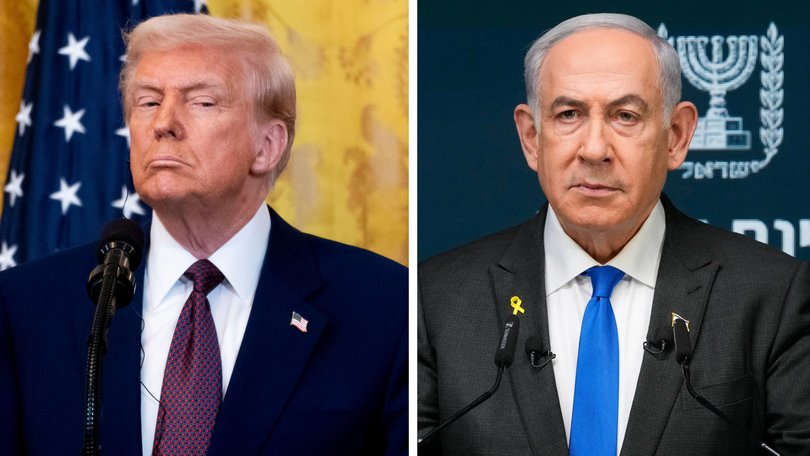
Iran’s newly declared Supreme Leader, Alireza Arafa, has threatened retaliation against the United States and Israel after Tehran accused both countries of carrying out military attacks on its territory.

In a statement released on Tuesday morning across several social media platforms, Arafa said diplomatic efforts had come to an end. He accused Washington of crossing a “red line.”

“The time for negotiations is over. The United States has chosen to cross the red line, the line of irreparable harm,” he said.

“By launching this war, they have signed their own death warrant: they don’t know when or how the axe will fall, but we hold the reins.”

His remarks followed reports of coordinated airstrikes by US and Israeli forces on Iranian military sites and key infrastructure. The operation marked a sharp deterioration in relations among Tehran, Washington and Tel Aviv.

Tensions between the countries have grown in recent months over Iran’s missile programme, its regional activities and allegations linked to nuclear development. The United States has repeatedly accused Iran of supporting armed groups in the Middle East and fuelling instability in the region. Iranian officials have denied those allegations.

Tehran described the recent strikes as “unprovoked.” Authorities insisted that Iran did not initiate hostilities.

Arafa rejected Western claims that the attacks were preventive steps against a nuclear threat.

“They brandish the nuclear specter like a scarecrow, blinded by their arrogance,” he said.

“They have no idea of the true extent of our power or what we are prepared to unleash.”

He directed some of his strongest remarks at Israel and warned of continued retaliation.

“As for Israel, its fate is sealed. Every strike, every crime, every act of suffering they have inflicted will come back to haunt them,” Arafa declared.

“They will remain in our sights, exposed, vulnerable, hunted.”

The exchange of threats has heightened concerns about a wider regional conflict. Armed groups aligned with Tehran in Lebanon, Syria, Iraq and Yemen could become involved if hostilities expand.

Security analysts say a prolonged confrontation could disrupt global energy supplies and deepen sectarian divisions across the Middle East.

In his concluding remarks, Arafa described the crisis as a defining struggle for Iran.

“We walk in the shadow of the Leader, and every step is a lightning bolt,” he said, before ending with the slogan: “Iran does not bend. Iran wins. Always.”

As tensions rise and military activities continue, international actors face growing calls to intervene and prevent a broader conflict that could reshape the region for years.

Cloud services across Middle East disrupted after drone strikes hit Amazon data centres in UAE

By Sabiu Abdullahi

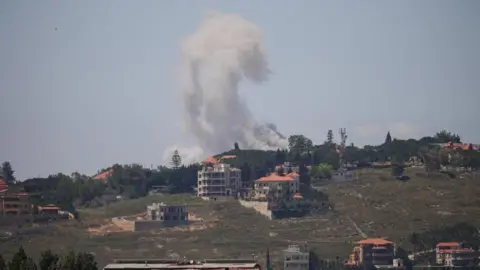
Smoke rose over parts of Beirut on Tuesday after Israeli airstrikes targeted the southern suburbs, highlighting the spillover of the Middle East conflict into key civilian infrastructure across the Gulf.

Tech giant Amazon confirmed late Monday that drones had “directly struck” two of its data centres in the United Arab Emirates, causing disruptions to cloud services in parts of the region.

The company also reported that a facility in Bahrain suffered damage from “a drone strike in close proximity,” adding to interruptions for customers who rely on its cloud infrastructure.

In an update on its service dashboard, Amazon explained that the affected regions “experienced physical impacts to infrastructure as a result of drone strikes” amid ongoing hostilities.

“These strikes have caused structural damage, disrupted power delivery to our infrastructure, and in some cases required fire suppression activities that resulted in additional water damage,” the company said.

Amazon’s disclosure represents a rare acknowledgment of direct attacks on major commercial cloud infrastructure in the Gulf. It underscores the vulnerabilities of global technology networks amid the escalating war involving the United States, Israel, and Iran.

Reports indicate that several Gulf cities have faced collateral damage from strikes and stray weaponry since US and Israeli forces launched operations on Iran, which allegedly led to the deaths of Iran’s supreme leader and other top officials.

The company did not provide information on whether any employees were injured. It added that it is coordinating closely with local authorities while “prioritising the safety of our personnel throughout our recovery efforts.”

Amazon Web Services, the world’s largest cloud computing provider, supports thousands of applications, websites, and generative AI platforms globally. It competes with Microsoft Azure and Google Cloud in providing large-scale digital infrastructure.

Amazon advised customers in the affected regions to back up critical data and consider relocating workloads to servers elsewhere as engineers work to restore full functionality.

On Sunday, the company had reported that one of its UAE facilities had been hit by unspecified “objects,” warning customers of potential service interruptions.

Iran clarifies it is at war ith US, Israel, not Gulf nations

By Sabiu Abdullahi

Iran has clarified that it is engaged in conflict with the United States and Israel, not with any countries in the Gulf region.

Speaking on Monday, Iranian Foreign Minister Seyed Abbas Araghchi said, “We’re not attacking our neighbours, we’re attacking US military bases. US soldiers fleeing to hotels will not prevent them from being targeted.” His remarks come amid ongoing US and Israeli strikes on Iranian positions, and retaliatory Iranian attacks on American and Israeli interests in the Middle East.

Al Jazeera reports that Iran accused the US of “betraying diplomacy” by launching attacks during ongoing negotiations. Araghchi also urged Gulf nations to pressure Washington to halt its military actions against Iran.

The Iranian minister emphasized that US military installations, including those located within Gulf countries, and facilities housing American troops, are considered legitimate targets.

For the third day in a row, loud explosions were reported in Dubai, UAE, and Qatar as Iran continues to respond to US and Israeli attacks. Bloomberg notes that both the UAE and Qatar have been quietly appealing to international allies to encourage President Trump to pursue a diplomatic solution instead of extending the conflict.

Qatar warned that ongoing disruptions to regional shipping could further drive up global natural gas prices. The country also announced that it intercepted two Iranian fighter planes, along with missiles and drones, which had entered its airspace. Gulf nations have pledged to continue defending their territories.

Meanwhile, the conflict between Israel and Hezbollah continues to escalate as both sides exchange attacks.

Melania Trump to chair UN Security Council as Iran war escalates

By Sabiu Abdullahi

United States First Lady Melania Trump is set to preside over a United Nations Security Council meeting on Monday, marking a historic moment at the global body.

Her appearance was announced last week before the United States launched military operations against Iran. According to her office, Melania will “make history at the United Nations, taking the gavel as the United States assumes the Security Council Presidency to emphasise education’s role in advancing tolerance and world peace.”

Stephane Dujarric, spokesperson for the UN secretary-general, confirmed that the event represents the first occasion a first lady or first gentleman has chaired a Security Council session.

The United States holds the rotating presidency of the Council for the month of March.

The development comes at a time of strained relations between Washington and the United Nations. Political and financial disagreements have increased in recent years, with the US expressing frustration over its status as the largest contributor to the organisation’s budget.

Since returning to office last year, President Donald Trump has withdrawn American support from several major UN agencies, including the World Health Organization.

The UN recently introduced a reform initiative. Washington paid $160 million into the body’s regular budget a few days ago, after making no contribution in 2025. Despite that payment, the United States still owes about $4 billion in outstanding contributions to the UN’s regular and peacekeeping budgets. Secretary-General Antonio Guterres has warned that the organisation faces a serious financial crisis.

Melania Trump’s Security Council appearance takes place amid intensifying conflict in the Middle East. A joint US-Israeli military campaign began on Saturday with strikes in Tehran that killed Iran’s supreme leader. Iran has since carried out missile and drone attacks across several countries in the region.

IRGC declares Strait Of Hormuz closed, warns ships will be attacked

By Sabiu Abdullahi

Iran’s Revolutionary Guard Corps has announced the closure of the Strait of Hormuz, a key global shipping route, and warned that any vessel attempting to pass through the waterway will face attack.

According to Iranian media reports cited by Reuters on Monday, Ebrahim Jabari, a senior adviser to the commander-in-chief of the IRGC, confirmed the decision and issued a direct warning to maritime traffic.

“The strait (of Hormuz) is closed. If anyone tries to pass, the heroes of the Revolutionary Guards and the regular navy will set those ships ablaze,” Jabari said in remarks carried by state media.

If enforced, the measure would stop commercial vessels from moving through one of the world’s most critical energy corridors. The Strait of Hormuz serves as the narrow entrance to the Gulf. Roughly one-fifth of global oil exports pass through the channel.

Oil tankers that navigate the route transport crude and gas supplies from Saudi Arabia, Kuwait, Iraq, Qatar, Bahrain, the United Arab Emirates and Iran. The northern coastline of the strait lies along Iranian territory.

Any interruption along the Strait of Hormuz has serious consequences for international energy markets. A prolonged closure would disrupt oil shipments and could drive up prices worldwide.

US marines fired at protesters during Karachi Consulate breach: Reuters

United States Marines opened fire during last weekend’s assault on the US consulate in Karachi, according to a report by Reuters that cited two American officials.

The report represents the first confirmation that Marines discharged weapons as protesters forced their way into the diplomatic compound.

The officials told Reuters that it remains uncertain whether any of the rounds fired by the Marines hit or killed members of the crowd. They also said they could not confirm if additional shots were fired by other personnel assigned to guard the facility, including private security contractors and local police officers.

At least 10 people lost their lives during the unrest, after demonstrators broke through the outer wall of the consulate complex.

A spokesman for the provincial government, Sukhdev Assardas Hemnani, stated that “security” personnel had opened fire. He did not clarify which security force was responsible.

Spain declines US request to use military bases for Iran strikes

By Sabiu Abdullahi

Spain has announced that the United States is neither using nor expected to use joint military facilities on Spanish soil for operations linked to the ongoing conflict with Iran.

Foreign Minister Jose Manuel Albares made the position clear during an interview with Spanish public television on Monday. “Based on all the information I have, the bases are not being used for this military operation,” he said.

The statement follows criticism from Spanish Prime Minister Pedro Sanchez, who denounced the US and Israeli strikes on Iran that began on Saturday. He described the action as an “unjustified” and “dangerous military intervention” that falls outside international law.

Albares stressed that Madrid would not permit any activity beyond the scope of existing agreements. “The Spanish government will not authorise the use of the bases for anything beyond the agreement or inconsistent with the United Nations,” he stated. He referred specifically to the Rota naval base and the Moron airbase, facilities operated jointly by Spain and the US but which remain under Spanish sovereignty.

Defence Minister Margarita Robles also addressed the issue. She said the bases “will not provide support, except if, in a given case, it were necessary from a humanitarian perspective”.

Spain further criticised Iran’s retaliatory strikes on Gulf states, even as it maintained opposition to the initial US and Israeli attacks.

Flight data published on Monday by tracking service FlightRadar24 indicated that 15 US aircraft departed from bases in southern Spain after the launch of military operations against Iran. At least seven of the planes later arrived at Ramstein airbase in Germany, according to the same source.

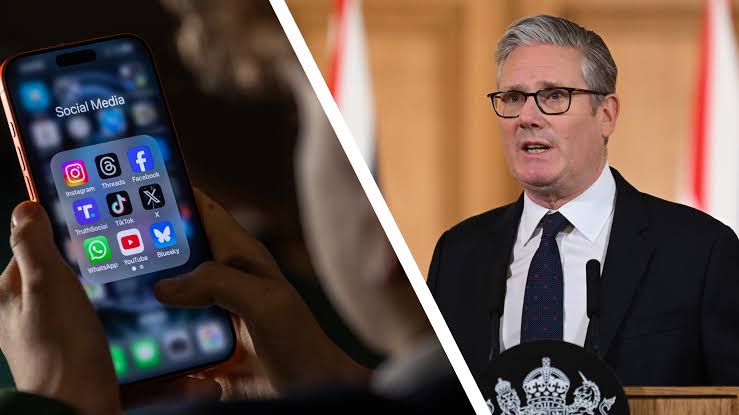
Madrid’s stance differs from that of several other leading European nations. The United Kingdom had earlier declined to allow the use of its bases for strikes on Iran. However, Prime Minister Keir Starmer reversed that decision on Sunday. He authorised their use for “collective self-defence” following Iranian counterattacks aimed at US assets in the Middle East and energy facilities in the Gulf.

France and Germany have signalled readiness to take a similar approach.

In a joint statement issued on Sunday, the leaders of the three countries said they were “appalled by the indiscriminate and disproportionate missile attacks launched by Iran against countries in the region, including those who were not involved in initial US and Israeli military operations”.

They added, “We have agreed to work together with the US and allies in the region on this matter.”

U.S. imposes sanctions on Rwandan military over alleged support for M23 rebels in Eastern Congo

By Sabiu Abdullahi

The United States has announced new sanctions against the Rwandan Defense Force (RDF) and four of its top officers over claims that they provided assistance to the March 23 Movement (M23) operating in eastern Democratic Republic of the Congo (DRC).

The decision was made public on Monday in a statement from the U.S. State Department. Principal Deputy Spokesperson Thomas “Tommy” Pigott said the action followed allegations that Rwanda offered “direct operational support” to the rebel group. He linked the move to the recent takeover of the Congolese city of Uvira by M23 fighters.

The statement noted that the fall of Uvira came “just days after President Trump presided over the December 4, 2025 signing of the historic Joint Declaration of the Washington Accords for Peace and Prosperity” together with DRC President Felix Tshisekedi and Rwandan President Paul Kagame.

Washington described the rebel offensive as a “clear violation of the Washington Accords,” which were introduced as a peace framework for the troubled Great Lakes region.

U.S. officials stressed that M23 is already under sanctions from both the United States and the United Nations. The group faces accusations of carrying out serious abuses in eastern Congo.

“M23, a U.S.- and UN-sanctioned entity, is responsible for horrific human rights abuses, including summary executions and violence against civilians, including women and children,” the statement said.

The State Department also alleged that backing from the RDF and its senior commanders made it possible for M23 to take control of territory in the DRC and maintain its campaign.

“The continued backing from the RDF and its senior leadership has enabled M23 to capture DRC sovereign territory and continue these grave abuses,” the statement added.

The sanctions were issued under Executive Order 13413, as amended. The order authorises the U.S. government to penalise individuals and organisations accused of contributing to unrest in the DRC.

Pigott said the United States remains committed to the peace agreement and regional stability.

“The United States stands firm in its support for peace and stability in eastern DRC and the wider region,” he said.

“The Washington Accords mark a decisive turning point for the Great Lakes region, setting a new course for peace, cooperation, and prosperity among neighbors.”

The statement said the latest measures reflect Washington’s determination to see that the agreement is respected.

“As President Trump has made clear, the United States is prepared to use all available tools to ensure the DRC and Rwanda deliver on the promises of this historic agreement,” it said.

Eastern Congo has experienced prolonged conflict involving several armed groups. Rwanda has repeatedly faced accusations of backing M23. Kigali has denied those claims in the past.

Private jet fares from Riyadh to Europe rise to N479m as wealthy individuals exit Middle East

By Sabiu Abdullahi

Riyadh has become a major departure point for wealthy individuals and top executives seeking to leave the Middle East amid rising regional tensions.

A report by Semafor indicated that private security companies have arranged fleets of sport utility vehicles to move clients from Dubai to Riyadh. From the Saudi capital, chartered private aircraft then transport them out of the region.

Those leaving reportedly include senior executives of global financial institutions as well as high-net-worth individuals who were in the region for business engagements or leisure activities.

Ameerh Naran, chief executive of Vimana Private, a private jet brokerage firm, said the cost of chartering flights has surged sharply.

“Saudi Arabia is the only real option for people who want to get out of the region right now. Private jets from Riyadh to Europe now cost up to $350,000,” he said.

Ian McCaul, operations and future plans director at Alma Risk, a United Kingdom-based security company, also confirmed increased demand for evacuation support.

“We’ve been approached by a mixture of clients including families, individuals, and corporations that want to get out of the region either because their fear for their safety, or for business reasons they just need to be able to travel,” McCaul said.

Tensions escalated on Saturday morning after Iran carried out retaliatory strikes on United States military bases across the Middle East. Explosions were reported in Abu Dhabi, Manama, Doha, Kuwait, and Riyadh.

The development followed a joint missile attack on Iran by the United States and Israel.

The conflict has disrupted commercial activities across the region. The United Arab Emirates closed its airspace. Qatar Airways suspended all flights. Airports in Dubai halted operations indefinitely. Several international airlines also paused flights to and from Middle Eastern destinations.