International

US economy loses 92,000 jobs in February as unemployment rate rises

By Sabiu Abdullahi

The United States economy recorded an unexpected decline in employment in February after official figures showed that thousands of jobs were lost across several sectors.

Data released in the latest labour report indicates that payrolls dropped by 92,000 during the month. The unemployment rate also increased slightly to 4.4%. Analysts had predicted that the labour market would remain steady.

The development has raised fresh concerns about the strength of the US job market. Economists now question whether the labour sector could be entering a period of weakness.

The report shows that job losses affected nearly every major sector of the economy. The healthcare industry also recorded losses despite its reputation as a stable source of employment. Strikes in the sector contributed to the decline in February.

The drop represents the largest monthly job loss since October. At that time, the United States government shutdown disrupted economic activity.

Economic observers also point to rising oil prices as another potential challenge. The increase followed tensions linked to the US-Israel war in Iran. Analysts warn that the surge in energy costs could place additional pressure on economic growth in the coming months.

Tinubu approves posting of 65 ambassadors to foreign missions, UN

By Sabiu Abdullahi

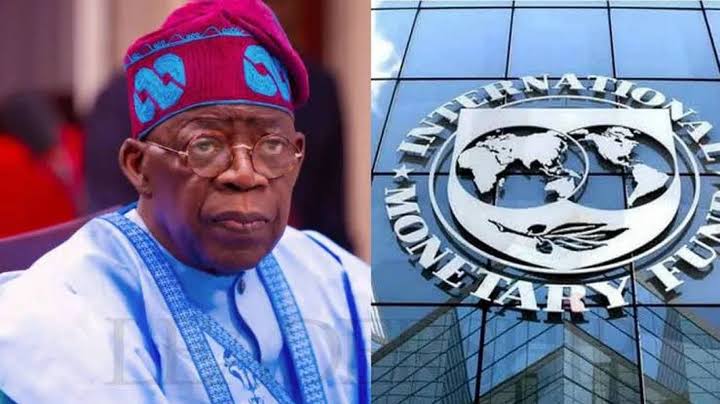
President Bola Ahmed Tinubu has approved the deployment of 65 ambassadors-designate to Nigeria’s diplomatic missions across the world and to the United Nations.

The list includes 31 career diplomats and 34 non-career appointees. The Senate had confirmed the nominees in December last year.

A statement issued by the Special Adviser to the President on Information and Strategy, Bayo Onanuga, said the postings cover several strategic countries and international organisations.

Among the non-career ambassadors, Senator Grace Bent was posted to Lome in Togo, while former presidential aide Senator Ita Enang will serve in South Africa. Former Abia State governor Victor Ikpeazu was assigned to Spain, and Nkechi Linda Ufochukwu will represent Nigeria in Tel-Aviv, Israel.

Other notable appointments include former INEC Chairman Mahmood Yakubu to Qatar, Reno Omokri to Mexico, and former Minister of Health Professor Isaac Folorunso Adewole to Canada. Former Aviation Minister Femi Fani-Kayode will serve in Germany, while former Chief of Defence Intelligence, Lieutenant General Abdulrahman Bello Dambazau, was posted to China.

Senator Jimoh Ibrahim was named Nigeria’s Permanent Representative to the United Nations. Lateef Kayode Are was assigned to the United States, while Ambassador Joseph Sola Iji will represent Nigeria in Russia. Aminu Dalhatu was posted to the United Kingdom.

The career ambassadors were also deployed to various countries. Ambassador Nwabiola Ezenwa Chukwumeka will serve in Cote d’Ivoire, while Besto Maimuna Ibrahim was assigned to Niger. Other postings include Mohammed Mahmud Lele to Algeria, Ahmed Mohammed Monguno to Egypt, and Muhammad Saidu Dahiru to India.

Additional assignments include Abdussalam Habu Zayyad to Senegal, Shehu Ilu Barde to Ghana, Aminu Nasir to Ethiopia, Abubakar Musa Musa to Chad, and Ibrahim Danlami to Kenya.

According to the statement, some host countries have already granted diplomatic approval for the appointments.

“The Ministry of Foreign Affairs has already received agrément from the United Kingdom for the High Commissioner-designate, Ambassador Aminu Dalhatu. Similarly, France has sent the agrément for Ambassador Ayo Oke.”

The presidency added that the Ministry of Foreign Affairs has forwarded the nominations of the remaining envoys to their respective host countries for the necessary diplomatic clearance.

“The Ministry has also conveyed the nominations of the other 62 designated envoys to all the countries concerned, including a request for their agréments in line with standard diplomatic practice.”

President Tinubu also directed the Ministry of Foreign Affairs to begin preparations for the ambassadors before they assume duty.

“President Tinubu has directed that the Ministry of Foreign Affairs should immediately commence the induction programme for the ambassadors-designate and High Commissioners.”

The induction programme is expected to prepare the envoys for their diplomatic responsibilities before their deployment to various missions.

Trump says he must play role in choosing Iran’s next leader

By Sabiu Abdullahi

U.S. President Donald Trump has said he must play a part in selecting Iran’s next leader following the death of the country’s Supreme Leader, Ali Khamenei.

Trump made the remark during an interview with Axios on Thursday. He said Mojtaba Khamenei, the 56-year-old son of the late Iranian leader, appears to be the most likely successor. However, the U.S. president rejected the possibility of him taking over the position.

“They are wasting their time. Khamenei’s son is a lightweight,” Trump said. “I have to be involved in the appointment, like with Delcy [Rodriguez] in Venezuela.”

Rodriguez became Venezuela’s acting president in January after U.S. forces entered Caracas, arrested then-President Nicolas Maduro and transferred him to New York to face drug-related charges. After Rodriguez assumed office, Trump described Venezuela as “our new friend and partner” and said her administration had supplied the United States with millions of barrels of oil.

Trump stressed that Washington would not accept a new Iranian leader who intends to continue the policies of the late supreme leader.

“Khamenei’s son is unacceptable to me,” he told Axios. “We want someone that will bring harmony and peace to Iran.”

He repeated the position in a separate interview with Reuters.

“We want to be involved in the process of choosing the person who is going to lead Iran into the future. We don’t have to go back every five years and do this again and again.”

Reports from the New York Times indicate that Mojtaba Khamenei has emerged as the leading candidate for the role after several meetings of Iran’s Assembly of Experts. The cleric, who has largely stayed away from public attention, studied Islamic theology and is known for holding hardline conservative views.

The comments from Trump come days after the United States and Israel launched a large-scale military operation against Iran. The strikes targeted multiple locations across the country. A humanitarian organisation reported that more than 1,000 people lost their lives during the attacks.

Iran responded with missile strikes on Israel, Qatar, Kuwait, the United Arab Emirates and other locations in the region. According to the Pentagon, six American service members have been killed in the conflict.

Military activity has continued in recent days. Reports indicate Iranian attacks in Azerbaijan. The U.S. Navy also sank an Iranian vessel in the Indian Ocean. The Pentagon said more than 20 Iranian ships have either been damaged or destroyed.

Soon after the first strikes, the Trump administration offered several explanations for the operation, which it named “Epic Fury.”

Vice President JD Vance said the campaign aims to stop Iran from developing nuclear weapons. Secretary of State Marco Rubio stated that the action followed indications that Israel planned to attack Iran. Trump also suggested the operation could lead to political change in Iran. He wrote on Truth Social during the weekend, “This is the single greatest chance for the Iranian people to take back their Country.”

During a press conference on Monday, Trump outlined four major objectives. He said the United States seeks to destroy Iran’s missile capabilities, eliminate its navy, prevent the country from obtaining nuclear weapons and remove the current Iranian leadership.

It remains unclear how long the operation will last. Trump suggested it might take about four weeks but said the United States has the ability to continue longer if necessary.

The military action has drawn mixed reactions in the United States. Many Democrats oppose the campaign and have described it as illegal and strategically flawed. Several Republicans have expressed support for the president, although some have raised concerns in private.

A war powers resolution that aimed to limit the president’s authority over the Iran conflict failed in the Senate earlier this week. Lawmakers in the House of Representatives are expected to vote on a similar proposal.

Public opinion also appears divided. A recent Reuters survey found that only one in four Americans support the U.S. strikes on Iran.

Iran’s government has condemned the attacks. Officials in Tehran described the strikes as illegal and urged the international community to support the country.

Italy will honour US base agreements but won’t join war, says PM Meloni

By Sabiu Abdullahi

Italian Prime Minister Giorgia Meloni has stated that her country will continue to respect existing agreements that allow the United States to use military bases located in Italy.

However, she stressed that Italy has no intention of taking part in the ongoing war involving Iran.

Meloni spoke on Thursday during an interview on an RTL radio programme. She said the Italian government had not received any request from the United States to use its bases for military action against Iran.

“Today we have no such request and I want to say that we are not at war and we do not want to enter a war,” she said.

The prime minister explained that the agreements between Italy and the United States date back to 1954. According to her, these arrangements permit certain logistical activities and operations that do not involve direct combat.

“These are technical authorisations when we are clearly talking about logistics and so-called non-kinetic operations – simply put, operations that do not involve bombing,” she said.

Meloni also noted that if Washington later seeks approval to use Italian bases for combat operations, the government would first consult the country’s parliament before making any decision.

She expressed concern about the growing tension in the Middle East and warned that the conflict could widen. According to her, the situation carries “a risk of escalation that could have unpredictable consequences.”

Italy, alongside the United Kingdom, France and Germany, is also considering sending defensive assistance to countries in the Gulf region. Meloni said the step is intended to protect tens of thousands of Italian citizens living there, as well as about 2,000 Italian troops stationed in the region.

The Italian leader described the Gulf area as important to global energy supply and warned that the ongoing crisis could affect Italy’s economy.

She said the government was monitoring energy costs and food prices. Authorities, she added, would take action to prevent companies from taking advantage of the situation by raising prices unfairly.

The current tensions began after the United States and Israel launched a major military offensive against Iran last Saturday. Reports indicate that at least 926 people have been killed, including Iran’s Supreme Leader Ali Khamenei and several senior military officials.

Iran has responded with missile and drone attacks targeting Israel as well as Gulf states that host United States military assets.

Iran launches strikes on Kurdish groups in Iraq over alleged collaboration with U.S., Israel

By Sabiu Abdullahi

Iranian forces have carried out new military operations against Kurdish armed groups in northern Iraq as the conflict involving Iran, the United States and Israel continues to intensify across the Middle East.

The latest attacks come as Iran also launched another wave of missile and drone strikes targeting Israeli and American assets in the region.

Reports indicate that this marks the 19th round of Iranian strikes since the United States and Israel began coordinated military operations against Iran nearly a week ago. Iran’s semi-official Tasnim news agency said the conflict has already resulted in more than 1,045 deaths across the country.

Iran’s state media said early Thursday that its military struck what it described as “anti-Iran separatist forces” operating in the semi-autonomous Kurdish region of Iraq. Authorities did not immediately disclose the precise locations targeted.

Al Jazeera reported that Iran’s intelligence ministry later confirmed the operation. The ministry stated that Iranian forces attacked positions belonging to “separatist groups” that were allegedly preparing to infiltrate the country through its western border.

The ministry also claimed the armed groups suffered significant losses and accused them of working with the United States and Israel to carry out attacks on Iranian territory.

Officials further said Iranian forces were cooperating with what they called “noble Kurds” in the area to counter what they described as an “Israeli-American plan” to destabilise Iran.

Residents in Iraq’s northeastern province of Sulaimaniyah reported several explosions late Wednesday night. The province lies within Iraq’s autonomous Kurdish region.

Local media outlets said at least four explosions were heard near the areas of Arabat, Zarkuiz and Surdash. Sources in the region indicated that the strikes appeared to target the headquarters of the Kurdistan Toilers Association, widely known as Komala. The group is an Iranian Kurdish armed organisation based in northern Iraq.

Videos circulating on social media showed large fires and blasts lighting up the night sky.

The escalation followed reports that some Iranian Kurdish armed groups along the Iran-Iraq border recently held consultations with United States officials regarding possible coordinated operations against Iranian security forces.

Reuters reported that the Kurdish coalition had trained fighters for potential cross-border operations designed to weaken Iran’s military capacity. However, Tasnim news agency denied earlier claims that Kurdish fighters had already entered Iran from Iraqi territory.

At the same time, Iran’s Islamic Revolutionary Guard Corps announced a new round of missile and drone attacks targeting Israel and American military facilities across the region.

Israeli media reported that air defence systems intercepted two drones over the western Galilee region. Saudi Arabia also said its air defence units shot down at least three drones believed to be linked to the Iranian attack campaign.

In Qatar, authorities instructed residents living near the United States Embassy in Doha to evacuate the area amid fears that American diplomatic sites could become targets.

Meanwhile, the United States and Israel continued large-scale bombardments inside Iran. Explosions were reported in Tehran and in several Kurdish cities including Sanandaj, Saqqez and Bukan.

‘DraftBarron’ campaign goes viral, satirically calls for Trump’s son to join Iran war

A satirical campaign urging Donald Trump’s youngest son, Barron Trump, 19, to be drafted into the US military has gained viral attention as the US and Israel continue their strikes on Iran. The hashtag #SendBarron has been trending widely on social media.

Operation Epic Fury, which involves extensive airstrikes by the US and Israel against Iran, has so far resulted in the deaths of six American service members.

Donald Trump has faced criticism for what commentators describe as a lack of visible concern over these casualties. During brief remarks at a Medal of Honor ceremony following the attacks, Trump appeared more focused on his plans for the White House’s new ballroom than on the loss of life, prompting speculation about how he might react if his own son were deployed.

In response, former South Park writer Toby Morton created the satirical website, DraftBarronTrump.com, which encourages the president to send Barron to war. The site humorously praises Barron’s “courage” and “proven genes” while juxtaposing images of him napping.

“America is strong because its leaders are strong,” reads a subheading on the website. “President Trump proves that every day. Naturally, his son Barron is more than ready to defend the country his father so boldly commands.”

The site concludes: “Service is honor. Strength is inherited. Dog Bless Barron.”

DraftBarronTrump.com also features absurdist testimonials from Barron’s family. Donald Trump Jr said, “This moment is really about Barron, okay? Always has been. He represents strength, courage, and service. I’ll be honoring that sacrifice in my own way, mainly by talking about it from a safe distance.”

Eric Trump added: “People always say I’m stupid, which is totally unfair, because I understand a lot about pancakes. Pancakes are complex. You’ve got batter, heat, timing. If you rush it, you ruin everything. I think about pancakes a lot. Mostly pancakes.”

Morton, known for buying website names and creating satirical campaigns, also promoted ResignChuck.com, which calls for Democratic Party leader Chuck Schumer to resign over his perceived inaction toward Trump’s policies.

The launch of DraftBarronTrump.com fueled the trending hashtag #SendBarron, with thousands of social media users jokingly calling for Barron to serve alongside soldiers his father has sent into battle.

Barron’s eligibility for military service may be limited due to his height of 6’9’’ (2.05m), exceeding the maximum enlistment limit of 6’8’’ (2.03m) in most military branches. This contrasts with Donald Trump’s own avoidance of the Vietnam draft, which he famously attributed to a bone spur diagnosis. Dr. Elysa Braunstein and Sharon Kessel, daughters of the podiatrist who signed the original diagnosis, told The New York Times that it was “a favour” to Trump’s father, Fred Trump, who was their father’s landlord.

Iran warns of strikes on Israeli embassies worldwide

By Sabiu Abdullahi

Iran’s armed forces have issued a strong warning to Israel over what they described as a possible attack on Tehran’s diplomatic mission in Lebanon.

A military spokesperson said on Wednesday that Iran would respond by targeting Israeli embassies across the globe if such an action takes place.

Abolfazl Shekarchi, spokesperson for the Iranian armed forces, spoke during a live television broadcast. He said, “if Israel commits such a crime, it will force us to make all Israeli embassies around the world our legitimate target.”

His remarks followed a statement by the Israeli military a day earlier. On Tuesday, Avichay Adraee, the Arabic-language spokesperson for the Israeli army, said it “warns representatives of the Iranian regime who are still in Lebanon to leave immediately before being targeted”, and gave them 24 hours to depart.

The exchange comes amid rising hostilities between Iran, the United States, and Israel. Iran has faced joint US-Israeli airstrikes since February 28. Reports indicate that more than 40 senior Iranian government officials have been killed in the bombardment. Among those reported dead is Iran’s Supreme Leader, Ali Khamenei.

The strikes have also affected civilians. More than 1,000 non-combatants have lost their lives, according to reports. The attacks prompted Iran to launch retaliatory measures.

Washington has accused the government led by Khamenei of suppressing its citizens and pursuing nuclear weapons development. Tehran has denied the claims and rejected the allegations.

The situation has continued to heighten tensions across the region, with both sides exchanging threats as the conflict deepens.

JUST IN: US Secretary of War says Iran ‘tried to assassinate Donald Trump’

By Sabiu Abdullahi

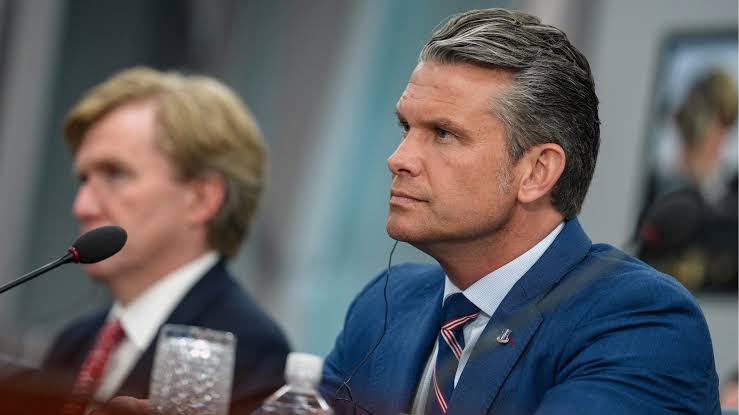
United States Secretary of War Pete Hegseth has alleged that Iran attempted to assassinate President Donald Trump, as he announced the killing of a senior figure linked to the plot.

Hegseth made the remarks during a press briefing at the Pentagon on Wednesday, where he provided updates on the ongoing conflict with Iran. He referred to recent interceptions of drones and rockets by American forces and praised the strength of the US military.

He said: ‘Yesterday, the leader of the unit who attempted to assassinate President Trump was hunted down and killed.

‘Iran tried to kill President Trump, and President Trump got the last laugh.’

The defence chief also vowed retaliation for American personnel killed in the fighting. He stated that the United States would ‘avenge’ the four servicemen and women who died in attacks involving Iranian drones and rockets.

Hegseth stressed that operations are still underway. He said the mission is not ‘accomplished’. He cited a recent naval action in which a US submarine sank an Iranian warship that, according to him, ‘thought it was safe in international waters’.

Hegseth added: ‘This was never meant to be a fair fight, and it’s not a fair fight… they’re going down.

‘More and larger waves are coming; we are just getting started.’

A Defence Department map displayed during the briefing outlined the first 100 hours of what has been named Operation EPIC FURY. The chart detailed a series of strikes across Iranian territory.

Meanwhile, Iranian authorities reported a rising death toll from the conflict. Iran’s Foundation of Martyrs and Veterans Affairs said at least 1,045 people have died so far. The agency explained that the figure reflects bodies identified and prepared for burial.

The fighting entered its fifth day with continued airstrikes by the United States and Israel on Tehran and other cities. Israeli forces targeted members of Iran’s leadership and security services. Iran responded with missile launches and drone attacks aimed at Israel and locations across the region.

Residents in Tehran reported explosions at dawn. State television broadcast images of damaged buildings in central areas of the capital. The city of Qom and several other locations also came under attack.

The Israeli military said one of its F-35 fighter jets shot down a piloted Iranian Air Force YAK-130 aircraft over Tehran on Wednesday.

The conflict has intensified tensions across the Middle East, with both sides signalling that further military action may follow.

Spain rejects U.S. pressure as Trump threatens trade cut

By Sabiu Abdullahi

Spain has pushed back against pressure from the United States after President Donald Trump warned that Washington could halt trade ties over Madrid’s refusal to support American military strikes on Iran.

In a national broadcast from the Moncloa Palace, Prime Minister Pedro Sánchez set out his government’s position in clear terms. He told citizens that Spain’s stance could be reduced to three words: no to war. He also stressed that one “illegality” could not be met with another, framing the issue as a matter of principle and international law rather than political rivalry.

Tensions escalated when Spain declined to grant the United States permission to use the shared military bases at Morón and Rota for operations targeting Iran. Spanish authorities described the strikes as unjustified and risky. In response, Trump labelled Spain a “terrible” partner and threatened to cut off all trade between the two countries.

The warning has raised concerns about a key economic partnership. The United States ranks among the top destinations for Spanish exports and remains a major source of investment. Although no formal sanctions or tariffs have been announced, the prospect of trade restrictions has unsettled investors and business leaders.

Spain’s approach aligns with its recent foreign policy record. The government has adopted firm positions on conflicts it believes may violate international law. It has criticised Israel’s actions in Gaza and recognised a Palestinian state ahead of several European Union members. At the same time, Madrid has backed Ukraine in resisting Russia’s invasion, while urging restraint to avoid broader escalation elsewhere.

Spanish officials have also invoked the memory of the 2003 Iraq invasion. That conflict, which Spain supported under a previous administration, sparked widespread protests at home. Many citizens still regard that decision as an error that increased insecurity and carried lasting costs. Leaders now argue that military action can produce consequences that endure well beyond the battlefield.

The dispute unfolds at a delicate time for Spain’s coalition government. It faces political pressure in parliament and allegations of corruption involving individuals close to the leadership. However, recent opinion polls indicate that a significant number of Spaniards hold unfavourable views of Trump. Analysts say this could reduce the domestic fallout from the diplomatic clash.

For Madrid, the confrontation extends beyond Iran or access to military facilities. It touches on Spain’s broader role in global affairs. The government maintains that adherence to peace and international legality reflects national values and long-term interests. Critics counter that challenging the United States may expose the country to economic strain that could affect ordinary citizens.

The next phase depends largely on Washington’s response. If the White House moves from rhetoric to concrete measures, trade relations could face serious disruption. Until then, Spain remains in a tense standoff that tests both its diplomatic principles and its economic stability.

Trump’s strikes on Iran could cost U.S. economy up to $210bn, report warns

By Sabiu Abdullahi

A new economic assessment has indicated that the United States’ military action against Iran could impose a heavy financial burden on the American economy, with potential losses reaching as high as $210 billion.

Kent Smetters, a fiscal analyst and director of the Penn Wharton Budget Model, said the conflict has already unsettled trade flows, global energy markets, and fuel prices. He explained in an interview with Fortune that estimating the exact cost of the war remains difficult due to uncertainty surrounding its duration and scope.

According to his projections, the economic loss could stand at about $115 billion under current conditions. However, he noted that the figure could be as low as $50 billion or rise to $210 billion, depending on how events unfold.

“One problem I have with cost of war calculations is that they really do ignore the counterfactual,” he told the outlet. “If Iran really did get a nuclear weapon, then we might have spent a lot more on military and even repair of cities later on.”

President Donald Trump has acknowledged the possible strain on the economy. He has proposed measures aimed at stabilizing energy supplies, including government-backed insurance and naval escorts for oil tankers passing through strategic routes in the Gulf.

“If necessary, the United States Navy will begin escorting tankers through the Strait of Hormuz, as soon as possible,” President Donald Trump announced on Tuesday on Truth Social. “No matter what, the United States will ensure the FREE FLOW of ENERGY to the WORLD. The United States’ ECONOMIC and MILITARY MIGHT is the GREATEST ON EARTH.”

Speaking with reporters in Washington, the president admitted that oil prices could remain elevated “for a little while,” but expressed confidence that costs would eventually decline. He said once the conflict ends, “these prices are going to drop, I believe even lower than before.”

Energy markets have already reacted to the hostilities. By the end of trading on Tuesday, West Texas Intermediate crude rose by more than five percent. Data from the American Automobile Association also showed that the national average price for a gallon of gasoline increased by more than 10 cents.

Economic observers say the overall impact will depend largely on the length of the war and whether key shipping lanes remain secure.

“Markets are right now really under-pricing the tail risk of a sustained engagement and an operation that does not wrap up quickly, restore travel through the Strait of Hormuz and get everything back to de-escalation and normal in a timely manner,” former Biden economic adviser and chief of policy and advocacy at the Groundwork Collaborative, Alex Jacquez, told The Associated Press.

Beyond the broader economic effects, the military campaign itself may require substantial federal spending. Estimates suggest the operation could add about $65 billion in budgetary costs as U.S. air and naval forces mobilize across the region.

In a letter to Congress, President Trump stated that it is “not possible at this time to know” how long the mission, known as Operation Epic Fury, will continue.

“Although the United States desires a quick and enduring peace, it is not possible at this time to know the full scope and duration of military operations that may be necessary,” Trump wrote Monday.

He has earlier indicated that the bombing campaign could last “four to five weeks.”