International

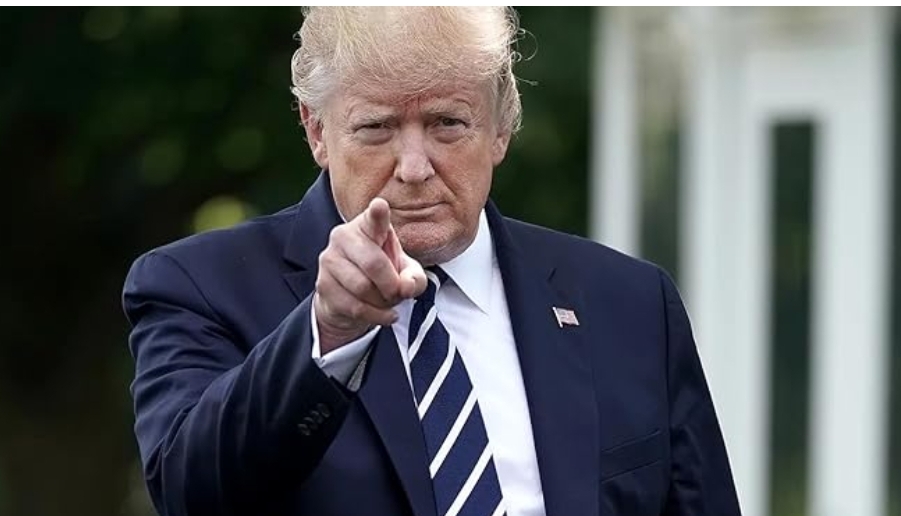
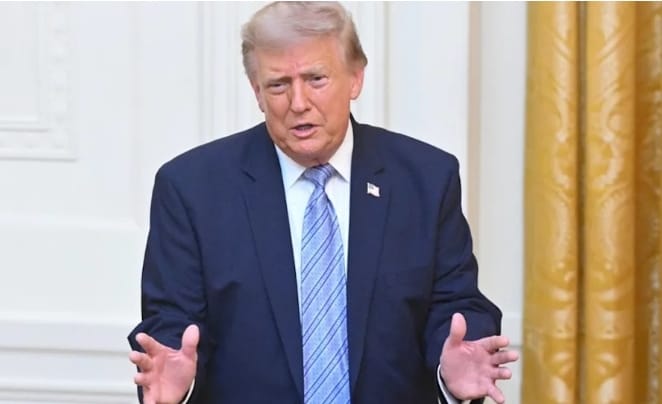
Trump Slams Counterterrorism Chief After Resignation, Calls Him ‘Weak On Security’

By Sabiu Abdullahi

President Donald Trump has responded to the resignation of Joseph Kent, Director of the United States National Counterterrorism Center, following controversy linked to U.S. military action against Iran.

Trump spoke on the development during an interview with Fox News, where he shared his views on Kent’s position on national security and the ongoing conflict involving Iran.

He claimed that he had long held concerns about Kent’s approach. “I always thought he was weak on security. Very weak on security. I didn’t know him well. But I thought he seemed like a pretty nice guy. But when I read his statement, I realised that it’s a good thing he’s out because he said Iran was not a threat,” Trump said in a video released by Fox News on Tuesday.

Kent stepped down earlier the same day. His resignation followed criticism of the war in Iran and questions about the reasons behind the military engagement.

In a letter addressed to the president, Kent stated that his decision came after careful consideration. “After much reflection, I have decided to resign from my position as Director of the National Counterterrorism Center, effective today,” he wrote.

He explained that he could not align himself with the administration’s current foreign policy, especially its military actions. “I cannot in good conscience support the ongoing war in Iran. Iran posed no imminent threat to our nation, and it is clear that we started this war due to pressure from Israel and its powerful American lobby,” he stated.

Kent added that his views were based on principles he believed had guided previous policies. “I support the values and the foreign policies that you campaigned on in 2016, 2020, 2024, which you enacted in your first term. Until June of 2025, you understood that the wars in the Middle East were a trap that robbed America of the precious lives of our patriots and depleted the wealth and prosperity of our nation,” he said.

He also criticised what he described as the role of external influence and media narratives. Kent said “high-ranking Israeli officials and influential members of the American media” promoted misinformation that “wholly undermined your America First platform and sowed pro-war sentiments” encouraging military action.

The former counterterrorism chief warned that U.S. leaders may have been misled about the level of threat posed by Iran. “This echo chamber was used to deceive you into believing that Iran posed an imminent threat to the United States, and that should you strike now, there was a clear path to a swift victory. This was a lie,” he said.

Reflecting on his personal experience, Kent pointed to the cost of war. “As a veteran who deployed to combat 11 times and as a Gold Star husband who lost my beloved wife Shannon in a war manufactured by Israel, I cannot support sending the next generation off to fight and die in a war that serves no benefit to the American people nor justifies the cost of American lives,” he said.

He concluded his message with a call for a policy rethink. “I pray that you will reflect upon what we are doing in Iran, and who we are doing it for. The time for bold action is now. You can reverse course and chart a new path for our nation, or you can allow us to slip further toward decline and chaos. You hold the cards,” he wrote.

Kent ended his letter on a note of appreciation for his time in office. “It was an honor to serve in your administration and to serve our great nation.”

U.S. Counterterrorism Chief Resigns Over Iran War, Alleges Israeli Pressure

By Sabiu Abdullahi

The Director of the United States National Counterterrorism Center, Joseph Kent, has stepped down from his role, citing disagreement with Washington’s military involvement in Iran and questioning the factors behind the conflict.

Kent conveyed his decision in a letter to President Donald Trump. He said he reached the conclusion after careful thought and confirmed that his resignation takes immediate effect.

“After much reflection, I have decided to resign from my position as Director of the National Counterterrorism Center, effective today,” he wrote.

He stated that he could no longer support the administration’s current foreign policy, especially its decision to engage Iran militarily.

“I cannot in good conscience support the ongoing war in Iran. Iran posed no imminent threat to our nation, and it is clear that we started this war due to pressure from Israel and its powerful American lobby,” he stated.

Kent noted that his position reflects principles he believes once shaped U.S. foreign policy.

“I support the values and the foreign policies that you campaigned on in 2016, 2020, 2024, which you enacted in your first term,” Kent wrote.

“Until June of 2025, you understood that the wars in the Middle East were a trap that robbed America of the precious lives of our patriots and depleted the wealth and prosperity of our nation.”

He also accused “high-ranking Israeli officials and influential members of the American media” of driving what he described as a misinformation effort. According to him, the campaign “wholly undermined your America First platform and sowed pro-war sentiments” that encouraged action against Iran.

Kent argued that U.S. leadership received misleading information about the situation.

“This echo chamber was used to deceive you into believing that Iran posed an imminent threat to the United States, and that should you strike now, there was a clear path to a swift victory. This was a lie,” he said, while drawing a comparison with events that preceded the Iraq war.

He pointed to his own military background to stress the human cost of war.

“As a veteran who deployed to combat 11 times and as a Gold Star husband who lost my beloved wife Shannon in a war manufactured by Israel, I cannot support sending the next generation off to fight and die in a war that serves no benefit to the American people nor justifies the cost of American lives,” he said.

Kent urged the president to reconsider the current approach and warned about possible long-term consequences.

“I pray that you will reflect upon what we are doing in Iran, and who we are doing it for. The time for bold action is now. You can reverse course and chart a new path for our nation, or you can allow us to slip further toward decline and chaos. You hold the cards,” he said.

He ended his letter by expressing gratitude for the opportunity to serve. “It was an honor to serve in your administration and to serve our great nation.”

Iran threatens to ‘hunt down, kill Netanyahu’

By Sabiu Abdullahi

Iran’s Islamic Revolutionary Guard Corps (IRGC) has issued a threat against Israeli Prime Minister Benjamin Netanyahu, saying it will pursue him and kill him.

The threat appeared in a statement released on Sunday through Sepah News, the official website of the IRGC. In the message, the Iranian military body described Netanyahu as a “child-killing criminal” and warned that it would continue efforts to locate him.

“If this criminal, the killer of children, is still alive, we will continue working to hunt him down and kill him with all our strength,” the statement reads.

The development came as speculation circulated on social media about the Israeli leader’s health and whereabouts.

Israel’s prime minister’s office dismissed the claims. It said the reports spreading online were false and confirmed that Netanyahu was in good condition.

“These are fake news; the Prime Minister is fine,” the office told Anadolu Agency in response to claims circulating on social media that Netanyahu had been killed in retaliation for the strikes.

The rumours intensified after a video of Netanyahu circulated online. Some social media users claimed the clip showed him with “six fingers”.

The unusual detail raised suspicion that the footage might have been created with artificial intelligence. This added to the speculation about the Israeli leader’s condition and location.

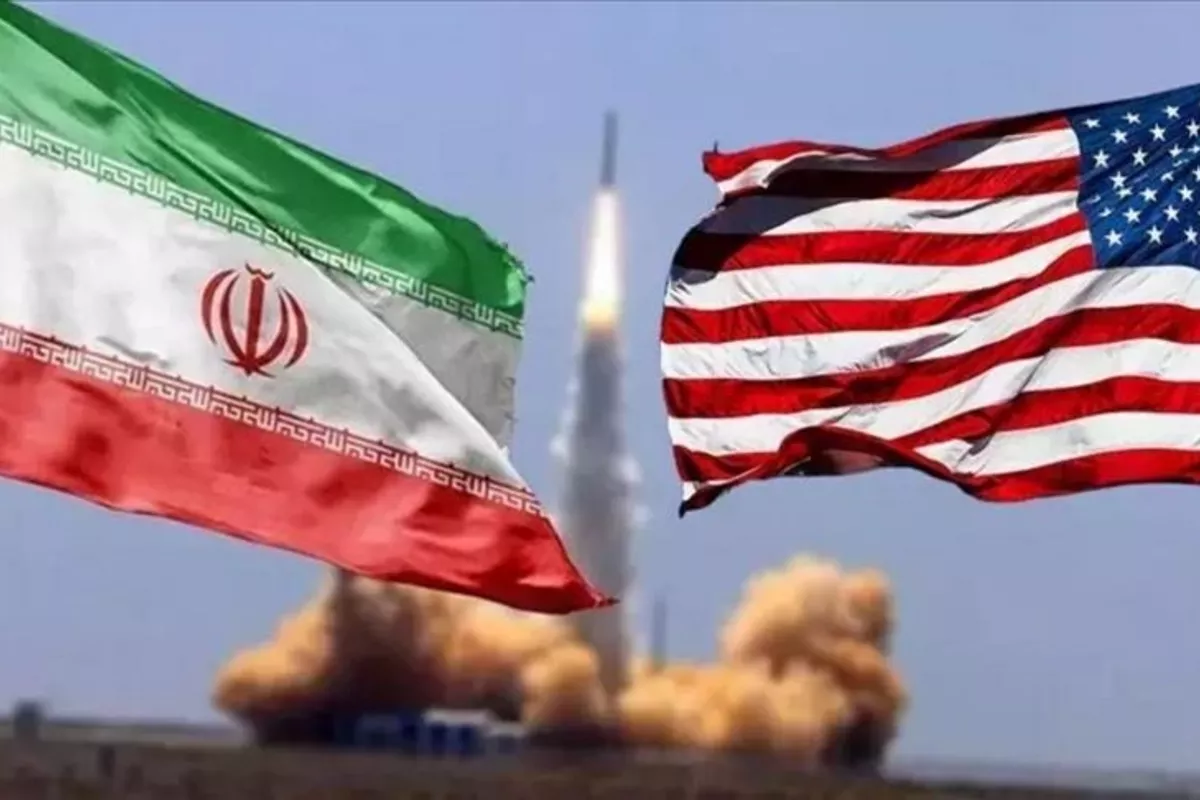
The IRGC’s threat comes as the confrontation involving Iran, Israel and the United States continues. The conflict has now entered its 16th day.

On the morning of February 28, the United States and Israel carried out air strikes inside Iranian territory.

Iran responded with military action. Its forces launched ballistic missiles and drones toward Israel. The country also carried out missile and drone attacks against United States bases and targets in Bahrain, the United Arab Emirates, Kuwait, Qatar and Jordan.

Iran’s strategic mastery: Why Tehran is poised to emerge victorious in the war against Israel and the US

By Dr. Umar Musa Kallah

As the US-Israeli war against Iran enters its second week, the initial narrative of a rapid Western triumph has collapsed. What began with coordinated strikes on Iranian leadership and infrastructure has instead unleashed a sophisticated Iranian counter-campaign rooted in decades of preparation, control of global chokepoints, and asymmetric warfare. Verifiable maritime data, energy market reports, and military analyses confirm that Iran is not merely holding ground, it is systematically eroding the economic foundations of American power and its Gulf allies.

The closure of the Strait of Hormuz stands as Iran’s most potent immediate weapon. Since Iran’s declaration and attacks on transiting vessels in early March 2026, shipping traffic has effectively halted, with oil and LNG flows, representing roughly 20% of global trade is severely disrupted. Global crude prices have spiked, insurance markets have pulled coverage, and Asian importers face acute shortages. This is no bluff: tanker tracking and satellite imagery show near-total cessation of commercial traffic, directly strangling revenues for US-aligned Gulf states.

Tehran has complemented this blockade with hundreds of ballistic missiles and drones targeting US military installations and infrastructure across Bahrain, Qatar, Kuwait, the UAE, and Saudi Arabia. Strikes have damaged communication systems, radar sites, and air bases, including the US Fifth Fleet headquarters and Al Udeid Air Base. The cost asymmetry is telling: cheap Iranian drones and missiles exhaust multimillion-dollar Western interceptors at a pace that cannot be sustained indefinitely.

Iran has also struck desalination plants and power infrastructure critical to Gulf freshwater supplies. With over 90% of drinking water in several Gulf nations dependent on energy-intensive desalination, these targeted hits are creating humanitarian pressure and accelerating economic paralysis. By weaponizing both energy exports and water security, Tehran is holding civilian populations and regional economies hostage.

This economic siege directly undermines the Gulf sovereign wealth funds that have bankrolled much of America’s AI boom. Saudi Arabia’s Public Investment Fund and Abu Dhabi’s Mubadala have channeled tens of billions into US tech, data centers, and AI ventures. With oil revenues frozen, airspace closed, and infrastructure under fire, these funds are already curtailing new commitments to American projects. The resulting capital drought threatens Silicon Valley valuations and risks triggering a broader stock-market correction, a strategic blow at the heart of US technological supremacy.

None of this is improvised. Iran has spent decades building precisely this capacity: an estimated pre-war arsenal of thousands of ballistic missiles, mass-produced drones, and resilient proxy networks designed for attrition warfare. Its high-ranking scientists and engineers have indigenously advanced these systems through reverse-engineering and innovation, often drawing on historical technological exchanges. Battle-hardened IRGC commanders , seasoned warlords operating with decentralized command, coordinate the response, while a population of over 90 million, tempered by generations of sanctions and pressure, demonstrates profound civilizational resilience and refusal to surrender easily.

This internal steel is coupled with broader strategic depth from longstanding partnerships. Russia, China, North Korea, and Pakistan have provided diplomatic condemnation of the US-Israeli aggression, alongside decades of technological collaboration in missiles, drones, and defense systems that now equip Iran to endure. While direct military intervention has been limited, these ties  combined with Iran’s own preparations will ensure sustained resistance that outlasts Western political will and munitions stockpiles.

The world now faces Tehran’s calculated endgame: choking global energy arteries, disrupting vital water supplies, and redirecting Gulf capital away from American innovation. Every day of blockade, every intercepted drone salvo, and every sign of Iranian societal cohesion deepens the strain on Washington and its partners. Iran did not stumble into this conflict; it prepared for it across a lifetime of strategic patience. As oil prices climb, water crises intensify, AI investments falter, and resilient Iranian forces continue to dictate the tempo, the balance of power is shifting decisively.

The verifiable data from shipping trackers, strike assessments, and resilience analyses  is clear: Iran is not on the defensive. It is leveraging geography, technology, alliances, and unbreakable national will to hold the world ransom. Tehran is on course to prevail.

Dr Umar Musa Kallah, a writer and community advocate, can be reached via yakubunasirukhalid@gmail.com.

Hamas urges Iran to avoid striking Gulf states, condemns aggression against Tehran

By Anwar Usman

The Palestinian group Hamas has urged its ally Iran to end attacks on Gulf states, while affirming Tehran’s right to defend itself against Israel and the United States in the war they launched.

Hamas on Saturday called upon its “brothers in Iran” not to target neighbouring countries, and urged the region to end the ongoing conflict that has embroiled much of the Middle East.

The group fought back against Israel’s genocidal war on Gaza following its October 7, 2023, attack, while Israel razed the besieged and bombarded enclave to the ground, killing more than 72,000, with Gulf nations, particularly Qatar, stepping in through mediation, diplomacy and aid.

Since the start of the Iran war by the US and Israel on February 28, several Gulf states in the region have reported Iranian missile and drone attacks.

Hamas said in a statement, “While affirming the right of the Islamic Republic of Iran to respond to this aggression by all available means in accordance with international norms and laws, the movement calls on the brothers in Iran to avoid targeting neighbouring countries.”

 The statement added that countries of the region should “cooperate to halt this aggression and preserve the bonds of fraternity among them”.

Iran has supported Hamas financially and militarily for decades, the group being a part of the now much-weakened so-called “axis of resistance” that includes Lebanon’s Hezbollah and Yemen’s Houthis.

Last month, Gulf countries pledged more than $4bn in combined financial support to US President Donald Trump’s Board of Peace, signalling backing for efforts to resolve the Israeli-Palestinian conflict.

The pledges were announced during the first meeting of the Board of Peace, which has gone quiet in the wake of the war, in Washington, where Qatar and Saudi Arabia each committed $1bn. Kuwait also pledged $1bn over the coming years, while the United Arab Emirates announced an additional $1.2bn in support for Gaza through the board.

Qatar, throughout the genocidal war on Gaza, also played a leading role as mediator, alongside the US and Egypt.

A US-backed “ceasefire” agreement has been in place in Gaza since October 2025, which was meant to halt Israel’s two-year onslaught that killed more than 72,000 people and injured more than 171,000 since October 2023.

Despite the “ceasefire”, however, Israeli forces have continued hundreds of violations through shelling and gunfire, killing hundreds of Palestinians.

Japan confirms suspected North Korean missile launch amid ongoing US-Iran-Israel tensions

By Sabiu Abdullahi

Japanese authorities reported on Saturday that North Korea may have launched a ballistic missile targeting Japan.

The Prime Minister’s Office of Japan shared the information on its verified X account, noting that officials are closely monitoring the situation. In the post, the office stated: “North Korea has launched a suspected ballistic missile. More updates to follow.”

No additional details were provided regarding the missile’s type, trajectory, or possible impact location. Japan has previously tracked multiple missile tests from North Korea in recent years, prompting heightened vigilance by both national and regional authorities.

Authorities have promised to release further updates as new information becomes available.

The missile alert comes amid an ongoing military confrontation between the United States and Iran in the Middle East, which intensified in late February 2026 following coordinated airstrikes by U.S. and Israeli forces on Iranian military and strategic sites.

Iran responded with missile and drone attacks targeting Israeli territory, U.S. military bases, and allied states in the Gulf region. Iranian-backed organizations, including Hezbollah, have also participated in the conflict.

The hostilities have disrupted the Strait of Hormuz, a crucial route for global oil transport, raising concerns about energy supplies. Casualties and injuries have been reported among U.S. personnel as well as civilians in the region.

No formal ceasefire has been declared, and both sides continue military operations while monitoring each other’s movements.

Trump suggests Iran should skip 2026 World Cup for their life safety

By Sabiu Abdullahi

United States President Donald Trump has suggested that Iran’s national football team should reconsider taking part in the 2026 FIFA World Cup in the United States, citing concerns about the players’ safety.

Trump shared the view in a message posted on his Truth Social account on Thursday. He stated that the Iranian team would still be welcomed at the tournament. However, he said the present circumstances might make participation risky.

“The Iran National Soccer Team is welcome to The World Cup, but I really don’t believe it is appropriate that they be there, for their own life and safety. Thank you …,” Trump wrote.

The comment comes at a time of rising tension between the United States and Iran. The situation has raised concerns about security and diplomatic relations ahead of the global football competition.

The 2026 FIFA World Cup will take place in the United States, Canada and Mexico. The tournament will feature an expanded format with 48 national teams.

Iran has already secured qualification for the competition. The team has been placed in a group with Belgium, Egypt and New Zealand. Their matches are scheduled to be played in cities across the United States.

Trump’s statement appears to differ from earlier assurances he gave to FIFA President Gianni Infantino. At that time, he indicated that the Iranian team would be allowed to participate in the tournament.

Iranian officials have also expressed doubts about the country’s participation. The country’s sports minister said the team may not attend the competition under the current conditions. He argued that Iranian athletes might not be safe if they travel to the United States.

The situation has created uncertainty over Iran’s final decision on the tournament. It has also raised questions about how FIFA would respond if the country withdraws.

Trump also used the social media post to repeat his opposition to Iran acquiring nuclear weapons. He noted that the United States produces more oil than any other country and could benefit financially if oil prices increase.

“The United States is the largest Oil Producer in the World, by far, so when oil prices go up, we make a lot of money,” Trump said.

He added that financial gains were not his main concern as president.

“But, of far greater interest and importance to me, as President, is stoping an evil Empire, Iran, from having Nuclear Weapons, and destroying the Middle East and, indeed, the World,” he added.

Trump ended the message with a firm warning.

“I won’t ever let that happen!” he said.

Meanwhile, tensions surrounding Iranian football players have also drawn attention in Australia. Authorities there recently relocated six members of Iran’s women’s national football team after they sought asylum in the country.

Australia’s Home Affairs Minister Tony Burke confirmed the emergency relocation while addressing parliament. He said the government acted after learning that one of the players had contacted the Iranian embassy and revealed the group’s location.

“Unfortunately, in making that decision, she’d been advised by her teammates and coach to contact the Iranian embassy and to get collected,” Burke said.

“I immediately gave the instruction for people to be moved,” he added.

The issue began after the players refused to sing Iran’s national anthem before a match. The action drew criticism from Iranian state media, which reportedly described the athletes as traitors. Human rights groups later raised concerns about the players’ safety, which led Australian authorities to arrange visas and protective accommodation for them.

Iran plane departs India with sailors, bodies as Hormuz passage opens for Indian ships

By Sabiu Abdullahi

A chartered aircraft arranged by Iran left southern India late on Friday carrying sailors and the bodies of crew members killed in a recent U.S. attack at sea, according to two sources familiar with the development.

The aircraft had earlier departed from Sri Lanka with the remains of Iranian sailors who died after a U.S. submarine struck an Iranian warship off the Sri Lankan coast last week. An Indian official with direct knowledge of the situation said the plane transported the bodies of 84 sailors.

The flight later landed in Kochi in southern India. It then departed with sailors from another Iranian vessel that had docked in India. The aircraft also carried several Iranian tourists who had been stranded in the country, the official said.

An Iranian source confirmed that the plane departed from Kochi. The source declined to reveal the destination or provide further details due to security concerns.

The Iranian warship IRIS Dena sank on March 4 after a torpedo fired from a U.S. submarine struck it. The vessel was returning from a naval exercise in India when the incident occurred. The attack took place during the ongoing conflict involving Iran, the United States, and Israel.

Two other Iranian naval vessels that took part in the exercise sought shelter in nearby countries. The IRIS Lavan docked in India. The IRIS Booshehr sailed to Sri Lanka.

A Sri Lankan court ordered authorities earlier this week to hand over the bodies of the sailors killed in the attack to Iran’s embassy. The remains had been kept at a morgue in the National Hospital in Galle, a southern port city.

Thirty-two survivors from the sunken vessel remain in Sri Lanka. Another 208 crew members from the IRIS Booshehr are also in the country.

Sri Lanka’s foreign ministry said it has maintained communication with the Iranian embassy in Colombo regarding the situation of the crew. Iranian authorities in Tehran are also involved in consultations.

The developments come amid rising tension in the region. The war involving Iran has disrupted shipping through the Strait of Hormuz, a key route for global oil shipments. About 40 percent of India’s crude oil imports pass through the strategic waterway.

Iran confirmed on Friday that Indian ships would be allowed to transit the strait safely. The announcement brought relief to New Delhi after days of uncertainty caused by Iranian attacks on vessels in the area.

Iran’s ambassador to India, Mohammad Fathali, reaffirmed the decision while speaking to reporters.

“Because we believe that Iran and India are friends,” he said. “We have common interests and a common fate. I, as the ambassador for Iran in India, I say to you that the government of India .. after the war, will help us in different fields.”

India has continued discussions with Iranian officials to ensure safe passage for ships flying the Indian flag or carrying cargo to the country. Several vessels have already passed through the Strait of Hormuz in recent days. Officials in New Delhi see the development as an important step toward stabilising energy supplies.

US strike on Iranian school: China donates $200,000 to families of slain students

By Hadiza Abdulkadir

China has announced a $200,000 humanitarian donation to support the families of students killed in a missile strike on a school in Iran earlier in the war, according to reports by Agence France-Presse (AFP).

In a statement on Friday, China’s foreign ministry said the Chinese Red Cross Society will channel the funds through the Iranian Red Crescent Society to assist the parents of the victims.

Beijing described the incident as an “indiscriminate” missile strike carried out by the United States that resulted in the deaths of several students. The donation, officials said, will serve as emergency humanitarian assistance intended for “condolences and compensations” to the bereaved families.

China also reiterated its call for the protection of civilians, particularly children, during armed conflicts.

US military refueling aircraft crashes in Western Iraq

By Sabiu Abdullahi

A United States military refueling aircraft has crashed in western Iraq, the US Central Command confirmed on Thursday, saying the incident involved another aircraft but was not caused by hostile or friendly fire.

In a statement, the command said rescue operations were underway after the KC-135 refueling aircraft went down during a mission. It added that the second aircraft involved in the incident landed safely.

“The incident occurred in friendly airspace during Operation Epic Fury,” the statement said, referring to the military operation name for the US campaign against Iran.

A US official who spoke on the condition of anonymity said the second aircraft was also a KC-135. The official added that up to six service members were on board the aircraft that crashed.

Meanwhile, the Islamic Resistance in Iraq, a coalition of Iran-backed armed groups, claimed responsibility for bringing down the aircraft.

In a statement, the group said it had shot down the KC-135 aircraft “in defense of our country’s sovereignty and airspace”.

The KC-135 tanker aircraft was produced by Boeing in the 1950s and early 1960s. It has remained a key part of the US military’s aerial refueling fleet. The aircraft allows combat planes to continue missions without the need to land for fuel.

The latest incident comes as fighting continues between the United States, Israel, and Iran. Since the US and Israel began strikes on Iran on February 28, seven American troops have been killed.

Reuters reported earlier this week that up to 150 US troops have been wounded in the conflict.

On the same day as the crash, two US sailors were also injured after a fire broke out aboard the USS Gerald Ford. Officials said the fire was not related to combat.

Overall, the war has claimed more than 2,000 lives so far, including nearly 700 people in Lebanon.