International

Nigeria, Benin Republic reach trade deal to boost regional economic integration

By Sabiu Abdullahi

Nigeria and the Benin Republic have reached a significant agreement on a joint trade framework aimed at removing cross-border trade barriers, promoting economic growth, and strengthening ties between both nations.

The agreement was sealed during a high-level meeting held on Saturday, August 2, 2025, at the Ministry of Economy and Finance in Cotonou.

The session brought together top officials, Customs leaders, and trade experts from the two countries, all focused on improving the efficiency of cross-border trade.

Nigeria’s Minister of Industry, Trade, and Investment, Mrs. Jumoke Oduwole, described the new framework as a strategic advancement in West Africa’s quest for regional economic development.

“This agreement signals strong political will from both countries to pursue a progressive and inclusive trade relationship,” she stated.

She recalled the recent meeting between Presidents Bola Ahmed Tinubu and Patrice Talon at the West African Economic Summit, where both leaders signed a preliminary Memorandum of Understanding (MoU) and directed their technical teams to turn political agreements into real progress.

“Our joint commitment is to dismantle barriers, improve logistics, and ensure that trade becomes a tool for job creation and regional prosperity. The Heads of Customs of both nations have demonstrated commendable synergy, which we are expanding through four thematic working groups covering trade facilitation, enforcement, data sharing, and infrastructure,” she added.

Mrs. Oduwole also noted that Nigeria is positioning itself to transition from a regional trading hub to a global player in shaping equitable trade systems.

Comptroller-General of Customs, Adewale Adeniyi, MFR, assured that the Nigeria Customs Service is fully prepared to implement the agreement in line with the country’s trade agenda.

“What we have witnessed today is the culmination of intensive technical meetings between Nigeria and Benin Customs officials over the past 48 hours. We’ve developed a joint framework that reflects our Presidents’ shared vision for economic growth,” he said.

He disclosed that both countries are planning to sign a formal Memorandum of Understanding based on the framework by early 2026.

Addressing the role of Customs in improving trade processes, CGC Adeniyi said measures have been outlined to ensure corridor-based trade solutions, which will promote transit and transshipment activities and reduce the bureaucratic delays affecting small and medium businesses.

“We’re committed to removing trade barriers that hinder local businesses. New trade corridors have been identified, and connectivity between our systems has already been activated,” he added.

He also expressed gratitude to the Director-General of Benin Customs, Mrs. Adidjatou Hassan Zanouvi, for her support, particularly for Benin’s endorsement of Nigeria’s leadership role at the World Customs Organisation (WCO) Council meeting in Kinshasa, Democratic Republic of Congo.

Both delegations later toured the Cotonou Port to review existing operations and identify areas for modernisation. They also visited the Seme-Krake Joint Border Post, demonstrating their commitment to closer coordination and regional integration through joint border management.

This new agreement marks a major milestone in the trade relations between Nigeria and Benin and is expected to promote growth, transparency, and innovation across both economies.

Maryam Bukar Hassan named first UN Global Advocate for Peace

By Hadiza Abdulkadir

Nigerian spoken word artist and poet, Maryam Bukar Hassan, has been appointed the first United Nations Global Advocate for Peace, marking a historic milestone for both the artist and the continent.

Known for her evocative poetry and powerful performances, Hassan, often called “Alhanislam” by her fans, has gained international recognition for using her voice to address pressing social issues. Her latest appointment underscores the UN’s commitment to engaging young voices in the global peacebuilding process.

In her new role, Hassan is expected to lead campaigns that inspire dialogue, promote conflict resolution, and amplify youth perspectives on peace. Her message, rooted in empathy and resilience, has resonated with many around the world.

“Peace is not a silence you force into people’s mouths… It is not the absence of war; it is the presence of understanding,” she says in her latest poem — a reflection of the conviction she brings to her advocacy.

With conflict and crisis affecting millions globally, especially young people, Hassan’s appointment comes at a critical time. Her voice offers not just representation, but a rallying call for hope and healing.

U.S. issues travel warning, flags 18 Nigerian states as high-risk zones

By Abdullahi Mukhtar Algasgaini

The United States government has issued a new travel advisory, warning its citizens against visiting 18 Nigerian states due to escalating security and health risks.

The advisory, released Tuesday, cited widespread violent crime, terrorism, abductions, and poor healthcare infrastructure as key concerns.

The U.S. Department of State classified Nigeria among several African countries under its highest risk categories, advising against all non-essential travel to certain regions and urging increased caution nationwide.

Other countries listed include Somalia, Libya, Burkina Faso, South Sudan, the Democratic Republic of Congo, Uganda, Burundi, Mauritania, Guinea-Bissau, Niger, and Chad.

In Nigeria, the advisory designates Borno, Yobe, Kogi, and northern Adamawa states as highly dangerous due to terrorism and frequent kidnappings.

It also flagged Bauchi, Gombe, Kaduna, Kano, Katsina, Sokoto, and Zamfara states for rampant abduction cases.

Meanwhile, Abia, Anambra, Bayelsa, Delta, Enugu, Imo, and Rivers (excluding Port Harcourt) were noted for persistent criminal activity and violent gang operations.

“Reconsider travel to Nigeria due to crime, terrorism, civil unrest, kidnapping, armed gangs, and inconsistent availability of health care services. Some places in Nigeria have an increased risk. Overall, all locations carry significant security risks,” the U.S. Mission in Nigeria stated.

The advisory emphasized that violent crime—including armed robbery, assault, carjacking, and rape—is widespread, and that travelers could be exposed to kidnapping and hostage-taking, especially along major roads.

This latest warning underscores growing global concern over Nigeria’s internal security challenges and places increased pressure on authorities to address rising insecurity across multiple regions.

Columbia University disciplines students over pro-Palestinian protests

By Muhammad Abubakar

Columbia University has announced disciplinary actions against dozens of students involved in pro-Palestinian demonstrations on its campus earlier this year. Measures taken include suspensions, expulsions, and the revocation of degrees, according to a university spokesperson.

The protests, which drew national attention, had sparked controversy over their tone and messaging. The Trump administration, citing concerns of antisemitism, accused the demonstrators of promoting hate speech and paused federal funding to the university in March.

University officials stated that the disciplinary process was based on violations of campus policies, not political content. “We support free expression, but actions that disrupt university operations or threaten community safety are subject to consequences,” the spokesperson said.

Student and civil rights groups have condemned the punishments, calling them excessive and politically motivated. Advocacy organizations continue to demand transparency in the university’s disciplinary procedures.

Nigerian physicist appointed to UN scientific panel on nuclear war

By Hadiza Abdulkadir

KANO — Nigeria has earned international recognition following the appointment of Professor Rabia Sa’id, a renowned physicist from Bayero University Kano, to a newly established United Nations independent scientific panel tasked with assessing the impacts of nuclear war.

The 21-member panel, constituted under UN Resolution 79/238, will provide a comprehensive scientific report on the consequences of nuclear conflict by 2027. The panel is part of a broader global initiative aimed at strengthening nuclear disarmament efforts and promoting peace through evidence-based research.

Professor Sa’id’s inclusion in the panel underscores Nigeria’s increasing influence in global peacebuilding, science diplomacy, and advocacy for nuclear non-proliferation. Her appointment is being hailed as a significant milestone for Nigerian science and for women in STEM across Africa.

A respected scholar and advocate for science education and sustainable development, Professor Sa’id brings to the panel a wealth of academic experience and a strong commitment to global security.

Her appointment has been widely celebrated within Nigeria’s academic and diplomatic communities as a positive step toward the country’s deeper engagement in global scientific and humanitarian initiatives.

Suspected racist’s brutal murder of Algerian lady in Germany sparks outrage

By Sabiu Abdullahi

The fatal stabbing of 26-year-old Rahma Ayad, an Algerian nursing trainee, in the German town of Arnum near Hanover has ignited protests and diplomatic conversations between Algeria and Germany.

Many are urging that the incident be treated as a racially motivated hate crime.Rahma was killed on the morning of 4 July in the stairwell of her apartment building.

According to German police and eyewitness reports, her screams were heard by neighbours who called emergency services. She was discovered with multiple stab wounds to her chest and shoulder.

Despite the rapid arrival of medical personnel, she succumbed to her injuries shortly afterward.A 31-year-old German man, who resided in the same building, was arrested later that day.

While he remains in custody, authorities have yet to officially confirm a motive or file formal charges.

Rahma’s family alleges that she had previously expressed concerns about her safety.

They claim she had been repeatedly harassed by her neighbour, particularly because of her Arab identity and choice to wear the hijab.

In an interview with Al-Araby TV, her mother revealed that Rahma had felt unsafe for months due to the neighbour’s behaviour, which reportedly included verbal abuse.

Algerian community activists in Germany echoed these concerns, stating that the suspect had a history of making derogatory remarks directed at Rahma.

They are now calling on authorities to treat the incident as a case of racist violence rather than dismissing it as a random act or linking it to mental instability.

The killing has sparked widespread protests across Germany.

On Tuesday, demonstrators gathered outside Rahma’s residence in Arnum, holding a rally to demand justice and draw attention to what they described as rising Islamophobia across Europe.

The protesters also criticised the muted response from German officials and the limited coverage the story received in mainstream media.

“If the killer had been a Muslim and the victim German, this would be headline news everywhere,” one protester told Al-Araby TV.

Another participant accused German authorities of applying justice “only selectively”.

The incident has stirred strong emotions online as well.

A user on X (formerly Twitter) commented, “People travel to Europe for safety and a better life […] and they end up like this.”

Responding to the outcry, Algeria’s Secretary of State for National Community Abroad, Sofiane Chaib, held talks with the German ambassador in Algiers.

He described Rahma’s death as a “heinous crime” and called for greater protection of Algerians living in Germany.

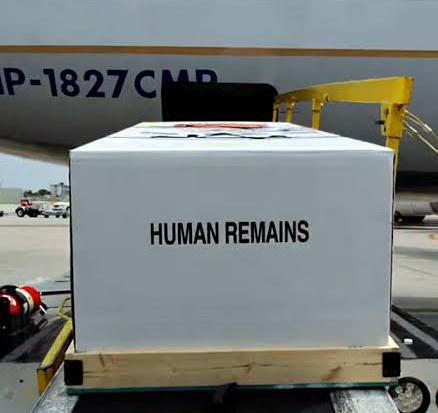
In a related gesture, the Algerian consulate in Germany has committed to covering the expenses for transporting Rahma’s body back to Oran, where she will be laid to rest.

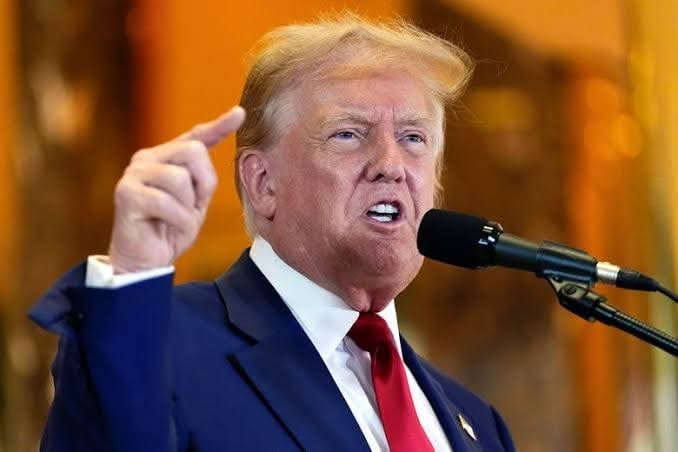
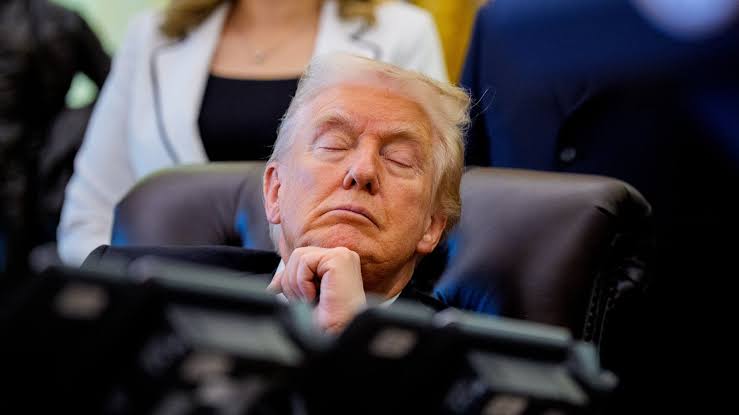
Trump applauds Liberian president’s ‘beautiful’ English

By Sabiu Abdullahi

United States President Donald Trump has drawn attention with remarks made during a meeting with African leaders at the White House, where he praised Liberian President Joseph Nyuma Boakai’s English-speaking skills.

After Boakai delivered his remarks, Trump responded with visible admiration. “Such good English,” the president said.

He then asked, “Where were you educated? Where? In Liberia? Well, that’s very interesting. It’s beautiful English.”

He went further to say, “I have people at this table can’t speak nearly as well.”

The comments were made during a luncheon on Wednesday, July 9, 2025, attended by the leaders of Senegal, Gabon, Mauritania, and Guinea-Bissau, among others.

The gathering was held to deepen ties following a recent executive order signed by Trump to enhance U.S. mineral output, with a focus on collaboration with resource-rich African countries.

President Boakai, who studied at the University of Monrovia and previously served in various senior roles under former President Ellen Johnson Sirleaf, responded to Trump’s praise with a statement of friendship and alignment.

“Liberia is a longtime friend of the United States and we believe in your policy of making America great again,” Boakai said.

Trump’s remarks, however, sparked debate on social media and in the press. Some viewed them as complimentary, while others criticized the tone as condescending.

In defense of the president, a White House spokeswoman told The New York Times that “only the fake news could so pathetically pick apart President Trump’s heartfelt compliment during a meeting that marked a historic moment for U.S.-Africa relations.”

Liberia, located in West Africa and with a population of 5.7 million, was founded by freed Black Americans in the 1800s.

English is the country’s official language, although Liberian English and various indigenous languages are widely spoken.

The World Bank projects a 5 percent GDP growth for Liberia in 2025, driven largely by an expansion in the gold mining sector, along with improvements in agriculture and services.

The country’s reserves of rare Earth elements, including neodymium, have made it a point of interest for foreign investors, including the U.S.

Other African leaders at the White House also expressed interest in deepening economic cooperation with Washington and voiced support for policies that prioritize mutual benefit.

Nigeria backs BRICS vision for global restructuring, youth inclusion — Tinubu

By Muhammad Abubakar

President Bola Ahmed Tinubu has reaffirmed Nigeria’s commitment to the ideals of the BRICS bloc, emphasising the need for financial restructuring and a reimagined global order that reflects the aspirations of emerging economies.

Speaking at the ongoing BRICS summit in Rio, Tinubu stated that the group must evolve beyond its economic identity to become a “beacon for emerging solutions” based on solidarity, self-reliance, sustainability, and shared prosperity.

Talking about Nigeria’s youth-driven demographic, the President emphasised the importance of shaping global policies that address the specific concerns of young people, who comprise 70% of Nigeria’s population.

“Nigeria is not a passive participant in global affairs,” Tinubu declared. “We are taking bold, homegrown steps to accelerate renewable energy, mainstream climate action, strengthen urban resilience, and expand healthcare access.”

He concluded with a strong message of determination: “The world is changing. Nigeria will not be left behind. We will help lead the way.”

Arsenal’s Thomas Partey charged with multiple sexual offences

By Maryam Ahmad

Arsenal midfielder Thomas Partey has been officially charged with multiple sexual offences, the Metropolitan Police Service confirmed on Thursday.

In a statement, the police said the Crown Prosecution Service (CPS) had authorised the charges following a file of evidence submitted by detectives. Partey, 32, of Hertfordshire, faces five counts of rape and one count of sexual assault.

The alleged offences are reported to have taken place between 2021 and 2022.

“The Met has issued a charge and requisition to Thomas Partey… in connection with the following offences: Five counts of rape, One count of sexual assault,” the statement read.

Further details about the case have not been released, and a court date is expected to be announced soon.

Partey and his representatives have yet to make a public statement regarding the charges.

Dr Yasir Qadhi pays tribute to Alhaji Aminu Dantata

By Hadiza Abdulkadir

Renowned U.S.-based Islamic scholar Dr. Yasir Qadhi has paid a heartfelt tribute to Nigerian business mogul and philanthropist Alhaji Aminu Alhassan Dantata, who passed away at the age of 94.

In a message shared via his social media platforms, Dr. Qadhi described Dantata as “a shining star and a legendary icon” in Nigeria, praising his humility, honesty, and lifelong commitment to philanthropy.

“He was one of the most successful entrepreneurs and business tycoons in Africa,” Dr. Qadhi wrote. “Yet everyone knew him to be a humble and honest man… ever-ready to help others less fortunate, never greedy for more.”

Recalling a recent meeting with Dantata in Nigeria, Qadhi shared the late businessman’s parting words of wisdom: “Honesty! Always, be truthful and sincere, and leave the rest to Allah.”

Alhaji Dantata, who declined a political appointment, was never involved in a scandal and was laid to rest in the revered Baqi al-Gharqad cemetery in Madinah, Saudi Arabia.

“Such men are very rare indeed,” Qadhi noted, praying for Allah’s mercy upon him and for his legacy to continue through his progeny.