International

“Violence and terror have no place in the United States of America,” ex-President Biden calls for probe into Minneapolis killings

By Sabiu Abdullahi

Former United States President Joe Biden has condemned the killing of two people by Immigration and Customs Enforcement (ICE) agents in Minneapolis and has called for full, fair, and transparent investigations into the incidents.

In a statement shared on his X handle on Tuesday, Biden described the killings of Alex Pretti and Renee Good as actions that run contrary to America’s core values. He said the country is “not a nation that guns down our citizens in the street” and “not a nation that allows our citizens to be brutalized for exercising their constitutional rights.”

“We are not a nation that tramples the 4th Amendment and tolerates our neighbours being terrorized,” the former President said.

Biden also commended residents of Minnesota for what he described as their strength and unity in the face of hardship. He said Minnesotans have continued to support one another and speak against injustice despite difficult conditions.

“The people of Minnesota have stood strong — helping community members in unimaginable circumstances, speaking out against injustice when they see it, and holding our government accountable to the people,” he said.

“Minnesotans have reminded us all what it is to be American, and they have suffered enough at the hands of this Administration,” Biden added.

The former President stressed that violence has no place in the United States, especially when it involves state authorities.

“Violence and terror have no place in the United States of America, especially when it’s our own government targeting American citizens,” he said.

Biden urged citizens to protect democratic values and insisted that the foundations of the country cannot be destroyed by one individual.

“No single person can destroy what America stands for and believes in, not even a President, if we — all of America — stand up and speak out. We know who we are. It’s time to show the world. More importantly, it’s time to show ourselves,” he stated.

He concluded by extending condolences to the families of the victims.

“Jill and I are sending strength to the families and communities who love Alex Pretti and Renee Good as we all mourn their senseless deaths,” Biden said.

Alex Pretti, a U.S. citizen and registered nurse, was killed during an immigration enforcement operation on the south side of Minneapolis. Colleagues described him as a healthcare worker known for caring for critically ill veterans.

His death has intensified scrutiny of federal law enforcement actions and has widened mistrust between frontline healthcare workers and federal authorities.

The incident is the second fatal shooting linked to federal immigration agents in Minneapolis in recent weeks. It has sparked protests, renewed debate over enforcement methods, and growing calls for accountability.

The shootings occurred during a weeks-long deployment of immigration enforcement and other federal agents in Minneapolis. Authorities have intensified raids in the city as part of President Donald Trump’s anti-immigration agenda.

Minneapolis has also seen daily protests since the January 7 killing of Renee Good, a 37-year-old resident who died after an ICE officer fired into her vehicle. In a separate incident last week, U.S. security operatives also shot a Venezuelan man in the city.

Majority of Europeans see Trump as an ‘enemy’ of Europe, poll finds

By Sabiu Abdullahi

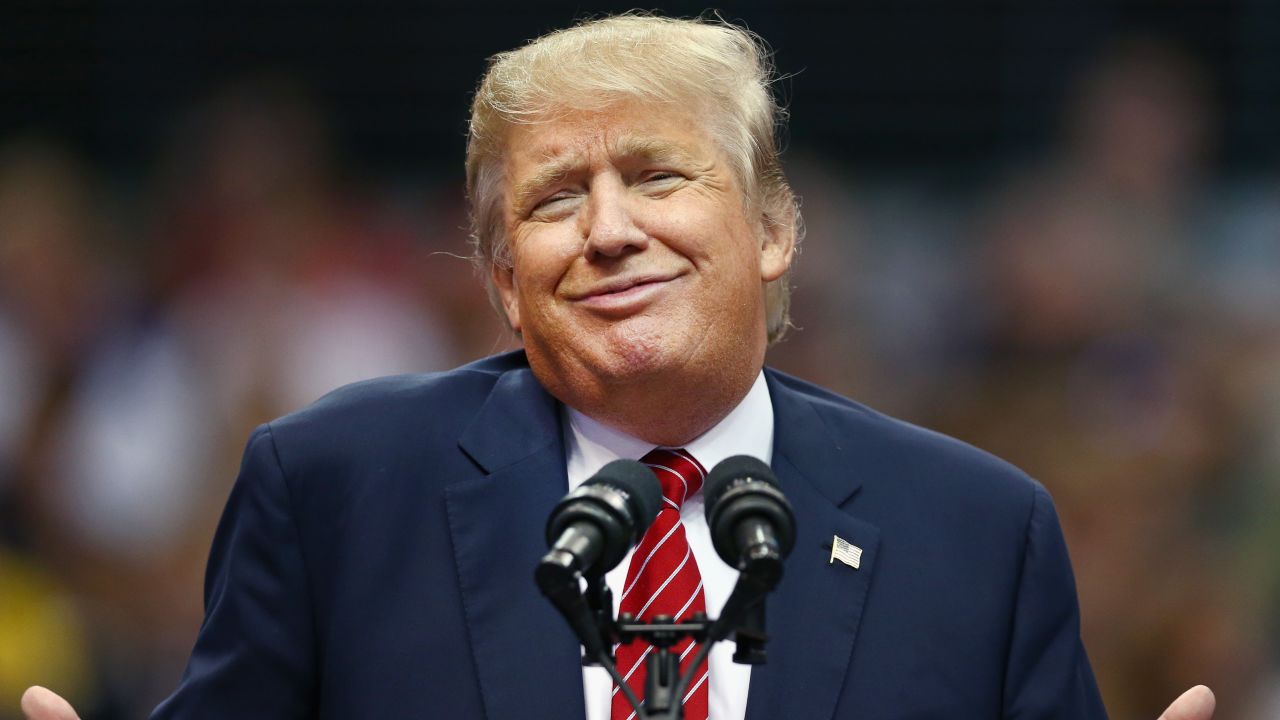
More than half of Europeans now regard US President Donald Trump as an “enemy” of Europe, a new opinion poll has shown.

The survey, published on January 23, was conducted across seven European Union countries. It revealed that 51 percent of respondents hold a negative view of Trump’s relationship with the continent. By contrast, only eight percent described him as a “friend” of Europe.

The findings indicate a steady rise in distrust toward the US president since September last year. Public confidence has weakened over time, reflecting growing unease about his policies and rhetoric toward Europe.

According to TRT World, respondents in Denmark emerged as some of the most critical in the poll. This followed repeated statements by Trump in which he threatened to take control of Greenland, an autonomous territory under Danish sovereignty.

The poll highlights widening scepticism across Europe about the US president’s intentions and his approach to transatlantic relations.

Trump meets Noem for two hours as backlash grows over Minneapolis shooting

By Sabiu Abdullahi

President Donald Trump held a lengthy Oval Office meeting on Monday evening with Homeland Security Secretary Kristi Noem amid rising criticism of his administration’s handling of the fatal shooting of a Minneapolis resident by federal agents.

According to two people briefed on the discussion, the president met with Noem and her top aide, Corey Lewandowski, for nearly two hours. The sources spoke on condition of anonymity because the meeting was private. The session followed a request from Noem to see the president, the sources said.

According to New York Times, during the meeting, Trump did not indicate that the jobs of Noem or Lewandowski were in danger. Still, the talks highlighted growing concern within the White House over bipartisan criticism linked to the killing of Alex Pretti. Pretti was shot roughly 10 times by immigration agents on Saturday after he was reportedly filming them with his phone.

Noem has been the public face of the administration’s immigration crackdown. She has also drawn controversy for making false accusations about Pretti, including describing him as a “domestic terrorist.”

Several senior White House officials also attended the meeting. They included Susie Wiles, the chief of staff; Karoline Leavitt, the press secretary; and Steven Cheung, the communications director. Stephen Miller, a senior aide who oversees immigration strategy, was not present.

The meeting took place on the same day Trump announced that Tom Homan, his border czar, would be sent to oversee operations in Minneapolis. The decision was widely viewed as an effort to rely on an official associated with Immigration and Customs Enforcement’s traditional focus on targeted arrests, rather than broad raids that have taken place in cities across the country.

At the same time, the administration was preparing to move Gregory Bovino, a Border Patrol official whose aggressive tactics have attracted sharp criticism, out of Minneapolis. Two officials familiar with the matter confirmed the plan, speaking on condition of anonymity.

The developments reflect a shift in approach as the administration faces mounting scrutiny over the use of force by federal immigration agents and its broader enforcement strategy.

Trump says ‘big armada’ near Iran as Hezbollah, UAE, IRGC issue warnings

By Sabiu Abdullahi

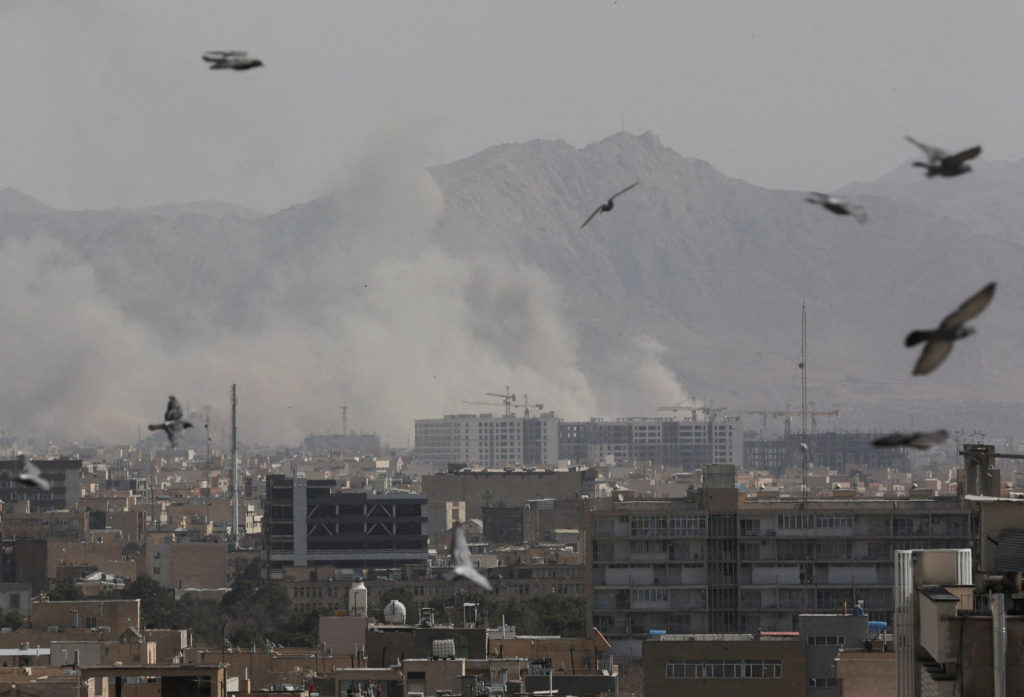
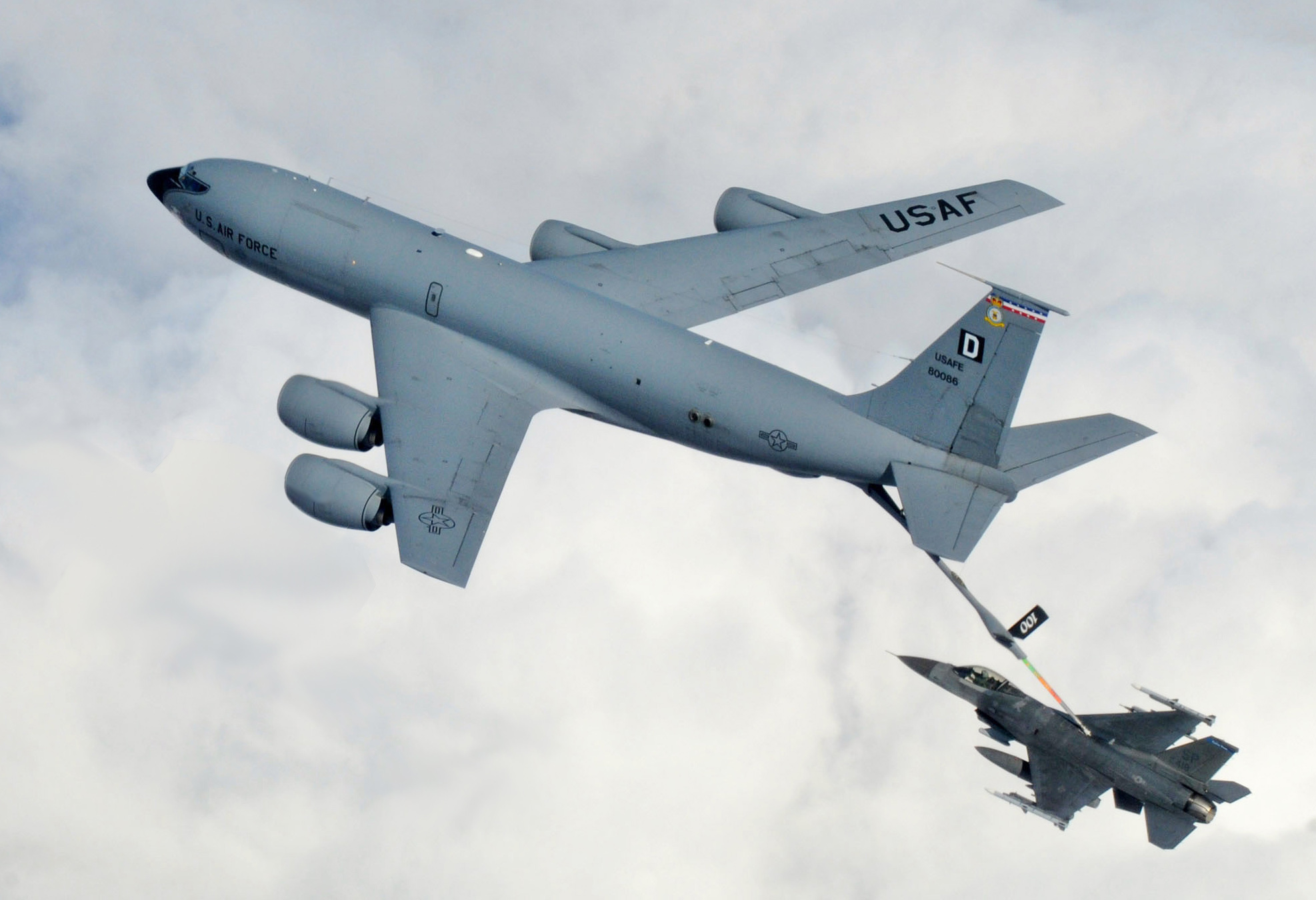
United States President Donald Trump has said Washington has deployed what he described as “a big armada next to Iran” amid rising tensions, while insisting that Tehran’s leadership is still interested in reaching an agreement with the US.

Trump made the remarks during an interview with Axios late on Monday, shortly after the aircraft carrier USS Abraham Lincoln entered the US Central Command’s area of responsibility in the Middle East. The move marked a major escalation in the US military posture close to Iran.

Speaking on the deployment, Trump said: “We have a big armada next to Iran. Bigger than Venezuela.”
He also emphasised that diplomacy remained possible. “They want to make a deal. I know so. They called on numerous occasions. They want to talk.”

According to White House officials quoted by Axios, a military strike against Iran remains an option, although Trump has not taken a final decision. The officials added that the president is expected to hold further consultations this week and assess additional military choices.

Iranian authorities, on their part, have continued to warn of serious consequences if the US launches any attack. The warnings come amid ongoing arrests linked to deadly nationwide protests and a prolonged internet blackout across parts of the country, Aaljazeera reports.

The Islamic Revolutionary Guard Corps (IRGC) has also issued strong signals. In a report carried by Press TV, an unnamed IRGC official said the force is “closely monitoring” US and Israeli actions in the region. The official added that any belief that a strike on Iran would be quick and clean is based on an “incomplete understanding” of Iran’s capabilities. Last week, IRGC commander General Mohammad Pakpour said his forces were “more ready than ever, finger on the trigger,” and urged the US and Israel to “avoid any miscalculation.”

Meanwhile, Lebanon’s Hezbollah has declared it would not remain neutral if Iran is attacked. Hezbollah leader Naim Qassem made the position clear during a televised address delivered via video link at a solidarity event.

Qassem said Hezbollah fully supports Iran and its leadership. He added that any threat against Iran’s Supreme Leader, Ayatollah Ali Khamenei, would be treated as a threat against Hezbollah itself, according to Hezbollah-affiliated Al-Manar TV. Qassem also accused Washington of long-standing hostility towards Iran, saying the US had plotted against the country since the 1979 Islamic Revolution and later pursued conflict through Iraq in the 1980s.

Regional reactions have also emerged. The United Arab Emirates announced that it would not allow its land, airspace or territorial waters to be used for any military operation against Iran. In a statement, the UAE Foreign Ministry said it would also refuse to provide logistical support for such an attack. The Gulf state maintains strong trade ties with Iran, despite regional rivalries and its 2020 normalisation agreement with Israel, which was brokered by the US.

In Tehran, tensions have spilled into public symbolism. Authorities unveiled a massive mural in Enghelab Square that shows a damaged US aircraft carrier with destroyed fighter jets and streams of blood. The caption on the artwork, written in both Farsi and English, reads: “If you sow the wind, you will reap the whirlwind.” Enghelab Square often hosts state-organised gatherings, and officials regularly change its murals to reflect national events.

The developments underline the growing strain between Washington and Tehran, as diplomatic signals continue alongside military deployments and stark warnings from Iran and its allies.

Laken Riley remembered barely two years after tragic campus killing

By Sabiu Abdullahi

Laken Hope Riley, a 22-year-old nursing student whose life was cut short during a morning jog at the University of Georgia, continues to be remembered across the United States for the profound impact her death had on her community and the national conversation on public safety and immigration.

Riley was attacked and murdered on February 22, 2024, while running near Oconee Forest Park on the University of Georgia campus in Athens, Georgia. Her body was later discovered near Lake Herrick. Medical findings confirmed that she died from blunt force trauma and asphyxiation after suffering multiple severe injuries.

On the morning of the incident, Riley sent her mother a text message at 8:55 a.m., writing: “Good morning, about to go for a run if you’re free to talk”. She placed a call to her mother minutes later. Security footage later showed Riley jogging with her phone at 9:05 a.m., before she turned toward the wooded park area at 9:06 a.m. That was the last time she was seen alive.

Investigators established that Riley’s phone placed an emergency call to 911 at 9:11 a.m. Her watch later indicated that her heart stopped at 9:28 a.m. Police believe the attack occurred between 9:06 a.m. and 9:32 a.m.

University police discovered Riley’s body at 12:38 p.m. after her roommate reported her missing earlier that day. Sergeant Kenneth Maxwell, one of the first officers on the scene, said Riley had visible injuries and no detectable pulse. Efforts to revive her were unsuccessful.

An autopsy conducted by Dr. Michelle DiMarco revealed that Riley suffered eight cuts to the left side of her head, a complex skull fracture, hemorrhaging, and multiple injuries to her ear, neck, torso, abdomen, hand, and leg. Petechiae were also found in her eyes and gums. Authorities described the killing as a “crime of opportunity”, noting that the attacker acted alone. It was the first murder recorded on the university campus since 1983.

Riley was born on January 10, 2002, in Marietta, Georgia, to Jason Riley and Allyson Phillips. She grew up with three siblings and graduated from River Ridge High School in 2020, where she ran on the cross-country team. Her former coach, Keith Hooper, remembered her as “a beautiful person, passionate about her health care studies and an unselfish teammate”.

At the time of her death, Riley was studying nursing at Augusta University in Athens and had previously attended the University of Georgia as an undergraduate. She was also an active member of the Alpha Chi Omega sorority.

Police later identified the suspect as José Antonio Ibarra, a 26-year-old Venezuelan national who had entered the United States illegally in September 2022. He was arrested after investigators linked him to the crime through surveillance footage, forensic evidence, and witness accounts. Riley’s hair was found on a jacket recovered from a dumpster near Ibarra’s residence, and police observed scratches on his arms and redness on his knuckles during questioning.

Ibarra faced ten criminal charges, including felony murder, malice murder, kidnapping, aggravated assault with intent to rape, false imprisonment, and concealing the death of another. He pleaded not guilty. After a bench trial that began in November 2024, Judge H. Patrick Haggard found him guilty on all counts on November 20, 2024, and sentenced him to life imprisonment without the possibility of parole.

Riley’s death drew international attention and sparked renewed debate over illegal immigration policies in the United States. Lawmakers cited her case during deliberations on the Laken Riley Act, legislation that mandates federal detention of illegal immigrants arrested for burglary or theft. The bill was signed into law on January 29, 2025, becoming the first legislation approved during President Donald Trump’s second term.

Her funeral took place on March 1, 2024, at Woodstock City Church, followed by her burial at Enon Cemetery in Woodstock, Georgia. A memorial now stands near Lake Herrick in her honor. Her family later announced plans to establish the Laken Hope Riley Foundation.

Speaking on behalf of the family, Riley’s stepfather said: “She will be missed every day, but we promise to honor her life moving forward in a very big way”.

One year on, Laken Riley is remembered not only as a promising nursing student and devoted daughter, but also as a symbol of a life lost too soon and a tragedy that continues to resonate far beyond the University of Georgia campus.

The suspect

Fellow nurses honour Alex Pretti after US federal agents shot him dead

By Sabiu Abdullahi

Colleagues of Alex Jeffrey Pretti, a 37-year-old intensive care unit nurse at the Minneapolis Veterans Affairs Medical Center, have paid tribute to him following his death during a federal immigration enforcement operation in Minneapolis.

Pretti, a U.S. citizen and registered nurse known for caring for critically ill veterans, was shot by federal immigration agents on January 24 on the city’s south side. His death has sparked public outrage and renewed debate over the conduct of federal law enforcement during immigration operations.

Over the weekend, hospital staff held informal tributes in his honour. A video that circulated widely on social media, posted on Monday by the account @Pamphlets, showed a staff member standing beside the body of a deceased veteran draped in the American flag, while delivering a formal final salute. The footage has drawn attention as colleagues recalled Pretti’s dedication to his patients.

Authorities said Pretti was taken to hospital with multiple gunshot wounds, where he was later pronounced dead. Minneapolis Police Chief Brian O’Hara confirmed the sequence of events. Federal officials initially said the shooting occurred in self-defence, alleging that Pretti approached agents with a handgun.

That version of events has been rejected by Pretti’s family, eyewitnesses, and video recordings captured by bystanders.

In a statement, his parents, Michael and Susan Pretti, expressed grief and anger over their son’s death and criticised what they described as false official accounts.

“We are heartbroken but also very angry,” they said. “Alex was a kindhearted soul who cared deeply for his family, his friends, and the American veterans he served as an ICU nurse at the Minneapolis VA hospital. Alex wanted to make a difference in this world.”

The parents dismissed claims that their son posed a threat and said he was unarmed at the time he was shot.

“I do not throw around the term ‘hero’ lightly,” they said. “However, his last thought and act was to protect a woman. The lies told about our son by the administration are reprehensible. He was holding his phone, his other hand raised, while being pepper-sprayed and trying to shield someone who had been pushed to the ground.”

They also called on the public and the media to review available video evidence and, in their words, “get the truth out.”

The Department of Homeland Security has continued to defend the actions of its agents, stating that a Border Patrol officer fired after perceiving an imminent threat. However, several videos circulating online appear to show Pretti holding only a cellphone shortly before the shooting. This discrepancy has drawn criticism from civil rights groups and some local officials.

At the Minneapolis VA Medical Center, staff members described Pretti as a calm and compassionate caregiver. Colleagues gathered near the hospital entrance to lay flowers and share memories, while expressing grief and anger over his death.

One video that has been widely shared shows Pretti offering a final salute to a deceased veteran who had been under his care. Many have described the moment as a reflection of his commitment to those he served.

“He did difficult, often invisible work every day for veterans who depended on him,” one VA nurse said. “That dedication doesn’t disappear because of the way he died.”

Local authorities confirmed that Pretti was a licensed gun owner with a valid permit, but they have not established whether he had a firearm on him or displayed one during the encounter. Witnesses said he tried to assist another protester before agents pepper-sprayed him and restrained him. Shots were fired shortly after.

The incident is the second fatal shooting involving federal immigration agents in Minneapolis within recent weeks. It has triggered protests, intensified scrutiny of enforcement tactics, and renewed calls for accountability from federal authorities.

Niger detains DW Hausa correspondent

By Muhammad Abubakar

Authorities in Niger have detained DW Hausa journalist Gazali Abdou Tasawa and placed him in Niamey Central Prison following a court summons on Thursday, January 22, 2026. The journalist appeared before the public prosecutor at the Niamey High Court for questioning related to a video report he produced.

The report highlighted the difficult living conditions of refugees from Katsina State in northern Nigeria who have sought refuge in Niger. However, no official statement has yet been issued detailing the specific charges against the journalist.

The detention has raised concerns among media observers and press freedom advocates, particularly regarding the treatment of journalists reporting on humanitarian and refugee issues in the region.

Senegal’s AFCON winners receive cash and land in presidential honour

By Muhammad Sulaiman

President Bassirou Diomaye Faye has awarded Senegal’s AFCON 2025–winning squad a total of $6.2 million in cashand 68,000 square meters of land, marking one of the most generous state rewards in African football history.

Each player will receive $135,000 and a 1,500-square-meter plot on the Petite Côte, while members of the technical and backroom staff will be awarded $90,000 and 1,000-square-meter plots, according to the presidency.

Senegal clinched the continental title with a disciplined 1–0 victory over the Morocco national football team in the final, a tightly contested match that underscored the Lions’ defensive organisation and tactical maturity.

Led by head coach Pape Thiaw, the Lions’ triumph has been celebrated as a symbol of national pride and sporting excellence, with officials saying the rewards reflect the country’s gratitude for a team that once again placed Senegal at the summit of African football.

As a sideline to every soccer tournament

By Abubakar Muhammad

AFCON has just concluded. Senegal won the trophy, but many football enthusiasts know that the actual play of the game is only half of the big spectacle. There are many things going on backstage that take time to materialise. When you look at the countries, roll the camera, and see them doing well, you will see patterns lock into place. There might be visible investment and development of physical infrastructure, but there is also something more to it. 

As a sideline to every soccer tournament, one of the things I pay attention to is the grassroots, street-level infrastructure that feeds talent to the national team. In these tournaments, you would not only pay attention to the official game or what happens in the big arenas, but also to the images that come out from foreign visitors depicting themselves playing outside the formal venues. The soccer crowd, wherever they are, tend to find where to play.  To host a tournament, you really need a solid infrastructure for both formal and informal arenas. But more so, this tells us stories about the status of the game, leisure and where citizens play. 

As usual, it seems Nigeria is left behind when it comes to grassroots soccer infrastructure. Senegal, Algeria, Angola, etc, have a thriving street soccer infrastructure. This infrastructure is not formal, but it seems to enjoy greater consensus that cuts across the formal-informal divide between citizens and governments. 

In Latin America, there are spaces in favelas and barrios where local kids can play the game. The spaces may not be the same, may use different nomenclature, may straddle the line between the formal and the informal, but they retain the same purpose and spirit.

In Senegal, they are in the form of navétanes, a semi-formal regional tournament played in local spaces. These spaces are not owned by the government or private individuals, unlike, say, primary school premises or other government buildings. They are simply communal spaces where the navétanes games are played. These spaces are respected by everyone; no encroachment or erection of structures, public or privately owned. Kids start their careers in their neighbourhoods and progress to regional teams, then to the professional league, the national team, and onward to international careers. You find similar spaces in Brazil as developing ground for talents that would later go on to dazzle a global audience. 

In North Africa, they have a thriving culture of street football played in what we can call in Nigeria a 7-aside stadium. The difference is that these spaces in North Africa are free and open to everyone. They sit in open spaces in the middle of neighbourhoods. The key idea here is access and openness. The use of open space for soccer must not require any payment and must remove any other impediments that can exclude people. A truly public space is one that lets you in without charging a fee or asking for proof of innocence.

In Nigeria, empty lots and vacant spaces are constantly being developed. There is no respect for spaces where kids can play. The idea is that in places where formal sporting infrastructure is not in place, small-scale community members use these spaces for leisure and sporting activities. Kids will have a chance to play the game from a very young age until they dribble their way to the national team. The grassroots in many parts of the world are where players are developed and imbued with the spirit of the nation before they enter the academy for the refinement of their talents. 

African soccer, like its South American counterpart, is largely dependent on informal infrastructure, with local people coming together to build their own. People-as-infrastructure is a concept in which citizens enter into a series of temporary, makeshift arrangements with one another to provide services that authorities are unable to deliver.

By killing these spaces, Nigeria is killing her young talents. It makes it difficult for the local kids to develop an interest, let alone play the game and nurture their talents. Angola, not really a footballing nation, has a thriving street football culture. I noticed from the videos I watched that street lots exist, and they are everywhere. They don’t seem to be developed or encroached so rampant as we see in Nigeria. It seems these spaces are protected by consensus, just like they are protected in Brazilian favelas and Argentina’s barrios. 

Football is the game of the poor. Commercialise football, and you create a barrier where only the rich can afford to play. Commercial football delivers more money to the pockets of a few individuals without bringing much-needed collective glory to the national team. The English Premier League is the wealthiest league in the world, but the country has fallen far behind other footballing nations.  Germany has an academy system in place, but their overall sporting culture is anchored around a process that resembles socialist democratic football more than an individualistic, capitalist model that Nigeria tends to lean towards. 

One of the biggest problems that Nigeria’s football faces as an institution is the seeming, increasing reliance on the academy for its national talents. Academies are simply there for money. Another thing is the seeming sole reliance on foreign-based players. This is understandable for the refined talents abroad, but there seems to be a problem with that in Nigeria. 

There is nothing wrong with foreign-based players populating the national team. Countries tap into their talents abroad, sharpened by cutting-edge training models and infrastructure. One of the biggest problems with this, in the case of Nigeria, is that players know exactly why they’re called up to the national team. They understand why, and there is no confusion about the nature of the transaction. There is nothing that dilutes or softens the nature of the transaction. The country only sees them when it needs them. The country is not there when they need her, and so, in their bloom and glory, they may not give their all. They will not play with their blood and heart. 

Secondly, tapping into foreign players in Nigeria is not grounded in any philosophical sporting policy. For instance, what does it mean for a player to play for the national team? What does the national team mean to them? What is that one thing that all players can understand as a common language and shared values? Something like a unique national culture common among the youth? You can only find this in street football played across the country. Pick that ideology and craft it into the national sports policy. What we see instead is total indifference at best, if not outright obstacles thrown in the way of the nation’s youth by the government and private interest groups. 

By eliminating informal spaces, we have destroyed the conviviality and socio-spatial relations that emerge from street games. Street soccer gives the manager of the national team a foundation, something to start with. The street is where every player understands what it means to play for the national team. From the ground up, the Nigerian player can develop a sense of Nigerianness, just as French players are instilled with French values and what it means to play for the national team. But since we don’t have the formal structures and arrangements of the French, Germans, or English, where players are developed through various academies under the guidelines of the national football federations, the street is where our players should build their character. The Senegalese have taken the navétanes and use it as a national sports policy. It is an informal, grassroots football that develops independently of the government. The coach and players speak the same football language that came from the streets. 

By erecting structures on every available space in Nigeria, you tighten the rope for the children in local communities and make it hard for ordinary folks to make their way to the national team. So many talents would slip through the cracks before rising to the top and reaching their full potential. We are already importing a dangerous trend from abroad, where only kids from wealthy backgrounds can play the game and reach the professional level.

And since we don’t have meaningful ways in which citizens feel indebted to their governments and their countries beyond familial ties, the very few that already found their way to the highest level of the game know why they’re playing. They’re simply playing commercial football. They have already paid the price on the way to Europe without the aid of any national structure. When you call them up to the national team after this, they will not play with their heart and their blood. 

Abubakar Muhammad is from Kano, Nigeria. 

Nigeria–UAE Relations: Between economic partnership and global controversies

By Zayyad I. Muhammad 

During President Bola Ahmed Tinubu’s official visit to the United Arab Emirates to participate in the 2026 edition of Abu Dhabi Sustainability Week (ADSW), Nigeria announced that it will co-host Investopia with the UAE in Lagos, Nigeria, in February. The initiative aims to attract global investors and accelerate sustainable investment inflows into Nigeria.

Nigeria has also concluded a Comprehensive Economic Partnership Agreement (CEPA) with the UAE to deepen cooperation across key sectors, including renewable energy, infrastructure, logistics, and digital trade. The agreement is expected to significantly strengthen trade relations and deliver tangible benefits for Nigerian businesses, professionals, and workers.

Overall, this expanding trade and economic relationship between Nigeria and the UAE represents a welcome development for both countries, with the potential to drive growth, job creation, and long-term economic collaboration.

However, on the international security front, the UAE is increasingly viewed through a more complex lens. Over the past decade, the country has pursued a more assertive foreign policy, particularly in parts of the Middle East and Africa.

The UAE has faced allegations and scrutiny from some governments, international organisations, media outlets, human rights groups, and analysts regarding its involvement in conflict-affected and politically fragile environments. These debates often centre on whether UAE actions have influenced or intensified existing crises, especially in several Muslim-majority countries.

In Sudan, various reports have alleged that the UAE was involved in the supply of weapons, including drones, to actors in the ongoing conflict. Some accounts claim that arms transfers were routed through neighbouring countries such as Chad, Libya, and Uganda, and that humanitarian operations served as logistical cover. Emirati authorities have denied these allegations, maintaining that the UAE supports humanitarian relief efforts and political solutions to the crisis.

In Yemen, the UAE was a key member of the Saudi-led coalition opposing the Iran-aligned Houthis. At the same time, analysts have pointed to UAE support for the Southern Transitional Council (STC), which seeks greater autonomy or independence for southern Yemen. Critics argue that this support contributed to political fragmentation, while others describe it as a pragmatic response to local security challenges and counter-terrorism objectives.

In Libya, the UAE has frequently been cited in international reports as a major external supporter of forces led by Khalifa Haftar and the Libyan National Army. Allegations include the provision of military assistance during operations against Tripoli-based authorities. UAE officials have consistently rejected claims of direct military involvement, emphasising their support for stability and counter-extremism.

In Somalia and the wider Horn of Africa, some observers have raised concerns about the UAE’s engagement with regional authorities and security actors, particularly in Puntland and Somaliland, suggesting that this involvement may have influenced internal political and security dynamics.

More recently, the Federal Government of Somalia announced the cancellation of all agreements with the UAE, including deals covering port operations, security cooperation, and defence. Somali authorities cited alleged violations of national sovereignty as the reason for the decision. The UAE, however, maintains that its activities in Somalia and the region are conducted within frameworks of cooperation, development assistance, and mutual security interests.

In 2022, the United States Treasury sanctioned six Nigerian individuals for allegedly raising funds in the UAE to support Boko Haram. This followed earlier actions by UAE authorities in 2021, when individuals were arrested and prosecuted for operating a fundraising network linked to the group. Despite these incidents, Nigeria–UAE relations remain largely focused on investment, trade, and broader economic cooperation.

Zayyad I. Muhammad writes from Abuja via zaymohd@yahoo.com.