International

Saudi Arabia intercepts Iranian missiles allegedly targeting Riyadh, eastern region

By Uzair Adam

Saudi Arabia has condemned what it described as direct military aggression by Iran, confirming that Iranian forces targeted Riyadh and the Kingdom’s eastern region in a sharp escalation of tensions across the Gulf.

In a statement issued by the Saudi Foreign Ministry and carried by Al Jazeera, the Kingdom said its air defence systems successfully intercepted the incoming missiles and drones.

“These attacks cannot be justified under any pretext or in any way,” the statement said, adding that Tehran had been aware that Saudi Arabia would not allow its airspace or territory to be used for operations against it.

The acknowledgement represents a significant shift in Riyadh’s posture, moving from expressions of solidarity with Gulf allies to confirming that it was itself a direct target.

The escalation followed coordinated strikes by the United States and Israel on multiple locations inside Iran. Washington and Tel Aviv described the operation as aimed at weakening Iran’s military capacity and countering perceived threats.

Tehran, however, denounced the attacks as violations of its sovereignty and pledged a decisive response.

Within hours, Iran launched missiles and drones toward Israeli and American assets across the region.

Air defence systems were activated in several Gulf capitals amid reports of explosions and intercepted projectiles.

Iran had earlier warned that any assault on its territory would result in American bases in the region being treated as legitimate targets.

Despite calls for restraint from some Middle Eastern states, the United States proceeded with its military operation.

Confirmation that Riyadh and the eastern region were also targeted has intensified fears of a wider regional conflict.

Saudi Arabia now finds itself navigating a delicate strategic balance. As a longstanding security partner of Washington, the Kingdom remains aligned with the United States’ defence framework.

At the same time, it has in recent years sought to ease tensions with Tehran after decades of rivalry.

The confrontation builds on deep-rooted disputes over Iran’s nuclear ambitions and proxy conflicts in Yemen, Syria, and Iraq, alongside recurring flare-ups between Israel and Iran.

Diplomatic efforts to calm tensions have repeatedly faltered, leaving the region exposed to sudden escalation.

Analysts warn that continued hostilities could disrupt energy supplies, unsettle global markets, and strain an already fragile regional security environment.

Several air routes to and from parts of the Middle East have already been suspended amid the rising tensions.

With military exchanges intensifying and rhetoric hardening, the region faces a defining moment, as uncertainty grows over whether diplomacy can regain momentum and prevent a broader conflict.

NYT editorial criticises Trump over new Iran strikes

By Sabiu Abdullahi

The Editorial Board of The New York Times has strongly criticised Donald Trump over his decision to launch a fresh military attack on Iran, describing the move as reckless and poorly justified.

In an opinion piece published on February 28, 2026, the board said Mr. Trump had gone against his earlier campaign promise to end wars, noting that he had instead ordered military strikes in several countries over the past year.

The editorial stated that the latest operation, carried out in cooperation with Israel, was broader than earlier attacks on Iranian nuclear facilities in June. It accused the president of failing to properly explain the reasons for the action to Americans and the international community.

According to the board, Mr. Trump did not seek approval from Congress before authorising the strike, despite constitutional provisions that grant lawmakers the authority to declare war. It also criticised the timing and manner of his announcement, noting that he released a video in the early hours of Saturday claiming Iran posed “imminent threats” and calling for regime change.

The editorial questioned the credibility of the president’s justification. It pointed out that he had earlier claimed Iran’s nuclear programme was “obliterated” during the June strikes, a position it said was contradicted by intelligence reports and the need for a new attack.

While acknowledging that preventing Iran from acquiring nuclear weapons is a legitimate objective, the board argued that the administration had not clearly defined its goals or secured sufficient domestic and international support.

It further stated that the president’s approach showed disregard for both U.S. law and international rules governing warfare.

The editorial also criticised the Iranian government, describing it as oppressive and responsible for widespread human rights abuses, including the killing of protesters and persecution of minorities. It added that Iran’s leadership had long posed a threat through its hostility toward the United States and alleged support for violent activities abroad.

Despite this, the board maintained that the dangers posed by Iran do not justify what it described as an ill-prepared and potentially destabilising military action by the Trump administration.

FG issues advisory to Nigerians in Middle East amid rising tensions

By Sabiu Abdullahi

The Federal Government has assured Nigerians living in Iran and neighboring Gulf countries of its commitment to their safety, following reports of military activities in parts of the Middle East.

In a statement signed by the Ministry of Foreign Affairs’ Spokesperson, Kimiebi Imomotimi Ebienfa, the government said it is “closely monitoring the evolving and volatile situation in the Middle East,” emphasizing that the safety and well-being of Nigerians abroad remain a top priority.

The ministry urged Nigerian nationals in the affected countries to stay alert, restrict non-essential travel, and follow instructions from local security authorities.

It also advised citizens to avoid areas identified as strategic, military, or government installations, warning that such locations could become hotspots amid ongoing tensions.

“The Nigerian Embassy in Tehran and affected neighbouring Gulf countries are on high alert to provide required consular assistance and facilitate easy communication,” the statement noted.

Nigerians were encouraged to rely on credible sources of information and avoid acting on unverified reports circulating on social media. The government stressed that official communication channels remain the safest way to receive security updates.

The advisory applies to Qatar, Bahrain, Kuwait, the United Arab Emirates, and Saudi Arabia. Citizens in these countries were further urged to exercise caution, avoid large gatherings, and refrain from public demonstrations until the situation stabilizes.

Beyond immediate safety measures, the Federal Government called on all parties involved in the conflict to exercise restraint.

“The Government of Nigeria wishes to call on parties to the conflict to de-escalate the crisis by returning to the negotiation table for the interests of global peace and coexistence,” the statement read.

The government reaffirmed its commitment to protecting Nigerians abroad and reiterated its support for dialogue and diplomatic efforts to resolve conflicts in the region.

Israel shuts airspace after launching ‘unprovoked’ strikes on Iran

By Sabiu Abdullahi

Israel has closed its airspace to civilian flights following a military operation against Iran, as tensions escalate across the region.

Authorities in Israel confirmed on Saturday that the action followed what officials described as a preemptive strike on Iran. Air raid sirens were activated in Jerusalem, while residents across the country received emergency alerts warning of an “extremely serious” threat.

In a statement, the defence ministry said: “The State of Israel has launched a preemptive strike against Iran.

“Defence Minister Israel Katz has declared a special and immediate state of emergency throughout the country.”

In Iran, witnesses reported explosions in the capital, Tehran. Two loud blasts were heard, and thick smoke was seen rising from parts of the city.

Iranian news outlet Fars suggested the nature of the incident. “The type of explosions suggests that this is a missile attack,” the agency reported.

Following the development, Israel announced a complete shutdown of its airspace. The country’s transportation minister, Miri Regev, said: “Following the security developments, the Minister of Transportation has ordered the Director of the Israel Civil Aviation Authority to close the airspace of the State of Israel to civilian flights.”

Iran also took a similar step. Its Civil Aviation Organisation confirmed that flights have been suspended nationwide. “The airspace of the entire country is closed until further notice,” a spokesman said.

The situation has prompted precautionary measures beyond the two countries. In Qatar, the United States embassy directed its staff to remain indoors as a safety measure.

The latest developments have raised fears of a wider confrontation, with both countries taking urgent steps to secure their territories.

JUST IN: Iran vows ‘crushing’ retaliation after US, Israel strikes

By Sabiu Abdullahi

Iran has threatened to launch a strong response following recent military strikes carried out by the United States and Israel, warning that any retaliation would be “crushing”.

Explosions were reported on Saturday in several Iranian cities, including Kermanshah, Lorestan, Tabriz, Isfahan and Karaj, raising fears of a widening conflict in the region.

Israel’s Defence Minister, Israel Katz, defended the operation. He said: “The State of Israel launched a pre-emptive attack against Iran to remove threats to the State of Israel.”

The latest strikes come months after a 12-day aerial confrontation between Iran and Israel in June. The development also follows repeated warnings from Washington and Tel Aviv over Iran’s nuclear and ballistic missile activities.

An Iranian official told Reuters that authorities in Tehran are preparing a counteroffensive that would be severe in scale.

Reports indicate that Iran’s Supreme Leader, Ali Khamenei, was not in Tehran at the time of the attack. He has since been moved to a secure location.

Reacting to the strikes, the head of the National Security Commission of Iran’s parliament, Ebrahim Azizi, issued a warning to both countries. “We warned you! Now you have started down a path which end is no longer in your control,” he said.

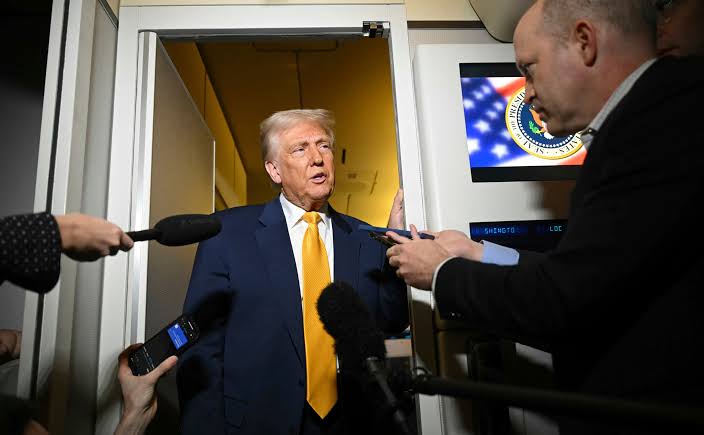
Meanwhile, United States President Donald Trump said the action was taken to safeguard American interests.

“A short time ago, the United States military began major combat operations in Iran. Our objective is to defend the American people by eliminating imminent threats from the Iranian regime, a vicious group of very hard, terrible people. Its menacing activities directly endanger the United States, our troops, our bases overseas, and our allies throughout the world,” he posted.

The situation has heightened global concern, as tensions continue to rise with both sides signalling further military action.

Nigerian fashion designer in US shot dead during nightclub

By Sabiu Abdullahi

A Nigerian fashion designer living in the United States, Sheriff Shittu, has lost his life after a shooting incident at a nightclub in Brooklyn, New York.

The 30-year-old was killed in the early hours of February 14 during a birthday gathering at the Quilox Restaurant and Lounge, located in the East Flatbush area.

Reports from local authorities indicate that the incident happened around 4:25 a.m. A man who was reportedly intoxicated had been asked to leave the club by security personnel. While being escorted out, he allegedly pulled out a gun and opened fire.

Witness accounts suggest that the situation began after the suspect caused a disturbance inside the venue. He was said to have acted inappropriately toward some female guests, including Shittu’s girlfriend. This behaviour led to a confrontation that later escalated.

Shittu had attended the celebration with his younger brother, Fawaz Shittu, as they joined others to mark a friend’s birthday.

Fawaz later described the moment of the tragedy in an emotional account. “I was screaming his name. I was trying to wake him up,” he said.

Further reports stated that the suspect had been behaving in a disorderly manner before the argument broke out, which eventually led to the shooting.

Family members of the deceased have raised concerns over the security measures at the nightclub. They questioned how a firearm was brought into the venue without detection.

“We don’t know how the security did not do the job and search properly before somebody could bring a gun into the club,” Salem Shittu said.

“He was being kicked out, and he was being escorted out when he did it,” he added.

Police confirmed that the suspect escaped immediately after the attack and has not yet been apprehended.

Shittu was rushed to One Brooklyn Health–Brookdale University Hospital Medical Centre, where doctors later confirmed his death.

Relatives described him as a young designer who had been working hard to build a career in the United States before his life was cut short.

Authorities have begun investigations into the incident and are currently searching for the gunman.

Far-right anti-Islam march sparks counterprotests in Manchester

By Sabiu Abdullahi

Hundreds of far-right protesters gathered in Manchester city centre on Saturday for an anti-Islam march organised by Britain First, a political group known for its hardline stance on immigration. The demonstration drew a larger counterprotest, which led to tense confrontations between the two sides.

Chants of “send them back” echoed through an underpass as the march began. Protesters waved Union Jack flags and voiced anti-immigration slogans, while also making critical remarks about British Prime Minister Keir Starmer. Some participants appeared to be under the influence of alcohol.

According to Aljazeera, in response, a larger group of antifascist demonstrators assembled nearby. They carried antiracist placards and waved different flags, including the Palestinian flag. Many said they turned out to oppose what they described as hate-driven rhetoric.

Ruby, a 20-year-old student from South London, travelled for five hours to attend the counterprotest. She described her decision as a “no-brainer” and asked that her surname be withheld due to fear of repercussions. She explained that her grandparents, who came from Montserrat as part of the Windrush generation, now feel increasingly unwelcome in the UK. According to her, they believe racism is returning to levels seen in the 1950s.

Another protester, Llowelyn, 16, from Wales, shared similar concerns. She said her father, who is of British Guyanese descent, has faced more racial abuse in recent years than before.

Tension grew before the marches began. Some far-right activists livestreamed their activities as they entered areas occupied by counterprotesters. A counterprotester identified as John confronted them while police officers monitored the situation. He told Al Jazeera, “They come here to cause a ruckus and make money of it online, but I come here to protect the left. These guys [far-right agitators] try and intimidate … minorities because they think they are a master race”.

The situation escalated when the Britain First march, led by Paul Golding, moved through the city under police escort. Verbal abuse followed as marchers encountered counterprotesters. One protester shouted, “Leftie scum,” at three individuals who staged a sit-down protest. Riot police intervened and moved them away for safety.

Clashes intensified when both groups came into close contact. Protesters from the far-right group used flag poles to push counterprotesters, while some individuals broke through police lines. Officers struggled to maintain control as insults and opposing chants filled the air.

Pia Feig, a member of Jewish Action for Palestine, criticised the decision to allow the march. She said, “We, as Jews and internationalists, are having to confront Britain First, the fascists who are organising on the streets, who have been permitted to market their divisive, racist, dictatorial positions on our streets,”

Another counterprotester, Audrey, who works as a teacher, accused the police of favouring the far-right. She said officers always “protected” such groups after she was pushed during the confrontation.

A police officer, who spoke anonymously, explained that managing the situation was challenging. He noted that both groups frequently changed their routes. He added that officers also had to handle a separate rally in support of Ukraine and provide security at major football matches taking place over the weekend.

UK government blocks Trump from using British bases to strike Iran

By Sabiu Abdullahi

The United Kingdom government has refused to grant permission for the United States to use British military facilities for any potential strike on Iran, amid escalating tensions over Tehran’s nuclear programme.

The decision places London in a cautious diplomatic position as indications emerge that US President Donald Trump is considering military options that could involve installations located on British territory.

Reports indicate that American officials are preparing operational strategies that would depend on the joint US-UK military base at Diego Garcia in the Chagos Archipelago, as well as RAF Fairford in Gloucestershire. RAF Fairford functions as a major centre for the deployment of US heavy bombers across Europe.

Under existing defence agreements between both countries, American forces require prior approval from the British government before launching operations from UK soil. However, reports state that such authorisation has not been granted should Washington proceed with military action against Iran.

Sources within government circles attribute the hesitation to legal concerns. British authorities fear violating international law, which holds both direct actors and supporting states accountable if a military strike is later judged unlawful.

The matter reportedly featured in a telephone discussion between President Trump and UK Prime Minister Rishi Sunak on Tuesday night. Trump’s ultimatum to Iran regarding its nuclear ambitions formed a key part of the conversation.

A day later, the US president criticised the UK government’s stance on the Chagos Islands agreement. He also referenced Iran in a post on his Truth Social platform, where he suggested American forces might need access to the bases if Tehran refuses negotiations.

“Should Iran decide not to make a Deal, it may be necessary for the United States to use Diego Garcia, and the Airfield located in Fairford, in order to eradicate a potential attack by a highly unstable and dangerous Regime,” Mr Trump wrote.

He added that such a move would aim to prevent “an attack that would potentially be made on the United Kingdom, as well as other friendly countries,” suggesting that British involvement could fall under self-defence if Iran poses a direct threat.

Meanwhile, the UK government has reaffirmed its commitment to moving forward with the Chagos Islands agreement despite signals of unease from Washington.

Justice Minister Alex Davies-Jones confirmed that the necessary legislation will return to Parliament once scheduling allows. The proposed bill had earlier been withdrawn from debate in the House of Lords after a Conservative-backed amendment called for a pause, citing “changing geopolitical circumstances.” Fresh delays were also reported as a possibility.

The situation highlights growing diplomatic strain as Britain attempts to preserve its strategic alliance with the United States while addressing legal and political sensitivities tied to any direct role in a potential conflict with Iran.

“I love Nicki Minaj; her skin is so beautiful”—Trump sparks buzz with lavish praise for music star

By Sabiu Abdullahi

United States President, Donald Trump, has openly expressed admiration for American rapper Nicki Minaj, whose real name is Onika Tanya Maraj-Petty.

The president spoke during a Black History Month event held in Washington, D.C., on Wednesday. The 79-year-old leader commended the 43-year-old music star’s appearance and showered her with compliments.

In a video that circulated widely on Thursday, Mr Trump highlighted the singer’s complexion and her long acrylic nails. PREMIUM TIMES reported that the president recalled noticing her beauty when she previously visited the White House.

He said, “How about Nicki Minaj? Do we love Nicki Minaj? I love Nicki Minaj. She was here a couple of weeks ago. She’s so beautiful, her skin’s so beautiful. I said, ‘Nikki, you’re so beautiful’ Her nails are so long.

“I said, Nikki, are they real? She didn’t want to get into that, but she was so beautiful and so great. And she gets it, more importantly.”

Growing Friendship

Mr Trump’s remarks came two days after Nicki Minaj marked Presidents’ Day by sharing photos that reflected her growing relationship with the president. She posted the images on her account on X with the caption, “Happy President’s Day.”

According to Billboard, the rapper also attended the Trump-backed World Liberty Forum on Wednesday. She appeared as a keynote speaker on a panel titled “Owning the Culture: The Business of Music in a Creator-Led Economy.”

Her first public meeting with Mr Trump took place in January during the Trump Accounts Summit in Washington, D.C. At the gathering, she stood beside the president and voiced strong support for him.

She said, “I am probably the president’s No. 1 fan. And that’s not going to change. What people have to say does not affect me at all. It actually motivates me to support him more. And it’s going to encourage all of us to help him more.

“We’re not going to let them get away with bullying him. And you know, the smear campaigns. It’s not going to work. He has a lot of force behind him, and God is protecting him.”

Backstory To Their Alliance

Reports indicate that Nicki Minaj’s connection with the Trump administration has become more visible during his second term in office.

Premium Times noted that the rapper addressed a press event at the United Nations last November. She spoke on alleged persecution of Christians in Nigeria and thanked Mr Trump for what she described as “his leadership on the global stage.”

The invitation came from the United States Ambassador to the UN, Mike Waltz, who asked her to share concerns about what he termed “religious persecution in Nigeria.”

During that speech, the rapper called for freedom for Christians in Nigeria. She said they face attacks, displacement, and killings. She stressed that protecting Christians should unite humanity rather than create division.

Reacting to Mr Trump’s recent compliments, Nicki Minaj reposted the viral video on her X page. She added an AI-generated image that showed a person holding a burning cigarette.

Report alleges Epstein, ex-Israeli PM Barak exploited B0k0 Hârām crisis to market spy technology in Nigeria

By Sabiu Abdullahi

New details have surfaced alleging that convicted American sex offender Jeffrey Epstein and former Israeli Prime Minister Ehud Barak exploited Nigeria’s Boko Haram insurgency to promote surveillance technology and gain entry into key economic sectors.

The claims are contained in an investigation by Drop Site News (DSN). The outlet relied on emails released by the United States Department of Justice. The report alleged that both men saw Nigeria’s worsening insecurity as a commercial opening rather than a humanitarian concern.

Al Jazeera also cited the investigation. It reported that while Nigeria battled Boko Haram, Epstein and Barak marketed Israeli “field-proven” security systems to Nigerian authorities. The term refers to technologies tested in conflict zones, particularly in Palestinian territories.

One 2014 email referenced unrest across the Middle East and Africa, including Nigeria. Epstein wrote to Barak, saying, “isn’t this perfect for you.” Barak reportedly responded, “You’re right in a way. But not simple to transform it into a cash flow.”

Biometric Technology Promoted As Counterterrorism Measure

The investigation linked Barak to Israeli intelligence-connected technology firms whose products later reached Nigeria.

In 2015, Barak and a partner invested $15 million in FST Biometrics. The company was founded by former Israeli military intelligence chief Aharon Ze’evi Farkash. It developed a biometric platform known as Basel. The system was first tested at the Beit Hanoon (Erez) crossing between Israel and Gaza to monitor movement.

As Boko Haram violence intensified, Barak allegedly helped facilitate the sale of similar biometric systems to Babcock University in Nigeria. The initiative was framed as a counterterrorism project. Promotional materials at the time said the system would “filter away all unwanted persons.”

The report added that such deals opened doors for wider Israeli cyber-security involvement in Nigeria. By 2020, DSN stated that the World Bank had engaged the Israel National Cyber Directorate and a startup linked to Barak to support Nigeria’s national cyber infrastructure planning.

Security Deals Linked To Oil, Maritime Interests

Documents cited in the investigation suggested that security partnerships also created business pathways into Nigeria’s oil and port sectors.

Epstein allegedly arranged high-level meetings on behalf of DP World, the Dubai logistics firm. The talks focused on potential acquisition of strategic port assets in Lagos and Badagry.

In 2018, he reportedly connected Jide Zeitlin, then chairman of Nigeria’s sovereign investment authority, with DP World chairman Sultan Ahmed bin Sulayem. Emails indicated that Epstein tried to manage U.S. sanctions concerns involving figures in Nigeria’s mining industry to advance negotiations.

One September 2018 message quoted Zeitlin as telling Epstein: “I hope your pal’s sojourn in Tel Aviv … was more effective than his efforts on the African continent.”

According to the investigation, Bin Sulayem stepped down as DP World chairman on February 13 amid renewed scrutiny over his relationship with Epstein.

Political Access In Nigeria

The emails also pointed to high-level political access secured by Epstein and Barak in Nigeria.

In 2013, Barak attended a cybersecurity conference in Abuja. Organisers privately described the event as an opportunity to arrange meetings with then-President Goodluck Jonathan.

Correspondence cited in the report quoted an organiser saying, “The dinner is one other excellent way … to meet with good Friends of Israel and make new friends for Israel as well.”

Following those contacts, Israeli defence contractor Elbit Systems went ahead with an internet surveillance project in Nigeria despite objections from some lawmakers.

The documents also showed Epstein advising Barak on business strategy. After Barak shared information about a proposed oil transaction, Epstein cautioned him: “I told you on the phone before sending or asking anyone about it you should do your own homework.”

Wider Document Release

The revelations form part of a broader disclosure of millions of files detailing Epstein’s global relationships with political figures, financiers and intelligence-linked actors.

The investigation reported that Epstein funded Israeli groups such as Friends of the Israeli Army and the Jewish National Fund. It also alleged links with individuals connected to Israeli intelligence circles.

Barak, who served as Israel’s prime minister from 1999 to 2001, has previously expressed regret over his association with Epstein. Epstein was convicted in 2008 for procuring a minor for prostitution and served about a year in prison. Barak maintained ties with him for years afterward. He later said he did not know the full extent of Epstein’s crimes until 2019.