Opinion

Why Gawuna is the man for the job in APC

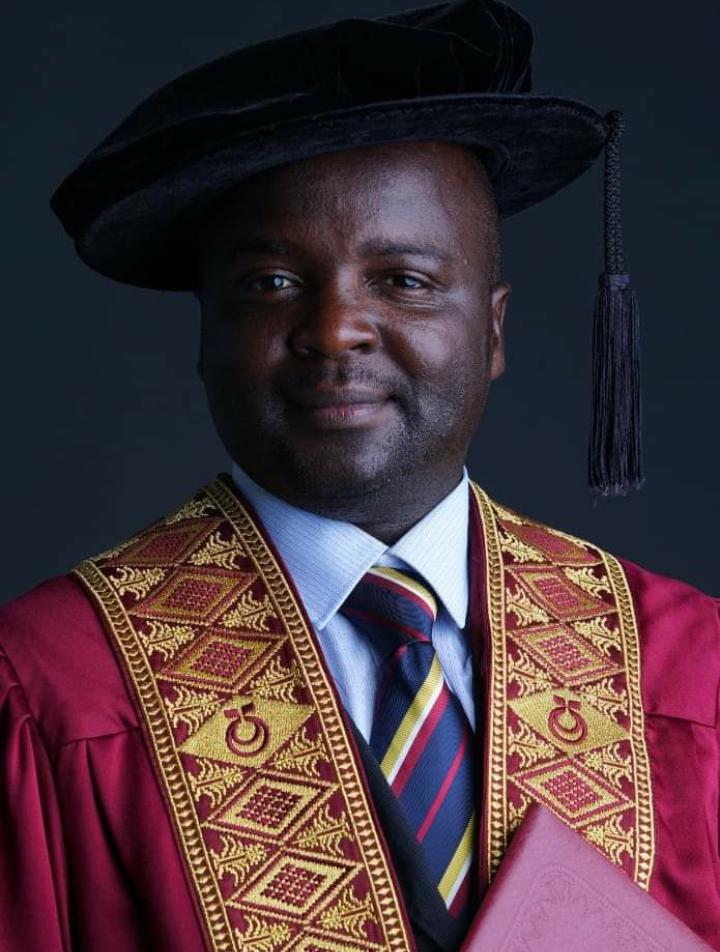
By Dr Ibrahim Siraj

Apparently, no governorship election ever in Kano has drawn a larger number of aspirants than the forthcoming 2023 elections. From the two major parties to other newer and smaller parties, no fewer than a dozen people are vying to lead our great Kano State.

There is however a great deal of interest in what happens in APC owing to the obvious reason that it is the ruling party in the State and the fact of its factionalization and the intrigues that surround it even as parties in the party’s leadership legal tussle await the verdict of the Supreme Court expected to be delivered any moment from now.

This notwithstanding, the ruling All Progressive Congress (APC) appears to have the largest number of aspirants many of whom have started mobilization through their support groups and the recalibration of their political structures throughout the State. Each of them though would hope to be Governor Ganduje’s ‘anointed’ candidate knowing full well the value and power of such ‘anointment’ in influencing the outcome of the primary election in Nigeria’s democracy. Other aspirants may not have the privilege of asking for more than just a level playing field.

While the search for Ganduje’s successor continues, some people are inclined to believe that The Kano State Commissioner for Local Government Affairs, Alhaji Murtala Sule Garo is the one going by some public utterances made by the Governor’s wife to that effect although the government was quick to issue a disclaimer to douse the tension generated by such outburst. There are others who feel the Governor would anoint his Deputy the same way he was anointed by Kwankwaso but in the hope that all will end well. And this brings me to my main topic.

For me, the farthest Murtala Sule Garo can go on a governorship ticket is the position of Deputy Governor due to reasons that are so obvious enough to be called common knowledge. Murtala Garo may be a tenacious, fearless, dependable and reliable political mobilizer in his own right but he appears to be lacking in so many qualities needed to govern a complex state like Kano: education (western and Islamic), administrative experience, exposure, charisma, urbaneness, etc. This is not to add the huge baggage of antagonists (I don’t want to call them enemies) that he has cultivated for himself either through his role as the most powerful Commissioner in Ganduje’s government or his role as “Commander” of the ruling party’s “militant wing”.

APC’s surest bet under the circumstances, therefore, is no other person than Nasiru Yusuf Gawuna. The Deputy Governor has all it takes to lead Kano in 2023. All that is lacking in Garo is present in Gawuna in sufficiently varying proportions. Gawuna is well educated and vastly experienced. He has the exposure, experience, sagacity, shrewdness, administrative acumen and humble mien to make a good governor. His cosmopolitan nature makes it easier for him to connect and relate well with the different strata of Kano society. His politeness coupled with his approach to politics makes him earn the respect of political gladiators across party divides. He abhors politics of bitterness and adversity. He, as a result, has the smallest number of antagonists possible for a politician of his calibre. Ultimately, he will be relatively an easy sell by a party suffering from a serious popularity crisis.

His over seven years as Local Government Chairman, his decade-old experience as Commissioner (and member of the State Executive Council) as well as his five years as Deputy Governor have more than prepared him for the job. None of the aspirants can boast of leadership skills and training acquired through years of on-the-job experience like Gawuna.

As a beneficiary of financially autonomous Local Government administration, Gawuna understands what it means to have a functional local government system that is able to cater for the immediate needs of our masses in the realization of the noble objective of bringing government closer to the people. He will be expected therefore to end the obnoxious joint state-local government account that has paralyzed governance at the local level and is further pauperizing our local populations.

Should APC field Gawuna and other parties equally field their own best, the task of choosing a good leader for Kano will be made much easier for the people. It will be a matter of choosing the best among the best for our State. We must therefore encourage all political parties to present their best materials so that whoever wins our dear State will be better off for it. The opportunity to vote for good leaders is often missed at the level of the primary election.

May Allah make the best of choices for us, Ameen!

Dr Ibrahim Siraj writes from Kano and is a lecturer with the Department of Mass Communication, Bayero University, Kano.

Reflection on poor parenting

By Abdullahi Yusuf (Abdool)

The viral tape of Chrisland School, Lagos, has become a trending topic lately due to its indecency and the nature of the people involved (i.e. children).

But before we conclude on whether the act involved rape or not, let’s look at the bigger picture, which is questioning the moral upbringing of the kids involved, who are obviously at the initial stage of puberty (below 13 years of age). We can all believe that it is too early for them to have such a bad experience at this young age. But who is to be blamed for this?

The 21st century has come along with many technological advancements. Some of these are of optimal benefit to humanity but detrimental to morality in some aspects. Contemporarily, one can access information and things we merely hear about in the olden days.

Internet is one of the goodies of this century. It enables its users to access what happens around the world quickly. Internet helps one learn a lot of things and get exposed to global opportunities with ease, while on the contrary, it holds a lot of negativities, especially for our younger ones.

We can’t dodge away from the reality of the moment, but we can put a lot of effort into making sure the negativities of the moment do not corrupt our progeny or us.

Parental negligence is the major contributing factor to the immorality we are experiencing. Parents nowadays show an unreasonable love to their children, which haunts them when they can no longer protect themselves or the children. This love gradually exposes the evil in the children due to a lack of due diligence in discharging parental responsibilities by the parent.

In the olden days, a total stranger could discipline a child for misbehaviour, and the child’s parent would appreciate the stranger for helping them do the right thing. But unfortunately, in the present time, a neighbour cannot punish a child for any misdemeanour because doing that could instigate the wrath of the child’s parent, and they would fight back as if punishing their child is a felony.

I could remember a scenario I read about on Twitter not long ago. A lady who visited her aunt narrated the story. She was necessitated to make a call and realised that her phone was out of credit which compelled her to borrow the phone of her aunt’s son, who was about 14 years of age, to make the urgent call. When using the phone, a video suddenly came in through WhatsApp, and she became curious to see what had just come in. She was shocked when she saw a nude sent to the boy by a young lady who happened to be his classmate. So she went through his chat with the same young lady to ascertain the fact. What she saw was devastating. She realised that the boy had been in a sexual relationship with that girl for a very long time.

In the above scenario, the parents are unaware of what’s going on with their child. He has been destroying his life without their knowledge due to their negligence. Their contribution to his misbehaviour is massive as they provided him with a phone and never cared to monitor what he was doing with it.

Typical African parents find it disgusting to give sexual orientation to their children. They think doing it is immoral, while not doing it causes more harm than good to our contemporary society.

Sex education to children is not about telling them about sexual intercourse; it’s about orienting children about their sexuality, sexual abuse, and what they should know about the sensitive parts of their body and acts they should consider as molestation. It is also about gender stereotypes and limitations concerning their morphology and physiology.

In conclusion, being a parent means being a protector, a teacher, a guide and a counsellor to the child. As a parent, don’t ever become reluctant to discharge your sole responsibility. Whenever you fail as a parent means unlocking an element of distress to society, which will strain you before diffusing to the larger community.

Abdullahi Yusuf (Abdool) studies at the Department of Human Kinetics and Health Education, Bayero University, Kano. He wrote from Kaduna State via abdoolphd@gmail.com.

Almajiri System: From the prism of broken marriages

By Nusaiba Ibrahim

When all this brouhaha on the Almajiri system of education is over just before we hop on another discussion likely to be initiated by random persons online, we will then realise we have failed to acknowledge the failed infrastructure that has created and will continue to fuel the unrefined Almajiranci system of education by the day.

The earlier we realise how enormous challenges have, over the years, consumed our societies in the North, courtesy of broken marriages or homes, the better for us to understand the enormous task ahead of us in empowering our communities with the correct information and strategies to face greater challenges now and in the future, especially with regards to marriage as an important social institution. No matter how hard you try, as an optimistic Northerner, to overlook the series of ongoing debates in the past week online, it is practically difficult and impossible to ignore them, given the current reality that we have found ourselves in.

There is a reason why I choose to deliberately sideline discussing the Almajiri system from the premise of system reformation, the aspect of its essence or in contrast to modern primary education that has continuously screamed for aid. Unless we address the myriads of problems faced by the major social institution that is essential for development – family/marriage, we are hence, collectively wasting our efforts and brains to come up with solutions to transforming the system. At the same time, many under-aged will continue to be pumped out into these traditional Islamic schools, which are, of course, overwhelmed in the name of Qur’anic education.

It’s impossible to continue thinking that only strategic transformation, erasing the system or replacing it with a standard Islamiyya system, will bring a lasting solution to this misery. Agreed, they are essential to improving the system and even sustaining it. But as time flies, if they ever get a chance to be thoroughly revamped, they too will be overwhelmed to take care of these children sent to them in multitudes.

Now, let us take a quick recap of why our primary education has continued to suffer greatly. If you choose to think critically, you will understand that it’s the same reason in the context of the Almajiri system of education that has continued to promote this unending menace. It continues to act as a shield to a lack of good parenting, thanks to unsuccessful marriages. It’s nothing other than overpopulation alongside a dwindling economy. Hence, a multi-faceted menace like this requires a robust approach from virtually all aspects of social life.

My thoughts on why broken homes have the lion’s share of Almajiri menace are based on the facts highlighted in many of the reports that have been consistently aired on our local radio stations in Kano State and a recent publication by The Daily Reality on the 28th of March 2022. Several instances of why these unkempt children are sent to these schools all boil down to the separation of parents either directly or indirectly, which necessitates living with grandparents and stepmothers, who are eventually left without no quicker choice but to use the Almajiri system as an escape route from discharging their parental duties.

In a bid to understand the in-depth social ills of our dearest Northern Nigeria, particularly on the marriage institution, The Daily Reality published a report highlighting the rate of divorce in Kano State to be at about 32%, with an average age of divorcees ranging from 20-25. Presenting these figures shows a red flag and a slap on our faces as we boast of some of the best religious scholars, undisputed morals and values compared to our neighbouring counterparts.

But unfortunately, some low-IQ dimwits denied the facts with fierce rebuttals. While some challenged the veracity of the facts, another portion challenged the authenticity of the reportage/research findings by reducing it to mere propaganda than research. And for others, it doesn’t even reflect the reality on the ground. And the consequences aren’t confined to their families alone, which we are well aware of. Unfortunately, with developments in several aspects of social life around the world, we are still in the age of denying facts that are under our noses.

Let’s assume the facts aren’t authentic enough. Still, mere observations and intuitions have made us all realise that there exists a particular season of the year when agricultural products are everywhere in the markets. The number of these children quadruple on our streets. These periods always signal the season of new marriages in villages with the bit of fortune made from the sales of agricultural produce, thereby forcing these children out of the homes to accommodate new wives. You may choose to argue with whatever is next to you – these are undeniable facts. Interviews during the height of the ban against street begging unveiled many children narrating experiences of their grandparents, fathers and step-mothers taking them to traditional Qur’anic education alias Almajirci before harmattan season kicks off. Radio stations in Kano State primarily documented these.

Delving deep into the report, what struck me hard was, who will then take responsibility for the children out of these marriages? In whose custody will they survive if their mothers remarry? Will their new stepmothers be willing to accommodate them? What about their step-fathers? Indeed not the government, and it cannot be the community either. So, they’ll add another layer of complexity to our complex problems. In my thoughts, I silently hoped that people might look at this dimension which happens to be the root cause. If you think broken marriages aren’t the problem, try surveying many Almajirai in your community.

In all sense of honesty, I must recognise that the essence of the Qur’anic education in the North has not only proven to be undisputedly essential for authentic Islamic education but is also the pillar that sets the pace for all modern Islamiyya education in Northern Nigeria. Contemporary Islamic education has only gone further to modern teaching and learning methods in line with global Islamic development based on the strategies of traditional Quranic education. Many of our reputable religious scholars, professors and other professionals in different fields of endeavour are beneficiaries of the conventional Qur’anic systems.

Apparently, we have seen examples of why transforming the Almajiri system of education is almost impossible, especially because of government inconsistencies, discontinuity of government policies and lack of political will to tackle the menace. Besides, there are even mightier problems that are yet to be addressed. However, I firmly believe that strengthening marriages via introducing policies to safeguard and sustain good parenting can be a strategic move to tackle the menace of Almajirai. It will undoubtedly produce a desirable result by solving multiple challenges simultaneously.

Nusaiba Ibrahim Na’abba is a master’s student from the Department of Mass Communication, BUK. She is a freelance writer and researcher. She can be reached via nusaibaibrahim66@gmail.com.

Intra-religious dialogue: Let’s begin from here

By Sheikh Prof. Muhammad Babangida Muhammad

The growing trend of conflicting religious verdicts being issued these days by the Ulama in Nigeria is alarming. That they differ and argue on issues is not in itself the problem. In fact, they should differ in order to provide the people with a variety of acceptable perspectives of the secondary teachings of Islam. At the same time, there should be no cause for Muslims to differ on the fundamentals of Islam.

The problem lies in how the Ulama express the differences in their understanding and interpretation of texts. Some Ulama resort to launching abusive missiles and questioning the integrity and sincerity of the other scholar who differs from them, which is out of tune with the ethics of differences (adab al khilaf). They create an unnecessary atmosphere of distrust, tension and ill-feeling, accompanied by intolerance, lack of moderation and self-centredness.

The institution of scholarship in Nigeria is gradually being abused by intruders who lack the basic prerequisites of scholarship. Some vacuum seems to exist somewhere as people fail to recognise who genuinely is a Malam and who is ‘ pro-Malan’ – for wealth or worldly-inspired. An era of Ulamisation (crowning the ignorant as Ulama) of the ordinary uninformed people seems to be taking over as religious verdicts are issued by ‘Awaam al nas’, disrespecting the precise position of qualified Ulama.

We are in a state of ‘Kowa Malam’- everyone claiming Islamic knowledge. There are the ‘social media Malams’ and the ‘Market and roadside Malams’. We have the ‘Amulet-vendor Malams’, ‘political-opportunists Malams’ and all sets of quasi-Malams who wriggle in themselves and slug it out with the real Malams in the religious and socio-political space. They corrupt the religious environment, promote confusion and chaos and ultimately cause societal decay. Something needs to be done to stop these people and keep them away altogether.

We all recall that Maitatsine and later Boko Haram emerged out of such a situation and, fuelled with ignorance, developed into a monstrous extremist ideology. The current race by the uninformed to take over the religious garb and platform might be a fallout from the wrong perception of freedom provided by democracy or societal disequilibrium and failure or the incapability of the real Ulama to provide the needed leadership and guidance in response to emerging contemporary issues. In any case, it is an unacceptable trend that must be arrested.

In most Islamic countries, an established Central Committee of Leading Ulama (Hai’at Kibar al Ulama) or a Fatwa Council collectively deliberates on any issue requiring a verdict. Uncertified people who issue fatwa are sanctioned. Within the Fatwa Council, the majority opinion is upheld, while the minority view of any scholar is respectfully appended, but the majority view remains the official position. It is probably high time we considered instituting such a body in Nigeria, which will consist of capable and qualified Ulama who would be saddled with the responsibility of issuing fatwa based on well-informed opinion.

The Fatwa Committee of the National Supreme Council for Islamic Affairs could be expanded to include various religious tendencies within Sunni Islam. Alternatively, a university-based Islamic research Centre may constitute a broad-based non-sectarian Fatwa body (Majma’u al Buhuth wal Fatawy al Ilmiyyah). Only the most qualified (not necessarily certificate holders) would be admitted into the body. This will go a long way in arresting the seemingly uncontrollable trend of ‘Ulamitism’ or false claim to Islamic knowledge.

Only recently, during this blessed month of Ramadan, an unnecessary controversy on Inter-religious Dialogue (IRD) was blown out of proportion. Before you know it, accusations and counter-accusations were flying all around. Some ‘Ulama’ issued fatwa literally declaring those involved in IRD and any form of a committee consisting of people of other religions as apostates. Fatwa without strings or borders. A dangerous trend indeed. Something is definitely wrong somewhere, and we need to trace our steps back to do the right things in order to right the wrongs.

Let’s begin from here. First, establish an Intra- Religious Dialogue Committee, which would promote mutual respect, understanding and tolerance amongst the Ulama and, by extension, a broader atmosphere of peace and unity amongst the Muslims. It should not be an assembly of the argumentative elements who strive in controversies. If we fail to appreciate the value and significance of intra-religious dialogue and positive engagement with one another, Inter-religious dialogue will indeed appear out of order.

In a multi-religious society like Nigeria, engagement with people of other faiths for some common good is essential. Therefore, we should use sound knowledge, wisdom, sincerity and consideration of the general good of the Muslims (al Maslahah al ‘ammah) to determine any engagement of Muslims with other faiths. Ulama who are well-grounded in knowledge should be given a chance to guide how to pursue such engagement.

At the intrafaith level, the example of the Coalition of Ulama in Kano is a commendable initiative. Ulama belonging to various inclinations, came together under a Forum to pursue and tackle shared problems related to insecurity, drug abuse, child theft and trafficking, issues of IDPs and disaster-stricken communities, orphans and related problems. The Coalition established an NGO, NUSAID Humanitarian Initiative, which since 2016 has been extending assistance and community services to the needy members of the community, including the IDPs in Borno. The Kano initiative may serve as a model for Ulama in other states to adopt to promote Muslim unity, peace and mutual assistance.

May this piece not be a source of yet another controversy. Ameen, Ya Allah.

Sheikh Prof. Muhammad Babangida Muhammad is the Director Center for Quranic Studies BUK & National Amir, National Islamic Center (Ummah Movement).

Explainer: The anatomy of kidnapping/abduction

By Group Captain Sadeeq Shehu

As the hostage situation continues, the kidnappers have released a second series of pictures of the Kaduna-Abuja train captives, which include women and children. Though my reading may not be 100% correct, I will be drawing from training I received on anti-kidnap, hostage survival and hostage incident management,  and my involvement in managing real-life hostage situations while working abroad. Most importantly, this is to help family members understand and come to grips with the situation of their loved ones. I hope this explainer will help the victims’ families understand what is likely happening to their loved ones. 

First, kidnapping is defined as an event of forced capture or detention to receive something in return for the captive’s release. “Abduction” and “hostage-taking” are often used interchangeably, but they are not synonymous. Abduction means to capture someone forcefully but with no demand for ransom. Hostage-taking refers to the forced capture of a person or people to gain an advantage during a siege.

Kidnapping situations can be divided into two broad categories. The first is a hostage situation. Here, the victim(s) location is known (it could even be in the victim’s home). A kidnapping situation is when we do not know the location of the victims (first stage of train incident). A kidnap situation can turn into hostage-taking if the security forces get involved in the rescue operation (second stage of train incident and where we are now).

There are generally 5 phases of kidnapping, although they may not be sequential, and two phases could occur simultaneously. The phases are: 

1. Abduction and transfer

2. Captivity,

3. Contact,  

4. Negotiations, 

5. Release or rescue.

In the case of our brothers, sisters, mothers and fathers in the current situation, phases 1 and 3 have taken place. Phases 2 and 4 are happening currently and concurrently. We hopefully await Phase 5.  

I will explain what happens or is likely happening in Phase 2, Captivity, and offer some advice on how the victims or any person unfortunate to be in similar situations could cope.  

During the captivity phase of kidnapping, the victim(s) you could either be held in seclusion or confined with a group. Unfortunately, it’s also possible that victims could be held captive for a long time, so it is advisable to be mentally prepared for such a situation.

Victims are advised to be calm, neutral and project that you do not pose a threat or nuisance. Show a mature, controlled and stable appearance in any interaction with the kidnappers. Multiple groups can manage victims, and sometimes, they are sold to other political or criminal groups to obtain concessions. Different groups handle victims differently. Victims may be kept at the same location or moved frequently. Some captors keep hostages in reasonable conditions, but the living conditions will be primarily difficult.

If you are part of a group of hostages, try not to be separated. Instead, identify a spokesperson who can interact with the captors. Needless to say, living conditions can be pretty tricky during captivity, so victims should take measures to cope with the situation to the best of their abilities.

The situations the captives may be facing currently and how the abductors may behave are as follows: 

Living conditions

Living conditions are likely to be basic and primitive, with minimal access to facilities—for example, lack of toilet, washing, etc. The place may be dark, infested, cold/hot etc. Sleeping arrangements may be quite basic (mat/blanket). Food might not be served regularly, so you may need to ask for it. Eat whatever food is provided. 

The kidnappers may engage other people (cleaning, food, and health). Be respectful to these people but beware they are under the control of the kidnappers.

Abductor behaviour

Abductors may try to dehumanize victims by indicating that they are nothing more than a thing or a commodity, such as telling the victims that nobody cares about them, committing degrading acts, conducting aggressive interrogation, and playing on victims’ psychology (promising immediate release).

Surviving captivity

Captivity can adversely affect victims in many ways. Victims must maintain their equilibrium to stay healthy and clear-headed. It is advisable to take the following steps to keep your dignity and self-respect:

Maintain your appearance and keep yourself and your surroundings clean.

Exercise as much as possible and try to keep yourself fit.

Eat what is served to you.

Sleep properly. Your body will need sufficient rest. 

Think positively, but be realistic.

Focus on pleasant memories such as the time you spent with your family.

Be optimistic. Believe that you will be released eventually.

Have confidence that the government and family are working tirelessly to secure your safe release

Never blame yourself for the situation.

Believe in your family and friends.

Retain the human values you have earned.

Use your beliefs as a means to keep your spirits high and calm your nerves.

Pray. Meditate. Seek your spiritual comfort.

Maintain a positive attitude and set achievable goals.

Perform relaxation/mental activities that can help you control your emotions.

Keep track of time. Develop a routine, and ask for reading materials, blankets, and access to facilities (if possible).

Engage in creative activities to keep yourself occupied.

Communication and Building Rapport 

As difficult as it may seem, it is essential to realize that the kidnappers are also humans. Therefore, victims are advised to maintain their dignity while treating the captors with respect. When the opportunity arises, try to develop and maintain rapport with the kidnappers.

Guidelines for building rapport with the kidnappers

Whatever a victim understands about the kidnappers can inform their survival strategy. Therefore, Try to understand your kidnappers. In addition, be sensitive to the captors’ cultural norms and practices. Do not make assumptions about their level of intelligence or knowledge.

Observe their behaviour and learn what they consider respectful practice.

Communicate

All communications with the kidnappers should be done to improve your chances of survival. Therefore, avoid discussing political, religious or sensitive topics. Don’t get drawn into arguments. Instead, talk about your family, if appropriate. Keep your emotions in control and avoid outbursts. Communicate your human needs, such as hunger, thirst or the need to relieve yourself.

Be vigilant

When questioned, keep your answers short and to the point. Be careful not to divulge too much information.

Avoid making any suggestions.

Do not lie to your kidnappers, but try not to provide them with additional information. Do not give away any personal belongings unless the items are demanded. 

NB. I will not talk about the negotiations phase for obvious reasons. Still, hopefully, I will later talk about the Release/Capture phase and what families need to do in the aftermath.

Group Captain Sadeeq Shehu can be reached via sgshehu@gmail.com.

Does Sheikh Dahiru Bauchi contradict the Sultan?

By Malam Hassan Mohammed

You see, I have a lot of issues with Mallam Dahiru Bauchi when it comes to the sighting of the moon for the commencement and ending of Ramadan. The man has been, in the past, a deliberate source of unnecessary controversy and in the process dividing the Muslim Ummah. But we have to be fair to him this time. He did not ask anyone to break his fast, eat today and also observe Eid-el-Fitr. He did not contradict the Sultan or anyone in the position of authority to make the pronouncement of the termination of Ramadan whether locally or internationally.

In fact, listening to the conversation (the audio is almost everywhere) you’ll hear that even after serious pressure from some unscrupulous dudes who were discussing with him, the man was careful to refer to the Sultan. He was clear. He initially said that though it can be accepted that the moon may have been sighted in Doma (Nasarawa) and Abuja if as they claimed there are witnesses. But he could not tell people not to end Ramadan or that they could not if they chose to. Or call them people who knowingly violate injunctions.

However, he (1) specifically asked them if the Sultan is aware or had announced, which took the dubious guys aback because they didn’t expect that push back from him. And (2) when he got tired of their pressure he pushed back by saying just wait till next tomorrow, regardless of the claims that the moon has been sighted in Doma, Abuja and Niger Republic. If you can’t listen to the all 3:42 minutes, you may fast-forward to minute 1:33 where and when he asked if the Sultan has been informed and instructed that he must be informed so he will announce. And also 3:38 where he said he will not lead Eid, so they should wait.

The man simply ceded the right to announce the ending of the fasting to the constituted authority by saying, “If you are in Nigeria, you have no justification for breaking your fast unless you have not heard (the instruction of the Sultan). For that, we will not observe Eid. We are going to wait till next tomorrow. They should wait”.

These guys that were with the revered Sheikh and many others are used to the usual rebellion that they thought the Sheikh will simply agree and announce that the fasting should end and Eid to be observed today. To be fair to him, especially this time around, he didn’t. This is because one of our major problems with respect to moon sighting is that there are people who consider not accepting to commence the Ramadan fasting or ending it with the rest of Ummah/everyone, this is an act of rebellion. It is to them, a continuation of the denominational war. So, irrespective of the religious injunction and obligations, and also irrespective of their own beliefs as at the time of moon sighting, they must reject whatever the authorities say.

That this year’s Ramadan, the commencement and ending of the fasting, is not controversial as it usually is, is a serious letdown for them. If you pay serious mind to the nearly 4 minutes discussion, you’ll hear that Sheikh Bauchi was probing as he was also careful not to reject the idea that those who said they have sighted the moon completely have done so, but to also tell them that while he is not saying they lied, he emphasized that he desperately tried to avoid that, but he will not end his own Ramadan. That’s the wisdom of elders and of the learned, not the exuberance of young people who rebel in unnecessary and unhelpful controversy.

This shows that Sheikh is always at loggerheads with authorities over when to commence the Ramadan fasting because of his philosophical conviction and not because of ideological differences. So, if you end your Ramadan fasting just chest it. Don’t lie against the old man. Don’t use him. Just say that you just feel like it. It’s just about you and you, and nothing else. Try using another excuse for why you endured 29 days of fasting but cannot take just one more day. It is you, and you. Not Sheikh Dahiru!

Hassan Mohammed is a social analyst. He writes from Kaduna, Nigeria.

Adamu Garba ll and the audacity of fundraising

By Ali Tijjani Hassan

Lately, in the previous weeks, Adamu Garba, from Adamawa state, declared his interest in vying for the office of the President of Nigeria under the platform of the ruling party, the APC, in 2023. Adamu, a young entrepreneurial pedagogy with fervent learning ability, nestled the slogan of the Youth-4-Youth movement. He’s a source of motivation, inspiration, and encouragement to the young generation.

After watching his declaration of interest speech and reading his visionary parable, “This is my Nigerian vision for the Presidency”, I learnt that; bundles of courage and braveness are kept in this young man. He meant business-like to his ambition. If elected, Adamu vows to tackle national threats like corruption, unemployment and insecurity.

The young Adamu, in his 40s, held no public office before his declaration. He’s likely to be a corruption-free citizen, and he could make a good President if elected and be the ‘Mr. Integrity’ we were craving earlier. As he said, “we failed many experiments with individuals that know nothing but public service”. Adamu’s mind is not obsessed and dominated by lively greed.

Adamu dreams of lifting the country close to heaven by transforming it into 21st century Nigeria. So, we can compete globally in diplomacy, development and economic productivity.

The audacity of fundraising:

President Muhammadu Buhari bamboozled Nigerians to send their accumulative income to his ‘fes benk’ account when contesting in 2015. Numerous Nigerians see it as fraudulent and daylight robbery that the aspirants use to avoid bankruptcy. If they do, so they lose to make it in the primaries. Buhari used this beguiling technique twice during his democratic terms, becoming a modus-operandi among shining politicians. It’s one of Nigeria’s political cultures that many Nigerians hate.

If this fraud has to be put into practice amidst this life plight and economic hardship, no politician fits the kind of supportive gestures from his followers than two political idols; Sen. Shehu Sani of Kaduna state and Sen. Rabiu Musa Kwankwaso of Kano state. But to all my pleasure, these humble men surreptitiously take their form of interest without coward ploy.

Adamu Garba ll has adapted this weapon and paved his way to national legendary. The matter arose and transmuted to night thunder not only to Adamu Garba ll but also to many deceitful cartoon-sketch candidates. But alas, he received the shocking response of his life, as most of the responders took his notion as a joke and responded with a kind of joke we’ve never witnessed.

The saddened part is that some people are busy promoting this delusional love to the spendthrift governor like one of Yobe state. In a saner clime, people to used their hard-earned money to sponsor any candidate is not a good idea. Still, with the kind of deception we witnessed from the previous candidate that went through the same system, the culture has to be stopped and allow people to deal with the incompetency of these politicians.

Ali Tijjani Hassan wrote from Potiskum, Yobe state via alitijjanihhassan@gmail.com.

How to entertain your children without TVs, tablets, phones, video games or PlayStations?

By Umm Khalid

I completely understand this parental concern. We live in an age, unfortunately, where entertainment is tantamount to plopping yourself and your kids in front of the screen.

Screens = Fun

But this model was not always the case. In previous generations, entertainment came in many forms and none of them involved a screen.

Even today, much research has been done and much ink has been spilt to detail the deep harms that come with screentime for children, especially at a young age.

I did not grow up watching TV, even though this was the norm in Egypt when I was growing up. Almost everyone had a TV, and most families gathered around their screen to watch ŰŁÙÙ„Ű§Ù… ÙˆÙ…ŰłÙ„ŰłÙ„Ű§ŰȘ (movies and soap operas/ TV shows and dramas). This was standard practice in Egypt even with our relatives and neighbours.

But my father, may Allah reward him immensely, had a different mindset. He saw this as a big waste of time, precious time that could be used elsewhere either to be productive or to have fun but in a non-screen way. He also worried about the impact it have on his daughters (my sisters and I) to see women dressed without hijab (even though the way women dressed on TV in Egypt in the 1980s and 90s was nothing compared to how women dress now!). But he knew that whatever the eye consumes has a big impact on the heart and mind. My father called the TV Ù…ÙÙÙ’ŰłÙŰŻÙŠÙÙˆÙ† (a play on the word for TV in Egyptian Arabic, ŰȘلفŰČيون), roughly like “Mufsid-vision,” meaning that which brings fasad, or destruction.

So he put our TV in the closet, unplugged and unused.

I think this is one of his most brilliant parenting strategies mashaAllah!

So after becoming a parent myself, I’ve followed suit. My husband and I do not allow our children to watch TV or be on a screen of any kind.

Especially these days, even so-called children’s shows and cartoons are riddled with subliminal messaging and deep social engineering on issues like LGBTQ+-Ă—Ă· and tabarruj and promote disrespect and defiance to parents, and deviance in general. TV shows on Netflix or HBO or whatever other platforms are basically avenues for smuggling in all the most damaging, fitra-warping, nature-altering liberal ideas into the heart and mind of the viewer. It’s nothing short of mass brainwashing.

What is also quite sad and even dangerous is that after enough acclimation to screens, it becomes an actual addiction. There are studies that show that children as young as one and two years old get addicted to screens, and if parents attempt to take away these devices, children show classic signs of withdrawal! This is what happens with drugs, for example. When a drug user stops using, he or she experiences painful withdrawal symptoms. TV for children can become similar. Turning off the TV after the show has ended can often result in crying, screaming, and temper tantrums.

The other bad thing about a screen is that it trains children to be passive recipients instead of active doers. On the screen, characters parade themselves before the children’s eyes, there are bright lights and loud sounds and flashing images. So easy to sit back and be passively amused. Next to this lively entertainment, how can reading a book compete? Now reading a book looks dull and boring in comparison. Writing your own story is now too much work. It is in this way the screens tend to stunt creativity and initiative in children.

And for us as Muslims, an over-reliance on screens can be an obstacle to Quran. How can memorizing Quran compete with the easy passive fun of watching TV? Memorizing Quran will seem that much harder and more arduous, that much less fun, next to the TV. Without the blaring distraction that is the screen, Quran is much more doable and even enjoyable inshaAllah.

Sometimes either my husband or I will show the kids a specific video on a certain topic (animals, nature, or what subject they might be learning about like tornadoes or earthquakes, etc), but it’s always with us, supervised and educational.

And it’s a one-off, not a regularly scheduled event.

Our kids have no expectations for having a certain amount of TV time or screen time a day or a week or a month. This can be achieved by training the kids and by being consistent with the rules so the kids do not feel confused.

So then: what do the kids do for entertainment?

đŸŒ» We go outside very often and let the kids run and play, go swimming. One of my kids is a big climber and loves to climb trees. Invariably, the boys find some good sticks and tree branches and use them as swords, and have mock battles (ŰșŰČÙˆŰ§ŰȘ).

đŸŒ» The kids love to read books and sometimes try to “write” their own books complete with illustrations. Before they are literate, they just look at the pictures. We also read aloud to them sometimes.

đŸŒ» We go on play dates to various parks with friends.

đŸŒ» Sports (for my kids: soccer!)

đŸŒ» At least once daily, I play with the kids (chasing and tickling games, lol). [I have an old post from a few years ago detailing the specific games I often play with them!]

đŸŒ» But most of all, the kids invent games with one another. Alhamdulillah, that’s one of the benefits of having multiple children: they make up games together! They wrestle, race, and make up other ways to compete. This strengthens their creativity, initiative, and imagination.

When you have a big imagination, the possibilities for entertainment are vast!

But what we don’t do is rely on TV or screens for entertainment. Our entertainment is deliberately low-tech and old school.

I’ll end with this, as food for thought: many of the people who live in Silicon Valley and work at Google or other tech companies do not allow their own children to have any screens. They keep all their kids’ toys and entertainment low-tech. Interesting, no?

The Preface of Nigeria

By Abdullahi D. Hassan

Nigeria is a nation with Hydra lineament. For a long time, its narratives became a phenomenon in scholarship and startle those that are not abreast of Nigeria’s convoluted history, ethnic chauvinism, election rigging, religious intolerance, cankerworm corruption and heartless politicians with megalomaniac habits, driving pleasure in shady governance to submerge their citizens into gross poverty.

The sarcastic ‘Giant of Africa’ falls into a harrowing moment. Nearly all of the architecture of Nigeria is profoundly rotten, and its stench is sprinkled with endemic corruption, lack of patriotism, decay in moral values, transparent nepotism, and killing is crossbones across the regions. From the fanatic massacres, notably by Boko Haram and bandits.

After three decades of military tyrants and juntas, 1999 turned new dawn for Nigeria. The nation shifted from military dictatorship to civilian government. Policymakers, political pundits, and intelligentsia ascertain Nigeria’s prospect is on the trajectory of advancement. Albeit, the ultra development in multifaceted sectors. Within a decade of pseudo-civilian government, the country’s destiny is trapped in quicksand. Due to ingrained corruption by the three arms of government: executive, legislature and judiciary.

Nonetheless, the dominant ethnic groups, Hausa from the North, a Muslim enclave and fraction of Christian, Igbo from the South, a rife of Christian and Yoruba from the West, shared hybridity of Islam and Christianity. Those ethnic cleavages race for Tour de France in tribal wars, hegemonic politics, religious politics and domineering politics according to the dictum of language, faith and region. Amid the wanton rascality done by the “Zombie”, like Fela, the Afrobeat legend branded soldiers.

Thus, the failure of the so-called democratic government unbridled the ‘darkest History of Nigeria’. A typical Hausa accuses Igbo of the putsch and eliminating Northern leaders, Sir Abubakar Tafawa Balewa, Prime Minister and Sir Ahmadu Bello, a remarkable figure to Northerners. In 1966 a bloody coup was orchestrated by Igbo officers. Igbo talk of persecution and pogrom against their race in the North. Among the factors that emanate the unfortunate Nigerian-Biafran war spanned between July 6, 1967, to January 15, 1970.

Furthermore, from the 1999 political dispensation to the current predicament, the country challenges twig onto gloom-ridden forms; politicians turned into confidence tricksters, parliament became the ‘House of Deception’, religious institutions metamorphosed into a commercial enterprise, journalists supplanted into puppets controlled by the connected few and higher learning academic reposition to woman’s assault domain. The former American ambassador, John Campbell, from 2004 to 2007, described politicians in his book Nigeria Dancing On The Brink “the civilian political class behaved as badly and in much the same way as its military predecessor”.

The most populous black nation on earth is about to be a Banana Republic. In the Northern part of the country, hardly a day passes, from sunrise to sunset, without disheartening news breaking in mainstream media. Boko Haram, ISWAP insurgents or bandits kidnap and maim innocent people. The terrorist marauders hold certain villages in the North-West. Similarly, hundreds of public schools are shut down for fear of abduction.

The most recurring questions preoccupying my faculty: Who will lead Nigeria to the Promised Land? When will Nigeria be exempt from being a nepotistic state to an excellent land, with leaders handling the nation based on the principles of democracy? What are the required features to alter the awful chronicles of Nigeria? Why are we divided in a discourse of religious sentiment, ethnic oblique and regional dominance rather than championing the furtherance of Nigeria?

Surreally, Nigeria is the most religious nation on earth! But in reality, it is the most irreligious in the world. The proliferation of mosques and churches crisscross the length and breadth of Nigeria. The anointed citizens were sponsored to Mecca and Jerusalem for pilgrimage from the government treasury. Despite public schools turning into rubble, pupils sat on ruined floors. Pregnant women wallowed in a dearth of medical personnel and drugs to survive early death in rural areas. Another outstanding hypocrisy of the Abrahamic faith’s leadership in Nigeria, the schools were built with the alms of followers. Such schools are barricades for the common man to enrol his children. Their subtle aim was to propagate adulterate gospel and split the masses based on emblems of Christianity and Islam.

As Chinua Achebe says in one of his pieces of literature, The Trouble with Nigeria, “There is nothing basically wrong with the Nigerian land or climate or water or air or anything else. The Nigerian problem is the unwillingness or inability of its leader to the rise to the responsibility, to challenge of personal example which is the hallmark of true leadership”. The book was written 38 years ago. The quote portrayed the decay of systematic dwindling in leadership style patterns. Although there was relative peace in the country at the time, we could travel thousands of miles from Lagos to Borno with confidence. In the absence of the highwaymen and any other obstruction.

Nevertheless, the dethroned Emir of Kano, erstwhile Governor of Nigeria’s Central Bank, Khalifah Mahammed Sanusi II. He mentioned in his impressive Tedx speech entitled Overcoming The Fear of Vested Interest, “the world’s largest producers of crude oil that do not refine its own petroleum products”. In addition, the reverend Economist, Ngozi Okonjo-Iweala, former minister of Finance and Director General of World Trade Organization. As stated in her book Fighting Corruption is Dangerous. She recounts how billions of dollars were siphoned in a fraud called oil subsidy intervention. Mrs Iweala’s doggedness toward deceitful oil cartels and markets led to the kidnapping of her aged mother. Those two paradigm exegeses gave a sinister view of modern-day Nigeria from the spectrum of the clandestine elite.

The absurdities mentioned above triggered the Igbo to quest for a breakaway from Nigeria and rekindle the Republic of Biafra under the tutelage of Nnamdi Kanu, the ringleader of the proscribed Indigenous Peoples of Biafra (IPOB). The Yoruba seek Oduduwa nation, as some Northerners dream of an Islamic state to govern their affairs based on Shari’a. Those juxtapositions defined the nationhood of Nigeria as a conduit of dissolution.

Double standards in outright vilification of Almajirai

By Yusuf Muhammad Tukur Illo

It has obviously become the norm among those who call themselves ‘intellectuals’ or arrogate to themselves ‘advanced civilization’ especially from the North, to at the slightest opportunity, revile not only the poor Almajiri children but also their parents and anyone/anything they deem directly or indirectly connected with their own notion of Almajiranci practice.

You will often read them carelessly throwing descriptions such as ‘irresponsible parents who bring to the world children that they cannot take care of’, showing absolutely zero regard to the plight of most of those children and their parents – being victims of systemic injustice who otherwise should deserve better treatment from their governments.

Moreover, the so-called intellectuals have constituted themselves into an anti-Almajirai vanguard, advocating for banning of the practice in its entirety and vehemently opposing any call or move to reform the system. Literally, giving the children no chance to benefit from any initiative to improve their lives, especially from the governments that have neglected and reduced them to destitution.

HOWEVER, the attitude shown by these ‘civilised intellectuals’ is an entirely different ball game when other than Almajiranci is the case. I will give a few examples attesting to that double standard.

1. They passionately call out any State Government (from those Northern States where Almajiranci is prevalent) that has failed to pay the examination fees (WASSCE and NECO) of its graduating secondary school students, criticising and blackmailing the government until it settles the money running into hundreds of millions. The flimsy reasons they advance is that there are children of the poor who cannot afford the examination fees. But to them there are no children of poor among the Almajirai that deserve government support in whatever form.

After enjoying virtually free education with feeding (mostly for those in boarding schools) courtesy of the State Governments, the parents failing to pay only the exam fees of their children are not irresponsible and not deserving of condemnation, simply because they sent their children to a school other than an Almajiri school. Consequently, our ‘intellectuals’ will pressure the governments to shoulder that responsibility on their behalf.

2. They equally criticize any State Government that discontinues payment of University Registration fees for its indigenes (as is the case in some Northern States) or cuts down scholarship stipends of its students in the highly subsidized public universities. Why won’t they deserve free or highly subsidized education from Primary School to the University since it is Western Education, as it is popularly called?
And their parents are not irresponsible for giving birth to children whose education in public institutions they cannot even pay for, but rely on the Government to do it for them.

But the Almajiranci practice should not benefit from any government scheme that will aim to reform it, because their parents are irresponsible for giving birth to them and failing to look after them.

3. They always support the struggle of ASUU (which I have been a member of, for over a decade) in demanding more Government funding to revitalize our universities, making all kinds of commentaries on how our governments care less about the educational sector due to low budgetary provisions for the sector. That is because university education is sacred to them.

But they will oppose groups that advocate for schemes to intervene and reform Almajiri practice, because those who engage in it are lesser humans and therefore deserve no such interventions. That’s even though the Almajiri school settings are no where near the universities in terms of needs.

4. They endlessly praise any State Governor that sponsors his indigenes to study abroad. And any successor who dares to end the sponsorship due to lack of funds or redistribute the students across universities in less expensive countries or even transfer them to private universities in Nigeria, will come under fierce criticisms of the ‘intellectuals’.

But the Almajiri practice should receive total ban rather than government initiatives that will reform it and make it better for the citizens who have chosen it.

With all sense of modesty, I have been a beneficiary of government funded foreign scholarships for both MSc and PhD, and I know the humongous amounts of money the government spends on foreign scholars yearly, which has yielded only very low Return on Investment for the country so far.

Should a meagre fraction of those amounts be allocated and used to reform Almajiranci practice, the impact will be immediately noticed and the poor children will have a chance to live a decent life facilitated by their governments. But our ‘intellectuals’ are opposed to that, because Almajiranci practice is a useless venture from which comes no good, as they have repeatedly claimed.

5. After all the aforementioned interventions, the students of Western Education graduate from the universities and complete their NYSC, then majority sit at home idle, only adding to the country’s unemployment statistics. Our ‘intellectuals’ will seize the opportunity to criticise the governments once more for failing to create jobs or provide employment opportunities for the youths.

Interestingly, the graduates are not irresponsible for failing to secure a job or even knowing where to start from, despite benefitting from free or highly subsidised education. Likewise, their parents are not irresponsible for giving birth to them and failing to guide them to obtaining jobs or entrepreneurship, even though the government has shouldered most of their educational responsibilities.

However, our ‘intellectuals’ expect the neglected Almajirai and their disadvantaged parents who have most likely never benefited anything from the government, to be self educated and enlightened and even create those enabling environments and opportunities for themselves to thrive and become ‘responsible’.

6. Whenever they discuss about the Almajiri practice, they try to bring out only the woes of it, without a single possible benefit which they have already concluded does not exist.

However, whenever anyone discusses the ills of their unimpeachable Western Education, they go berserk, pouring invectives on the person regardless of their social status – accusing them of trying to drive Northerners away from acquiring modern education to be able to compete nationally instead of encouraging them, and eventually blackmailing them into silence.

But the fact they keep denying is that there are as much troubles and abuses in our Western educational systems as there are in the Almajiri practice.
I do not need anyone to tell me this, because I am a stakeholder with nearly 2 decades of cumulative teaching and lecturing experience across Nursery and Primary Schools, Polytechnic and University.

Even for non-stakeholders, the incessant cases reported in the media of abuses in formal school settings from defilement of Nursery/Primary schools pupils by teachers, sexual harassment of junior students by their seniors, induction of high school and tertiary students into prostitution syndicates as well as sex for grade incidents, are more than enough pointers to the degree of rot and risks in the system. But we can continue living in denial and looking the other way.

The Sexual Harassment Act made by the National Assemlby to arrest sex for grade cases in our universities is what has hit the final nail on the coffin in that regard. So, whoever wants to keep denying let them do.

Therefore, for those whose major argument for advocating ban on Almajiranci practice is the risk of abuse the children are exposed to, they would really have to try harder to prove how free our formal education sector is, from those risks.

A very silly argument some of the ‘intellectuals’ often put forward is: “since Almajiranci practice in its current form is good, why don’t you send your child to an Almajiri school?”

Well, the chances of me sending my child to Almajiranci is as non-existent as the chances of me sending them to any formal boarding school. The probability is zero. Because the risks are as high in both, and only effective reforms could endear either of them to me. That is why we call for the reform of the Almajiri practice with integrated skills training and basic literacy and numeracy, to engage the poor kids and offer them chance to live a decent life, at least. At AMORGIC Foundation, we are making plans to give such contributions to some Almajirai, as a pilot scheme. While the ‘intellectuals’ can continue attacking whoever dares to expose the vices that have become rampant in our formal educational sector as they are in the Almajiranci practice.

Another irrationality yet displayed by groups of those intellectuals is: “the Almajiranci practice has outlived its usefulness”, “what do the Almajirai even achieve after graduation?”, bla, bla, bla… That is the shallow and pseudo kind of their ‘intellectualism’. They can see sense in music, drama, film making and what not, but none in graduating from an Almajiri School after committing most or all of The Holy Qur’an to memory?

They should perhaps try to first explain what the millions of our unemployed graduates have achieved after graduation, with some spending as much as 5-10 years searching for jobs. That is when we can easily think of factors responsible for that, right? Likewise, there are factors responsible for the sorry state the Almajirai have found themselves in. So, for every bastardised Almajiri School that you want to use as a model, there are equally bastardised formal institutions that produce millions of graduates adjudged unemployable – many that cannot even write a formal job application letter.

And in case our so-called intellectuals have no idea, a reformed Almajiranci practice brings with it numerous benefits. Apart from producing responsible and law abiding citizens and boosting the skilled labour market, the graduates of those schools can even be ‘exported’ to other countries where their expertise are needed. Yes, exported!

If the Almajirai can have decent learning environments with proper, formalised certifications for their completed studies, there are opportunities for them to be hired internationally and get handsomely paid. A quick destination for them could be the complex for printing and publication of The Holy Qur’an in Saudi Arabia, to be proofreading millions of copies of printed Qur’an among other tasks.

In fact, the graduate Almajirai can be hired even in the United Kingdom where you least expect, as full time Imams.
From experience, an Imam leading just Taraweeh prayers in Ramadaan (who are in high demand) could earn up to ÂŁ1,000 only, an equivalent of about N750,000.
As full time Imams, they could be entitled to a house from the mosque and a monthly wage of up to ÂŁ700 – ÂŁ800 (N525,000 – N600,000). While some mosques have a rate of pay for the Imams per prayer he has led.
Plus, the Imams can run Qur’anic classes for adults or kids or both, with an average charge of ÂŁ6 – ÂŁ10 (N4,500 – N7,500) per person per week. Details about this may be discussed another day.

In conclusion, it is apparent that most of those bashing the Almajirai and calling for the abolishment of Almajiranci practice in its entirety, are not really after the betterment of those poor children’s lives. They are only furious because the children roam the streets of our big cities, hence they are insisting that every child be returned to their villages so that our streets are rid of Almajirai completely. They do not care what becomes of them at the villages where there is no government presence whatsoever, in most cases. They will be just fine and comfortable as long as they don’t see Almajirai on their way.

But those ‘deported’ children may be there gradually metamorphosing into monsters that will come to hunt us much later, probably worse than the neglected forest Fulanis who are now terrorising us whenever we pass through their territories. We should have learnt serious lessons by now, honestly.

That is why at AMORGIC Foundation, we try to approach the issue critically rather than emotionally. The children should not be summarily condemned to their villages where their respective governments have failed to provide them any form of basic education. From initial engagements with some of these Almajirai, they do not have even a single block of classroom in their villages. What exactly do we want them to do if they are deported?

We hope to in no distant future, conduct a comprehensive study involving the Almajirai and their Malams, into a multitude of factors that have contributed to the current state of Almajiranci, including the failure of governments in discharging their responsibilities of providing free, accessible basic education for all citizens. Because we believe that for any drastic reformative measures to be successful, governments must fulfil their own part of the bargain. They must take responsibility!

Then if we want justice and fairness for the Almajirai, let us pressure all Northern States Governments with Almajiranci issues to halt the payment of WASSCE, NECO, University Registration fees and/or scholarships for just 3 years and use the money to reform Almajiranci practice. Let us see the results we are going to have.

Until that is that chance is given to them, I don’t think we have the right to scorn them at will.