Opinion

The elusive nature of common sense: Unravelling the mystery

By Abdurrazak Muktar Makarfi

Common sense, the practical and intuitive understanding that guides our daily lives, is often regarded as an inherent trait. However, the phrase “common sense is not so common” lingers as a lament, suggesting that this attribute is not as prevalent as expected. In this article, we explore the reasons behind the scarcity of common sense in various situations.

One contributing factor to the scarcity of common sense is the existence of cultural variations. Different cultures have distinct norms, values, and expectations, leading to differing interpretations of what constitutes logical or rational behaviour. Consequently, common sense in one culture may be entirely foreign in another.

A lack of relevant experience or exposure also plays a role in the scarcity of common sense. Common sense is often developed through personal experiences, observation, and learning from mistakes. Individuals with limited exposure to certain situations or lacking diverse life experiences may struggle to apply common sense principles effectively.

Human cognition is prone to various biases that can hinder the application of common sense. Cognitive biases are systematic errors in thinking that deviate individuals from rationality. These biases can distort judgment and decision-making processes, making it challenging to apply common sense consistently. For instance, confirmation bias leads individuals to favour information confirming their beliefs, potentially clouding their judgment.

Emotions can significantly impact decision-making, often overriding common sense. Strong emotions such as fear, anger, or love can impair rational thinking and lead individuals to make choices that defy common sense. In these instances, emotional responses take precedence over logical reasoning, resulting in behaviour that may seem irrational to an outsider.

Critical thinking is a fundamental component of common sense. It involves analysing information, evaluating its validity, and making sound judgments based on evidence and logic. However, many educational systems prioritise rote memorisation over fostering critical thinking skills. As a result, individuals may struggle to apply common sense when faced with complex or unfamiliar situations.

The modern world’s complexity and information overload make it increasingly challenging to discern what constitutes common sense. The abundance of conflicting information, rapid technological advancements, and evolving societal norms can create confusion and dilute the clarity of common sense principles. In such an environment, individuals may need help distinguishing between valid common sense and misleading or erroneous advice.

In conclusion, common sense, often considered a natural and universal trait, can be elusive in certain situations due to cultural variations, lack of experience or exposure, cognitive biases, emotional influence, lack of critical thinking skills, and the complexity of the modern world. Recognising these factors helps individuals develop a more nuanced understanding of common sense and strive to enhance their ability to apply it effectively.

Abdurrazak Muktar Makarfi can be contacted via prof4true1@gmail.com.

APC chairman Adamu reportedly resigns

By Muhammadu Sabiu 

Reports reaching the Daily Reality have indicated that Senator Abdullahi Adamu has resigned as the National Chairman of the All Progressives Congress (APC). 

According to reports, he tendered his resignation on Sunday night. As of the time of this publication, neither the APC chairman nor the party had officially confirmed the story, and party officials have declined to confirm or refute it. 

However, according to party sources, a press conference is scheduled for Monday at noon. The resignation is anticipated to be made official at that time, and an interim National Chairman will be selected. 

The briefing is anticipated to follow the present meeting of the party’s National Working Committee (NWC). According to Channels TV, Senator Adamu will be thrown out of office through a vote of no confidence, according to some party insider sources, if he does not quit by himself.

Lessons from Ganduje dollar videos

By Muhammad Muhammad Khalil

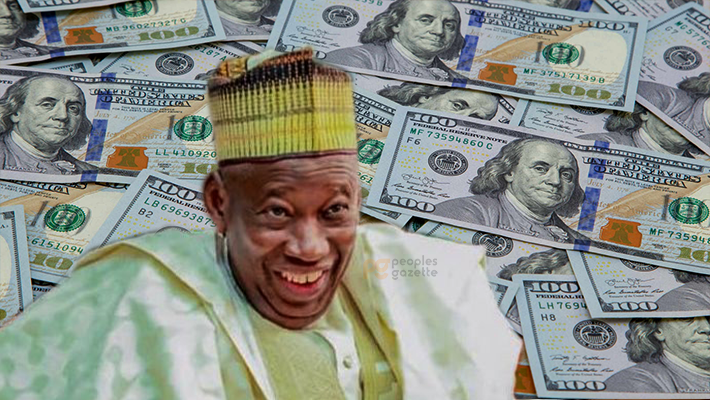
Since Dr Abdullahi Umar Ganduje’s dollar video surfaced on the internet, I have been keenly pursuing its happenings, from Ganduje’s fierce denial to the latest court order barring his arrest by the Kano Anti-Corruption Agency. I will highlight some critical lessons from this whole saga in this article.

1. Despite the former governor’s persistent efforts to dismiss the clip as bogus and doctored, many people still believe in its authenticity. In many people’s view, and thanks to the video, he is a greedy politician whose craze for money is beyond comparison.

Although Ganduje is ultra-rich, they say, he does not reject a fifty thousand naira kickback. Several stories are widely circulated demonstrating this. This shows us the importance of doing good and avoiding any act that can soil one’s reputation. Ganduje is Khadimul Islam to some people; to many others, he’s a dreadful, unrepentant bribe-taker.

2. The authentic or fabricated videos keep reminding us that what one holds hidden can be brought into the open and even grab the headlines. The fact that we do some terrible and disgusting things in the secrecy of our rooms shouldn’t make us feel we are wise; instead, we should never forget that nothing escapes the sight of Allah. The truth is that we sometimes fear creatures more than we fear the creator.

3. The same Ganduje who defied and has little or no respect for court orders is now desperately struggling to be shielded by the court orders he used to flout in broad daylight. Power is intoxicating.

4. Journalists who have the itch to blow the whistle on people in power should realise the danger of their boldness and prepare for what might trail their decision to speak out against corruption and corrupt politicians. It can cost one his dear life.

I don’t know if President Muhammad Buhari’s administration did anything to protect journalist Jaafar Jaafar from the threat to his life that forced him to seek asylum in the UK. The Buhari Mai Gaskiya claimed to have placed fighting corruption atop his priority. Wonder shall never end.

Muhammad Muhammad Khalil wrote from Kano. He can be reached via muhdmuhdkhalil@gmail.com.

Reasons why Dr. Ali Pate should be a Minister

By Isma’il Ahmad Misau

The APC-led administration of President Asiwaju Bola Ahmad has a plan of action (prioritized set of goals/agendum) that it determines to accomplish. It was in broad daylight that the President has blended and marketed his manifestos for the election under the banner of ‘Renewed Hope.’ During his campaign, President Tinubu outlined his strategies for building the finer Nigeria of our aspirations in an effort to win over the Nigerian voters. Yes, Nigerians voted for him massively and he won the election because they were supposedly pleased and convinced with his promises to make Nigeria a better place on earth. What follows is history. One month has passed since the reign of the Renewed Hope. What next? I guest, the formation of cabinet.

Nigerians are anxiously awaiting for President Tinubu’s cabinet one month after his inauguration. Nigerians are making predictions about the Ministers from all sides and aspects while taking various factors into account. Top politicians, including past Governors and Senators who are still in office, are vying for ministerial positions. 

Dr. Ali Pate is not on the list of top candidates for the ministerial position in Bauchi State, and no one is counting him. Unexpectedly, Nigerians learned of his resignation from GAVI, where he had been acting as the organization’s Chief Executive Officer until his resignation. He resigned to accept the ministerial office at President Tinubu’s request, which is an interesting aspect of the event. The occurrence that sparked various responses around the world. 

Dr. Ali Pate is a well-known physician, to those who are familiar with him as a stakeholder of global healthcare, his appointment as a Minister is not deserving of media attention. Even if the World Health Assembly, the top body for the world’s healthcare system, were to announce his appointment as it’s Director General or to be the CEO of the World Health Organization, the news would not come as even the slightest surprise because he is already qualified to hold any position that exist in the health sector due to his capacity, ability, capability, and competence.

It is true that whomever understands the way goes first. Dr. Ali Pate has held a variety of government posts throughout his career as a skilled healthcare professional, including Chief Executive Director of the National Primary Healthcare Development Agency and state Minister of Health in Nigeria. Prior to his voyage, the National Population Health Care Development Agency (NPHCDA) was utterly devoid of leadership and the laughing stock of Nigeria’s health industry. The National Programme on Immunization (NPI), which it amalgamated after being founded by Her Excellency, Haj. Maryam Abacha, was in charge of overseeing vaccination campaigns in Nigeria. Nigeria was alone in endangering billions of dollar worth of global polio eradication efforts. He grabbed the opportunity when President Umaru Musa Ƴar’adua (of blessed memory) named him to lead the agency. 

He invited the traditional rulers and integrated them as stakeholders since he is a versed leader. They are closed to the populace and adept at instructing them in a relaxed manner. That was how polio patients were identified and effectively treated. There was not a single index case of polio in Nigeria prior to his resignation.

He completely reinvigorated NPHCDA. It realigned it’s priorities and focus on the tasks it was truly created to complete. In order to combat the threat of unfathomably high maternal mortality rates in Nigeria, the National Population Health Care Development Agency (NPHCDA) introduced the innovative Midwifery Service Scheme by recruiting retired midwives from all over the nation to support underperforming antenatal clinics nationwide.

He expanded the system’s horizon past the bounds of preexisting structures. New approaches were created and the polio eradication mission was revived. “Nurturing Nigeria to be a nation of healthy people with equitable and affordable access to primary health care through a system that delivers quality, integrated services with the participation of all stakeholders,” was Dr. Ali Pate’s stated objective at the time.

Then-President Goodluck E. Jonathan appointed him as Minister of Health due to his outstanding abilities as a healthcare administrator, visionary, goal-setter, servant leader, and revivalist. He used his wealth and extensive knowledge to influence the system. 

In his capacity as the Minister of Health at the time, Dr. Ali Pate set the following core goals for himself to pursue: enhancing the provision of essential services at the front lines; focusing on the prevention agenda through immunization; health education; concentrating on clinical governance and raising the standard of care in the Nigerian health sector; and, finally, maximizing the potential of market forces to encourage innovation and advancements in the health sector. He started a new project after establishing the aforementioned goals, which was to save one million Nigerian lives by 2015.

For the second time in Nigerian history, Dr. Ali Pate resigned from his position as Minister with honor because he is a man of real values. The decision was due to some inconsistencies. He took the job of Professor of Public Health at Duke University.

Dr. Ali Pate worked for many international organizations at numerous capacities, including Senior Health Specialist and Human Development Sector Coordinator for the East Asia/Pacific Region, Senior Health Specialist for the African Region. He simultaneously held two distinct Executive Director positions of;  Director for Health, Nutrition, and Population, and Director of the Global Financing Facility for Women, Children, and Adolescents (GFF) at the World Bank Group. He also oversaw the distribution of USD 18 million in financial assistance across the globe to mitigate the effects of Covid-19. 

There were 304 applicants for the position of CEO of GAVI from multifarious and terrestrial breedings. Only three of them advanced to the last round. Fortunately, Dr. Ali Pate prevailed over the two other candidates. He was the only individual in the world who was black, African and from Nigeria, who remained from the start of the exercise to it’s conclusion. All preparations were done for his formal inauguration on 3rd August 2023.

Now that the Nigerian healthcare system has failed as a result of weak governance, lack of coordination, subpar health facilities, lack of human resources, inadequate finance and corruption, the President must appoint someone with foresight and focus who has knowledge of the Nigerian and international healthcare systems in order to reconstruct the system by addressing all these pressing artificial challenges.

Dr. Ali Pate is the only black person with overall features, virtues and reputations that would match the assignment of the Renewed Hope healthcare agenda, which focused on human resources, brain drain, health tourism, infrastructure, universal health care and health financing. This is true not only in Nigeria or Africa, but also globally.

Dr. Ali Pate, an astute visionary administrator and experienced physician who changed the global narratives of healthcare and made his marks as an administrative paterfamilias with uncommon zeal, will be in charge of managing Nigeria’s healthcare. Additionally, Nigeria is governed by President Bola Ahmad Tinubu, a full-fledged democrat whose actions were strategic and always calculated to produce results. Renewed Hope is doable if Dr. Ali Pate’s preferences are shared. 

President Bola Tinubu’s expression of interest to collaborate with individuals like Dr. Ali Pate demonstrated his willingness to address the problems plaguing Nigeria.

In conclusion, Dr. Ali Pate will do us a huge favor if he gives up his next position, the CEO of GAVI where he will bring home the groceries of $700,000, or 525 million Nigerian naira, to take a political seat with a salary of 2m, including allowances and everything, 60 million annually. This singular act demonstrates his patriotism and willingness to die for his nation. Behold, Dr. Ali Pate is among the greatest assets to Nigeria.

May Bola Ahmad Tinubu be successful. May Allah, the Almighty grant us Dr. Ali Pate as the Nigerian Health Minister, may He lead, strengthen, assist and uphold him to effectively implement the Renewed Hope agenda.

Isma’il Ahmad Misau: writes from Misau College of Health Science and Technology (MICOHEST).

Understanding and coping with stress: Navigating life’s challenges

By Patrick Ben

Introduction

Stress has become an inevitable part of modern life, affecting individuals of all ages and backgrounds. From work pressures to personal responsibilities, our fast-paced society bombards us with numerous stressors. However, it is essential to understand that stress is not entirely negative. In fact, it is a natural response to demanding situations that can motivate and drive us to perform better. Nevertheless, chronic stress can have detrimental effects on our physical and mental well-being if left unaddressed. This article aims to shed light on stress, its causes, impacts, and effective strategies for managing and alleviating it.

Understanding Stress

Stress can be defined as the body’s physiological and psychological response to any demand or challenge, known as stressors. It triggers a complex interplay of hormone release, including adrenaline and cortisol, causing the body to enter a heightened state of alertness. In the short term, this response can be helpful as it prepares us to face challenging situations. However, prolonged or excessive stress can have detrimental effects on our overall health.

Common Causes of Stress:

Stress can arise from various sources, including work-related pressures, financial difficulties, relationship issues, health problems, academic challenges, and major life changes. Each individual may experience stress differently, as what might be highly stressful for one person may not affect another person in the same way. It is crucial to identify the specific stressors in your life to manage and reduce their impact effectively.

Impacts of Stress

If left unmanaged, chronic stress can manifest in physical, emotional, and behavioural symptoms. Some common physical symptoms include headaches, muscle tension, sleep disturbances, digestive issues, a weakened immune system, and increased blood pressure. Emotionally, stress can lead to feelings of anxiety, irritability, depression, mood swings, and a sense of being overwhelmed. Behaviourally, individuals experiencing stress may resort to unhealthy coping mechanisms such as substance abuse, overeating, or social withdrawal, which can further exacerbate stress levels.

Coping Strategies

1. Identify and Manage Triggers: Recognize the specific stressors in your life and explore methods to resolve or minimise their impact. This may involve setting realistic goals, practising time management, seeking support, or communicating openly with those involved.

2. Practice Relaxation Techniques: Engaging in relaxation techniques, such as deep breathing exercises, meditation, yoga, or taking regular breaks, can help lower stress levels and promote a sense of calmness.

3. Physical Activity: Engaging in regular physical activity has been proven to reduce stress and improve overall well-being. Choose activities you enjoy, be it dancing, running, or simply taking a peaceful walk in nature.

4. Prioritize Self-Care: Make time for activities you enjoy and that promote self-care. This may include hobbies, spending quality time with loved ones, enjoying a warm bath, reading a book, or listening to music. Taking care of yourself is essential for stress management.

5. Seek Support: Don’t hesitate to reach out to friends, family, or professional support when needed. Sharing your feelings and concerns with others who can provide guidance and support is invaluable.

6. Create a Healthy Lifestyle: Ensure you maintain a balanced diet, get sufficient sleep, avoid excessive consumption of caffeine or alcohol, and prioritise relaxation activities to support your overall well-being.

Conclusion:

Stress is a universal experience, but it is essential to manage and alleviate its impact on our lives. By identifying the causes, understanding its impacts, and employing effective coping strategies, we can proactively tackle stress and maintain a healthier, more balanced lifestyle. Remember to prioritise self-care, seek support when needed, and make conscious efforts to engage in stress-reducing activities. By taking charge of our stress levels, we can navigate life’s challenges with resilience and lead a more fulfilling life.

Patrick Ben wrote via benzy4205@gmail.com.  

Life before graduation

By Aminat Adebesin

Getting into college after high school has been the main focus of students for decades to the extent that we mostly forget about life during college/university days and what might come after getting a degree. Universities offer everyone different opportunities like networking, housing, relationship, partying, etc. It all depends on the aspect you tend to grab. 

Before graduating, build enough networks to last you a lifetime, even to the coming generations, if possible. As they say, the university is the best stage for you to lay the foundation of “who you want to be” and “people you want to be with”.

Make use of the resources around you and better use them. No one cares whether you have anything to give, so tap into the resources in the school to build yourself up. Building yourself up should be your primary focus, which involves updating your CV with meaningful resources as much as possible. 

Getting a side hustle will ease life in school better than relying entirely on your sponsors, as there are some impromptu needs that you would love to take care of without disturbing them. No one can relate to the spending that comes with schooling unless you experience it yourself.

Attending university is about making memories and having the most beautiful experience possible. Building memories and networks have good and bad days, so make enough to last since they are all we have to show we have passed through a stage with some people.

Never let anything stop you from enjoying your school days. Learn and have fun sensibly.

Aminat Adebesin is a student of the Mass Communication dept, Bayero University, Kano.

Muslim domination of Nigerian politics, El-Rufai’s remarks and the quest for a just social order!

By Ibraheem A. Waziri

1. As against the postulations of some, who think Nigeria to be a fantastic, British-contrived social experiment. Many believe it to be purely a product of inevitable historical processes that ordinary mortals should only play along with. So, it is said that statesmen and cultural priests cum social philosophers must – by the spirit of the time, fair universal human values and exigencies of frequent unassailable moments – always create and promote a narrative of a reasonable sociocultural balance for the country to continue to thrive.

2. In this, since religion is adjudged, by scholars of identity in history, to be the strongest factor in social mobilisation. It is safe to assume that the crème de la crème of the Nigerian military, who ruled the nation between 1983-1998, although mostly Northerners and Muslims, had good intentions; to have worked hard to ensure the provision of religious balance, between mainly Muslims and Christians, in the general administration of the national and sub-national units of the country.

The Justification

3. A casual review of both the 1st and 2nd Republic is enough to show tendencies to Muslims’ domination of the Nigerian political space. Also, since Islam is consistently found to be deeply expressive in the discourses and practices of its adherents daily, especially in Northern Nigeria, non-Muslims may not help but feel threatened – even if only imagined, not real – with marginalisation when individual Muslims are in power. This, regardless of whether their predilections do not suggest inclinations to any assumed extremist tendencies. Because often politics and politicians ride on only prevailing narratives and popular sentiments as major currencies during elections and subsequently in forming finer details of general governance policy direction!

4. This may have been why people like the late Capt. Ben Gbulie would maintain this in his book, Nigeria’s Five Majors, and much later when he responded to questions by late Barrister Yahaya Mahmood SAN during a session at the Oputa Panel. That one of their reasons for staging the January 1966 coup d’état that killed mostly Northerners Muslims in power was intel, they got and rigorously verified to confirm, by some standard, that the then Nigerian government, led by mainly Northern People’s Congress (NPC), was clandestinely planning a Jihad with the hope of Islamising the country.

5. The measures of balancing taken by the military may not be favourably viewed by modern reviewers, depending on the angle of vision one takes. But it is unmistakably clear that had the prevailing rhetoric of the Nigerian Muslim communities of the late 80s and 90s – that were even celebrating as heroes on various pulpits, figures and ideals of contemporary Islamist movements in Egypt, Iran, Algeria, Afghanistan and Sudan – met with a popular narrative of Muslim majority populated Nigerian state, the results would have been better imagined now. 

6. Thus, during both the two aborted electioneering processes of 1992 and 1993, to usher in a democratic government, General Ibrahim Babangida (IBB), the Head of the Nigerian state, deliberately tried to ensure political parties presented bi-religious tickets for elections into offices of governors, everywhere there is a significant population of people of differing faith, and ultimately that of the Presidency.

7. Many scholars and pundits alike have concluded that it was the failure of the southern Muslim, Moshood Abioĺa, Social Democratic Party’s candidate, who is said to have won the election, to respect IBB’s wish to select Paschal Bapyau, a northern Christian, as Vice Presidential candidate that led to the annulment of June 12 1993 elections! The Quest for such religious balance was that important to IBB, as we can conveniently presume it to be part of his insight and blessed wisdom clinging to higher moral flanks, advancing the standard of a fair, indivisible Nigerian nation.

8. Fast forward to the events preparatory to ushering in the fourth republic in 1999. It was the same cream of former Northern Nigerian top military generals who insisted on a power shift to the South, particularly to a Christian president, who would, in turn, have a Muslim running mate from the North. Thus, Northerners or Muslims from the South were cajoled to stand down their ambitions in the name of peaceful, regional and religious balance!

To Every Action…

9. Yet, as the timeless law of physics stipulates, there is an equal and opposite reaction to every action taken. So also the decision to premise all the sociocultural discourses on Nigeria on the narrative of religious balancing. Religion as a determinant of who gets what, in the string of the political equation, and ultimately down the line on the food chain of the country’s rentier economy, also became the cheap tool providing the impetus for persistent conflicts and unending violence, particularly in some subnational units in Northern Nigeria.

10. In Kaduna, my state, there has been a wave of religiously motivated crises, coupled with agitation for territorialism and territorial expansion, more resource allocation and political representation, since 1987. After the ushering in of the fourth republic in 1999, it continued assuming an alarming direction, characterising every aspect of the policy discussion in the state. Every single appointment, political or otherwise, must factor in religion. Yet the wave of the crisis did not show any sign of going away. It kept consuming many lives and properties, casting a blight on every possible future of progress and development. Refugee camps became a distinct feature of satellite towns in the state.

11. Government, civil society and faith-based organisations became very busy and active daily on the issues of conflict resolution and rehabilitation and resettling of refugees more than any other thing. From 2013 to 2014, Reverend Joseph Hayeb, the present Kaduna State Christian Association of Nigeria’s Chairman and a Muslim cleric, Shaykh Haliru Maraya, served as Special Advisers to the then Kaduna State governor, Mal. Mukhtar Yero on Christianity and Islam, respectively. They partnered with an international peace promotion non-governmental organisation, Global Peace Foundation, in a state-wide campaign for peace and conflict resolution in the state. Malam Samuel Aruwan, who was to become the first Commissioner of Internal Security and Home Affairs in Kaduna 2019 – 2023, and I joined them on the invitation. We wrote essays and appeared with them at conferences, engaging in the discourses of why Muslims and Christians must find ways to live in peace!

2015!

12. the deployment of superior vigilance technology, by the Independent National Electoral Commission, in the conduct of the 2015 elections exposed the fallacy of the premise ascribed to the religious balancing narrative that has lasted for 30 years in Kaduna. Instead of the entrenched assumption that the religious demographic spread in the state is almost 50-50 between Christians and Muslims, it was realised that it was at most 30 – 70 in favour of Muslims!

13. This, unfailingly, was to give room to so much reflection, on the utility of the religious balancing narrative, in providing the needed peace and stability for the general administration of the state. In that, a fair and dispassionate assessment could be said that over the years, it has proven to be a burden to the state and is threatening the overall peace and stability of the Nigerian Nation! Even if it has once been useful in keeping peace and maintaining justice, providing stability and strengthening the foundation of the Nigerian Nation.

14. More so, the assumed justifiable reasons that made the northern military elite deploy it then can be said to be no longer there now. As Samuel Huntington projected in his 1993 seminal work, The Clash of Civilisations and the Remaking of World Order, the appeal of the universal call to Jihad among Muslims would lose its popularity in about 25-30 years. That Muslims world over would gradually appreciate and align with the values of democracy and its prescriptions in the rule of law and freedom of expression.

15. Global war on terror and the experience of the Muslims here, home to Boko Haram, has helped make Huntington’s prophecy real. It significantly changed the perspectives and disposition of the Muslim elites in the country. Many scholars and clerics have stopped identifying with Jihadi rhetoric and, in many cases, withdrawn or dissociated themselves from the earlier ones they once made. There has been a wide-ranging consensus among a larger section of them to work with the present multi-religious composition of Nigeria and support its established institutions!

16. Also, the era now is not a military era, where the earlier conceived balancing narrative can be sustained by fiat nationally and sub-nationally. Democracy is here, and its promises, based on the premise of popular participation and will, are bound to force the hands of society in a particular direction.

17 In 2019, the Pew Research Centre, an independent American think tank that specialises in social sciences, demographic research and analysis, published that, in 2015, Muslims in Nigeria constituted 50% of the population as against Christians who are less. And by 2050, Muslims will constitute about 60% of the people, while Christians will be less than 40%. 

18. When I wrote about this on the 11th of July 2022, in a message wishing fellow Muslims well during Sallah celebrations, I also called them out to reflect on what Nigeria they would want. Many experienced pundits and senior citizens in my list submitted that the 60% per cent figure is most likely the population of Nigerian Muslims now. We are only hindered from knowing that for a fact because the past Nigerian military leaders had struck out religion as a variable in all official national headcounts. They believe that by 2015, Nigeria’s Muslim population will likely be 70 – 75%. 

19. All these should point to the reality of the futility of struggle, for a just social order, in Nigeria while clinging to the religious balancing narrative. 

The El-Rufai Example of 2019!

20. Malam Nasiru El-Rufai was elected into the leadership of Kaduna State on top of events significant to unravelling the wave of fallacies that made operational in the state, the religious balancing narrative. He was equally confronted with the reality of the non-viability or even risks associated with any attempt to perpetuate it.

21. In 2019, he won the election after confronting the operational, religious balancing narrative and crushing it. Amid cheers by the Muslim community, who are excitedly displaying an air of triumphalism, some of us must have assumed that the winner takes all maxim will be deployed. Yet Malam Nasiru went ahead in his acceptance speech on the 11th March 2019 to state: _“Let us all see and value each other as human beings descended from Adam and Eve. Let us end the misuse, abuse and manipulation of religion for personal gains. Religion should be a private matter. Our identities should not become barriers to common humanity. Our doors are open to a new chapter of concord.”

22. Subsequently, appointments and responsibilities were allocated based on merit, trust, commitment, party loyalty, and clearly outlined cause. Thus, many so-called sensitive positions, like the Accountant General, Commissioner of Internal Security and Home Affairs, and many others, go to non-Muslims!

23. In this, as an independent observer not speaking for Mal. Nasiru, I will say that one can see that if the Muslim-Muslim ticket has any purpose, it is only for burying the religious balancing narrative, which has proven to be cancer, in the body of our journey of development, into a just and prosperous society. It is also to serve as a teachable moment, to Muslim leaders, politicians, and the teaming youthful population, on operationalising the new narrative of the Muslim majority Kaduna and Nigeria, which is soon to be the new order of the day.

The Controversial Speech of 28th May 2023!

24. Nigeria’s 2023 elections, which saw the much-maligned success of a Muslim-Muslim ticket at the national level, had reasons to give Nigerian Muslims a feeling of triumphalism again. It has confirmed their numerical superiority and harbours the tendency of permanently killing the religious balancing narrative in our national politics. It also came with the risk of making some elements among Muslim politicians, clerics, and scholars alike start using it, in future, in a manner that would be inimical to the interest of their fellow Muslims, non-Muslims and the idea of the Nigerian nation.

25. The farewell dinner, Imams, clerics and Islamic scholars organised for Mal. Nasiru Elrufai, the 28th of May, 2019, in my opinion, was the best place for him to kick start the conversation about what the victory of the Muslim‐Muslim ticket should mean to the Muslims and the country in general. Both mark the end of the religious balancing narrative, religious politics and what future clear Muslim dominance or leadership should mean. 

26. From the clips of the recordings circulating in social media and the translation of the entire speech by various news outlets. It is clear that though Elrufai spoke appealing to his audience’s sentiments and good feelings, he was also unequivocal that the Muslim leadership across history and his, in Kaduna, did not and shall not try to discriminate against non-Muslims. This is a call and a subtle cautionary appeal to those who may think otherwise to reflect and reconsider as an exemplary guide in future.

The Ways Forward

27. Nigeria has moved into a new era in its history and evolution. Not that it has only seen the futility and, ultimately, the end of the religious balancing narrative; it has also come to the era where the influence and wisdom of its retired military generals in its democracy is about to cease altogether. All hands must be on deck to help chart a new cause and craft a fresh narrative for its sustenance and maintenance on a just and equitable pedigree.

 28. The country’s new reality of a sociocultural composition needs the attention of scholars, pundits and policymakers to ensure that the nation moves with reasonable speed on the lane of development. And this is what that speech by El-Rufai on that day should be seen to have helped to transit the national conversation quickly!

Ibraheem A. Waziri wrote from Zaria, Kaduna State. He can be reached via iawaziri@gmail.com.
To wash, or not to wash: The bloody Samaritans contemplated

To wash, or not to wash: that is the question

‘Whether it is nobler in the mind to suffer the slings and arrows of outrageous’ servitude,

or to take a stand against a sea of troubles, mediocrity and ‘by opposing, end them?’

Since washing the husband’s clothes has found its way to the topmost topic worthy of discussion amidst many other issues ravaging our dear region, let’s talk about it then. We are unserious, first of all, I must admit. After wasting time and energy on such trivial topics, I wonder how we still expect an actual transformation to occur. How is that possible?

By the way, washing the husband’s clothes is not a crime; it fetches rewards from Allah and love from (some) husbands. If you want to be a diligent wife and conquer his heart by washing his clothes, please do, as there’s no user guide to a successful marriage. Just do what works for you. But remember, no good husband will wish slavery and suffering upon his wife. If he/she has the means to make life easier for you and they are not doing that, then dear, you are probably with the wrong partner.

Who are you married to? A lover or a husband?

Yes, because it’s about time we differentiate between the two. But I was married to both in one person, so to say that I washed his clothes out of love shouldn’t be surprising. We were newly married then. I was young (and not naive, thanks), energetic, and most of all, wanted to prove the ‘I am a good wife’ point. We both were pursuing our masters in India, so whenever he had classes and I didn’t, I would wash and iron his clothes before he returned. I love to see him appreciate me. That ‘Allah ya yi miki albarka‘ meant a lot to me, and I would do anything to get those blessings.

So while I was washing, he would try to dissuade me. Other times he would join when he was around, and because I wouldn’t stop, he searched, found and patronised dry cleaners in the neighbourhood until we got our washing machine. So, whether or not to do these little things is absolutely perspectival. I washed not just his clothes but those soiled with poop and vomit (when he was sick). It doesn’t make me feel lesser, and I would do that again if necessary because if I don’t, who will? I did it diligently, with enthusiasm and so much pride.

Moreover, that made us happier; it fetched me lots of love and admiration and earned me a good repute. As such, he washed mine and the kids’ too. We were abroad without any other relative, so whenever I put to bed, he’d be fully in charge of the laundry – and other domestic chores. What is love and compassion in marriage for?

I have seen similar arguments about cooking as well. So if you say women shouldn’t care for or serve their husbands in these little ways, how else should they do it if he is not rich enough to afford such services? Just how?

I am not saying being a slave is the only way to a man’s heart; instead, I want to rebuke the adamant claims that rule out the possibility of making these little gestures. If care is not taken, someday, women will argue about whether to have intercourse with their husbands. Hello!

It saddens me every time I see women following a so-called ideology trashing the institution of marriage – in the guise of ‘woke-ness’, for we may escape the traps of their unwavering criticisms, but what about our kids? The louder their voices, the more sceptical the next generation would be about marriage. Many youths are now feeling pessimistic about the whole idea of marriage – thanks to influencers and bloggers. Remember, if we continue to applaud life without marriage, we will watch our societies relapse into lethargic savagery.

I am not saying being a slave is the only thing about marriage; no, there’s a lot more. But please, let’s engage in marital discourses more positively and always keep in mind that the younger generation is watching. Marry, wash or cook if you want to, and if you don’t want to, just shut up! We shouldn’t be accomplices to the tacit agenda infesting our region.

Please do not misconstrue my opinion. Being servitude isn’t the key to every man’s heart. It depends on the man and the circumstances. Also, washing his clothes (among other courtesies) wouldn’t keep him, if you like wash his clothes and all of his village people’s, he will replace you in a snap if he wants to. No amount of endurance, sacrifice, compassion and diligence would guarantee that you have won him, my dear; only a man that wants to be kept can be kept.

So, as you put all your efforts into building your home, do everything for Allah’s sake to earn His pleasure only because man is naturally dynamic. Wash if you want to, I reiterate, but remember, it’s not your religious duty as a wife. However, you may do it for the fun of it. Be a bloody Samaritan. It’s fun! What is love without compassion and foolishness? Although my ‘breakfast’ was just recently served, I choose to say objectively: Marriage is sacred and an achievement, take it or leave it!

Yours humbly,

Dr Sadiya Abubakar

Is Tinubu Awoist – a disciple of Awolowo?

By Abdullahi Khairalla

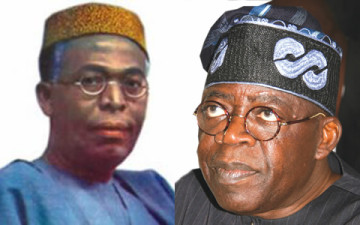
Given the recent tsunamic and fundamental economic and educational reforms in the country, people have started raising historical and comparative questions of whether President Bola Ahmed Tinubu holds dearly the sacred political and economic principles and ideals of a centenary Yoruba saint Obafemi Awolowo known as ‘Awoism’.

Since the 1960s, Yoruba politics has been dominated by a political orientation known as ‘Awoism’. The phrase refers to the political philosophy of the late Yoruba political leader Awolowo, who espoused policies he called “democratic socialism”. Its primary tenets were welfarerism, free social services and job creation. Awolowo loomed large over Yoruba politics for over forty years. He was an intensely intellectual figure with great energy.

Awolowo had a ground-breaking term of office as the premier of Nigeria’s Yoruba-dominated Western region between 1955 and 1959. During this time, he introduced free education and health care in his region with other social welfarist policies.

Awolowo’s political ideology did not die with him. He was a great and transformational leader who was loved, revered and cherished like the rock of Gibraltar by the Yorubas and all who benefitted from his pioneering social welfare programmes. They refer to themselves as ‘Omo Awolowo’ (Awolowo’s children) or Awoists (disciples of Awolowo and his principles). Awolowo’s ideas remain so deeply ingrained in the political psyche of the Yoruba that being an Awoist is regarded by many Yorubas as the only legitimate apprenticeship before becoming a Yoruba politician on the national stage.

President Tinubu has very few in common with Awolowo. Tinubu, just like MKO Abiola, is not like Awolowo. Awolowo was trim, dapper and austere. In contrast, Tinubu is well known for his staggering wealth and flamboyance, which made him appear larger than life. Awolowo was a socialist: Tinubu is an ultra-capitalist billionaire who sits atop— bringing in completely capitalist-oriented policies in the education sector, oil and gas industry, health, electricity and many others, which makes him look like the opposite figure of Awolowo in Yoruba land.

Of course, Awolowo’s death politically orphaned the Yoruba. He had served or played a dual role as the Yoruba leader and also their political representative on the national scale. After his death, Yoruba politics were dominated by one trend. First, there was the search for another iconic and radical socialist to inherit Awolowo’s dual role. 

Many thought Tinubu would apply some Awoist policies on Nigerians now that he became the Nigerian president, but the recent developments and realities seem to belie this hope. 

Abdullahi Khairalla writes from the Department of Political Science, University of Maiduguri.

Use your certificate and creativity

By Salihi Adamu Takai 

Creativity pays with much income, so don’t be misled as you’re acquiring knowledge in any field of study, whether scientific or artistic. Refrain from relying on the Government to enumerate your study; the onus is on you to use your knowledge to help your humble self and the Government.

Be curious about Creativity, and don’t think that you will have a certificate in some field of study so that Government will give you what you may rely on to quench your hunger. As you study at the University, college or secondary school, think of your future and learn to get money from the little you grasp in your study.

People should have learned that already as they started feeling discouraged by Government policy; success in life is attached to curiosity, innovation, creativity and courage. If people had been curious about innovation, they would have become creative and courageous about their interests.

Let’s look at the sources of development of the developed countries, such as China, America, England and others. We will say that they all developed because of curiosity in innovation. In China, we can see an infant exhibiting a sense of invention, producing phones and what have you; he doesn’t rely on the Government to give him jobs; the Government receives from his creativity.

In Nigeria, conversely, even a professor still relies on Government to boost his salary. That is a typical example of backwardness in Africa. Our Government also doesn’t encourage the youths to be curious about Creativity only bars them with a lack of encouragement. 

Therefore, as the youth who starts thinking of this idea, I engage myself in creativity. I did, and I got the value of it; I became curious about it; and will keep evolving curious about it forever. I exhibited my input on Earth, and it was accepted. Alhamdulillah!

Salihi Adamu Takai wrote from Kano via salihiadamu5555@gmail.com.