Opinion

WhatsApp status update dilemma

By Muhammad Ubale Kiru

In today’s digital age, it’s undeniable that sharing every aspect of our lives on social media statuses has become the norm. From announcing joyous occasions like the birth of a child to celebrating birthdays and achievements, we’ve come to believe that posting on our statuses is the ultimate expression of love and support.

But let’s take a step back and consider: Is our affection, loyalty, or friendship genuinely defined by what we post online? Do we measure the depth of our feelings by the number of reposts and likes?

For instance, when a dear friend welcomes a new bundle of joy, do we really need to rush to post it on our status to show our happiness? Should we assume jealousy or indifference if we don’t? Or when someone celebrates a birthday, must we repost it to prove our love?

The truth is that authentic connections thrive beyond the digital realm. True love, genuine friendships, and sincere empathy are expressed in actions, in the support provided when no one is watching, and in the real moments we share.

Let’s resist the notion that it’s not genuine if it’s not on our status. Authenticity is found in the personal gestures that come from the heart, not the public displays.

Next time you feel pressured to post every emotion or occasion, remember that your feelings are far more meaningful than what appears on your screen. Let’s focus on nurturing our connections beyond the virtual world.

Actions speak louder than status updates and true love and friendship are felt, not just seen.

How does verbal appreciation affect marriage?

By Aisha Musa Auyo

A beautiful marriage comprises couples who see and know how to appreciate one another by verbalising their positive estimation of each other. Some couples don’t just internalise their appreciation of each other’s beauty but voice it out. 

Men, when you see your wife as she is dressing up, don’t keep quiet; it’s an opportunity to tell her how beautiful she looks, for you are her mirror. I started with men because they are the gender that is very stingy with words. It’s the same gender that was telling you how beautiful you were before marriage. Now they became mute; I wonder what happened.  

Men, you are the only ones who see the fabulous underwear your spouse is wearing, which others will never have an opportunity to see or compliment. If she does not have undies worth complimenting, get her one! Who is more qualified to tell a woman she is beautiful than her husband?

It is very encouraging for a spouse to know that their partner appreciates how they look and still thinks of them as handsome or beautiful, not minding the number of years they have been together as a couple. It does not matter how old you are or how long you have been married. Simple appreciation, no matter the form, is a beautiful way of adding colour to your marriage. The food is delicious, the home smells nice, the bathroom looks spotless, this hairstyle looks great on you, etc., will cost you nothing but earn you a lot.

As much as men enjoy verbal appreciation, they also crave respect and admiration. Admiration for their hard work, masculinity, sacrifices, and admiration for their ideals, deeds, and wins.

When a spouse knows they are highly appreciated or valued, the one who receives the love will always have an urge or a longing to give back what they have received. So it’s a win-win.

Even if you have been giving and not receiving compliments, don’t despair. You will agree that giving of appreciation has a package attached to it: the joy of giving. A gift which lightens your heart and sends waves of fulfilment to you whenever you show gratitude. It’s a win-win situation.

Remember, your spouse is an opportunity to show love, kindness and gratitude; the best expression of meekness and humility and, above all, the best person after God to lavish all the praise you can fathom.

Aisha Musa Auyo is a Doctorate researcher in Educational Psychology, a wife, a mother of three, a homemaker, a caterer and a parenting/ relationship coach.

A clarion call to make breastfeeding and work, work!

By Tukur Hafsat Sani 

The art or science of breastfeeding can be projected to be as old as the childbirth phenomenon itself. Some historians have hypothesised that this important act became a widespread practice about 2.6 million years ago.

Inappropriate marketing of breast milk substitutes, stigmatisation, body image crisis, and public shaming, among others, have continued to undermine the efforts of medical experts and world organisations to improve breastfeeding rates and duration worldwide. With the world evolving, this is gradually changing.

In view of the importance of breastfeeding, over 30 years ago and even more precisely on February 14th, 1991, the World Alliance for Breastfeeding Action (WABA) came up with the World Breastfeeding Week (WBW), of course in partnership with World Health Organisation (WHO), United Nations Children Fund (UNICEF), government agencies and other non-governmental organisations across the globe.

The event was innovative, aiming to establish a global breastfeeding culture and provide support for breastfeeding mothers or even surrogates everywhere while promoting exclusive breastfeeding for a minimum of six months.

Therefore, World Breastfeeding Week is an annual tradition celebrated from the first and ends on the seventh of August worldwide, each year with a peculiar theme or slogan. Interestingly today, more than 100 countries globally participate in this important event.

On themes, for example, WABA, for the year 2020, chose “Support breastfeeding for a healthier planet’’ as its theme. The focus of WBW 2020 was aligned with thematic area 3 in WBW-SDG 2030 and is on the impact of infant feeding on the environment or climate change and the imperative to protect, promote and support breastfeeding for the health of the planet and its people owing to the fact that breastmilk is environmentally safe; produced and delivered without pollution.

In 2021 it was “Protect Breastfeeding: A Shared Responsibility”, which was with respect to the survival, health and well-being of women, children and nations, as well as how nursing mothers can be supported. For last year, it was “Step up for Breastfeeding – Educate and Support”. The WABA for this year set a theme – “Enabling breastfeeding: making a difference for working parents.”

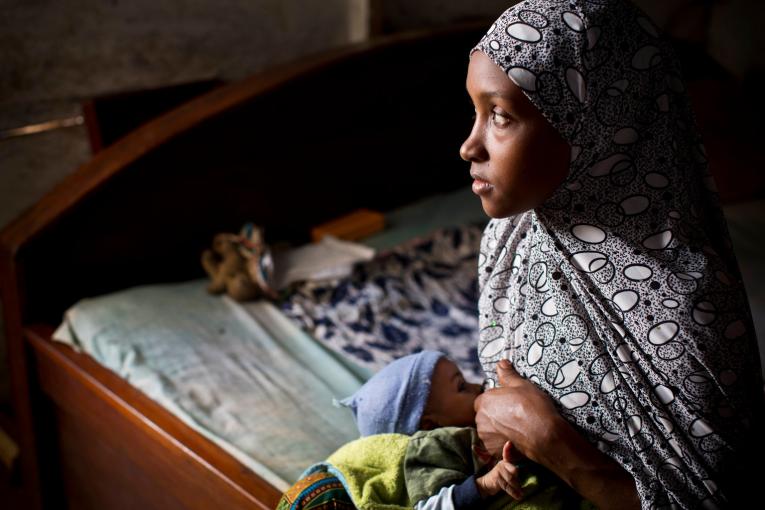
Breastfeeding is the process of feeding a mother’s breast milk to her infant – newborn baby because, apart from the bond of love that is built between a mother and her child through the process, breast milk is the most important and essential food an infant should receive due to colostrum it contains, and this colostrum possess antibodies and other immunological benefits that can give babies a healthy boost.

Universally, breastfeeding is of two types, exclusive breastfeeding and partial breastfeeding, which only a few in our society are able to differentiate and know the significance of.

Exclusive breastfeeding implies availing a child only breast milk without any solid food for the first eighteen weeks of his or her life, while for partial breastfeeding, an infant receives both breast milk and solid or semi-solid food. Noteworthy of the fact that exclusive breastfeeding is highly recommended by health professionals both for the benefit of mother and child. 

Since is singular act of breastfeeding helps mothers, according to studies, reduce conditions such as depression and breast cancer while simultaneously breeding children who are physically, biologically and mentally alert, it becomes imperative to help drive the 2023 campaign of “Let’s make breastfeeding and work, work!” – a campaign which focuses on promoting practices that can help support workplace-related breastfeeding in different countries.

Hence, employers of labour should support working-class mothers in different countries across different contract types and sectors and promote action that can be taken to help ensure breastfeeding works for all working-class women.

This can be achieved through sensitisation, supporting rather than stigmatisation of this prime natural process, and providing secluded areas where working mothers can feed their babies without eyes preying on them needlessly while at work. 

While mothers across the globe are encouraged to keep up the good work of breastfeeding in other to build a healthier and smarter global population, providing them access to breastfeeding their babies while at work would mean that we are making breastfeeding and work, work!

God Bless All Mothers Across the World.

Hafsat, a 200-level Student of Ahmadu Bello University, Zaria, Kaduna State, writes via hafsasarney@gmail.com.

Bridging linguistic worlds

By Abdussamad Yahya Sufi

My Literature teacher cautioned me in secondary school to avoid using Pidgin English during communication. Mr. Ibrahim Bello would always tell me that using pidgin in the infancy of learning English would affect my budding standard English. Since then, I have never used it and always try to avoid it in writing and speaking.

Now that I’m at university, I have met different people from southern Nigeria who always use pidgin. At first, I feared what would happen to my infant English. However, later, I realised that I could still maintain the standard since they all understood standard English; they just chose not to use it.

During my first days at university, the pidgin speakers in my hostel irritated me the most. Everyone used the language, and I didn’t understand 80% of it. When someone talked to me, especially my roommates, I would ask them to translate what they said.

After a few days, many of the guys in the hostel noticed me and began teasing me, thinking I simply chose not to speak the language until they understood that I didn’t understand it. They started calling me ‘English Man,’ which didn’t bother me as I had heard such names before.

Some invited me to their rooms to tell me stories, and I never rejected that opportunity. I knew it would help me improve my English skills. When I told them stories, they paid attention and asked questions in good English, not bad pidgin. 

Honestly, that helped me build my public speaking skills, and I appreciate the guys for understanding me then, unlike before. Even when I meet any of them on campus now, they introduce me as the ‘English Man.’ to their friends, and they all speak good English while exchanging greetings.

I don’t mind being silly while learning; I don’t hide myself when interacting with my schoolmates and friends. They are my laboratory, where I practise what I have learned. Even if they laugh at me or call me names, I use those experiences to practise my learning skills.

Abdussamad Yahya Sufi wrote via abdussamadsufi744@gmail.com.

Is Tinubu’s gov’t behind the fear-monger of occultic women in Arewa?

By Aminah M. Abubakar 

The crackdown on women begging for alms or food in Arewa communities has raised questions and fears of human rights violations. Attacks on innocent women, based on fear-mongering claims of a group of women trained as cultists to carry out nefarious missions, are becoming increasingly alarming.

Several audio clips circulating on social media alleged that about 100 women were trained by a secret society group to infiltrate Arewa communities, posing as beggars or impoverished individuals needing financial assistance. It is claimed that if you allow them into your home and offer any assistance, whether money or food, you will instantly collapse or die.

How was this baseless and manipulative statement conceived?

Who is responsible for perpetuating the fear-mongering that endangers women’s lives in Northern Nigeria?

Why do many, including the educated class, believe such a narrative paves the way for the blatant abuse of vulnerable women?

Why haven’t religious scholars and traditional leaders investigated to uncover the truth behind this notorious fear-mongering, which poses a threat to innocent women struggling with poverty and hunger?

At times of every new power shift in Nigeria, there has been different tribulation and tension. Hence, rumourmongers have a role to play in creating chaos and instability.

Islam condemns rumour-mongering. It is well known that Islam enjoins its followers to act cautiously and verify any story or news that comes to them according to Shari’ah because Allah says in the noble Qur’an:

“Believers, when a dishonest  person brings you a piece of news, carefully ascertain its truth, lest you should hurt a people in ignorance and afterwards you become regretful for what you have done.” ~ Surah Al-Hujuraat 49:6.

While I may be mistaken, my instincts compel me to question the authenticity of the initial stories that struck fear into the hearts of people, creating tension and distrust towards women seeking financial assistance at a time when most families struggle to afford decent food.

I wonder if the fabricated fear-mongering was aimed at silencing people and preventing them from voicing their grievances toward government policies that exacerbated the existing economic breakdown caused by the previous administration. It’s always difficult to discern the extent to which those in power will go to manipulate and conceal their shortcomings.

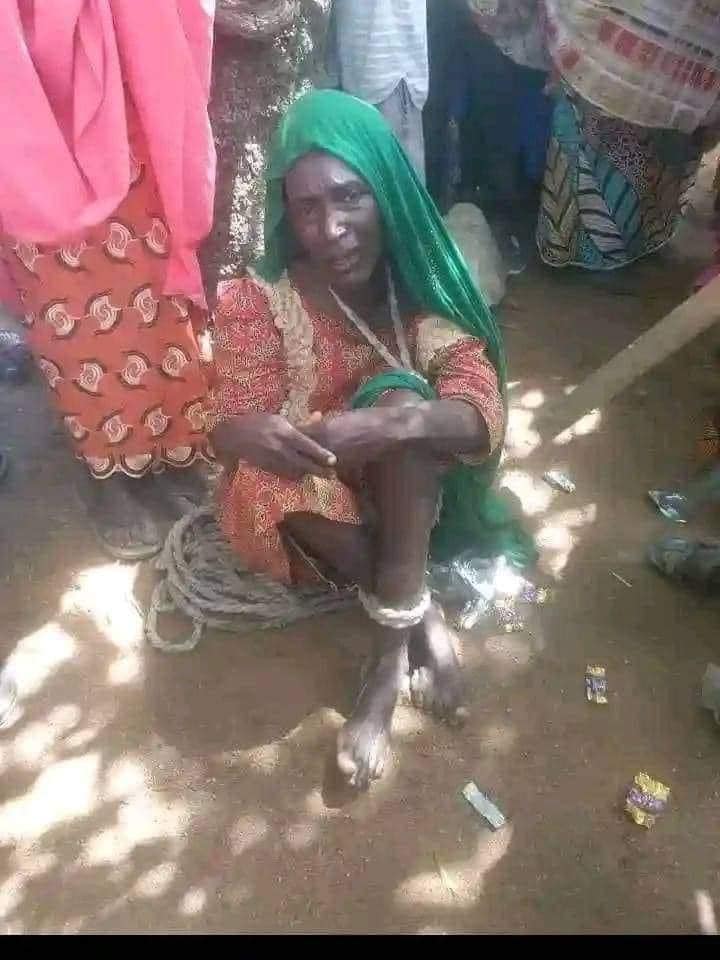
Just two days ago, I witnessed a disturbing video on Facebook where two destitute women were mercilessly beaten by a group of teenage boys for no apparent reason other than their quest for food or to visit another community. Similar incidents can be found on WhatsApp groups, where women have been stripped almost naked and beaten by groups of youths over flimsy allegations, such as causing the collapse of someone merely through conversation. Treating vulnerable women is unjust and unwarranted, as any form of human rights violation is profoundly concerning and illegal.

Those who pushed the fabricated narrative that 100 or 1000 occultic women were capable of killing people by simply greeting or begging have now created the violent “monsters” that are now taking advantage of the situation to attack or even kill poor women – widows & mothers whose means of survival depend only on going out to beg for food or financial support.

We are all aware that the harsh economic situation created by the new government has increased the number of people seeking food and financial assistance. This group includes mentally ill and poverty-stricken citizens. Millions of Nigerian families have been enduring significant hardships due to the new government’s policies and are unsurprised.

It has always been the usual norm in Nigeria: the politicians and elites live in luxury, indulging in the finest pleasures – lavishly eating the best whenever they desire, living in luxurious homes they build, while the ordinary citizens who entrusted politicians with their votes suffer from poverty and the consequences of self-serving decisions made by the elites.

I hope this brief piece sheds light on the fabricated fear-mongering prevailing in Arewa communities, emphasising the gravity of human rights violations. It also underscores how impoverished and hungry women have been made scapegoats by a nonsensical false alarm intended to divert attention from the harsh economic realities that adversely affect people’s health and well-being.

Aminah M. Abubakar sent the article via mbubakar.minah@gmail.com. She can also be contacted via her X handle (formally known as Twitter): @MinahMbubakar11.

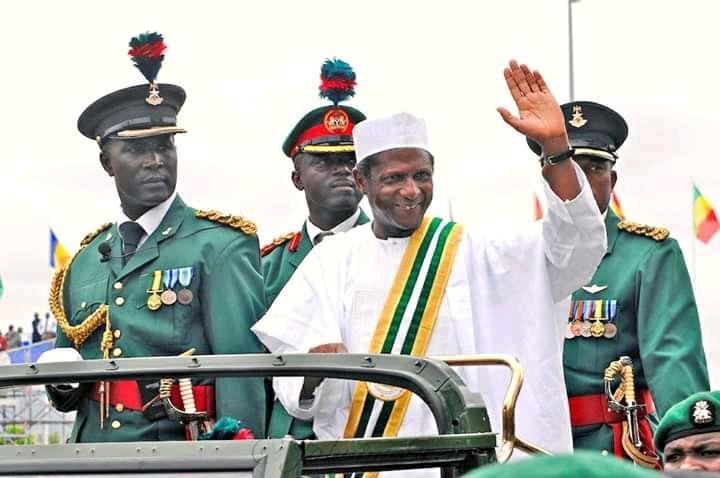
Umaru Musa Yar’Adua: Nigeria missed a chance to become the “Giant of Africa”

By Saifullahi Attahir

“It’s still morning in Nigeria, democracy is just eight years old, our Nation has changed for the better, but there is much left to do……for Nigeria of today,  the Sun is still rising” – Yar’adua during campaign 2007.

I deliberately chose the above phrase as a   subtitle of my essay due to the sorrow  I felt whenever I remembered the chances our dear country missed by losing the above rare political figure through the cold hand of death. Although I’m a Muslim who believes in destiny, I still can’t help but recount the countless opportunities and milestones we were about to scale during a very golden hour in the political history of Nigeria.

Before 2007, little was known about this gentleman apart from his home state, Katsina. Although many Northern Governors were busy lobbying in Abuja for President Obasanjo to anoint them as PDP presidential flag bearers, Umaru Yar’adua was far in the remote state of Katsina. Unconcerned with the political atmosphere in Abuja, he was busy building a legacy of service known in his family’s blood.

In a  dramatic twist of fate, President Obasanjo handed over the PDP ticket to Umaru Yar’adua after inviting him to Abuja. This singular act of courage and benevolence by Obasanjo, which deserved accolades, was done after scrutiny of all the Northern Governors at that time, with historians quoting Obasanjo as saying, ‘Yar’adua was one of the few spotless politicians with a good track record of efficient administration’.  This can be a powerful message to powermongers, especially in today’s politics,  that God can give it (power)  to whom He likes without lobbying or cutting corners.

Umaru Yar’adua was born in 1951 to Late Musa Yar’adua, a former Lagos Minister during the Tafawa Balewa administration. His father was also a Chieftain (Matawalle)  in Katsina Royal court. Their household was a signatory of service, honesty and discipline that produced many notable figures, including his senior brother, Late General Shehu Musa Yar’adua.

Yar’adua attended the prestigious  Ahmadu Bello University (ABU)  Zaria,  where he obtained a degree and master’s in chemistry education between 1972 and 1978. He had a stint as a lecturer at CAST in Zaria and Katsina Polytechnic. Umaru Yar’adua was a teacher by heart who took teaching as his favourite hobby and job despite his affluent family background. This can testify to this man’s ultimate humility and love of service for his Nation.

It was not only teaching that Yar’adua knew, as part of their family tradition, but he was also later a Director of several companies that were founded by either his brother or Late father, including;  Habib Bank Limited, Lodigiani Nig Limited, Hamada Limited, Sambo farms. This is to show that Yar’adua has a taste in the private sector as a prudent manager of resources with vast practical knowledge of the economy.

During his tenure as Governor of Katsina state, he was the first in Nigeria to declare his assets to the public. He also saw to the massive construction of public schools, equipping and rehabilitating hospitals, good road networks, and prudent management of Katsina treasury. These are not just created lies but historical facts. One example that can testify to this is how Yar’adua picked and groomed one of the finest intellectual and hardworking administrators Nigeria has ever had, Tanimu Yakubu Kurfi. This economic guru has worked closely with Yar’adua as an aide and later as commissioner of finance. The hard work of this fellow led to Obasanjo appointing him as Chairman of the Federal Mortgage Commission. Indeed, Tanimu Yakubu would be an article I would separately write one day by God’s grace.

The choice of Yar’adua as the presidential candidate was not without foes; even among the Cabinet Ministers of Obasanjo, some people looked at themselves as the most competent for that job, so this automatically created harsh criticism between them and Yar’adua even before the government took off.  The example of what transpired between Mallam Nasir El-Rufa’i and Yar’adua was an unfortunate event. Although I see El-Rufa’i as an exemplary leader and my political mentor, his bitterness and open hatred toward Yar’adua were less expected of him. At least, it should have ended after his death, but to the surprise of many, his untimely death has become a source of pride and rejoicing for others.

Among the first surprises Yar’adua to the world after his election was his confession that the election that brought him to power was faulty, but he asserted his commitment to bring change in electoral reforms. He quickly again declared his assets. The choice of Cabinet members in the Yar’adua government was a testimony to his commitment to Nigeria. Most of his political appointees are people of unquestionable character,  integrity and experienced technocrats.

Dr Shamsudeen Usman, a Kano-born Economic guru, was the Minister of National Planning. Dr Mansur Mukthar, another Kano technocrat, was the Minister of Finance.  Sanusi Lamido Sanusi, a radical Economist, was the head of CBN. Colonel Abdurrahman Dambazau, another Kano-strong man, was the chief of Army staff. Ojo Maduekwe, an intelligent diplomat, was the Foreign Minister. Dora Akunyili, an iron Lady, was the head of NAFDAC. Tanimu Yakubu, a rare gem, was the Chief Economic Adviser. Segun Adeniyi, a veteran writer and mentor, was the Presidential spokesperson. Abba Sayyadi Ruma, a confidant of Yar’adua, was the Minister of Agriculture. Dr. Aliyu Modibbo is in charge of FCT. Mrs.  Fareeda Waziri as EFCC boss. Attahiru Jega, as the unforgettable INEC chairman. Even Mallam Nasir Elrufa’i was initially part of the government as head of Energy sector reform. These are some of the few members of Umaru’s administration to give an idea about what he intended for this country.

Immediately after its inauguration,  Yar’adua set the agenda for this country as ‘VISION 2020’ to set Nigeria as one of the world’s top 20 countries with a strong economy by 2020.

These were not empty promises or the usual character of some politicians, but a tangible and committed road map he has charted for Nigeria with the strong political will to deliver. Yar’adua developed the famous ‘7 POINT AGENDA’, a simplistic approach to good governance and a roadmap for a brighter Nigeria. This is unlike the multiple, complex, ambiguous, and confused slogans we have witnessed since his demise by the subsequent regimes.

7 POINT AGENDA is a set of policies Yar’adua envisioned concentrating on during his tenure as President. They are as follows: 1)Power and Energy.  2)Food security. 3) Wealth creation 4) Transportation. 5) Land reforms. 6) Security. 7) Human capital development/Education.

Despite the short period of his government, which was also interspersed by crises and frequent health concerns, within three years between May 2007 and May 2010,  Yar’adua was able to leave an indelible positive mark as one of the best leaders this country ever produced. Most Nigerians believe that had Umaru left in 2015, our story would have been a different one, full of hope.

1)Yar’adua was able to solve the crisis of the Niger Delta; this automatically brought security to the region and also boosted the crude oil production of Nigeria.

2)Yar’adua maintained the rule of law, especially in electoral matters, by bringing many reforms in INEC. Hence, many elections were won and given to the opposition parties, exemplified in Ekiti and others.

3) Inflation was dramatically brought down during his regime when many commodities became cheaper and subsidised, including petrol, fertiliser, food, etc.

4) Yar’adua gave Sanusi Lamido Sanusi the green light to carry out the radical reforms in the banking sector that led to rescuing our economy from recession and corrupt elites.

5) Yar’adua initiated and completed the draining of the river Niger to boost the hydroelectric power supply to Nigeria, especially in the blackout  Northern part.

Despite the above achievements, the Yar’adua government faced many challenges during his time. The Boko Haram crisis escalated after the killing of Muhd Yusuf (its leader). Also, Nigeria entered a diplomatic crisis with the US after arresting Farouq Mutallab in an airport, allegedly trying to detonate a Bomb. His government also faces many corruption cases perpetrated by some Cabinet and political associates.

Yar’adua was a doer, a silent achiever, a respected diplomat, and a prudent manager. He was married to his brave and confidant wife, Turai Yar’adua, in 1975. Three of his nine children were married to 3 Governors then ( Isah Yuguda, Sa’idu Dakin-gari, and Ibrahim Shema). His wife said Yar’adua’s favourite foods were ‘Kosai da biredi’ ( bread and bean cake, a popular simple Hausa food). He sometimes wore a wristwatch until it started rusting due to his simplistic life.

His life was cut short on 5- 2010 due to  Pericarditis, a complication from an underlying Chronic Kidney disease he has had for a long time.

Humility, honesty, discipline, listening ear, prudence, simplistic life, and hard work attracted Yar’adua to Obasanjo by anointing him as the  Presidential aspirant. They are the same characteristics that help him to deliver some of the promises he has made; they are also the same qualities that endear him to millions of Nigerians  13 years after his death.

Saifullahi Attahir wrote via saifullahiattahir93@gmail.com.

Tinubu’s 100 days: The ticking time bomb and the danger of the elite’s silence

By Abdelghaffar Amoka

It is 100 days in office and six months after President Bola Ahmed Tinubu won the election, and the government seems directionless. It is more news that the hardship that President Muhammadu Buhari introduced us to has multiplied. Whether he removed the fuel subsidy or Buhari did, he has no excuse to be clueless for the past six months on the way forward. He asked for the job.

My problem is how our leaders are comfortable putting burdens on the people, burdens they have not prepared them to carry. There was a plan to remove the fuel subsidy. Common sense should tell them that it will affect purchasing power. It is that simple. But why was it so difficult to put up a parallel plan to stabilise the purchasing power of the people once the subsidy was removed? How some people are comfortable with a policy that does not follow the natural law of growth and development beats my imagination.

When a child is born, he is nurtured and trained to become an adult. He is either sent to school or learns a trade and gets empowered to take responsibility. He then gets a wife, has kids, and starts to take responsibility. Imagine giving the boy a wife with kids at 15 without empowering him to take care of the responsibility and expecting him to be fine. It is against the law of nature to burden anyone without preparing him for it.

Fuel subsidy removal was a long battle, and many people have campaigned to remove fuel subsidies since 2010. They made it look like the removal would save the government money for infrastructure and do wonders. But they never discussed the consequences of the removal on the people. How much have we saved for 100 days, and what have we achieved with it? What infrastructure is better than the general well-being of the people?

Funny enough, some of the advocates of the subsidy removal are currently complaining about the hardship on the land. That made me wonder what they were thinking when advocating for the removal. Some are even intellectuals. They thought subsidy was like a tap that you just switch off, and everything is fine. They think it’s that simple. The state government has now given money to share some stuff as palliative. Is 5kg of rice or Semovita all we need to overcome this heartless burden? Who are the people giving them economic advice?

There are three schools of thought on the post-fuel subsidy removal. Those benefitting from the removal will never see anything wrong with it. Those who feel we should endure the hardship and wait for the government to invest in infrastructure. Then, those who see everything wrong with the removal instead of fighting the corruption that shrouded fuel subsidies.

We are being advised to cut our expenses. They seem to have agreed with Buhari’s “Sharholiyah” (wasteful spending) principle. Where is the waste to cut? Those people think everyone has as much as they have to spend. How do you expect a junior staff working at the federal secretariat earning about N40k monthly to cut his expenses and manage? What will he cut? How do you expect a graduate working at the federal secretariat and earning about N60k monthly to cut costs? What will he cut?

For the first time since I became an adult,  federal government workers are being asked to work 2 or 3 days a week to reduce the cost of going to the office. Unfortunately, that will not help reduce the cost of living.

Fuel subsidy is removed, and we are expected to be patient and cope. School fees have increased due to the present economic reality, as acknowledged by FG, and we are expected to come with it. Floating naira to dollar in a country that imports 80% of its needs is a disaster.

The danger of keeping quiet.

It is no more news that crime rates have increased over the last months and are getting worse. Meanwhile, there are three classes of people: the upper, middle, and the lower class. The upper class is inaccessible. They have security escorts, bulletproof cars, tall fences, and gigantic gates with security dogs. The kids are abroad or well-secured. The middle class is accessible and lives not far away from the lower class. As far as the lower class is concerned, the upper and middle classes ( a fast-depleting class) are responsible for the difficulties they are experiencing.

As long as you can still manage to drive your car and feed, you belong to the haves as far as the lower class is concerned. As the crime rate soars, your house will be the first target to be vandalised and bugled. This narration from my friend, Muhammed Hashim Suleiman, keeps ringing the bell in my ear. The narration keeps reminding me of our likely danger in this situation. 

He managed to muster the courage to buy a few litres of petrol for his old Tokunbo car. The petrol station was swarming with people, young and old, not buying petrol but waiting for any buyer to saunter in, and they descended on that unlucky buyer begging for alms. After he purchased the few litres he could afford, entering his car became a struggle because the beggars were begging between him and the car. He silently ignored them and found his way inside the car. Then, a very old woman stood before the car until the petrol attendant shouted at her. 

Instead of leaving the front of my car, the old woman walked towards the driver’s side. On reaching his window, in a cold voice, she said: “Kun kwashe kuɗin ƙasar, kun bar mu da yunwa, yanzu muna roƙon ku abun da zamu ci amma kun hana mu. Wallahi, idan muka mutu da yunwa, sai Allah ya kama ku.” That: “You people have stolen the nation’s money and left us in hunger, now we are begging you for what to eat, but you won’t give us. If we die of hunger, I swear God will never allow you free.”

We are all victims of public embezzlement, but the old woman who happened to belong to the lower class is unaware of it. As we keep quiet adjusting to living with the burden placed on us by these elitists in government, know that the lower class that has been driven far below the poverty line has placed you on the same page with those that have stolen the nation’s money.

It is 100 days of disaster. I hope the government gets its acts together and be purposeful. Any government that fails in the general well-being of the people is a failed government.

Dear Nigerians who are supposed to be in the middle class but tending towards the lower class, If nothing is done and the time bomb should explode, you will be the first casualty. Your silence will cost you a lot. That will be a double casualty for a crime you and I are victims of.

Abdelghaffar Amoka Abdelmalik, PhD, wrote from Ahmadu Bello University, Zaria. He can be reached via aaabdelmalik@gmail.com.

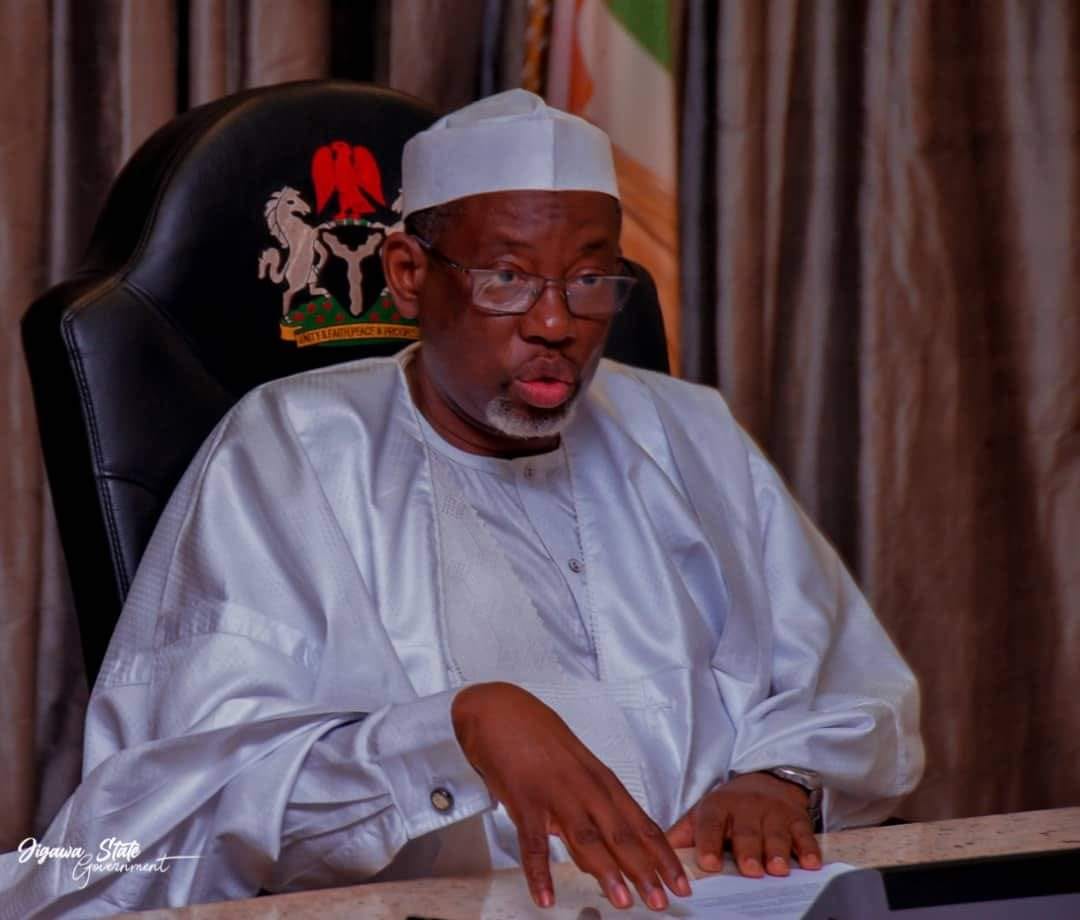
Governor Namadi (Danmodi): An epitome of change in Jigawa State

Your Excellency Sir,

I hope this letter will find you in sound health and high spirit. I am writing to express my heartfelt solidarity and appreciation for your recent appointments in Jigawa State, specifically your decision to appoint individuals of high repute and strong academic backgrounds.

Your recognition and value of the expertise of a highly educated professional of Jigawa State extraction is that of a leader with a progressive vision to put heads together and develop our dear State. By appointing well-meaning sons of the land into key positions to steer the affairs of our dear State, indicate your commitment to an open and all-inclusive government. It is indeed a commendable gesture. By this, you are not all promoting meritocracy but also ensuring that our government benefits from the knowledge and skills of these accomplished individuals.

This move not only showcases your dedication to improving the quality of governance but also sets a precedent for other States to follow. It sends a strong message that education and expertise are vital components of effective leadership.

I am confident that these appointments will lead to innovative policies and solutions that will benefit the people of Jigawa State. As a resident and citizen, I feel proud to have a visionary leader like you who places a premium on competency and excellence. Indeed, Jigawa will be higher than it is under your leadership.

Once again, thank you for your visionary leadership and for recognizing the value of this knowledgeable personality in shaping the future of Jigawa State. Your actions inspire hope and confidence in the direction our state is headed.

Please accept my best wishes for continued success in your tenure as our esteemed Governor.

Sincerely,

Engr. Abubakar Abbas Adamu (R. Engr COREN, MNSE, CIPMA)

Kofar Fada Sabon Garin Ya’’Ya’’ Town, Taura Local Government Area, Jigawa State

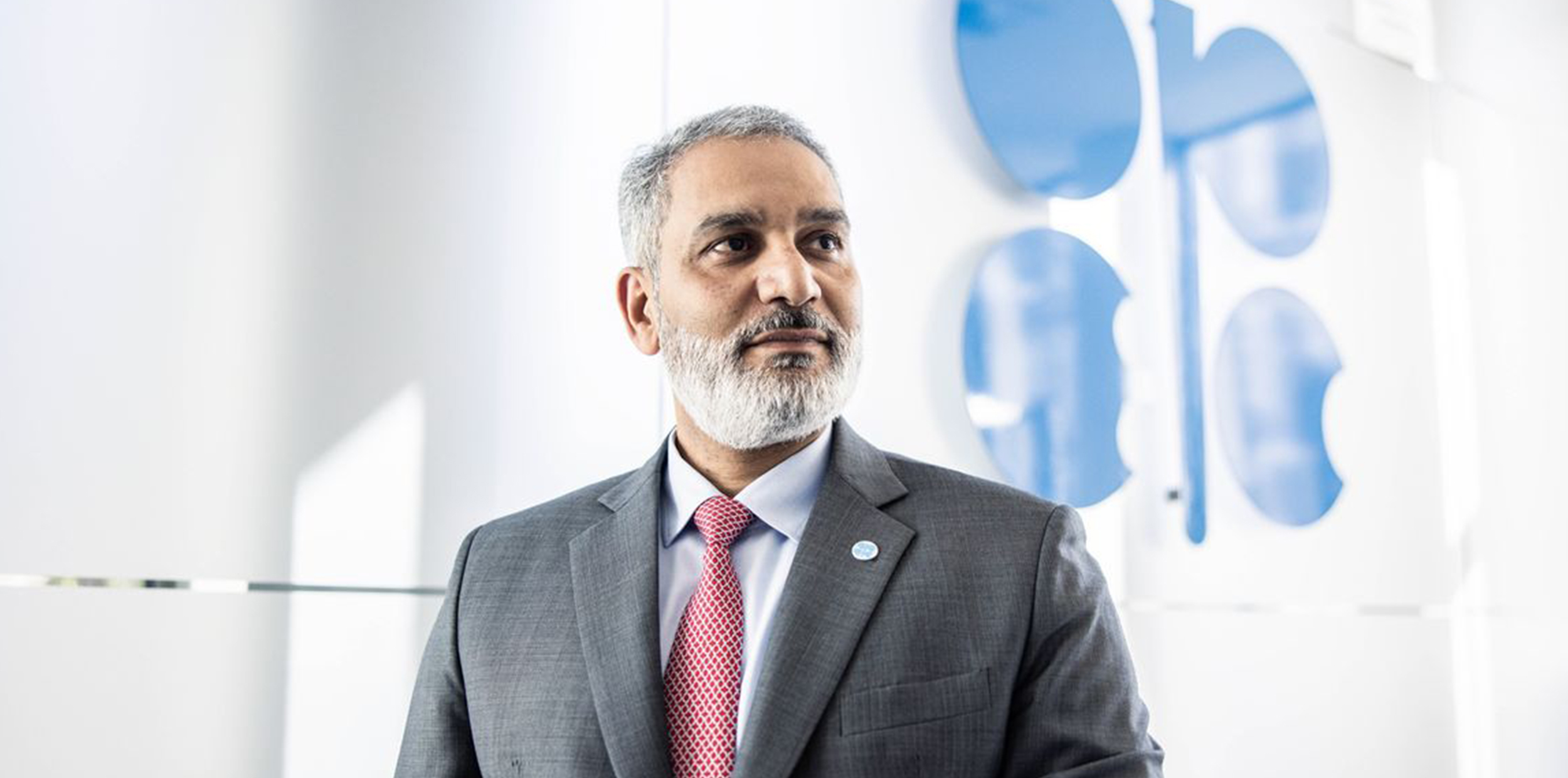
Why the world needs more oil, not less

By Haitham Al Ghais

What do toothpaste, deodorant, soap, cameras, computers, gasoline, heating oil, jet fuel, car tires, contact lenses and artificial limbs have in common?

If oil vanished today, these and many other vital products and services that use oil or its derivatives would vanish too. Transportation networks would grind to a halt, homes could freeze, supply chains would crash, and energy poverty would rise.

The World Energy Report for 2022, published by the UK-based Energy Institute and consulting firms KPMG and Kearney, noted that fossil fuels constituted 82% of global energy in 2022. This is comparable to OPEC’s latest world oil outlook and represents a similar level to 30 years ago.

Why then do most energy transition debates disregard the critical role that commodities like oil and gas continue to play in improving lives, fostering stability and energy security, as well as related industries’ efforts to develop technologies and best practices to reduce emissions? The scale of the climate change challenge is daunting, but meeting the world’s rising energy demand and mitigating climate change do not have to exist in a vacuum or be at odds with each other.

Rather, the world should act to reduce emissions and ensure that people have access to the products and services they need to live comfortably. Towards these goals, OPEC members are investing in upstream and downstream capacities, mobilising cleaner technologies and deploying vast expertise to decarbonise the oil industry. Major investments are also being made in renewables and hydrogen capacity, carbon capture utilisation and storage — as well as in promoting the circular carbon economy.

The bottom line is that it is possible to invest heavily in renewables while continuing to produce the oil the world needs today and in the coming decades. This approach also contributes to global stability at a time of volatility and is critical given that history shows that energy transitions evolve over decades and take many paths.

Take electric vehicles: Although the Toyota Prius became the world’s first mass-produced hybrid vehicle in the late 1990s, an analysis from the U.S. National Automobile Dealers Association noted that sales of hybrids, plug-in hybrids and battery electric vehicles (BEV) accounted for only 12.3% of all new vehicles sold in the U.S. in 2022.

While the rising popularity of electric vehicles is indisputable, total sales of BEVS also made up only 19% of new car sales in China last year. Similarly, in the EU, vehicles using petrol or diesel still accounted for around half of all car sales in 2022.

Thus, when it comes to the transportation sector – and indeed many other fields – it is clear that it would not be prudent to ignore that billions of people across the globe rely on oil and will continue to do so for the foreseeable future.

This becomes even more pressing when coupled with the investment needed to meet the rising demand for energy, ensure energy security and affordable access, and lower global emissions in line with the Paris Agreement.

Rising demand for energy

The world’s population is growing. OPEC’s World Oil Outlook (WOO) for 2022 sees it increasing by 1.6 billion people through 2045, while United Nations statistics note growth to around 10.4 billion by 2100.

In parallel, OPEC’s estimates that global energy demand will increase by 23% to 2045. Within this, oil demand is projected to increase to around 110 million barrels a day (mb/d). Thus, it is clear that oil will continue to be an essential part of the global energy infrastructure for decades to come. This is in stark contrast to the many proclamations of past decades that the age of oil was over. Indeed, contemporary demand is close to an all-time high and will rise by close to 5 mb/d in 2023 and 2024.

No single form of energy can currently meet expected future energy demand; instead, an “all-peoples, all-fuels and all-technologies” approach is required. As such, OPEC member countries are ready, willing and able to provide the affordable energy needed to cater towards these future energy needs, all the while reducing their emissions and helping eradicate energy poverty in doing so.

The UN notes that more than 700 million people still lack access to electricity, and almost one-third of the global population uses inefficient, polluting cooking systems. Daily life is not about cars, laptops or air conditioning for these people; it is about basic access to heat and electricity. To provide adequate and affordable universal energy access, and eradicate energy poverty, oil can and will play a key role in developing countries. The Global South has been – and continues to be – very clear about this; is the Global North taking heed?

Investment in oil is critical for energy security

Another worrying reality across the globe is that not enough investment is going into all energies. Looming oil demand growth alone necessitates far more investment if a sustainable supply is to be maintained.

Oil will make up close to 29% of global energy needs by 2045, with an investment of $12.1 trillion needed by then — or over $500 billion a year — but recent annual levels have been far below this.

The consequence of failing to invest adequately in oil is hammered home by recent OPEC Secretariat research outlining that in five years, there would be a staggering oil market deficit of 16 million barrels per day between forecasted rising global demand and supply if investments into upstream activities were stopped today — as some are calling for.

The oil industry has played a central role in improving billions of lives to date. If it is to continue to do so, and if the world is serious about implementing orderly energy transitions and meeting future energy demand while ensuring energy security for all, chronic under-investment in the industry needs to be remedied swiftly.

Ahead of this year’s United Nations Climate Change Conference (COP28) in the United Arab Emirates – where the world will evaluate progress on the Paris Agreement – COP28 President-Designate Dr Sultan Ahmed Al Jaber said the world needs “maximum energy, minimum emissions.” A healthy degree of pragmatism will be necessary to achieve this goal, especially given the clear need to utilise all energies if we are to meet the world’s current and future energy demands.

Ultimately, no people, industry or country can be ignored, and we believe that discussions at this year’s COP28 will reflect this. After all, history is filled with numerous examples of turmoil that should serve as ample warning for what occurs when policymakers fail to take on board energy’s interwoven complexities.

Al-Ghais is the Secretary General of the Organization for the Petroleum Exporting Countries (OPEC).

A decent life abroad

By Salihi Adamu Takai

Life is a period in a person’s life or a state of being alive. A lifetime is a temporary time to live from the cradle to the grave (death). Being alive is a chance to make everything designed to achieve.

Life goes along with the timeline and plans quickly (it’s not permanent). This means that everyone on earth is allocated to a specific time, and that can’t be in any way extended. 

As you come into existence and start living a life, how do you live it and plan to live it? Are you living at home? Or you’re just intending to live abroad? So, if you want to live overseas, it’s essential to know many things about living abroad; I will critically point out some helpful hints for your living abroad.

Life abroad is not like a home life. It’s a new life. If you happen to be living abroad, you will start feeling lonely and naive because you find yourself in a new place that takes you to free thinking. So, from this time, you will start thinking about living; how can you cope with the situation? But the answer should be the plan made you there; was it for what? Just think about it before living abroad!

It’s discussed that anyone who intends to live abroad has already planned for life, so they only need guidance to live it decently. So, here are the five things helpful for living a decent life abroad;

1. Be curious to achieve your goals for living abroad. This means that as you take off and land in the place you intended to live, just be wrapped up in it until you get it, be it study or business.

2. As you land, you must think about your financial capacity and start studying the cost of living there. Don’t start spending anything without critical thinking about life there. Study their currency first and compare it with your country’s currency.

3. What are you going to do there? Is it study or business? Make sure you study their Constitution. As you start living, please focus on the laws governing your transaction there and avoid anything contrary to their law and order.

4. Choose a good friend to live with, and don’t accompany anyone who can influence you negatively. You can find different kinds of people anywhere, good and bad. So, refrain from associating with the bad, and accompany the good ones helpful to your life there.

5. Your religion should be your guide in everything. Don’t forget your religion in anything. Be within the guidelines of the religion; you will be safe anywhere.