Opinion

Why Nigeria should prioritise peace

By Maryann Sholanke

Recently, the world has witnessed escalating tensions and conflicts between nations, often resulting in devastating consequences for humanity. As a prominent African nation, Nigeria must demonstrate its commitment to regional stability by actively resisting any inclination towards attacking its neighbouring country, Niger.

Humanitarian Consequences and Shared Ties

First and foremost, attacking the Niger Republic would undoubtedly lead to severe humanitarian consequences. Both countries share cultural, historical, and ethnic ties, with many Nigerians and Nigeriens having close family and social connections. Any military aggression from Nigeria would inevitably cause human suffering, displacement, and loss of life among innocent civilians on both sides of the border. Nigeria should be cautious not to inflict harm on its own citizens’ family members and friends in Niger.

Diplomacy and Cooperation

Furthermore, Nigeria should recognise that diplomatic engagement and cooperation with neighbouring countries foster peace and development. By upholding peaceful relations, Nigeria can establish harmonious partnerships that benefit its citizens through regional trade, economic growth, shared security initiatives, and cultural exchange. A peaceful and stable Niger enhances regional stability and contributes positively to Nigeria’s development and progress.

Regional Stability and Solidarity

Moreover, attacking Niger risks exacerbating existing regional tensions and instability. The West African region has long grappled with challenges such as terrorism, insurgency, and organised crime. Sustaining peace and security requires collaborative efforts among regional actors rather than exacerbating conflicts that may create fertile ground for extremists and criminal networks to thrive. Nigeria should maintain regional solidarity, actively engaging in forums such as the Economic Community of West African States (ECOWAS) or the African Union (AU) to find common solutions to shared challenges.

International Reputation

In addition, Nigeria must promote and preserve its reputation as a responsible and respected international actor. Nigeria has historically been a key contributor to peacekeeping missions and conflict resolutions on the African continent. Its involvement in various regional initiatives, such as the fight against Boko Haram, highlights its commitment to regional peace and stability. By abstaining from military aggression towards Niger, Nigeria will reinforce its image as a nation dedicated to peaceful coexistence and diplomatic resolutions.

Long-Term Implications

Lastly, Nigeria must consider the long-term implications of attacking Niger. Regional conflicts often harm the stability and development of the nations involved, leading to weakened economies, strained resources, and prolonged instability. Rather than investing in warfare, Nigeria should allocate its resources towards education, healthcare, infrastructure, and poverty alleviation to empower its citizens and strengthen its national development.

In Conclusion

In conclusion, Nigeria should resist any inclination towards attacking Niger, as it is imperative to prioritise peace, regional stability, and human welfare. By engaging in peaceful resolutions, diplomatic negotiations, and collaborative efforts with its neighbours, Nigeria can set an example for other nations and contribute positively to the long-lasting development, prosperity, and peace of the West African region.

Maryann Sholanke is an Entrepreneur, child advocate and media personnel, and she writes from Abuja. She can be reached via marycool72@gmail.com.

A stark warning for economic hardship

By Bilyamin Abdulmumin

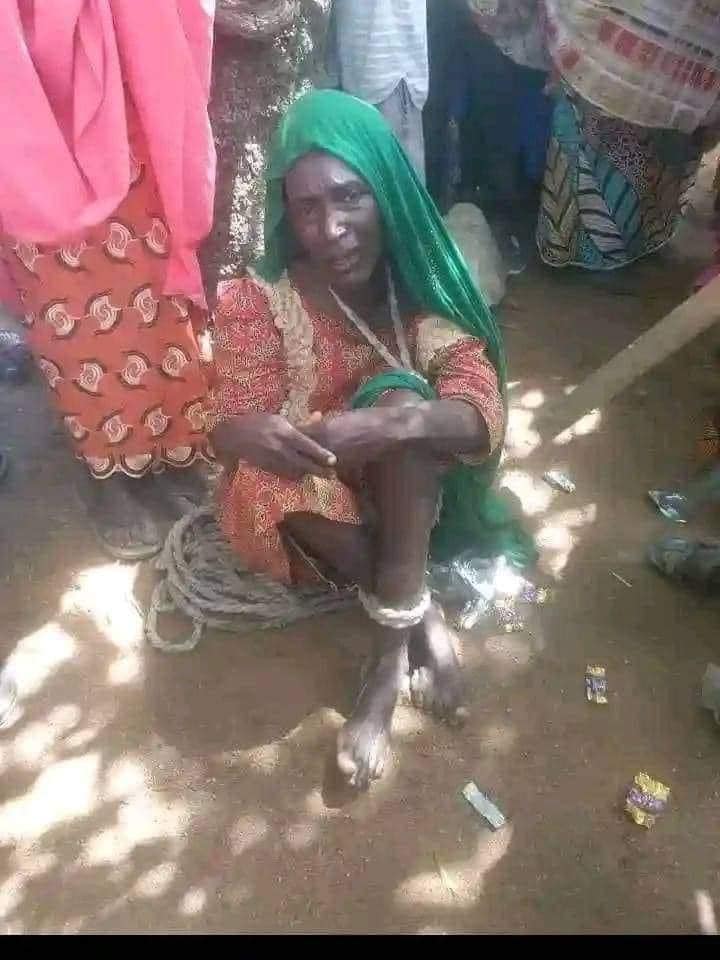
For some weeks, witchcraft news has been making rounds in the North. Several trained bloodsuckers were rumoured to be sucking blood from their victims. Videos of such incidents went viral on social media, especially Facebook and WhatsApp. Some individuals, particularly women who appeared to be victims themselves, were allegedly caught in the act of trying to suck their victims’ blood.

In one video, a woman alleged to be a witch was seen surrounded by a swarm of youth while another lady fainted, her body lying on the floor. To resuscitate her, the purported witch woman was asked to skip her, and intriguingly, she woke up. But in another video, the victim couldn’t wake up, so voices from the background kept shouting: skip three times!

Many burning questions arise when it comes to claims of witches. Challenging this perception, one Islamic scholar presented a compelling argument. He asked, ‘Why are the victims always poor and destitute?’ According to the Sheikh, he has never heard of a governor’s mother, a minister, or any public figure’s mother being paraded as a witch. This argument deals a significant blow to proponents of witchcraft.

Another similar question is: Why do claims of witchcraft usually originate in rural environments? The more rural the area, the greater the belief in witch existence. I discussed this scenario with a roommate some years ago, and he mentioned that he also had reservations about the issue of witches. He shared an anecdote about their younger sister, whose alleged ‘witchiness’ would never surface except when it was time for her to return to boarding school. She would always be fine at other times, but whenever school resumption was near, she would seem to change, which raised suspicions of foul play. However, this guy would climb down the pedestrian; he seemed torn between his thoughts and societal beliefs. In the same conversation, he defended the notion that rural areas have more witches because they have forests everywhere. What a ditch in logic!

I have once turned around to make a prank on witch allegations. While Nigeria was at a crossroads, a time in 2014 when Boko Haram, the partial removal of fuel subsidies, and the depreciating value of the naira to the dollar combined to wreak havoc on the masses. Similar rumours erupted, claiming that when one received a call from a certain number, their blood would be sucked away. I decided to play a prank. I saved my number as that controversial number in my friend’s phone contact and then called him. Immediately, he began reciting every prayer known to him.

Several theories have been put forward to explain the phenomenon of witchcraft in the North. One theory suggests that the nation’s predicament could have given birth to such rumours. Bulama, a famous cartoonist, also lends credence to this opinion. He created a cartoon depicting a man happily devouring at a food junction. Upon seeing him, a passerby paused to ask his companion, ‘Isn’t he the person being witch-hunted?’ The other person, intrigued, replied, ‘He’s being witch-hunted by hunger.

Another theory also suggests that it could be government propaganda. According to this view, the government might be making a clandestine move to divert public attention amid economic hardship. This theory can’t be outrightly denied because, as the saying goes, ‘biri yayi kama da mutum’ (Monkeys resemble humans!).

Public belief could also play a significant role. Doctors have told us several times that the efficacy of medication has a strong correlation with the patient’s beliefs. In other words, the more patients believe in the potency of the drug, the more effective it is. For instance, our Fulani herders are said to never recover from illness without injections. The average Fulani herder believes that injections are the only way to recover from illness. So, when they are down with malaria, for instance, they have to get an injection to recover, whereas city dwellers can recover with just drugs.

The issue of rumour-mongering during periods of instability is not unique to Nigeria or Africa alone. After the Second World War, the atmosphere was filled with fear and uncertainty, and everybody was looking for someone or something to blame. Suddenly, the myth of the Bermuda Triangle (Devil’s Triangle) emerged. With several aircraft and ships disappearing mysteriously without a trace, this section of the North Atlantic Ocean was believed to possess some supernatural power that not even a bird could dare cross. Several decades later, the myth survives.

Bilyamin Abdulmumin can be reached via bilal4riid13@gmail.com.

My ideal Nigeria: A personal reflection

By Obansa Nimah

It’s the year 2050. I’m on the balcony of my smart home in Port-Harcourt, waiting for the arrival of my last son, who is on his way to becoming the youngest medical doctor in Africa. At 18, Tariq is in his final year at the University of Abuja Medical College. Then I remembered how the last 3-decades saw a revolution in tertiary education that eliminated industrial actions from various unions in the sector and saw the emergence and proliferation of world-class, affordable public and private varsities.

The Nigerian government, in May 2023, after a 10-month-long strike by varsity lecturers and closure of universities, signed into law “The Tertiary Education Revolution Act”. The Act saw an allocation of 20% of the national budget to education across all levels, allowed for a public-private partnership, implemented a citizen-funded education trust fund in the form of “tax-ED”, and gave universities the autonomy to channel human and internally generated resources to local and international partnerships in research, technology and innovation.

The Act also issued a clause that banned the elites from sending more than a child abroad for school and a fine of 500 million naira for violators of the ruling, to be donated to government-owned varsities. I smiled as I remembered the war that the Act sparked at its outset and how the stakeholders ensured that its implementation not only raised the country to the educational capital of the world but also reduced poverty, created jobs, improved security, grew the economy, increased admission into schools, and improved the overall well-being of Nigerian students.

Tax-ED saw Nigerian citizens donate 5% of their call airtime to education. It meant that 100 million mobile users donated 500 million naira whenever they recharged at least N100. I remember how enthusiastic my parents were to publicise and implement tax ED. I couldn’t blame them as I was the first of 6 children, and it was my 8th year in the university studying a 6-year course, all thanks to the incessant strikes.

It was a moment of agony and intense psychological distress for millions of Nigerian students and their families. As I delved deeper into the memories of those days, including how I had to hurriedly marry Tariq’s father because I wasn’t getting any younger, I began to giggle. I stared at the horizon with gratitude to a wonderful Lord for bringing us this far.

Tax–ED not only revolutionised the educational sector, but it also united the country towards a goal. For the first time, there was a concerted effort towards ensuring the revolution yields fruition. Everyone had a role to play, and they did it so well. It made Nigerians realise that more could be achieved outside the terrain of ethno-religious sentiments. All were united to accomplish a common goal. The success of tax ED led the government to launch another revolution in the healthcare sector. In about five years, sure-MED was found, and the national health bill was fully implemented. Sure-MED had two components: “Tax-MED” and “enjoy-MED”.

Tax-MED was a 5% upgrade from the Tax-ED dividends and either a $5 charge for each diaspora ticket bought by Nigerian Airways or a $10 charge for tickets to other airlines. Enjoy-MED saw the wealthy Nigerians paying for poorer Nigerians through a scheme that ensured 2.5% of their wealth was donated to the trust fund in return for being allowed to continue medical tourism abroad and having few shares of the now booming mechanised agricultural farming coordinated by the Central bank to achieve national and continental food sufficiency.

As I got to this part of the flashback, I thought about how cheap I got the bananas on my table. Hunger, poverty and ignorance have drastically reduced nationwide due to the 3-decade long interventions. The country has become so secure and united that I could decide to live anywhere, everywhere!

The nation’s oil and gas sector now uses artificial intelligence for most of its work; it is now powered by a Nigerian-modified solar world in the north. Morality classes are now held in every home where elders exhort and reward moral values. The government and law enforcement agencies uphold justice for or against anyone. CCTV cameras and robots now man our roads, railways, airports and public spaces. Artificial intelligence is now the norm, even in homes. The country is thriving. The ideal Nigeria has arrived, I grinned and mumbled to myself. As I moved to sit down, I heard Effle, the robotic security alarm, announce that Tariq was there.  I left the balcony to embrace him, only for him to excitedly tell me he got to Port-Harcourt using the world’s first solar-powered speed rail.

Obansa Nimah wrote via nimah013@gmail.com.

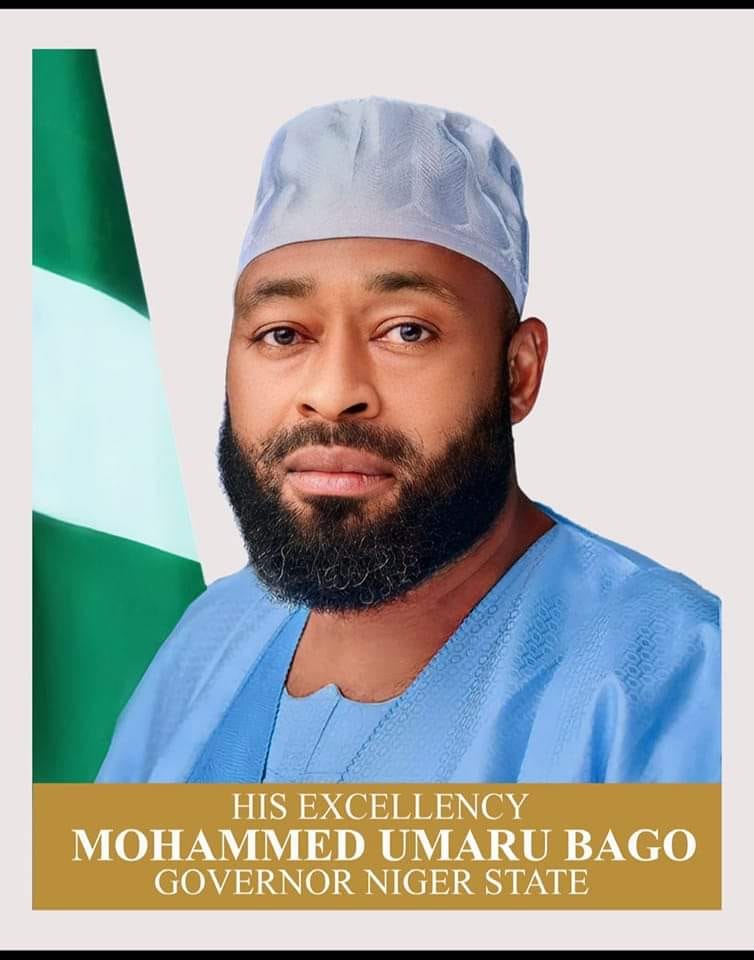
First Class Graduates: A letter to Gov. Mohammed Umar Bago

Your Excellency Sir,  

We, the Niger State First Class Graduates (NSFCG), extend our warm regards and seek your invaluable support for employment opportunities and scholarships to further our education. This appeal is made with great respect and the utmost desire to contribute meaningfully to the growth and development of Niger State under your leadership.

It is with great pride and inspiration that I assume the role of the pioneer chairman of NSFCG, especially during a time when you have ascended to the esteemed position as one of the youngest governors in Nigeria. This convergence is both emotional and motivational, serving as a beacon of hope for young intellectuals of Niger State like us, who aspire to follow in your footsteps with the necessary guidance, mentorship, and empowerment from our esteemed leaders. Congratulations on your well-deserved election and inauguration as the Executive Governor of Niger State. We extend our best wishes and prayers for your success in the formidable tasks of leadership and governance guided by divine wisdom. 

The NSFCG comprises First Class Graduates who hail from various universities and are proud indigenes of Niger State. Our membership spans nearly all of the 25 Local Government Areas, united by a common goal – to fulfil the high expectations society places on those who achieve the pinnacle of academic excellence through hard work, exemplary character, sacrifice, determination, and brilliance. As role models, we understand the responsibility that accompanies our achievements, and we aspire to make positive contributions to our society, guided by the values we hold dear. 

We express our concern that the absence of support for some of us, despite our exceptional merits and academic achievements, may inadvertently diminish the inspiration, value, and faith in education, determination, and hard work that our society needs. It is our belief that individuals like us should not be left without the necessary support but rather should be empowered to serve as beacons of excellence, motivating others to follow in our footsteps. 

Recognizing the need to address this disparity and utilize our potential for the betterment of Niger State, the NSFCG has taken the initiative to raise awareness about our current predicament. We are keenly aware of the profound impact we could make in contributing to the growth and development of our state, inspiring the public to remain steadfast in their pursuit of education, lofty aspirations, and unwavering determination. 

In this context, we note the remarkable strides made by other states, such as Kano under the leadership of Former Governor Rabiu Kwankwaso, who championed human capital development through substantial investments in foreign scholarships for first-class graduates, alongside Governor Nasir Elrufa’i of Kaduna State who witnessed infrastructural advancements through championing Urban Renewal policy and Kashim Ibrahim Fellowship (KIF) for most brilliant and outstanding graduates in the state. Permit me, Your Excellency Sir, to say that it is this visionary approach that distinguishes leaders and leaves an indelible mark on society. 

We also commend the Talba Program, an initiative that provided gainful employment for numerous unemployed youths in Niger State, leaving a lasting legacy of empowerment and transformation for beneficiaries and their families alike. 

Your Excellency Sir, as esteemed leaders with a genuine passion for the betterment of our state, we appeal for the following: 

1. Consideration for employment opportunities within the Niger State Government for the approximately 90+ first-class graduates hailing from almost all of the 25 LGAs who are currently unemployed. Our collective skill set can contribute to filling existing job vacancies and enhancing the effectiveness of newly established ministries. 

2. Financial support or scholarships to facilitate our further education within Nigeria or abroad, thereby enabling us to acquire knowledge and expertise that can be channelled back to benefit our state. 

3. Mentorship and guidance from accomplished professionals, enabling us to evolve into exemplary citizens of whom Niger State can be justifiably proud. We aspire to possess the high level of skills and competency necessary to add significant value to our state and extend our positive impact beyond its borders. 

Your Excellency Sir, we hold steadfast belief in your dedication to uplift the youth, enhance human and infrastructural development, and curtail the challenges of crime and insecurity. By considering our appeal, you will not only empower a group of exceptional individuals but also sow the seeds for a more prosperous and vibrant future for Niger State and its citizens. 

With profound respect and anticipation, we remain committed to working diligently for the betterment of our beloved state.

Yours sincerely, 

Mukhtar Nasir, CPM        

Chairman, Niger State First-Class Graduates (NSFCG). He can be reached via nigerstatefcg@gmail.com.

Prioritizing security in Zamfara State

By Dr Musab Isah Mafara

The security situation in Zamfara State demands immediate and resolute action from the state and the federal government of Nigeria. Security, undoubtedly, should be the topmost priority of any government, as it lays the foundation for meaningful development and progress. Regrettably, recent events and the ongoing spate of attacks across the state indicate that more substantial efforts are required to ensure the safety and well-being of the people.

The recent official recognition and recruitment of ‘Yan-Banga by the state government is a step in the right direction. This move acknowledges the need for additional security personnel to combat the rising wave of criminal activities. Furthermore, the swift response and the rescue of some of the kidnapped students of FUG two days ago is a testament to how the reaction time of the security apparatus in the state has improved. However, one may argue that a similar response has not been seen where the helpless victims were not students. And since we are yet to know the actual number of students kidnapped, it is not far-fetched to assume that some students may still be in captivity in addition to hundreds of Nigerians in the kidnappers’ dens in Zamfara state and beyond.

While we acknowledge that the government may be undertaking efforts behind the scenes, the prevailing situation demands a more visible and concerted response. The spate of attacks that continue to plague the state is a clear indication that there are still gaps in the security apparatus. It is imperative that the government takes swift and decisive action to bridge these gaps.

In his book, Wujubul Hijrah, Shehu Usmanu Danfodiyo discussed the need for a leader to prioritize security even if it means spending all the state resources to ensure the safety of his people. Shehu wrote:
وسيرة ائمة العدل في الفيء والخمس ان يبدا بالسد المخاوف والثغور واستعداد الات الحرب واعطاء المقاتلة فان فضل شيء فللقضاة والعمال وبنيان المساجد والقناطر ثم يفرق على الفقراء فان فضل شيء فالامام مخير بين تفرقته على الاغنياء وخبسه لنوائب الاسلام

(Words in square brackets [ ] are mine to further explain the points made)
“The history of just leaders as regards to [the wealth generated by the state through] fai’ and khumsi [two of the many means of generating income to the treasury of the state] is that the leader should start with fortifying the state [walling the cities, building garrisons, etc], procurement of armament, and paying the salaries/allowances of soldiers. If something remains [in the treasury after that] then the leader should pay the judges and civil servants, and build mosques and bridges [and by extension roads]. And then he distributes the wealth to the poor [this could mean direct cash transfer but also providing social amenities such as schools and hospitals]. If there is still money [in the treasury after all these expenses] then the leader is given the choice of distributing it to the rich or keeping it for a rainy day.”

The quoted text clearly shows the need to give absolute priority to security above all else in the running of a state. Financial investment in the security sector should be a priority, as it is an indispensable component of effective security measures. There is also a need for our security strategy to move from being reactive to attacks to being proactive and preventing attacks. So many villages have been attacked, so many students have been kidnapped that the next attack is a question of when not if. The security measures must also be sustained for the foreseeable future. What tends to happen is that every time a school is attacked, the security agencies become active in some flash points for some days only to let their guards down after a while, until we are taken by ‘surprise’ again by the bandits.

The time for decisive action is now. The people of Zamfara State deserve to live in an environment where their safety and security are guaranteed. The government must intensify efforts, allocate adequate resources, and collaborate with relevant stakeholders, especially the two ministers of defence, to fortify security across the state. Only by doing so can Zamfara State flourish, with meaningful development and progress becoming attainable goals.

Quick thoughts on the Kano State governorship election petition tribunal judgement

By  Rabiu Gama

I had the (dis)pleasure of reading the full judgement of the Kano State Governorship Election Petition Tribunal last night, which was delivered on Wednesday, October 20, 2023, via Zoom. Here are my humble thoughts on it.

By the way, I am writing this under the safe assumption that anyone who is reading this is quite familiar with the story behind the judgment. Nonetheless, clarity is important. So, for the sake of clarity, let me quickly state that APC is the Petitioner in this case, while INEC, Abba Kabir Yusuf (AKY) and NNPP are the First, Second and Third Respondents, respectively. Nasiru Yusuf Gawuna, APC’s candidate, was not a party in the suit. The Tribunal, relying on the provision of Section 133 (1) of the Electoral Act, 2022, and some judicial authorities, held, correctly in my opinion, that Gawuna must not be a party before the Tribunal.

As I see it, NNPP’s and AKY’s lawyers did a bad job. INEC’s lawyers did worse, though: INEC’s legal team failed miserably to prove that the election was conducted in compliance with the provisions of the Electoral Act, 2022 (the burden or onus of proof was on them in that regard) as alleged by the Petitioner (the APC). The First Respondent, i.e., INEC, made a terrible and costly mistake of relying lazily on the weaknesses of the Petitioner’s case. The cost of not doing the right thing at the right time is always high!

Since the outcome of an appeal largely, if not completely so, hinges on the proceedings of the lower court (the Tribunal in this case), then it is my humble opinion that NNPP’s (AKY’s) chances of winning at the Court of Appeal might not be as promising as many hope it to be. It shocked me that NNPP’s lawyers could not even establish that AKY was a legitimate member of the party when he contested the 18th of March Governorship Election. The Tribunal was benevolent enough to point out some ways that they could have followed to establish it, but they couldn’t.

I, however, failed to grasp or discern why the Tribunal refused to apply “the principle of margin of lead” when it went ahead to declare that APC’s candidate, Nasiru Gawuna, was the winner of the election even though it had already found and, in no uncertain terms, admitted that the number of cancellations was in hundreds of thousands while its final finding showed Nasiru Gawuna was leading with tens of thousands only. The Tribunal, in my humble opinion, should have ordered a re-run: based on that finding, the election was supposed to be declared “inconclusive”.

The Tribunal also seems to have disregarded the provision of Section 63(2) of the Electoral Act, 2022 when it invalidated over 165,000 votes that were cast in favour of NNPP/AKY for the reason that the ballot papers were neither signed nor stamped, in other words, the ballot papers did not carry the official mark that was prescribed by the commission (INEC). The said provision of the Electoral Act is to the effect that even if a ballot paper is not signed or stamped, the Presiding Officer of the concerned Polling Unit can go ahead and count the ballot paper as valid.

All in all, I find some of the reasonings and conclusions of the Tribunal, based on what was laid before it, legally sound. But the Tribunal’s failure to apply “the principle of margin of lead”, as well as its apparent disregard for the provision of Section 63(2) of the Electoral Act, 2022, do not sit well with me.

Even though it is trite that nobody knows for sure what a court of law will do, I will still strongly advise that AKY’s supporters (of which I am not ashamed to admit I am one) should manage their hopes regarding the chances of success in the Court of Appeal. This is because the odds seem frighteningly balanced. The scale might tilt in favour of any side.

The right thing to do right now is to pray for a “legal miracle” – whatever that means. Some miracle might happen, hopefully in the Court of Appeal, as the Supreme Court rarely tempers with the concurrent findings of the lower courts (the Tribunal and the Court of Appeal) unless those findings are glaringly perverse or have occasioned a miscarriage of justice.

Rabiu Gama is Law student. He writes from the Faculty of Law at Bayero University, Kano. He can be reached on 09061912994 or at rabiuinuwagama@gmail.com.

Policing: Safeguarding communities from internal threats

By Ammar Yakubu Sani

The role of police officers in maintaining law and order in a society cannot be overstated. They serve as essential guardians, working selflessly to protect citizens and ensure their safety. Recently, the police officers in Katagum Zone and its environs have displayed exemplary dedication and resourcefulness in tackling various internal security challenges, with commendable successes for their efforts.

One of the significant security concerns in the area has been the menace of motorcycle snatchers. These criminals, often operating with impunity, create fear and unrest within communities. However, the diligent work of the police has resulted in a significant reduction in motorcycle snatching incidents. Through strategic patrols, investigations, and targeted interventions, police officers have demonstrated their unwavering commitment to eradicating this criminal activity, giving residents a renewed sense of safety and security.

House robbery and murder strike the hearts of individuals and families. The police have been instrumental in curbing such incidents by implementing proactive measures and enhancing community engagement. Their rigorous investigative work and swift response to distress calls have brought perpetrators to justice and deterred potential criminals. The tireless dedication of police officers has undoubtedly contributed to a decrease in the occurrence of such alarming crimes.

Under the leadership of a newly posted Commissioner of Police, Auwal Musa Muhammad, a remarkable operation was undertaken against a notorious gang of kidnappers in the Ningi Local Government Area. This operation was a resounding success, resulting in apprehending the criminals and dismantling their hideouts. The Commissioner’s astute guidance, accompanied by the unwavering commitment and bravery of the police officers, demonstrated the effectiveness of well-coordinated efforts in combating heinous crimes and preserving the peace.

Equally notable is the recent elimination of kidnappers around Jama’are and Itas Gadau Local Government Areas of Katagum Zone. Through meticulous intelligence gathering, strategic planning, and relentless pursuit, the police managed to root out this criminal network. Their determined efforts have provided a glimmer of hope and relief to the residents of the area, reinforcing their faith in law enforcement and the potential for a safer environment.

These successes affirm the assertions made by Dr. Babangida Ruma regarding the restoration and maintenance of internal security under the authority of the police force. The achievements of the police officers in Bauchi State and its environs demonstrate their capability to tackle security challenges when provided with the necessary support and empowerment. The dedication, discipline, and professionalism displayed by these officers serve as an inspiration and testament to law enforcement’s critical role in safeguarding communities.

Efforts must be made to sustain this momentum by further empowering the police force. Adequate resources, modern technology, and regular training must be provided to effectively enhance their capacity to combat evolving threats. Moreover, fostering a strong partnership between the police and local communities is crucial to creating an environment where citizens actively collaborate with law enforcement agencies, resulting in more timely and accurate information sharing.

Citizens, community leaders, and policymakers need to recognise the remarkable achievements of the police force and support their endeavours to maintain law and order. By doing so, we can work collectively towards a society that thrives on security, justice, and harmony. The progress made by the police officers in Bauchi and the wider area serves as a beacon of hope, inspiring us to invest in strengthening our internal security mechanisms and forging an even safer nation.

Ammar Yakubu Sani wrote from Wambai Salihu Street, Dabar Makaho Azare, Bauchi State. He can be contacted via ammaryakubusani@gmail.com

The election tribunal verdict and the future of Kano politics

By Rukayya Abubakar Othman

In the last few years, Kano State has been plagued by a seemingly endless and unabated fierce political war that has divided the state and truncated its progress. The two principal political empires, the Kwankwasiyya and the Gandujiyya have polarised the people of Kano along two opposing camps, each calling for the head of the other.

It is difficult for any state or country to develop under an unstable and tumultuous political climate. Kano’s experience over the past years is a case in point. The incessant strife between the Kwankwasiyya adherents and the Ganduje’s followers has created a hostile environment for economic growth and social progress.

The recent election tribunal court verdict in Kano has further opened another dimension to the whole gamut of issues. The Kwankwasiyya adherents are questioning the true meaning and concept of independence of the Judiciary.

Will those who massively voted for NNPP accept the verdict of our courts in good faith? Will it further deepen confrontational politics in Kano? The answers to these questions can only be found in the upcoming Court of Appeal and the Supreme Court judgments.

More tellingly, the recent trend will no doubt tragically change the course of Kano politics. If the governorship polls in Kano are taken out of the general election, it will become like Imo, Edo, and Ondo states, where the governorship elections are held on different dates from the general election. This will have a multiplier effect on the political landscape of Kano, considering the central role that the state plays in the region.

The political leaders in Kano must put the state’s interests first and work together to resolve their differences. The people of Kano have suffered enough from the political instability in the state. It is time for politicians to put their differences aside and work for the good of the people.

Lastly, the recent court verdict in Kano has opened up a new dimension to the already turbulent political landscape of the state. It is difficult to predict the long-term impact of the ruling, but it will significantly impact the future of Kano politics.

The political leaders in Kano must put the state’s interests first and work together to resolve their differences. The people of Kano have suffered enough from the political instability in the state. It is time for politicians to put their differences aside and work for the good of the people.

Rukayya Abubakar Othman wrote via othmanrukayya0@gmail.com.

Kano guber tribunal judgement: An eyewitness account

By Muhammad Shamsuddeen

On the first ground, which alleges that Engr. Abba Kabir Yusuf was not qualified to contest the election because his name was not submitted by the party 30 days before the primary election. The tribunal accepted the respondent’s contention in their preliminary objection to the effect that this ground is an internal affair of the party and mainly a pre-election matter in respect of which the tribunal has no jurisdiction.

The court then proceeded to hold that even if the evidence before the court proves the failure to submit the name as alleged by the petitioners, the court had no power to make pronouncement in that respect. Consequently, the ground was struck out for want of jurisdiction.

The second ground is that the election was invalid by reason of non-compliance with the provisions of the Electoral Act 2022 in over 300 polling units. To prove this case, the petitioners called only 31 witnesses, 30 among whom are Polling Unit agents of only 30 of the affected Polling Units. The law, as held in a plethora of authorities, is that to prove noncompliance in several Polling Units, the petitioner is under a duty to call witnesses from each of the Polling Units who saw the noncompliance first-hand.

Despite the reiteration of the above provisions in Obi v INEC and Atiku v INEC, the Kano tribunal shut its eyes against the doctrine of judicial precedent and held that it would rely on the documents dumped on the court, investigate the same at its Chambers and made findings in respect thereto.

The court, on its own, analysed the documents and held that all the Polling Units in respect of which the petitioner complained must be cancelled, and the number of PVCs collected in the Polling Units is 231,843. The tribunal, instead of making a pronouncement of inconclusive, considering that the margin between the candidates is less than 231,843, just kept quiet on that.

It should be noted that the tribunal did not advert its mind to the foundational position of the law of ‘he who asserts must prove’ and went ahead to believe that whatever was presented before it by APC was true and need not be validated by credible witnesses. The greatest error is from the tribunal’s determination of ground 3 of the petition, which alleges that the 2nd respondent was not elected by valid lawful votes at the election.

The petitioner’s contention here was that there were several ballot papers that were not stamped, signed or dated, for which reason they alleged that the votes were invalid. As a preliminary point, it should be noted that the petitioners did not plead the number of ballots affected by the alleged non-compliance. The law is that parties are bound by their pleadings.

Section 63 of the Electoral Act provides that; “(1) Subject to subsection (2), a ballot paper which does not bear official mark prescribed by the Commission shall not be counted. (2) If the returning officer is satisfied that a ballot paper which does not bear the official mark was from a book of ballot papers which was furnished to the presiding officer of the polling unit in which the vote was cast for use at the election in question, he or she shall, notwithstanding the absence of the official mark, count that ballot paper.”

The petitioners called only one Dr Harbau, who alleged that he is an expert and that he analysed the ballot papers and discovered that they were unsigned, undated, unstamped or affected by a combination of two or more of these. However, the written statement on oath of this witness was filed long after the hearing had commenced, and not along with the petition as mandated by the Electoral Act and the case of Obi v Inec decided 2 weeks ago.

Instead of discountenancing the oath of the witness, the court believed him line, hook and sinker. There is no evidence from the Petitioner that any of the ballot papers were rejected by the respective presiding officers or the collation officers. There is, therefore, the presumption that they were believed by the officials as having emanated from INEC.

Similarly, in Boni v Muazu (2004) 16 NWLR PT. 900, the Court of Appeal held that to prove ballot votes stuffing, it is the duty of the petitioners not only to produce the ballot papers allegedly stuffed, they must also produce the particular ballot boxes in which the ballots were stuffed, and same must be demonstrated before the court by bringing out the ballot papers from the boxes and counting them before the court to establish the claim. This did not happen.

The court still went ahead to unilaterally cancel the votes, namely 165,763 belonging to the 2nd respondent. With this cancellation, the margin between the parties is 36,766, with Gawuna leading. However, since the court earlier held that the number of collected PVCs in the cancelled polling units is 231,843, the only conclusion is to declare the election inconclusive. The court shut its eyes to this legal position and declared Gawuna, who is not a party in the proceedings, a winner of the election.

In the determination of grounds 2 and 3 of the petition, the tribunal refused to follow the precedent in Obi v INEC, Atiku v INEC, AYETOLA V INEC, BONI V MUAZU and several other decisions decided by the superior court. This decision is indeed one of a kind!

Muhammad Shamsuddeen is a legal practitioner based in Kano.

Our words have the power to build or break our marriages

By Aisha M. Auyo

In my last article, I wrote about how verbal appreciation affects marriage. In this episode, I will discuss how our words have the power to build or break our marriages. Words are not just for communication; they are for construction and destruction.

We are builders when we use our words wisely. With our words, we are creating a marriage that matters, a union that makes it through the good and bad, through thick and thin.

Here are a few things that you can build with your words in marriage

1. Intimacy

Intimacy is not just something physical. Share your heart with your spouse. Cultivating a marriage with meaningful communication will build deeper intimacy. 

Words move two hearts closer together and unite them as one. 

Dear wife, be patient with your husband – we all know men generally don’t talk as much… They are people of action.

Allah didn’t create marriage to be boring! Have fun for His sakes! From sending a naughty text during the day, a random phone call with words that will make your spouse want to finish whatever they are doing and come home to using words that will build anticipation.

Simple sentences like “I made your favourite dish” or “I’ll come home with your favourite smoothie” can do the trick. It is not the entity that matters. It’s about knowing that your Significant Other has thought about you and even tried to do what pleases you.

When you are together, set aside time for just the two of you to talk. Be intentional and selective with your words. Flirt with one another.

2. Build encouragement

Wives, one of the best things YOU can do for your relationship is to be an encourager. Encouragement can come naturally through sincere daily prayers. Through voicing delight in whatever is done or given to you, through words of gratitude. This will make him want to do more.

Men, women are highly receptive to words. Simple sentences could fuel her attitude for years. The phrase “Allah yai miki albarka” (We want this very badly), or “We can’t do without you”, is all she needs to hear to be her very best.

3. Build confidence

Life is hard, full of tough and sobering reminders that we live in a broken world. So, use your words to encourage and build hope in your spouse. 

Tell them you believe in them and trust their ability to excel. In a world full of competition, envy, and self-doubt, be the number one person who believes your spouse, uplift them, and make them trust themselves. From writing exams, presentations, business ideas, etc. Instil the seed of belief and confidence in them.

Men, please encourage your wife and boost her confidence in her looks and dreams. We need this like oxygen. With your support and trust, we can be the best version of ourselves.

Women, showing doubt in your man’s ability or dreams will kill his ego. His zeal to work hard, his zeal to excel. If there’s one thing that keeps men alive more than oxygen, it should be a massaged ego.

4. Heal

Words heal broken people, sick people, tired people, people who lost loved ones, even people in coma! I’m sure you’ve watched a movie where friends or families of a person in life support talk and say good things to them, and with time, the person in a coma comes back to life. This works not only in movies but also in real life. 

Soothing words for a broken person can help their physical and mental recovery immensely. Hearing someone say that they care about you, believe in your ability to heal, or that life will get better is often enough to improve someone’s mood in their lows.

Life-changing events, sickness, ailment, etc., can affect one spouse or the other. Be the person who brings harmony and healing to your spouse through words. Make it a point to say something positive to your significant other, even once a day.

However, let us always remember that our words can cripple, destroy and disrupt as much as they can build and construct. Verbal abuse is as powerful and destructive as physical abuse. It’s not every time we say what we feel. Most times (Not always woo), silence is better than some utterances. 

Avoid any word that will bring negativity, fear, or discouragement to your spouse. Never threaten or demean your spouse. If an issue needs to be resolved, choose your words wisely.

Know that words, once spoken out, can never be taken aback. The words ‘I’m sorry’, ‘I don’t mean it,’ and ‘it was a joke’ can never undo what you said. Some words create wounds that apology will never heal.

Aisha Musa Auyo is a Doctorate researcher in Educational Psychology, a wife, a mother of three, a homemaker, a caterer and a parenting/ relationship coach.