Entertainment

You can add some category description here.

Arsenal’s Premier League title challenge: A glass half full or half empty?

By Aliyu Yakubu Yusuf

At the beginning of every league season in Europe, football pundits look at the strengths and weaknesses of every team and make predictions on what they think will be the outcome and the position of every team at the end of the season. These pundits predict the likely winners of the league, the top 4 places, the relegated teams, the top scorer, the best player, the best goalkeeper, the best young player, the dark horses and so on.

I have followed these predictions on nearly all the major British tabloids like BBC, Daily Mail, GiveMeSports, Telegraph, Guardian, Athletic, etc. I did not come across a single pundit that predicted Arsenal to finish in the top 3 in the EPL. Most pundits earmarked Arsenal for the sixth position below Manchester City, Liverpool, Chelsea, Tottenham and Manchester United. In fact, some pundits went as far as predicting Arsenal to finish in the seventh spot below Newcastle United.

Looking at Arsenal’s title challenge from this context, it can be argued that Arsenal have punched well above their weight. By finishing second in the league, the Gunners have overachieved relative to everyone’s expectations at the beginning of the season. I have no doubt that most Arsenal fans who are now disgruntled would have indeed accepted the second position gleefully were it offered at the beginning of the season.

Arsenal’s squad is full of players in their mid or early twenties. Most of these players have never experienced a title race in their careers. The current disappointment may serve as a learning curve for Arsenal players. With Saka, Jesus, Odegaard, Martinelli, White, Ramsdale, Saliba, White, Smith-Rowe, and Gabriel approaching their primes, the future certainly looks bright in the red half of North London. A glass half full.

For the 36 weeks so far played in the EPL, Arsenal led the table for 29 weeks. In other words, the Gunners sat at the top of the table for more than 90% person of the matches played. And having led the EPL table for so long, it must be quite disheartening for the Gooners to lose the title in this disappointing fashion.

At a time, Arsenal appeared to be running away with the EPL trophy. However, most Arsenal fans will remember when their team seemed not to put a foot wrong when everything Mikel Arteta touched turned into gold. Thus, it must be heart-breaking to “bottle” everything when victory looks so tantalisingly close.

This season represents a golden opportunity for Arsenal to slap their 19-year wait for the EPL title. Considering their lofty standards, Manchester City were relatively poor for most of the season. Save for the last two months, Liverpool were having one of their worst seasons in recent memory. Chelsea were having a season from hell. Manchester United were in their usual shambles, though the coming of Erik Ten Hag has brought some semblance of calm. Spurs are just…well, ‘spursy’.

Looking at the whole picture, most of the EPL big boys were largely underwhelming for most of the season. It is difficult to imagine Liverpool and Chelsea having another miserable campaign next season for the Gunners to capitalise on. Therefore, this might just be a good opportunity missed. As I said earlier, most of Arsenal’s crop of young players have performed tremendously this season. This may spell trouble for the Gooners in the near or distant future.

Arsenal have grown a reputation of selling their best players just when they appear to hit their peak. Players like Fabregas, Nasri, Van Persie, Adebayor, Hleb, Toure etc., were all forced to leave Arsenal to realise their dreams of winning the big trophies. Will the current Arsenal players resist the temptation if (or when) big boys come calling? The vultures come circling. And this may well be another Groundhog Day for Arsenal. A glass half empty.

Aliyu wrote from Kano. He can be reached via aliyuyy@gmail.com.

It’s all to play for at the Etihad Stadium

By Aliyu Yakubu Yusuf

Real Madrid and Manchester City played quite an entertaining one-all draw at the Estadio Santiago Bernabeu. The much went as much as I expected it, with Manchester City dominating the possession, trying to dictate the tempo of the game and Real Madrid pressing the City players, trying to disrupt their rhythm and attacking at full pace through the electric Vinicius Jnr and the young prodigy, Rodrygo Goes.

That was the pattern for much of the game. Real Madrid will be a bit disappointed for not registering a win (no matter how slender) ahead of the second leg next week. Of course, it’s easy to criticise Guardiola for settling for a draw. But come on! We are talking about a FIRST LEG of a UEFA Champions League semi-final. Do you seriously expect any serious coach to attack Real Madrid all guns blazing and risk getting hammered via counter attack?

True, Manchester City players looked tired and disjointed in the closing stages of the game. I expected Guardiola to introduce Mahrez, Alvarez and/or Foden in place of largely ineffectual Bernardo and Grealish. But do I think I know better than Pep Guardiola?

This game can still go either way. Expect that when you are playing against Real Madrid in the UCL. However, from the result of the first leg, Manchester City will be the happier side. They played largely well below their capabilities (thanks to Real Madrid’s game plan and management) and still came out of the mighty Santiago Bernabeu unscathed.

On for the second leg!

Aliyu Yakubu Yusuf wrote from Kano and can be reached via aliyuyy@gmail.com.

The Origins of the Onomatopoeic Intertextuality of Hausa Popular Culture

By Prof. Abdalla Uba Adamu

His name was Tijjani, and nicknamed Ma’aslam. He mainly lived in the Sabon Sara ward, Kano city, but was a common sight along the Mandawari junction to Kasuwar Kurmi corridor in the 1960s.

Everyone considered him nuts. Apparently, he built a single-storey building without stairs to access the upper floor. He did not think a door was necessary for any structure either, so the building had no doors. He simply jumped up to the upper floor at night and jumped down in the morning. It was enough for the ward head to report him to the Jakara magistrate for him to be locked up on insanity charges.

During the hearing, he was given a basket to fetch water. He simply laughed at the judge, informing him that only a madman would attempt to fetch water in a basket. The judge threw the case out, declaring him perfectly rational. He may be nuts – although eccentric was more apt to describe his behaviour. But then, it takes a certain amount of nuttiness to be an innovator. And he was an innovator.

As children – and I am talking 1960s inner city Kano – we simply referred to him as Ma’aslam. He, I would argue, planted the seeds of onomatopoeic intertextuality in Hausa popular culture, at least in Kano. This was the process of picking up an element of popular culture, say, a song, converting it side-by-side into a different language (intertextual), using ‘sound-alike’ of the original (which is onomatopoeia) into a new one. A quick example was the Bob Marley hook:

Get up, stand up,

Stand up for your rights

Sadi Sidi Sharifai, a Kano onomatopoeic superstar, converted this to:

Jallof, Jallof,

Jallop, sai da rice

Try singing both the original and Sadi’s interpretation, and you have become an onomatopoeic star yourself!

In 1967, the American super soul star James Brown & the Famous Flames recorded the stunning live double album of their concert at the Apollo Theatre in New York. It was, perhaps unimaginatively enough, titled, ‘Live at Apollo.’ A standout track on the album was ‘I Feel Alright’. Its choral hook was:

‘Hey, hey, I feel alright

One time, uh!’

The album of the concert was released on 16th August 1968. I was 12 years old then, and still now, totally wired in music, complete with a Ukulele guitar, given to me by David Hofstad (author of Tabarmar Kunya play). My Dad, an avid music lover, noting my attachment to the song which was played on the radio, simply bought the double album for me at Musa Zamani Record store in Fagge (are there any old codgers who remember this record store?). I played it to death on the old Grundig music player we had then.

Back to Tijjani Ma’aslam. With his eccentric behaviour categorising him as loony, Ma’aslam started reciting the ‘Dalailul Khairat’, a celebrated manual of salutations upon the Prophet Muhammad (SAW), written by Muhammad ibn Sulayman al-Jazuli in 15th century Morocco. What was unique about Ma’aslam’s open-air recitation, however, was that he adopted the James Brown meter in the song, ‘I Feel Alright’, as his chorus. His rendition of the hook for his recitation of the Dalai’lu was:

Mujibun, Mujabun,

Afiyan, Afuyan,

Rasulillahi

Ahlan wa Sahlan

Rasulillahi

This was accompanied by James Brown’s dance moves (shown on Television’s Soul Train, which was available in a few houses that he might have access to). Maybe he was not reciting the salutations in their structured order, but at least his verses were discernible, as the Dalai’lu itself was recited in a song form by many reciters in Kano. What he did, and did it differently, was using a foreign music meter to make it more accessible. This formula was to be adopted by the Ushaqu Indiya group of devotional singers in the city of Kano (actually along the same neighbourhood as Tijjani Ma’aslam). More of this in subsequent articles/posts.

Tijjani Ma’aslam’s delivery mode was intertextually onomatopoeic to ‘Hey, hey, I feel alright’. The chorus was ‘Rasulillahi’. Ma’aslam was usually followed by a gaggle of kids echoing the chorus while he merrily led the way, clapping his hands, dancing and reciting the names of the Prophet from the Dalai’lu. Elders were bemused at the spectacle and simply labelled Ma’aslam crazy. He might have been. He certainly was not following the sequencing of the Salawat from the book. But his performances opened a door.

Up the road from his haunt and covering the same zone was the Palace cinema. This was built and completed in 1951 and opened in 1952. Palace cinema became an instant hit with the youth, closeted in the city and without any visible means of night-time entertainment. Before its opening, and still a carryover from the World War II years (1939 to 1945), a curfew used to be imposed on city residents at 8.00 p.m. With the relaxation of the curfew, the few neighbourhood plazas (dandali) that offer games for youth (both boys and girls) were no match for the sheer spectacle of a massive screen accompanied by loud music. The predominant films shown in the cinema were cowboy or mainstream European films. However, after independence in October 1960, Indian films started to be shown from November 1960 in Kano cinemas. Early films screened included Cenghiz Khan, Jaal, Sangeeta, Raaste Ka Patthar, Waqt, Amar Deep, Rani Rupmati, Dharmatama, Dost, Nagin and thousands of others. The one that caught massive imagination in Kano’s inner city, however, was Rani Rupmati, originally released in India in 1957 but only found its way to Kano cinemas in the 1960s.

Like all Indian films, at least from what the industry refers to as Bollywood, Rani Rupmati had a lot of songs – in fact, its overall screenplay is based on two people united by their love of music. However, two songs from the film caught Kano’s inner city imagination, ‘Itihaas Agar Likhna Chaho’ and ‘Phool Bagiya Mein Bulbul Bole.’ Interestingly, there was no choreographic dancing in these two songs, unusual for general Bollywood films but typical of earlier, more historical and artistic ones.

The first, ‘Itihaas’, sung by Lata Mangeshkar, has a great hook that, thanks to Tijjani Ma’aslam, became domesticated by kids along his sphere of influence and Palace cinema zone. It goes something like this:

Itihaas agar likhana chaho /

Itihaas agar likhana chaho /

Azaadi ke mazmoon se /

To seencho apni dharti ko /

Veeroon tum upne khoon se /

Har har har Mahadev /

Allaho Akubar /

Har har har Mahadev /

Allaho Akubar /

Sung within the backdrop of a band of warriors getting ready to go into a battle, led by a woman (the titular Rani Rupmati), it certainly gave the picture of a woman more enlightening than what was both the Hausa and Indians are used to. The film itself endeared itself to Hausa through the modesty of the women – shy drooping kohl-enhanced eyes with long blinking lashes, fully clothed (even the swimming scene shows the singers fully clothed in the river), with sari that resembles Hausa wrapper (zani), lots of jewellery, and stunning beauty. A Hausa common saying of the period was, ‘Allah, kai ni Indiya ko a buhun barkono’/God, let me visit India even in a sack of pepper. That was how besotted Hausa youth were to the beautiful Indian women seen on the screen, giving a false impression that every single Indian woman is beautiful.

Hausa youth, inspired by Tijani Ma’aslam, quickly domesticated the chorus of the song as:

Ina su cibayyo ina sarki / where are the warriors, where the is king?

Ina su waziri abin banza / And the useless vizier?

Mun je yaƙi mun dawo / we have return from the war

Mun samo sandan girma / and we were victorious

Har har har Mahadi / hail, hail the reformer

Allahu Akbar / Allah is the Greatest

Har har har Mahadi / hail, hail the reformer

Allahu Akbar / Allah is the Greatest

In an interesting case of lyrical substitution, the Hausa intertextual transcription captured the scene of the song as shown in the film, if not the actual meaning of the words. Loosely translated, the original verse was urging warriors to defend their land with their lives and become part of history. The chorus translates as ‘Let each of us sacrifice ourselves to Mahadev’.

While Mahadev was a reference to the Indian deity, Shiva, this pantheistic line was followed by a monotheistic reference to Allah, the Supreme Being in Islam. Thus, two contrasting religious sentiments were expressed in the song. It was likely that S. N. Tripathi, who directed the film and composed the music, introduced the chorus to attract both Hindu and Muslim audiences. After all, while Rani was a Hindu, her love interest in the film, Baaz Bahadur, was a Muslim. The expression, however, has since then been used as a slogan of communal harmony between often warring Hindu and Muslim communities in India.

But more stunningly, the Hausa version substituted the word ‘Mahadev’ with ‘Mahadi’. The Hausa heard ‘Mahadi’ (guided one), not ‘’Mahadev’, which worked perfectly well. Substituting Mahadev for Mahadi Islamized the song, as it were. In Islamic eschatology, Mahdi is a messianic deliverer who will fill the earth with justice and equity, restore true religion, and usher in a short golden age lasting seven, eight, or nine years before the end of the world.

The second song from the film, ‘Phool Bagiya Mein Bulbul Bole’ (also sung by Lata Mangeshkar, with Mohammed Rafi), also inspired onomatopoeic intertextually but further afield from Kano and bizarrely entered into Hausa urban legend of the 1960s. Its first verse goes something like this:

Phul bagiya me bulbul bole /

Daal pe bole koyaliya

Pyaar karo /

Pyaar karo rut pyaar ki aayi re /

Bhanwaro se kahati hain kaliya /

Ho ji ho ho ji ho ho ji ho /

Ho ji ho /

What Hausa youth heard in the choral refrain was ‘Hotiho’, not ‘Hojiho’, and in the film Rani Rupmati, the lady (played by Nirupa Roy) came to be referred to as Hotiho. The Hausa griot, Mamman Shata (d. 1999) popularised the word (which has no particular meaning) in his song, Mallam Sidi, ‘Mijin Hotiho’/Mallam Sidi, Hotiho’s husband.

In the film, there was no marriage between Rani and Baaz Bahadur because she said she was ‘married to her music’, despite living with him after running away from home to avoid death from a chalice of poison given to her by her father to avoid the shame of her rejecting a chosen husband. In all their dialogues, Rupmati and Baaz Bahadur stress their shared love for music, not their love for each other. So, Shata did not accurately describe the relationship in the film. However, such deep film analysis is not important to the transnational interpretation of Shata of Baaz Bahadur as a signature tune for a hen-pecked husband. Shata’s interpretation of the actor who played Rani’s lover was certainly in order as he was effeminate and obsessed with music rather than empire building, despite being heir to a throne. It was even Rani who led their army into war. He was wounded in the battle and ran away.

Another Hausa griot, Ali Makaho (d. 1984), known famously for his anti-drug song, ‘Mandula’, briefly referenced Rani Rupmati in another of his songs.

Za ni Kano / I’m going to Kano

Za ni Kaduna / I’m going to Kaduna

Mu je Katsina lau za ni Ilori / Let’s go to Katsina and Ilorin

Na je Anacha / I will go Onitsha

Ni ban san kin zo ba / I didn’t know you had arrived

Da na san kin zo ne / If I had known you have arrived

Da na saya miki farfesu / I ‘d have bought you [pot of] pepper soup

Hitoho hotiho /

Hotiho hotiho /

With a comedy skit thrown in, Ali Makaho’s rendering uses Phoolbagiya’s meter to narrate a series of anticipated travels over northern Nigeria. As an intertextual comedy, it worked and remained of his most memorable skits.

A third Hausa griot to adapt a song from Rani Rupmati was Abdu Yaron Goge, who played the goge (a large fiddle played with a bow). Abdu picked ‘Raat Suhani’ from the film for his adaptation. Since, unlike the other griots who used the elements of the songs from the film, Abdul was a musician, he used two approaches – first was rendering the symphonic structure of the opening bars of the actual composition, Raat and playing it on his fiddle, then secondly, he onomatopoeically appropriated Mangeshkar’s lyrics as Hausa version. The original lyrics were as follows:

Raati Suhani /

djoome javani /

Dil hai deevana hai /

Tereliye /

Tereliye /

These lines were pure expressions of love the protagonist has for her lover, especially ‘in the beauty of the night’ [raati Suhani]. Abdu Yaron Goge’s rendition was as follows:

Mu gode Allah, Taro / We should thank Allah, people

Mu gode Allah, Taro / We should thank Allah, people

[These lines vocalized the opening bars of Raat]

Duniya da daɗi /This world is nice

Lahira da daɗi / The hereafter is nice

In da gaskiyar ka / If you are truthful

Lahira da daɗi / The hereafter remains nice

In babu gaskiyar ka / If you are untruthful

Lahira da zafi / The hereafter is blazing

Thus, in a single verse (which he kept repeating over and over till the end of the performance), Abdul Yaron Goge borrowed a popular musical motif from another culture and domesticated it to Hausa entertainment. At the same time, he delivered a message totally different from the original meaning.

There were, of course, many other onomatopoeic intertextual interpretations of Indian film songs, but the three songs from Rani Rupmati, predated by Tijjani Ma’aslam’s innovative use of foreign motifs, were the definitive pioneers in music. In Literature, look towards Abubakar Imam and Magana Jari Ce. The intertextual origins of Hausa arts, of course, started in the 1930s; but its migration to music was certainly in the 1960s. It spawned a Hausa Cinema industry which was labeled ‘Kanywood’ in 1999, a few years before the term ‘Nollywood’ to refer to the Nigerian English language cinema, was created.

On a final note, Nazeer Abdullahi Magoga, a Kano ‘Indian’ (who speaks the language fluently, to the shock of BBC Delhi, who sent a crew to interview him in Kano, in Hindi) composed a song for the Centre for Hausa Cultural Studies, Kano which I was heading, but which I had to pause due to lack of funding. He used the Raat Suhani meter and used both Hausa and Hindi lyrics in his wonderfully beautiful tribute to the Centre. A link to the song on YouTube is given below. To really appreciate Nazeeru’s performance, listen to the original Raat Suhani from the film Rani Rupmati, also provided in a link.

Cibiyar Nazarin Al’adun Hausa by Nazeer Magoga [Raat Suhani template]

https://bit.ly/3LXTrMK

Raat Suhani, from the film, Rani Rupmati (1957)

https://bit.ly/42eTuJF

Shocking: PSG suspend Messi

By Muhammadu Sabiu
 
Paris Saint-Germain have reportedly suspended Lionel Messi with immediate effect following his unauthorised trip to Saudi Arabia this week.
 
According to veteran football journalist Fabrizio Romano, the suspension begins now and will take effect for the next two weeks.
 
This means that the seven-time Ballon d’Or winner will not play for the French side if things go as planned.
 
“Leo Messi’s side now still waiting on the official communication from PSG in order to clarify the situation,” Fabrizio Romano wrote on his official Facebook page.

Notes on “Manyan Mata” series

By Abdullahi Haruna Kandash

In my opinion, Mayan Mata is one of the best series, if not the best movie ever produced in Kannywood. The movie portrays the vicious circle of poverty, a retinue of marriages, the mutilation of pregnant women and how children in society are raised with no regard for their futures.

Sadik Sani Sadik thinks nothing a man should be ashamed of if he bullies his wife. In the series, his pregnant wife faces a crisis despite her pregnancy. Unfortunately, they lost the child by miscarriage. Jamila Nagudu experiences petty humiliation after her one and only child is taken to Almajiranci. Daso’s son is a nasty disciple, too, a spoiled one. He was taken to Almajiranci when he was a child. He follows the gang and gets spoiled.

The movie portrays what really sabotages relationships, couples and children’s futures. The best part of this movie tells us that there are people in society with more clout who show no concern for other children and other women whose lives have been shattered by the cruelty of their spouses. I became truly interested in the movie after I watched some episodes. And I have seen many things that happen in real life portrayed in the movie. The director has done a wonderful job.

Kannywood should continue to bring cultural identities into its movies. The director also depicts literature, art and culture in the movie, and all these can be vividly seen in the different scenes of the film. Literature, art and culture are not something we can simply despise. They are like the air we breathe. And If we cut them off, the whole world will suffer.

Literature has enormously helped so many movies to gather an audience because of its literariness. Manyan Mata pictures exactly what is happening in our communities nowadays. It shows how parents treat their children with contempt. The director shows us how our societies are sliding backwards and experiencing immaturity.

But the best part of it, however, is that it teaches us how to understand the beauty of humanity, that everyone’s life matters.

Fati Washa experiences a worst-case scenario with her deceased mother’s co-wife. After watching the scene where her mother’s co-wife was trying to burn her schoolbooks rudely, I sensed that the movie is trying to tell us that societies that achieve better prosperities are those where huge investments are made in education. These are societies where every child is allowed to go to school to learn. This part also attempts to show us that every child should have access to education so that just and egalitarian societies can be built.

I hope the director will continue to fight inequality and bring sameness because that is what brings safety, security and a sense of belonging among people.

Grass to Grace: Lessons in Ronaldo’s rise to stardom

By ImamMalik Abdullahi Kaga

“From the small island of Madeira to the bright lights of Manchester, Cristiano Ronaldo’s journey was one of hard work and relentless dedication” — Peter Drury.

“Madiera, Manchester, Madrid, Turin and Manchester again” — Peter Drury.

Cristiano Ronaldo needs no introduction in the footballing world and beyond. He is one of the greatest football players in history and a complete inspiration for millions worldwide. But many people need to learn the story behind Ronaldo’s rise to success.

Born in Funchal, Madeira, a remote island in Portugal, Ronaldo grew up impoverished. His family was not wealthy; his father worked as a kit man at a local football club. Yet, despite his challenges, Ronaldo’s passion for the game was strong, and he started playing football at a tender age.

After showcasing promise as a young player, Ronaldo joined the youth academy of a local club, Andorinha, when he was only eight years old. Even as a young player, he showed promise, and at the age of 12, he caught the eye of a scout from Sporting CP, one of Portugal’s top clubs. But convincing his family to let him go was difficult, and his father encouraged him to train harder and pursue his passion.

At Sporting, Ronaldo worked very hard to turn his dreams comes reality, and soon he became a star player. He debuted in the Sporting first team when he was a teenager, precisely 17 years old, and his performances caught the eye of scouts from some of Europe’s biggest clubs. Eventually, in 2003, he signed for Manchester United, one of the biggest clubs in the world at the time he signed for them where he made his footballing Godfather– Sir Alex Ferguson.

Ronaldo’s time at Manchester United was a turning point in his career. Although his first season was tough, he improved every year, and his talent and hard work were soon impossible to ignore. He played a crucial role in helping Manchester United win three Premier League titles, one FA Cup, and one UEFA Champions League trophy.

Ronaldo signed for Real Madrid for a world-record transfer fee of €94 million in 2009. But despite the astronomical transfer fee, Ronaldo’s performances continued to improve, and he emerged as one of the best players in the world. He won four UEFA Champions League titles and two La Liga titles with Real Madrid. He became one of the club’s greatest players in history before he departed to the Italian giant, Juventus.

Cristiano Ronaldo’s move to Juventus in 2018 surprised many football fans, as he was widely regarded as the face of Real Madrid. However, he quickly proved his worth at Juventus, becoming the talisman for the team as they won their eighth consecutive Serie A title.

In his first season at the club, Ronaldo scored 28 goals in all competitions, and his performances helped Juventus reach the quarter-finals of the UEFA Champions League. Despite a disappointing exit from the competition, Ronaldo’s impact on the team was evident as they continued to dominate domestically. He has since become a fan favourite, and his incredible work ethic and dedication to the sport have earned him the respect and admiration of fans across the globe.

In 2021, Cristiano Ronaldo returned to his former club, Manchester United, after spending several years with Real Madrid and Juventus. The announcement of his return to Old Trafford was met with waves of excitement from United fans, who remembered the impact he made during his first stint with the club. Ronaldo’s arrival brought a sense of renewed optimism to United, and many believed that he would be the key to helping the team win their first Premier League title since 2013.

Ronaldo’s return to Old Trafford was nothing short of spectacular. In his first game back, he scored two goals against Newcastle United, and his performances throughout the season were consistently excellent. However, United’s decision to sell him to Al-Hilal, a Saudi Arabian team, after the 2022 World Cup shocked many fans, who believed that the club should have done everything possible to keep him.

Ronaldo’s transfer to Al Nasar marked the end of an era for Manchester United. Although many fans were disappointed to see him leave, they knew that it was a decision that he had made for personal reasons, and they wished him all the best in his future endeavours. Despite his departure, Ronaldo’s legacy at Old Trafford will live on, and his return to the club will always be remembered as one of the most exciting moments in United’s history.

Today, Ronaldo is a global icon, a game legend, and a role model for millions of people worldwide. He has worked hard to overcome life’s challenges, and his dedication and hard work have paid off. His journey from poverty to sporting superstardom inspires all who aspire to greatness.

In conclusion, Cristiano Ronaldo’s story is a story of passion, talent, determination, and hard work. It is a story that teaches us that success is possible if we believe in ourselves and are willing to work hard to achieve our dreams. Cristiano Ronaldo’s journey from poverty to the world’s biggest sports star is remarkable, and his legacy will continue to inspire generations.

Imammalik Abdullahi Kaga writes from Borno State University.

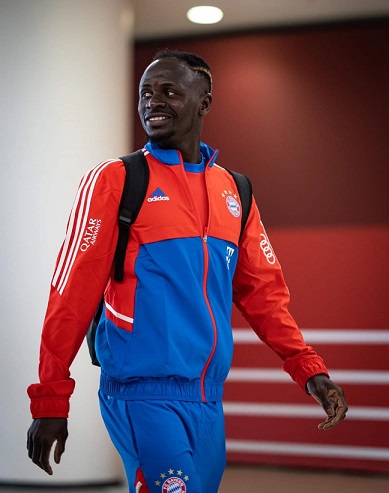
Bayern suspend Mané for punching Sané

By Muhammadu Sabiu 

Bayern Munich have suspended Sadio Mané after he punched his teammate Leroy Sane.

Following Bayern’s 3-0 loss to Manchester City on Tuesday night, Mane and Sane got into an argument in the dressing room.

The Senegalese international confronted Sane after the game because he was upset with how Sane treated him on the pitch.

He lost his cool and hit Sane in the face, leaving him with a bloody lip.

The suspension, according to reports, is until further notice.

A crack on Hadiza Gabon’s wall: Humanizing Northern Nigerian stories

By Sa’id Sa’ad

Being a lover of reality shows, award nights, behind-the-scenes and documentary movies, I’d always dabbled from one interview to another, especially exclusive interview rooms that humanise celebrities from various industries. Something that often allows me to see these people beyond their screen-portrayed selves, beyond their polished English-speaking tongues in sets, and beyond their filtered pictures on Instagram.

From Steve Harvey’s show to Trevor Noah’s. From Coffee with Karan to dozens of international shows of the same make-up. Each of them has always fed me the dose of vitamins I needed to see different fantastic interviewees in their human form. Sometimes, I would wonder deeply how one person could have this widened, divergent existence.

However, in Nigeria, shows like #WithChude hosted by Chude Jideonwo have become relevant to Nigeria’s entertainment industry, bringing music artists and Actors – Nollywood – to live through personal exclusive discussions that spark varying conversations. Meanwhile, the advent of Ebuka Obi Uchendu’s Black Box Interviews has presented a new dimension for this art. Through bringing similar personalities as #WithChude’s, the Black Box interviews – geared by Ebuka’s mastery in media and moderation makes it more humane, deep – yet story-driven and intense conversations that would take about fast-phased 2-hour discussion that would leave you wanting more. Undoubtedly, these contents have been the source which news media and bloggers would often plug their ‘stories’ and ‘gossips’ from, giving more relevance to the celebrities and promoting their art. And above all, selling the stories of these people, majorly, using it to their career advantage.

As you might already predict, Northern Nigeria’s entertainment industry has lagged same platforms, except for a few interview programmes produced by media companies. BBC Hausa’s Daga Bakin Mai Ita and Arewa24’s Kundin Kannywood are a few examples of what it was for the industry. Perhaps – as perceived by many – as a lack of “capacity” or “interest” to pursue the same, especially from the industry players. Or rather, others believe that as a result of the notion that northerners do not appreciate northern content. The latter, as sad as it may sound, has continued to place a borderline between contents from the region and its market. However, a robust attempt – from the industry players as thus they benefit from it – would have been a Noah’s Ark to what northern Nigeria’s storytelling would become and even the industry market. Hence, Hadiza Gabon’s Room.

Since the advent of the show – as much as I hardly ever skipped Daga Bakin Mai Ita – I am one of those who’ve watched every episode of Hadiza Gabon’s Room since its inception. Being a household name in northern Nigeria, Hadiza Gabon’s Room, a personal show produced by the actress lately, has gained attraction in the region. This should raise an eyebrow as to how northerners react to northern content or stories specifically produced in Hausa. Prior to the production, the most likely, perhaps consistent programme that ‘tries’ to do this task of humanising the northern entertainment artists has been Daga Bakin Mai Ita which, of course, contributed, though very shallow.

Another close ally to that was what used to be Kundin Kannywood, produced by Arewa24 – the first indigenous Hausa-speaking TV channel – and hosted by ace Kannywood actor Aminu Sheriff Momo. With the wider reach and technical skills invested in producing them, the duo have proven to have a lighter foundation of sustainability as they are run, produced and aired by media organisations who might – at any moment – halt, pause or terminate the programme, especially if any of its episodes attempt to wobble with the organisation’s reputation. But one would never separate celebrities and trends. Or can we?

I agree that “northern Nigeria does not appreciate northern Nigerian content” due to my experiences with middle-class-elite Hausa-speaking northern Nigerians who find their faces wrapped in shame to consume anything northern or anything Hausa. Be it music, film or any form of art. But even more, sometimes you could drop your jaw at how much northerners “dismiss” what becomes of Hausa celebrities from the region. Many were caught “bragging” about how much they didn’t recognise a certain northern celebrity they bumped into at a shopping mall.

But this is not so much different from what the same generation of Yoruba and Igbo does to their indigenous language promoters and contents as well. Perhaps the only difference between the Hausa-consuming northern Nigerian population and the others is that the typical educated middle-class or elites half-baked exposed northerner consume Hausa-produced content with ‘shame’. While a Yoruba or Igbo population consumes these contents in their own languages with ‘pride’. Unless for few who are bold hit the table, some have made it a subject of mockery to their friends who listens to Hausa songs or watch Hausa movies. Making it a “measure of exposure”.

Ordinarily, I’d assume that only a few people like myself – who are interested in storytelling and care about northern stories – consume Hadiza Gabon’s Room until a few weeks ago when the host interviewed a Kannywood actress who’d broken down on the show over what people would describe as “poisonous love” with another unnamed artist. This brought numerous comments from different people in the industry and beyond. But most surprising, from the same “typical educated middle-class or elites half-baked exposed northerners” admitting to having “been watching” the show. Perhaps this can also reflect a hypocritical-denial and intentional lack of acknowledgement. So, it’s safe to say these two contributed to placing the region’s storytelling where it is. Maybe even moved it farther.

Now, self-made analysts on social media have been placing the show on a scale weighing Hadiza Gabon’s skills in media or journalism, and some even going to the extent of breaking bits and pieces of how the questions should be asked. In all honesty, it is not balanced to completely dismiss the fact that there is still more to do from the producer in terms of the technicalities of the show, but it is also imperative to understand that Shows like these grow, get better and improve, with time. This could be reflected in what Ebuka Obi Uchendu or Chude Jideonwo’s shows were ten years ago and what they are now.

However, as a writer and a communications specialist, I would rather than analyse, admit that Hadiza Gabon would have become one of the bravest from northern Nigeria’s entertainment industry to self-produce such funnel that would feed – good or bad – stories from what creatives do in northern Nigeria. At least, a good or bad story is better than no story. Or better still, if Ebuka’s Black Box Interview Show could tell deeply personal stories about the life, career journey and even growth of certain entertainment stars from other parts of Nigeria, then there is a likelihood that Hadiza Gabon could be to northern Nigeria celebrities what Ebuka Obi Uchendu is to Nigerian Celebrities.

Though balancing stories is an essential part of storytelling, it is also unimaginable to think that one day you would find Chude Jideonwo interviewing Hamisu Breaker or Ado Gwanja on his show. This is not to be dismissive about the possibility of that, but the prospect as of now is blurry. Therefore, these stories from these people from northern Nigeria have to come out from northern Nigeria. And that is why Hadiza Gabon should be commended for that.

On the other side, celebrities have soon produced multiple of these shows – using their popularity to sell their stories – while putting a spotlight on their artists, storytellers, entrepreneurs, writers, tech gurus and even educators. And like tomatoes spread out on the front line of an open market, these have been central to the stories they tell the world about themselves. Since we refused to do the same, we are left with our favourite duo, “Almajiri and poverty” narratives.

Imagine if Hadiza Gabon’s Room is a Live show where these guests will speak – without filters, editing or CUT!? Such that truth will be told as raw as it should be, and the eyes will communicate a lie? Imagine if other writers and journalists would consistently write about whatever in-creatives-sake is coming out from northern Nigeria in theatre, movie, and music, such as Muhsin Ibrahim? Imagine if there were multiple consistent shows produced by the industry players who would use their popularity to air their stories, such as what Hadiza Gabon does in her Room? Imagine if consuming these contents in local languages is seen as mere “interest” rather than as a “measure of exposure”? Imagine! Imagine! Imagine!

This is a crack created by Hadiza Gabon’s Wall. We have now seen the gap. And there is more to see. Storytelling does not rest on the edge of a singular art form. Rooms as well, have ways of speaking. They have walls that portray. They have a roof that reflects. They have floors that nurture. We can only humanise our stories when we hang them on the walls and paint them. But what will become of us if our walls continue to crack?

Sa’id Sa’ad is a Nigerian writer, poet and playwright from Maiduguri. He is the NFC Essay Award Winner 2018 and the Peace Panel Short Story Prize Winner 2018. He tweets at @saidsaadwrites and can be reached via saidsaadabubakar@gmail.com.

Saudi Arabia offers £100m to manage national team

By Muhammadu Sabiu 
 
According to a report by the Daily Mail, Jose Mourinho, the manager of Roma, has been offered more than £100 million to coach Saudi Arabia in a two-year contract, making him the highest-paid manager in history.
 
Al-Nassr have expressed interest in Mourinho, according to the English news outlet on Thursday.
 
The 60-year-old Portuguese coach signed a contract with Roma in 2021, and his current deal with the Serie A side extends through 2024.
 
Nonetheless, there have been disagreements about transfers and disappointments with Roma’s results this year.

Nigerian Army launches TV series on fight against terror

By Muhammad Abdurrahman

The Nigerian Army, via its verified social media accounts, announced a new TV series entitled Lahira, a Hausa word for the “hereafter”, and urged Nigerians to watch it.

The show has been produced to highlight the struggle of the Armed Forces of Nigeria to combat terrorism and restore peace nationwide.

The post reads:

“Kindly watch LAHIRA, a TV series that dramatizes the efforts and achievements of the Armed Forces of Nigeria (AFN) in combating terrorism and restoring peace to affected communities within the country. LAHIRA series is aired on DSTV Africa Magic Channel 151 every Tuesday by 9 pm.”

Several people praised the new development, adding the application of non-kinetic measures to tackle insecurity is effective. However, others criticize the Army for misplacing priority.