Education

Sa’adatu Rimi college to be upgraded to university status – Ganduje

By Uzair Adam Imam

Following the lingering request by Sa’adatu Rimi College of Education (SRCE) management, Governor Abdullahi Umar Ganduje has revealed that the institution would be upgraded to the university status with the National Universities Commission (NUC).

Ganduje stated this when the management team of the institution led by Prof. Yahaya Isa Bunkure, the Provost of the College, paid him a courtesy visit.

In a release issued by the Chief Press Secretary to the Governor, Abba Anwar, Ganduje said: “I am happy that the College is now a degree awarding institution. Therefore, the call for the upgrading of this College to university, is without much financial commitment.

“Because most of the facilities needed are already there. Even lecturers we need to employ Professors.

“We can see how we can pursue this, so that we can actualize it. The only thing is, it will not continue awarding Certificate of Education. But we can still move all NCE Courses to other institutions. Just as some of our institutions have already started awarding NCEs,” Ganduje said.

TETFund should abolish foreign scholarships

By Abdelghaffar Abdelmalik Amoka

The presence of ETF and later TETFund became more visible after the suspension of the 2009 ASUU strike in October 2009, thanks to the ASUU strike. You enter the campus of some universities, especially the state government-owned universities and it appears as if TETFund is the only funder of the infrastructures in the universities. No wonder Professor Mahmood Yakubu’s NEEDS Assessment committee referred to them as “TETFund universities”.

The intervention from TETFund did not end on infrastructures and other physical projects but also on training. Quite a number of University academic staff obtained their PhD abroad, thanks to the TETFund Academic Staff Training and Development Intervention and ASUU. That ASUU’s achievement has increased the number of quality PhDs across the departments in our universities. About 6 colleagues in my department are beneficiaries of the TETFund PhD grant.

It did not stop at that. TETFund has also established research grants. The TETFund Institutional Based Research (IBR) grant for basic research and the TETFund National Research Fund for developmental research.

When TETFund announced the call for the 2016 National Research Fund (NRF) grant proposal submission, I got it forwarded to me by several people that knew I was passionately looking for research grants to set up my lab since my return from Europe to ABU in September 2015. I was excited with the call for proposals and I prepared my proposal and submitted it with others. It was well coordinated by the university, thanks to the efforts of Prof. Husseina Makun and the Directorate of Academic Planning and Monitoring of my university.

Not long after then, there was a change in the leadership of the agency and I never get to hear anything about that submission to date. My guess was that the usual Nigerian factor may have played a role and you possibly need to know somebody that knows another body that knows someone that can help facilitate it.

The call for the submission of a “concept note” for the 2019 NRF grant after your return did not excite me. I was informed by several people but I ignored it. I was like this is a repeat of what I called the “2016 call for grant proposal scam”. But few days to the expiration of the call, I decided to make a submission, after all the application doesn’t cost anything. It will only cost my time and effort. I was actually not expecting a response like it happened in 2016, but a few weeks later, you “shocked” me as I received an email requesting to submit the full proposal. I did, and a few weeks later I got an invitation to Abuja to defend the proposal. In January 2020, the grant award letter was issued.

That was the first very transparent exercise I have participated in in Nigeria in recent times. No personal contact. All correspondence was through email and you don’t have to wet anybody’s palm. Unbelievable! That exercise gave me a renewed hope that with responsible leadership, we can make every unit work as it should and the sum will make Nigeria work. Sir, you renewed my hope that Nigeria is going to work and we can regain the lost glory in academia.

TETFund is making a lot of impact in public universities even though some universities may not get the true value of the allocated funds due to several reasons including the possible manipulation of the procurement process. TETFund is also doing a lot to build research capacity in our universities and over the last 10 years, the number of quality PhDs has increased. But my worry is that these researchers may end up being more frustrated if they get back without the necessary research facilities and incentives to give back to the system.

The TETFund PhD training scheme is a train-the-trainers program but there seems to be no preparation to utilize the knowledge acquired by these scholars on their return. We seem to be just training without any provision for their return. The scholars were sent for training as researchers but returned to meet little or no improvement on research facilities. So, how do we intend to utilize these well-trained scholars that have returned?

Their research work seems not to be well coordinated, unlike the NRF grants. They are mostly not towards the critical needs of the country. Some of the scholars who have got no idea of what to work on may sometimes end up using our fund to implement the supervisor’s idea. The idea may not be something that is of very importance to our country. Going abroad for quality research in that state-of-the-art laboratory but on research that does not tend towards our national need and without adequate provision for their return will make them more frustrated on their return.

Quite a number of PhDs in our universities, colleges of education, and polytechnics trained over the last 10 years are TETFund Scholars. Thanks to the overseas training scheme. The question then is; What is the strategic plan for the scheme? How long is the scheme meant to last? When is it going to end? What are the exit plans?

A lesson from other countries.

During my PhD, I met a number of Malaysians doing PhD at the University of Southampton. One of those Malaysians was on 3 months research visit to the lab I did my PhD. They were all on a Malaysian government scholarship. They have all returned to their respective universities in Malaysia with well-established laboratories and access to funds for research. Most of the funds for PhD training are in Malaysian universities.

Malaysia now earn foreign exchange from international students, especially Nigeria students. These my colleagues and contemporaries in the UK universities are among the researchers/Lecturers training my Nigerian university colleagues that have gone to Malaysia to study. What is the difference between us and them? They return to a functional lab but we returned to an empty space and we are struggling to build a lab. Our situations are different because their training and return were well planned out. What are the plans for our trained colleagues?

It is possibly time to re-channel the funds for overseas scholarships to funded PhDs in our universities.

South Africa has National Research Foundation (NRF) that gives grants for research PhD training in South African universities. NRF is so well established that they are collaborating with DAAD in Germany for a funded PhD in South Africa. There is also the TWAS-NRF funded PhD but in South African university. We can take a lesson from that

The Research Council of Norway usually contributes 50% of research project funds while the other 50% is from industrial partners, but the condition on the government 50% is to train a PhD or postdoc in Norwegian university. Norwegian universities are tuition-free like Nigerian universities. The grant covers living costs, travel, conference attendance anywhere in the world, etc.

There is the UK Research and Innovation (UKRI), Engineering and Physical Sciences Research Council (EPSRC), that provides UK universities with grants – awarded through a competitive process – to cover the fees and living costs of postgraduate students. Each place a university offers as a result of this funding is called a studentship. Application for the studentship is done through the university you want to study.

These countries would not have being able to comfortably execute research and training without capacity building. We surely need capacity building scheme and TETFund and PTDF have done great in that respect. But the scheme should have a well-defined timeline. At the expiration of the timeline, the overseas scholarship should be converted to full national scholarships for the trained scholars to train PhDs in funded laboratories in our universities. Forex is already becoming a big challenge. The funds are then domicile here rather than shipping the fund out.

TETFund may need to produce a database of their scholars in the various tertiary institutions in Nigeria and even the ones that have refused to return to the country. There should also be a database for successfully completed TETFund NRF projects and their Principal Investigators. The TETFund Academic staff training and development intervention can then be converted to Nigeria’s university-based training. Scholars are only sent abroad for subjects that we lack expertise in Nigeria.

So what do we do?

We can adopt the German model. To get a DAAD-funded PhD training in Germany, you must first get a supervisor in a German university that is willing to work with you. With the consent of the supervisor, you can then apply and the application is endorsed by the supervisor.

In our case, the prospective TETFund PhD scholar will first get a supervisor from TETFund recognized researchers/Professors. Application is then made through the university and endorsed by the prospective supervisor. If the scholarship grant is like 20 million naira, for example, up to 10 million naira can be mandated for laboratory equipment, the rest will be used for living expenses for the scholar, International conference participation, purchase of consumables, etc.

You can imagine the value Dr. Mansurah Abdulazeez will add to the existing facilities for Cancer research in their Biotech lab in BUK if they are awarded the 20 million naira by TETFund to train 1 TETFund scholar each year for the next 10 years. That will be another investment of about 200 million naira in our university that would have being taking out.

Just a little effort and we got the Materials Physics Research lab. Imagine getting 10 TETfund scholars to train over the next 10 years in high voltage materials engineering and 50% (about 100 million naira) of the PhD grant is approved for research facilities. Unlike the PhD done abroad, the facilities procured during the PhD will remain in the Nigerian university for others to use after the PhD. Just imagine how the lab will be in the next few years.

I was at the Biotech lab at IAR, ABU Zaria last year, I saw the IAEA-funded research facilities, and I was like wow! Just imagine the steady growth of the lab, research output, and visibility if Prof Husseina Makun for example, gets the funded PhD scholars to work with instead of taking the money to universities abroad. We have quite a number of serious-minded researchers among senior colleagues across our university and a large number of bright and exposed early career researchers.

We have trained enough PhDs abroad over the last 15 years through PTDF, TETFund, NITDA, etc that are back and capable. Some of them are not doing badly even with all the challenges as they have been able to publish quality papers in indexed journals. I want to believe that we can give quality training to PhD scholars in Nigeria.

We have several challenges in Nigeria that the universities can develop solutions for. But personally funded PhDs cannot give that quality PhD research to achieve that. I advertised 2 research topics on my Facebook page recently and I got responses from prospective research students. But the question they were asking was; is it funded? Some of the people that responded are students that received their MSc abroad.

A timeline should be rolled out on when to end the overseas scholarships and focus on using the fund meant for that to further develop the research capacity of our universities to make them attractive to foreign students. It is time to keep the money at home to develop our research and development capacity and use PhD programs to find solutions to our numerous problems.

Abdelghaffar Abdelmalik Amoka

The Almajiri system should be reformed not banned – Independence Northern Youth Talk

At the conclusion of the Independence Youth Talk on the theme “Fathering the Orphaned Arewa Towards Nigeria’s Development”, a communiqué was issued, which contains the following resolutions:
1. That Northern Nigeria is urged to live up to its responsibility by mobilizing and harnessing the precious resources at its proposal, which include internally generated revenue and foreign exchange earnings to provide physical and social infrastructure, education for about 9 million out of school children, etc.

2. That Northern Nigeria should be directly involved in the development of agriculture through a mechanized system of farming, industrialization and import substitution programmes so as to discourage its over reliance on oil, which forms the fulcrum of the national economy, as well as importation.

3. Northern Nigeria should take its constitutional responsibilities to ensure maximum security for citizens and their properties through the legitimate use of the instruments of law enforcement against insurgency, banditry and kidnapping, which bedevil the region.

4. Northern Nigeria is urged to take a leading role through social engineering and the implementation of viable economic policies to ensure an enabling environment for businesses to thrive.

5. The Almajiri system of education, which has raised a number of issues to the governments of Northern Nigeria must be reformed instead of being banned.

6. It is resolved that a special conference should be convened in the North on its economy and security so as to address the challenges of Neo-liberal democracy and the crises of development in the region.

Name and Signature of Chairman, Society for Arewa Development and the convener, Independence Youth Talk.
Sahabi Sufiyan

…………………………


Former colleagues, students from Bayero University, Kano congratulate Abdulrazak Gurnah for wining the 2021 Nobel prize in Literature

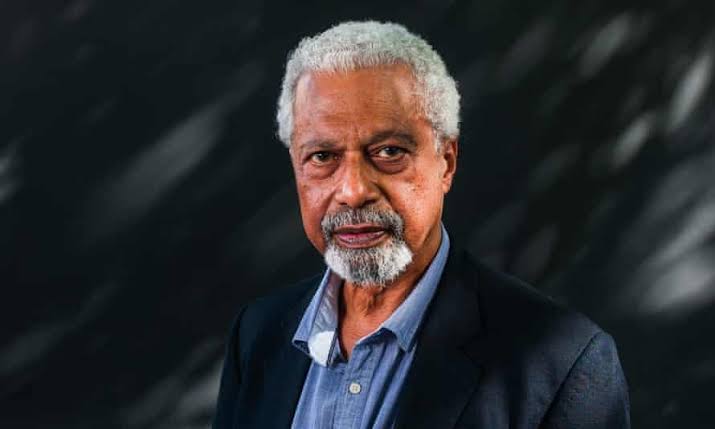
Colleagues and former students of Abdulrazak Gurnah, from the Department of English and Literary Studies, Bayero University, Kano, congratulate him, as he emerged this year’s winner of the prestigious Nobel prize in Literature.

According to one of his former students, Ibrahim Garba, “we already foresaw than in him, since the 1980s when he taught us in the department, here in Bayero University, Kano, Nigeria. He deserves it. Gurnah has always been enthusiastic about Literature and today he attained the highest and most popular status. Congratulation sir”, he said. He added that “Bayero University, Kano would be equally happy and part of this achievement, as a place where Gurnah worked and served diligently.

According to the Guardian Newspaper, UK, the “Tanzanian novelist is named laureate for ‘uncompromising and compassionate penetration of the effects of colonialism’

The Nobel prize in literature has been awarded to the novelist Abdulrazak Gurnah, for his “uncompromising and compassionate penetration of the effects of colonialism and the fate of the refugee in the gulf between cultures and continents”.

Gurnah, who grew up on one of the islands of Zanzibar and arrived in England as a refugee in the 1960s, has published 10 novels as well as a number of short stories. Anders Olsson, chair of the Nobel committee, said that the Tanzanian writer’s novels, from his debut Memory of Departure, about a failed uprising, to his most recent, the “magnificent”, Afterlives, “recoil from stereotypical descriptions and open our gaze to a culturally diversified East Africa unfamiliar to many in other parts of the world”.

No black African writer has won the prize since Wole Soyinka in 1986. Gurnah is the first Tanzanian writer to win.

Gurnah’s fourth novel, Paradise, was shortlisted for the Booker Prize in 1994. Olsson said that it “has obvious reference to Joseph Conrad in its portrayal of the innocent young hero Yusuf’s journey to the heart of darkness”, but is also a coming of age tale, and a sad love story.

As a writer, Gurnah “has consistently and with great compassion penetrated the effects of colonialism in East Africa, and its effects on the lives of uprooted and migrating individuals”, Olsson told gathered journalists in Stockholm.

Gurnah was in the kitchen when he was informed of his win, said Olsson, and the committee had “a long and very positive” conversation with him.

Gurnah’s most recent novel Afterlives tells of Ilyas, who was stolen from his parents by German colonial troops as a boy and returns to his village after years fighting in a war against his own people. It was described in the Guardian as “a compelling novel, one that gathers close all those who were meant to be forgotten, and refuses their erasure”.

“In Gurnah’s literary universe, everything is shifting – memories, names, identities. This is probably because his project cannot reach completion in any definitive sense,” said Olsson. “An unending exploration driven by intellectual passion is present in all his books, and equally prominent now, in Afterlives, as when he began writing as a 21-year-old refugee.”

Afterlives by Abdulrazak Gurnah review – living through colonialism

Worth 10m Swedish krona (£840,000), the Nobel prize for literature goes to the writer deemed to be, in the words of Alfred Nobel’s will, “the person who shall have produced in the field of literature the most outstanding work in an ideal direction”. Winners have ranged from Bob Dylan, cited for “having created new poetic expressions within the great American song tradition”, to Kazuo Ishiguro “who, in novels of great emotional force, has uncovered the abyss beneath our illusory sense of connection with the world”.According to Ellen Mattson, who sits on the Swedish Academy and the Nobel committee: “Literary merit. That’s the only thing that counts.”

The Nobel winner is chosen by the 18 members of the Swedish Academy – an august and mysterious organisation that has made efforts to become more transparent after it was hit by a sexual abuse and financial misconduct scandal in 2017. Last year’s prize went to the American poet Louise Glück – an uncontroversial choice after the uproar provoked by the Austrian writer Peter Handke’s win in 2019. Handke had denied the Srebrenica genocide and attended the funeral of war criminal Slobodan Milošević.

The Nobel prize for literature has been awarded 118 times. Just 16 of the awards have gone to women, seven of those in the 21st century. In 2019, the Swedish academy promised the award would become less “male-oriented” and “Eurocentric”, but proceeded to give its next two prizes to two Europeans, Handke and Polish writer Olga Tokarczuk.”

World Teacher’s Day: Nigerian students send wishes, prayers to their teachers

Compiled by Aisar Fagge

Today, October 5, is designated as World Teacher’s Day. Students across the globe are celebrating the day with their teachers by sending them flowers, cards, taking them out for dinner and writing goodwill messages on various social media platforms.

The Daily Reality collects some opinions of Nigerian students about this day. Here are some:

Umar Haruna Tami

“Teachers are the nearest alchemists within our reach. The good students they produce are the result of patience, perseverance and dedication to the service. They don’t prioritize what’s in it for them. May their spirits never lose shape.”

Adamu Kazaure

“Without the hard work of Nigerian teachers, the level of illiteracy will have been unmeasurable. We are ever grateful to all the Nigerian teachers. You all deserve to be celebrated.”

Hafeez Kiido

“Uncle Ishaq, who taught me in my elementary school, Maitama Yousuf. He was the first person who had inspired me to read and be courageous when giving it back(public speaking in debates). Malam Sanusi was the second person who usually exempted me out of many applauding my doings. That motivates me, though.

Prof. Tijjani M Naniya of BUK (well-known historian), from whom I retrieve raw knowledge of history. I also emulate some of his positive and solid character. For example, he once told us to be self—defendants and not to part in sectarianism, as sectarianism was solely built upon politics, not religion.

Late Malam Sanee taught me Quran in my early childhood stage (Allah ya gafarta masa).

Last and not least was Malam Abdullahi Abba, who was my Project Supervisor at Kano state Informatics. I will never forget his kindness and guidance towards our studies. May the brim of blessings of Allah flood them all.”

Sohaib Infinity

“Teachers are the reason for what am I today; I always respect them, and my love for them is immeasurable.”

Abdullahi Idris Tikau

“We know we don’t have a Kobo, Naira, or Dollars to pay you. So your (teachers) reward is in heaven. May Allah be your helper and protect you from the trials of this Dunya. May Allah bless your excellent work for humanity. Long live Nigerian teachers. Your good work will not be in vain.”

Jamila Umar

“Teachers are community builders. I can recall when a teacher in primary six once told me about vision 2020 (2005) that all the academic, health challenges etc., we are facing in Nigeria will become history. Since then, I have been dreaming of this dreamland. He speaks sincerely with hope for our future, but upon reaching 2020 now, the result is ‘irony.’ I still have hope for the future generations to come. May Allah reward our teachers.”

Harun Muhammad Yakasai

“Teachers are the angels who enlighten our lives with the light of knowledge and wisdom. Wishing you immense joy, happiness and prosperity because teachers like you deserve the best. Happy teacher’s day to you all.”

Sani Muhammad

“My best regards to both my Islamic and western education teachers as they have really impacted on me in relations to honesty, dedication and many more.”

Dan Ladi Hausawa 

“I don’t have enough words to express my gratitude to my humble teachers who guided me on how to become a useful person among the people. God bless our teachers.”

Auwal Mukhtar

“Today is the teacher’s day. Teachers are the bedrock of any sane and progressive society without which any society can only live in room and gloom. They perform lofty and noble acts which go unnoticed and adequately compensated. My utmost regards to my teachers, who helped to shape and mould my thinking. Who always taught me the act of self-sacrifice and selfless living. My sincere appreciation to Mrs Beatrice Okoro, Mr Yemi Odedokun, Mr Nkuma, Late Atemken Achanga, Mal Abdullahi Musa, Mal Yusufu, Mal Nura Khalid ( digital Imam), Ass. Prof Bappa M Abubakar, Ass. Prof Manir Kamba, Prof Lukman Diso, Dr  Abdulkadir Idris Ahmed and many others too numerous to mention.”

Karama Jamila Sani Yaro

I will forever be grateful to my teachers. My parents were my first teachers. Both Islamic and Western School teachers I attended. And the entire teaching staff of Al-Manaahil Academy. You all are much appreciated.”

Yahanasu Ibrahim Isah

“Dear teachers, it is because of you I became a good student. Thank you, all, that you have done for me. I wish you a delighted teachers day. If knowledge is the light, then you are the guiding stars that give us this light. I celebrate you all. Happy teachers day. Proud to be one. I celebrate us all.”

Hassan Mujtaba
“I was inspired by many teachers, and you are included. The way teachers inspired me is to be a hard-working student. Alhamdulillah. I took their advice. I always work hard. I rather fail and fail than cheat in any exam. I believe deep down in me that this is a very good thing and am proud of it. Above all am proud to be among your students, sir. Am still seeing it as a favour. May God bless all our teachers.”

Teacher’s Day

By Muhammad Rabi’u (Bin Isah)


IN MOST CASES, we look at many successful people without remembering those people that held the lamp for them. Teachers are the light-bearers of success, the beacons of progress and the building blocks of a good generation. “Islamiyya teachers” at the top, and the Boko teachers; they all hold lamps for us. But they are less assisted, remembered and appreciated.

Of all people, teachers are the most selfless segment of the society that derive pleasure not in failure but in the success of their students and people in general. Whether doctor, engineer, lawyer, administrator, etc., a teacher stands behind you in support. They feel delighted when students learn and understand, take and pass their tests, and when they hear that one of their students has made a remarkable achievement in life. After exhausting their energy in bringing light in person, they are now fully assured that their effort has not been in vain.

Teaching, as the essential task of teachers and the most fundamental component of education, can never be achieved without teachers. Education, the art of imparting knowledge, skills and experiences to learners, will lose its meaning without the help of teachers. Because education, which we now equate with schooling, taking schools as the vital places of learning, where socialization takes a decisive form, is not effective without teachers’ sacrifices.

The system of our organizations, whether governmental or non-governmental; the processes of our public and private enterprises; the modalities and mechanisms of our modern state of affairs; the leaders that serve the workers that run our world and us; all are not but the manifestation of the work of one selfless, good-loving and a charitable individual called a teacher. But this teacher is not appreciated, and they don’t care as long as the world stays educated, sane and developing.

Whatever we may say about teachers, we can never elucidate the merits of their services in their deserved way. Words can never capture the splendour of their roles and works in man’s development and wellbeing. Teachers love nothing more than the feeling of being successful in putting life into a place where death has taken an abode.

Teachers can be forgotten, but in every word spoken and any letter written, and in any sense made and any problem solved, the teacher takes credit, and particularly the teachers, at the primary levels of our learning, who have helped us learn how to read and write, understand and play with numbers in order to have eyes, hands and tongues to communicate with the world.

You can say “Thank You” to your teachers, and you’re still less thankful for the life they have breathed into you. Perhaps, by excelling more and being a good member of society, the teachers will feel better appreciated. And you can still never pay them. And nobody can ever pay them. Indeed, their reward is in heaven.

Thus, I say, a happy #WorldTeachersDay.

Muhammad Rabi’u (Bin Isah) writes from Bauchi State.

Bayero University Kano confirms extension of registration period

By Khadija Muhammad

It has been widely circulated that the Senate of Bayero University, Kano, has extended its resumption time from October 4, 2021, to the first week of November. However, students were worried as nothing was mentioned concerning the actual time of closing registration. Nevertheless, today, The Daily Reality newspaper has seen and verified a Facebook post of the Dean, Student Affairs, Bayero University, Kano, Professor Shamsuddeen Umar. The Dean posted as follows:

“Dear BUK Students.
1. With [the] extension of the resumption time, the registration time has also been extended accordingly. So the registration portal will not close and even if it closes it will be opened again. So there is no cause for alarm.

2. The Vice-Chancellor has increased the number of students to benefit from the Indigent scholarship. The list will soon be pasted and this year close [to] 500 students will get #50,000 each to help them register and do other things.

3. The Vice-Chancellor has also directed for the employment of interested students, to do some work during their lecture-free time in the University and they will be receiving payment weekly to enable them [to] cater for themselves while studying.

I wish all of you success,
Prof. Shamsuddeen Umar
DSA

Hausa language translation grows bigger in Kano

By Abubakar Muhammad Musa

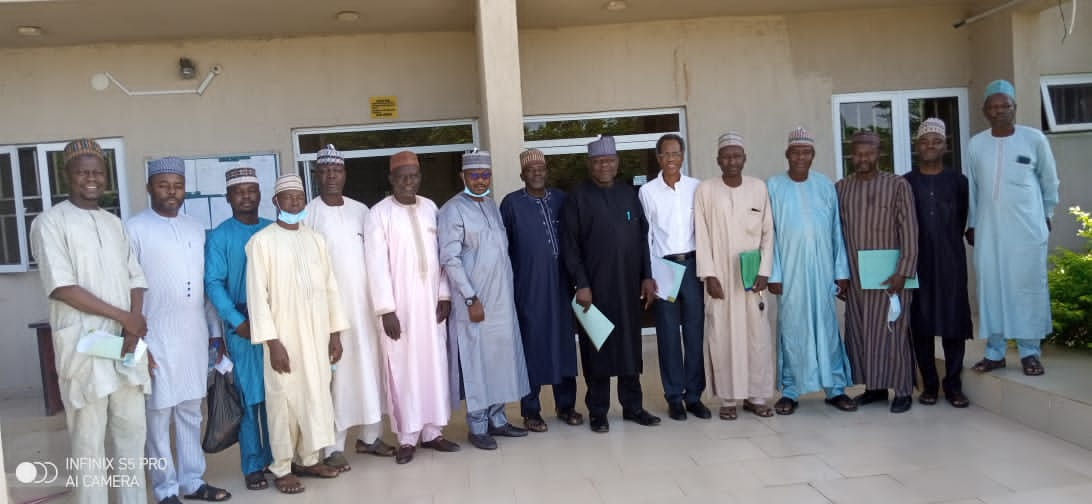
The Nigerian Institute of Translation and Interpreters (NITI) formed Kano State Council*

Shortly after the International Translation Day organized by the National body, then a three member committee (the NITI National President Prof. Hafizu Miko Yakasai, NITI Publicity Secretary Mustapha Adamu Indabawa and Associate Professor Isa Yusuf Chamo HOD Linguistics & Foreign Languages, Bayero University Kano) coordinated the formation and inauguration of Kano State Council of the Institute. The following executive members were unanimously elected:

1. Mustapha Adamu Indabawa, MIIMA, MNITI – Chairman, Kano State Council.

2. Muhammad Sagir Abdullahi, MNITI: 1st Vice Chairman.

3. Dr. Halima Umar Sani, MNITI: 2nd Vice Chairman.

4. Yagana Ali: 3rd Vice Chairman.

5. Abubakar Muhammad Musa (Saraki), MNITI: Publicity Secretary.

6. Nadiya Muftahu Garba: Treasurer.

7.Dr. Isa Muhammad Inuwa, MNITI: Secretary General.

8. Ibrahim Is’haq Ɗan’uwa Rano: Assistant Secretary General.

9. Prof. Mustapha Ahmad Isa Former Vice Chancellor Yusuf Maitama Sule University Kano: Ex-Officio.

10. Dr. Aminu Bello Muhammad, Registrar Kano University of Technology, Wudil: Ex-Officio.

Similarly, the NITI Kano State Council had seen the need for the formation of two special committees that would handle organization of the ITD at State Council level and Trainings for members of NITI at the State Council level. Thus, the two special committees were formed as follows:

i) A special Committee on International Translation Day, with Malam Nura Ahmad of Arewa24 as Chairman, while Malam Badsha Mukhtar and Patience Abo would serve as members of the Committee.

ii) Training and Capacity Building Committee: This Committee would handle seminars, capacity building workshops and professional trainings on translation and interpretation or anything relevant, this Committee would be under the watch of Dr. Muhammad Sulaiman Abdullahi, as Training Officer I and Dr. Jamilu Abdullahi – Training Officer II. Plus two other members fom the media.

Abubakar Muhammad Musa (Saraki), MNITI, Publicity Secretary NITI Kano State Council

20 new programmes to be introduced in Federal University Birnin Kebbi in 2022 – VC

The Federal University Birnin Kebbi (FUBK) inaugurated a Joint-committee on collaboration with Waziri Umaru Federal Polytechnic, Birnin Kebbi on Thursday, September 23, 2021.

The collaboration which is aimed at promoting symbiotic relations between the two institutions would be geared towards experience sharing, staff and students exchange, use of instructional and workshop facilities, among others.

In their separate remarks, Vice Chancellor Prof. BB Shehu and Rector of Waziri Umaru Federal Polytechnic, Birnin Kebbi emphasized that the collaboration could not have come at a better time as the University started ten (10) new programmes in relevant of common interests.

The Vice Chancellor who frowned at frightening statistics and low-level gap of educational status in northern Nigerian states, particularly Kebbi also disclosed that the University would commence twenty (20) new programmes in 2022. This includes Urban and Regional Planning, Estate Management, Industrial Design, Software Engineering, Biotechnology, Medical Laboratory, Science Laboratory Technology, among others.

He highlighted that while the Polytechnic groom students to attain Diplomas and NCEs, the partnership would enable them to secure regular and top-up Degree Programmes in their various fields of human endeavour at the University.

In appreciation, the Rector who was represented by Deputy Rector, Dr. Usman Tunga acknowledged the “speedy” transformation of the University. He said the Polytechnic is delighted to affiliate with the University to commence new programmes on Environmental Studies and other relevant fields.

He further appreciated the University for accommodating staff of the Polytechnic on sabbatical and visiting appointments, hoping that the dream of the collaboration would come true in no time.

Meanwhile, the Registrar of the University Mal. Abubakar Aliyu and his Polytechnic counterpart, Mal. Atiku Muhammad Bello harped on optimal synergy while presenting members of the Joint Committee.

FUBK Bulletin reports that the Committee is chaired by the Director Post Graduate Studies of the Polytechnic, Dr. Sani Ahmad Alhaji, while Barr. Abdulkadir Abubakar of the University Legal Unit serves as Secretary.

Members of the Committee from the Polytechnic are Director Academic Planning, Isiyaku Abdullahi; Director Environmental Studies, Dr Utenge Jonathan and Head of Statistics Department, Dr. Abubakar B. Dallatu.

Other Committee members from the University include the Dean of Post Graduate School, Prof. UM Chafe; Director Academic Planning, Dr. Aliyu A. Turaki and Director, Management Information System, Dr. Abdulhakeem Ibrahim.

(Signed)

Jamilu M Magaji,
Public Relations Officer,
Federal University Birnin Kebbi.
September 28, 2021

Many Christian universities operate illegally – NUC report

As the National Universities Commission (NUC) names 67 illegal universities in Nigeria, The Daily Reality found out that there are many Christian universities that fall under the illegal list.

The NUC has published a list of 67 illegal universities in Nigeria. AbatiMedia reported that “the Executive Secretary, Prof. Abubakar Rasheed signed a public notice on the NUC website.”

The names include those claiming to be affiliates of foreign universities in the country.

In the list (below), institutions that have ‘other campuses’ are indicated with “others”; those ‘operating anywhere in Nigeria’ have “anywhere” as suffixes.

1. University of Accountancy and Management Studies

2. Christians of Charity American University of Science and Technology, Nkpor, Anambra (& others)

3. University of Industry, Yaba, Lagos (& others)

4. University of Applied Sciences and Management, Port Novo, Republic of Benin (& others)

5. Blacksmith University, Awka (& others)

6. Volta University College, Volta Region, Ghana (& others)

7. Royal University, Izhia in Abakaliki, Ebonyi (& others)

8. Atlanta University, Anyigba, Kogi (& others)

9. United Christian University, Macotis campus, Imo (& others)

10. United Nigeria University College, Okija Anambra (& others)

11. Samuel Ahmadu University, Makurdi, Benue (& others)

12. UNESCO University, Ndoni, Rivers (& others)

13. Saint Augustine’s University of Technology, Jos, Plateau (& others)

14. The International University, Missouri USA, Kano and Lagos (& others)

15. Collumbus University, UK (anywhere)

16. Tiu International University, UK (anywhere)

17. Pebbles University, UK (anywhere)

18. London External Studies, UK (anywhere)

19. Pilgrims University (anywhere)

20. Lobi Business School, Makurdi, Benue (& others)

21. West African Christian University (anywhere)

22. Bolta University College, Aba (& others)

23. JBC Seminary Inc. (Wukari Jubilee University) – Kaduna illegal campus

24. Western University, Esie, Kwara (& others)

25. St. Andrews University College, Abuja (& others)

26. EC-Council USA, Ikeja, Lagos Study Centre

27. Atlas University, Ikot Udoso Uko in Uyo, Akwa Ibom (& others)

28. Concept College/Universities (London) Ilorin (& others)

29. Halifax Gateway University, Ikeja (& others)

30. Kingdom of Christ University, Abuja (& others)

31. Acada University, Akinlalu, Oyo (& others)

32. Filfom University, Mbaise, Imo (& others)

33. Houdegbe North American University campuses in Nigeria

34. Atlantic Intercontinental University, Okija, Anambra

35. Open International University, Akure

36. Middle Belt University (North Central University) Otukpo

37. Lead Way University, Ugheli, Delta

38. Metro University, Dutse/Bwari Abuja

39. Southend University, Ngwuro Egeru (Afam) Ndoki, Rivers

40. Olympic University, Nsukka, Enugu

41. Federal College of Complementary and Alternative Medicine, Abuja

42. Temple University, Abuja

43. Irish University Business School, London (anywhere)

44. National University of Technology, Lafia, Nasarawa

45. University of Accountancy and Management Studies, Mowe

46. University of Education, Wenneba, Ghana (anywhere)

47. Cape Coast University, Ghana (anywhere)

48. African University Cooperative Development (AUCD) Cotonou, Benin Republic

49. Pacific Western University, Denver – Colorado, Owerri

50. Evangel University of America and Chudick Management Academic, Lagos

51. Enugu State University of Science and Technology (Gboko campus)

52. Career Light Resources Centre, Jos.

53. University of West Africa, Kwali, Abuja

54. Coastal University, Iba Oku, Akwa Ibom

55. Kaduna Business School, Kaduna

56. Royal University of Theology, Minna, Niger

57. West African Union University, in collaboration with International Professional College of Administration, Science and Technology (anywhere)

58. Gospel Missionary Foundation (GMF), Theological University, Egbe Ikotun, Lagos

The NUC confirmed that others are undergoing further investigations/court actions in a bid to prosecute the proprietors and recover illegal fees/charges

1. National University of Nigeria, Keffi, Nasarawa

2. North Central University, Otukpo, Benue

3. Christ Alive Christian Seminary and University, Enugu

4. Richmond Open University, Arochukwu, Abia

5. West Coast University, Umuahia

6. Saint Clements University, Iyin Ekiti

7. Volta University College, Aba, Abia

8. Illegal Satellite Campuses of Ambrose Alli University

9. L.I.F.E. Leadership University, Benin, Edo