Education

Why you should read the “Kano Ƙwaryar Ƙira Matattarar Alheri” book series

By Dr Shamsuddeen Sani

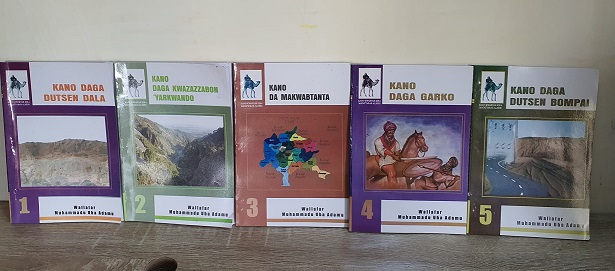
In my opinion, as a student of knowledge, there might be three reasons why I think everyone interested in Kano should read the 5-volume book Kano Ƙwaryar Ƙira Matattarar Alheri by the late Muhammadu Uba Adamu. May Allah bless his soul, amin.

1. Uncovers hidden narratives: the book offers a treasure trove of untold stories and forgotten or rarely told narratives of Kano history. The author masterfully explored the archives and conducted meticulous research allowing us to have a glimpse of the subtle Kano historical junctures, bringing to light stories of critical contributions, struggles, and resilience.

It is this very academic inclination to the Kano historiography that helps us challenge traditional historical narratives and gain a more inclusive understanding of our community’s past. By infusing creativity and academic rigour into the study of local history, the books unlock their transformative potential, fostering critical thinking, empathy, and an appreciation for the complexities of our community’s past and present.

2. The volume examines the microcosms of Kano’s ancient history: the author skilfully delves into the intricacies of our community’s past, helping us discern the impact of broader historical events, such as religious and economic shifts, social movements, or political changes. This very nuanced perspective enables us to grasp how global temporal processes shaped local realities, fostering a more comprehensive understanding of our interconnected world.

3. Analysis of spatial dynamics: in these volumes, it is discernible how the author uses the Kano history to analyse the spatial dynamics of our community’s development. Each volume uses an important geographical pivot point to relay historical milestones. This analysis provides insights into the social, economic, and cultural factors that have shaped the physical environment and spatial organization of our locality and our overall architectural heritage.

Dr Shamsuddeen Sani wrote from Kano, Nigeria.

Embracing Perseverance: A journey of triumph in English

By Abdurrazak Mukhtar

Introduction:

In the face of adversity, some individuals find the strength to rise above their challenges and achieve greatness. Such is the remarkable story of one individual who refused to let failure define them. Despite enduring twelve failed attempts at obtaining credit in English for their SSCE, they persevered, eventually mastering the language and becoming a mentor for HND and degree students. This story is a powerful reminder of the transformative power of perseverance and the unyielding spirit that can lead to incredible accomplishments.

The Will to Succeed:

Life has a way of testing our determination; for this individual, the English language became their ultimate hurdle. Year after year, they faced disappointment as the elusive credit seemed just out of reach. But instead of succumbing to despair, they summoned the courage to keep trying. Their unyielding will to succeed became a driving force that fuelled their journey towards mastery.

The Turning Point:

After numerous setbacks, the individual refused to let failure define them. Instead, they embraced the challenge head-on, recognising that actual growth often arises from struggle. So, rather than giving up, they embarked on a relentless pursuit of knowledge and skill, dedicating countless hours to studying and honing their command of the English language.

The Power of Education:

With each setback came a valuable lesson. The individual began to understand that learning is a lifelong journey and that education extends far beyond the walls of a classroom. They sought guidance from mentors, devoured books and resources, and immersed themselves in the intricacies of the English language. Slowly but steadily, their proficiency began to improve.

From Struggle to Mentorship:

The incredible twist in this story lies in the individual’s transformation from a struggling learner to a mentor for others. First, through their perseverance and hard work, they developed a unique insight into the challenges faced by students grappling with English. Then, armed with their own experiences, they became an inspiring guide, supporting and motivating HND and degree students in their pursuit of linguistic excellence.

Inspiring Others:

As this individual continued to impact the lives of others, their story became a beacon of hope for those who had lost faith in their abilities. They showed that failure does not define one’s potential but serves as a catalyst for growth. Furthermore, their remarkable journey instilled in others the belief that success is attainable with unwavering dedication and an unrelenting spirit.

Conclusion:

The story of this extraordinary individual serves as a testament to the power of perseverance. Despite repeated failures, their unwavering determination to conquer the English language transformed their lives and inspired countless others. Furthermore, it teaches us that setbacks are not roadblocks but stepping stones to success. With the right mindset and an unyielding spirit, anyone can triumph over adversity and achieve their goals.

So, let this story remind you never to give up, no matter how challenging the journey may seem. Instead, embrace each failure as an opportunity for growth and keep moving forward. Your struggles today may become the source of inspiration for others tomorrow. Remember, the key to success lies within you.

BOOK REVIEW: Wives and Work: Islamic Law and Ethics Before Modernity

Dr Shamsuddeen Sani

The modern discourse around housework for wives from the Islamic legal perspective has garnered beyond the adequate level of scholarly attention. It is as old as the marriage institution itself in the Islamic tradition.

The book, Wives and Work: Islamic Law and Ethics Before Modernity, published in 2022 by Columbia University Press, is a compelling and intellectually rigorous work that broadly contributes significantly to Islamic studies and gender studies.

Marion Holmes Katz’s meticulous research and refined analysis dismantle stereotypes and offer a fresh perspective on the complex realities of Muslim women’s lives. By engaging with Islamic legal and ethical traditions, the author not only deepens our understanding of the past but also provides a platform for critical reflections on the contemporary challenges and possibilities surrounding women’s roles as wives and their engagement in the workforce within Muslim-majority societies.

The book adopts a well-structured framework with an elaborate introduction followed by four body chapters and concludes with a thoughtful synthesis. Each chapter is dedicated to the diversity and development of fiqh discussion of domestic labour for the respective periods of the four Sunni schools of law.

The first chapter emphasises the formative period of Islamic law (8th-9th century CE) with a profound exploration of the Islamic literary corpus reflecting the social realities of the early Islamic community, then focusing heavily on wives’ domestic labour in the Maliki legal school. 

Moving into the 10th century CE, the second chapter of the book examined the issue of domestic labour through the lens of Shafii scholar Abul Hasan al-Mawardi using his legal manual, Al-hawi al-Kabir, as a paradigm for deconstruction but at the same provided a captivating contrast through his ethical manual Adab al dunya wal din.

Chapter three navigates into the intellectual realm of the Hanafi school of law, specifically focusing on the legal manual Al-Mabsut by the esteemed Hanafi scholar al-Sarakhsi. This comprehensive investigation illuminates al-Sarakhsi’s profound analysis and interpretations pertaining to domestic labour, offering an in-depth understanding of the Hanafi school’s intricate perspectives.

Geographically and temporally shifting to the post-classical period in Damascus, chapter four directs its attention to the Hanbali school of law. The focal point of analysis lies in a meticulous exploration of Ibn Qudama’s seminal work, which would later face extensive challenges from the visionary scholar Ibn Taymiyyah. Ibn Taymiyyah’s radical approach to the subject matter promotes a ground-breaking and transformative vision of the ethics of marriage, firmly rooted in the Qur’an and hadith traditions.

Academic dream: My research, my citations, my h-index, and the “true impact”

By Prof. Abdelghaffar Amoka

Colleagues have been sharing their experiences as academics in Nigerian universities with several reactions. The essence is not to discourage people from going into academia but to know what lies ahead of you if you want to go into academia. Like most colleagues, I had no idea of the challenges in Nigeria’s academia when I was so eager to join. For example, I never knew the job is for 24 hours, and that promotion is based on research output you will fund from your pocket.

After graduating in 1999, I looked forward to being part of the academia. During my youth service in Kano, I visited the HoD of Physics, ABU Zaria, Prof I. B. Osazuwa, to discuss my “academic dream”. He directed me to the late Prof. N. I. Hariharan. I met him, and he advised that I should enrol for MSc. So, in 2001 on my way from Kano, I stopped over in Zaria, purchased the PG form, and left for Lagos.

As we were job-hunting in Lagos, I remember my friend and Brother, Yusuf Osafore, saying it appears I was not taking the job hunting seriously but was more concerned with pursuing a Master’s degree. My looking forward to becoming an academic was so apparent to people around me. Then, I eventually got hired in March 2005. It was a dream come true. I have finally joined the group of intellectuals. The “most revered” group in the society. A group of knowledge generators. A group of reservoirs of knowledge.

After a few months in the university, they revealed the reality of Nigerian academia. The fact that I had no prior knowledge of. There are, of course, viable ideas, but they die within the university walls because the political class isn’t interested in them. The ideas are published, but it is just for promotion’s sake. I paid N7,000 or so to publish my first paper in a Nigerian university-based academic journal in preparation for the next promotion to Lecturer II. These made me begin to meditate on “my academic dream”.

In 2007, I had the opportunity to visit ICTP for a two weeks workshop, and my interaction there revived my academic dream. Then, in 2009, I got lucky and left the country for my PhD, strengthening my revived “academic dream”. My joy knew no bounds when I published my first research paper in an Elsevier-indexed Q1 journal in 2011. From then on, the papers kept coming.

There are two publication options. You either publish in close access journals where publishers are paid for access to your research work, or you pay between $1,500 to $3,500 to publish as open access for everyone to have access. I remember spending some dollars in 2014 to publish the last paper from my PhD work in Elsevier’s Sustainable Materials and Products journal as open access. That money came from my salary in Norway.

We were told that research impact is based on the number of citations one has. Something they called h-index was brought to classify our research impact. I began to monitor my citations and h-index on Scopus, ResearchGate, and Google Scholar. I usually wear a smile on my face whenever I receive citation alerts. As the promotion period approached, I counted my number of publications and was excited as my number of citations grew. We began to use Scopus h-index to rate academics. Unfortunately, we get carried away so much that if you talk too much, we ask, “What is your Scopus h-index?”

The irony is that you look for money (either grant or personal fund) to do research and get it published in a reputable journal after rigorous reviews (reviewers work for free) and are excited for an additional paper to your credit. Brag that you have so many articles in indexed journals and get promoted for a peanut added to your salary. In Nigeria, you become a Professor to earn about 440 USD (N325,000) per month. You proudly go around with the title (Prof). Meanwhile, a multi-billion dollars cooperation makes money from your sweat and the knowledge you have laboured to create. And all that we are happy with are citation alerts, a growing h-index, and promotions that come with peanuts.

The best publication time is during our young age. As we grow older, our students take over the writing. Then, the university will ask why you are the paper’s first, second, or last author. They have got no idea how it was funded. The academic dream can truly be defined as spending our entire youth creating knowledge and paying a billion-dollar corporation to take it from us in exchange for career capital that you can then use to buy meaningless promotions from other exploited individuals.

Sometime back, I logged into the university network, and the research output of a senior colleague on Google Scholar was highlighted on the university webpage with thousands of citations and a high h-index. So I decided to follow the link to check mine. Mine was very much below his, but it wasn’t that bad. So then, I sat down and began to question the true impact of my research work beyond what Google Scholar has evaluated.

Do a mere citation of our publications truly translate into research impact? Research is global, but you should see your work impact your immediate environment. We have Professors with thousands of citations that can’t present an inaugural lecture, faculty colloquium, or even a departmental seminar; so, what is the impact of our research on our immediate community?

I tried to reflect on our impact, especially as Professors and Farooq Kperogi came to mind. I remember checking on him on Scopus when he became a Professor in the US. However, when I later reflected on his writeups on Nigeria’s sociopolitical scene and the healthy discussions he had generated towards repositioning the country, I began to realise that Farooq has made much more impact on Nigeria than many of us with a better presence on Google Scholar, Researchgate, and Scopus.

Let me introduce myself properly—a Professor of Physics specialising in dielectrics and high-voltage electrical insulation. I have 33 research documents indexed in Scopus and an h-index of 11, 13, and 14 in Scopus, Reseachgate, and Google Scholar, respectively. In addition, I have about 585 citations on Google Scholar. My published research articles are on high-voltage insulation. Still, the articles and the citations, put together, have not impacted our electricity network in Nigeria, which is on a breakdown spree. So, what, then, is my impact?

Universities are identified as keys to innovation, from developing new ideas to providing state-of-the-art facilities. Industrialists and managers of the countries engage them in keeping the workflow full of new ideas. But in Nigeria, our university system has been made the most insignificant institution that has been reduced to lecture rooms. We only publish to avoid perishing.

Everywhere in the world, academics are respected and heard when they talk. But in Nigeria, especially during the Buhari government, they are tagged as enemies to crush. Our universities were once places where policies evolved. Academics generated ideas that shaped the country. Discussions in academia are used to shape the policy development of our nation. The golden time of Bala Usman can never be forgotten. What happened to those intellectual discussions? Who killed it? We now chase appointments within and outside the universities, especially after we become ‘Professors’.

Nigeria has been messy for the last eight years, and universities are in the worst state ever. But the government of Buhari used eight years to run away from education stakeholders’ engagement. The political class are educated people with no value for the education of the people. The best gift that Buhari gave to the people that so loved him was to strangulate the public universities for the people. Rather than having a public engagement on how to salvage the situation he was well aware of before his appointment, the outgoing Education Minister, Adamu Adamu, described the backwardness that they have imposed on us as “self-imposed backwardness” and their idea of the solution is by approving the establishment of more substandard private universities in the North.

The incoming government of Bola Ahmed Tinubu needs to come in with a clean and open mind to engage the academia with sincerity. They should look at ASUU as partners in progress rather than enemies to crush. The solutions to our problems are right in our hands if we are willing to engage each other. On the other hand, academia needs to start looking beyond publishing, not to perish. We need to start thinking beyond journal publication impact that has no impact on our immediate constituency, Nigeria. We need to wake up and revive the golden days of Bala Usman on our university campuses.

©Amoka

Teaching is not a cheap profession 

By Mustapha Dauda

People should be screened thoroughly before becoming certified teachers. Now, Colleges of Education are home to lazy and mainly copy-and-paste students. Although there are several academic gurus in the field, a higher percentage of educational students chose to be only there because of their inability to secure admissions in their various intended courses of study.

The alarming nature and downfall of the educational system in this country will be halfway associated with this very problem. So sad. Lack of potential and rigidly talented persons in the academic career is as dangerous as a fire outbreak is to wildlife in a bush to our society. Very dangerous and heart-breaking indeed. 

Teaching is the master of every profession, no doubt. Teachers nurture students in their preferred disciplines. Teachers head and guide and direct in every place of learning. They impact the character and learning of students: they play a vital role in inculcating good moral behaviours, knowledge impassion and impartation. How beautiful and nice of a profession. Moreso, they play a parental role during school hours. 

Though the responsibilities of teachers are beyond that which I have queued and listed here, even with the little above listed, we must agree that this is not a lazy profession. Hence, it should simply be handled by readily authentic, prepared, learned and responsible personalities. A kind of people that shun examination malpractice and any illegalities. Having fully reliable teachers guarantees the production of well-educated students from all levels of education. And, God forbid, vice versa. 

The only effective weapon that will end educational failures is the availability of qualified teachers. Steps in providing qualified teachers include: Demanding higher Unified Tertiary Matriculation Examination, UTME, scores before getting admission into any institution capable of certifying one as a teacher. It also comprises impromptu student-teacher supervision during their Teaching Practice, TP, periods.

And an important aspect is an instalment of a well-paid salary system to newly employed and already teaching teachers the government. This, for sure, will get the educational system many brilliant minds. Most students go for courses they expect can fetch them money. And for already teaching staff, a kind of test of qualification can be given, perhaps, through external bodies, thereby confirming their strength and teaching capabilities, and also changing the unqualified ones to the non-academic part of the institution, to at least help them maintain the source of income and from being unemployed.

A quack doctor can only kill or jeopardise one person at a time. A building engineer endangers a family or a building at a time. For teachers, it is a different case. An unqualified teacher cheats and misleads a whole generation. And the scary part is that what he wrongly misled the current generation is the same thing that will be passed and taught to the upcoming generation by the current ones, for they’re the leaders of tomorrow. And the problem, the misleading, the imperfection will go like that. The whole generation is in vain. Uncontrollably. Unknown to all, where it may stop, just perhaps. And all these, Just a single damage, by a single teacher. Just one person. Ohh! What will a class of unqualified teachers do to our society? Or what do we think all those quack teachers out there have been doing? 

Everything is just as straightforward as everyone can see it, yeah. Students sitting silently and helplessly listening to quack teachers are helpless and hapless and don’t know the misleading they’re in the middle of. The work is ours and the government’s. From our side, we don’t encourage and invite brilliant and vibrant students to teach. Ohh, sad; one will ask that, after graduating as a well-learned and certified teacher, what will I do, as much as a source of income? This question is too head shocking, and one may hardly get an answer to continue further convincing him to go for teaching.

How I wish and how beautiful to see teachers, too, being screened, being made to practice what they were taught, being made to face challenges that make them look every inch equal to their tasks like it’s usually done to qualified engineers and doctors and every other highly regarded course of study. It will make meaning this way. Indeed, there’s a huge need to look at and upgrade our educational system, of which teachers are the backbone.

Mustapha Dauda wrote from Azare, Bauchi State, via mustaphadauda399@gmail.com.

We’ll hire ad-hoc doctors – Ngige threatens striking NARD

By Uzair Adam Imam

The Minister of Labour and Employment, Chirist Ngige, has thrown a threat to the striking resident doctors saying that the Federal Government will hire ad-hoc doctors to replace their positions.

The minister stated that the ad-hoc doctors would be paid with the salaries of the striking doctors.

The Daily Reality gathered that the National Association of Resident Doctors (NARD) began a five-day warning strike Wednesday.

However, Ngige, who in an interview with journalists yesterday said there was nothing like warning strike, disclosed this during Channels Television programme.

It was also learned that the association is demanding increment in the Consolidated Medical Salary Structure to the tune of 200 per cent of the current gross salary of doctors; new allowances included in its letter to the Minister of Health on July 7, 2022, on the review of CONMESS; payment of the 2023 Medical Residency Training Fund; payment of salary arrears and consequential adjustment of the minimum wage.

Ngige added that the NARD was disrespectful to the Nigerian Medical Association (NMA), which was already negotiating with the government on its behalf.

“The resident doctors are part of NMA. They are young doctors in training. So if the NMA is negotiating on their behalf as the parent body, what these young people (resident doctors) are doing is disrespecting the NMA. They are crying wolf when there is none,” he said.

Power of “I think”

By Abdurrazak Muktar

Language is a powerful tool for communication, allowing us to express our thoughts, beliefs and opinions. One commonly used phrase that often sparks debate is “I think.” While some argue that it implies uncertainty, I believe that “I think” carries more significance than mere doubt. In this article, I will explore the multifaceted nature of “I think” and how it can convey conviction, personal perspective and respectful dialogue. Let’s delve into the power of “I think” beyond uncertainty.

Expressing Personal Perspective:
“I think” is frequently used to present a subjective viewpoint. By prefacing a statement with this phrase, individuals acknowledge that their opinion may differ from others. For instance; “I think pizza is the best food ever created.” And “I think the movie was captivating, but others might find it slow-paced.”
In the above examples, the use of “I think” allows for individual experiences and preferences to be expressed without imposing them on others. It fosters a climate of an open discussion where diverse viewpoints can coexist.

Conveying Conviction and Confidence:
While “I think” is often associated with uncertainty, it can also demonstrate confidence in one’s beliefs. Consider the following examples:
“I think renewable energy is the key to a sustainable future.” Or “I think education is the most powerful tool for societal progress.”
In these cases, the speaker uses “I think” to assert their convictions. The phrase is a way of emphasizing personal belief without assuming absolute authority or dismissing opposing viewpoints. It encourages respectful dialogue and invites others to share their perspectives.

Recognizing the Limitations of Knowledge:
“I think” can also be used to acknowledge the inherent limitations of human knowledge. It reflects an understanding that our comprehension of complex issues may be incomplete or subject to change. Examples include: “I think there might be life on other planets, but we haven’t found conclusive evidence yet.” And “I think the solution to poverty requires a multifaceted approach, but it’s a complex problem.”

In these instances, “I think” is a humble recognition of the complexities of the world. It encourages curiosity, open-mindedness, and a willingness to explore different ideas and possibilities.

In my conclusion, the phrase “I think” is a versatile linguistic tool that extends beyond expressing uncertainty. It allows individuals to share their opinions while acknowledging the subjective nature of their perspective. Whether it conveys personal beliefs, invites respectful discussion, or recognizes the limitations of knowledge, “I think” plays a crucial role in communication.

Next time you hear or use the phrase “I think,” remember its power to foster understanding, encourage dialogue, and bridge the gaps between diverse viewpoints. Embrace the potential for growth and learning that arises from the exchange of thoughts and opinions.

Al-Istiqama varsity vows to conduct drug test for students

By Uzair Adam Imam

A Nigerian private university, Al-Istiqama University Sumaila (AUSU), Kano, has taken a bold measure to address the lingering issue of drug abuse among youth, particularly its students.

Professor Salisu Shehu, the university’s Vice-Chancellor, disclosed this on Tuesday on his verified Facebook account.

The Vice-Chancellor said the university would not tolerate any form of drug abuse, adding that the move was to ensure “drug-free campuses.”

Reports on the danger of drug abuse by our media outlets recently filled the air following the murder of a Kano mother by her drug-addict son a few days ago.

The Vice-Chancellor further disclosed that the university has made it mandatory for all its students to go through a ‘drug screening exercise’.

In the disclosure he titled ‘Zero Tolerance to Drugs in Al-Istiqama’, Professor Shehu added, “As part of our efforts to ensure drug-free campuses, we have made it mandatory for each and every student, fresh or returning, to go through DRUG SCREENING EXERCISE at the beginning of each session.

“As we have just returned for the 2022/2023 Session, the exercise is currently ongoing, as can be seen in the photos below. ALHAMDULILLAH ALA TAUFIQIHI WAMTINANIHI,” he stated.

The Daily Reality, going through people’s reactions to the post, learned the measure taken by the university is fully supported by the public.

The decision was appreciated, and other universities were also called on to emulate Al-Istiqama to ensure a drug-free environment.

Language is not a friend – I have bound my project

By Bilyaminu Gambo Kong-kol

Language is considered the principal method of human communication, consisting of words used in a structured and conventional way and conveyed by speech, writing, or gesture. It is a tool that establishes commonness between the sender and the receiver.

For the commonness to be established, the encoder must be well-grounded in the language he chooses to use and arrange his words systematically. He must also consider meanings such as denotative, connotative, reflected, and social, among others. 

The receiver must also do his part as interference is likely to occur from him, the environment, channel, or encoder.

However, language sometimes becomes a betrayer by betraying even the native speakers due to its rigid nature. The fact is that even if you are familiar with the rules, language may decide to disgrace you abruptly.

In this piece, Hausa, Fulfulde, and English languages will be used to explain my points.

In Hausa, it is a rule that most of the words that end with the letter “A” are feminine, and those ending with E, I, O, and U are masculine. But there are exceptions. For instance, words like kotu (court), gwamnati (government), and kwallo (ball) end with masculine vowels, but they are feminine. On one part, ruwa (water), zama (sitting), and kira (call) are masculine despite having feminine endings.

Hausa also demands that wherever possessives “Na” and “Ne” are used for masculine words, they should be substituted with “Ta” and “Ce” for feminines. For example, Jirgina ne (It is my plane), motata ce (It is my car).

Many Hausa speakers, including some of the natives in northwest Nigeria, are struggling to adhere to the rules. To get primary data on this, choose any state in Nigeria and listen to their radio stations or have physical interactions.

In Fulfulde, the law states that a word’s ending determines its demonstrative adjective. For instance, it is okay to say this horse, this room, or this pen in English, but the case is different in Fulfulde. Wamnde nde, sudu ndu, bindirgol ngol. To learn more, get a Fulani friend or wife.

This rule is giving headaches even to the LI in Yola, as it requires alertness and quickness of thought. It is normal to hear a typical Fulani man saying “Mi laari mo” instead of “Mi laari ngal” when he is referring to “I saw the hen”.

Another blunder is the introduction of the letter “V” in Fulfulde. In a standard Fulfulde setting, there is nothing like the consonant sound /v/. Hausa, too, does not have it. That is why some Hausa say bery good instead of very good. Just like the way some Hausa misplace V for B in English, some Fulfulde speakers misplace W for V in their first language. 

For example, “O vindi” instead of “O windi” (He wrote), “Mi vi” instead of “mi wi” (I said), “O va’i leggal” instead of “O wa’i leggal” (He/she climbed a tree).

One interesting thing about Fufulde is that, unlike Hausa and English languages, Fulfulde does not have pronouns that differentiate gender. Fulfulde’s pronoun “O” refers to he/she in English and Shi/ita in Hausa.  And Fulfulde’s pronoun “Ma” refers to Ka/Ki in Hausa. Maybe this was done to show our shyness and respect (Pulaaku). 

Another virus that is threatening Fulfulde is code-mixing and code-switching. Some Fulfulde speakers in Adamawa, Taraba, Gombe, and Yobe could not speak pure Fulfulde for an hour without borrowing from Hausa, English, Arabic, or their L2 words. This signifies a low level of grammar or lack of respect for Fulfulde language. It needs to be fought gallantly.

In English, rules of concord, tenses, syntax, and semantics are hectic for learners and L2 speakers. 

Concords like: “He says, I say, they say, he has, I have, they have, he does, I do, they do, he does not have, I do not have, and they do not have” are found to be confusing most especially by learners. Also, the sentences below, even though correct, may not convince learners as plural nouns could be seen nakedly. Shamsu, together with his wife, is coming to London or Maijama’a, along with Bilkisu, is coming to Cyprus. Think of “Neither Ghali nor the students are present” vs “Neither the students nor Ghali is present”. 

In tenses, the unjustified usage of the past in the present, the present in the past, or the distortion of the entire tenses is common. Moreso, the choice of words and sentence construction are influenced by speakers L1. You will see an English sentence given direct translation from Hausa, Fulani, Igbo, or Yoruba. Example: Haruna said it is for you and me.

In phonetics and phonology, words are pronounced mostly the way we hear others articulate them over time. Sometimes, Lll speakers localise the British accent. Consonant sounds like /θ/, /ð/, /ʃ/ /ʒ/, /ʈʃ/, /dʒ/, and ŋ/ are mispronounced in some words. Vowel sounds /ʌ/,  /ə/, /ɜ:/, /æ/ and the eight diphthongs play with the tongues of learners. Or should we say learns to play with them?

The topic is broad, but advisably, make sure you learn all the dos and don’ts of every language you want to communicate with people. This will pave the way for you to communicate effectively and earn your respect. By so doing, you minimise 70% to 90% of your chances of making mistakes. Don’t expect 100%; even the natives are still looking for that!

Nevertheless, always remember that language is not a friend. It may decide to disappoint you unexpectedly. I received mine on my last day as an undergraduate student at Bayero University, Kano. I was stuck fishing out whether the word “bind” is a regular or irregular verb. What is the past participle; binded, bounded, or bound? It had escaped my memory. I still don’t understand why English decided to misbehave on this special day of mine (04/05/2023).

Whatever the reason, I got a pitch that led to the writing of this article. Alhamdulillah! My appreciation to communication scholars, the Vice Chancellor of Federal University, Kashere, Professor Umaru A. Pate, and OPEC’s PR Coordinator, Dr Umar Jibrilu Gwandu, for drawing my attention immediately. I HAVE BOUND MY UNDERGRADUATE PROJECT!

Bilyaminu Gambo Kong-kol is a graduating student of the Mass Communication Department at Bayero University, Kano. He can be contacted via bilyaminugambokonkol20@gmail.com.

FUBK gets new DVC, directors

News Desk

The Governing Council of Federal University Birnin Kebbi (FUBK) has appointed Professor Aliyu Abdullahi Turaki as the new Deputy Vice Chancellor of the University.

The appointment was sequel to the recommendation of the Senate and subsequent approval of the Governing Council at its 26th meeting held from 10th to 11th May 2023.

The appointment is for a term of two years at the first instance and takes effect from Thursday, 11th May, 2023.

Prof. Aliyu A. Turaki attended Sabon Garin Rikoto Primary School from 1978 to 1983, where he obtained his Primary School Leaving Certificate. He then proceeded to Government Science College, Birnin Kebbi, where he obtained his Secondary School Certificate in 1990. He obtained B.Sc. and M.Sc. Biochemistry from Usmanu Danfodiyo University, Sokoto, in 1996 and 2006, respectively.

Prof. A.A. Turaki obtained his PhD in Molecular Biology at the University of Greenwich, United Kingdom in 2014. Between 2007 and 2008, he also obtained Postgraduate Certificate in Food Safety and Certificate in Applied Hazard Analysis and Critical Control Points (HACCP) from University of Greenwhich and Royal Institute of Public Health, UK.

The new Deputy Vice-Chancellor comes with over 2 decades of professional experience. He started his teaching career as a Lecturer at the College of Agriculture, Zuru, in 1998. He joined the services of Federal University Birnin Kebbi on 26th May, 2015 as Lecturer I at the Department of Biochemistry and Molecular Biology, where he rose through ranks to become Professor in 2022.

Prof. Turaki served in various capacities in the University setting. He had been the Director of Academic Planning from 2021 to date; Deputy Dean, Postgraduate School from 2021 to date and Senate Representative on Council from 2021 to date. He also served as Deputy Director, Academic Planning from 2015 to 2021 as well as Head of the Department of Biochemistry and Molecular Biology from 2018 to 2023.

Prof. Turaki published papers in both local and international journals. He is a member of several professional organizations. He was born on the 5th of October, 1970, in Zuru, Kebbi State. He is married with children.

In another development, the Vice Chancellor, Federal University Birnin Kebbi, Prof. Muhammad Zaiyan Umar, has approved the reappointments of the immediate past Deputy Vice-Chancellor, Prof. Kasimu Shehu, as Director, Research and Innovation; Prof. Isa Garba Abor of the Department of Mathematics as Director, Consultancy and Entrepreneurship as well as Prof. Kabiru Jega Umar of the Department of Chemistry as Director, School of Basic Studies.

The appointments take effect from April 27, 2023.

Similarly, the Vice Chancellor approved the appointments of Prof. M.D.A. Bunza (Biological Sciences), as Director, General Studies; Dr. Sirajo M. Bakura (Computer Science) as Deputy Director Students Industrial Work Experience Scheme (SIWES); Dr. Abubakar Musa Shinkafi (Computer Science) as Deputy Director, Entrepreneurship; Dr. Ahmad Saidu (Nursing Sciences) as Deputy Director, School of Basic Studies and Mal. Yazid Salihu (ICT Directorate) as Deputy Director, Information and Communication Technology (ICT).

Their appointments take effect from 27th April 2023.

The new appointees are charged to bring to bear their wealth of experience in the discharge of their duties and responsibilities.