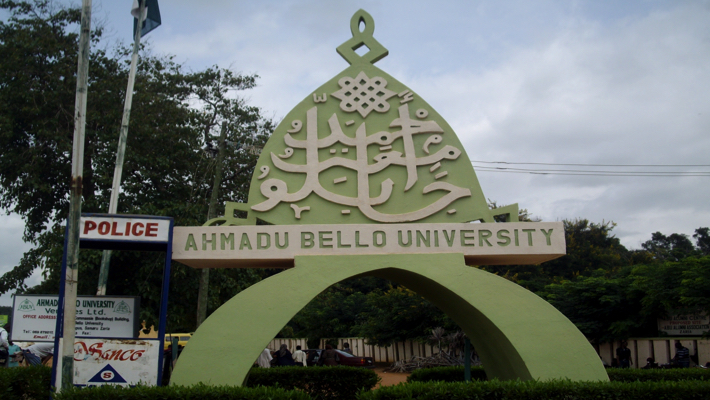
The management of Ahmadu Bello University (ABU), Zaria, has created numerous job opportunities for its current students. This is contained in a special bulletin dated Tuesday, January 9, 2024.
According to the director of the Counselling and Human Development Centre, Dr Sa’adatu Makarfi, the initiative named Students Work/Study Scheme aims to provide financial support to needy students and enhance their educational experience.
The scheme welcomes interested and capable students to work in areas such as coaching (for primary and secondary school students), research assistance, computer operation, harvesting, babysitting, laundry and car washing. Students can equally work as masters of ceremonies, and those with other specific skills are also encouraged to apply.
Interested students are to visit any of the Guidance and Human Development Centre offices at both the Samaru and Kongo campuses for registration or more information.
The Daily Reality gathered from some ex-students of ABU that the Centre has been assisting needy students who can work while studying, but this is probably the first time it is publicly calling for registration.
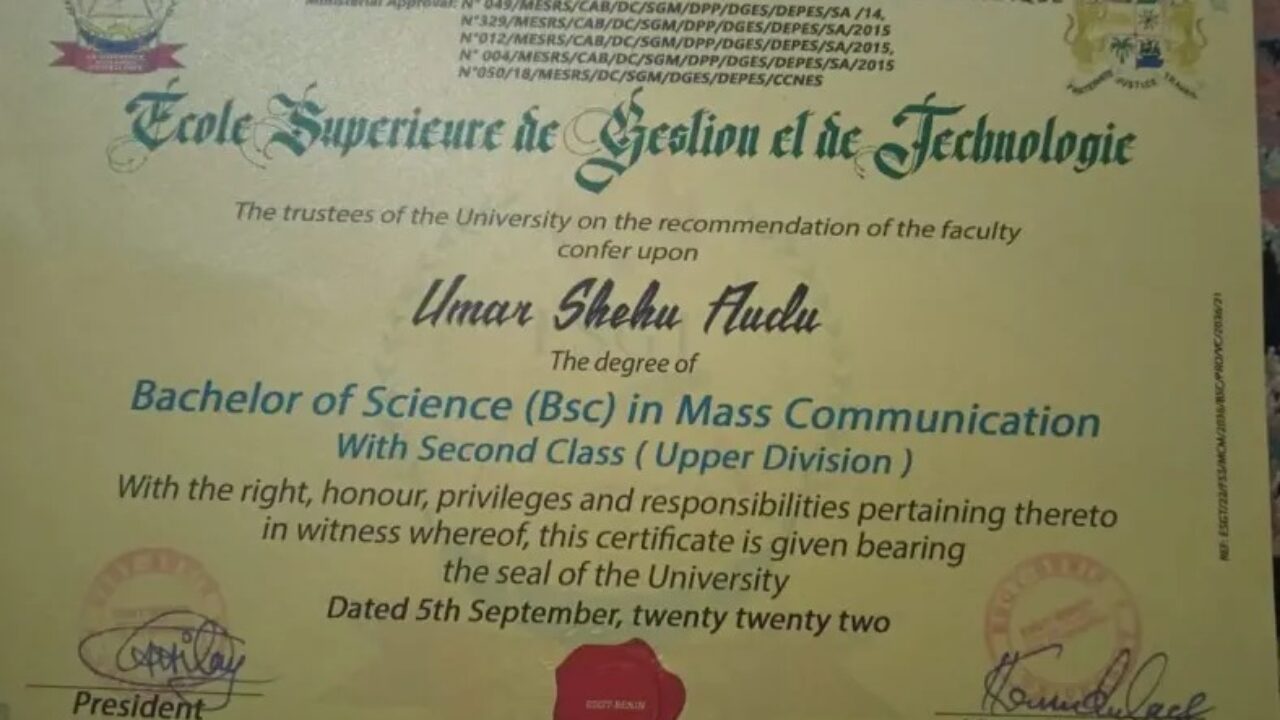
The excellent investigative report by the Daily Nigerian and the subsequent suspension of accreditation of degree certificates from Beninese and Togolese universities by the federal government of Nigeria has put a dent in every certificate genuinely or ill-obtained from institutions in these West African countries and some other African countries. This includes certificates from Eastern Africa as well.
The urge for these certificates, particularly among young Nigerians, is simply the price we pay for our inclination toward seeking easy solutions and allowing personal interests to override the national image.
One interesting aspect of the Cotonou ‘easy’ certificates is that they predominantly attract young people from Nigeria’s ‘semi-middle’ class and lazy individuals from wealthy families. For them, obtaining a bachelor’s degree often involves pursuing studies at Benin or Togo universities, which admit anyone can pay for the desired degree.
Another unfortunate aspect is that someone who obtains a bachelor’s degree in less than two months can easily secure a job in a sector involving life and death, make critical decisions in vital areas of Nigerian public life, or lead a group of competent individuals who have diligently earned their certificates. We hope there are no doctors, pharmacists, engineers, etc., practising in Nigeria who obtained their certificates through ‘crooked ways’ from Benin, Togo, etc. However, Nigeria’s professional and regulatory bodies should have prevented them from gaining entry.
Fake certificates pose a serious threat to the nation. This issue would be treated as a ‘war’ against the country in more developed countries. The Nigerian government should suspend accreditation from these countries and take decisive action to shut down these irresponsible institutions targeting Nigeria and punish the perpetrators.
However, Nigeria shouldn’t throw away the baby with the bathwater; some individuals have obtained certificates from reputable institutions in these African countries. Nigeria should address the issue from both ends—domestically and with these countries. Domestically, authorities must address why our young people opting for universities abroad. The answer lies in our universities being plagued with incessant strikes, some lecturers being unnecessarily sadistic, and sometimes foreign certificates being undeservedly celebrated.
Secondly, serene learning environments are attractive; some of Nigeria’s university lecture classrooms and theatres are overcrowded and in poor condition. In contrast, foreign universities provide beautiful and appealing learning spaces. Additionally, it raises questions about why graduating from a private university in Nigeria is often easier than a public university, especially when many lecturers at private universities are the same individuals teaching at public universities.
To address the issue at its source in these African countries, Nigeria should leverage its diplomatic influence in West Africa, compelling these nations to mandate that private universities adhere to established standards and penalise offenders. Those implicated should face legal consequences, as certifying unqualified individuals is akin to warring Nigeria’s human resources development and socio-economic sectors.
Fake degree certificates from Benin and Togo involve two actors: the institutions in those countries and their collaborators in Nigeria. Moreover, fake degrees are not confined to Benin and Togo; they are a global issue. According to a report by the Academic Credentials Evaluation Institute, Inc. (ACEI Global), based in Los Angeles, CA, USA, on December 2, 2023, Israeli police arrested 40 Israeli doctors, medical interns, and pharmacists who had presented false credentials to Israel’s Health Ministry. These individuals are suspected of purchasing medical and pharmacy degrees from three universities in Armenia despite never completing studies at those institutions—St. Tereza Medical University, Haybusak University, and Mkhtiar Gosh Armenian-Russian International University. The report also highlights controversies surrounding Punjab Technical University (PTU), India, including the issuance of fake degrees, leading to the arrest of four administrators for aiding failed students in passing.
If someone has genuinely obtained their degree from Benin or Togo, the current controversy has cast a shadow over it, and it may take some time to restore its credibility.
It is not just in Togo or Cotonou; mushroom universities are widespread in Asia, especially in India, Thailand, Indonesia, Malaysia and even some parts of core Europe.
The incident with this Cotonou one-year degree made me curious to discuss the issue with a student in Germany. He told me about the presence of substandard schools even in Germany. If such universities can be found in Germany, I wonder, where is safe? Most often, our federal universities in Nigeria, in comparison, seem to offer a more reliable education.
The significance of university rankings becomes apparent, particularly in the West, during job hunting. Employers often emphasise the importance of your university’s ranking in their consideration for an interview.
That’s why you’ll see graduates from places like Sudan or Cyprus facing challenges in passing medical and dental council exams in Nigeria due to the issues associated with their questionable degrees and institutions.
The situation in India is the worst one, and our best Nigerian students are often directed to these quack private universities, which are not on the accreditation list globally.
You’ll be seeing celebrities flaunting their graduation pictures and certificates obtained from Cyprus private universities while we know they are here in Nigeria shooting “Izzar So” and whatnot. How and when they studied still remains a mystery to all.
While not intending to generalise, our thirst for foreign certificates poses these challenges. Until we go for the best, our education and leadership will go nowhere.
Our government did an excellent job on these Benin and Togo degrees/certificates, until a system is established to check and authenticate these universities, the proliferation of quack PhD holders, which can indeed be detrimental to our growth will surely be the order of the day. Investing in our own institutions and striving for excellence globally should be our main priority and concern.
Muhammad Sani Usman can be reached via muhdusman1999@gmail.com.
Poverty has far-reaching consequences on various aspects of society, including health, education, and social structure. Understanding these repercussions is crucial for addressing the root causes and developing effective strategies to alleviate poverty and its associated issues.
1. Health
Poverty significantly impacts health outcomes. Limited access to nutritious food, clean water, and adequate healthcare services contributes to a higher prevalence of malnutrition, infectious diseases, and chronic conditions among the impoverished. Lack of resources often results in substandard living conditions, exposing individuals to environmental hazards. Additionally, stressors associated with financial insecurity can lead to mental health issues, further exacerbating the overall health burden.
2. Education
Poverty creates barriers to educational attainment. Families struggling with economic hardships may prioritise immediate needs over investing in education. Children from impoverished backgrounds often face challenges such as inadequate access to quality schools, resources, and educational support. Limited access to books, technology, and extracurricular activities hinders their development. As a result, the cycle of poverty continues, as these individuals may find it challenging to break free from their circumstances through education.
3. Social Structure
The social fabric of a community is intricately linked to economic well-being. Poverty can contribute to the fragmentation of social ties as individuals grapple with the stress and uncertainty of their circumstances. Communities with high poverty rates may experience increased social inequality and a lack of social cohesion. This can manifest as reduced community engagement, weakened support networks, and a diminished sense of belonging.
4. Crime
Poverty is often identified as a significant factor contributing to crime. Several mechanisms explain this relationship. Firstly, individuals in poverty may resort to criminal activities as a means of economic survival. Limited opportunities for legitimate employment can lead some to engage in illegal activities to meet basic needs. Additionally, impoverished communities may experience higher rates of substance abuse, which can further contribute to criminal behaviour.
Furthermore, the lack of access to quality education and limited social support in impoverished areas can result in a higher prevalence of delinquency. The frustration and hopelessness stemming from persistent poverty may lead individuals, particularly young people, towards criminal behaviour as an alternative to breaking free from their challenging circumstances.
Addressing the Link Between Poverty and Crime
A multi-faceted approach is necessary to mitigate poverty’s impact on crime. Policies to reduce poverty through economic empowerment, education, and healthcare access are crucial. Investments in education, vocational training, and job creation can provide individuals with opportunities to escape the cycle of poverty and reduce the likelihood of resorting to criminal activities.
Social support programs that strengthen community bonds, mental health services, and addiction rehabilitation can address some of the root causes of criminal behaviour associated with poverty. Additionally, targeted efforts to improve law enforcement-community relations and reduce systemic inequalities can contribute to crime prevention.
In conclusion, poverty has profound consequences on health, education, and social structure, with a direct link to increased crime rates. Breaking this cycle requires comprehensive strategies that address the systemic issues contributing to poverty and simultaneously provide individuals and communities with the tools and resources needed for positive transformation.
Umar Sani Adamu (Kawun Baba) wrote via umarhashidu1994@gmail.com.
In the hustle of everyday life, many people find themselves navigating through challenges, and for some, the journey includes the demanding world of academia. A recent encounter with a university student sheds light on the harsh reality students face on the path to education, especially in Nigeria today.
As a graduate waiting for our results to be released, I engaged in a rickshaw business. As I was moving through the city of Jos, Plateau State, I picked up a young woman who, by all appearances, seemed to be a dedicated university student. Little did I know that the shadows of academic hardships marred her journey.
Her phone conversation with a fellow coursemate delved into the frustrating realm of carryovers and spillovers. According to her, some lecturers seemed to wield their power recklessly, subjecting students to the ordeal of repeating courses, even after graduation. What struck me was the claim that these burdens were inflicted upon students who resisted inappropriate advances.
With a frustrated tone, the young lady spoke of the financial strain that accompanies repeating courses. Despite the current economic challenges faced by many Nigerians, students find themselves compelled to pay registration fees to rectify the consequences of what appears to be an unjust system.
If the allegations are indeed true, and this is a manifestation of the notorious “sex for grades” issue, it raises serious concerns about the ethical conduct within our educational institutions. It is a cry for justice that cannot be ignored.
In response to these distressing revelations, a collective responsibility falls upon the government, the Students Union, and the wider public. The government must ensure a thorough investigation into these claims, holding accountable any lecturer found guilty of such misconduct. The Students Union has a vital role in advocating for the rights of its members, providing support, and pushing for systemic changes that protect students from exploitation.
Moreover, the public must not disregard the struggles faced by these students. Awareness is the first step towards change. By shedding light on these issues, we collectively contribute to fostering an environment where students can pursue education without fear of victimisation. Only through collective action and a commitment to transparency can we hope to eradicate these hardships and create a safe space for education to flourish.
While mastering essential skills and knowledge is crucial, true success today often hinges on going beyond the baseline and actively cultivating personal growth. It’s about unlocking your full potential and becoming the best version of yourself.
It’s common that in order to do your job effectively, you need to have the technical know-how, or more so, you need to earn a certificate and license in order to practice for professional careers. These are the essentials. The prerequisite for skill practice. They provided the foundation – the sturdy scaffolding upon which we built our lives. They equipped us with the knowledge and skills to navigate the complexities of the world and secure a foothold in the ever-churning tide of life.
In this constantly ever-changing world, with different definitions of success always emerging, from being prowess with hard work to earning academic accolades, or both, now to low-profile, nuanced skills that are embedded in our personal character, termed soft skills, personal growth skills, or more so abilities beyond the technical, that propel us toward success. The skills, degrees, and certificates we earn alone may not, by themselves, help us build the career path we aim to reach. We found ourselves in an era where the application of artificial intelligence is rampantly proliferating, where distance and space are no longer barriers, and where employers are looking for employees that have skills that show the warmth of empathy, active listening, imagination, time management, efficiency, and the spark of passion to ignite self-discovery.
In his famous book, Skills Rather Than Just Degrees, Professor Isa Ali Pantami cited that the major unemployment challenges Nigeria faces are not, in part, the unavailability of jobs but rather, unemployability, where “positions cannot be filled because there are graduates and candidates without the requisite skills to take up such positions.” This is where personal growth steps in: having the dexterity to handle complex projects under pressure, to think critically outside the box, to prioritize tasks at hand, and to problem-solve effectively and efficiently. It’s about communication skills—the ability to organize your thoughts and communicate them in a clear, precise, and simple way without ambiguity while putting empathy and compassion into consideration. It’s about your interpersonal skills, how you relate to your peers, and your emotional intelligence—how you react to things that happen around you. Personal growth isn’t a linear path; it’s a winding journey punctuated by triumphs and stumbles, laughter and tears. It’s about embracing the detours—the unexpected turns that lead us to hidden treasures within ourselves. It’s about learning from our mistakes, not as failures but as stepping stones to a higher vantage point. Personal growth is about recognizing that the pursuit of knowledge is not confined to textbooks but blooms in the fertile ground of lived experiences. It’s the volunteer project that pulls us outside our comfort zones, revealing hidden depths of empathy and strength. It’s the heartbreak that cracks open our hearts, teaching us the profound dance of vulnerability and resilience.
In this era, what employers look for in candidates now is, mostly in part, what benefit you can bring to the table, how critical and quick you are in thinking and spotting opportunities, how open-minded you are in adapting to new ideas and environments, how broad-minded you are in project management, and how good you are in thinking about how those projects can be executed in a cheap and better way. So also, how analytical are you at predicting the future? Personal growth is about cultivating the habit of lifelong learning. A lifelong learning habit will give you an edge among your peers, make you important and relevant in your workplace, or give you a competitive edge in your business domain.
Great leaders, either in business or public organizations, tend to excel in their respective domains because they read books, update themselves regularly with the current trends in their domain, and choose to go out of their comfort zone to seek new knowledge and experience. You are better off succeeding at your job or business if you use your time to read books for personal and career growth that will change your thinking and broaden your imagination. You are better off succeeding if you use your time to learn soft skills from online learning platforms like Coursera, Udacity, Udemy, and LinkedIn online courses, among many others, to leverage the gap for the skills you lack that will give you a competitive advantage in your domain or help you land a job in top-notch corporations. You are better off succeeding if you use your data subscription to watch Youtube videos, TedTalks, documentaries, and listen to postcards that will hone your skills, broaden your knowledge, and open your eyes to global trends in your career. You are better off succeeding if you can give yourself to volunteering and/or internships, especially at the beginning of your career, where you will have ample opportunity to gain lots of experience and mentorship and, at the same time, clinch a job whenever there is a vacancy in the organization or from a different organization through a referral from someone in the organization you are volunteering for.
You are better off succeeding if you seek out mentors that can offer valuable insights, shortcuts, and advice on navigating challenges you might face and share their expertise in your field, helping you develop new skills or refine existing ones and provide unbiased feedback on your work, performance and ideas. This can help you identify areas for improvement and make more informed decisions. Personal growth is a lifelong journey, not a destination. Embrace the process, enjoy the learning and witness how it transforms you into a more successful and fulfilled individual.
Muhammad Muzzammil Bashir can be reached via; mbashir199@yahoo.com
Teaching, a practice dating back to the inception of human civilisation, remains the cornerstone of knowledge dissemination and societal development. Across diverse forms, teaching has profoundly influenced our lives and the world at large. It’s the vessel through which knowledge, information, and invaluable experiences are preserved and transmitted across generations. In the structured confines of schools, students engage with various disciplines, not solely to absorb knowledge but also to challenge, reframe, and contribute to a brighter future.
Yet, despite being the progenitor of all professions, Nigeria seems to overlook the significance of the teaching profession, unlike professions like law or medicine, where extensive training and years of study are prerequisites, teaching frequently appears as an accessible career path, sometimes attracting individuals without the essential pedagogical skills or comprehensive subject mastery.
This oversight manifests glaringly in the underappreciation of teachers by the Nigerian government, notably in the form of insufficient compensation. The meagre salaries offered to educators fail to recognise the intricacies and demands inherent in their roles, severely limiting their ability to perform optimally and affecting their morale.
Additionally, the teaching landscape in Nigeria grapples with a multitude of challenges that impede effective education delivery. Inadequate infrastructure, including a scarcity of classrooms, laboratories, libraries, and teaching materials, is a significant barrier to teaching and learning. This scarcity, coupled with a shortage of qualified educators and deficiencies in teaching methodologies, hampers students’ ability to reach their academic potential.
The lack of comprehensive and quality teacher training programs is a significant challenge educators face in Nigeria. Many teachers enter the profession without adequate preparation, lacking essential pedagogical skills and updated teaching methodologies. This deficiency in training directly impacts their ability to engage students effectively, cater to diverse learning needs, and employ innovative teaching techniques. Insufficient training also hampers educators in adapting to evolving educational trends, impacting the quality of education imparted to students across various levels of schooling.
Consequently, Nigeria’s education system suffers, and the ramifications are dire. If not rectified, this neglect of teaching—the bedrock of all professions—will perpetuate the birth of underqualified professionals. It’s a situation that could escalate brain drain, where competent educators seek opportunities abroad where their expertise is appreciated and duly rewarded.
Recognising the pivotal role teachers play in shaping society, there’s an urgent need for substantial reforms. It starts with acknowledging and properly compensating teachers for their arduous task of moulding minds and futures. Additionally, investing in comprehensive teacher training programs, extending the duration of educational courses to allow for a more thorough mastery of teaching methodologies, and implementing stringent selection processes for educators are imperative steps.
The government’s commitment to furnishing all schools with adequate resources and facilities is equally crucial. This holistic approach ensures seamless teaching and learning experiences, vital for the nation’s educational advancement.
In conclusion, it’s paramount to accord teachers the reverence and support they deserve. Their pivotal role in shaping both individuals and the world demands acknowledgement and concrete actions aimed at rectifying the systemic deficiencies currently hampering the teaching profession in Nigeria.
Ibrahim Tukur is a hearing–impaired individual from Ingawa, a town in Katsina. He earned his first degree in Special Education/Sociology. He is a Disability Rights Advocate and can be reached via inventorngw@gmail.com.
In Nigeria’s many socioeconomic challenges, one issue stands out as the biggest threat, casting a gloomy shadow over the present and the nation’s future. Youth unemployment is a subject that elicits head shakes, furrowed brows, and a sense of impending doom. But beyond the sombre tone, let me unravel the implications of this predicament and infuse a touch of hope— and a pinch of ‘humour’ into this all-too-serious subject.
Youth unemployment in Nigeria isn’t just a problem; it’s an iceberg of colossal proportions. The National Bureau of Statistics (NBS) stated that Nigeria’s unemployment rate rose to 33.3% as it stood at the rate of 4.1% in the first quarter of2023, which translates to about 23.2 million people— youths, in particular. Let’s face it: numbers don’t always tell the whole story. Picture this: some hundreds of thousands, nay, millions of mostly educated, bright young minds stuck in a seemingly endless and almost fruitless game of job hunting— a game with fewer opportunities and a mammoth crowd of players.
It’s a perplexing paradox, navigating through such a complicated realm that occasionally resembles a labyrinth of bureaucracy and nepotism. These players could either be overqualified or, in many cases, underqualified, creating a complex, ‘funny’ puzzle that baffles many— in a head-scratching manner.
Now, one might wonder why we care about this particular problem: youth unemployment. And even go on to declare it a “time bomb”? Too strict a term? Well, let me draw you a vivid picture. A sizeable chunk of our youths are left idle, grappling with feelings of inadequacy, financial crisis and frustration. Do you think all will end well? No! If not given the needed attention and channelled constructively, this sluggish energy can surely fester and lead to various social ills in unimaginably ugly ways. So, you see? It’s not just a ticking time Bomb: it’s an evil fuse that could ignite a powder keg of problems for this country.
It’s still not too late for the authorities to right this wrong. We’ve analysed the problem to an extent. Let’s talk solutions because dwelling on problems only, without drawing out remedies, is almost like writing a story with no plot. Nigeria’s youth is its greatest asset, with creativity and untapped potential. A serious country can’t afford to let this resource go to waste. More than ever. Now is the time to bridge the gap between the skills our youths (are assumed to) possess and the skills demanded by the labour market.
Various vocational trainings (not the usual ‘crash’ workshops that hardly change a thing!) and education systems tailored to market needs can play a vital role. The government and the stakeholders in the private sector need to collaborate and determine what knowledge and skills young people should be taught to have rewarding jobs, considering how businesses are suffering from skills mismatch. Government should play a more active role in promoting appropriate education and Capacity-building for the youth.
Another equally important area to work on is entrepreneurship. Why not encourage more young entrepreneurs in a country where the labour market is fiercely competitive? Our youths are teeming with brilliant ideas waiting to be hatched. Government support, access to funds and mentorship programmes can nurture these promising— budding business moguls.
Technology and Innovation. Nigeria’s burgeoning tech ecosystem offers great hope. The digital world is undoubtedly a place where opportunities abound for a tech-savvy. The government should then invest in technology infrastructure and create an environment that supports innovation and startups and training and mentorship for young people. These and many other initiatives centred on progress and empowerment can go miles in addressing our plight.
The evil of unemployment in Nigeria is undoubtedly a ticking time Bomb, but it doesn’t have to detonate. By investing in skills development, nurturing entrepreneurship, promoting innovative empowerments and retaining our trademark diligence, we can defuse this albatross and unleash the incredible potential of our youths.
Columbia is an Ivy League University, one of the eight most prestigious institutions in the United States of America. Ph.D. students at this university undergo two years of coursework. One of the classes I took was Islam, Knowledge and Forms, which a visiting professor from Germany taught. Part of the course is a library visit to the exhibitions section under the project of Islamic Sciences, Science, Nature, and Beauty: Harmony and Cosmological Perspectives in Islamic Science (2022) at Butler Library, the largest library of Columbia University with millions of resources.
The exhibition contained objects, images, rare manuscripts, and other learning materials. Two materials, among others, became the most astonishing factors in the exhibition: one of them is a rare copy of the Holy Quran, and the second is a locally handmade wooden tablet (Allo).
The instructor asked everyone to talk about any material in the exhibition. Students gave their feedback on the experiences passionately; different things wowed everyone. When it came to my turn as someone who had known these items since childhood in my father’s private library, where we sneaked as children, which housed similar treasures. To us, these are the most useful items in his library as we do not read books; we only view images and magazines, such things that are not viewed as essential to the readers. Then, I shared my familiarity with these items, telling them I was exposed to most of the exhibited materials from my upbringing in Northern Nigeria, including “rare manuscripts” of the Quran.
The Quran displayed was a giant copy of the original Uthmanic Quran, denoted to the third Caliphate of the Muslim nations who reigned (644/23H–656/35H). It was so amazing to all of us. As for me, the Quran is the most frequently read book in my entire life, and to their surprise, I can read this copy fluently without diacritical marks. I highlighted that memorising the holy Quran, even without understanding Arabic, is common in Northern Nigeria. Most of my fellows never knew that sometimes people memorise it at an early age. I did not shock them with that, as I am one of them.
In the second incident, Professor Brinkley Messick invited me to speak in his class on Islamic Shariah Law as someone with experience with an Islamic Madrasa background and went to Azhar University in Egypt. The theme of the class is the Islamic madrasa. He is interested in the Islamic tradition, as evident from the cover of his book, “Calligraphic State.”
Allo
The Professor brought Allo a wooden tablet to the class and circulated it to students. Everyone was looking at it with surprise. I named it to them as a personal tablet for inscription and memorisation of the holy Quran, and the students asked for more details. I said we write verses from the holy Quran for memorisation after repeating it several times; not everyone understands how that works, except those with Islamic background. However, when I told them when we wash the script, we drink it, everyone was left with open mouths, surprising our embodiment of the holy book, including the professor. They could not process as modernised individuals with high sensitivity to germs and bacteria. Again, as I told our class last semester, this is very common in Northern Nigeria.
Coincidently, one of the attendees from a Saudi background added that people used some scripts for Talismite and protection from Djinn (Ruqyā in Arabic or Ruqiyya in Hausa) by reciting some verses in water. I told her this is true; we have that part in our culture too, but the biggest part is that we drink washed script for the embodiment and show respect for not letting a drop of that water on the ground as a sacred word. As kids, we were told that whatever verses we memorise from the holy Quran and drink will stay in our hearts for a long time.
In reference to that, American Professor of Islam in Africa Rudolph Ware published his book Walking Quran on the Madrasa system in West Africa. He referred to those Quranic students’ embodiment as the Walking Quran in relation to the narration of the Hadith reported in the books of Hadith such as Ṣaḥīḥ Muslim; Aisha was asked about Prophet Muhammad’s PBUH character, and she said he was a Walking Quran.
Our cultural legacy, often undervalued by some of us in our region, gained recognition at Ivy League institutions. Those people appreciate a centuries-old Quranic educational tradition or Almajiri system and show their respect to our subregion. Even our way of drinking the washed script of the Quran mesmerised them.
A professor dedicated his projects to studying a school system called Daara schools in Senegambia or the Tsangaya schools in Northern Nigeria, making it evident that our legacy is an astonishing point to those communities. Then, as indigenous Africans who were introduced to the colonial system of Education less than a century ago in Northern Nigeria, we should be more proud of our system by appreciating those communities who choose to preserve it, as they make our subregion a central point of high intellectual conversation around the world.
We should not deny our legacy by stigmatising the Almajiri system of education. Instead, we should support it and create a way of modernising it to empower and preserve our centuries-old legacy. Whoever shows kindness to the Quran and its reciters will receive people’s applauses in this life, including Western intellectuals, and God’s reward in the hereafter. Thanks to those state governments in Northern Nigeria who support and recognise this system of education.
Umar Sheikh Tahir is a PhD student at Columbia University, New York, USA. He can be reached via ust2102@columbia.edu.
The whole Cotonou degree is criminal and all those involved need to be fished out and punished. Some people might see us as harsh or maybe insensitive for saying this.
There are things we cannot say in public, but one needs not to be prophet of doom to predict that Nigeria cannot withstand this onslaught and will eventually crash.
Our desperate quest for certification through whatever means led us to this situation. Parents are desperate to have their kids in the university, some even underage (we saw 15, 16 and 17 year olds being pushed to universities), whose mental capacity is too elementary to grasp or cope with challenges of university education.
The crises in higher education and the adoption of neo-liberal policies that have no place in a developing country like ours also contributed to this confusion. Consequences of commodification of knowledge is enormous in a country with no strong institutions to checkmate excesses and greed of capitalists. The results is the proliferation of degree mills all over.
Adoption of neo-liberal policies means cutting funding for public services like education, health and sanitation. Nigerian public universities suffer from these policies. Funding was cut, citing many reasons. The results is restrictions in admissions. When you have many applying to enter university and the slots are few, universities have to admit based on quota. Therefore, few can be admitted.
Parents, in their desperate efforts to get their children into universities, started sending their kids to some African countries for bachelor’s degrees – Uganda, Benin Togo, Ghana, Sudan, Niger Republic, etc.
Another reason is the dichotomy between degree and HND. Many people affected by stagnation in their places of work because of HND opted for a way to have a degree that can help them get promoted. Many went for the Cotonou degree. Since it is acceptable by MDAs or they made it acceptable, most of them started trooping to these mushroom universities to obtain these degrees to get promoted.
Then we have people who can’t cope with rigorous nature of our public university system. I know a lot who not only failed exams, but are withdrawn from diploma programmes, but appear after 6 months with a degree from these degre milling centres. Others could not pass UTME therefore unqualified to enter public universities. Cotonou degree provide an alternative.
The last, in my opinion, are those running from ASUU strike. Many parents justify purchasing the Cotonou degree because of the unending industrial disputes in the public universities.
I don’t want to talk about the “motor park gang” led by former minister of education Adamu Adamu and his National Universities Commission (NUC) executive secretary, who bastardised the university system for only God knows why. They have killed what remained of our public university system.
Lastly, some of our private universities are not any different from the “Cotonou universities”.
President Bola Tinubu needs to do a lot more to rescue the situation. I like how the Minister of Education, Prof. Tahir Mamman, handles the situation. But sincerely, the students of these dubious universities, their agents, officials from Federal Ministry of Education, NUC and the other places need to be rounded up, arrested and punished according to our laws.
Kabiru Danladi Lawanti, PhD, wrote from the Department of Mass Communication, ABU Zaria, via kblondon2003@yahoo.com.