Education

Hisbah saga: governor’s public condemnation, misstep in leadership

By Umar Sani Adamu

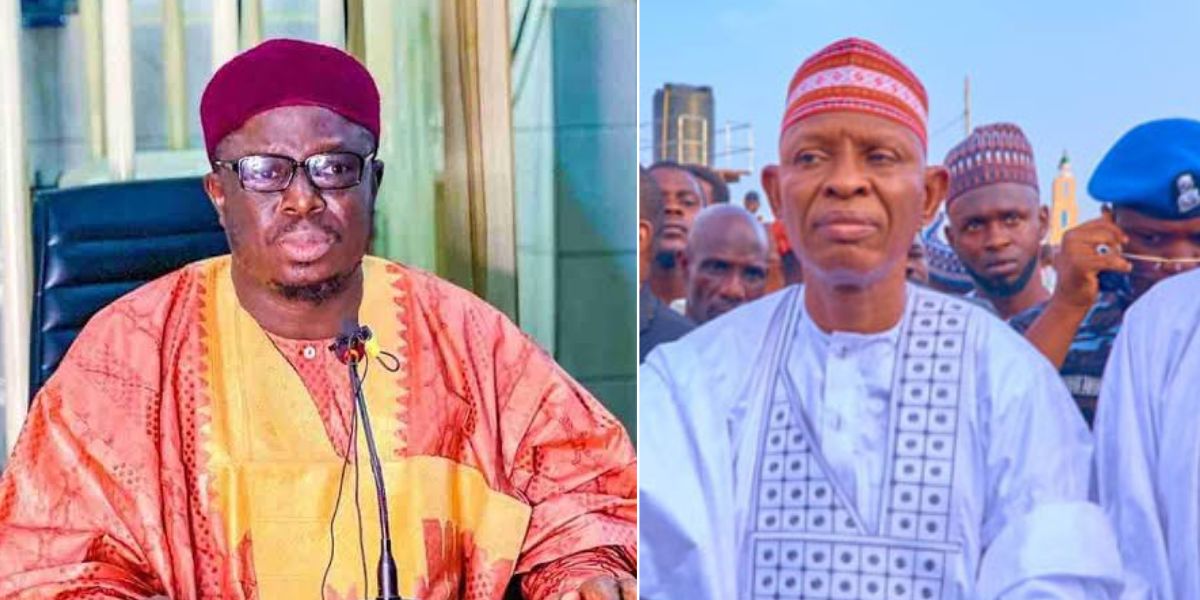
The recent public criticism by Governor Abba of the Hisbah board in Kano State has sparked controversy and raised concerns about leadership decorum and responsible governance. While it is crucial for leaders to address concerns and seek improvement within government agencies, the manner in which Governor Abba chose to express his dissatisfaction raises questions about his leadership style and the potential consequences of his actions.

First and foremost, criticizing a government agency publicly, especially one tasked with religious and moral enforcement like the Hisbah board, can create unnecessary tension and undermine public trust in the institution. Governor Abba’s decision to air his grievances in a public forum instead of handling them internally or through diplomatic channels demonstrates a lack of discretion and undermines the credibility of the Hisbah board.

Furthermore, by openly criticizing the Hisbah board, Governor Abba risks exacerbating existing tensions within the community and fueling resentment towards the agency. This could potentially undermine the effectiveness of the Hisbah board in carrying out its duties and could lead to a breakdown of law and order in the state.

Additionally, Governor Abba’s public criticism of the Hisbah board without offering concrete solutions or constructive feedback demonstrates a lack of leadership maturity. Effective leaders understand the importance of providing constructive criticism in a constructive and respectful manner, focusing on solutions rather than simply pointing out problems.

Moreover, Governor Abba’s decision to publicly criticize the Hisbah board instead of engaging in private dialogue with relevant stakeholders, such as Sheikh Mallam Daurawa, further highlights his disregard for diplomatic protocols and his tendency to prioritize personal agendas over the well-being of the community.

Adding the context of Murja Kunya’s situation provides further insight into the potential implications of Governor Abba’s public criticism of the Hisbah board. Murja Kunya, a social media influencer, has been accused by the Hisbah board of encouraging indecency and immorality. In this context, Governor Abba’s public condemnation of the Hisbah board could be interpreted as a form of protection for Murja Kunya.

By publicly criticizing the Hisbah board’s handling of the situation, Governor Abba may be perceived as undermining their authority and potentially shielding individuals like Murja Kunya from accountability. This not only weakens the effectiveness of the Hisbah board in enforcing moral standards within the community but also sends a troubling message about the government’s commitment to upholding moral values and protecting societal norms.

In light of these circumstances, Governor Abba’s public condemnation of the Hisbah board takes on an even greater significance. It not only raises questions about his leadership style and approach to governance but also calls into question his commitment to upholding moral standards and protecting the well-being of the community.

Therefore, it is imperative for Governor Abba to reconsider his approach and prioritize responsible leadership that fosters constructive dialogue and collaboration, while also upholding the values and principles that are essential for the well-being of society as a whole.

Umar Sani Adamu (Kawun Baba) 

Letter to Malam Isa Yuguda

By Mukhtar Jarmajo

Your Excellency, during your tenure as the Governor of Bauchi State from 2007 to 2015, you initiated and oversaw the implementation of various initiatives in the education sector. The long-term effects of these initiatives on the state’s citizens are still being evaluated.

One cannot overstate the significance of the Bauchi State University, Gadau. Established during your administration, the university has transformed into a thriving institution, empowering thousands with higher education. These graduates are not merely individuals equipped with knowledge, they are the architects of a brighter future for the state.

Furthermore, your decision to hand over the Bauchi State Specialist Hospital to the Federal Government paved the way for the establishment of the Abubakar Tafawa Balewa University Teaching Hospital (ATBUTH). This seemingly simple act had profound consequences. ATBU, previously lacking the facilities for medical courses, now flourishes with a thriving medical program. Last week, a milestone was achieved – the graduation of the university’s first set of doctors.

These achievements, Your Excellency, stand as a beacon of your forward-thinking approach. You recognized the critical role education plays in empowering individuals and propelling the state’s development. Your decisions, made with foresight and a commitment to the betterment of Bauchi state, continue to resonate till today.

While your time in office has since lapsed, the legacy you leave behind continues to flourish. You have earned the gratitude of the people you served, and your story serves as an inspiration to aspiring leaders who understand the transformative power of education.

Mukhtar Jarmajo, Lobito Crescent, Wuse 2, Abuja.

My Language, my pride

By Abdurrazak Muktar Makarfi

Have you ever stopped to think about the language you speak and how awesome it is? Well, I’m here to tell you about the Hausa language, and let me tell you, it’s pretty amazing! As someone who speaks Hausa, I’m bursting with pride to share why this language is so special.

Let’s take a little trip back in time to the historical kingdoms of the Hausaland, nestled in what is now called Nigeria and some other neighboring countries. That’s where the Hausa language started to take shape, blending influences from trade, migration, and cultural exchanges over the centuries.

Now, here’s the cool part – Hausa isn’t just a local language. Nope, it’s a global superstar, ranking as the 11th most spoken language in the world! Can you believe it? From Africa and beyond, millions of people speak Hausa, making it a real powerhouse in the linguistic world.

But Hausa isn’t just about saying words; it’s a whole vibe, a cultural identity that connects people across borders. It’s like a treasure chest of traditions, stories and values passed down through generations. The Hausa language is the heartbeat of West Africa, pumping life into its rich cultural tapestry.

Okay, let’s talk on business and politics. Hausa isn’t just chilling in the background; it’s making things to happen. As a lingua franca in West Africa, it’s a language of trade, commerce, and diplomacy, bringing people together and driving progress in the region.

Now, let’s zoom in to education. Imagine learning in a language that’s close to your heart, that speaks to your soul. That’s what Hausa language education does for millions of kids, giving them a solid foundation in learning while celebrating their roots.

Sure, Hausa language faces challenges like any other, but it’s also full of opportunities. We’re talking about initiatives that promote awareness, document our language’s rich history, and bring Hausa into the digital age.

So there you have it – the awesomeness of Hausa language in a nutshell! It’s more than just words; it’s a celebration of culture, a bridge between people, and a source of pride for millions. As a proud Hausa speaker, I’m shouting it from the rooftops – Hausa language rocks!

From the pen of Abdurrazak Muktar Makarfi, a proud Hausa speaker

Day Science College: Sustainability in Interventions 

By Mahmud Aminu Dambazau

The renewed interest in the state of infrastructure at Day Science College, Kano, by its alumni is highly commendable. When I was admitted thirteen years back, the school was one of the best in Kano State. No student sat on the ground; teaching materials were adequate; the library was full of books; the Physics, Chemistry, Biology and  Agric laboratories were well-equipped and functional. There was a Technical drawing studio, a weather station and even a computer lab provided by MTN. 

A large generator and school bus provided by the Malam Ibrahim Shekarau administration were well-maintained and functional. The toilets were clean and accessible. We even had a mini farm utilised by the agricultural students; water was never scarce. The school mosque had enough mats. That was then!

The academics, discipline and respect were topnotch. We wouldn’t have been one of the best if we had not been so lucky to have some of the best teachers across all disciplines. The current intervention proposed by the school’s old students might solve or at least reduce the present infrastructural gap. Below are  suggestions I think would help in sustaining or maintaining such and future interventions. 

A report by the 2012 chapter of The Old Students in 2021 revealed that there wasn’t even one classroom fully equipped with infrastructure and several classes without a single seat! The situation is worse at the moment. This is despite the interventions by corporate bodies, NGOs, CBOs, alumni, individuals and probably even the government. Maintaining infrastructure and equipment is impossible without funding. This decay might have been contributed by the pronouncement of free education by the government without providing alternative funding for these maintenances and other costs. 

I, therefore, propose a meeting with parents, teachers and representatives of chapters of the old students. Parents should be made to understand the importance of quality education and the present state of the schools in the absence of a stable funding option. The parents should, therefore, pay the sum of just five hundred naira (500) per student each term, which will, of course, not be school fees but meant for the provision and maintenance of physical and learning infrastructure. The individual chapters from the alumni should similarly pledge and contribute an annual fee of ten thousand naira (10,000) to be utilised for the same purpose.  

A friend of mine, Engr. Mustapha Tukur founded an initiative initially meant to consist of one hundred individuals in the Gadon kaya area of Kano who contribute the sum of one thousand naira monthly. I still can’t believe the number of interventions we have made through the voluntary contributions, which now involve other friends of his, even outside Gadon Kaya. With thousands of us as old students of Day Science College, if we could get just one thousand volunteers who could contribute one thousand naira per term (3-4 months),  we would be getting a million naira each term, which will go a long way in solving these issues raised in both short and long term.  

These funds can be managed by a committee with representatives from the parents, teachers,  school management, the school’s alumni and a representative of the KASSOSA national body.  The committee could be named Day Science Development Fund with clear guidelines, objectives, terms, timelines and deliverables.  

The above recommendations should not stop future government,  individual, chapter, or corporation interventions.  

While interventions have almost always been focused on physical infrastructure, there is a need to pay similar attention to the quality of education rendered. I was present at a debate organised by the pioneer administration of the KASSOSA BUK chapter among science school students. Day Science emerged second to the last, even though it was among sister science schools. The school, KASSOSA, or any respective chapter did not care to collect, analyse and report students’ performances at SSCE or similar examinations. While it is possible to excel academically without infrastructure,  it is impossible without quality education, even with the best infrastructure.  

On this note, I suggest an assessment be conducted to determine the number of teachers currently available for each course. Where the teachers are inadequate, Kassosites, with emphasis on those from Day science, should be engaged on contract to supplement the shortage. 

We have numerous alumni who have graduated yet are unemployed. If monies could be realised, an allowance which can cover their transportation and possibly feeding should be given to them. With that, we would have helped the school, its students, and the members of the old students who would ordinarily have been idle. With these interventions, I believe the past glories of Day Science College, now Mukhtar Adnan Day Science College, will be renewed.  

Mahmud Aminu Dambazau is a graduate of KASSOSA DSCK Class 2013. He sent this article via madambazau@gmail.com.

5 ways students can leverage generative AI to improve their academic performance and career prospects

By Najeeb G. Abdulhamid, PhD

I was recently working on a document about the ethical and responsible use of generative AI in academic research. It struck me that I hadn’t explored the potential of this technology for students themselves. So, I’ve compiled 5 potential uses cases for generative AI that can enhance learning while promoting responsible and ethical practices.

1. Leveraging Generative AI for Peer Feedback

One of the benefits of generative AI is that it can provide feedback on your work. Whether you are writing an essay, preparing a presentation, or working on a project, you can use tools like Bing Copilot, ChatGPT, Google Gemini, and Claude.AI to get comments on your draft. These tools can identify your strengths and weaknesses, suggest improvements, and ask insightful questions. This can help you polish your work and learn from your mistakes.

However, you should always verify and cite the feedback generated by these tools. Do not blindly accept or copy their suggestions without checking their accuracy and relevance.

2. Using Generative AI as a Personal Tutor

Another way to use generative AI is to get personalized tutoring. You can use these tools to review course materials, prepare for exams, and explore new topics. For example, you can use these tools to generate summaries, outlines, or flashcards from textbooks, lectures, or slides. You can also request practice questions, hints, and solutions tailored to your specific course and difficulty level. Additionally, you can use these tools to generate summaries, analyses, and insights based on your research questions and sources, allowing you to explore new areas of your field.

However, you should not use these tools as a substitute for your instructor, textbook, or classmate. You should still attend classes, do your readings, and participate in discussions.

3. Using Generative AI as a Source of Inspiration

Generative AI can also spark your creativity and self-discovery. You can use these tools to generate new ideas or content related to your interests, like stories, poems, music, images, recipes, or travel guides. This can help you discover hidden talents and passions, broaden your perspectives, and uncover new possibilities.

However, you should not use these tools to plagiarize or copy the work of others. You should always give credit to the original sources and the generative AI tools you used.

4. Using Generative AI as a Copilot to Conduct Research

Generative AI can also assist you in conducting research. You can use these tools for brainstorming and ideation, summarizing relevant literature, and exploring research questions, methods, findings, limitations, and recommendations.

Additionally, these tools can help you refine your language and address potential grammar or clarity issues in your draft papers. This can help you conduct research more efficiently, communicate your findings with greater clarity, and effectively convey the significance of your work.

However, you should not use these tools to fabricate or falsify data, code, or results, or to misrepresent or exaggerate your findings and implications. Always follow the ethical and responsible principles and practices of research, such as transparency, accountability, fairness, and privacy.

5. Leveraging Generative AI to Build Stronger Teams

With the rise of project-based learning, fostering effective teamwork is crucial. Generative AI tools can help you generate suggestions and tips for successful collaboration, such as strategies for setting roles and responsibilities, managing conflict, and resolving issues. These tools can also generate project plans outlining tasks, deadlines, and deliverables.

Additionally, they can create templates that prompt you to define roles, goals, communication methods, and feedback mechanisms. This can help you develop interpersonal, leadership, and problem-solving skills, ultimately improving team productivity and satisfaction.

However, you should not use these tools to replace or undermine the human element and the social aspect of teamwork and collaboration.

A Word of Caution: Responsible Use is Key!

While these applications hold great promise, it’s crucial for students to check with their faculty and consult their academic integrity handbook first. If specific policy guidelines aren’t established, here are some golden rules for responsible and ethical use of generative AI tools:

• Verify all information: As the user, you are ultimately responsible for ensuring the accuracy, relevance, and appropriateness of your work. Do not blindly accept AI-generated content without thorough verification.

• Cite your sources accurately: This includes both the original sources you used in your work and the generative AI tools you employed.

• Beware of fabricated information: Generative AI tools can sometimes invent references and information. Always verify any suspicious content before including it in your work.

By employing these tools thoughtfully and ethically, students can enhance their learning experience, boost creativity, and cultivate essential skills for academic and professional success. P.S:

To make this article more useful, I created some sample prompts for each of the five use cases I discussed above. You can use them to try out generative AI tools for yourself. Just follow this link t.ly/R5gPT to access the prompt library!

Image and poster credit: #generatedwithbingcopilot

On dyscalculia – the difficulty in learning mathematics

By Fauziyya Muallim

Mathematics is one of the core subjects all students must learn from pre-school to a certain level. Therefore, there is much effort for students to understand it by all means possible. However, many students consider it to be the most challenging subject that is difficult to understand. Several factors lead to difficulty in learning mathematics. 

Dyscalculia is a term used to describe specific learning disabilities that affect a child’s ability to understand, learn, and perform math and number-based operations. It usually begins to show as soon as children start to learn Mathematics in school, but adults may have dyscalculia without knowing. 

The good news here is: Dyscalculia can be treated in children because their brains haven’t finished developing, making it possible for them to learn skills and develop abilities they need to adapt to this condition. Moreover, not all difficulties in math are caused by dyscalculia.

Dyslexia disrupts areas of the brain related to reading. External factors include overcrowded classes, fear and anxiety, weak foundation, instructors and instructional materials. 

For young children struggling longer and harder with the most elementary of numeracy rules and facts, you may assess the child for dyscalculia. It is important to understand the symptoms of dyscalculia at all ages so that struggling students can be identified and supported. 

Young children (pre-school pupils): For young children, the most common symptoms include trouble with:

  • Counting upward
  • Matching numbers with objects
  • Recognising numbers
  • Arranging numbers in order

Primary school pupils: The symptoms for kids around the age of 6 include trouble with:

  •  Counting on fingers with small numbers
  • Loose track when counting backwards
  • Memorisation of multiplication tables 
  • Confusing operations signs or performing them in the wrong way
  • Doing simple calculations from memory
  • Understanding the concept of word problems
  • Basic math functions like addition, subtraction, multiplication and division
  • Forgetting what they are doing in the middle of a math problem
  • Having difficulty reading the clock and telling time 

Secondary school (Teenagers) and adults: The symptoms in teenagers and adults may include; 

  • Trouble with Solving word problems
  • Unable to recall basic math facts, steps, rules and formulas
  • Forgetting what they are doing in the middle of a math problem 
  • Confused when learning multi-step procedures
  • Measuring items or quantities
  • Understanding and converting fractions
  • Struggling with money matters such as making change, counting bills, or estimating how much something will cost
  • Easily get frustrated by games that require consistent scorekeeping, number strategies or counting.

There’s no specific test for dyscalculia, but you can help your child through the following processes:

Please consult your child’s teacher: Ask your child’s math teacher the areas they struggle to understand the most and the child’s complete learning to help you understand where to focus.

Visit a doctor: check out your child’s hearing and vision impairment that could impact learning. Your healthcare provider can tell you more about their treatment options for your case. Treatment should start as soon as possible; the sooner treatment begins, the better chances for a child to adapt to this condition and limit the impacts.

Consult a specialist: seek professional help to evaluate your child and give advice, which usually takes the form of a one-on-one learning program to focus on what the child struggles with most.

A child with dyscalculia may do well in other subjects and still struggle in math and math-based classes.  Moreover, dyscalculia doesn’t affect intelligence directly. It’s common for people with dyscalculia to have an above-average score on IQ tests. People with dyscalculia are also often gifted in other areas, especially creative skills (arts).

Fauziyya Muallim is a mathematics teacher and wrote from Kano.

Economy, education and the future of Nigerian students

By Abubakar Idris

From the beginning of February 2024, there has hardly been a Nigerian daily without a headline about the country’s economic hardship. For example, on Tuesday, 6th February 2024, Premium Times Nigeria reported a ‘protest over economic hardship in Minna – the capital city of Niger State’. Tribute Online, among other news agencies, also reported similar cases with traders in Kogi State and elsewhere. In such a precarious economic climate, no doubt, any additional financial strain is nothing short of a burden.

The cost of living in Nigeria is just too high. It is increasing as the country battles double-digit inflation and multidimensional poverty among most citizens and ranks with the highest unemployment rate. Whether the talk is about the ultra-expensive medication and foodstuff we couldn’t do without buying, or the non-subsidized petroleum and electricity products and services we must patronise, or any other inflated resources of necessity [take out luxury], it is clear that the income from work of an average Nigerian is not close to been enough to scale them out of Maslow’s first stage of Need Hierarchy! From Adamawa to Kebbi, Borno to Lagos, Katsina to Bayelsa, and Sokoto to Akwa Ibom, the distinction in our sociocultural variables exerts little difference on the state of suffering. Everywhere, the story is just the same.

By the look of things, the next generation of Nigerians, one hopes not, will be left with two very difficult options: either ‘not schooling’ or ‘getting education only outside their own country’. This assumption is based on the premise that education in this part of the world is at high speed on its way to its grave. At the same time, relevant stakeholders, especially the government, seem to be walking on a turtle’s back in their effort to reverse the disaster. 

As much as this line of thinking sounds pessimistic, it is the only reality one can grasp. In all honesty, any variation from this understanding is, or at least could be taken for, vague. This is because the conclusion is born out of an in-depth analysis of the current situation in which the country found itself.

While the Senate summoned ‘economic team’ over the worsening economic situation, as was made known to the general public on Wednesday, 7th February 2024, Punch Newspaper quoted the National Association of Nigerian Students (NANS) as lamenting about “rising inflation and economic hardship” on the same day. It’s a talk about a for-long burning fire in the backyard. Namely, an increase in tuition fees in tertiary institutions. Calling it by its name, it’s a time bomb – one more wrong move and all the huts are burnt down! 

After all, this is not the first time the said students’ union has been crying over the worsening Nigerian condition, engaging the nation’s leadership, holding it accountable, and insisting on doing the right thing – particularly regarding their education. The students are too familiar with the terrain to help others navigate it. 

On different occasions since early last year, when universities started increasing their tuition fee by at least 200% in the University of Maiduguri and even up to 300% in Ambrose Alli University, Ekpoma, Edo State, NANS and other social activists such as Femi Falana (SAN) keep urging the federal government to reverse the hikes. All in vain! To date, only a few universities have not been affected by such increases. I have since saved my heart by refusing to learn about the number of students who dropped out because of the hikes.

Worth noting is that, for parents, education has always been a top priority. They sacrifice and scrimp to ensure their children receive the best possible education, often compromising and forgoing their own needs. However, the recent spike in school fees has turned this daunting task into an uphill battle. Education is supposed to be the great equaliser, offering every person a chance to succeed regardless of their background. However, this fundamental principle is being undermined by excessive school fees. Education is fast becoming a privilege reserved only for the affluent while the less fortunate struggle to keep up.

Four (4) months ago, nationwide research by the Leadership Newspaper showed a “concern that university education may soon be out of reach of the children of ordinary Nigerians [the concern of which] was prompted by the [hitherto] recent pronouncement by the minister of education, Professor Tahir Mamman, that the federal government will grant full financial autonomy to public universities.” Or, in simpler terms, the government will stop sponsoring the education entities.

Whatever the reasons the universities and government hold for the tuition fee increase, it needs no saying: the timing couldn’t be more inappropriate. At a time when parents are already stretched to their limits financially, the additional burden is pushing many families to the brink of financial ruin. Some parents are forced to make agonising decisions –between paying school fees or putting food on the table, between investing in their children’s future or simply making ends meet.

Moreover, experts believe that the impact of rising school fees extends far beyond the financial realm. It creates a sense of insecurity and uncertainty among students, affecting their ability to focus on their studies and excel academically. It also perpetuates inequality, widening the gap between the haves and the have-nots and depriving countless children of the opportunity to realise their full potential.

In light of these challenges, action must be taken to address the issue of rising school fees – with reversing the recent changes being the most important. Take the so-called ‘Students Loan Act’ out of the equation for a while; government interventions such as subsidies or financial assistance programs are urgently necessary to help alleviate the financial burden on parents and ensure that education remains accessible to all. 

Educational institutions also have a role to play by implementing transparent fee structures and exploring alternative funding sources. In case they become autonomous, let there be partnerships between them and the private sector.

Finally, stakeholders at all levels ought to prioritise education and take decisive steps to mitigate the impact of rising school fees. The country’s future depends on it, and we cannot afford to let financial barriers hinder our dreams and aspirations. It’s time to ensure that education remains a beacon of hope and opportunity for every Nigerian, regardless of economic circumstances. Until something is done, the protests witnessed in many institutions from the southern part of the country could translate to a security challenge that promises to consume a great pool of the nation’s young talents. Allah Ya kiyaye!

Abubakar Idris “Misau” is a graduate Forestry and Wildlife from University of Maiduguri. He writes from Yola, Nigeria, and can be reached via mail at abubakaridrismisau@gmail.com.

FG commences payment of withheld salaries of ASUU members

By Sabiu Abdullahi

The Federal Government (FG) has initiated the payment of salaries previously withheld from members of the Academic Staff Union of Universities (ASUU). 

Confirmation of this breakthrough came directly from the Chairperson of ASUU at the Federal University of Technology, Minna, Prof. Gbolahan Bolarin, who officially verified the situation.

Prof. Bolarin affirmed, “Yes, it is true. Payment has started rolling in.” 

This announcement marks a crucial milestone in the ongoing negotiations between ASUU and the FG regarding salary payments and other outstanding issues.

The resumption of salary disbursements brings relief to thousands of university lecturers who have faced financial strain due to the prolonged withholding of their earnings. 

The decision to release the withheld salaries follows President Bola Tinubu’s directive in October 2023, authorizing the payment of four months’ worth of salaries owed to ASUU members.

This action represents a proactive step by the government to address the grievances of academic staff and ensure the smooth functioning of the country’s higher education sector.

The resumption of salary payments underscores the importance of dialogue and cooperation between stakeholders in resolving disputes and fostering a conducive environment for teaching, research, and learning in Nigerian universities.

“Mine is bigger than yours”, professorial count, that is!

By Prof. Abdalla Uba Adamu

The recent Facebook ribbing about the number of professors from states and localities in various northern cities with universities reminds me of the male adolescent macho posturing of “mine is bigger/thicker than yours” game played behind classrooms! I am even mentioned as a trophy — “yes but WE are the ones with a double professor!” referring to my being from Bayero University, Kano (BUK), in Kano State (Daneji in Kano Municipal).

The whole thing was ignited by an infographic with its origin in ₦airaland Forum where one Zafsy75 posted the graphic. Right away a fierce debate ensured on the forum with many commentors disputing the figure. Zafsy75 themselves did not provide additional scientific methodology on how they arrived at the figures. Nevertheless, they infographic became viral — and started the prideful ‘mine is bigger than yours’ ribbing.

The infographic was from Statisense which uses Generative Artificial Intelligence to generate its data! A search on its site revealed another graphic of “most professors” in Nigerian universities, in September 2023, with the University of Jos leading with 530 professors. BUK had 434 professors which included 10 women. I can personally count more than 20 women professors in BUK in 2021, not 2023! No methodology was provided as to how the figures for the universities were arrived at.

People should be aware that AI generated data is based on what the engine can find — it does not create the data. Thus, it is actually not possible to accurately determine the number of professors per state or local government even based on the much-quoted NUC Directory of Full Professors, 2021 (link to the publication attached below).

This is because the directory lists professors by DISCIPLINE in order to promote research collaboration and networking amongst Nigerian academics. Also, the Directory was not based on official submissions by various universities, but voluntarily by INDIVIDUALS which was synthesized and summarized by NUC. Additional source for the AI was personal websites where a professor proclaims to come from a particular university.

Thus, not EVERY professor agreed to submit their details to be captured. With this, it therefore becomes very difficult to accurately determine the number of professors from each state, as that was not the focus of the Director (or NUC’s intentions).

You can only get the official number of professors from individual universities. As of October 2023, BUK had 381 professors with the largest category being in Medical Sciences. All the professors were, however, not listed by their States or Local Governments, but their DEPARTMENTS or specializations.

So, I can’t see how the game of ‘mine is bigger than yours’ started. I believe; however, it was started by the infographic floating around showing the number of professors per UNIVERSITIES in the various states. The graphic was not providing the number of professors per state of origin, but per the universities IN the state. It made it clear by stating it is “by state where the school is located.”

Thus, if you are from Anambra and are a professor in BUK, this infographic will capture you as being from a university in Kano, but you will not be captured in any university in Anambra. In this way, it does not tell you the number of professors from indigenous to Anambra.

Right away, it is faulty (or fake). As of October 2023, BUK had 381 professors. Last week another 11 were announced bring the total to 392 as of February 2024. So how can Kano have 428 professors in 2022? Granted there are many universities in Kano, but the main prominent ones — Aliko Dangote University of Science and Technology, Yusuf Maitama Sule University — are basically tributaries of BUK. Indeed, most of the others rely on BUK professors as ‘visiting’ to their faculties.

Kaduna State where Ahmadu Bello University is located has at least eight universities — and you want me to believe the entire universities in the State have 62 professors? I am sure Kaduna State University (KASU) alone had either more than or close to that.

While the ribbing was fun while it lasted, at least it wakes us up to the idea of fake data and weaknesses of Generative Artificial intelligence.

As promised, below is the link to the authentic number of professors voluntarily submitted to NUC as of 2021. BTW, yours truly is listed TWICE on page 836. They still pay me single salary, though!

Directory of Full Professors in the Nigerian University System, 2021: https://shorturl.at/yKV34

Academic performance triggers student to take own life

By Sabiu Abdullahi 

A 400-level student at Kwara State University (KWASU), Malete, identified as Rashidat Shittu, has reportedly taken her own life, allegedly due to academic pressures. 

The incident has left the university community in mourning and disbelief. 

According to reports from Shittu’s friends on condition of anonymity, the deceased took her life in anticipation of upcoming exams by consuming insecticide.

Despite being rushed to the University of Ilorin Teaching Hospital for urgent medical attention, Shittu was pronounced dead upon arrival, adding to the sorrow and shock.

Sources close to the situation revealed that Shittu had been grappling with academic challenges, which may have contributed to her decision. 

She had allegedly confided in her peers about her struggles before tragically resorting to suicide.

Even though efforts were made to save her life, she succumbed to the effects of the poison. 

A member of the medical team at the University of Ilorin Teaching Hospital, who preferred anonymity, disclosed that Shittu was already deceased. 

The grim circumstances surrounding her death underscore the gravity of mental health issues among students, especially concerning academic stress. 

The solemn Janazah ceremony for the deceased took place at the Muslim cemetery in Osere, Ilorin, where she was laid to rest by her grieving family members and university staff from the students’ affairs unit. 

When approached for comment, KWASU’s Director of University Relations, Dr. Saeedat Aliyu, expressed unawareness of the student’s demise. 

She pledged to investigate the matter and provide further details once confirmed by relevant authorities, highlighting the need for official confirmation amid the tragedy.