Education

Setting the record straight: Yobe State’s education success

By Ibrahim Muhammad 

The Yobe State Government has made significant strides in revamping the education sector, demonstrating its commitment to empowering future generations.

In 2024, the government invested over N2 billion in learning materials and infrastructure development through its Universal Basic Education Board (YSUBEB).  

According to YSUBEB Executive Secretary Alhaji Isa Shettima, the substantial investment aims to enhance the quality of education in primary and secondary schools across the state. 

Learning materials were widely distributed, including essential items such as pencils, pens, exercise books, school bags, chalk, whiteboards, markers, and more.

Specifically, the YSUBEB distributed 5,600 cartons of pencils, 5,600 cartons of ballpoint pens, and 5,600 cartons of exercise books, among other materials.

Additionally, UNICEF donated 56,000 branded school bags. Infrastructure development was also a key focus area, with the YSUBEB renovating over 100 schools across the state’s three geopolitical zones.

Notable projects included the construction of new classroom blocks, administrative blocks, laboratories, libraries, and offices in various schools.

The government also built two vocational schools in each geopolitical zone. Some of the notable projects undertaken by the YSUBEB include renovating a block of two classrooms, offices, and stores in Government Secondary School, Dagona, and building a block of six classrooms with an administrative block, laboratory, library, and offices in GDJSS, Abba Ibrahim.

The YSUBEB also constructed two classroom blocks, an office, and a store in Bizi Primary School and six classroom blocks with an administrative block, a laboratory, a library, and offices in Government Day Secondary School Buraima. 

Despite these efforts, some reports have falsely claimed that the Yobe State Government has neglected the education sector, leaving schools in a ramshackle condition.

However, these claims are entirely unfounded and misleading. The facts on the ground demonstrate the government’s unprecedented commitment to providing quality education.

The N2 billion investment in learning materials and infrastructure development is a testament to this commitment. It is essential to set the record straight and dismiss these baseless reports.

The Yobe State Government has made overwhelming progress in revitalising the education sector, and this progress should not be obscured by misinformation.

The government remains dedicated to providing a conducive learning environment for its citizens and ensuring that every child has access to quality education. 

The Yobe State Government’s efforts in education are part of its broader development agenda, as outlined in the 2024 Appropriation and Finance Bills.

Curbing the menace of out-of-school children

By Lydia Usman Maiva

The issue of out-of-school children in Nigeria, particularly in the Northeast region, has reached alarming proportions. The numbers are gargantuan, and the consequences of inaction will be dire.

According to the United Nations Children’s Fund (UNICEF), Nigeria has the highest number of out-of-school children in the world, with over 10 million children between the ages of 5 and 14 not attending school.  

The Northeast region accounts for a significant portion of this number, with states like Borno, Yobe, and Adamawa having some of the highest rates of out-of-school children.

This trend is deeply troubling, as it not only affects the future of these children but also threatens the stability and development of the region.

Poverty, conflict, and cultural barriers are some of the factors driving this phenomenon, making it fundamental to adopt a comprehensive approach to address the root causes. 

Poverty and economic hardship are some of the contributors to the problem. Many families in the Northeast struggle to make ends meet, forcing them to prioritise basic needs over education.

Meanwhile, the lingering conflict in the region has destroyed infrastructure, displaced communities, and created an environment conducive to radicalization.

The lack of access to quality education further exacerbates the issue, as inadequate facilities and unqualified teachers undermine the value of education. 

Cultural and social barriers also play an active role in keeping children out of school. In some communities, girls are discouraged from pursuing education due to societal norms and expectations.

Similarly, boys are often pressured to engage in economic activities or join extremist groups. These barriers must be addressed through community-based initiatives that promote education and awareness. 

The consequences of taking measures will be far-reaching and devastating. Out-of-school children are more likely to engage in child labour or trafficking, become radicalised or recruited by extremist groups, suffer from poverty and unemployment, lack access to healthcare and social services, and perpetuate cycles of illiteracy and ignorance.  

To curb the menace of out-of-school children, increased investment in education infrastructure and resources is crucial.

This includes building and renovating schools, providing adequate materials and equipment, and training qualified teachers. Implementation of conditional cash transfer programs can also encourage enrolment, particularly among disadvantaged families. 

Community-based initiatives are vital in promoting education and awareness. Collaboration with local leaders, religious institutions, and civil society organisations can help challenge harmful cultural norms and promote the value of education.

Furthermore, policy reforms are necessary to address cultural and social barriers, ensuring that every child has access to quality education. 

The Nigerian government has launched several initiatives aimed at reducing the number of out-of-school children.

The National Education Plan, Safe Schools Initiative, Conditional Cash Transfer Program, and Education for All initiative are steps in the right direction.

However, more needs to be done to address the scale and complexity of the problem. Effective implementation and coordination among stakeholders are critical to the success of these initiatives. State and local governments must work closely with federal agencies, international organisations, and civil society groups to ensure a unified approach.

Additionally, monitoring and evaluation mechanisms should be put in place to track progress and identify areas for improvement. Ultimately, addressing the issue of out-of-school children in Nigeria’s Northeast requires a collective effort. We must prioritise education as a fundamental right and a cornerstone of national development.

By working together, we can ensure that every child in Nigeria has access to quality education and a brighter future, securing a more prosperous and stable future for our nation. 

In conclusion, the government must stand on its toes and provide a lasting solution to the problem.

The National Almajiri Commission and out-of-school children must also work round the clock in ensuring that the number has drastically reduced or eliminated.

This will require sustained commitment, coordination, and collaboration among all stakeholders.

Only then can we hope to reverse the alarming trend of out-of-school children in Nigeria’s Northeast and unlock a brighter future for generations to come.  

Lydia Usman Maiva is a student in the Department of Mass Communication, University of Maiduguri

New minister overturns 18 year university entry admission policy

By Abdullahi Mukhtar Algasgaini

Minister of Education, Dr. Morufu Olatunji Alausa, has reversed his predecessor’s policy of 18 years as entry age for University admission.

The policy initiated by Professor Tahir Mamman, former Minister of Education, had generated controversy.

But while briefing journalists upon assumption of office, on Tuesday, Alausa said the policy was detrimental to the federal government’s efforts to reduce the number of out-of-school children in the country.

He said it is also not sustainable for the education sector, explaining that the 16-year age limit would be maintained and exceptions would be granted for “gifted children”.

The new minister also said going forward, Nigeria’s education system will be 80 percent practical and 20 percent classroom/ theoretical.

Alausa said practical education will help to curb the unemployment situation in Nigeria as tertiary institutions will not continue churning out graduates on a yearly basis without jobs for Nigerians.

He said the federal government will work with private sector operators for the training of students to unleash their potentials.

Alausa was among the 10 ministers who got new portfolios after last month’s cabinet reshuffle which led to the exit of his predecessor.

Federal tertiary institutions no longer part of IPPIS —FG

By Anwar Usman

The Office of the Accountant General of the Federation has confirmed the deactivation of the Integrated Personnel and Payroll Information System for Federal Tertiary Institutions.

This comes after the Federal Government’s decision to remove these institutions from the IPPIS platform.

Bawa Mokwa, the Director of Press and Public Relations at the OAGF, made this known in an interview with journalists.

Mokwa stated, “It was only natural for the IPPIS platform for FTIs to be shut down, given the Federal Government’s directive to remove these institutions from the system.”

He added that November salaries for FTIs would be processed through the Government Integrated Financial Management Information System (GIFMIS).

Institutions are expected to prepare their payrolls in Excel format and bring them to IPPIS for verification and validation.

In response to concerns about possible changes to salary account details, the OAGF clarified that it has issued no directive instructing workers to change the financial institutions linked to their IPPIS accounts.

Mokwa reiterated that workers’ welfare remains a top priority, assuring that no misleading or panic-inducing instructions would be given.

He explained that any decision to change salary accounts is entirely personal for each worker, with no mandate from the IPPIS office.

Workers with valid reasons for changing their salary accounts were advised to follow the official procedures provided by the OAGF to ensure a smooth transition without payroll disruptions.

The relevance of girl child education in national development

By Hajara Abdullahi

Girl Child education is a major cornerstone for national development. In developing countries, Nigeria, inclusive of the girl child education, keeps experiencing setbacks due to certain constraints, which include poverty, cultural practices, insecurity, climate change, etc. In Northern Nigeria, where these challenges are more persistent, enrollment of the girl child has been minimal despite efforts by relevant stakeholders.

On October 11th, the International Day of the Girl Child was celebrated worldwide; several campaigns and gatherings were held in Nigeria to commemorate the event. The Vice President, Senator Kashim Shettima, while addressing a conference marking the event, described Nigeria’s 25.6% out-of-school as a threat to the country, and he reiterated the need to take a specific action plan to address the menace.

According to UNICEF, Nigeria has 18 million out-of-school children, and out of these 18 million out-of-school children,60% of them are girls. This implies that we must invest, harness, and champion enrollment in girls’ education.

Education is a fundamental human right and a cornerstone of national development. Investing in girls’ education empowers individuals, communities and the nation.

Education is not just a fundamental human right but a cornerstone of national development. When we invest in girls’ education, we invest in the future of our communities and nation. A girl with an education is not just an empowered individual but a catalyst for change. 

 Below are some of the essential aspects of girl-child education for national development.

Economic Growth: Educated girls significantly contribute to economic growth. Studies show that a girl’s future earnings increase substantially for every additional year of schooling. Educated women participate in the labour force, start businesses and drive economic development. In Northern Nigeria, where unemployment is rampant, empowering girls through education can break the poverty cycle and boost the economy.

Health and Well-being: Education profoundly impacts health outcomes. Educated girls make informed decisions about their health and well-being, marry later, and have healthier families. Educated girls prioritise their children’s education and health, creating a virtuous development cycle.

Social Change: Educated girls engage in civic activities, advocate for their rights and challenge societal norms. They become leaders, role models and change agents, contributing to gender equality and national progress. Inspirational figures like Dr. Ngozi Okonjo-Iweala, Amina J. Muhammad, Professor Ruqayatu Rufai and Maryam Aloma Mukhtar exemplify how investing in girls’ education fosters social change and national development.

Sustainable Development Goals: Girls’ education is crucial to achieving the United Nations Sustainable Development Goals, particularly Goal 4: inclusive and equitable quality education for all. Prioritising girls’ education helps eradicate poverty, promote gender equality and ensure sustainable development.

Therefore, we need to commit to actionable steps. We need increased investment in girls’ education, community awareness programs that challenge harmful cultural practices, and partnerships with local organisations to create safe and supportive learning environments. Every stakeholder, from government officials to community leaders, educators, and parents, has a role to play.

In conclusion, let us remember that the education of the girl child is not just a women’s issue; it is a national imperative. Together, we can build a future where every girl in Nigeria has the opportunity to learn, grow, and thrive.

Hajara Abdullahi wrote from the Department of Mass Communication, Bayero University, Kano. She can be contacted via phlosopherquin162@gmail.com.

Zamfara: Gov Lawal blasts past administration over unpaid fees, stranded students abroad

By Uzair Adam 

Governor Dauda Lawal of Zamfara State has inherited a challenging educational situation, highlighted by three years of unpaid examination fees that left many secondary school students unable to take their West African Senior School Certificate Examinations (WASSCE) and National Examinations Council (NECO) exams. 

The governor’s spokesperson, Sulaiman Bala Idris, revealed this in a statement on Sunday, describing the inherited financial hurdles affecting both local and international students.

According to the statement, among these challenges are unpaid scholarships for Zamfara students studying abroad, particularly in Cyprus and India. 

However, Idris said the government has been addressing issues with students in Sudan and India, enabling 66 evacuees from Sudan, affected by the ongoing conflict, to complete their studies. 

The statement read in part, “However, 14 of the 66 nursing students could not take their final exams. In partnership with Sudanese University, the state government organized exams for the 14 students in Nigeria, which is not one of the university’s designated exam centres. 

“The government covered flight, accommodation, and meal expenses for three examiners from Sudan. All 14 students completed their final exams, while 52 others received full scholarships to continue their studies at universities in Nigeria.

“We laid the foundation by referencing India and Sudan, where Zamfara scholarship students faced various problems that were addressed with the state government’s intervention. The question remains: Why is Cyprus International University different?

“Despite serious problems uncovered regarding the faulty foundation created when students were sent to Cyprus and other countries, the state government has been pursuing all official channels to resolve the issue, but the school management is blocking the efforts. 

“On November 12, 2023, the state government paid the university N84.7 million. Two days later, on November 14, 2023, another N30.9 million was transferred to the school.

“Cyprus International University has consistently rejected the state government’s request to send a delegation to discuss the ongoing issues concerning our scholarship students. As a result, the state government had to reach out to the Nigerian Foreign Mission in Turkey for assistance.

“In May 2024, following significant pressure from the Nigerian Foreign Mission in Turkey, the school management informed the state government that they were prepared to receive a delegation at the university in Cyprus, contingent upon the transfer of funds to demonstrate commitment. Consequently, on June 4, 2024, the state government transferred N100 million as requested by the university.

“In light of this, Governor Dauda Lawal formed a three-member delegation for a trip to Cyprus International University. The delegation includes Mallam Wadatau Madawaki, the Commissioner of Education, Science and Technology; Bello Mohammed Auta, the Commissioner of Finance; and Barau Muazu, the Special Adviser to the Executive Governor on Finance and Economic Matters.

“The delegation was saddled with the responsibility to establish the actual amount Zamfara State owes the university in respect of the 93 Students sent on scholarship since 2019; to screen all the Zamfara State students in the university in person to ascertain their actual number; to verify the students’ various and individual courses with the view to evaluating performance and confirm the year of graduation of each student.

“Other responsibilities include finding out and evaluating the conditions under which studies are being carried out, the situation of the hostels, feeding and other learning tools and infrastructure provided, and devising mutually agreed-upon terms and conditions through which the established outstanding and future liabilities would be settled.

“Before leaving Nigeria, the delegation reached out to the Nigerian Foreign Mission in Turkey, a reason why two officials of the Embassy joined the delegation to Cyprus on August 14, 2024, to complete the above assignment. On August 15, they met the students and the university’s management, setting the ball rolling.

“The first meeting with the management was with Professor Majid, from whom the delegation requested for any executed MOU/Agreement between Cyprus International University and Zamfara State Government, a total outstanding debt owed by each student from inception to date, indicating the amount per semester, payments received and outstanding balance; students’ cumulative academic transcript per semester indicating progress with anticipated graduation date and list of students who made personal payments for registration to avoid semester freezing, the amount paid per student and the total amount.

“In a meeting with the University Rector/Vice Chancellor, Professor Habil Nadiri, the delegation presented numerous issues faced by the students in the University, which included non-registration of students to allow them to attend lectures and access school facilities to carry out their studies conveniently; ejection of the entire students (except the ten females) who were patching in a provided boys hostel by the school; depriving all the students (including the ten females) food from the school canteen since the date they were ejected from hostel.

“Other issues presented to the school management include the school authority tagging Zamfara state students “under a deportation order,” which was frowned upon as a harsh decision since they had not committed any criminal offence against the university or the country, and the deportation of one of the students without prior notification to either the Zamfara State Government or the Nigerian Embassy in Ankara. We also frowned at this action as unwarranted for a non-criminal reason.

“The Zamfara delegation uncovered a lack of consistency on the part of Cyprus International University. The office of the General Secretary provided the government with EUR 947,544.71 as the total outstanding sum Zamfara State owes the university.

“The office of the Senior Advisor to the Board of Trustees and Head of the Promotion & International Affairs division provided the total debt the state owes as EUR 650,730.24.

“The International Affairs Office confirmed that the General Secretary’s office did not update its system with many payments and waivers. We reviewed the total provided by the international affairs office and discovered many anomalies that need to be corrected, further reducing the total indebtedness.

“Since the delegation returned, the Zamfara State Government has been awaiting communication from Cyprus International University regarding the actual payment needed to end the quagmire.

“The Nigerian Foreign Mission in Ankara has been actively working to encourage the Cyprus Diplomatic Mission to press Cyprus International University for the necessary official documents. We are hopeful that this diplomatic intervention will help to compel the university to do the right thing without any further complications,” the statement added.

FG disburses funds for NASU salaries, retiree benefits

By Uzair Adam

The Federal Government has disbursed funds to settle withheld salaries of the Non-Academic Staff Union of Federal Universities (NASU) and benefits for retirees under the Nigerian Union of Pensioners Contributory Pension Scheme Sector (NUPCPS).

This was disclosed by Mr. Bawa Mokwa, Director of Press and Public Relations in the Office of the Accountant-General of the Federation (OAGF), in a statement released on Saturday in Abuja.

Mokwa noted that payments to NASU members had begun, with many recipients confirming they had received the funds.

He stated the government’s commitment to supporting Nigerian workers and retirees.The Daily Reality reported that NASU, alongside the Senior Staff Association of Nigerian Universities (SSANU), had launched a nationwide strike on Monday.

According to SSANU President Mohammed Ibrahim, the strike would continue for seven days unless the government addresses grievances over payment disparities among university unions.

Impact of social media on teenagers

By Zainab Haruna Abba

Social media has become an integral part of teenagers’ lives, but its impact on their well-being and mental health is a topic of concern.

Social media allows teenagers to connect with friends and family, share their thoughts and experiences, and access information and resources. It can also provide a platform for self-expression and creativity. Additionally, social media can be a powerful tool for raising awareness about important issues and promoting social change.

The impact of social media on teenagers can be significant. It’s not just a case of losing sleep and getting distracted during the day; social media can have far-reaching adverse effects on a teen’s mental health.

As the adolescent brain is still developing, it’s more vulnerable to time online. And since teens can sometimes struggle to self-regulate their screen time, their exposure and the risk of harm increases. As a result, teens’ social media use often correlates with depression, anxiety, low self-esteem, envy and loneliness.

However, parents can take steps to encourage responsible use of social media and limit its negative effects. Setting reasonable limits on social media use is crucial. Parents should talk to their teens about avoiding interference with important activities such as sleep, meals, or homework. Establishing a bedtime routine that avoids electronic media use and keeping cellphones and tablets out of bedrooms is also essential.

Monitoring teens’ social media accounts regularly is vital. Parents should let their teens know they will check their accounts and follow through. Explaining what’s not okay to share or do online, such as gossiping, spreading rumours, bullying, or damaging someone’s reputation, is also important.

Encouraging face-to-face contact with friends is particularly important for teens who are vulnerable to social anxiety disorder. Parents should talk openly about social media and its potential impact, sharing their experiences and habits and asking teens how they use it and how it makes them feel.

Reminding teens that social media is full of unrealistic images can help mitigate negative effects. Parents can also help protect their teens by setting guidelines and teaching responsible use.

An estimated 4.9 billion people worldwide are expected to use social media in 2023. For teens who grow up with technology, those digital platforms are woven into the fabric of their lives.

“Social media is here to stay,” said Mary Alvord, PhD, a clinical psychologist in Maryland and adjunct professor at George Washington University and a member of the APA panel. That doesn’t mean we have to accept its dangers, however. “Just as we decide when kids are old enough to drive, and we teach them to be good drivers, we can establish guidelines and teach children to use social media safely,” Alvord said.

The truth about job and scholarship opportunities in Europe, by Dr. Muhsin Ibrahim

Coming to Europe—legally or otherwise—is not easy. Countries, including Germany, have tightened their immigration policies and continue to do so.

Of course, several European countries have a shortage of highly skilled workers. However, they follow due, often bureaucratic, processes to hire those workers.

I don’t know how to hire or influence anybody or any institution to hire anyone. If I knew, my immediate family and close friends would be the first I would bring here, not “random” social media contacts.

I appeal to some people who contact me via DM about job and scholarship opportunities in Germany. I share such openings here and, especially, on LinkedIn. Try your luck and pray. Muhsin may not be able to help you in the way you think.

Everything is available on the Internet. Explore sites and YouTube. But don’t fall for scammers. Your employers will not ask you for money; instead, they will pay you. Scholarships are not for sale. Your qualifications and competence will earn you one.

May the Almighty God make it easy for everyone, amin. May you secure your dream job or scholarship sooner than you anticipate, amin.

Dr. Muhsin Ibrahim teaches at the University of Cologne in Germany and he can be reached via muhsin2008@gmail.com.

BUK operations continue smoothly amid non-teaching staff unions’ strike

By Uzair Adam

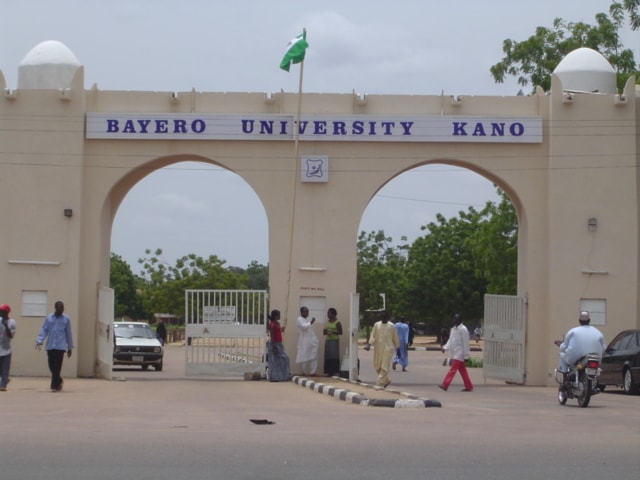
The strike initiated by the Joint Action Committee (JAC) of university non-teaching staff unions has shown little effect on Bayero University, Kano (BUK), where daily activities continue as usual, and essential facilities remain accessible.

The Daily Reality observed that locations expected to be affected by the strike, such as the university’s main library and hospital, were fully operational.

Students were actively studying in the library, while the hospital staff continued to provide medical care.

The university main library with students preparing to get access

University staff activities were also observed at the Student Affairs Office, suggesting minimal disruption from the strike.

The JAC, which includes the Senior Staff Association of Nigerian Universities (SSANU) and the Non-Academic Staff Union of Educational and Associated Institutions (NASU), had issued a circular on Sunday instructing members to begin an indefinite strike.

The circular, signed by NASU’s General Secretary Mr. Peters Adeyemi and SSANU’s President Mr. Muhammad Ibrahim, cited four months of unpaid salaries as the reason for the action.

The announcement raised concerns that the strike could significantly affect university operations, with some anticipating solidarity actions from the Academic Staff Union of Universities (ASUU).

Students at the Attahiru Jega Twin Theatre writing their exams.

However, campus activities continue, and some students have even been able to sit for exams as scheduled.

Malam Nura Garba, SSANU’s Secretary, explained that the strike impacts only NASU and SSANU members, affecting administrative, hospital, and library operations. Nevertheless, these services remain accessible.

NASU Chairman Abdullahi Nasiru clarified that the delay in shutting down facilities stemmed from a late directive issued on Sunday.

“We are holding a meeting today, and the facilities currently open will soon be shut down,” he said.

The University’s Health Service Department

Nasiru emphasized that while the strike is intended to be “total, comprehensive, and indefinite,” the union needed official clearance from the national headquarters before proceeding.

Students who spoke with our reporter confirmed they encountered no issues accessing the hospital and library facilities, despite the ongoing strike.