Education

RUMFOBA advocates for community database centres in Kano

By Uzair Adam

The Rumfa College Old Boys Association (RUMFOBA) Class of ’94 commemorated its 30th anniversary in Kano on Thursday, urging the state government to establish community-based database centres.

The centres, proposed to be managed by village heads, aim to provide vital household data for effective planning, decision-making, and project execution across Kano State.

Professor Ibrahim Sani Madugu, the Chairman of RUMFOBA Class ’94, underscored the significance of these centres in enhancing security, fostering community development, and supporting small-scale industries.

He noted the potential of these initiatives to address critical challenges and drive sustainable growth.

In support of their alma mater, the association has already undertaken key projects, including ensuring water availability in essential areas and installing a CCTV surveillance system.

Following discussions with the school principal, additional initiatives were identified.

These include the installation of solar-powered security lights in sensitive areas such as the NCC computer centre and laboratories, the provision of carpets for the school mosques, the replacement of non-functional solar batteries, and the settlement of outstanding allowances for security personnel.

Madugu also advocated for the state government to expand the use of renewable energy solutions, such as solar power, to mitigate electricity challenges.

He praised the government’s progress in establishing the Kano Hydro Electricity Development Company (KHEDCO) and the power projects at Tiga and Karaye dams.

As the leader of a research team on Solar Radiation Modification (SRM) at Kampala International University, Madugu highlighted the need for innovative solutions to combat climate change and enhance sustainability in Kano.

During the event, three individuals were honored for their contributions to education and their support for Rumfa College.

The awardees included former Governor Malam Ibrahim Shekarau, Dr. Yusuf Ibrahim Kofar-mata, and another distinguished recipient. Dr. Yusuf Ibrahim Kofar-mata, Kano State Commissioner for Science, Technology, and Innovation, lauded RUMFOBA’s dedication to educational advancement.

He advised the association to focus on executing one significant project annually while bringing other issues to the government’s attention for resolution.

On TSU’s unending strikes and govt’s ‘responses’: A call for stakeholders’ intervention

By Tordue Simon Targema

Taraba State University (TSU), Jalingo is, yet again, under lock and key as a result of industrial actions embarked upon by the Academic Staff Union of Universities (ASUU) on the 5th of December 2024, and all other labour unions in the University subsequently to press home germane issues that bother on effective running of the institution and welfare of its staff.

Ordinarily, this would not have been a hopeless situation completely, as industrial actions could be resolved as soon as they start if well handled. But with the rather harsh and brutal response of the Taraba State government, a solution to the present strike is not in sight.

What are the issues in contention, by-the-way? ASUU-TSU outlined six key demands upon commencement of the strike as follows: (1) absence of pension scheme for staff of the University, (2) non-payment of four months salary backlog, (3) failure of the state government to constitute a Governing Council for efficient running of the University, (4) non-payment of accumulated Earned Academic Allowances, (5) repeated exclusion of the University from minimum wage implementations, and, (6) inadequate funding as provided by the Law establishing the University.

Simple as these sound, all diplomatic approaches by ASUU to prevail on the state government to address them have failed, leaving the Union with no option but to embark on strike. Sadly, the response of the state government clearly indicates that the strike will linger longer than expected.

A quick rundown on the major responses as highlighted by the Chairperson of ASUU-TSU Branch, Dr Mbave Joshua Garba thus far confirms this hunch: first was a statement from the Office of the Special Assistant (to the State Governor) on Media and Digital Communications, Mr. Emmanuel Bello requesting the Union to call off the strike immediately and return to the negotiation table, to which the Union queried: which negotiation table? The same “table” that government officials abandoned since June 2024, and have consistently evaded the Union’s advances for engagements?

Besides, the struggle at this point has passed the stage of “negotiations” but instead, requires appropriate actions on the part of government: do we need negotiation to enact a Governing Council for the University, implement a pension scheme, pay salary arrears/EAA, or implement the national minimum wage for the University? One thus wonders what exactly the SA wanted to negotiate with the Union again.

The second response as reported by the Chairperson came through the Commissioner of the then Ministry of Education, Dr. Augustina Godwin, who told the Union that the Governor has two options for them: to call off the strike immediately and have his audience once he returned to the state, or remain on strike while government takes ALL the time it requires to compute and work on the demands of the Union. ASUU opted for the latter, for who is in a hurry to return to a classroom that holds no hopes for him, both now and in future anyway?

Then came the last move that clearly portrayed government’s confusion regarding TSU and her intractable issues: the (re)creation of the Ministry of Tertiary Education, which hitherto existed in the state but was scrapped by the current administration, and which was there during the past administration, yet could not resolve the stalemates that befall the University.

Clearly, the state government lacks the sincerity of purpose required to resolve the issues in dispute, and this is most unfortunate for an administration that has made access to education its mantra. For instance, one wonders if ASUU must embark on industrial strike before government is moved to constitute a Governing Council without which the University is handicapped in the discharge of its administrative mandates. Yet, ASUU has consistently engaged the government on this issue since the last Governing Council was dissolved in 2023 to no avail.

What about a pension scheme which has become a dirge that staff of the University chant every day, but which all other tertiary institutions in the state have? Today, many staff of the University have put in about fifteen years of service without a penny as pension. When a staff of the University retires, s/he walks home with nothing after years of enslaving but meritorious service to the state.

The most distressing moment is when a staff dies: his family is entitled to a paltry 50,000 naira as death benefit which is recently increased to N70,000. Yes, that is our worth in death without gratuity. Indeed, many staff of the University have switched from other institutions or agencies with functional pension schemes to TSU. Sadly, once they assume duty in TSU, they as well kiss the final “goodbye” to pension and gratuity.

While ASUU’s engagements with the state government towards amicable resolution of these issues hit a stalemate, the final straw came that completely broke the camel’s back, namely: the blatant and cruel exclusion of the University from the N70,000 new national minimum wage implementation in the state. Yes, as I write, TSU staff are being paid using the grossly outdated 2009 salary template for Nigerian Universities! Last year, the state government implemented the N30,000 minimum wage for workers without effecting the consequential adjustment for staff of the University, even as other tertiary institutions in the state were captured which showed the resentment of the government to staff of the University. Then came the FG/ASUU 25% and 35% salary award which was also ignored by the state government with impunity.

The peak of this cruelty has just manifested with the conspicuous exclusion of the University from the 2024 N70,000 national minimum wage implementation in the state in November. Afterwards, all concerned stakeholders put up evasive postures to ignore all efforts by ASUU to push for inclusion of the University.

ASUU Chairperson reported, shockingly, that at a meeting with government representatives, the Commissioner for Finance, Budget and Economic Planning, Dr. Sarah Enoch maintained that the University is not entitled to the new national minimum wage, even as she admitted, funny enough, that there is need for consequential adjustment. This position betrayed, first, the level of confusion that pervades the corridors of power regarding issues in TSU, and secondly, the cruel disposition of critical state actors to the plights of the University’s staff.

Few questions beg for answers arising from the Commissioner’s disposition: if tertiary institutions in the state are not entitled to the new minimum wage, why implement it for the State Polytechnic, College of Education, College of Agriculture, School of Nursing and Midwifery and the School of Health Technology? Why jettison the submission for the University which was computed by the same minimum wage committee in the state? Again, why question the report of a committee that had all relevant stakeholders on board, including from the Ministry of Finance? Does this mean that the Commissioner’s personal judgement supersedes the position of the committee made up of experts from all relevant ministries?

Unfortunately, government has chosen the vindictive path, and has weaponised hunger to chastise the Union back to the classrooms, a strategy that is counterproductive and had repeatedly failed in the past. For instance, November salary was immediately withheld to cow the Union into submission, then came December salary. It is shocking that not even the commemoration of the birth of Christ could move the state government to bury its vindictiveness and release December salary to staff of the University to celebrate the Yuletide with their families and loved ones.

To TSU staff, this is but a familiar maltreatment, a repeat of what happened in 2020, 2022, and now 2024 when staff had to celebrate Christmas without salaries. The tale is same for the Muslim brethren, who can hardly recall when last they celebrated either Eid-el-fitir or Eid-el-Kabir with their salaries paid. This is a dehumanising act that we are already used to, the more reason why the brutal approach is doomed from inception.

Indeed, this is time for all stakeholders in the state to act. TSU is core to Taraba State’s socio-economic advancement, no wonder its motto: “Harnessing Nature’s Gift”. Within the short period of its existence, every sector in the state is a testimony to its profound impact on human capital development. It is, therefore, time for all those who mean well for the state and its progress to speak out and prevail on the government to stop playing the ostrich and do the needful.

Government must, at this point, put on the toga of sincerity towards frantically addressing the lingering issues that constantly ignite industrial disharmony in the University once and for all without further ado. There is no better time to act than now.

Tordue Simon Targema is a Visiting Postgraduate Student in the School of Social and Political Science, University of Glasgow, United Kingdom and teaches in the Department of Mass Communication, Taraba State University. He can be reached at: torduesimon@tsuniversity.edu.ng

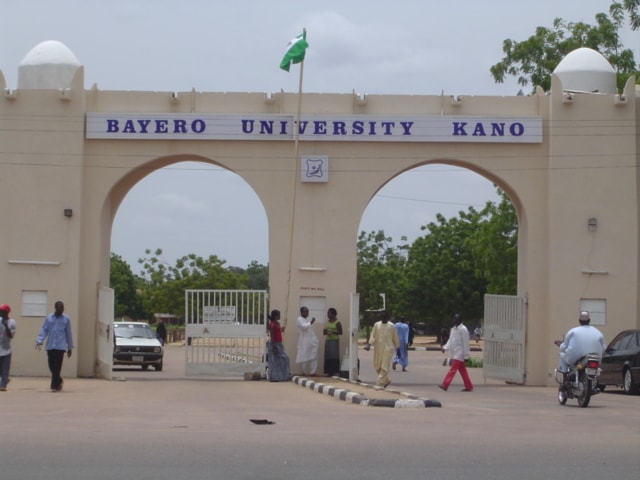
My journey in student politics at Bayero University, Kano

By Bilal Muhammad Bello (BMB)

From a young age, I have been deeply fascinated by politics and dreamed of actively participating in it one day. Growing up in Kano State, I listened to political programs on local FM stations and national media, which nurtured my passion and understanding of the political landscape. This enthusiasm carried over into my academic journey at Bayero University, Kano (BUK), where I discovered opportunities to channel my political ambitions.

Upon gaining admission to BUK, even before lectures commenced, I visited the Students’ Union Government (SUG) Secretariat with a friend in his second year. At that time, the SUG President, fondly known as Third Man, led a vibrant administration. Observing the activities at the Secretariat left a lasting impression on me. I resolved that, despite the challenges ahead, I would one day participate in student politics.

However, during my first and second years, the school management suspended SUG elections and replaced the union with a caretaker committee (CTC). To stay involved, I joined my local government students’ association and other student unions, which allowed me to gain valuable experience and insights.

In 2023, during my third year, the school management reinstated SUG elections, and I seized the opportunity to run for the position of SUG Departmental Senator. Around the same time, my department, the Mass Communication Students Association (MACOSA), was preparing for elections. Since the position of Departmental Senator was part of the SUG elections, MACOSA executives decided to conduct a primary election to streamline the process. The winner of the primary would automatically secure an SUG election form.

I was one of three candidates vying for the position, determined to represent my department in the Students’ Representative Assembly (SRA). Financial challenges posed significant hurdles, but I remained optimistic. My campaign strategy focused on building genuine relationships with students across all levels. From my first year, I had shared resources like past question papers, handouts, and PDFs with my name attached, ensuring I was remembered. Additionally, I provided timely updates about school affairs and assisted newcomers in settling into university life. These efforts resonated with students and garnered their support.

The campaign period was intense. While my opponents distributed campaign materials such as hand fans and handouts, which I couldn’t afford, I relied on the unwavering support of my friends and team members. A close friend, Sa’ad Abubakar, even purchased my election form. My campaign team, including Hajara Abdullahi, Benjamin Jacobson, Umar Farouq, Junaidu Shehu, Abubakar Sadeeq Yahaya, Raheela Usman Buhamas, Sani Labaran and Abdulrauf Abdulrazak Rugu Rugu, worked tirelessly to mobilise voters.

The night before the election, we conducted a face-to-face campaign, visiting hostels such as Sa’adu Zungur (Blocks A, B, and C), Yar’Adua Block, El-Kanemi, Dantata, Dangote, and Ramat. We engaged students directly, explaining our vision and soliciting their support. Influential friends like Al-amin Musa Muhammad, Musa Rabiu and the current MACOSA President, Abbas Ynbs,  played pivotal roles in reaching key student areas with contribution of Fateemah Dabo, Anas Abbas, Alhassan Alhassan Gidan Kara, Khadijah MakkahSanda, Anwar Usman, Abdullahi Mohammed Abubakar, Uzair Adam Imam, Sadi Sada, Yusuf Aminu Yusuf and Adamu Muhammad Dan Hajiya.

The election results were a testament to the power of grassroots engagement and genuine relationships. I emerged victorious, securing the automatic ticket to represent my department in the 24th SRA. I initiated projects that strengthened our department’s presence in the university’s political landscape during my tenure.

Encouraged by this success, I later contested for the position of Faculty Senator and won unopposed, representing the Faculty of Communication in the 25th SRA. This journey was made possible through the unwavering support of friends like Abubakar Ibrahim Shehu, the President of the Department of Information and Media Studies, and the contributions of Distinguished Senator Abdullahi Yunusa Alkah of Law and distinguished Senator Ahmad Mijinyawa of Computing.

Reflecting on my journey, I attribute my success in student politics to a genuine commitment to helping others and fostering meaningful relationships by prioritising the needs of my peers, sharing knowledge, and maintaining mutual respect.

This experience has fulfilled my dream of participating in politics and equipped me with valuable lessons in leadership, collaboration, and perseverance—qualities I intend to carry forward into broader political endeavours.

Bilal Muhammad Bello (BMB) is a Senator Representing the Faculty of Communication 25th Student Representative Assembly SRA-SUG-BUK.

Today’s students’ union and future Nigerian politics

By Nasiru Tijjani

Human society is intricate, comprising individuals from diverse backgrounds and social classes who interact. For society to thrive, it is essential to maintain peace, order, transparency, unity, teamwork, discipline, accountability, sanity, tranquillity, and justice.

However, when corruption, injustice, and criminal activities become rampant, society is bound to collapse. Good leadership, followership, a sense of togetherness, and patriotism are crucial to addressing these issues. 

Established in 1956, the National Association of Nigerian Students (NANS) has played a significant role in Nigerian politics. It advocates for students’ rights and participates in protests for educational growth.

To ensure a brighter future for Nigerian politics, it is essential to revive the spirit of patriotism and collective responsibility among students, leaders, and citizens. We can build a more prosperous and equitable society by promoting transparency, accountability, and justice.

Frequent student demonstrations and unrest have plagued Nigerian universities and other tertiary institutions for years. These protests have often turned violent, destroying public property and resulting in arrests, injuries, expulsions, suspensions, and even the loss of lives. Despite these efforts, students usually return to the same conditions that sparked the protests, with their demands left unaddressed.

Students must form associations and unite under a common banner to address these issues effectively. By doing so, they can discover their strengths and attributes and develop resilience and assertiveness. A well-organized student union allows students to express their opinions, take independent positions, and ask questions on critical issues.

As Jega (2003) aptly noted, students’ unions play a vital role in helping students develop essential organisational skills and strength of character. These skills prepare students for greater responsibilities in their future endeavours.

In its heyday, students’ unionism in Nigeria commanded respect and inspired awe in governments, students, and institution administrators alike. These unions were built on strong ideologies, fostering a culture of intellectual debates and resistance against oppressive government policies and institutional administrators. They fearlessly expressed dissenting views to authorities when necessary, enjoying broad support from the student community.

The primary objective of these unions was to promote and defend the welfare needs of their members. To achieve this, they engaged in constructive dialogue with governments on policy matters and with institutional authorities to secure essential services. These efforts aimed to create a conducive environment for teaching and learning, ultimately enhancing the academic experience.

A Students’ Union is an organised association of students within an educational institution governed by established rules and regulations that guide its operations. According to Isah (1991), the primary objective of a Students’ Union is to promote and defend the collective interests of its members, aligning with the broader societal context.

This underscores the intrinsic connection between education, students, and society. Students can be viewed as raw materials, shaped and refined by institutions of learning. Through this process, they transform, ultimately emerging as finished products, equipped to contribute positively to society.

Students’ union and the future of Nigerian politics

The state of students’ unions in Nigeria is alarming. The desire for leadership positions is no longer driven by a passion for public service but rather by personal gains and fame. This trend is worrying, as it suggests that Nigeria’s future leaders are more interested in self-aggrandisement than in serving the people.

The situation is further compounded by the fact that some student leaders have become professional beggars, presenting awards to undeserving individuals based on their financial contributions rather than merit. The embezzlement of funds generated from such programs is also common.

This decay in students’ unionism poses a significant threat to Nigeria’s future, as many of these leaders will eventually become politicians. If they already exhibit corrupt tendencies, these habits will likely continue in their future careers, perpetuating a cycle of corruption and poor governance ¹.

To break this cycle, students’ unions must return to their core values of promoting the welfare of their members and advocating for positive change. Student leaders must be selfless, transparent, and accountable, demonstrating the moral values and character essential for effective leadership.

The future of Nigerian politics hinges on the quality of leaders from students’ unions. If these leaders prioritize personal interests over service, the country will struggle. Revitalizing students’ unions for their original purpose offers hope for a brighter Nigeria.

Nasiru Tijjani writes from Gwaram Tsohuwa, Jigawa state and can be contacted via tijjaninasiru@gmail.com.

Banking service disruptions hit UDUS campus

By Wonderful Adegoke 

“I’ve also had to absorb the cost of failed transactions,” lamented Adeyemi Ademola, a food seller on campus at Usmanu Danfodiyo University, Sokoto (UDUS), her voice tinged with frustration and despair. 

Struggling to keep her business afloat, Ademola’s story highlights the pervasive challenges stemming from disrupted banking services. Her small shop, which supplies students with staples like rice, beans, garri, and other essentials, has been eerily quiet. The culprit? Persistent banking service disruptions, especially from Guaranty Trust Bank (GTB) and Access Bank, which her customers rely on for online payments.

Ademola’s predicament mirrors the experiences of countless others who cannot access essential banking services. GTB’s ongoing downtime—part of its transition to a new core banking application system—has left many in limbo. Even a visit to customer care brought little solace, as the explanation of “technical disruptions” linked to recent system upgrades felt more like a dismissal than a solution. Such upgrades, ostensibly aimed at fortifying defences against cyberattacks, have instead sown doubt about the security and efficiency of these systems.

The upgrades, though necessary, come with inevitable growing pains. Migrating vast amounts of customer data and integrating it across multiple platforms—from ATMs to mobile apps—is complex and time-intensive. Customers, however, bear the brunt of these transitions, enduring weeks or even months of service disruptions that hinder daily transactions.

In the past quarter alone, several commercial banks in Nigeria have initiated IT upgrades to bolster their operations and prepare for an increasingly competitive future. While these efforts are laudable, they have had far-reaching effects, straining banking operations and customer satisfaction. 

The National Bureau of Statistics (NBS) reports that the banking sector’s contribution to Nigeria’s GDP rose to 16.36% in Q2 2024, a testament to significant technological investments. Yet, for many, these figures are cold comfort amidst recurring downtimes and transaction failures.

Ademola’s weariness is palpable. She confides that her trust in traditional banking institutions, once the cornerstone of financial stability, is eroding. The persistent disruptions have cost her business revenue and undermined the basic operations on which her enterprise depends.

Lost Sales, Revenue, and Opportunities

The ripple effects of these banking failures are felt across various sectors. Rabi’u Bawa, a POS attendant, recounts her struggles: lost sales, revenue, and opportunities due to failed transactions. She still haunts the memory of a recent incident—a Sterling Bank system failure that left her unable to process payments. The frustrated customer walked away, leaving Bawa to shoulder the financial loss.

“This isn’t an isolated incident,” Bawa shares, her tone heavy with frustration. She’s frequently faced delayed payments and disputes stemming from unprocessed transactions. When her account is debited, but the recipient remains untouched, she finds herself mired in time-consuming and costly resolution processes, often at the expense of her reputation.

The disruptions have had devastating consequences for Adepoju Victor, an entrepreneur dealing with laptop repairs and phone accessories. “The stress and anxiety have taken a toll on my mental health,” he admits, his voice betraying sleepless nights spent worrying about his business. “The banks need to take responsibility for their actions and find a solution to this recurring problem.” His sentiment is echoed by many who have poured their resources and efforts into enterprises now threatened by systemic banking inefficiencies.

Service Disruptions Violate Customers’ Rights

The Federal Competition and Consumer Protection Commission (FCCPC) has warned financial institutions sternly about the crisis. According to a statement by Tunji Bello, the Commission’s Chief Executive Officer, these disruptions inconvenience customers and infringe upon their rights.

“Interruptions that impede customers from engaging in transactions or accessing essential funds are not merely an inconvenience,” Bello asserts. “They may constitute a violation of fundamental consumer rights.” The Commission’s stance underscores the urgency for banks to address these disruptions swiftly and decisively.

As customers continue to grapple with the fallout of these disruptions, Nigeria’s banking sector must balance technological advancements with reliable service delivery. Until then, entrepreneurs like Ademola, Bawa, and Victor have remained at the mercy of a system struggling to adapt to its progress.

Kano scholar wins prestigious Doctoral Dissertation Award in Chicago

By Muhsin Ibrahim

Kano-born historian Dr Abdullahi Hamisu Shehu has been awarded the 2023 African Studies Review/Cambridge University Press Award for Best Africa-Based Doctoral Dissertation at the 67th ASA Annual Meeting held in Chicago, United States of America, from December 12 to 14, 2024.

The recognition celebrates Dr Shehu’s groundbreaking research, titled “Procession, Pilgrimage, and Protest: A Historical Study of the Qadiriyya-Nasiriyya and Islamic Movement in Nigeria Public Religiosity in Northern Nigeria, 1952-2021.”

Dr Shehu, a faculty member at the Department of History, Bayero University, Kano, earned his PhD from Stellenbosch University in South Africa. His dissertation examines the dynamic interplay between public religiosity and identity formation in northern Nigeria, focusing on two key movements: the Qadiriyya-Nasiriyya, a reformed Sufi order, and the Islamic Movement in Nigeria (IMN), a Shia revivalist group.

His research explores the historical, social, and religious aspects of public demonstrations, such as the Maukibi (Sufi processions) and the Muzahara and Tattaki (Shia protests and symbolic journeys). According to Dr Shehu, these practices represent a unique contest for public space and visibility between competing religious identities in the post-colonial northern Nigerian landscape.

An accomplished scholar, Dr. Shehu is also a Fellow of the Next Generation Social Sciences in Africa (Social Science Research Council, New York) and a Lisa Maskell Fellow (Gerda Henkel Foundation, Germany). Over his career, he has participated in numerous academic conferences and workshops worldwide.

His work sheds new light on the role of public space in shaping religious identity and offers fresh perspectives on the sociopolitical complexities of northern Nigeria. Dr. Shehu’s achievement highlights his academic excellence and underscores the growing impact of African scholarship on global discourse.

TETFund boss calls for reform as politics, corruption taint VC appointments

By Anwar Usman

The Executive Secretary of the Tertiary Education Trust Fund, Sunday Echono, has expressed concern over the growing influence of politics and corruption in the appointment of Vice Chancellors in Nigerian universities, describing the trend as detrimental to the quality of higher education.

Echono, made this known while speaking at the 36th convocation lecture of the Federal University of Technology, Owerri, he explained how political interference and financial incentives are eroding the sanctity of university leadership selection processes.

“The sponsorship of the selection process of Vice Chancellors by politicians has made university administration increasingly local,” he stated, reiterating that the undue influence of external forces has compromised the integrity of the process.

He also noted that the competition for these appointments has become a lucrative venture, turning members of governing councils into targets for financial inducements.

He further explained that, “Our universities have become increasingly local, with the majority of academic and non-academic staff sponsored by local politicians and other leaders from the host communities.

“Political affiliation has also assumed overarching importance in the selection process,” he lamented.

To restore credibility to the leadership selection process, Echono calls for greater autonomy for universities to shield them from political interference.

He also stressed the need for decision-makers to uphold transparency and implement clear criteria in selecting university leaders.

Rabi’u Kwankwaso Bilingual College, Niamey, PTA requests Governor Yusuf to return their children to school

By Abdullahi Sulaiman

The Parents Teachers Association of Rabiu Musa Kwankwaso Bilingual College, Niamey, Niger Republic, has appealed to His Excellency, Governor Abba Kabir Yusuf, to honour the promise made by the former Governor of Kano, Dr Rabiu Musa Kwankwaso to return their children to their school in Niger Republic. 

The students have not been in school for over a year now, while their peers in the Niger Republic have already resumed classes in the new session five weeks ago.

Dr. Ibrahim Habu, Chairman of the PTA, commends Governor Yusuf for prioritising education with substantial budget allocations. However, he urges him to address the unresolved issues of Bilingual College students in Kano from the last academic session. He calls for immediate action to ensure no child from the college is left idle at home.

The PTA Chairman urges all stakeholders to work collaboratively to fulfil Rabiu Musa Kwankwaso’s vision of establishing a Bilingual college, emphasising the importance of equipping students with bilingual skills in French and English to enhance self-reliance and global competitiveness among Kano’s next generation of citizens.

The Chairman also calls on the people of Kano State to continue supporting Governor Yusuf’s educational initiatives. These initiatives will ensure sustainable development in the education sector and contribute to the overall development of Kano State.

BUK extends registration period, approves study suspension for non-registrants

By Uzair Adam

The Senate of Bayero University, Kano (BUK), has extended the registration deadline by six weeks for students who sat for the First Semester examinations without completing their fee payments.

This decision was reached during the university’s 418th Senate meeting on Wednesday, November 27, 2024, following a recommendation by the Vice Chancellor.

In a statement issued on Friday, Lamara Garba, the Deputy Registrar and Head of Public Affairs, said the extension, effective from Thursday, November 28, 2024, will give affected students additional time to finalise their registration.

Garba warned that students who fail to pay within the extended period will be required to suspend their studies for the 2023/2024 academic session.

He also disclosed that the Senate has approved a suspension of studies for students who were unable to register or sit for the First Semester exams due to unforeseen circumstances.

“This decision highlights the university’s commitment to supporting students facing financial challenges,” Garba stated.

The challenges of integrating Almajiri traditional schools into mainstream education

By AbdulMajid Haruna

Several policies on education span across four decades, and yet Nigeria is still grappling with the menace of out-of-school children. Recent statistics from UNESCO projected a figure hovering around twenty million, with a significant portion of the children being the Almajiri Quranic students. 

Issues such as inconsistent government policies, poor implementation, inadequate funding, and limitations in terms of the scalability and scope of interventions provided by non-state partners and international donors have hindered efforts to address the problem. However, cultural and religious resistance remains a significant barrier.  

The classical system of Quranic Almajiri education imbibes Islamic teaching that every Muslim must acquire religious knowledge. However, culturally, the system aims to instill self-reliance and a sense of responsibility in the social and moral training of the child through hardship, toil, and hunger.

Sufism, the doctrine on which the system was founded, frowns at self-indulgence and believes asceticism and humility to be the hallmarks of a seeker of knowledge. This sentiment was echoed in the Weekend Triumph Newspaper of August 26, 1989, by Abdulkareem A. Bello, who describes the system as “the old wine in an old bottle”. 

In this article, Samaila Ado, an Almajiri in the Kano municipality, was reported to have said, “Our deplorable and wretched condition is a symbol of selflessness and humility.” According to Samaila, a true Almajiri is not concerned with worldly gains but rather is busy preparing for eternal life, which is more paramount.

Historically, the system had flourished owing to the support from the state’s public finances, the local community, and the philanthropic efforts from elites that catered to the modest needs of the children. During this time, the Almajiri scholars were artisans who, during their lecture-free hours, engaged in farming, fishing, well construction, production, masonry, trade, and tailoring. Most were farmers of the iconic Northern Nigerian cotton and groundnut pyramids. Some engaged in leather tanning and shoe and bag making in the old Sokoto empire. 

Sadly, however, the system has failed to adapt to the realities of the twenty-first century, with the modern Quranic Islamiyyas overshadowing the traditional Tsangayas and the Western secular education providing the safest route to climb up the socio-economic ladder. But more worrisome is the report that said six out of ten Almajiri pupils never find their way back home, and many lose their lives through street violence, ritual killing, kidnapping, disease and hunger.

Over the years, Integration has proven difficult due to the inadequacy of our policies. A careful analysis of the failure of Jonathan’s Almajiri integrated Model Schools by the Former Director of the Universal Basic Education Commission, Professor Ahmed Modibbo Mohammed, at Arewa House In Kaduna revealed that the lack of sensitisation and mobilisation of the nation affected the level of buy-in leading to a decrease in support and acceptance of the new system.  

Qualitative assessment research corroborated this analysis, carried out among Almajiri communities in Adamawa State. It demonstrated that including secular subjects was one of the major reasons parents did not welcome the program. 

Time and again, our policymakers have underplayed the subtle but widespread sentiment among the Islamic traditionalists who fear the new order poses the danger of erasing the cultural identity of the people. In a 2021 report published by The Resource Centre for Human Rights and Civic Education (CHRICED), Sheikh Bakura Assusaawi was remarked to have said: “Every Islamic scholar had gone through the system which shows us that there is indeed a great benefit in that system which we cannot afford to lose. There is no other help apart from helping the religion, and when we all neglect to do that, there is never a way forward.”

This allegiance to the old system and aversion towards Western education is rooted in the early events of the 20th century. On October 9, 1902, Fredrick John Lugard replaced Arabic & Hausa-Ajami (Hausa written with Arabic alphabets) with English & Romanized Hausa as the official language of Northern Nigeria. 

This single act in history changed the region’s educational scholarship trajectory. Not only did it render the rich knowledge produced in Ajami in the fields of humanity, science, and social science by the preeminent Sokoto caliphate obsolete and dying, but it relegated those proficient in this script to the background because to be “literate” and “employable” means to speak English and to write in the Roman script.

Tragically, the British also failed to recognise the Almajiri schools and abolished their state funding, tagging them as mere religious schools. This linguistic displacement brewed an identity threat in the people’s social psyche, igniting disdain and antagonism for the new system introduced by the colonial state and the Christian missionaries. 

Unfortunately, a century gap is still not enough to change the thought patterns of the Almajiri community. A recent story shared by a Twitter user about his late colleague’s son aptly drives home my point: 

The colleague had died, and the possibility of sponsoring the child’s education was hanging in the balance because the grandmother was standing in the way. She wanted the son to be enrolled in an Almajiri Quranic school instead of a secular Western school. 

The Twitter user was baffled because the grandma wouldn’t budge even when it was suggested that the child attend a formal school on weekdays and the Almajiri school on the weekends.

Many juxtaposing factors remain underpinning enrolment in traditional Almajiri education, barring socio-religious commitments and an aversion to Western education. These include rural-urban migration in search of greener pastures, disbanded families due to divorce or the death of the breadwinner, poverty, irresponsible parenting, and bad governance. 

Integration begins by fixing the stated problems, but reorienting society to the limitations of this age-long conservative approach to Islamic scholarship takes precedence.  Ever since the pilot scheme of 1964 to modernise Islamic schooling in the Northern Nigerian government headed by Sir Ahmadu Bello that ran successfully for few years before coming to a halt after his assassination, subsequent education policies namely Universal Primary Education (1976), National Primary Education Commission (mid-1980s), Universal Basic Education Act(2004) and Ministerial Committee on Madrasa Education (2009) which led to the establishment of President Jonathan’s Almajiri Model Schools have suffered detrimental setbacks.

Policies are cathedrals in the grand scheme of things; reality is the quicksand sinking them to the bottom. The government and relevant stakeholders must develop the political will to implement policies to their very ends. Most importantly, they must engage in intensive enlightenment, mobilisation, and re-orientation of the populace through the mass media, town hall meetings, and active involvement of the traditional Ulamas and leaders. 

AbdulMajid Haruna is an education thought leader and an inclusive education advocate primarily focused on vulnerable Almajiri children. He can be reached via abdoulmajeed570@gmail.com.