Education

BUK dismisses admission scandal reports, reaffirms commitment to integrity

By Uzair Adam 

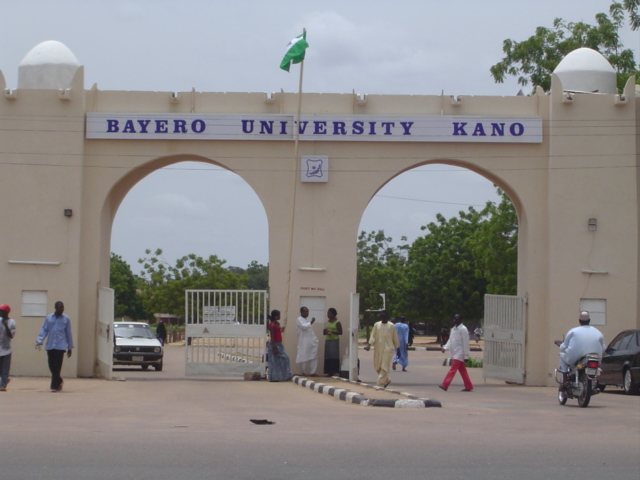
Bayero University, Kano (BUK), has refuted reports on some online platforms alleging irregularities in its admission process, describing them as false and misleading.

The clarification was made in a statement issued on Sunday by the Deputy Registrar and Head of Public Affairs Directorate, Lamara Garba, who said the allegations relate to the 2021/2022 Direct Entry admissions conducted over two years ago.

According to the statement, BUK’s thorough screening process at the time uncovered several applications backed by fake results. 

The university stressed that it rejected all such applications in line with its zero-tolerance policy on academic fraud.

“This was not a scandal but rather a testament to our due diligence, which earned us commendation from the Joint Admissions and Matriculation Board (JAMB),” the statement read.

It added that in 2023, BUK was honoured with an Award of Excellence and Due Diligence by JAMB, becoming the first university in Nigeria to receive such a distinction.

BUK therefore urged the public to disregard the circulating misinformation, affirming its continued commitment to fairness, transparency, and high standards in its academic processes.

BUK unveils on-campus tricycle service  

By Anas Abbas

Bayero University, Kano (BUK) has officially launched an on-campus tricycle service at its New Campus. 

The initiative, inaugurated by Vice-Chancellor Professor Sagir Adamu Abbas, aims to provide a safer and more convenient mode of transportation for students and staff navigating the university’s expansive grounds.

During the launch event, which was attended by key university officials, including the Registrar Haruna Aliyu, Deputy Vice-Chancellor (Academics) Professor Haruna Musa, University Librarian Dr. Kabiru Dahiru Abbas, Head of Public Affairs Lamara Garba, and Professor Yakubu Magaji Azare, Professor Abbas highlighted the university’s commitment to prioritizing student welfare.

“This initiative is part of our broader effort to enhance security and convenience for our students,” Professor Abbas stated.

“We are committed to making our campuses not only academically stimulating but also comfortable and safe for everyone.” He added

He assured the university community that the tricycle service would be operated under strict monitoring and evaluation, with trained drivers adhering to best practices from 7 AM to 9 PM daily.

The introduction of the tricycle service follows a February 2025 ban on motorcycles on campus due to rising security concerns. 

The new tricycles are expected to offer a structured and secure alternative for students, facilitating seamless movement across the campus while upholding BUK’s reputation for safety and order.

UDUS holds its 2024/2025 matriculation on April 9

By Dahiru Kasimu

Usmanu Danfodiyo University Sokoto will hold its 2024/2025 matriculation ceremony on 9 April 2025.

This was contained in a press release signed by the University’s Director of the Information and Public Relations Unit,Ismail Muhammad  Yauri, and issued to the journalists.

He stated that the event, which will take place at the Convention Square Arena on the main campus, is meant for newly admitted UG I and UG II (Direct Entry) students and postgraduate students who are not alumni of the university.

During the matriculation ceremony, Prof. Bashir Garba, the Vice Chancellor of the University, along with the Dean of Student Affairs, scholars, and the Students’ Union, is expected to attend and address students.

Newly admitted students will undergo an orientation program, and eminent academicians will address them on theinformation they need to know about the university, the rules and regulations, in addition to the mode of operations.

The orientation program could also help the students understand how to accomplish their academic pursuits.

Usmanu Danfodiyo University Sokoto, known as the most peaceful university in Sub-Saharan Africa, is one of the second-generation universities established in 1975. It offers eighty-two academic programs across 18 schools, colleges,and faculties located at the permanent site and the University Teaching Hospital.

PhD scholarships: Scholars to study in Germany as ABU announces positions

By Ishaka Mohammed

Ahmadu Bello University (ABU) Zaria, Nigeria, in collaboration with the University of Rostock, Germany, has announced four fully funded PhD positions in Bioenergy, Green Hydrogen, Waste Management, and Circular Economy.

The positions are under a joint research program between the Bioresources Engineering Research Group at ABU and the Professorship for Material and Energy Valorization at the University of Rostock.

As shared by a lecturer at ABU, Zaria, Dr Muhammad Hashim Suleiman, the positions will involve advanced research in the aforementioned bio-resource fields, aiming to develop sustainable solutions for global environmental and energy challenges. 

Successful applicants will be offered provisional admission to the University of Rostock, Germany, where they will spend six months. However, the main research will be conducted at ABU.

The scholarship will cover tuition fees, stipends for living costs during the research period, and costs of research and laboratory logistics.

Each successful applicant will be required to conduct independent and high-quality research but will submit regular progress reports to their supervisors. 

They are also expected to publish at least two articles per year in reputable and indexed journals, in addition to performing any other tasks assigned by their supervisors, if deemed necessary, from both universities.

An applicant for each position should have a minimum of upper second class in their first degree and a good master’s degree in any field of engineering with a research focus on bioenergy, waste-to-energy, circular economy, or green hydrogen.

Each applicant must also be proficient in both spoken and written English, 35 years old or younger, and not be under any other scholarship at the time of application.

Interested and eligible applicants are required to send the under-listed documents to daie@abu.edu.ng and copy saniabbaaliyu2015@gmail.com before Wednesday, May 7, 2025. 

The documents include a detailed curriculum vitae (CV) showing a publication profile, copies of academic certificates and transcripts, proof of research in bioenergy, waste-to-energy, circular economy or green hydrogen, two reference letters from academic or professional referees, a personal statement detailing motivation and research interests related to the PhD program, a concept note of within five pages on any of the aforementioned research areas, and proof of study leave (if employed).

Ahmadu Bello University, Zaria, is the fourth oldest university in Nigeria, while the University of Rostock, founded over 600 years ago, is the third oldest in Germany.

You can now check your results online – BUK tells students

By Ishaka Mohammed

The management of Bayero University, Kano (BUK) has announced that students can now access and print their end-of-session results from the school’s registration portal.  

According to a special bulletin dated March 31, 2025, this initiative is part of the university’s ongoing efforts to automate its operations.

An undergraduate at the institution confirmed to The Daily Reality that previously, BUK students from different states could only check their results while on holiday with the assistance of close friends residing in Kano, who would share photos from the noticeboard.

Consequently, the new development comes with more convenience and privacy. However, the bulletin states that “final-year students will not have access to their final results until after Senate Approval.”

No-Show: Nigerian professor expresses frustration over students’ absence in his class

By Hadiza Abdulkadir

A postgraduate class at Bayero University faced an unexpected turnout issue during a recent lecture on social media’s role in popular culture. 

Professor Abdalla Uba Adamu, from the Faculty of Communication, scheduled his M.Sc. Popular Culture lecture for 2:00 p.m. on Monday, March 24, 2025. However, when he arrived, he was met with an empty classroom.

In a candid post on his Facebook page, Professor Adamu described the situation, expressing disappointment at the absence of his students, many of whom are mature individuals committed to their education. 

“I will wait one more hour, all by myself,” he wrote, revealing the gravity of the situation as he sat alone in the lecture hall.

The incident raises concerns about student engagement and commitment in higher education, particularly among postgraduate students who are expected to take their studies seriously. 

Professor Adamu’s experience reflects a growing trend of attendance issues in classrooms, prompting discussions among his social media followers about students’ attitudes to learning in Nigerian universities.

As the academic community reacts to this situation, it remains to be seen how institutions will address these challenges in the future.

Information and Media Studies students host Iftar to promote unity

By Isma’il Gambo Muhammad (IGMB)

Students from the Information and Media Studies department organized a one-day Iftar gathering at the Faculty of Communication, Bayero University, Kano, to promote unity among themselves, their teachers, and the broader university community.

The event took place one day after the last exam of the second semester, aimed at fostering cordial and lasting academic relationships within IMS as one family while celebrating the month of Ramadan, seen as a time of kindness and all forms of goodness and mercy.

The occasion has graciously received the honor of inviting five competent and indigenous lecturers from the department, including the Head of the Department (HOD), Prof. Nura Ibrahim; Level Three Coordinator, Dr. Muhammad Ɗanja;Faculty Examination Officer, Dr. Aliyu Isa Agaye; Level Four Coordinator (IMS), Dr. Saminu Umar; and above all, Dr. Ibrahim Muhammad from the University of Abuja.

Many representatives from various university departments attended, including the Faculty of Computing, Software Engineering, Cyber Security, and some SUG officials from the BUK chapter.

Students voluntarily offered various contributions, including comfort foods, delicious dishes, meats, fruits, and a wide selection of drinks, ensuring that each attendee was sufficiently served.

In his opening remarks, Dr. Muhammad Ɗanja warmly welcomed everyone to the grand occasion. 

In his comments, Prof. Nura Ibrahim stated that IMS is more than just a studentship; it is a family. He mentioned, “As long as all the IMS levels come together to observe the IFTAR next year, I will certainly invite the Vice Chancellor (VC) to the occasion.”

However, in their keynote speeches, all the invited lecturers expressed their heartfelt happiness and gratitude to all the attendees, and they mentioned their ongoing commitment to supporting such a significant gesture in the future.

The lecturers encouraged and inspired the students to apply their acquired knowledge and skills in real-life situations. They concluded by drawing the attention of potential Level Four (SIWES) students to maximize their efforts, broaden their horizons, and seize opportunities for skill acquisition at their respective organizations where they are posted for service. They prayed for the ongoing progress of the Department and its students.

Ultimately, in his closing remarks, Coordinator Muazu Salihu expressed a heartfelt thank you to all the lecturers and fellow students for honoring the invitation and wished everyone a safe journey back to their respective destinations.

54 Kano students return from India, get automatic employment

By Hadiza Abdulkadir

Kano State Governor, Abba Kabir Yusuf, has announced the automatic employment of 54 indigenes of the state who recently completed their Master’s degrees in India under the state government’s foreign scholarship program.

The governor made the announcement during an Iftar gathering with the returning scholars, emphasizing the government’s commitment to investing in education and strengthening the state’s workforce.

Governor Yusuf urged the graduates to repay the state’s investment by contributing diligently to Kano’s development. He reaffirmed his administration’s dedication to providing educational opportunities and employing qualified professionals to enhance governance and public service.

NERDC boss calls for urgent measures to address deterioration of Council’s library

By Sabiu Abdullahi

The Executive Secretary of the Nigerian Educational Research and Development Council (NERDC), Prof. Salisu Shehu, has raised concerns over the deteriorating state of the Council’s library, describing it as “decaying and shameful.”

Prof. Shehu stated this during the opening ceremony of the Writing Workshop for Research and Development Database (RDD) & Library Management Information System (LMIS) Documentation and User Manual Development.

The event was held at Freshland Hotels, Mararaba, Nasarawa State, from March 17 to 20, 2025.

Voicing his disappointment over the library’s condition, Prof. Shehu questioned why Research Officers, Academic Staff, and Administrative Officers had not prioritized its improvement.

He further urged all employees, regardless of their departments, to take action in addressing the issue.

He described the library as the think tank of Nigerian education but lamented its current state.

According to him, this neglect is a collective failure that requires immediate attention. He stressed that he expected real change after the workshop.

Since assuming office, Prof. Shehu said he had visited the library multiple times and observed minor improvements. However, he maintained that these efforts were not enough.

He called for comprehensive reforms to transform the library into a modern center for knowledge and research.

Speaking on the purpose of the workshop, he explained that its primary aim was to develop system documentation and a user manual for the R&D Database and LMIS.

He noted that once these systems are fully implemented, they will enhance access to educational research by serving as a repository for completed studies, improve library management to ensure efficiency, and facilitate collaboration between the Council’s library and other research institutions.

He added that it’s of utmost importance to have a well-structured Library Management System and a robust Research and Development Database.

He also urged the Library and Informatics Centre and the Book Development Centre to ensure that all assessed books, whether recommended or not, are properly documented and easily accessible.

Earlier, Dr. Mandela Asebiomo, Director of the Library and Informatics Centre, explained that the workshop was to develop a dual-purpose software application for the Research and Development Database and the Library Management Information System.

He stated that digitizing research records and reports would support policy formulation and academic collaboration. He further noted that integrating the library with online access capabilities would enhance research interconnectivity and information sharing.

The workshop brought together experts from NERDC and other key stakeholders to develop practical solutions for modernizing the Council’s library and research database systems.

The importance of time: An appeal for punctuality in academia and elsewhere

By Abubakar Aminu Ibrahim

Deedee rushed around her room, gathering the necessary materials for her PhD proposal defense, her heart racing as she tried to remember everything. The session was officially set to begin at ten in the morning, as specified by the postgraduate college, but by seven, she was already anxious, determined not to be late for such an important academic event.

Thanks to the relentless morning traffic, Deedee barely arrived at her destination by eight. Clutching her papers tightly and breathing heavily, she sighed in relief—at least she was the first to arrive. Finally, she could set aside the worry of being late. She settled into her seat, absorbing the tranquillity in the environment and the nervous anticipation of her imminent defense.

The clock ticked on. By ten o’clock—the designated time—only a few familiar faces were moving about. It was evident that the college had only just started making arrangements for the venue and other necessary protocols. Deedee stayed patient. Maybe the session would begin by eleven, she thought, but I need to pick up Mukhtar from school by two.

Yet, the college workers—both academic and non-academic—moved about leisurely, their faces showing no awareness of time slipping away. As the hours passed, other students began to trickle in. No one noticed who had arrived first; there was no system in place to ensure that Deedee or any early arrivals would be attended to first. It seemed that the very concept of punctuality was foreign here.

Frustrated, Deedee later lamented, “Can you believe the session didn’t start until two o’clock in the afternoon? That was exactly when I was supposed to pick up Mukhtar from school?”

“I’m really sorry,” I said earnestly. “But this is what we refer to as ‘African time.’ People here often don’t prioritize valuing time.”

“But do you realize what that means!?” Deedee interjected. “It means our defense times were shortened, leaving us little opportunity to express the very ideas we spent sleepless nights preparing. I was caught between trying to present my work convincingly and worrying about my poor son. What could I say to impress the professors? What was Mukhtar doing at that moment? Was he thinking I had forgotten him? These thoughts, combined with exhaustion, drained all the energy I’d built up for the session.”

Sadly, lack of respect for time has become our trademark in Africa—or, let me be specific, in Nigeria, which I know too well. It is bad enough that the general populace disregards time, but it is even more disheartening that this culture thrives in academic environments. 

Ironically, some people deliberately arrive late to events, using it as a display of status. They ensure the crowd has gathered before they waltz in, basking in the admiration of those who foolishly equate tardiness with importance. Even more baffling is that these individuals always have some fools cheer and applaud their ignorance or arrogance.

We must recognize that our choices do not impact us alone. More often than not, they have far-reaching consequences for others. Consider how a single instance of lateness can disrupt the timing of subsequent activities. Life functions like a chain—delaying one link interrupts the entire sequence. If action A is postponed, it affects action Y, and ultimately, there may be no time left for action Z, which could be critical to someone else’s plans.

It is time we erased the shameful phrase “African time” from our vocabulary and our reality. We must recognize that adhering to schedules is an act of responsibility, a way of being our brother’s keeper. Whether as teachers, students, participants, or public speakers, we need to respect the time allocated to us, neither taking more than our share nor wasting what we have.

Yesterday is history, which is why it’s referred to as the past. Tomorrow is a mystery, unknown and unpredictable. But today—this moment—is a gift. That’s why it’s called the present. Use it wisely.

Abubakar Aminu Ibrahim wrote via abubakarmuhammadaminu21@gmail.com.