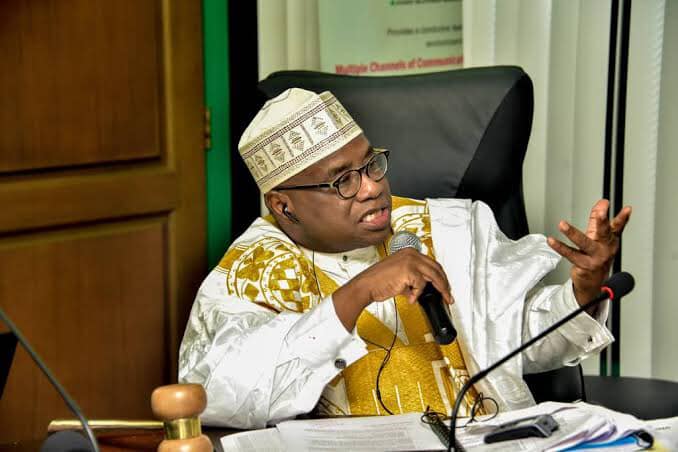
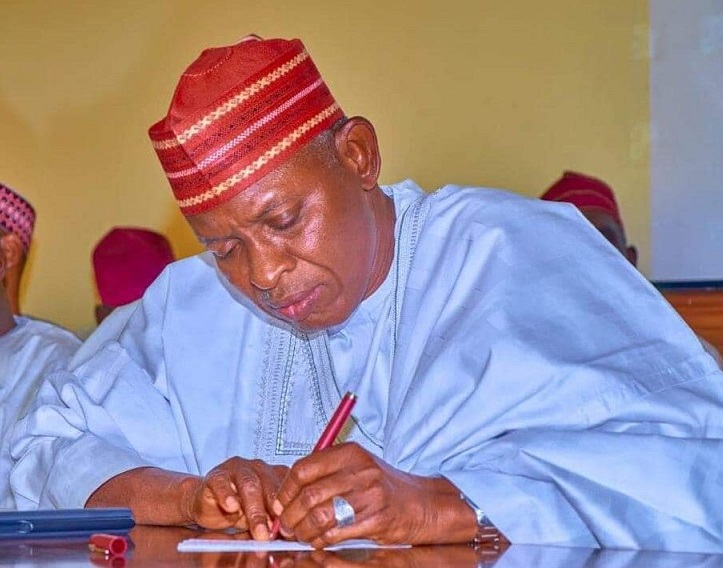
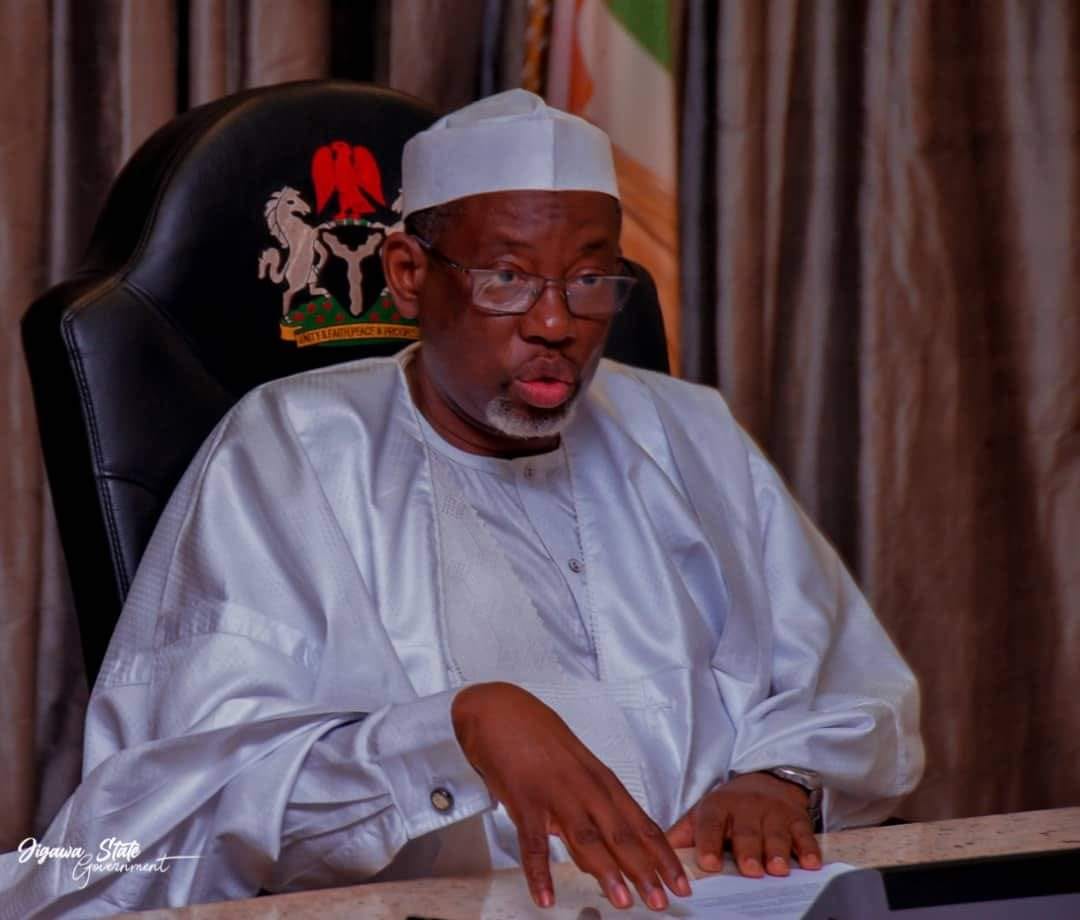
Kano State Governor, Alhaji Abba Kabir Yusuf, has appointed the Emir of Lafia, Justice (Rtd) Sidi Muhammad Bage, as the new Chancellor of Northwest University, Kano.
The announcement was made in a statement issued by the governor’s spokesperson, Sunusi Bature Dawakin Tofa, on Friday.
The appointment has been widely praised as a strategic move to bridge traditional leadership and modern academia. Emir Bage, a former Supreme Court Justice, brings decades of legal and administrative experience to the role.
Born in 1956 in Lafia, Nasarawa State, Bage earned his law degree from Ahmadu Bello University and was called to the Nigerian Bar in 1981. He served across Nigeria’s judiciary, culminating in his appointment to the Supreme Court in 2017 before ascending the throne as Emir of Lafia in 2019.
Governor Yusuf noted that the selection of such a distinguished figure aligns with the university’s values of excellence and integrity. “His track record of justice and community leadership will inspire our academic community and support the university’s growth,” he said.
The appointment letter was officially presented to the Emir by the University Council Chairman, Prof. Hafiz Abubakar, alongside Vice Chancellor Prof. Mukhtar Atiku Kurawa.
Professor Haruna Musa, Deputy Vice-Chancellor (Academics) at Bayero University, Kano (BUK), has emerged as the most widely accepted candidate in the university’s Vice-Chancellor selection process, following a keenly observed congregation vote held on Tuesday, July 1, 2025.
Prof. Musa, a Professor of Polymer Chemistry, secured a commanding 853 votes, far ahead of his four contenders in a process described as transparent and credible by participants and observers.
The vote, part of BUK’s Vice-Chancellor appointment procedure, serves as an indicator of community acceptability, contributing 20% to the final selection by the Governing Council.
Other contenders included Professors Mahmoud Umar Sani (367 votes), Sani Muhammad Gumel (364 votes), Adamu Idris Tanko (161 votes), and Bashir Fagge (18 votes).
Presiding over the session, Vice-Chancellor Prof. Sagir Adamu Abbas applauded the maturity and democratic spirit shown during the process, describing the outcome as a “collective victory” for the university.
“The result showcases our institutional commitment to transparency and unity,” he said, urging all candidates to support the eventual appointee.
Electoral Committee Chairman Prof. Muhtari Ali Hajara announced that 1,784 staff members were accredited to vote, with 17 votes deemed invalid and four unaccounted for.
Commending the process, Prof. Gumel, one of the candidates, stated: “The election was fair and credible. The result shows the community’s direction.”
Former Minister of Education, Prof. Rukayyatu Ahmed Rufa’i, and ex-VC of NOUN, Prof. Abdalla Uba Adamu, also praised the outgoing VC and the electoral process, urging continued cooperation for the university’s development.
The final appointment now rests with BUK’s Governing Council.
Federal University Dutse (FUD) is set to convoke a total of 4,227 students in a combined convocation ceremony for the 2022/2023 and 2023/2024 academic sessions.
This was announced by the Vice Chancellor of the university, Professor Abdulkarim Sabo Muhammad, during a pre-convocation press briefing, where he outlined the preparations and schedules for the event.
The convocation ceremony is scheduled to take place on Saturday, July 5th, 2025, by 9:30 am.
A convocation lecture will precede the ceremony on Friday, July 4th, 2025, at 4:00 pm at the Nuhu Muhammad Sunusi Auditorium.
The lecture, titled “Harnessing Research and Innovation for Sustainable Development in Nigeria: The Role of Higher Education Institutions,” will be delivered by Guest Professor Jibrilla Dahiru Amin, the pioneer VC of the university.
According to the VC, a total of 99 and 110 students graduated with First Class honors in the 2022/2023 and 2023/2024 academic sessions, respectively.
Additionally, 544 and 727 students graduated with Second Class Upper Division in the respective sessions, while 879 and 115 students graduated with Second Class Lower Division.
Furthermore, 321 and 283 students graduated with Third Class honors in the 2022/2023 and 2023/2024 academic sessions, respectively.
The VC highlighted some of the remarkable achievements of his tenure, including the university’s attractiveness to prospective students, with around 20,000 applicants seeking admission annually.
Other notable achievements include improvements in student and staff welfare, physical infrastructure development, introduction of new faculties and departments, enhanced security, research grant wins, and digital transformation, among others.
A professor of Special Education at Bayero University, Kano (BUK), Hassana Darma, has unveiled her Hausa translation of the globally acclaimed Islamic book The Ideal Muslimah, originally written in Arabic by Dr. Muhammad Ali Al-Hashimi and later translated into English by Nasiruddin Al-Khattab.
The book, now titled Musulma Ta Gari in Hausa, was presented during the monthly seminar organised by the International Institute of Islamic Thought (IIIT) at Bayero University, Kano, on Sunday.
Speaking at the event, Professor Darma narrated how the translation journey began with a single chapter she found in a folder of Islamic texts shared by a friend.
“I came across a chapter titled “The Muslim Woman and Her Husband”. I felt it was something that could benefit married women if translated into Hausa,” she said.
She later discovered that the chapter was part of a larger book while visiting a relative. “That’s when it dawned on me that I could translate the entire book, even if it would take years,” she added.
The project, which spanned nearly 15 years, was completed with guidance and review from Professor Ahmed Murtala of the Department of Islamic Studies and Sharia.
“It wasn’t an academic assignment; I did it during holidays, strikes, and personal time,” Darma explained.
Highlighting the book’s relevance, she noted that the content guides Muslim women through various aspects of life, ranging from their relationship with Allah to their interactions with parents, spouses, children, and the broader society.
“It’s a recipe for life. If you follow the content like you follow a cooking recipe, it can cleanse and guide your soul,” she noted.
Professor Darma also encouraged other women to take up translation projects, especially in areas that can benefit society.
“Many people don’t have access to knowledge because of language barriers. If we who understand more than one language translate, we will bridge that gap,” she said.
She further called on media houses to consider disseminating such works through radio, citing that “our people are better listeners than readers.”
Also speaking at the event, Dr. Furuk Umar Usman, husband to Professor Hassana Darma, commended her dedication to the translation project, stating that she was often seen working tirelessly at her computer.
He expressed gratitude to all those who supported the successful completion of the book, including their children, her sisters, and other family members.
Dr. Furuk acknowledged that the task was rigorous and time-consuming, but noted that the work received commendations from several respected individuals.
He narrated how Professor Ahmad Murtala provided support during the translation process and how the book was well received by the Vice Chancellor of Bayero University, Professor Sagir Adamu Abbas.
He added that the book was also presented to Professor Sani Umar Rijiyar Lemo, who equally praised the quality of the translation.
Also speaking, Professor Aishatu Abdu Isma’il of the Department of Political Science, BUK, and a director at IIIT, described the book as “a powerful guide” that helps Muslim women understand their purpose in life and their roles in building moral societies.
“She has not missed the message of the original Arabic or English versions. The book reminds women of who they are, who they worship, and how they relate with others,” she said.
She added that the values in the book address pressing societal issues such as gender-based violence, poor parenting, and moral decay.
“Chapter 10 alone talks about a woman’s relationship with her community — which is critical today,” she stressed.
Also commenting, Dr. Saida Ahmad Dukawa, the National Coordinator of the International Institute of Islamic Thought (IIIT), noted that the event was organised as part of the institute’s monthly intellectual engagement series.
He explained that the gathering was aimed at reviewing the Hausa translation of The Ideal Muslimah, titled Musulma Ta Gari, rendered by Professor Hassana Darma.
According to him, IIIT regularly hosts scholarly presentations to foster intellectual discourse and knowledge sharing.
Dr. Dukawa emphasised the significant but often undervalued contributions of women to societal development, stating that the influence of women—especially mothers—plays a foundational role in shaping individuals long before formal education begins.
“Almost every renowned individual begins life with the tarbiyya, or moral training, provided by their mother.
“Women are the first educators, shaping the values and manners of future generations,” he said, stressing that behind every successful man, there is often a strong and nurturing woman.
The official launch of Musulma Ta Gari is scheduled for July 26 at the Convocation Arena of Bayero University, Kano.
In a significant move to overhaul Nigeria’s educational infrastructure, the Federal Government has inaugurated a high-level committee to develop comprehensive Public-Private Partnership (PPP) guidelines aimed at attracting private sector investment into the sector.
The initiative, led by the Honourable Minister of Education, Dr. Maruf Olatunji Alausa CON, seeks to address persistent infrastructural and capacity deficits, particularly in secondary and tertiary institutions.
Speaking at the committee’s inauguration, Dr. Alausa emphasized the need for innovation and collaboration in education financing. “Government cannot do it alone… We must leverage private funding to modernize and sustain our educational system,” he said, noting that while current funding efforts—such as the 2025 education budget and TETFund interventions—are commendable, they remain inadequate.
The newly inaugurated committee, chaired by the Honourable Minister of State for Education (represented by the Director of Special Duties), includes key directors from the ministry, and representatives from the Infrastructure Concession Regulatory Commission (ICRC), Ministry of Housing, and other stakeholders.
Its mandate includes formulating PPP benchmarks, reviewing legal frameworks, clarifying stakeholder roles, establishing performance indicators, designing oversight mechanisms, and recommending penalties for non-compliance. The committee has been given three months to submit its report.
“If we do this right, this document can be a model for other ministries,” Dr. Alausa noted.
Other speakers at the event, including ministry officials and stakeholders, expressed strong support for the initiative and its potential to transform Nigeria’s education landscape.
The Nigerian educational system faces a crisis that can no longer be ignored. After years of neglect and outdated policies, the system has effectively collapsed. The curriculum in many public schools and universities is stuck in the past, failing to keep up with global developments and the skills needed in today’s workforce. Students often learn content that no longer applies to current realities, leaving them ill-prepared for the job market or further study.
One of the key problems is the failure to reform the curriculum in a meaningful way. While other countries continuously update their education content to match technological advancements and changing economic needs, Nigeria remains stuck with decades-old textbooks and syllabi. This disconnect creates a significant gap between what students learn and what employers expect, ultimately undermining the country’s ability to compete internationally.
The challenges extend beyond outdated content. Many schools are overcrowded, forcing students into cramped classrooms that are not conducive to learning. Basic facilities such as libraries, laboratories, and lecture halls are either dilapidated or entirely missing in numerous institutions. The lack of adequate infrastructure makes it difficult for students to engage in practical and experimental learning, which is critical to developing critical thinking and innovation.
Equally troubling is the condition of the teaching workforce. Many educators in the system are poorly motivated, largely because of low pay, irregular salaries, and poor working conditions. The absence of incentives and professional development opportunities means many teachers do not perform to their full potential. This creates a cycle where students receive substandard teaching, further reducing the quality of education and widening the skills gap.
Another critical issue is research funding, which is almost non-existent in Nigeria’s public education sector. Research is the backbone of academic and scientific progress, but here, lecturers often have to fund their projects or give up entirely. Without adequate grants, modern labs, or support for collaboration, innovation stalls. This lack of investment in research not only affects universities but also denies the country breakthroughs that could address local and global challenges.
The federal government’s role in this decline cannot be overstated. Despite education being constitutionally a priority, it remains underfunded and undervalued. While political budgets and other sectors receive increased allocations, education’s share continues to shrink. The failure to treat education as a strategic investment has led to a cycle of decay where graduates come out unprepared and schools continue to crumble.
In conclusion, reversing the collapse of Nigeria’s education system requires urgent and sustained commitment. It demands updated curricula, better infrastructure, improved teacher welfare, and significantly increased funding for research. Until these steps are taken seriously, Nigeria risks falling further behind as its youth are denied the quality education they need to thrive in a fast-changing world. The country’s future depends on a system that values knowledge, innovation, and real learning, not just ticking boxes on paper.
Muhammad Umar Shehu wrote from Gombe and can be reached via umarmuhammadshehu2@gmail.com.
The United States government has announced a new policy requiring student visa applicants to make their social media profiles publicly accessible as part of the application process.
According to the Department of State, the move is intended to enhance security screening and allow immigration officials to better assess the backgrounds of applicants. The policy will apply to most non-immigrant visa categories, including the F-1 visa commonly used by international students.
Critics have raised concerns about privacy and potential bias, warning that the rule could discourage free expression online. Supporters, however, argue that it strengthens national security and helps identify potential threats.
The new requirement is expected to take effect later this year, with applicants needing to provide their social media handles and ensure that posts are visible for review.
In a historic academic achievement, Dr. Zaidu Jibril Muhammad, a lecturer at Sule Lamido University (SLUK), Kafin Hausa, has become the first African recipient of the prestigious King Abdullah Bin Abdulaziz International Award for Translation.
Dr. Zaidu, who lectures in the Department of Arabic, Faculty of Humanities, clinched the 2025 award for his Hausa translation of the Arabic literary masterpiece Maqāmāt al-Ḥarīrī, published under the title Dandalin Hikimomi. The Prize’s Board of Trustees praised the translation for its scholarly depth and cultural resonance, calling it a significant contribution to African scholarship and global cross-cultural understanding.
Born on May 15, 1985, in Shungurum village, Birnin Kudu Local Government Area of Jigawa State, Dr. Zaidu holds a Ph.D. in Arabic Language among other qualifications.
Dr. Zaidu is also a prolific author, with four major Hausa translations of classical Arabic works. In addition to Dandalin Hikimomi, his works include Dandalin Dabaru (from Maqāmāt Badī‘ al-Zamān al-Hamadhānī), Bakandamai Bakwai(from Al-Mu‘allaqāt al-Sab‘a), and a Hausa version of a widely used Arabic academic guide for university students. He has also published fifteen academic articles in national and international journals.
Currently serving as a Lecturer I and a member of the International Union of Arabic Language, Dr. Zaidu’s groundbreaking achievement has been described as a landmark not just for Nigeria but for the entire African continent.
There is growing outrage among the students of Northwest University, Kano, following a significant increase in school fees for the 2025/2026 academic session.
The Daily Reality gathered that the increase is nearly 100 percent, causing many students to question whether they will be able to continue their studies given the worsening economic situation in the country.
In an exclusive interview with our reporters, the students, many of whom pay their own fees, have made passionate pleas to the school authorities to reconsider the hike.
They warn that if the situation remains unchanged, higher education will be accessible only to the children of the elites in the country.
The Daily Reality recalls that the previous reduction in fees by 50 percent, initiated by Governor Abba Kabir Yusuf, had made the university one of the most accessible institutions in the state.
According to the National Bureau of Statistics (NBS), Nigeria’s inflation rate as of January 2025 is 24.48 percent. Though it has dropped from the December 2024 figure of 34.80 percent, Nigerians continue to struggle with the high cost of everyday necessities.
The fee hike is untimely
Most of the students who spoke to The Daily Reality expressed deep concern, describing the increase as ill-timed, especially in light of the economic hardship in Nigeria.
They lamented that they were not prepared for the hike and had no plans to cope with it, leading to troubling thoughts about their future and the possibility of continuing their studies.
One student, Ibrahim Muhammad (not his real name), shared his worries with The Daily Reality, stating, “The registration fee is beyond imagination.”
He added that the school authorities did not inform them in advance, and they were shocked to see the Remita platform reflecting the sudden increase—an amount they find unbearable.
Muhammad, who came to Kano from a neighbouring state, highlighted the importance of the earlier fee reduction, saying, “I chose this university because of the 50% reduction. We urge Governor Abba to consider our plight and take action.”
The burden is too heavy
Another student, Isma’il Shu’aibu (also not his real name), voiced his frustration: “Last session, I paid 18,000 naira, but now I’m being asked to pay 57,000 naira.”
Shu’aibu further added that, “This is far too much, and many students will struggle to afford it.”
A Growing Crisis
The students noted that the increase would only worsen an already challenging situation, urging the school authorities to reconsider their decision.
Shu’aibu added that even the previous fee of 18,000 naira was a struggle for many students, pushing some to consider dropping out.
“Many students are appealing through the media for help to pay their registration fees,” he lamented.
“As I speak to you, I am paying for my own education. I don’t have 57,000 naira, and I don’t know where to find it,” Shu’aibu concluded.
Many students who feared to speak with journalists expressed dissatisfaction about the hike. They shared a common concern about how the new fees might force them to abandon their studies.
They expressed, “We have no idea how we will manage to pay this new fee. It’s simply too much for us, especially with how hard it is to survive these days.”
Increase a blessing in disguise – Authority
Despite bitter complaints from students, the school authorities argue that the increase is, in fact, a blessing in disguise for them.
Speaking to The Daily Reality, the university registrar, Malam Isyaku Adamu, confirmed the hike and explained that it would help students participate in the National Education Loan Fund (Nelfund), noting that many of their students had not been taking advantage of the programme.
He stated, “The Nelfund is the national cake. If Musa and Isa refuse to eat, Jon and Jack will eat. So this is to also encourage our students to participate and benefit from the Federal Government’s programme.”
He added that the increase was also meant to help the university meet certain critical needs. Adamu emphasized that Northwest University is still among the most affordable institutions in Nigeria, based on the university’s own research.
“If you look at what the students pay in a year, even after maintaining laboratories, the library, health services, electricity, water, and environmental sanitation, the money is still very cheap,” he said.
He concluded that the fees are not even sufficient to cover all expenses, reiterating that even primary and secondary school pupils pay more than what Northwest University students pay per year.
Government Secondary School Kwakwaci, Kano, has a rich history of academic excellence spanning decades. Over the years, the school has produced thousands of graduates who have gone on to achieve greater things.
The Daily Reality reliably gathered that despite these notable achievements, the school is now facing significant challenges.
Many fear that Kwakwaci will be among the schools in Kano State that may cease to exist due to severe environmental and managerial problems that have plagued the institution.
These unresolved issues threaten to ultimately force the school to close its doors.
Part of the problems bedevilling the school include dilapidated classrooms, abandoned laboratories, and other infrastructural decay, further exacerbated by rampant theft of school facilities by hooligans living in the vicinity.
Neglect despite huge education allocations
The Daily Reality also gathered that this menace persists despite the state’s declaration of an emergency in the education sector and the allocation of massive funds to improve education in the state.
This persistent neglect raises uncomfortable questions about the priorities of the Kano State Government, which allocated a staggering ₦95 billion to the education sector in its 2024 budget and an additional ₦168,350,802,346.19 (representing 31.00% of the budget) in 2025, making education one of the most heavily funded sectors in the state.
Current state of the school
The once-proud institution has no gate to protect its infrastructure, giving people of all kinds unrestricted access to the premises.
A staffer of the school, who spoke under the condition of anonymity during an interview with our reporter, lamented how the school has been grappling with issues that threaten its very existence.
“At night or after school hours, people enter the school and steal whatever they want due to the absence of security personnel at the gate,” he said.
He added that, “That’s what makes it easy for people to engage in criminal activities like smoking, drug abuse, and other illegal acts.”
He further noted, “The school is located very close to a market, and people have taken advantage of that proximity to carry out illegal activities.”
Other schools suffering a similar fate
Kwakwaci is not the only school in this dire situation. Several other schools are either on the verge of collapse or desperately need renovation to continue operating.
Schools like Mai Kwatashi, GSS Tudun Bojuwa and many others in the rural communities have suffered from over a decade of neglect.
In the case of GSS Tudun Bojuwa, the school has no gate, students sit on the floor, and the classrooms lack doors and windows, among other distressing conditions.
It is evident that while the state government’s declaration of an emergency in education is a vital step, these persistent problems continue to undermine teaching and learning.
Response from the principal
When contacted, the principal of Government Secondary School Kwakwaci said he was not fully aware of the situation.
“The only thing I know is that the school has no junior secondary students because they are under the supervision of the State Universal Basic Education Board (SUBEB), and they don’t send junior secondary students here anymore,” he said.
He attributed the lack of students to the high cost of living. “Most of the students come from areas like Kurna, Rijiyar Lemo, and Bachirawa.
“Many parents cannot afford the transport fare for their children, and that’s why the school has no junior classes.”
He added, “We only have SS2 and SS3 classes, and we have already appealed to stakeholders to reconsider the situation and send fresh students for junior secondary education.”
Government response
TDR also contacted the Kano State Ministry of Education through its Public Relations Officer, Usman Abdullahi, who referred us to the Executive Secretary of the Kano State Secondary Schools Management Board (KSSMB) for a comprehensive report on the condition of the school.
However, the Executive Secretary’s phone could not be reached.
Efforts to contact the PRO of the KSSMB also proved futile as there was no response to the calls and messages we sent to him at the time of compiling this report.
Many people believe that it is high time the government took decisive action to address the plight of these schools, especially Kwakwaci.
They also believe that that would help not only in revitalising education but also in curbing illegal activities by individuals who exploit the school’s deteriorating facilities.