Muhammad Sulaiman

From love to labor: how relatives become oppressors

By Fatima Musa Yakubu

Family is often called the best gift of life, a place of love and care. Living with family should feel like a blessing, even when some members are so strict.

Parents, even when they are tough, love their children and want the best for their future. As the 12th child in a family of eighteen, I was surrounded by my brothers and sisters. We laughed, played, argued and shared meals together. It was very cheerful and happy moments which I didn’t fully value and appreciate—until I when lost it.

Everything changed when my aunt’s husband died. In Islam, a widow must stay inside her home for 4 months and 10 days, only leaving for exceptionally important excuses. Since my aunt had no children, my grandmother decided I should stay with her to keep her company. I was excited at first, imagining that I would be treated with kindness and have meals all to myself. I couldn’t have been more wrong.

One Saturday morning, after prayers, I wasn’t feeling well and decided to rest. Suddenly, a sharp slap landed on my face. My aunt, angry for reasons I didn’t know or understand, dragged me out of the bed and beat me badly. Then, she told me my new daily tasks: fetching water from a faraway well, washing dishes, clothes and her car, and sweeping the compound—all before 10am. I was only ten years old then.

According to a report by the International Labour Organization (ILO), more than 15 million children in Nigeria are forced into child labor. Many of these children, like me, are treated unfairly in their own homes by relatives. Instead of going to school, we do heavy chores and endure painful experiences. I was taken out of school for years and suffered in silence.

I wanted to tell my parents about my aunt’s behavior, but I was too afraid. She threatened me, and I feared what she would do if I spoke up. When I made her angry, she beat me with a copper wire, hit my head against the wall or dragged me across the floor. Sadly, this kind of abuses happen to many children living with relatives.

A UNICEF report says that nearly 60% of children in Nigeria who live with extended family face some kind of abuse, often hidden as “discipline.”

Life with my aunt wasn’t just about hard work—it was lonely. I felt isolated and scared all the time. Meanwhile, I watched other children in my neighborhood, also living with relatives, being treated like with kindness of a family. One girl, who I thought was living with her parents, was actually staying with her guardians. They treated her like a queen, sending her to the best school and giving her everything she needed. It was painful to see such a difference.

My suffering ended when I turned fifteen. My aunt, who had treated me like a servant, passed away after falling sick with typhoid. Even7though she hurt me, I felt sad when she died. Over time, I learned to forgive her. As Maya Angelou once said, “We often forgive those who have wronged us, not for their sake, but for our own peace.” This has been true for me.

Today, I am grateful to be alive and well. I am happily married, with two children, and I have returned to school to continue my studies. Looking back, I realize that after every hardship, relief eventually comes. My story is just one example of many.

In Nigeria, more than 7 million children live with extended family due to poverty, loss of parents, or other reasons. Many of them suffer, just like I did. Unfortunately, their stories often remain unheard. According to Human Rights Watch, abuse of children living with relatives is a big problem that needs more attention.

I am sharing my story to let others know that this issue is real and must be addressed. Children who live with relatives deserve the same love and care that their own parents would give them. The Nigerian government and organizations fighting for children’s rights must do more to protect these vulnerable children. Laws against child abuse need to be enforced, so no child has to suffer in silence like me.

To my readers, remember this: after every storm, there is calm. If you are going through a tough time, hold on, relief will come. And for those who can help, we must speak up for children who cannot defend themselves. Every child deserves a life without fear.

Fatima Musa Yakubu writes from the Department of Mass communication,
Bayero University, Kano, Nigeria.

NNPCL and Dangote refinery: whom will Nigerians trust?

By Ibrahim El-Caleel

This press release shows that Dangote Refinery is also enjoying the whole petroleum industry ruse and elongating it. NNPC said they bought your petrol at N898. Instead of this press statement to deny it, you simply tell the public the actual price you sold it to them.

For example, “We didn’t sell petrol at N898 to NNPC. We sold it to them at N619”. Is this too difficult to do or unethical?

When you do this, then let the NNPC come and deny it; then you take the next step by publicly sharing a sample of the invoice where they bought it at N619 from Dangote Refinery. This is what transparency means.

But how do you expect people to believe this? Why should people trust Dangote Refinery and not NNPC? Both DR and NNPC are only making statements; they go explain taya, no evidence. Where is the invoice?

The petroleum industry in Nigeria lacks transparency. Nobody wants to let Nigerians understand what is going on so that they can start asking the right questions. They are leaving everyone in the dark so that immediately you say anything, they will mock you that you don’t understand anything; you are a layman who doesn’t understand anything about the oil business! Yet, you are the same layman buying the petrol which fuels the industry.

What Dangote Refinery is doing at the moment is just a glorified, or let me say corporate “DM for price”. It’s the same “DM for price” that BUA Cement did one time saying it has reduced the price of cement without giving any details on how much was the initial price before they “reduced” it.

Hello DR, NNPC,

Price is not a trade secret, geniuses! If you are hiding the price of your product, then there is something shady you are doing. How can you be doing a “DM for price” strategy for a global commodity like petrol? It takes me just a click to know the price of a barrel of crude oil in the global market, same thing for an ounce of gold. What is so special about the price of the Nigerian refined petrol that you need to keep it a secret?

Anyway, lemme mind my business. You know over the last few weeks I decided to give up on my self-assigned goal of understanding the petroleum industry. I only drive into a filling station and buy petrol according to what I can afford at the time. How the petrol got there ain’t really any of my business any longer. I don’t care. When we all become tired of the nonsense going on in Nigeria one day, I am sure we will come and agree on the way forward. I am very sure this nonsense cannot continue to happen forever. It will end one day.

Dr. Bukar Usman received honorary fellow of the prestigious Nigerian Academy of Letter

By Khalid Imam

Dr. Bukar Usman, the acclaimed President of the Nigerian Folklore Society, (NFS) and the President of the Dr. Bukar Usman Foundation who was a recipient of many illustrious awards including one of the highest national medals, Officer of the Order of the Niger (OON), is to be deservedly inducted with the most distinguished Honorary Fellow of the Nigerian Academy of Letters (Hon. FNAL).

In a well-crafted letter sent to Dr. Usman, the National President of NAL, Professor Sola Akinrinade, FNAL aptly enumerated that the Honorary Fellowship is the most prestigious award that the Nigerian Academy of Letters bestows on well-qualified non-members who have significantly made astonishing contributions to the transformation of the Arts and Humanities in Nigeria. While felicitating with Dr. Usman, an esteemed honoree, Prof. Akinrinade rolled out the deserving names of some of the acclaimed past honorary awardees of Hon. FNAL which include among others; late Mr. Gamaliel Onosode; HRH Alhaji Umaru Sanda Ndayako late Etsu Nupe, Emir of Bida; HRM Omo n’Oba n’Edo Erediauwa, late Oba of Benin Kingdom; a seasoned administrator and politician, late Mallam Adamu Ciroma and an astute diplomat, Chief Emeka Anyaoku, former Commonwealth Secretary-General, and Most Rev. Bishop Dr. Matthew Hassan Kukah.

These past Honorary Fellows were all distinguished giants in their different professional callings whose fascinating contributions to Arts and Humanities as well as other fields were well noted and appreciated.

Considering the high esteem and recognition Dr. Usman is enjoying due to his oeuvre cutting across the fields of literature, language, history and security, NAL President stated in his letter to Dr. Usman that, the illustrious and apex body of scholars considered it as an honor that Dr. Usman, a son of Biu from Borno State of northeastern Nigeria will be one of those called to join the hall of honour of Hon. FNAL.

Dr. Usman, a renowned author of over thirty well-received publications, famed for being very meticulous in research and dissimulation of profound history facts is a silent achiever and disciplined organizer who, before his retirement from the presidency in 1999 as a Permanent Secretary was adjudged to be among some of the finest public administrators. Through his Dr. Bukar Usman Foundation, Dr. Usman has been publishing and distributing free books to educational institutions, individuals and organizations across Nigeria and beyond. A philanthropist par excellence, Dr. Usman has been supporting vulnerable individuals with education support funds, health support bills, and he has been distributing free fertilizers and quality seeds to poor farmers in his Biu community. A detribalized Nigerian, he is with loyal friends and colleagues across the Niger. A man with heart of gold he is always willing to be a part of worthy endeavors that would move Nigeria forward. A tower of strength to the youths he is a reliable bridge-builder.
To those familiar with Dr. Usman’s outstanding public service achievements, literary contributions and philanthropy, many recognized him as one of the most generous patrons of books, arts and literature, therefore his investiture for the conferment of the Hon. FNAL held on Thursday, 8th August, 2024, at the University of Lagos, Nigeria, has been long awaited. Hence, the good news of this Hon. FNAL award has been receiving wide applause and salutes among the academics, writers and readers across the country.

Among his many awards are: LAN award by Linguistic Association of Nigeria in 2013; Honorary Doctorate degree, Doctor of Letters (D.Litt) in 2014 by Ahmadu Bello University, Zaria; the Golden Ingots honour for excellence by his alma mater, the King’s College, Lagos in 2015; Award for Value-Oriented Leadership by the University of Nigeria Nsukka in 2016; among many others too numerous to roll out here.

Dr. Usman who became active in writing after his retirement from public service, born on 10th December, 1942, is without doubt a prolific writer without border, especially when the array of areas he delved into are anything to consider. Some of his publications are: A History of Biu; Language Disappearance and Cultural Diversity in Biu Emirate; Girl- Child Education in Biu Emirate: the Early Years; My Literary Journey; My Public Service Journey: Issues in Public Policy Administration in Nigeria; Hatching Hopes; Folklore and History: the Twin Rivers of World Heritage; Leadership, Security and National Development; Issues and Challenges of National Security; Language, Technology and Democratic Culture; Restructuring Nigeria: An Overview; Public Policy Formulation in Nigeria; Taskar Tatsuniyoyi; A Selection of Nigerian Folktales: Themes and Settings; People, Animals,. Spirits and Objects: 1000 Folk Stories of Nigeria; Gods and Ancestors: Mythic Tales of Nigeria; My Literary Works: Reviews and Reports; A Foundation of Hope and many others.

As Dr. Bukar Usman receives the prestigious Hon. FNAL award, one can’t fail to hail NAL for bestowing honour to whom it is duly due. Congratulations.

Khalid Imam is a Kano-based bilingual poet, writer and education administrator who is the Curator of All Poets Network International and Chairman, Board of Trustees of Poetry Renaissance Trust. He can be reached via email: khalidimam2002@gmail.com

Court orders judges chairing inquiry commission to resign in favour of Ganduje

By Uzair Adam Imam

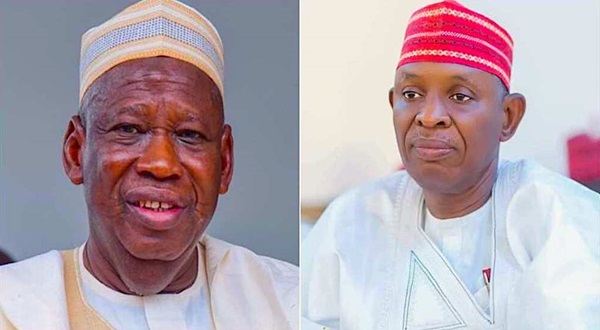
A Federal High Court in Kano has given Justice Farouk Lawan Adamu and Justice Zuwaira Yusuf 48 hours to resign from their appointments as chairmen of inquiry commissions set up by Kano State Governor Abba Kabir Yusuf.

The court also ordered the National Judicial Council to stop paying their salaries and benefits if they fail to comply.

The judges were appointed to investigate alleged misappropriation of public properties and political violence, but the court ruled that their acceptance of the appointments was an encroachment on the judicial arm of government and a breach of the separation of powers doctrine.

The court’s decision came in a case filed by former Governor Abdullahi Umar Ganduje, who sought to stop the probes. The court had earlier ruled that Ganduje could only be investigated by the EFCC or ICPC.

The judges were ordered to cease performing executive functions assigned to them by the Governor and to resign from their appointments as chairmen of the inquiry commissions. Failure to comply will result in the stoppage of their salaries and benefits.

According to the court, the Governor of Kano State has no power to appoint judges as chairmen of inquiry commissions without recourse to the National Judicial Council.

The court also stated that the judges’ acceptance of the appointments was a violation of the Code of Conduct for Judicial Officers.

The court’s ruling is a victory for Ganduje, who had challenged the probes as an abuse of office and undermining the sanctity of the judiciary.

The respondents in the suit include the National Judicial Council, the Revenue Mobilization Allocation and Fiscal Commission, the Attorney-General of Kano State, and the two judges.

El-Rufai sues Kaduna State Assembly for defamation

By Abdullahi Mukhtar Algasgain

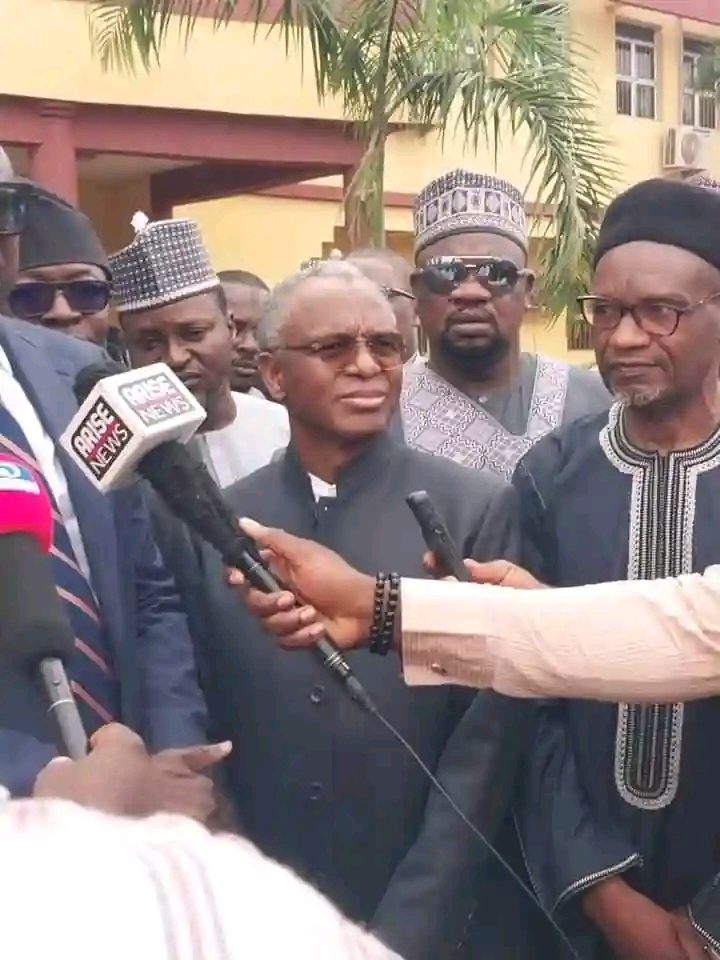
The former Governor of Kaduna State, Malam Nasir El-Rufa’i, has filed a defamation lawsuit against the Kaduna State Assembly. The lawsuit was presented today, Wednesday, at the Federal High Court in Kaduna.

El-Rufai is demanding a public apology from the lawmakers for a report they published, which he claims defamed him and his cabinet. The State Assembly’s report alleged that the former governor misappropriated over ₦423 billion during his tenure.

El-Rufai’s legal team argues that the report is both false and malicious, designed to tarnish his reputation and discredit his administration’s achievements. They assert that the allegations have caused significant harm to his personal and professional standing.

The former governor, noted for his developmental policies and efforts to improve infrastructure and education in Kaduna State, has consistently defended his administration’s transparency and commitment to public service. He maintains that the Assembly’s allegations are politically motivated and lack any substantive evidence.

The legal proceedings have drawn significant attention, with many awaiting the court’s decision on the matter. The outcome of this case could have substantial implications for El-Rufai’s political future and the current political landscape in Kaduna State.

No any plans to dethrone Sultan of Sokoto

By Abdullahi Algasgain

The attention of the Sokoto State Government has been drawn to a malicious publication credited to the Muslims Rights Concern (MURIC) alleging a plan by the sttate government to dethrone the Sultan of Sokoto, Muhammad Sa’ad Abubakar.

The state government wondered how a responsible body like MURIC, claiming to be protecting the rights of the Muslims would descend so low and cheaply as to join hands with deluded mischief makers and enemies of progress to fabricate such a false and unsubstantiated story just to create an unfriendly atmosphere and fear in the minds of the law-abiding and peaceful citizens of the state.

We believe that MURIC is not the type that will be dancing to the tunes of enemies and mischief makers who are trying to take away the attention of the good people of Sokoto state and Nigerians on the transformative initiatives taking place in Sokoto State over the last one year.

We also like to assure MURIC that the present administration just like the previous administrations in the state cherishes and respects the Sultanate Council long before MURIC was established.

The Sultanate Council, which has a long standing historical importance is so reverred to all the people of Sokoto State, therefore we still hold the institution in very high regards and esteem.

This is not the first time stories such as this were fabricated to show that all is not well between the state government and the Sultanate Council, as some few months back we had a similar obnoxious story which the state government categorically condemned and denied in whole.

From the look of things,those nefarious detractors and distracting enemies of progress have not relented in their failed efforts to smear the cordial relationship existing between the state government and the Sultanate Council.

MURIC should have cared to find out if there was ever any query, warning or any threatening documents served on the sultan by the state government.

We equally like to remind MURIC that promoting Islamic affairs is the second item on the Ahmed Aliyu’s nine-point Smart Agenda,therefore Islam means so much to the present administration, coupled with the fact that Sokoto being the Seat of the Caliphate, is a 100 per cent Muslim-dominated society.

It is on record that no administration in the history of Sokoto State has done to Islam what the present administration has done in just one year. This we say without any fear of contradictions.

Therefore, for any one to think that the present administration could engage in acts or actions that could jeopardize the development of Islam is not only unfair but unjustifiable.

To put the records straight, we would like to tell the world that the relationship between the Ahmed Aliyu-led administration and the Sultanate Council under the leadership of our most respected monarch, Muhammad Sa’ad Abubakar has been very cordial.

The present administration always consulted with His Eminence, the Sultan on issues affecting the state, and his invaluable contributions and inputs are always respected and included in policy implementation.

On the issue of sacking and transfer of some District Heads in Sokoto State, MURIC should know that the affected District Heads were accused of some unbecoming behaviours,such as land racketeering, aiding insecurity as well as insurbodination to the constituted authority.

In order to give them fair hearing the committee summoned all the affected District Heads, after which it came up with a whitepaper report, advising the government on what to do. And it was based on that and also in the public interest that the state government acted in conformity with the recommendations made by the whitepaper committee.

It is equally important for MURIC to note that nobody is above the law, therefore,the sacked District Heads are just reaping what they saw, and that the action taken by the Sokoto State Government was indisputably in the best public interest.

Abubakar Bawa
Press Secretary to
Sokoto state Governor
25/06/2024.

Some takeaways from my reading journey

By Abdullahi Khairalla

I am not a huge fan of reviewing books that come my way because of personal reasons, but this time around, I felt compelled to share some major lessons and takeaway from a book I personally found rich in ideas for building and shaping leadership journey of any aspiring leader across different sectors.

“Lead Disruption” is a book written by Dr. Akin Oke with thrust and focus on providing a guide for exceptional leadership performance in this era of turbulence and uncertainty.

To begin with, the author began by establishing the fact that, the world today is faced with all kinds of disruptions, chaos occasioned by the accelerating rate of change and uncertainty in our hyperkinetic environments caused fundamentally by three seismic events:

  • Global Health Pandemic(Covid-19)
    *Global reorganisation of work due to the adoption of new technologies and
  • The ongoing geopolitical transformations across the globe (east/west tension).This according to him, summarises our world into VUCA meaning– Volatile, Uncertain, Complex and Ambiguous.

Additionally, recent predictions about the advance of the fourth industrial revolution indicate that the speed of change, uncertainty and disruption to businesses will continue to increase. The world will have to brace up for potential global economic recession and the effects of climate change due to the continued depletion of ozone layer. This rapid change taking place, will invariably displace the old order and that will require leaders who are well-packed and positioned with requisite skills to transit their businesses and societies into prosperity in line with the new realities.

It is not a matter of conjecture that the Covid-19 has taken the world by surprise and has shifted and dismantled many old conventions, practices and ways of doing things that had previously existed during the pre-Covid era in our business space, industries, government halls and social realm. One thing that stood out is the complete migration of human race into a technological world, work from home, a situation he terms as the “new normal”

To effectively provide effective leadership in light of the current precarious reality of our fast-paced world, the book outlines among other themes and concepts such as self-awareness, resilience, innovation quotient, empathy and effective communication as critical elements for leaders to navigate through the tough and murky waters of the VUCA world.

I will touch briefly on each of the concepts for the sake of time. Self-awareness is the bedrock of effective leadership. This is because effective leadership, begins with good self-leadership. For a leader, knowing yourself and staying true and authentic to oneself is one of the salient assets you need, to be able to lead others in times of uncertainty. Asking yourself how well do you know your personal traits, your strengths, weaknesses, values and preferences? are very critical for a leader that aspires to lead his people even in times of turbulence. Dr. Akin Oke gave an analogy of a dangerous turbulence called “clear-air” by aviators that airplanes face which occurs when the plane has stabilised and in the cruising altitude and is always difficult to predict as radars cannot signal it in advance.

At this point, pilots are not too concerned about it, because the body of the plane itself has the ability to come back to its original planned position based on the inherent strengths of the plane itself. “Aeronautical engineers call this ability positive stability and pilots will tell you that the secret lies within the complex technical configurations at work in-between the wings of the plane and the in the belly of fuselage. This is the same way ‘self-awareness works for a leader. Leaders should have this capacity within them-they must build that resilience within them, that positive stability. And you cannot do that without having a good configuration of yourself (you morality, integrity, honesty, etc)”

Again,self-awareness is very important as there is a strong nexus between private morality and public morality of a leader because his personality is molded by these two realities. Though, this assertion has met stiff criticism by some leaders who try to separate public morality from their private morality. Unfortunately, these two intertwined. While it’s true a leader is human like everyone else and is entitled to private life outside the public role, the reality is that the leader’s private life can have serious consequences on the larger society especially in terms of public perception or behaviour. A bigoted leader, for example, is unfit to lead a company or plural society made up of people of diverse inclinations, backgrounds and idiosyncrasies. This is because his professional sense of judgement will be affected. A bad father , would not be the ideal person to lead or speak to other about fatherhood or parenting,especially if his private life as a failed father is a matter of public knowledge.

Another key element highlighted in the book is of course ‘resilience ‘ which is about the ability of a leader to respond in a positive and constructive way to uncertainty. It is about adapting to a prompt change and capacity to bounce back after a setback. A leader is required to be resilient even in the face of towering threat and dilemma and do everything to emerge out of it. This of course led the author to introduce me to a concept previously unfamiliar to me ‘antifragility’ which is a notch higher than resilience. While resilience rests on the capacity to bounce back after a setback, antifragility has to do with not only bouncing back but how to learn to thrive in the face of adversity and uncertainty. Simply put ‘a resilient leader resists shocks and stays the same, the antifragile leader gets better”.

Equally, the author looks at the central role of innovation in propelling one to be an effective leader in times of disruptions such as the covid era. Innovative leadership lies in the ability of a leader to provide solutions that lead to improvement in the life of an organisation or society, using new ideas. Covid era is a referral case in point, with Zoom coming to the rescue of mankind at its most critical point of need. As a leader, your ability to generate breakthrough ideas that help and transform society at a time of needs and despair, speaks volume of you. Voltaire was right to say “no problem can withstand the assault of sustained thinking”

The last but not the least, among the tips reeled out by the author is “empathy”. This is about a leader putting himself in workers’ or subjects’ shoes to understand their emotions and feelings while ultimately providing solutions to them. He interestingly demonstrated how a leader with no empathy may receive vitriolic backlash by his subjects or workers. The case of Adams Osiomole in 2013 was cited when he was begged by a widow illegally selling wares by the roadside, where he told her to, “Go and die”.

Although Oshiomole’s outburst stemmed from his frustration as a leader trying to enforce street trading laws in a bid to make the city better, his unguarded utterance was met with widespread condemnation. He had to organise a highly publicised reunion with the widow barely a month later to apologise.

The book reached its climax on stressing the invaluable role of ‘communication’ in engendering effective leadership. Effective leadership communication is about transferring message in such a way that it can be understood by all the parties involved. The leader should take into the audience’s level of understanding and ability, especially by enhancing the clarity and unambiguousness of the every message transmitted to them.

Without effective communication, nothing gets done in a society especially in hours of uncertainty. An example of former governor of New Yoke Mr. Andrew Cuomo was drawn especially his daily Covid-19 briefings viewed globally via CNN which were source of information, direction and vision casting without leaving his subjects second-guessing on every next move. It enabled New Yorkers to have clear vision of the impact of the Covid Pandemic on the state of New York and probably America at large.

As far as I am concerned, Borno state governor Prof. Babagana Umara Zulum is also a shining example of effective leader even in moments of fear and despair. This could be seen during his frequent state-wide broadcast during the pandemic in English, Kanuri and Hausa respectively which provided hopes, empathy, details of infection rates, estimated death toll, that way, the people of Borno were able to make informed decisions towards slowing down the spread of the virus by complying the with Covid protocols and appreciate the need to endure tough lockdown restrictions. This is the essence of leadership communication.

Finally, providing tips for building effective communication in leadership by the author is just “an icing on the cake” these are; Affirming words or communication with action(behaviour of the leader), Demonstrate and Provide stories, anecdotes that inspire and motivate action, Communicate relentlessly, Active Listening and encouragement of inputs, Clarity, and simplicity in communication.

Abdullahi Khairalla writes from Maiduguri

Lingering water scarcity in Jos

By Usman Muhammad Salihu

Jos, the capital city of Plateau State, has for long been grappling with the persistent issue of water scarcity, leaving residents to endure the consequences of insufficient water supply from the body responsible. The lack of functional boreholes and wells further compounds the challenge, painting a grim picture of daily life for the city’s inhabitants.

The city, despite being blessed with natural water sources, finds itself in the grip of a water crisis. Government efforts to address this issue have fallen short, with inadequate infrastructure and supply systems unable to meet the teeming demand.

To effectively bring an end to the menace, the government must prioritize infrastructure development, including the construction of water treatment plants and distribution networks, to ensure equitable access to clean water across the city.

Implementing and enforcing water management policies and regulations can help curb wastage and ensure responsible usage of available resources.

Engaging with local communities to understand their needs and involve them in decision-making processes can foster a sense of ownership and accountability in water management initiatives.

On the other hand, well-to-do individuals and private companies operating in Jos should integrate water provision mechanism and sustainability practices into their corporate social responsibility initiatives.

Collaborating with government agencies and NGOs can amplify the impact of private sector efforts, leveraging resources and expertise to address water scarcity more effectively.

Empowering residents with knowledge about water conservation and hygiene practices can promote responsible usage and reduce strain on limited water resources.

Supporting grassroots initiatives aimed at water conservation, such as community-led well drilling projects or water purification programs, can foster resilience and self-sufficiency within our neighborhoods.

By implementing comprehensive solutions that span governmental, private, and community sectors, the city can break free from the cycle of scarcity and ensure a sustainable water future for generations to come.

Usman Muhammad Salihu writes from Jos, Nigeria.
muhammadu5363@gmail.com

Lead British School saga: the slap or the dress?

By Dr. Fahad Ibrahim Danladi

Unfortunately, bigotry has permeated the fabric of our society, affecting some Nigerians. Recently, I was surprised to learn that the girls wearing miniskirts in the Lead British School, Abuja bullying video were Muslim students.

This incident highlights a concerning trend, also seen in Lagos, where students in private schools may be restricted from wearing modest attire that aligns with their religious beliefs.

In contrast, I’ve witnessed a more inclusive approach in the United States, where my children attend public school. Their schools accommodate diverse religious and cultural backgrounds by offering flexible dress code options.

For instance, my daughter’s elementary school has a uniform policy with various styles that cater to different religious and cultural needs. Similarly, my other daughter in middle school wears traditional Hausa dresses to school without issue.

In light of the Supreme Court’s ruling, it’s crucial for both private and public schools in Nigeria to adopt inclusive uniform policies that respect the two major religions in our country, promoting a culture of acceptance and understanding.

Reconcile with our neighbors dear President Tinubu

By Nuraddeen Danjuma Maiwada

Mr. President sir, I hope this finds you in good health and high spirits. I am writing to bring to your attention the special relationship that exists between the people of Northern Nigeria and the Republics of Niger, Mali and Burkina faso, our beloved neighbors.

In Northern Nigeria, especially in towns and cities close to Niger Republic’s borders, Nigeriens are not just our neighbors, but also our relatives. The bond we share transcends borders, as we are interconnected through history, language, and culture. It is impossible to deny the fact that our roots run deep in both lands.

Our kingdoms, trade, religion, culture were the same untill colonialism and much beyond. The Frontline regions of Niger Republic namely Dosso, Tahoua, Maradi, Zinder and Diffa share common ancestry and culture with Nigeria’s Kebbi, Sokoto, Zamfara, Katsina, Jigawa, Yobe and Borno States. Emir of Maradi is still called Sarkin Katsinan Maraɗi

Despite the existence of artificial boundaries that separate us on maps, we are essentially the same people. Our shared histories and intertwined cultures make it evident that Niger, Mali and Burkina faso Republics hold a special place in our hearts. This kinship between our nations is based on a strong foundation of mutual respect, understanding, and cooperation.

In light of this, I implore you, dear President Tinubu, to adopt a peaceful approach instead of confrontation when it comes to dealing with neighbors. This approach recognizes the deep ties we share and seeks to strengthen the bonds between our nations rather than tear them apart.

By choosing dialogue and peaceful negotiations, we can establish a prosperous future for both our nations. Joint efforts in areas such as trade, education, healthcare, and security will not only benefit us but also foster a stronger sense of unity and collaboration among our people.

It is essential to remember that our shared interests and aspirations far outweigh any differences that may arise. By fostering peaceful relations, we can unlock tremendous potential for development, progress, and stability in the region.

As leaders, it is our duty to foster an environment that encourages harmony and collaboration. Let us set an example for the rest of the world by showcasing how two nations, intertwined by history and shared values, can resolve any differences through peaceful means.

I remain hopeful that under your leadership, our nations will continue to strengthen the bonds of brotherhood and cooperation. Together, we can build a future where all countries in ECOWAS and Nigeria thrive side by side, united in peace and prosperity.

Nuraddeen Danjuma Maiwada
Bayero University Kano
25.02.2024