Muhammad Sulaiman

Some takeaways from my reading journey

By Abdullahi Khairalla

I am not a huge fan of reviewing books that come my way because of personal reasons, but this time around, I felt compelled to share some major lessons and takeaway from a book I personally found rich in ideas for building and shaping leadership journey of any aspiring leader across different sectors.

“Lead Disruption” is a book written by Dr. Akin Oke with thrust and focus on providing a guide for exceptional leadership performance in this era of turbulence and uncertainty.

To begin with, the author began by establishing the fact that, the world today is faced with all kinds of disruptions, chaos occasioned by the accelerating rate of change and uncertainty in our hyperkinetic environments caused fundamentally by three seismic events:

  • Global Health Pandemic(Covid-19)
    *Global reorganisation of work due to the adoption of new technologies and
  • The ongoing geopolitical transformations across the globe (east/west tension).This according to him, summarises our world into VUCA meaning– Volatile, Uncertain, Complex and Ambiguous.

Additionally, recent predictions about the advance of the fourth industrial revolution indicate that the speed of change, uncertainty and disruption to businesses will continue to increase. The world will have to brace up for potential global economic recession and the effects of climate change due to the continued depletion of ozone layer. This rapid change taking place, will invariably displace the old order and that will require leaders who are well-packed and positioned with requisite skills to transit their businesses and societies into prosperity in line with the new realities.

It is not a matter of conjecture that the Covid-19 has taken the world by surprise and has shifted and dismantled many old conventions, practices and ways of doing things that had previously existed during the pre-Covid era in our business space, industries, government halls and social realm. One thing that stood out is the complete migration of human race into a technological world, work from home, a situation he terms as the “new normal”

To effectively provide effective leadership in light of the current precarious reality of our fast-paced world, the book outlines among other themes and concepts such as self-awareness, resilience, innovation quotient, empathy and effective communication as critical elements for leaders to navigate through the tough and murky waters of the VUCA world.

I will touch briefly on each of the concepts for the sake of time. Self-awareness is the bedrock of effective leadership. This is because effective leadership, begins with good self-leadership. For a leader, knowing yourself and staying true and authentic to oneself is one of the salient assets you need, to be able to lead others in times of uncertainty. Asking yourself how well do you know your personal traits, your strengths, weaknesses, values and preferences? are very critical for a leader that aspires to lead his people even in times of turbulence. Dr. Akin Oke gave an analogy of a dangerous turbulence called “clear-air” by aviators that airplanes face which occurs when the plane has stabilised and in the cruising altitude and is always difficult to predict as radars cannot signal it in advance.

At this point, pilots are not too concerned about it, because the body of the plane itself has the ability to come back to its original planned position based on the inherent strengths of the plane itself. “Aeronautical engineers call this ability positive stability and pilots will tell you that the secret lies within the complex technical configurations at work in-between the wings of the plane and the in the belly of fuselage. This is the same way ‘self-awareness works for a leader. Leaders should have this capacity within them-they must build that resilience within them, that positive stability. And you cannot do that without having a good configuration of yourself (you morality, integrity, honesty, etc)”

Again,self-awareness is very important as there is a strong nexus between private morality and public morality of a leader because his personality is molded by these two realities. Though, this assertion has met stiff criticism by some leaders who try to separate public morality from their private morality. Unfortunately, these two intertwined. While it’s true a leader is human like everyone else and is entitled to private life outside the public role, the reality is that the leader’s private life can have serious consequences on the larger society especially in terms of public perception or behaviour. A bigoted leader, for example, is unfit to lead a company or plural society made up of people of diverse inclinations, backgrounds and idiosyncrasies. This is because his professional sense of judgement will be affected. A bad father , would not be the ideal person to lead or speak to other about fatherhood or parenting,especially if his private life as a failed father is a matter of public knowledge.

Another key element highlighted in the book is of course ‘resilience ‘ which is about the ability of a leader to respond in a positive and constructive way to uncertainty. It is about adapting to a prompt change and capacity to bounce back after a setback. A leader is required to be resilient even in the face of towering threat and dilemma and do everything to emerge out of it. This of course led the author to introduce me to a concept previously unfamiliar to me ‘antifragility’ which is a notch higher than resilience. While resilience rests on the capacity to bounce back after a setback, antifragility has to do with not only bouncing back but how to learn to thrive in the face of adversity and uncertainty. Simply put ‘a resilient leader resists shocks and stays the same, the antifragile leader gets better”.

Equally, the author looks at the central role of innovation in propelling one to be an effective leader in times of disruptions such as the covid era. Innovative leadership lies in the ability of a leader to provide solutions that lead to improvement in the life of an organisation or society, using new ideas. Covid era is a referral case in point, with Zoom coming to the rescue of mankind at its most critical point of need. As a leader, your ability to generate breakthrough ideas that help and transform society at a time of needs and despair, speaks volume of you. Voltaire was right to say “no problem can withstand the assault of sustained thinking”

The last but not the least, among the tips reeled out by the author is “empathy”. This is about a leader putting himself in workers’ or subjects’ shoes to understand their emotions and feelings while ultimately providing solutions to them. He interestingly demonstrated how a leader with no empathy may receive vitriolic backlash by his subjects or workers. The case of Adams Osiomole in 2013 was cited when he was begged by a widow illegally selling wares by the roadside, where he told her to, “Go and die”.

Although Oshiomole’s outburst stemmed from his frustration as a leader trying to enforce street trading laws in a bid to make the city better, his unguarded utterance was met with widespread condemnation. He had to organise a highly publicised reunion with the widow barely a month later to apologise.

The book reached its climax on stressing the invaluable role of ‘communication’ in engendering effective leadership. Effective leadership communication is about transferring message in such a way that it can be understood by all the parties involved. The leader should take into the audience’s level of understanding and ability, especially by enhancing the clarity and unambiguousness of the every message transmitted to them.

Without effective communication, nothing gets done in a society especially in hours of uncertainty. An example of former governor of New Yoke Mr. Andrew Cuomo was drawn especially his daily Covid-19 briefings viewed globally via CNN which were source of information, direction and vision casting without leaving his subjects second-guessing on every next move. It enabled New Yorkers to have clear vision of the impact of the Covid Pandemic on the state of New York and probably America at large.

As far as I am concerned, Borno state governor Prof. Babagana Umara Zulum is also a shining example of effective leader even in moments of fear and despair. This could be seen during his frequent state-wide broadcast during the pandemic in English, Kanuri and Hausa respectively which provided hopes, empathy, details of infection rates, estimated death toll, that way, the people of Borno were able to make informed decisions towards slowing down the spread of the virus by complying the with Covid protocols and appreciate the need to endure tough lockdown restrictions. This is the essence of leadership communication.

Finally, providing tips for building effective communication in leadership by the author is just “an icing on the cake” these are; Affirming words or communication with action(behaviour of the leader), Demonstrate and Provide stories, anecdotes that inspire and motivate action, Communicate relentlessly, Active Listening and encouragement of inputs, Clarity, and simplicity in communication.

Abdullahi Khairalla writes from Maiduguri

Lingering water scarcity in Jos

By Usman Muhammad Salihu

Jos, the capital city of Plateau State, has for long been grappling with the persistent issue of water scarcity, leaving residents to endure the consequences of insufficient water supply from the body responsible. The lack of functional boreholes and wells further compounds the challenge, painting a grim picture of daily life for the city’s inhabitants.

The city, despite being blessed with natural water sources, finds itself in the grip of a water crisis. Government efforts to address this issue have fallen short, with inadequate infrastructure and supply systems unable to meet the teeming demand.

To effectively bring an end to the menace, the government must prioritize infrastructure development, including the construction of water treatment plants and distribution networks, to ensure equitable access to clean water across the city.

Implementing and enforcing water management policies and regulations can help curb wastage and ensure responsible usage of available resources.

Engaging with local communities to understand their needs and involve them in decision-making processes can foster a sense of ownership and accountability in water management initiatives.

On the other hand, well-to-do individuals and private companies operating in Jos should integrate water provision mechanism and sustainability practices into their corporate social responsibility initiatives.

Collaborating with government agencies and NGOs can amplify the impact of private sector efforts, leveraging resources and expertise to address water scarcity more effectively.

Empowering residents with knowledge about water conservation and hygiene practices can promote responsible usage and reduce strain on limited water resources.

Supporting grassroots initiatives aimed at water conservation, such as community-led well drilling projects or water purification programs, can foster resilience and self-sufficiency within our neighborhoods.

By implementing comprehensive solutions that span governmental, private, and community sectors, the city can break free from the cycle of scarcity and ensure a sustainable water future for generations to come.

Usman Muhammad Salihu writes from Jos, Nigeria.
muhammadu5363@gmail.com

Lead British School saga: the slap or the dress?

By Dr. Fahad Ibrahim Danladi

Unfortunately, bigotry has permeated the fabric of our society, affecting some Nigerians. Recently, I was surprised to learn that the girls wearing miniskirts in the Lead British School, Abuja bullying video were Muslim students.

This incident highlights a concerning trend, also seen in Lagos, where students in private schools may be restricted from wearing modest attire that aligns with their religious beliefs.

In contrast, I’ve witnessed a more inclusive approach in the United States, where my children attend public school. Their schools accommodate diverse religious and cultural backgrounds by offering flexible dress code options.

For instance, my daughter’s elementary school has a uniform policy with various styles that cater to different religious and cultural needs. Similarly, my other daughter in middle school wears traditional Hausa dresses to school without issue.

In light of the Supreme Court’s ruling, it’s crucial for both private and public schools in Nigeria to adopt inclusive uniform policies that respect the two major religions in our country, promoting a culture of acceptance and understanding.

Reconcile with our neighbors dear President Tinubu

By Nuraddeen Danjuma Maiwada

Mr. President sir, I hope this finds you in good health and high spirits. I am writing to bring to your attention the special relationship that exists between the people of Northern Nigeria and the Republics of Niger, Mali and Burkina faso, our beloved neighbors.

In Northern Nigeria, especially in towns and cities close to Niger Republic’s borders, Nigeriens are not just our neighbors, but also our relatives. The bond we share transcends borders, as we are interconnected through history, language, and culture. It is impossible to deny the fact that our roots run deep in both lands.

Our kingdoms, trade, religion, culture were the same untill colonialism and much beyond. The Frontline regions of Niger Republic namely Dosso, Tahoua, Maradi, Zinder and Diffa share common ancestry and culture with Nigeria’s Kebbi, Sokoto, Zamfara, Katsina, Jigawa, Yobe and Borno States. Emir of Maradi is still called Sarkin Katsinan Maraɗi

Despite the existence of artificial boundaries that separate us on maps, we are essentially the same people. Our shared histories and intertwined cultures make it evident that Niger, Mali and Burkina faso Republics hold a special place in our hearts. This kinship between our nations is based on a strong foundation of mutual respect, understanding, and cooperation.

In light of this, I implore you, dear President Tinubu, to adopt a peaceful approach instead of confrontation when it comes to dealing with neighbors. This approach recognizes the deep ties we share and seeks to strengthen the bonds between our nations rather than tear them apart.

By choosing dialogue and peaceful negotiations, we can establish a prosperous future for both our nations. Joint efforts in areas such as trade, education, healthcare, and security will not only benefit us but also foster a stronger sense of unity and collaboration among our people.

It is essential to remember that our shared interests and aspirations far outweigh any differences that may arise. By fostering peaceful relations, we can unlock tremendous potential for development, progress, and stability in the region.

As leaders, it is our duty to foster an environment that encourages harmony and collaboration. Let us set an example for the rest of the world by showcasing how two nations, intertwined by history and shared values, can resolve any differences through peaceful means.

I remain hopeful that under your leadership, our nations will continue to strengthen the bonds of brotherhood and cooperation. Together, we can build a future where all countries in ECOWAS and Nigeria thrive side by side, united in peace and prosperity.

Nuraddeen Danjuma Maiwada
Bayero University Kano
25.02.2024

More about ‘studying abroad’

By Salihi Adamu Takai

Most of the people leaving their country for acquiring education abroad make mistakes when considering the study abroad as an “easy learning” or an “easy way of gaining certificate”. Some people applied for transfer from their Universities to gain admission abroad not for the purpose of proper learning or additional gaining.

In any country, there’s a university that you can find around that’s not standard and gives certificate any how. So, if someone is intending to gain only certificate (not qualitative education) he can get that in his/her surroundings. In learning, the intention and purpose matter. What makes you search for it, takes you there – but to what extent that can be achievable? Ask your mind!

If it’s only certificate I want, why should I leave my country for another place? Think twice or even thrice. As a Muslim, I learned in the Hadith that the Prophet (SAW) was reported to have said that “search for a knowledge even in China”. Referring to “China” in the Hadith, even though some Ulamas say the Hadith is not authentic, but it shows how important search for knowledge is/was, and it makes people curious to get it – for the well-being of their lives. It’s talking about the qualitative education not what can be gotten easily.

Studying or living abroad is a chance of life if the person uses the advantages appropriately. Apparently, it’s not something of gaining what’s easy to me or not – rather what can add me value into my life. This means a person living in the most developed country can plan to live in the most underdeveloped country in Africa. This can help the person acquire another things such as experience and study how different people live in different places.

Many people learned different languages accurately through living abroad. There you can interact with some people you have never met before. They speak what you speak not. You can learn from them something different.

Studying abroad also can be the best for you if you take it as it should be. This means as you learn from someones who are different from you nationally and socially, you can get someone new to you. Although, the contents of the things you’re acquiring are the same, but the things in them can be worth acquiring and grabbing.

Here in Uganda, I interact with Congolese whose country is Francophone. Their official language is French not English. Most of them live in some countries like Uganda to do their degree and at the same time learning English language. This shows that the purpose is not only a degree certificate – but the language is very important to them.

Therefore, it’s very important to the people (students in particular) who are living abroad to know that; it is a very good time that should be utilised decently. You’re not living there permanently. Anytime you can be asked to leave the country. So, it’s a life for a purpose with a limited time. Don’t take it as just a chance of pleasure – rather a chance of success – once it is misused – it can affect the whole life.

Muslim women must acquire digital skills now

By: Ibrahim Suleiman Ibrahim

In today’s consistently evolving digital world, the pursuit of digital/ICT skills has become increasingly important for individuals and communities alike. This is particularly relevant for Muslim women, who often face unique challenges in balancing their religious and family values with their career choices, hence, making them to be left behind in the digital landscape.

In this article, we will explore the importance of creating awareness among Muslim communities about the need for Muslim women, especially the married ones, to pursue digital/ICT skills.

One of the primary concerns of Muslim women is the compatibility of their careers with their religious values and family life. Most jobs in our contemporary secular societies often raise ‘Sharee’ah’ concerns—which mostly revolve around free mixing and intimacy with ‘non-mahrams’, prolonged unavailability in their matrimonial homes that often impede performance of domestic responsibilities, compromising the Islamically mandated mode of dressing for Muslim women, and so on, making it challenging for some educated Muslim women to identify fulfilling careers that align with their religious values and beliefs.

God so kind, the recent advancements in the ICT sector has now alternatively offered a wealth of opportunities for Muslim women to pursue careers that are both fulfilling and compatible with their ‘Deen’ and family life, but unfortunately, most Muslim women lack sufficient awareness of those opportunities.

It is quite essential for Islamic scholars and Muslim elites to be aware of the recent advancements in the ICT sector and to consider enlightening their communities about the potential benefits of digital/ICT skills for Muslim women. By promoting awareness and understanding, these leaders can help Muslim women make informed decisions about their careers and contribute to the overall empowerment of the community, without compromising their religious values and beliefs.

Importantly, pursuing digital/ICT skills can also lead to remote job opportunities that offer flexibility and work-life balance. These jobs allow women to work from their homes, enabling them to demonstrate their supportive roles in their marriages, while still advancing their careers. Some of the skills that can lead to remote job opportunities include web development, copywriting, social media management, digital marketing, graphic designs, virtual administration, data analytics and so on.

Furthermore, encouraging Muslim women to pursue digital/ICT skills can lead to greater empowerment and intellectual development. By acquiring these skills, Muslim women can supportively contribute to their families’ finances and also become more intellectually sound, which is in line with the principles of Islam that promote the pursuit of knowledge.

In conclusion, we are in an interconnected world where digital skills are increasingly relevant across all sectors. Muslim women lawfully deserve to be equiped with these skills so they can also participate more actively in the global economy and contribute to the advancement of their communities, within the limits of Sharee’ah.

There may be misconceptions within Muslim communities about the compatibility of digital/ICT careers with Islamic principles. However, creating awareness can help address these misconceptions and demonstrate how these skills can be utilized in ways that are consistent with religious values.

It’s therefore crucial for community leaders, including Islamic scholars and Muslim elites, to actively promote the value of digital/ICT skills for Muslim women. Their support and endorsement can greatly influence the attitudes and decisions of community members.

Ibrahim Suleiman Ibrahim is a Public Affairs Analyst. He can be reached via: suleimibrahim00@gmail.com

From Gawuna is coming to Sanusi is coming!

By Abbas Datti

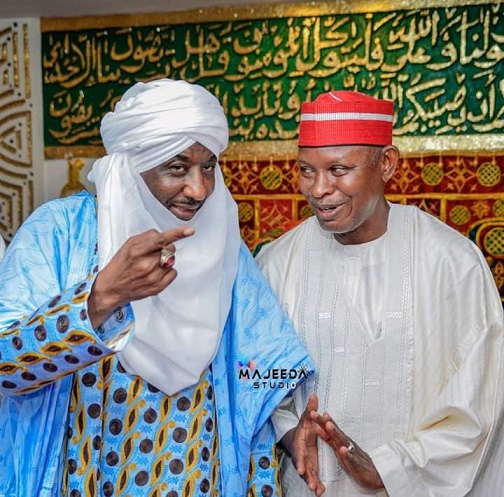
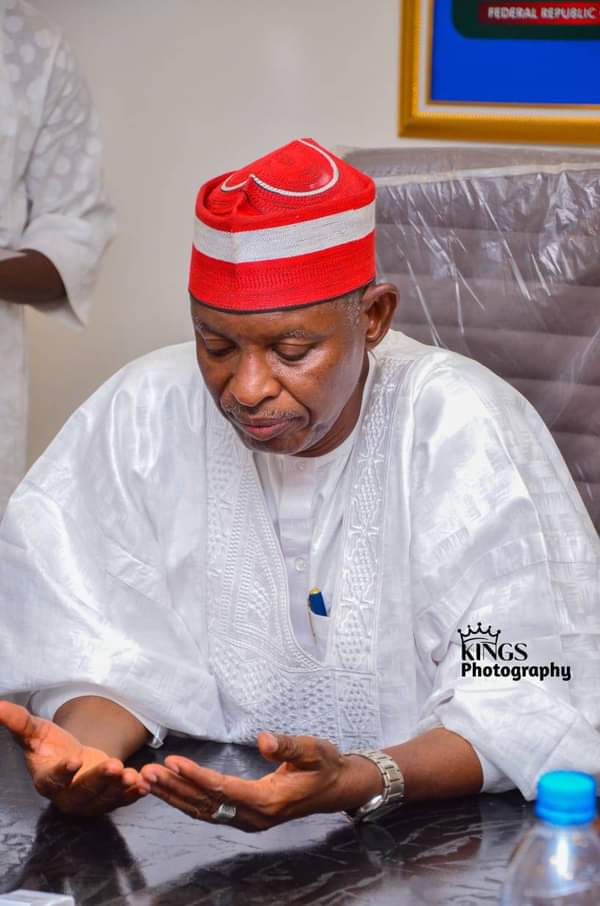
Following the Apex court’s ruling in favour of Eng Abba Kabir Yusuf as the legitimate elected governor of Kano State, there arises the compelling debates with regards to balkanization of Kano emirate, and potential return of Sunusi II to Gidan Dabo, as well as possible removal of the present emir, Alh. Aminu Ado Bayero.

Sunusi’s potential return to the throne is not without its challenges and complexities. Understanding the possibilities of post-Sunusi II and assessing the current political climate before making such a decision is paramount.

Considering Sunusi’s wide popularity and global influence, he may not necessarily obey Abba Kabir Yusuf as governor of Kano State. Sunusi’s tacit approval for women to confront their maltreating husbands in their matrimonial homes comes into play. Therefore, there’s a need for both Kwankwaso and Abba Kabir to ensure a delicate balance between addressing the fears that may arise from Sunusi’s reinstatement and charting a justifiable reason towards the dismounting of Ado Bayero’s biological son from the throne.

Supporters of Sunusi II passionately advocate for his reinstatement, citing his worldwide recognition and his radical approach to some social problems. Also, for opponents of the immediate past governor of Kano State, Sunusi’s enthronement is seen as a stab in the back to Eng Dr Abdullahi Umar Ganduje and the restoration of Kano’s kingdom dignity.

However, the broader implications of such a move require diligent, careful considerations. Both supporters of Aminu Ado Bayero and Sunusi are closely watching the unfolding events, with questions threatening the respect, dignity, and reverence enjoyed by the Kano emirate.

Balancing the expectations of various factions, addressing the concerns of opposing voices, and fostering an inclusive dialogue will be key to a successful solution to the emerging calls about removing Alh. Aminu Ado Bayero.

The possibility of enthroning back Sunusi is a multifaceted scenario with far-reaching possibilities. As the political stage sets for Sunusi’s potential return, the world observes with keen interest, eager to witness the unfolding of a narrative that could reshape the destiny of Kano State and redefine the dynamics of the leadership of Kano emirate.

Abbas Datti writes from Kano via abbasdatti448@gmail.com.

Why the North needs to stand for Abba Gida-Gida

By Sani Umar Adamu

It’s said “An injustice to one is an injustice to all”. The cursory in justice would be an insincere simulacrum that spells the rogue society, but only to who knows must say the least. Going by the saying ‘what the heart thinkenth the tongue speaketh’ with all viable indications the awaiting judgement would not serve and do away with stud whom were racing to twist the world known mandatory, just on the floor of pristine judgement which by the way would be the Nigeria’s biggest justice robbery.

Abba was returned elected and officially declared winner by the INEC, the election which was supervised by both the internal and external observers was believed to be freed from any howl, in fact; it was an afflatus to stimulate by other states. Only greedy and depredator would cease the rectitude of the election and thinkenth to reverse the will of millions. We have known that the only substitute to the lies and unfairness is shaping the mendacity to bring in seizing, itch and threatening of the democracy. 

We became tootles in reticent the voices of our concern are in taciturnity where we no longer feel the pain in others; the pain of my neighbor is no longer threatening, as if telling the truth is synonymous to being a workshy. The naked truth has become something invisible – that which can not be seen simply because the ambitions and hopes are tied to president’s apron string. To cleanse the Augean stable – we definitely need to voice up our concern learn from the history of Hercules who was to clean the stables of Augeas King of Elis in which were 3000 oxen and which stables had not been cleaned for thirty years. Hercules performed the task in a single day by leading the rivers Alpheus and Peneus through the farmyard… this is to show how quality of trusting and voicing the concern is. So on no account we should lay out our hands, our voices and our fortitude to this least moiety-imballlance  we have received from the judgement of the Kano state governor. With menacle or co-adjutor, with wantonness or pride we all have to coalesce to break the unspeakable inept trench drawn between justice and injustice. 

To secret or not to do the Injustice is lethal and apparently we shouldn’t live in negation to it’s very existence, the wrath horror would summon the every existence of our survival. And when the fury unleash it wouldn’t spare the opulents or the one in abject poverty we all be the receiving edge and in the midst the pollutants disseminate the unity in our lands and finally mock the affirmation of our peaceful coexistence. 

A close shave to this prospicience is to replete the almost will of justice towards its impartial equilibrium. That’s the Justice must be served in no conjunction or appeliation to party membership, it should be served on the ground of impartiality. The crooked or inanimate cupidity to topple the incumbent and democratically elected Governor will be checked  and stopped on the spot. It’s truly beyond comprehension to figure out why all this hatred in the name of polity? Comparisons are odious, and an empty bag will not stand upright. Decisively this justice miscarriage sensed the intended failure to oust the duly elected Governor. At length the plutocracy is in sight and this will bring the collapse of our youngish democracy and it’s an injure to the prescribed rule of law and when this happens just wait for the time to commiserate the down fall of the entire system at large.

Sani Umar Adamu (Kawun Baba) can be reached via umarhashidu1994@gmail.com.

ReplyForward

Defending the Naira: A political perspective

By Ibrahim Isa Wada

When the current administration was advised by some economic experts to withdraw the subsidy on fuel and allow the Nigerian Naira to find its own value in the international arena, I got so much worried for fears of what would be the outcome. Being a nonexpert on economics, banking or finance, but only a bloody retired broadcast regulator with a fair understanding of day to day current issues, I decided to drop this piece and I hope it will be carefully considered by the experts. All I know is that, life is so hard for all of us since the Naira decided to take a flung and the fuel prices shoot up.

Sadly, some of the experts disappeared while others started to blame the past administration and/or their village people for making our lives so miserable.

Defending the value of the Naira amounts to defending the Tinubu/Kashim administration, and surely the interest of the Nigerian people.

How can any government, businesses or persons successfully plan and execute meaningful projects; how can Nigeria join economic groups, like the BRICS, with such a rickety currency?

I understand that the value of the Nigerian Naira is a function of her balance of trade. That is for the Naira to be strong and stable, the total value of goods and services Nigeria imports must be the same or less than the value of goods and services Nigeria exports over the period of time.

In the present circumstances, we tend to import almost everything including PMS, and even charcoal for smoking Shisha! While we export gold and dollars in cash etc, to safe havens. To be frank, any Nigerian leadership that wants to succeed must have a strong and stable Naira to begin with, which can be achieved by taking the following measures, among others:

1) Bring back the policy of Export Promotion and Import Substitution of the late 70’s.

This should be done with vigour. Any product that could be manufactured in Nigeria shall not be easily imported into the country, while all products that can be exported should receive a boost from the government.

There are means and ways to manuver around international trade politics, like the WTO, to achieve that.

2) Formalise all international transactions, including our transborder trade with ECOWAS and other African countries. Currently the Nigerian Central Bank serves as the unofficial African Central Bank, providing the foreign exchange requirements for many African countries that route their trade through Nigeria.

The trade formalization entails the systemic deployment of adequate personnel and infrastructure that would make international trade between Nigeria and other countries smooth, yet documented.

3) The CBN, Commercial Banks and Bureau De Change operations should have a joint universal forex transactions software that will ease, unify and speed up forex trading.

4) From 3 above, all foreign currency transfers including PTA above $250 must be in digital form.

5) Also from 3 above, the commercial banks and BDC Forex Operator window should capture a basket of about seven major foreign currencies that Nigeria transacts in, i.e Dollar, Yuan, Euro, Pound, CFA, Saudi Riyal and Dirham.

Therefore the BDC operators should have multiple currency accounts with their banks to receive and transfer funds in digital form.

6) The Nigerian government should be bold enough to block all foreign exchange leakages, in form of waivers and favours to individuals and institutions.

7) Develop key institutions targeted towards the elimination of Forex Guzzlers thus:

a) Establish more private universities to reduce students high foreign exchange remittances.

b) Establish more world class hospitals to save foreign exchange from medical tourism.

c) Establish companies for the local fabrication of low technology agricultural and industrial machinery to reduce foreign exchange outflow.

d) Fuel imports should stop at the shortest possible time, by developing more modular refineries, privatising existing ones and ensuring the early take up of the Dangote refinery.

8) In line with the Export Promotion and Import Substitution Strategy, invest heavily in agriculture to reduce food and dairy products import, as well as encourage the exports of cocoa, cashew nuts, sesame seeds, beef, etc.

This is my political perspective of the basic economic issue, because if the politicians fail to defend the value of the Naira and the poor, they will fail utterly in politics.

Ibrahim Isa Wada, writes from Kano, Nigeria. He can be reached via; ibrahimisawada@gmail.com