BREAKING: Kaduna High Court releases El-Zakzaky, Wife
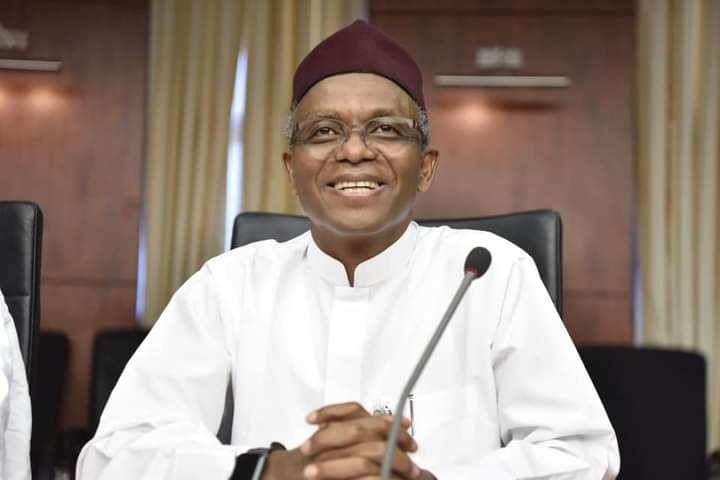
A Kaduna State High Court has released the leader of the Islamic Movement in Nigeria, Sheikh Ibrahim Elzakzaky and his wife, Malama Zeenat, today.
More details later.
A Kaduna State High Court has released the leader of the Islamic Movement in Nigeria, Sheikh Ibrahim Elzakzaky and his wife, Malama Zeenat, today.
More details later.
By Sulaiman Maijama’a
Suppose there is anything more flabbergasted, more blasphemous than what Abduljabbar Kabara had committed against our noble prophet (SAW). In that case, it is the report published by Sahara Reporters comparing the “Hijrah” of our most respected prophet to the evacuation of this Yoruba secessionist leader, whom I will not dignify by calling his name. Though attributed to Afenifere (Yoruba socio-cultural organisation), truth be told, Sahara Reporters is just disguising under the group to have unleashed their long-buried malice against Islam, which they are known for.
The contentious report pricked the sensitivity and sensibility of every Muslim faithful. If a fervent believer of Islam were to be given a choice between an assault on their prophet and assault on their parents, they would, before a blink of an eye, opt for the latter because of the enormity of love we have for him.
Don’t be deceived by the fact that the media outlet removed the report, owing to the heavy pressure put on them. Taking it down alone is not enough to comfort Muslim Ummah to spare them. Suppose Abduljabbar, one of the leading Islamic clerics from the North, could be dragged to prison by the same Muslim Northers for blasphemy and sacrilege against the prophet. How, then, could any group that has people with a proper cognitive ability not take stock of their utterances? I assumed if the Abdujabbar saga did not symbolise the deep reverence Muslim Ummah have for the prophet, nothing could do.
Afenifere instead of this your illogical comparison, since Nnamdi Kanu, another secessionist group leader, was recently apprehended from a foreign street and arraigned in a courtroom and later remanded just like how Sunday Igboho was arrested in Benin City, charged and jailed, it would have made sense if you had compared Igboho and Kanu, since they are like cousins, having the same mission of tearing Nigeria apart. Moreover, both have foreign passports; if things get out of hand, they can flee the country, leaving innocent people in a disastrous situation just like they did now.
But since you have misused simile, I still find it difficult to relate the point of comparison. The most acceptable annals of history in the world attest to the fact that prophet Muhammad (SAW) brought peace and harmony among the adherents of different religions. He is the most tolerant and Noble person ever lived on earth who preached to his companions to jettison racial prejudice. So is Sunday preaching unity or disunity?
Afenifere, in your statement, you made it clear that “there is nothing wrong with Yoruba Nation activist, Sunday Adeyemo, seeking asylum in another country where his safety can be guaranteed.”
Prophet Muhammad (SAW) left Makkah mainly because he was denied “right to religion”, and when departing Makkah for Madinah, he went along with all his companions. This indicates the concern he had for his people, meaning the safety of his people is of equal importance as his safety. It also signifies the mission was out of honesty. Why Sunday fled Nigeria alone? If his security can be guaranteed in another country, what is the fate of the people he left in Nigeria, whom he used and who are at the forefront of the clamour for a sovereign nation?
Maijama’a writes from the Faculty of Communication, Bayero University, Kano. He can be reached via: sulaimanmaija@gmail.com.
By Salisu Uba Kofar-Wambai
Though conflicts, for the most part, originate in the social world beyond the media, it is through the different media of journalism and circulation of news that many of them become publicly known and, often, pursued. Moreover, it is through many media lenses that the conflicts are variously defined, framed and visualized. Hence, media must always be socially responsible in its reportage not to stir up violence through its operations.
Journalism is a serious business in a multi-ethnic country like Nigeria, a country with over 400 ethnic groups, two major religious groups belonging to several sects, among other diversities. The media, especially the online newspapers, which serve as a watchdog and mirror of the society, cannot afford to be biased, lopsided and insensitive in the way they report such ethno-religious issues in the country.
Nigeria is a unique country on earth. You can hardly get a country that’s almost equally divided along two religious lines as Nigeria. Unfortunately, many studies conducted have shown the dirty hands of media in fanning the embers of hatred, animosity and conflicts they ought to have resolved among the followers of the two faiths.
The demonization of Fulani, the reportage of Sharia issues in the early 2000s, Boko Haram coverage, Niger Delta militancy reports, recent secessionists uprisings were all given oxygen by the media to survive, which seriously poses a threat to the unity and integration of the country.
However, irresponsible newspapers and so-called professionals working in the industry are to blame. The recent derogatory reportage of the unguarded utterances of the Afenifere, a Yoruba social-cultural organization, by Sahara Reporters is a textbook example of media complicity in causing violence in the country.
It looks like the Sahara Reporters had underrated and underestimated the profession’s ethics regarding such a sensitive and slippery issue. The editors haven’t done their onus professionally. Editing is a process of preparing language, images, or sound for presentation through correction, condensation, organization and other modifications. So, given the complex configuration of Nigerian society, an editor ought to be versatile and very knowledgeable of religious sensitivities. Newsroom desks must be given their cause to do their works. For instance, should the editor-in-chief be busy, the subeditors in the religious desk should handle it.
An editor is a gatekeeper who controls and sifts what will be disseminated to the enormous and varied readers, who have emanated from different social backgrounds, religious beliefs, and ethnic nuances. Therefore, an editor in a Nigerian newspaper ought to be someone with deep comparative religious knowledge who knows the sensitivities of every belief and faith.
In a heterogeneous society like Nigeria, an editor must be Mr Know-All to escape falling into a ditch and trap of such violence invocation.
He should be aware that If Christians can compare every dimwit, imbecile character with Jesus (PBUH), Muslims don’t do it this way. In Islam, Prophet Muhammad (SAW) is sacrosanct, inviolate. Thus, no one should compare the Prophet with any being, let alone Sunday Igboho, a run-away character the Nigerian government sees as a criminal and murderer.
I thought these so-called editors would take a lesson from what Isioma Daniel did, who tried to align Prophet Muhammad SAW with the dirty beauty pageants in the early 2000s. It turned out to be the worst professional blunder by Thisday newspapers. That single act that could be corrected by almighty editing led to gigantic violence that claimed more than 200 innocent souls in Kaduna.
I also wonder that Afenifere apologists have more Muslims than Christians in their membership; they ought to know this. Therefore, that’s why many were suspecting that what transpired was deliberately done to instigate war.
Sahara Reporters is the only newspaper that reported such an incident as such. Most media outfits have abandoned the reports for their editors knew the consequences. They look at the news items and the society at large.
No matter what, the professional interest must not be mortgaged to religious and ethnic ties. We must allow competence and expertise to overshadow those personal interests.
Salisu Uba Kofar-Wambai is a PhD student at the Department of Mass Communication, Bayero University, Kano. He can be reached via salisunews@gmail.com.
A Kaduna State High Court is expected to rule on the trial of the embattled leader of the Islamic Movement in Nigeria, Sheikh Ibrahim Elzakzaky and his wife, Malama Zeenat, today.
It will be recalled that El-Zakzaky and his wife are standing trial on an eight-count charge bordering on alleged culpable homicide, unlawful assembly and disruption of the public peace, among others. Among the witnesses who testified against the IMN leader were two army officers, a retired director of State Security Service (SSS), police officers and a medical doctor.
Security around Kaduna metropolitan area has been intensified as men of the Kaduna State Police Command, and the Civil Defense Corps blocked all the roads leading to the court, diverting vehicles to alternative routes. According to top sources, the move is to avert any breakdown of law and order.
By Sanusi Lafiagi
The blasphemous and sacrilegious statement credited to Afenifere, a Yoruba socio-cultural group, (and published by Sahara Reporters) comparing the plight of Sunday Igboho to that suffered by the Prophet Muhammad ﷺ is a great insult to Islām and Muslims all over the world. It behoves every Muslim, especially of Yoruba extraction to publicly condemn this blatant disrespect to our religion and demand an unreserved apology from them. The ignorance exhibited by the group about the Prophet ﷺ shows how lowly the so-called Yoruba nation agitators think of Muslims. Why did the group deem it fit to travel far into the 7th century to find a comparison for a thug when I could have simply compared him to Afonja?
Sunday Igboho is NOTHING compared to Prophet Muhammad ﷺ for the following reasons:
1. Muhammad ﷺ was a Prophet and Messenger of Allāh. He was divinely anointed and heavenly guided. Sunday Igboho, by his own admission, is a political thug and hire-for-pay warlord whose conscience is sold to the highest bidder.
2. Muhammad ﷺ spent 13 years in the hostile plains of Makkah preaching Unity of Allāh and devotion to His worship. In spite of the persecution (including summary execution) that he and his followers faced, it is NOT on record that he instigated them against the system or called for secession. Sunday Igboho on the other hand resorted to self-help and terrorised innocent northerners (remember that only a court of competent jurisdiction can declare anyone guilty of crimes brought against them), leading to deaths and destruction of invaluable properties. He instigated a violent insurrection against the system.
3. Muhammad ﷺ advanced the cause of humanity and was vehemently opposed to tribal bigotry and jingoism. He abolished the class system and preached the equality of mankind before Allāh. Sunday Igboho on the other hand is a tribal bigot who advanced ethnic cause and preached the superiority of Yoruba to the Hausa and Fulani ethnic groups. He described the latter as parasites and cancer, who are feeding fat on the fortunes of the Yorubas.
4. Muhammad ﷺ belonged to all who professed faith in Allāh and submitted to His worship. Despite that, he treated even his worst enemies with fairness and justice. He never at any time supported the corrupt system that operated in Makkah.
Sunday Igboho on the other hand (by his own admission) is a bonafide member of PDP who participated actively in election malpractices that foisted insecurity and corruption in society. His last political outing with the current governor of Oyo State, Engineer Seyi Makinde, was in Kogi state, during the election that earned governor Yahya Bello for the second term in office. This, it is not far-fetched to say that Igboho’s agitation, just like his counterpart’s, Nnamdi Kanu of IPOB is LARGELY (to put it mildly) political!
5. Muhammad ﷺ migrated to Madīnah to establish an Islamic state where members will be able to live freely and practise Islām without fear of torture and persecution. As a precursor to this flight, he had earlier sent his followers in groups first to Abyssinia, and later to Madīnah to take refuge while he stayed back. Neither did he leave his followers behind, nor fly to hide from the powers that be. Muhammad ﷺ wasn’t a coward. Sunday Igboho, like Ojukwu and his mentee, Nnamdi Kanu, fled the scene after causing trouble (leading to the death and arrest of some of his followers) to enjoy the warmth of his wife and kids. He’s a coward and rabble-rouser who has no balls!
6. Muhammad ﷺ fought the Makkans ONLY after he had settled in Madīnah and established an Islamic state with all its political and administrative apparatuses. The first battle, Badr, came about a year after his settlement in Madīnah. At the time, the majority of his followers had fled Makkah. Thus, he was able to provide maximum protection and support for them in the friendly and serene terrains of Madīnah. Sunday Igboho on the other hand wants to cause an uprising that will not only destroy the lives of millions of Yorubas living across the country but will also ground the nation’s fragile economy and heap more difficulty on innocent people.
7. Muhammad ﷺ was severally persecuted and harassed on the street of Makkah, yet he remained undeterred in his mission. He didn’t run away or stockpile arms to force liberation. There were days that he was attached even while observing Salāt. Sunday Igboho on the other hand is an oppressor and lout who publicly harassed first class Obas of Yorubaland and threatened violence. He’s on tape to have threatened to kill the Ooni of Ife and Bola Ahmed Tinubu, attack the palaces of some prominent Obas, mocked pastor Adeboye over the death of his son, and traded insults with Gani Adams.
8. Muhammad ﷺ was NOT a magician. He didn’t practice magic or boast of diabolical powers. Sunday Igboho, as it turns out is a jester, a lousy idiot, a comic actor and an empty shell of nothingness. One would expect that by now, given his incessant JuJu braggadocio, the security forces that invaded his house would have turned into fowls or that he wouldn’t need to go through an airport to disappear into thin air. Alas! The acclaimed warrior of Ife-Modakeke communal clash disappointed his cheerleaders and fans by not living up to expectations!!!
Therefore, comparing the noble Prophet of Islām to a nuisance like Igboho is a great disservice to humanity and an insult to the sensibilities of Muslims all over the world. It should be retracted immediately and an apology tendered.
Sanusi Lafiagi is a lecturer of Islamic Studies at the Al-Hikmah University, Ilorin, Kwara State.
Jaya settlements in Boko District, Zurmi Local Government Area of Zamfara State was raided by suspected bandits yesterday.
Reports have indicated that several people have been killed and many injured in yesterday’s attack.
A resident of the settlements, who goes by the name Aminu, told Daily Trust newspaper that animals, including cows and others, have been rustled by the attackers.“I saw three injured persons being ferried to a hospital in Boko community. They were shot on arms, legs and thighs,” he said.
“[A] few days ago, the armed men had attempted to attack one community there but were ambushed by vigilantes otherwise known as Yan Sakai, who had got the wind of attack by the armed criminals. The armed bandits retreated after several of them were killed.
“This apparently angered the bandits. They, therefore, reinforced and invaded the communities. Reports say they came on more than 100 motorcycles, and when they laid siege, it was drizzling, and people were taking shelter inside their houses.
“Several women and children had fled the communities, and some of them arrived at Boko community this evening, despite the incessant rainfall,” Mr Aminu told Daily Trust newspaper.
The state’s police command has not made any comment on the incident.
Zamfara State, alongside other northwestern states, is known to have been badly hit by killings and kidnappings virtually daily despite the efforts being made by security agents.
The traditional ruler of Jaba, the Kpop Ham of Jaba Chiefdom in Kaduna State, Jonathan Danladi Gyet Maude, has been abducted by gunmen suspected to be kidnappers.
The brother of the kidnapped monarch, Anthony Maude, has confirmed the development. He said the victim was kidnapped on his farm located at Gitata community in Nasarawa State.
Kpop Ham Jonathan Danladi Gyet Maude is among the first-class monarchs in Kaduna State.
The Kano State House of Assembly has recommended the dismissal, arrest and prosecution of the suspended chairman of the state’s public complaints and anti-corruption commission, Muhuyi Magaji. In addition, the Assembly has set up a 6-member committee to investigate his conduct as the anti-corruption czar from 2015 to 2021.
Details will follow.
The Publisher of Sahara Reporters, Omoleye Sowore, has been arrested by officers of the Nigerian Police Force (NPF) in Abuja.
The incident happened at the Federal High Court, Abuja, the venue of the trial of the leader of the proscribed Indigenous People of Biafra (IPOB), Nnamdi Kanu.
Sowore confirmed the incident on his Twitter handle that he was “Just arrested by @PoliceNG at the Federal High Court in Abuja!”
By India Biró
How far would you go in order to be forgiven? Would you send a text message? A letter? Flowers, or a gift? Would you track down the person you hurt and beg them to forgive you, even if it required a two-month journey?
For Zakariyya, the hero of Abubakar Shehu’s Hausa-language film Risala, his desire to be forgiven for eating fruit from a stranger’s farm sends him on a week-long journey on foot to the village of Baihan to ask the farm’s owner to absolve him of his sin. Throughout this journey, he encounters unsavoury characters, is repeatedly beaten up, almost dies of thirst, finds a fortune and loses it, and ultimately meets the love of his life.
Zakariyya is the perfect hero: modest, handsome, determined, faithful, never straying from his morals. Even when he is accused of being a robber, beaten, and insulted by the village’s men, he remains calm and only defends himself by explaining the misunderstanding. When they realize their mistake, he simply forgives them and moves on without holding a grudge. His character seems so genuinely good; it makes you wonder if you would admire him or be annoyed by his constant perfection if you knew him in real life. Surely there must be something that makes him angry or tempts him to sin? However, his strength of character throughout the movie is reminiscent of noble mythical or legendary characters known to Western audiences, such as Robin Hood. This is further reinforced by the pre-colonial setting when modern amenities were not yet present in Nigeria.
When Zakariyya finally encounters the farm’s owner, he appears unwilling to forgive him at first. Yet, because Zakariyya is such a noble person, he senses the opportunity to marry off his daughter to a worthy man. So he proposes to Zakariyya that he marry his ugly, deformed daughter Ummulkhair (sometimes also referred to as Ummu Salma). Zakariya, being the modest man he is, immediately accepts Ummulkhair and promises to treat her well. However, when we see her, she turns out to be exceptionally beautiful.
We learn that the farm’s owner in Baihan has been looking for a suitable husband for his lovely daughter for quite some time, yet every man he has encountered was too enamoured with her beauty, which he considers superficial. Thus, to test Zakariyya’s good faith, he tells him his potential wife is horrendously ugly. The fact that Zakariyya still vows to marry her proves he is not a superficial man and that he is truly worthy of marrying her. In the end, he is rewarded for all his troubles with a beautiful wife. Zakariyya questioning his wife’s integrity by asking her about her relationship with her parents proves he is still not superficial and really is interested in marrying a righteous woman, not just an attractive one.
The fact that Ummulkhair’s beauty is treated as a detriment to her father, resulting in her spending most of her life indoors, as well as her treatment as a prize or commodity for a man (especially her virginity), is unsettling to feminist viewers, yet reminiscent of Western fairy-tales such as Sleeping Beauty, Rapunzel, Snow White, etc., as well as being very fitting for a story set several centuries ago. While Zakariyya’s “test” of his wife before accepting her reeks of sexism, it is probably a very realistic portrayal of the treatment women faced (and continue to face) in many societies.
Another theory about Ummulkhair with regards to the many fairy-tale and magic-like elements in Risala is that she is, in fact, not conventionally attractive and that it is Zakariyya’s reward for being a good man that she appears beautiful to him. This theory can be discounted because, after revealing herself to him, Ummulkhair tells Zakariyya she was barred from leaving the house because of her beauty, so apparently, she really is beautiful and not ugly. However, disregarding this, one could come up with a hypothesis:
Before unveiling her to see her for the first time, Zakariyya says, “everything created by God is beautiful. Only people make distinctions between the good and the ugly.” Perhaps, Ummulkhair is somehow cursed with an ugly outer appearance, and Zakariyya’s words acted as a spell that lifted the curse and made her appear beautiful to only him. So, because his heart is pure and he has good intentions, he sees a beautiful face instead of an “odd-looking” one and instead of a hunchback, he sees a striking woman. Because he is deserving, he sees the beauty in her while others do not. Had he approached the situation differently, perhaps thinking, “poor me, to be stuck with an unattractive bride”, she would have appeared ugly to him.
Ultimately, regardless of the specifics of Zakariyya’s marriage, the message is clear: Those who are good-hearted and seek forgiveness for their sins will be rewarded for it. As such, Risala is a very wholesome film worth watching for its retro charm reminiscent of fairy tale films or Bible stories and its interesting storyline. In addition, the acting and editing manage to steadily capture the viewer’s attention, something unfortunately not always a given in Kannywood cinema as it is still a developing industry and production quality is often low.
While I consider Risala to be one of the better Hausa films I have seen, do not expect a lot of character development since Zakariyya is a perfect hero right from the start and other, more sinister characters like the robber Gambo die before they get a proper chance at reform. There is also some slightly unnecessary bloodshed coupled with overly dramatic and unrealistic special effects reminiscent of low-budget Japanese anime. On the other hand, the music may not be to everyone’s taste (especially Western audiences), but I found it rather pleasant and meshed well with the action rather than distracting the viewer. Subtitles for the final song would have been helpful for non-Hausa speakers, but the song was still fascinating and enjoyable, especially the dancing and colourful Hausa clothing. Overall, while the film could have easily been condensed into one part instead of two, the storyline is gripping, and the acting is done well. I would recommend this film to anyone new to Kannywood cinema.
India Biró is a student at the Institute of African Studies and Egyptology, University of Cologne. She can be reached via ibiro@smail.uni-koeln.de.