Nigerian pop star gives out 250m naira donation to orphanages nationwide
By A. F. Sesay
When I was young I had a pure heart, bright eyes and a sparkling smile. All I wanted then was to grow up quickly and set things right. I wanted to be a shoulder for the poor, a shield for the oppressed and a think-tank for my nation. I grew a bit older …. And then there was a minus one to my dreams.
Then I entered youth with exuberance and disillusion I knew the people who have ruined the nation more than I knew myself. I wished I had the power to remove all of them from power. I knew I was a good young man but I never gave much thought to the realities of life, not more the realities of power. I grew a bit older and I got my first job (as well as my first shock). And then there was a minus one to my dreams…
Here I am today with so much money but very little direction. With a special room in every seven-star hotel, I lay my “ears” on. Yet I have very little peace in my mind. I thought money was all I needed to change the world. If I could stop being poor and deprived, I had thought, then I would be happy and resourceful. Little did I know that money had little to do with wellbeing.
True, sometimes money brings the tools of happiness, but it takes a grateful and content mind to put them to good use. What use will the money be, when all people around me wallow in mud and dirt poverty? I wonder. But people like and respect me even though I am a corrupt rich man. Corruption persists when all around you insist that your La Vida Loca life is an inspiration for them, without asking for your source of income. Actually, they don’t want to do bad belle for you.
I spray money at their functions to feed my empty ego. I donate a lot of money (well that’s a very tiny per cent of the loot) to charity organisations in return for publicity and praise. But deep within my soul, the truth keeps me debased. The wound of conscience brings more pain than a thousand dagger cuts. I spend here and I spend there. But at night, I secretly spend much more to feed the dirty flesh. Then I grew older …. And then there was a minus one to my life.
Sometimes, I make more money in a day than some unfortunate PhD holder may make in his/her whole lifetime. Don’t mind these Doctors of Philosophy! They talk a lot about the evil things we do. But when they cook up “research” to carry out, they bring the proposals and we give them part of that evil money and they are all smiles. Now that’s the power of corruption trumping the power of “knowledge”. You get the point now.
I grew a bit older and I started losing the taste for money. All efforts to seek reliable sources of pleasure proved abortive. No amount of beautiful women, or exotic cars or houses or even new places ever sang the you-have-finally-arrived song I heart longs for. The more I got, the less fulfilled I became. Then I made a resolution to give up bribery and corruption, but my soul resisted. In fact, the organ that transports blood to my heart almost became rotten in protest. I was rushed to my doctor and he vehemently advised that I should not give up corruption so that I can pay all my medical bills on time. And some more during medical tourism. As you know, the nation can’t afford that so I have to foot my heavy bills.
My children told me they are tired of studying overseas where they are daily exposed to insults over race and nationality. So I had to look for them the best private school in the country. Their school fee per annum is my exact salary for a whole year! But never mind, I have a way of fetching it in a twinkle of an eye.
In this final quarter of the year, I discussed my resolution to give up corruption with my children’s school principal, a tiny white man, who reminds me of my grandfather’s master before the 1960s. He is a practical man. also told me, “Be fair to yourself,” He emphatically told me. In sum: if I knew I was sincere about giving up corruption, he had posed, why did I bring my children to their school when salary was not paid in pounds sterling. I grew a bit older …. Then there was depression looming in the air. Ready to take me to my grave, even before I have eaten a tenth of what I have ‘worked’ for.
I look around again and it seems everything around me encourages me to remain corrupt. After all, everybody is doing it (or so I thought). One day in my solitary reflections, two stubborn questions popped up in my head. What if I suddenly die without repenting, will God punish me for all my sins? Will I be deprived of all that I have done in life? I tried to fight them by asserting that the Hereafter is an ancient tale told by religious men who wanted to exercise their will to power. But it is difficult to convince myself. Deep within me, I harbour doubts since there had been no standard (or even a substandard) experiment to nullify the belief in life beyond the grave so as to prove these religious folks wrong. And the complex process of life from inception to death also betrays a complete denial to resurrection. There has to be an Intelligent and Just Lord waiting in ambush! What will I say to Him, if Hell turns out to be true? Will I enter it alongside my beloved wife and children who are nourished by the fats and protein public wealth?
Truly, I am afraid, but I am also afraid of poverty. If I give up corruption and become poor, my enemies will think it is their curse that overtook me. But if I die with the wealth of the nation in my private account, will my enemies assist me against the Angel of Punishment? I am somewhat torn between the devil and the deep blue sea.
My dear friend! Imagine if what you just read was a false confession from a young man who is reflecting on what he will make out of his life were he to be a public officer, will his false confessions make any true impact on your life? What if it is actually a true confession of an old civil servant or politician who has approached old age (and subsequently death) will you learn any lessons from his “wasted” years! It is important for us to know, fellow citizens, that people’s wealth can never be ours. Both conscience and religion deny us that.
Let’s be honest and work hard and sincerely for whatever we want in life. Just because we are living in hard times, does not mean we have got a licence to take bribes. Many became billionaires without reliance on the public treasury and many more will. So, O young man, why are you afraid of relying on God and unleashing your potential to the fullest! Be wise now that you still have some time.
Muhammad Sabiu
When an action movie has “Revenge” as its theme, the main focus is the “Avenger”. He is, at times, a lone survivor whose parents are brutally murdered, and his efforts to avenge their death often make the intriguing action scenes in such movies. As its title suggests, Avenger, the Kannywood English action film, is also not different. It’s a story of an avenger who vows revenge against the assassins of his family.
Jamal (M.M Haruna) is the last survivor of Alhaji Baffa Yaro’s family. He was in boarding school when his father, a gubernatorial candidate, was assassinated alongside his family members. His deceased father’s friend, Sani Mu’azu, provides refuge for him. Years later, Jamal grew into an Avenger, and Sani Mu’azu (his saviour who also trained him to be one) begins to give him the pictures of those who, according to him, are responsible for the assassination.
However, when the Avenger launches serial killings on them, he learns that they are innocent. Sani Mu’azu is the real antagonist but mischievously pulls the strings behind him. He is even the mastermind of the actual group behind the murder of the Avenger’s family. Avenger, therefore, shifts his target to the real perpetrators.
Having noticed the exposé of his true identity and that he is now the Avenger’s target, Sani Mu’azu hires professional hitmen to haunt the Avenger down and eliminate him. The Avenger’s encounter with them is conveyed in highly dramatic chases and choreographed action sequences. However, everything is not resolved when the film ends, and the phrase “to be continued” pops up on the screen.
Though a rehash of foreign films, Avenger opens on an engaging note. It begins with Sani Mu’azu, Abba El-Mustapha and Tijjani Faraga conspiring to kill the gubernatorial candidate. It then shifts to where the police are investigating the serial killings on prominent personalities by an unknown person, who is later found to be an Avenger, as he leaves similar transcription after each murder. But as the film expands, it slackens. The story proves contradictory. The narrative gets incoherent and somewhat confusing. Some unconnected scenes seem complementary as they are not serially arranged, and there are no proper techniques, not even intertitles, to clarify.
As an action film, its setting is also not fitting. So is the use of costumes and props, which is too poor. The cinematography is generally nothing to write home about. The action sequences are poorly crafted, and the editing is flawed. There are instances where dialogue is repeated, among other defects.
Compared with Kannywood’s previous attempts at action genre, like Aduniya (Dir. G. Galadima, 2014) and Gwaska (Dir. Falalu Dorayi, 2015), Avenger is much impoverished. It copies the storyline of Aduniya, while Gwaska has better production quality and a more effective setting than it has. Moreover, the English dialogue rendition is weaker than Jammaje’s “There is a way (2016)” and co.
Additionally, the portrayal of M.M Haruna as Avenger is unfit. He lacks the charisma of action heroes. The same goes with Ali Nuhu, who is portrayed as the boss of Ishaq Sidi Ishaq. The latter plays the role of the police officer in charge of the murder investigations. However, the reverse could have been better since Ali Nuhu is more agile and popular to make the required impact.
The ending is also outrageous. It shouldn’t have been inconclusive. Movies meant for the big screen shouldn’t be fragmented. But they are in Kannywood. The film in question and the previously released Sarki Goma Zamani Goma are typical examples. The filmmakers should either change or end up losing a large audience.
Finally, with all its negatives that clearly outweigh the positives, Avenger is still a watchable film for the suspense in its first few moments and Ali Nuhu and Sani Mu’azu’s eloquence in delivering English dialogue. I rate it 2/5.
Habibu Maaruf Abdu wrote from Kano. He can be reached via habibumaaruf11@gmail.com.
By Muhammad Sabiu
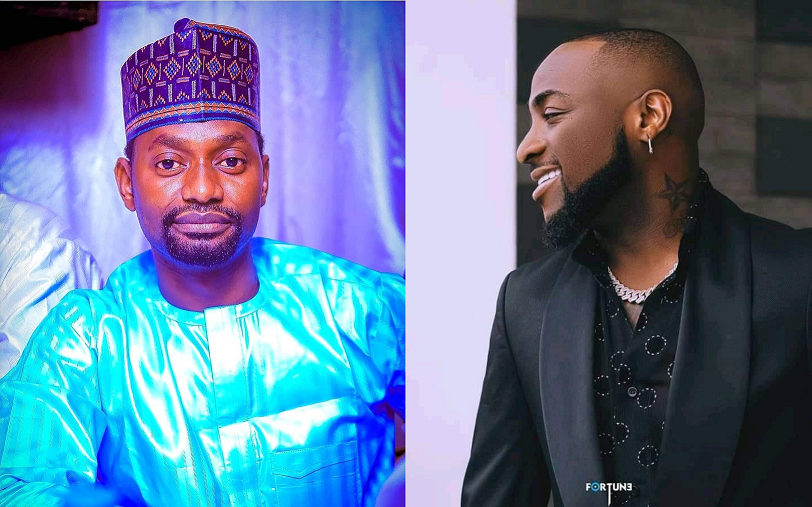
In style similar to that of the popular Nigerian musician Davido, a Kannywood producer Lawal Ahmad also took to his Instagram and Facebook pages to announce his appeal for donations from his fans.
He said, “Today, I also want to be honoured by my fans courtesy of Prophet Muhammad (SAW),” He afterwards stated his account details, comprising the account number, account name and bank.
You may recall that Davido on Monday was able to raise more than one hundred million naira in less than 24 hours after asking, jovially, those whom he had given a “hit song” to send him money. As of the time of filing this report, money still hits his account.
The famous musician has been sharing his bank account dashboard screenshots, displaying his name and account balance, which significantly increases whenever he uploads a new screenshot.
This has become a new trend as many other social media users follow suit to appeal for money—though sometimes jokingly.
Lawan Ahmad could be the first person to have made such an appeal in the Kano-based Hausa film industry history.
Checks on the timeline of the producer carried out by the Daily Reality show that he has started receiving money, albeit much smaller amounts compared to Davido’s.
By Uzair Adam Imam
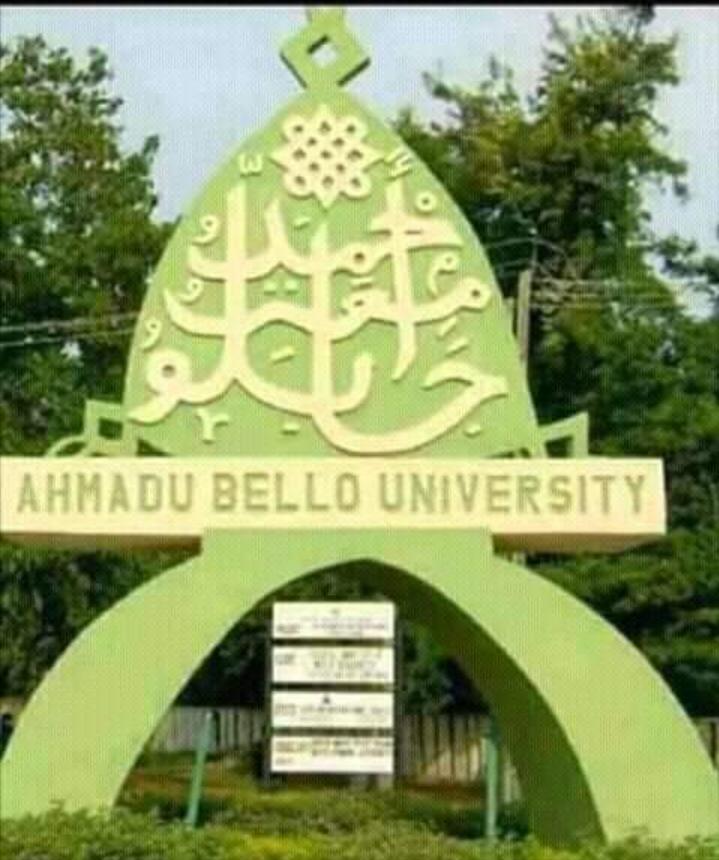
Prominent Saudi universities have expressed interest to build a strong collaboration with Ahmadu Bello University, Zaria (ABU), stating that the university has attained a considerable standing in teaching and research, the Consul-General, Royal Consulate General of Saudi Arabia, Kano, Khalil Ahmed Admawi, has disclosed.
The Consul-General made the disclosure today, 18th November 2021, when he paid a familiarisation visit to Ahmadu Bello University, Zaria, where he had an interaction with the Vice-Chancellor, Prof. Kabiru Bala, in his office.
This was made public in a release signed Thursday, 18th November 2021, by the Public Affairs Directorate, Office of the Vice-Chancellor, Ahmadu Bello University, Zaria.
Mr. Admawi, who led a three-man delegation to the University from the Saudi Consulate in Kano, said it was a “great pleasure” for him to have visited Ahmadu Bello University for the first time.
He added that long before his coming to Nigeria to serve as a diplomat he had been hearing about ABU’s greatness as clearly manifested in the quality of products produced by the institution over the years.
The Consul-General also explained that his visit to ABU was primarily to acquaint himself with the institution, and to subsequently link many Saudi universities with Ahmadu Bello University for possible collaboration on various academic fields.
Admawi, who expressed immense appreciation to the Vice-Chancellor for the warm reception accorded him and his entourage, further said that the visit would open more doors for different academic linkages between ABU and Saudi academic institutions.
Receiving the Consul-General, the Vice-Chancellor, Prof. Kabiru Bala, recalled the kind of relationship ABU had with the Gulf countries at its early years of existence.
Prof. Bala further said that such collaboration ceased to exist with the death of Premier of Northern Nigeria, Sir Ahmadu Bello, the Sardauna of Sokoto, who founded the University in 1962.
“Thereafter, ABU has been trying to resuscitate such collaborations with the Gulf countries. It is my hope that your visit will eventually revive the collaborations not only on Islamic Banking but also on other academic fields”, he said.
The Consul-General and his entourage were later conducted round some places within the University, including Department of Arabic, where he briefly interacted with the Head of Department, Prof. Jafar Abdulmalik and other staff members of the Department.
A renowned Islamic scholar at the Faculty of Education, Federal University, Dutse, Jigawa State, Dr. Abubakar Mohammed Sani Birnin Kudu, and Malam Ahmad Idris Yunus, a staff at the Consulate, were part of the Consul-General’s entourage.
By Abdelghaffar Abdelmalik Amoka
We woke up Monday morning to meet the bold Newspapers’ headlines of ASUU’s 3 weeks ultimatum to FG after the NEC meeting. In response, FG through Ngige promised to disburse the withheld 2019/2020 EAA on Wednesday. Another promise and Wednesday is gone. Of all the none implemented agreements, it’s EAA that came to their mind. Is the 3 weeks ultimatum all about EAA or they feel that another promise of a meager allowance called EAA will calm the nerves of those “poor lecturers”? I guess they are thinking they have impoverished us to that level that we jump on a promise of little “change”.
In December 2020 and a few days before the suspension of the 2020 edition of the ASUU Strikes, an agreement was reached, and with a clause that the failure of the government to fulfill the signed 2020 MoU with the agreed timeline, the strike will resume without any notice. It’s almost 11 months when the strike was suspended and some of us can’t really figure out the part of the agreement that has been implemented.
After 11 months, UTAS is on voicemail and ASUU members have been tactically dragged into IPPIS using their BVN. 11 months and still counting, no information on the renegotiation of the 2009 agreement that involves salary review. While no information on the accumulated EAA till 2019, the 2019-2020 EAA that is part of the 2021 budget is hanging and the year 2021 will end in about 6 weeks.
This reminds me of the last meeting for the strike suspension referendum at the branches. A senior colleague stood up during the meeting to pour out his mind that with his experience from the ASUU and FG negotiations, suspending the strike based on the usual promises and signing of MoUs will be a regret. The opinion of the colleague and other factors may have possibly made the ABU Branch of ASUU to vote against the suspension of the 2020 strike.
After the strike was suspended, I had an encounter with Dr. Salihu Lukman, the DG of Progressive Governors’ Forum on the ASUU strike. He made a comment that is still in my head since December 2020. That statement featured in the conclusion of my book titled: Nigeria’s university industrial unrest and poverty of sincerity. Dr. Lukman said, “We should not deceive ourselves to imagine that simply because there is an agreement, leaders will voluntarily implement it”. Hate him or like him for that statement, the statement has been true and is still true.
It is 11 months after the strike and ASUU members are on IPPIS, directly or indirectly. I doubt if there are any visiting professors in any federal universities, UTAS has been under test for the past 11 months with all the delaying tactics. The highest-paid Professor in 2009 received a net salary of about N450,000, including all the allowances. The salary remained that till January 2020. From February 2020 till date, and despite the minimum wage implementation, the net salary of the highest-paid Professor with all the allowances dropped to N416,000. With the inflation since 2009, the salary of academics was static till January 2020 after which it start to decrease.
And to attain the level of highest-paid Professor with that net salary, you must have been employed as an Assistant Lecturer with a Masters degree on a salary of N115,000 per month (all allowances included), worked for a minimum of 15 years to be promoted to the rank Professor and be on that rank for 9 years. So, to earn N416,000 as a Professor in any Nigerian university, you must have worked for a minimum of 24 years.
In the book that was recently published, I described the 2020 strike suspension as just like a temporary “ceasefire” and that FG will have to be forced to implement the signed agreements with another strike as usual. That is exactly where we are today with another ultimatum that may very likely lead to another strike.
But most colleagues are actually tired of strikes. Despite the 9 months of torture during the strike without salary, nothing seems to have changed and we are struggling more than ever to get home with our take-home pay. Are we ready to go for another round of months without a salary? Will the coming strike be focused on the revitalisation as number one on the list of demands? Or be silent on revitalisation for now and focus on 2009 renegotiation and pursue the review of salaries and welfare of lecturers to a logical conclusion?
The question coming from younger Academics is this: Why the continued fight for the system by academics while most others are fighting for themselves? They are saying that it is time for ASUU to focus on the welfare and conditions of service of their members. They said they feel more comfortable for their salaries to be withheld for a demand for improved salaries and welfare than for the fight to uphold university autonomy and funding which parents and students don’t even think is necessary.
A graduate of physics working in a bank visited the department last week and we got talking and the issue of salaries popped up. I told him our salaries which include all the allowances from Graduate Assistant to Professor and he was like that is unbelievable. He opened his mouth in disbelief. He thought my salary was like N700,000 and a Professor earned something close to a million naira. I could not stop laughing at his thoughts. I told him that those figures only exists in his head and that the reality was the figure I just rolled out. He felt that way because he is about 2 years in the bank and his salary is higher than the salary of a senior lecturer in the University. It made no sense to him. He can’t believe he earned more than a senior lecturer, a PhD holder, that has spent a minimum of 9 years in the University.
Dear ASUU President and ASUU NEC, convincing some ASUU members, especially the younger ones to vote in favour of another strike that will not prioritize their salaries and welfare may be a hard nut to crack. We have suffered enough and still suffering. We are meant to be solution developers but we are definitely not in the right frame of mind to develop solutions. How do you expect an academic to think when his brain is filled with the thought of how to get home with his salary? We need to set our priorities right. This is 2021 and we are living on a salary that is lower than the 2009 salary table. That is not sustainable.
Dear Federal Government of Nigeria, university lecturers don’t need that EAA that they are not sure when it will come but an academic living wage to live a life. Having refused to fully implement the 2020 MoU as Dr. Lukman postulated and some of us expected, ASUU members will be more than willing to embark on another strike to get that academic living wage from the conclusion and implementation of the 2009 renegotiation.
Abdelghaffar Abdelmalik Amoka writes from ABU, Zaria.
By Hussaina Sufyan Ahmad
By Mukhtar Ya’u Madobi
The alarming rate of insurgency, banditry and kidnappings are rising across Nigeria without any sign of abating.
These myriads of insecurity challenges have been inflicting wanton damages on the country’s political, socio-economic, and educational institutions.
Initially, the prime targets of kidnappers are wealthy individuals who can afford a ransom of any sum to regain their freedom. But nowadays, the narrative has since dramatically changed, as individuals who live from hand to mouth have now become the targets of these blood-sucking demons.
Worse still, this heinous act has been extended to the education sector, looking at how mass abductions of students have become a norm. These students end up in the kidnappers’ den and get subjected to different forms of torture, leading to the premature death of some of them, while the lucky ones that survive usually go a long way battling with post-traumatic stress disorders (PTSD) due to the horrific experience they were exposed to.
According to the latest edition of Nigeria’s National Security Strategy (NNSS) 2019, a document released by the Office of the National Security Adviser (ONSA), retired Major General Babagana Monguno, it was emphasized that kidnapping, armed banditry and militia constituted about 40% incidences of national insecurity in Nigeria.
Reports have indicated that several schools have come under attack by bandits since late last year in which innocent students were horrifically abducted. Records have shown that 20 attacks had been carried out on some Nigerian schools in which about 1,436 children were kidnapped and 16 dead, while 200 children are still unaccounted for. It is with dismay that many schools were closed, thereby pushing the country’s education system on the cross.
Several schools in Northern Nigeria have been raided by bandits in which mass students were abducted. Notable among them are Government Science Secondary School Kankara, Katsina State, Government Girl Secondary School, Jangebe, Zamfara State and Government Science College, Kagara in Niger state. In addition, bandits have also stormed and kidnapped students from tertiary institutions in Nigeria, such as the Federal College of Forestry Mechanization, Afaka and Greenfield University, both in Kaduna State.
The continuous infiltration of Nigerian schools by bandits, especially in Northwestern Nigeria, is pervasive and disastrous. Currently, students of Bethel Baptist High School, Kujama in Kaduna State and Federal Government College, Yauri, in Kebbi State are still being held in bandits’ camps for more than four months with a slim hope of ever regaining freedom. Meanwhile, the abducted pupils of Salihu Tanko Islamiyyah School, Tegina, in Niger state, did regain their freedom in August after spending about 88days in bandits’ enclave.
UNICEF raised the alarm not long ago, saying that at least one million school children across more than 37 schools in Nigeria are afraid to return to school. According to the agency, the fears by the children were a result of insecurity in the country, especially abductions that had taken place in some schools across the country.
Reports indicated that Nigeria has the highest number of out-of-school children in the world. For every five children that are not attending school globally, one of them is Nigerian. And this is mainly attributed to the danger the students face in their school from the anti-educational forces.
However, the question that is still begging for an answer is, what are the necessary measures taken by the government towards preventing the recurrence of kidnappings in our schools?
Albeit, armed groups, have since proliferated and become more sophisticated over the years. Henceforth, enhanced coordination between state and federal governments will surely improve the response to banditry and general insecurity. Part of this strategy should involve the use of early warning and early response systems involving the federal government, state governments, local vigilantes and community leaders.
Honestly, it will be apt should the Federal Government return to the drawing board to invigorate the earlier established Safe School Initiative program. The Safe School Initiative was unveiled in 2014 in Abuja during the World Economic Forum on Africa (WEFA) by the Nigerian government in collaboration with the United Nations to rebuild, rehabilitate and restore normalcy in the education sector. It was launched in May 2014 after the abduction of more than 270 Chibok girls from their school in Borno State.
The program was established to build community security groups to promote safe education zones, consisting of teachers, parents, police, community leaders and young people. In the longer term, the program will further focus on bolstering the safety of schools by providing school guards and police in partnership with Nigerian authorities, training staff as school safety officers, and providing counsellors to schools at risk of attack.
Additionally, this initiative constituted a series of research, campaign and programmatic activities in collaboration between Theirworld and the Global Business Coalition for Education to raise the profile of safe schools and learning environments in times of conflict and emergencies.
The policy had been successfully launched and recorded tremendous successes in some countries such as Syria, Lebanon, Pakistan and Latin America. Safe School Initiative offers supervision, services and teaching in saving children’s lives in the short term and helping them develop in the long term.
Presently, it is heartwarming to learn that the Nigeria Security and Civil Defence Corps (NSCDC) has commissioned an all-female squad mandated to safeguard schools from any harm by either bandits or kidnappers. This is part of its efforts to promote the Safe School Initiative and provide full-proof security for schools as directed by the federal government.
However, the Senate President, Senator Ahmed Lawal, has lamented that the Safe School Initiative program in Nigeria was designed to fail. This is because the Education Ministry was not involved in the funding or application of funds for the program, as the Ministry of Finance handles all these activities entirely.
The time is long overdue to stem the tide of banditry and kidnappings, as Nigeria must be liberated from the hands of ‘aliens who have turned to blood-sucking demons.’ Otherwise, this will retard the bright future of our children and the country they tend to inherit.
Mukhtar wrote from Kano State via ymukhtar944@gmail.com.